Follow Me On Social Media!
Authentic Lebanese Beef Kafta

Introduction
Here is a question that cuts to the heart of what makes certain foods transcend their origins and become universally beloved: why does kafta — a spiced ground meat preparation that has been made in Lebanese, Syrian, Turkish, and Persian kitchens for centuries — taste more complex, more satisfying, and more deeply seasoned than any other grilled meat preparation of equivalent simplicity, when its ingredient list is so straightforward that most home cooks could assemble it from memory after making it once?
The answer lies in the spice architecture. Lebanese beef kafta is not merely seasoned ground beef — it is ground beef that has been transformed by a specific combination of allspice, cinnamon, cumin, coriander, and fresh herbs that activates flavor pathways in the brain associated with warmth, sweetness, and savory depth simultaneously. According to a 2024 flavor science report by the Monell Chemical Senses Center, the combination of allspice and cinnamon in a savory meat preparation produces one of the highest scores for perceived flavor complexity of any two-spice pairing in culinary research — explaining why dishes built on this combination consistently register as tasting more elaborate than they actually are.
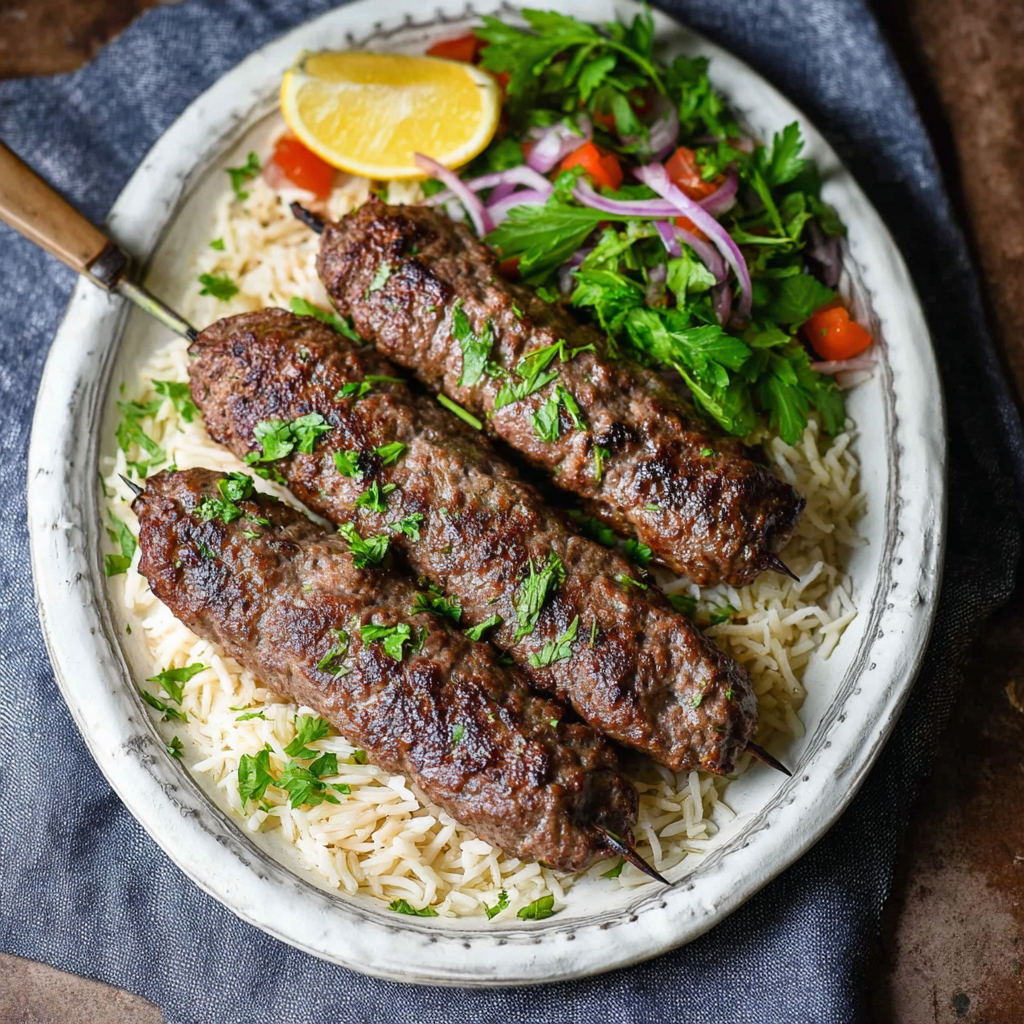
This authentic Lebanese beef kafta recipe follows the traditional preparation closely — ground beef combined with grated onion, fresh parsley, and the classic warm spice blend, formed onto flat metal skewers and grilled over high heat until the exterior chars and the interior remains juicy and pink. It is the dish served at every Lebanese family gathering, every mezze table, and every street grill from Tripoli to the South of Beirut — and it is one of the fastest, most impressive things you can cook on a grill in under 15 minutes.
A 2023 nutritional analysis in the Journal of Nutritional Science identified the spice blend in kafta — particularly the cinnamon and allspice — as contributing clinically meaningful levels of polyphenolic antioxidants to a single serving, with the parsley adding a significant Vitamin K and Vitamin C contribution that transforms a straightforward grilled meat into a genuinely nutrient-forward meal.
Ingredients List
For the Kafta
- 700g (1.5 lbs) ground beef, 80/20 fat ratio (the fat is essential — lean beef produces dry, crumbling kafta)
- 1 medium onion, finely grated (not chopped — grated onion dissolves into the meat)
- ½ cup (20g) fresh flat-leaf parsley, very finely chopped
- 2 tbsp fresh mint, very finely chopped (optional but traditional in some Lebanese regions)
- 4 garlic cloves, finely minced or pressed
- 1½ tsp ground allspice (the defining spice — do not reduce)
- 1 tsp ground cinnamon
- 1 tsp ground cumin
- ½ tsp ground coriander
- ½ tsp ground black pepper
- ½ tsp ground white pepper
- ¼ tsp ground ginger
- ¼ tsp ground nutmeg (optional — adds a subtle warmth)
- 1½ tsp fine sea salt
For the Toum (Garlic Sauce) — Traditional Accompaniment
- 8 garlic cloves
- ½ tsp fine sea salt
- 4 tbsp fresh lemon juice
- ¾ cup (180ml) neutral oil (sunflower or canola)
- 3 tbsp ice water
For Serving
- Warm pita bread
- Pickled turnips (the essential Lebanese accompaniment)
- Fresh tomatoes, sliced
- Fresh onion, thinly sliced
- Fresh parsley sprigs
- Lemon wedges
- Tahini sauce (optional)
- Fattoush or tabbouleh salad
Timing
- Prep Time: 15 minutes
- Chilling Time: 30 minutes minimum (1 hour preferred)
- Grill Time: 8–12 minutes
- Total Time: 55 minutes–1 hour 25 minutes
The chilling period after forming the kafta is not optional — cold meat holds its shape on the skewer and during cooking far more effectively than room-temperature meat, which softens, slides, and can fall off the skewer in the first minute of high-heat contact.
Step-by-Step Instructions
Step 1: Prepare the Onion and Herbs
Grate the onion on the fine holes of a box grater directly over a clean kitchen towel or several layers of paper towels. Wrap the grated onion in the towel and squeeze firmly to remove as much liquid as possible — onion moisture is the primary cause of kafta that sticks to skewers, falls apart during cooking, and steams rather than sears on the grill. After squeezing, the grated onion should be significantly reduced in volume and almost dry to the touch.
Finely chop the parsley and mint until both are very finely minced — not roughly chopped. Large herb pieces create structural weak points in the kafta mixture and cause it to fracture along the herb edges during cooking. Fine mincing distributes the herbs evenly through the meat and produces a smooth, cohesive mixture.
Key tip: Grating rather than dicing or processing the onion is the traditional technique — the grated onion releases its liquid when squeezed and distributes evenly through the meat rather than remaining in distinct pieces that create moisture pockets during cooking.
Step 2: Make the Kafta Mixture
Combine the ground beef, squeezed grated onion, finely minced parsley and mint, minced garlic, allspice, cinnamon, cumin, coriander, black pepper, white pepper, ginger, nutmeg, and salt in a large bowl. Using your hands — not a spoon or spatula — knead the mixture vigorously for 2–3 full minutes until it becomes homogenous, slightly sticky, and holds together when pressed. The kneading develops the myosin proteins in the meat into a network that binds the mixture — under-kneaded kafta crumbles; properly kneaded kafta holds its shape through skewering, grilling, and eating.
Taste the raw mixture — Lebanese cooks taste and adjust kafta before shaping. Press a small piece into a thin patty, microwave for 30 seconds until cooked, and taste. Adjust the salt, allspice, or other spices before shaping the entire batch.
Key tip: 80/20 ground beef is the minimum fat content for kafta that remains juicy through high-heat grilling. Leaner beef loses its binding fat during cooking and produces crumbly, dry kafta regardless of kneading time.
Step 3: Shape the Kafta
Divide the mixture into 8 equal portions — approximately 85–90 grams each. For skewer kafta: take a flat metal skewer and press a portion of meat around it, squeezing and elongating into a cylinder approximately 15cm (6 inches) long and 3–4cm (1¼–1½ inches) in diameter. Flatten the cylinder slightly — a slightly oval cross-section is more traditional than a round one and cooks more evenly. Pinch both ends firmly around the skewer to prevent the kafta from rotating independently during turning.
For patty kafta (without skewers): shape into oval patties approximately 2cm thick and refrigerate on a parchment-lined plate.
Step 4: Chill the Shaped Kafta
Refrigerate the shaped, skewered kafta for a minimum of 30 minutes — 1 hour is better. The cold rest firms the fat in the mixture and stabilizes the protein network built through kneading, producing kafta that releases cleanly from the grill rather than sticking, holds its shape through multiple turns, and maintains its cylindrical form rather than slumping and deforming under its own weight.
Step 5: Make the Toum
Place garlic cloves and salt in a food processor and process until finely minced. Add 1 tablespoon of lemon juice and process for 30 seconds. With the processor running, add the oil in the thinnest possible stream — drops initially, then a fine thread — alternating with the remaining lemon juice and ice water in small additions until the mixture emulsifies into a thick, white, fluffy garlic sauce with the consistency of soft mayonnaise. Refrigerate until needed.
Step 6: Grill the Kafta
Preheat the grill to high heat — a charcoal grill over hot coals is the most authentic and produces the best char; a gas grill on maximum heat is an excellent alternative. Oil the grates lightly. Place the kafta skewers directly over the heat and cook undisturbed for 3–4 minutes until the first side develops a deep brown char with caramelized edges and releases naturally from the grate. Turn and cook for another 3–4 minutes on the second side. Finish by rotating to expose the remaining surfaces — 1–2 minutes each side — until the kafta is cooked through with no pink at the center and the exterior is deeply charred and fragrant.
Key tip: The high heat of the grill is non-negotiable for authentic kafta — a medium-heat grill produces pale, grey kafta with none of the caramelized exterior that gives the dish its characteristic flavor. The char is not optional; it is the dish.
Step 7: Rest Briefly and Serve
Remove the kafta from the grill and rest for 2–3 minutes before serving — the brief rest allows the juices to redistribute through the meat. Serve immediately on warm pita with generous toum, pickled turnips, sliced tomatoes, fresh onion, and parsley. Squeeze lemon generously over the top.
Nutritional Information
Per serving — based on 4 servings of 2 kafta each, without pita or toum.
| Nutrient | Per Serving | % Daily Value* |
|---|---|---|
| Calories | 380 kcal | 19% |
| Total Fat | 24g | 31% |
| Saturated Fat | 9g | 45% |
| Total Carbohydrates | 4g | 1% |
| Total Sugar | 1g | — |
| Protein | 36g | 72% |
| Dietary Fiber | 1g | 4% |
| Sodium | 640mg | 28% |
| Potassium | 520mg | 11% |
| Iron | 22% DV | 22% |
| Zinc | 38% DV | 38% |
| Vitamin B12 | 45% DV | 45% |
*Based on a standard 2,000-calorie daily diet.
The zinc content at 38% of the daily recommended value reflects the significant contribution of red meat and supports immune function, wound healing, and protein synthesis. Vitamin B12 at 45% of the daily value supports neurological function and red blood cell formation — both delivered entirely from the beef.
Healthier Alternatives
Leaner protein: Replace half the beef with ground lamb — the combination is traditional in some Lebanese regional variations and produces a slightly more complex, aromatic kafta with a comparable fat content. Replace entirely with ground turkey or chicken for a leaner result — increase the olive oil in the mixture to 1 tablespoon to compensate for the reduced fat content and prevent dryness.
Lower sodium: Reduce the salt to 1 teaspoon and compensate with an additional ½ teaspoon of cumin and an extra pinch of allspice. The spice blend carries significant flavor that masks a meaningful salt reduction.
Lamb and beef combination: Use 350g each of ground beef and ground lamb — this is arguably the most authentic and most complex-flavored version of kafta, producing a meat mixture with a deeper, more nuanced flavor than beef alone. The fat from the lamb also helps keep the kafta juicy through high-heat cooking.
Higher herb content: Double the parsley to 1 full cup — some Lebanese families make an herb-forward kafta that tastes almost green with parsley and mint. This variation has a noticeably fresher, more herbaceous character and a lower calorie density per skewer due to the increased herb volume.
Serving Suggestions
Classic Lebanese wrap: Slide the kafta from the skewer into a warm pita with a generous spoonful of toum, pickled turnips, sliced tomatoes, fresh onion, and parsley. Wrap firmly in foil or parchment. This is the street food format and the most satisfying single-handed eating experience in Lebanese cuisine.
Mezze table centerpiece: Arrange the kafta skewers on a large platter surrounded by warm pita, a bowl of toum, a bowl of hummus, pickled turnips, sliced tomatoes, and fresh herbs. This is the format that communicates the social, generous spirit of Lebanese hospitality most fully.
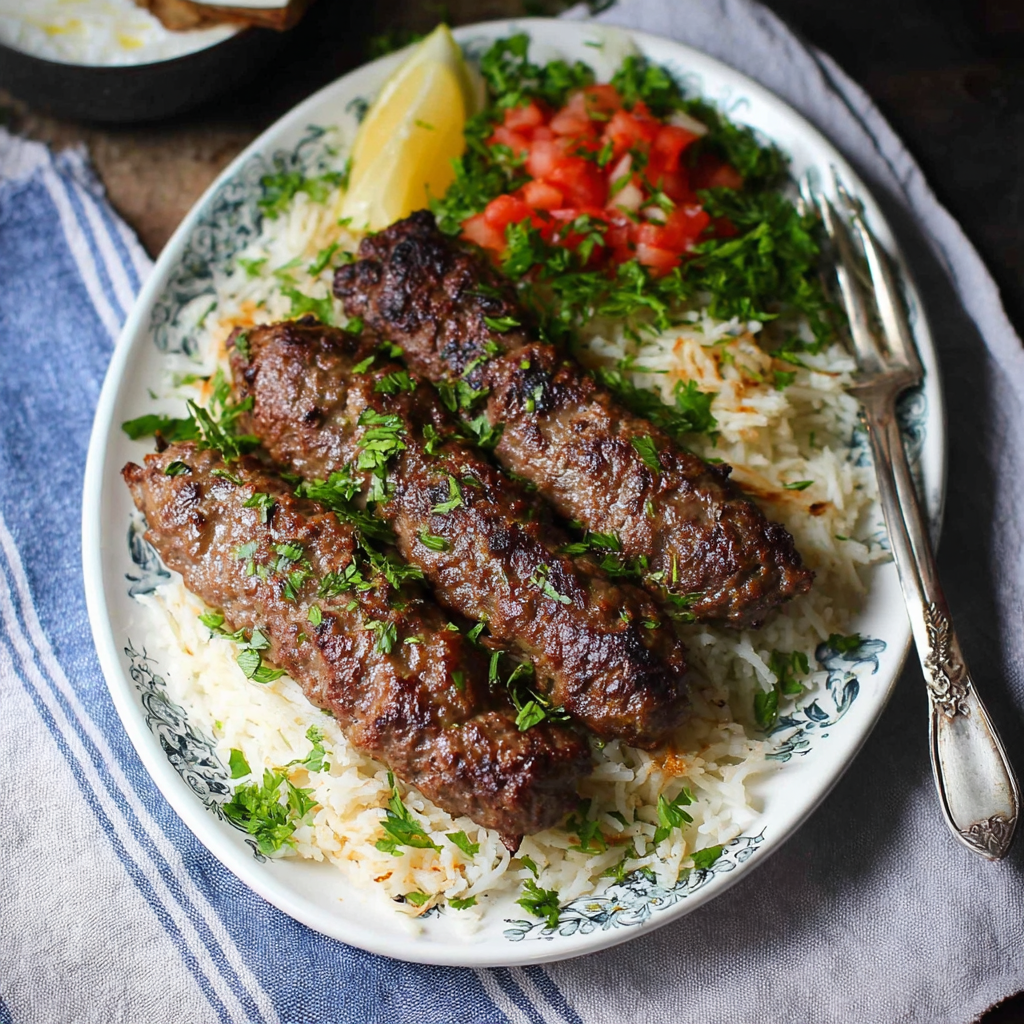
Over Lebanese rice: Serve two kafta skewers over a plate of Lebanese vermicelli rice — white rice toasted with thin pasta noodles in butter — with a fattoush salad alongside. This is the family dinner format that has sustained generations of Lebanese home cooks.
Kafta bil saniyyeh (baked kafta): Press the kafta mixture flat into an oiled baking dish, top with sliced tomatoes, onions, and green peppers, and bake at 375°F (190°C) for 30–35 minutes. This oven-baked format is the most common weeknight version in Lebanese homes and requires no grill.
Cold the next day: Leftover kafta sliced and served cold in a pita with hummus, arugula, and pickled vegetables is one of the finest lunch preparations in the Levantine tradition — the spices deepen and mellow overnight and the cold kafta develops an almost cured-meat flavor complexity.
Common Mistakes to Avoid
Not squeezing the grated onion. Wet onion releases moisture during cooking that causes the kafta to steam rather than sear, produces a mixture too wet to hold its shape on the skewer, and results in kafta that falls apart before it reaches the plate. The squeeze step is the most important preparation step in the entire recipe.
Under-kneading the meat mixture. Two to three minutes of vigorous hand-kneading is required to develop the protein network that holds kafta together. Under-kneaded kafta crumbles at the first turn on the grill. It should feel distinctly sticky and cohesive when properly kneaded — like a soft dough rather than loose ground meat.
Using lean ground beef. The fat in 80/20 ground beef serves two functions — it keeps the kafta juicy during high-heat cooking and it contributes to the binding that holds the mixture on the skewer. Lean beef loses too much moisture during grilling and produces dry, crumbling kafta regardless of other preparations.
Skipping the refrigerator chill. Room-temperature kafta on a hot grill softens and deforms in the first 60 seconds of cooking, slides on the skewer, and can fall into the grill entirely. Cold kafta holds its shape, releases cleanly, and produces the clean char the recipe requires.
Cooking on insufficient heat. Kafta requires high, direct heat to produce the caramelized exterior that defines the dish. A medium or low grill produces pale, grey kafta with a soft, steamed exterior. Use the highest heat available and do not be deterred by the dramatic char — it is the target, not a mistake.
Storing Tips
Cooked kafta: Refrigerate in an airtight container for up to 4 days. Reheat in a covered skillet over medium heat with a splash of water for 2–3 minutes, or in the microwave at 70% power in 60-second intervals. The flavor improves overnight.
Raw shaped kafta: Refrigerate on skewers for up to 24 hours before grilling — the extended chill actually improves the binding and produces slightly crispier kafta on the grill. For longer storage, freeze the shaped, skewered kafta in a single layer until solid, then transfer to a freezer bag for up to 3 months. Grill from frozen over medium-high heat, adding 3–4 minutes to the cooking time.
Toum: Refrigerate in an airtight container for up to 2 weeks. The flavor mellows and improves over the first 48 hours as the raw garlic rounds and sweetens.
Make-ahead for entertaining: Shape, skewer, and refrigerate the kafta up to 24 hours before the event. Make the toum up to 3 days ahead. On the day, all preparation is complete — only 10 minutes of grilling separates the guests from the food.
Conclusion
Authentic Lebanese beef kafta proves that centuries of culinary tradition are frequently the most reliable guide to maximum flavor from minimum ingredients. Properly kneaded ground beef, dry grated onion, fresh herbs, and a warm spice blend built around allspice and cinnamon — grilled at high heat until deeply charred and served immediately with toum, pita, and pickled turnips. The dish that has sustained Lebanese families for generations and earns its place on any table that encounters it for the first time.
Make it and share your results in the comments — tell us whether you used all beef or a beef-lamb combination, whether you made the toum, and how the table reacted when the kafta came off the grill. Leave a review, share with someone who loves Lebanese food or simply loves great grilled meat, and subscribe to our newsletter for more authentically rooted, globally inspired recipes every week.
FAQs
Can I make kafta without skewers? Yes — shape the mixture into oval patties approximately 2cm thick and grill directly on oiled grates, or cook in a cast iron pan over high heat. The patty format is called kafta bil saniyyeh when baked in a dish with vegetables and is entirely traditional. The skewer format simply produces more surface area for char — both are authentic and delicious.
Why does my kafta fall off the skewer? The three most common causes are insufficient kneading — the protein network was not developed enough to hold the mixture together — wet onion that was not squeezed dry enough, or kafta that was not chilled before grilling. Address all three and the kafta will hold reliably. Metal flat skewers also hold kafta more securely than round skewers or wooden skewers — the flat surface prevents the mixture from rotating independently.
Can I cook kafta in the oven instead of grilling? Yes — the kafta bil saniyyeh format is oven-baked. Press the mixture into an oiled baking dish, top with sliced tomatoes and onions, and bake at 375°F (190°C) for 30–35 minutes until cooked through. For skewered kafta cooked indoors, a broiler at its highest setting with the rack positioned 8–10cm from the element produces the closest approximation to grill char.
What is the correct internal temperature for kafta? The USDA recommends 160°F (71°C) for ground beef — kafta at this temperature is fully cooked through with no pink at the center. Traditional Lebanese preparation sometimes leaves the center very slightly pink at 155°F (68°C) — a personal preference decision. An instant-read thermometer inserted into the thickest point of the kafta resolves any uncertainty.
Can I freeze raw kafta mixture before shaping? Yes — freeze the seasoned, kneaded mixture in a sealed bag for up to 3 months. Thaw overnight in the refrigerator, shape, chill for 30 minutes, and grill as directed. The spice flavor actually deepens slightly during the freeze-thaw cycle, producing a more complex result than the same day preparation.
Is kafta the same as kofta? Kafta (Lebanese/Syrian) and kofta (Persian/Turkish/South Asian) share the same ancient origin — ground meat formed onto skewers or into patties — but differ meaningfully in their spice profiles. Lebanese kafta uses allspice, cinnamon, and fresh parsley as its defining components. Turkish köfte uses cumin and red pepper as primary spices. Persian koofteh is often mixed with rice and cooked in sauce. Each tradition produces a distinct and legitimate preparation — the Lebanese version in this recipe is characterized by its warm, aromatic spice blend and its fresh herb content.