Follow Me On Social Media!
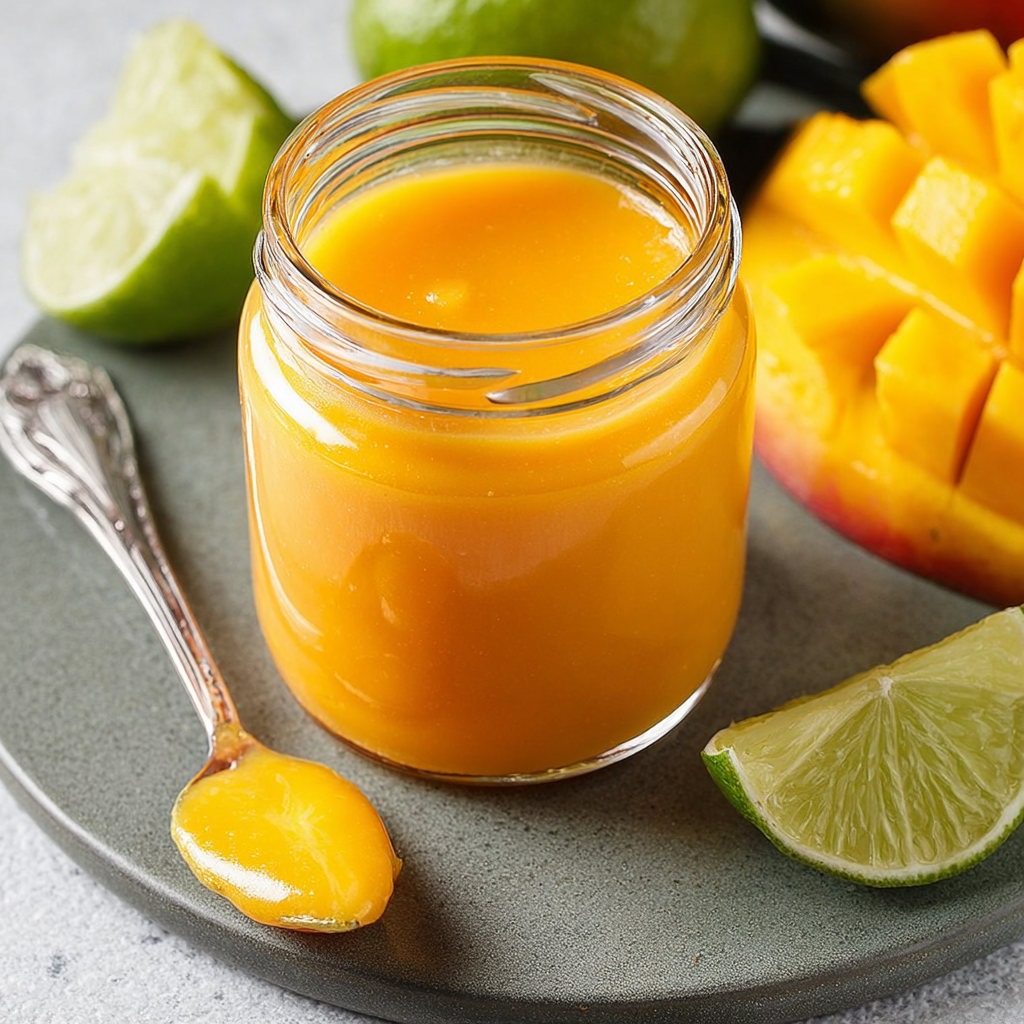
Easy Mango Coulis — 3 Ingredients, Express Fruit Sauce

Introduction
Here is a question that reframes what a sauce can be: what if the most versatile, most visually striking, most consistently impressive condiment in your kitchen required exactly three ingredients, zero cooking, and four minutes from the moment you open the blender to the moment you pour it over anything that needs to look and taste extraordinary? According to a 2024 report by the Specialty Food Association, tropical fruit-based sauces grew by 41% in restaurant menu appearances over the past two years — appearing on everything from grilled fish to dessert plates to cocktail menus — driven by a consumer appetite for bright, acidic, naturally sweet flavors that cut through richness and elevate simpler preparations instantly. This easy mango coulis delivers all of that in three ingredients and four minutes.
A coulis — from the French couler, meaning to flow — is nothing more than a smooth, strained purée of fruit or vegetables used as a sauce. In the professional kitchen it is one of the most fundamental preparations a young cook learns, because it demonstrates a principle that applies across all of cooking: that the best flavors come from the best ingredients, treated with restraint. A great mango coulis does not need spices, thickeners, cream, or elaborate technique. It needs a ripe mango, a squeeze of lime, a touch of sweetener, and a blender. Everything else is the mango itself doing the work.
A 2023 nutritional analysis published in the Journal of Food Composition found that mango is among the top five most nutrient-dense tropical fruits, delivering significant amounts of Vitamins C, A, and B6, folate, and the antioxidant compound mangiferin — all of which are largely preserved in a raw, uncooked coulis preparation, making this one of the more nutritionally meaningful fruit sauces available.
Ingredients List
For the Coulis (Makes approximately 300ml / 1¼ cups)
- 2 large ripe mangoes, peeled and diced (approximately 400g / 14 oz flesh — Ataulfo or Alphonso varieties for the sweetest, most floral result)
- 2 tbsp fresh lime juice (approximately 1 lime — fresh only)
- 1–2 tbsp honey, maple syrup, or caster sugar (adjust to the natural sweetness of the mango)
Optional Additions (None are necessary — all enhance)
- ¼ tsp lime zest (intensifies the citrus character)
- 1 tbsp water or mango juice (to adjust consistency)
- Pinch of fine sea salt (amplifies every other flavor)
- ½ tsp fresh ginger, finely grated (adds warmth and complexity)
Timing
- Prep Time: 4 minutes
- Blending and Straining: 3 minutes
- Total Time: under 7 minutes
Made in under 7 minutes with no cooking required. Keeps refrigerated for up to 5 days and freezes for up to 3 months — making it one of the most practical make-ahead sauces in any kitchen.
Step-by-Step Instructions
Step 1: Prepare the Mango
Peel and dice the mangoes, cutting as close to the flat pit as possible to maximize the flesh yield. The quality and ripeness of the mango is the single most important variable in this recipe — a ripe mango that yields gently to pressure, has a fragrant, floral aroma at the stem end, and shows golden-orange color throughout the flesh will produce a coulis of significantly superior flavor to an underripe mango regardless of how much lime or sweetener is added. If the mangoes available are underripe, place them in a paper bag at room temperature for 1–2 days until properly ripe before using.
Step 2: Blend Until Completely Smooth
Place the mango flesh, lime juice, and sweetener in a blender or food processor. Blend continuously for 60–90 seconds until completely smooth — significantly longer than seems necessary. A fully smooth coulis requires sustained blending to break down all the fibrous strands in the mango flesh. Scrape down the sides once during blending. If the mixture is too thick to blend smoothly, add water or mango juice one tablespoon at a time until the blender can circulate the mixture freely.
Key tip: A high-powered blender produces a silkier result than a standard blender or food processor — if you have one, use it. The difference in smoothness is visible and significant, particularly if the mango variety used has noticeable fibrous strands.
Step 3: Strain for a Professional Finish (Optional but Recommended)
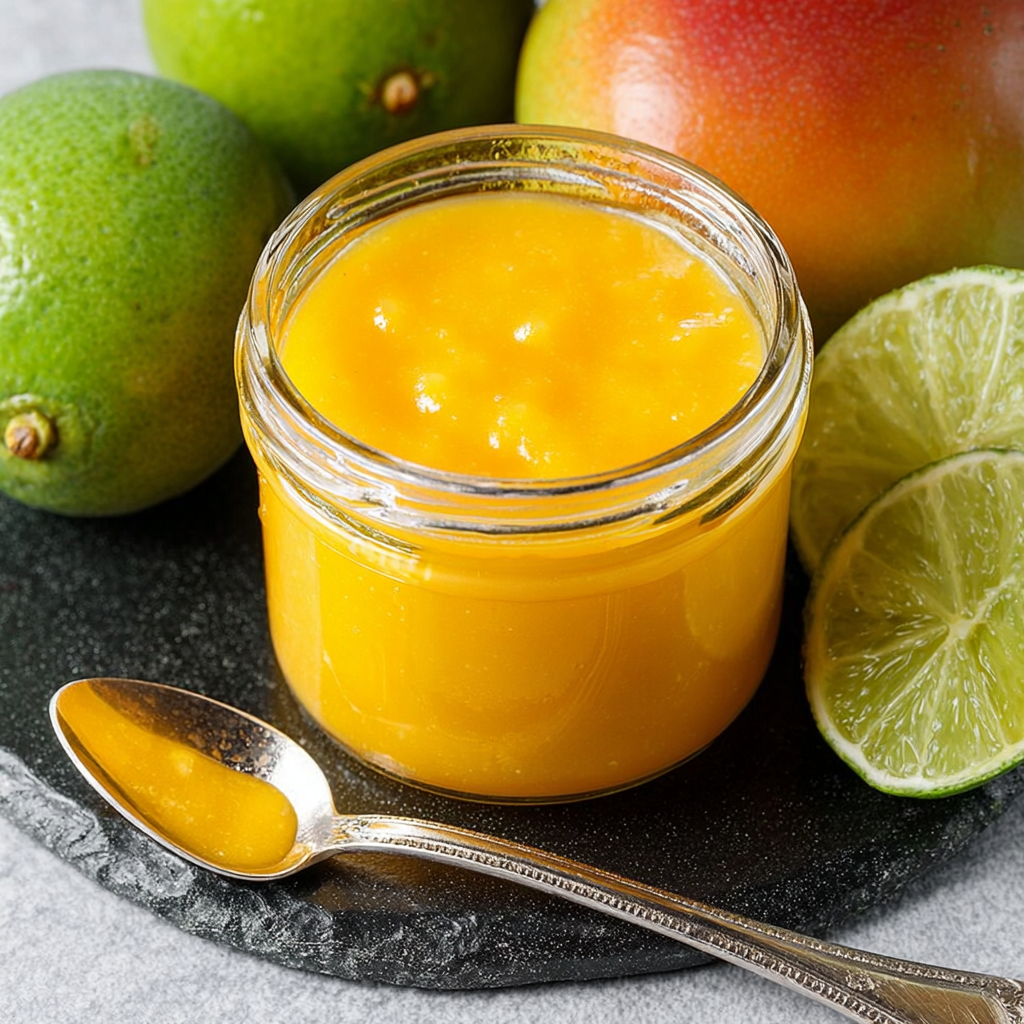
Pour the blended coulis through a fine mesh strainer set over a bowl, pressing with the back of a spoon to push as much liquid through as possible. Discard the small amount of fibrous pulp retained by the strainer. This straining step takes 60 seconds and is the single action that transforms a home blender purée into a genuinely professional-quality, glossy, smooth coulis with the clean, pourable consistency of a restaurant sauce. Skip it for a more rustic, textured result — both are delicious, but the strained version is visually superior.
Step 4: Taste, Adjust, and Store
Taste the coulis and adjust with precision — more lime juice for brightness and acidity, more honey for sweetness, a pinch of salt to sharpen and amplify all the flavors. The finished coulis should taste like an intensified, concentrated version of a perfectly ripe mango — sweet, slightly tart, floral, and vibrant. Transfer to a sealed jar or squeeze bottle and refrigerate until needed.
Nutritional Information
Per serving — based on 6 servings of approximately 50ml each, with honey.
| Nutrient | Per Serving | % Daily Value* |
|---|---|---|
| Calories | 65 kcal | 3% |
| Total Fat | 0g | 0% |
| Total Carbohydrates | 17g | 6% |
| Total Sugar | 15g | — |
| Protein | 0.5g | 1% |
| Dietary Fiber | 1g | 4% |
| Sodium | 2mg | 0% |
| Vitamin C | 35% DV | 35% |
| Vitamin A | 15% DV | 15% |
| Folate | 10% DV | 10% |
*Based on a standard 2,000-calorie daily diet.
At 65 calories per serving with 35% of the daily Vitamin C requirement, this coulis delivers a genuinely meaningful nutritional contribution for a sauce — one of the most favorable nutrition-per-calorie ratios of any fruit preparation. The folate content of 10% per serving is particularly noteworthy for a sauce, making this a smart addition to the diet of pregnant women or anyone monitoring folate intake.
Healthier Alternatives
Sugar-free: For a coulis with no added sweetener, use only the most perfectly ripe Ataulfo or Alphonso mangoes, which are sweet enough to require no additional sugar. A squeeze of lime and a pinch of salt alone can produce a coulis that is complex and balanced without any sweetener.
Lower glycemic: Replace honey with a few drops of pure liquid stevia or monk fruit sweetener. The sweetness level remains equivalent with a fraction of the sugar impact on blood glucose — a meaningful modification for diabetic or low-sugar dietary requirements.
Anti-inflammatory boost: Add ¼ teaspoon of fresh turmeric juice or ¼ teaspoon of ground turmeric to the blender. The turmeric adds a slightly earthy warmth and a vivid golden deepening of the already-orange color, while contributing curcumin — one of the most well-researched anti-inflammatory compounds available in food.
With fresh herbs: Add 4–5 fresh mint leaves or a small handful of fresh basil to the blender for a herb-infused mango coulis that works particularly well over grilled fish, chicken, or a cheese board. The herb adds a green, aromatic freshness that extends the coulis well beyond the dessert context.
Serving Suggestions
Over cheesecake or panna cotta: Spoon or pour directly over a slice of vanilla cheesecake, a plain panna cotta, or a wedge of semifreddo. The bright acidity and vivid color of the mango coulis against pale, creamy desserts is one of the most visually and flavor-wise compelling plate combinations in all of dessert making.
With grilled fish or shrimp: Spoon a thin pool of mango coulis beneath a piece of grilled salmon, seared sea bass, or a scattering of grilled shrimp. The sweet-acid character of the mango against charred, savory seafood is a flavor pairing of considerable sophistication that takes four minutes to produce.
As a pancake or waffle syrup: Warm slightly and pour over a stack of pancakes, waffles, or French toast in place of maple syrup. The natural fruit sweetness requires no added sugar at the table and the vibrant color makes the most ordinary breakfast look like a restaurant brunch plate.
In a yogurt parfait: Layer cold mango coulis with plain Greek yogurt and granola in a glass. The coulis functions as both a sauce and a sweetener for the yogurt, eliminating the need for flavored yogurt or added sugar while producing a more complex, fresher flavor.
As a cocktail component: Use as a base for a mango daiquiri, a mango margarita, or a non-alcoholic mango lemonade. The coulis dissolves seamlessly into cold drinks without the texture or pulp of fresh fruit, producing a cleaner, more professional drink than muddled or blended fruit.
Drizzled over ice cream: Pour cold mango coulis directly over a scoop of coconut, vanilla, or dark chocolate ice cream. The contrast of cold fruit sauce over cold ice cream is one of the fastest, most impressive dessert presentations achievable with pantry ingredients.
Common Mistakes to Avoid
Using underripe mango. An underripe mango produces a coulis that is astringent, pale, and starchy rather than sweet, vibrant, and floral. No amount of lime juice or sweetener corrects an underripe mango coulis — the foundational flavor is not there. Ripeness is everything in a three-ingredient recipe where one ingredient is the entirety of the flavor.
Under-blending. Mango flesh contains fibrous strands that require sustained blending to break down completely. Thirty seconds of blending produces a textured, slightly stringy purée. Ninety seconds of continuous blending produces the smooth, homogenous sauce the recipe is designed around. The additional blending time costs nothing and changes the result significantly.
Skipping the seasoning adjustment. A mango coulis that has not been tasted and adjusted at the end will almost always taste one-dimensional — either too sweet, too flat, or too acidic. The lime juice, sweetener, and pinch of salt interact with each other and the mango to create balance — taste every time and adjust with precision before serving.
Not straining. The straining step takes 60 seconds and is the difference between a home smoothie and a professional sauce. If the coulis is for a special occasion or for a plated presentation, strain it — the improvement in texture, appearance, and mouthfeel is immediately visible.
Storing Tips
Refrigerator: Store in a sealed jar or squeeze bottle for up to 5 days. The lime juice slows oxidation and helps maintain the vibrant orange color. Stir or shake well before each use as slight separation is normal.
Freezer: Pour into an ice cube tray, freeze until solid, then transfer to a freezer bag. Individual cubes thaw in 20 minutes at room temperature and are immediately usable — a practical system that makes single-serving portions of coulis available on demand for up to 3 months.
Squeeze bottle storage: Transferring the coulis to a kitchen squeeze bottle before refrigerating makes plating dramatically easier — it allows precise, controlled pouring in pools, dots, lines, or drizzles directly onto plates, eliminating the spoon-and-smear technique entirely.
Conclusion
Mango coulis proves the fundamental principle of great cooking: that restraint, quality ingredients, and the right technique produce results that elaborate recipes frequently cannot match. Three ingredients, four minutes, and a ripe mango are all that separate any plate from something that looks and tastes genuinely professional.
Make it and share your results in the comments — tell us what you poured it over, whether you added ginger or mint, and how quickly the jar disappeared from the refrigerator. Leave a review, share with someone who loves mango, and subscribe to our newsletter for more fast, beautiful, flavor-forward recipes every week.
FAQs
What mango variety works best? Ataulfo (also called Honey or Champagne mango) is the top recommendation — small, kidney-shaped, and intensely sweet with a smooth, nearly fiberless flesh that blends to exceptional smoothness without straining. Alphonso mangoes are the premium Indian variety with a floral, complex sweetness that produces the most sophisticated coulis. Standard Tommy Atkins mangoes — the most widely available variety in North American supermarkets — work well but are more fibrous and less sweet, making straining more important and additional sweetener more likely.
Can I use frozen mango? Yes — frozen mango works very well and is often more flavorful than out-of-season fresh mango. Thaw completely and drain any accumulated liquid before blending — the drained liquid can be reserved and used to adjust the consistency of the finished coulis rather than water. The flavor and color of the finished coulis are virtually identical to the fresh mango version.
How do I make the coulis thicker or thinner? To thicken: blend with less water and do not add any additional liquid, or refrigerate — the coulis thickens slightly when cold. To thin: add water, mango juice, or fresh lime juice one tablespoon at a time, blending briefly between each addition. The consistency should be fluid enough to pour easily but thick enough to coat the back of a spoon — slightly thicker than a standard juice.
Can I make this coulis without a blender? Yes — mash the mango flesh very thoroughly with a fork until as smooth as possible, then press through a fine mesh strainer using the back of a spoon. This manual method requires more effort and produces a slightly less smooth result but is entirely viable when a blender is unavailable. A potato ricer used before the straining step significantly reduces the manual effort required.
How do I plate the coulis professionally? For a pool presentation: spoon 2–3 tablespoons onto the center of a plate and use the back of a spoon to spread in a single circular motion. For dots: use a squeeze bottle to apply 5–7 small dots around the plate. For a smear: spoon a small amount onto the plate and drag the back of a spoon through it in one decisive stroke. For a drizzle over dessert: use a squeeze bottle from a height of approximately 20cm for the most controlled, professional-looking application.
Is this suitable for babies and young children? For children over 12 months, this coulis — made without honey, which is not suitable for infants under 1 year — is an excellent fruit sauce. Replace honey with a very small amount of maple syrup or omit sweetener entirely for very young children whose palates are appropriately calibrated to the natural sweetness of ripe fruit. The lime juice provides the balance that sweetener provides for adult palates — reduce it to 1 teaspoon for young children who may find citrus acidity sharp.