Follow Me On Social Media!
Roasted Carrots with Whipped Ricotta & Hot Honey

Introduction
Here is a question that challenges how you think about side dishes: when was the last time a vegetable preparation — not a main course, not a showstopper protein, but a side dish built around one of the most overlooked and underestimated vegetables in any produce section — genuinely stopped a dinner table mid-conversation and made everyone reach for seconds before the main course had been fully eaten? According to a 2024 food trend report by the James Beard Foundation, roasted root vegetables finished with contrasting sweet and heat elements represent one of the most significant emerging trends in both restaurant and home cooking — driven by the recognition that vegetables treated with the same intentionality applied to proteins produce results that are equally memorable and far more surprising.
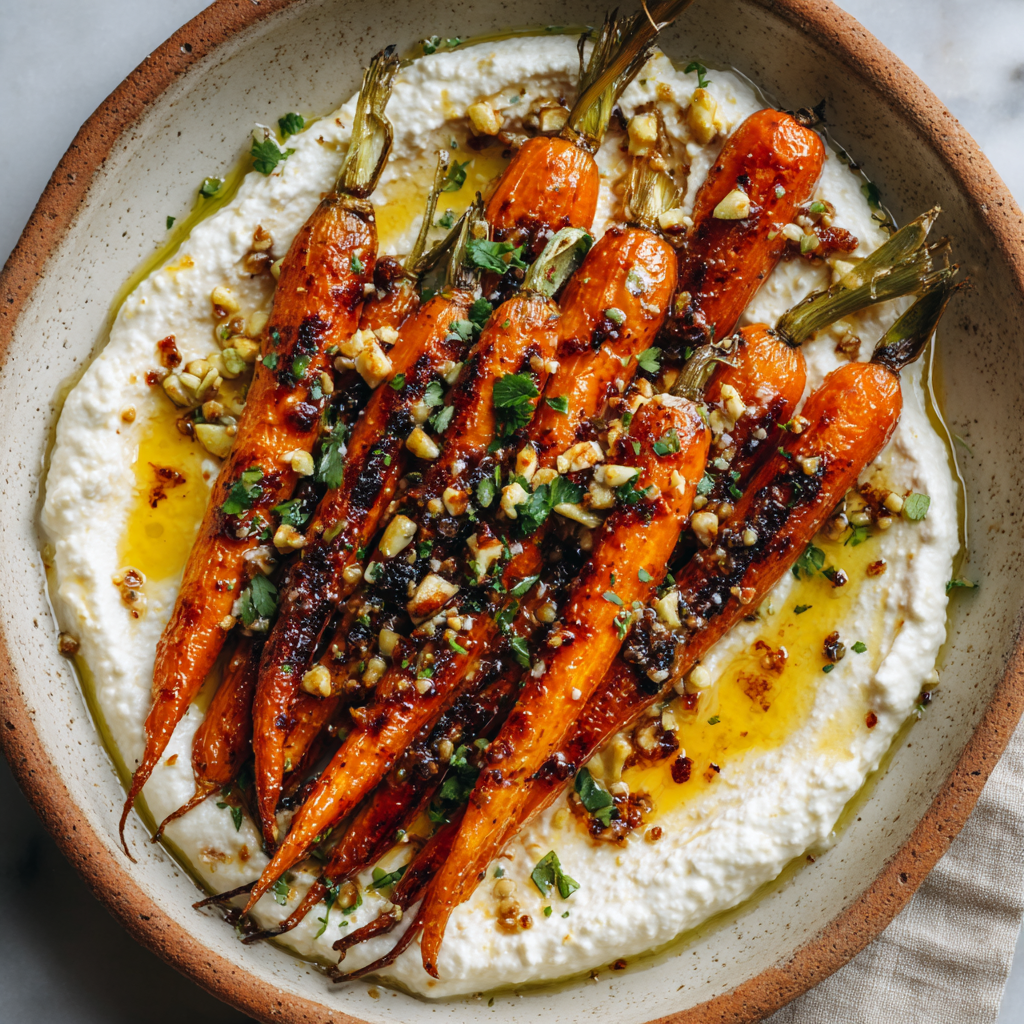
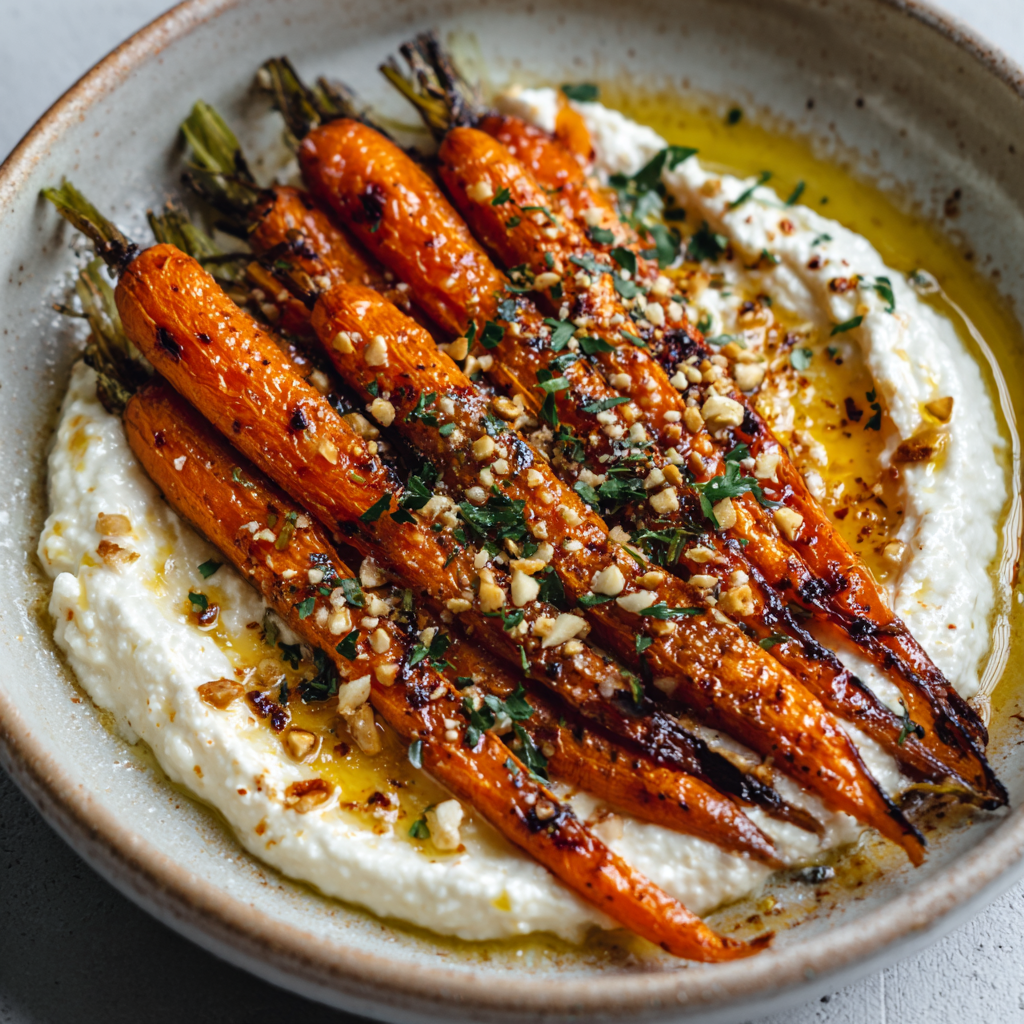
These roasted carrots with whipped ricotta and hot honey are the proof of that principle in its most accessible form. Whole or halved carrots roasted at high heat until their natural sugars caramelize into deep, concentrated sweetness and their edges char slightly, served on a cloud of whipped lemony ricotta that provides cool creaminess and tangy contrast, finished with a hot honey drizzle that adds floral sweetness and a slow-building heat that transforms the entire plate from a side dish into a talking point. The combination of the sweet char, the cool cream, and the spicy honey activates every taste receptor simultaneously — a flavor profile that food scientists identify as one of the most neurologically engaging of any culinary combination.
A 2023 nutritional review in the Journal of Agricultural and Food Chemistry identified high-heat roasting as the most effective cooking method for increasing the bioavailability of beta-carotene in carrots — the carotenoid compound responsible for their orange color and their significant Vitamin A contribution — by breaking down the cell walls that limit absorption in raw carrots and increasing the bioavailable beta-carotene by up to 40% compared to raw consumption.
Ingredients List
For the Roasted Carrots
- 800g (1.75 lbs) medium carrots, scrubbed (leave the skin on — it adds texture and the scrubbing removes any grit)
- 3 tbsp extra virgin olive oil
- 1½ tsp fine sea salt
- 1 tsp freshly ground black pepper
- 1 tsp ground cumin
- ½ tsp smoked paprika
- ½ tsp ground coriander
- ¼ tsp ground cinnamon (optional — adds a warm, slightly Moroccan depth)
- 1 tbsp honey (drizzled over the carrots before roasting — accelerates caramelization)
For the Whipped Ricotta
- 300g (10.5 oz) full-fat ricotta cheese
- 2 tbsp extra virgin olive oil
- 2 tbsp fresh lemon juice
- 1 tsp lemon zest
- 1 garlic clove, finely minced or pressed
- ½ tsp fine sea salt
- ¼ tsp freshly ground black pepper
- 2 tbsp heavy cream (optional — produces a lighter, more cloud-like texture)
For the Hot Honey
- 4 tbsp good-quality raw honey (floral varieties — clover, orange blossom, or wildflower — work best)
- 1–2 tsp red pepper flakes (adjust to heat preference)
- ½ tsp apple cider vinegar (adds a subtle tang that prevents the honey from tasting flat)
- 1 small garlic clove, finely minced (optional — adds savory depth)
For Finishing and Garnish
- Fresh thyme leaves or micro herbs
- Toasted pine nuts or crushed pistachios (adds crunch and contrasting color)
- Extra lemon zest
- Flaky sea salt (Maldon or fleur de sel)
- Extra virgin olive oil, for drizzling
- Fresh flat-leaf parsley, roughly torn
Timing
- Prep Time: 10 minutes
- Roasting Time: 30–35 minutes
- Total Time: 40–45 minutes
Make the whipped ricotta and hot honey while the carrots roast — both take under 5 minutes each and are ready well before the carrots finish. Everything converges at the exact moment the carrots come out of the oven.
Step-by-Step Instructions
Step 1: Prepare and Season the Carrots
Preheat the oven to 425°F (220°C). Scrub the carrots under cold running water and pat dry. Leave the skin on and leave the tops on if they are fresh and vibrant — carrot tops are edible and their slightly bitter, herbal flavor makes an excellent contrast to the sweet honey and creamy ricotta. Depending on the thickness of the carrots, leave thin ones whole and halve thicker ones lengthwise — cut surfaces caramelize more dramatically than rounded ones, producing more of the concentrated, slightly bitter char that makes roasted carrots so compelling.
Toss the prepared carrots with olive oil, salt, pepper, cumin, smoked paprika, coriander, and cinnamon if using. Arrange in a single layer on a large, parchment-lined baking sheet with space between each carrot — crowding creates steam rather than caramelization. Drizzle the pre-roast honey over the carrots and toss once more.
Key tip: The pre-roast honey accelerates the caramelization of the carrot’s natural sugars and produces a deeper, more evenly distributed char on the cut and curved surfaces. It also provides a surface-level sweetness that intensifies during roasting rather than burning — honey’s higher fructose content has a lower burning threshold than granulated sugar, so watch the carrots in the final 5 minutes.
Step 2: Roast the Carrots
Roast at 425°F (220°C) for 15 minutes without disturbing. After 15 minutes, flip each carrot using tongs or a spatula, exposing the uncaramelized surfaces to the pan heat. Return to the oven for another 15–20 minutes until the carrots are tender throughout — a knife or skewer slides through the thickest point with minimal resistance — and the surfaces are deeply golden to dark amber with slightly charred edges and tips. The carrots should be cooked beyond the point that most people would consider “done” — the deeper the caramelization, the more intensely sweet and complex the flavor.
Step 3: Make the Whipped Ricotta
While the carrots roast, place the ricotta, olive oil, lemon juice, lemon zest, garlic, salt, and pepper in a food processor. Process on high speed for 90 seconds until completely smooth, aerated, and noticeably lighter in texture than the original. Add the heavy cream if using and process for another 30 seconds. The finished whipped ricotta should be smooth, cloud-like, and taste of lemon, garlic, and clean dairy with a pleasing tang. Taste and adjust — more lemon for brightness, more salt to sharpen, more garlic if desired. Refrigerate until needed.
Step 4: Make the Hot Honey
Combine the honey, red pepper flakes, apple cider vinegar, and garlic if using in a small saucepan over the lowest heat setting. Warm for 2–3 minutes — the honey should become completely fluid and the pepper flakes should begin to bloom in the warm liquid, releasing their capsaicin compounds into the honey. Do not allow the honey to simmer or boil — high heat degrades the enzymes and aromatic compounds in raw honey that give it its complexity. Remove from heat and allow to steep for 5 minutes before using. The hot honey can be made well ahead and stored at room temperature.
Key tip: The intensity of the heat in hot honey is easily adjustable — start with 1 teaspoon of pepper flakes, taste after steeping, and add more if desired. The heat level continues to develop over the first 24 hours as the capsaicin infuses more fully into the honey.
Step 5: Plate and Finish
Spread the whipped ricotta generously across a large serving plate or platter — use the back of a large spoon to create swooping, textured strokes across the surface rather than spreading it flat. The textured surface catches the finishing oil and honey in small pools that create visual interest and ensure every bite gets all components.
Arrange the hot roasted carrots over the whipped ricotta while they are still steaming — the heat of the carrots gently warms the ricotta beneath them without melting it. Drizzle the hot honey generously over the carrots and allow it to pool into the ricotta around the edges. Scatter toasted pine nuts or crushed pistachios, fresh thyme leaves, extra lemon zest, torn parsley, and a pinch of flaky sea salt. Finish with a thread of extra virgin olive oil over everything. Serve immediately.
Nutritional Information
Per serving — based on 4 servings as a side dish.
| Nutrient | Per Serving | % Daily Value* |
|---|---|---|
| Calories | 380 kcal | 19% |
| Total Fat | 22g | 28% |
| Saturated Fat | 7g | 35% |
| Total Carbohydrates | 40g | 15% |
| Total Sugar | 26g | — |
| Protein | 10g | 20% |
| Dietary Fiber | 5g | 18% |
| Sodium | 480mg | 21% |
| Potassium | 680mg | 14% |
| Vitamin A | 380% DV | 380% |
| Vitamin C | 18% DV | 18% |
| Calcium | 16% DV | 16% |
*Based on a standard 2,000-calorie daily diet.
The Vitamin A content — 380% of the daily recommended value from the beta-carotene in the carrots alone — makes this one of the single highest Vitamin A-contributing dishes in any cuisine. Beta-carotene is a fat-soluble compound, meaning the olive oil and ricotta in this recipe significantly enhance its absorption — the fat content of the dish is not incidental but functionally improves the nutritional bioavailability of the carrots.
Healthier Alternatives
Lower fat ricotta base: Replace full-fat ricotta with part-skim ricotta and use 1 tablespoon of olive oil rather than 2. The whipped texture will be slightly less rich but remains smooth and pleasantly tangy.
Dairy-free: Replace the ricotta with a cashew cream — blend soaked raw cashews with lemon juice, apple cider vinegar, nutritional yeast, garlic, and salt until completely smooth. The flavor is less delicate than dairy ricotta but the lemon and garlic notes carry through well against the sweet honey and caramelized carrots.
Lower sugar: Reduce the honey in the hot honey recipe to 2 tablespoons and replace the pre-roast honey drizzle with a light brush of olive oil. The caramelization will be less intense but still present — the natural sugars in the carrots provide sufficient sweetness for the dish.
Higher protein: Add a layer of warm cooked white beans — seasoned with garlic, cumin, and lemon — between the whipped ricotta and the carrots. This transforms the side dish into a protein-rich main course that is simultaneously plant-based and genuinely satisfying.
Root vegetable variation: Replace some or all of the carrots with parsnips, beets, or sweet potato cut to similar dimensions. Each produces a different but equally compelling result with the whipped ricotta and hot honey — beets in particular produce a dramatically colored plate that is visually extraordinary.
Serving Suggestions
As a side dish: Serve alongside roasted lamb, grilled chicken thighs, or pan-seared salmon. The sweet-heat-cream combination works particularly well against the fat of lamb and the gentle flavor of chicken — the contrast in temperature, texture, and flavor makes the plate more interesting than either component alone.
As a vegetarian starter or sharing plate: Serve as a first course before a pasta or grain-based main, with warm pita or crusty bread alongside for scooping the whipped ricotta and hot honey from the plate. This is the format that most clearly communicates the dish’s ambition and produces the greatest admiration from guests.
On a mezze or cheese board: Arrange the warm carrots on a board alongside labneh, hummus, warm pita, marinated olives, and crudités. The roasted carrots in this context serve as the warm, substantial anchor of a cold board and the hot honey drizzle provides a visual and flavor highlight.
As a grain bowl component: Slice the roasted carrots and serve over a bowl of herbed farro, freekeh, or couscous with a spoonful of the whipped ricotta and a drizzle of hot honey. This bowl format transforms the side dish concept into a complete, standalone meal.
Room temperature for entertaining: The dish is genuinely excellent served at room temperature — the carrots have a more concentrated, chewier character, the ricotta firms slightly, and the hot honey has soaked into the surfaces. This make-ahead format is ideal for dinner parties where timing multiple hot courses simultaneously is impractical.
Common Mistakes to Avoid
Crowding the baking sheet. Crowded carrots steam in the oven rather than roasting — producing pale, soft, watery carrots rather than the deeply caramelized, slightly charred result the recipe requires. A single layer with space between each carrot is non-negotiable. Use two baking sheets if the quantity requires it.
Not roasting long enough. The most common mistake with roasted vegetables of all kinds is pulling them too early — before the caramelization that produces the concentrated, complex flavor has fully occurred. The carrots should look almost overdone — deep amber, slightly charred at the tips, collapsed and tender — before leaving the oven. When in doubt, give them another 5 minutes.
Not whipping the ricotta sufficiently. Unwhipped ricotta spread from the container is grainy, dense, and doesn’t provide the cloud-like base that makes the contrast with the warm carrots so effective. The full 90 seconds in the food processor produces the correct texture — smooth, aerated, and light enough to pool gently around the carrots when they are placed on top.
Overheating the hot honey. Simmering or boiling honey destroys the enzymes and aromatic compounds that give raw honey its complexity. The lowest heat setting for 2–3 minutes is sufficient to bloom the pepper flakes and produce a pourable, infused sauce without degrading the honey’s quality.
Adding garnishes before the carrots are plated. The garnish sequence — ricotta first, then carrots, then honey, then nuts, herbs, and flaky salt last — is a structural sequence, not merely aesthetic. Each component needs to be placed in the correct order for the dish to hold together visually and for each element to be encountered in the correct proportion at eating.
Storing Tips
Roasted carrots: Store cooled carrots in an airtight container for up to 4 days. Reheat in a 400°F (200°C) oven for 8–10 minutes or in an air fryer at 375°F (190°C) for 5 minutes — the caramelized surfaces recover much of their original texture with either method. Avoid the microwave, which produces soft, steamed results.
Whipped ricotta: Store in an airtight container in the refrigerator for up to 3 days. Re-whip briefly with a fork if it has firmed during refrigeration. The flavor improves slightly over the first 24 hours as the lemon and garlic integrate.
Hot honey: Store in a sealed jar at room temperature for up to 2 weeks. The heat level intensifies over the first 24–48 hours as the capsaicin continues to infuse. Do not refrigerate — cold temperatures crystallize honey and the jar becomes difficult to pour.
Assembled dish: Not recommended for advance storage — the warm carrots begin to compress and moisten the ricotta within 20 minutes of plating. Assemble immediately before serving for the optimal textural contrast.
Make-ahead strategy: Make the whipped ricotta and hot honey up to 2 days ahead. Roast the carrots up to 4 hours before the event and reheat in the oven for 8 minutes before plating. With these preparations complete, the day-of assembly takes under 5 minutes.
Conclusion
Roasted carrots with whipped ricotta and hot honey proves that the most memorable dish at any table is not always the most expensive or the most complex — it is often the one that understood what a humble ingredient was capable of and gave it the treatment it deserved. Caramelized sweetness, cool cream, slow-building heat, and the crunch of toasted nuts: a side dish that earns the conversation it generates every time it arrives at the table.
Make it and share your results in the comments — tell us how long you roasted the carrots, how spicy you made the hot honey, and whether it was the first thing to disappear. Leave a review, share with someone who underestimates carrots, and subscribe to our newsletter for more vegetable-forward, technique-driven recipes every week.
FAQs
What type of carrots work best? Medium-sized carrots of relatively uniform thickness produce the most even roasting result — too thin and they char before becoming tender, too thick and the outside caramelizes before the center softens. Rainbow carrots — yellow, purple, and orange together — produce the most visually dramatic plate and each variety brings a slightly different flavor character. The purple variety is particularly striking against the white ricotta.
Can I make the hot honey in advance? Yes — and it is actively recommended. Hot honey made 24 hours ahead has had sufficient time for the capsaicin to fully infuse into the honey, producing a more complex, evenly distributed heat than freshly made hot honey. It keeps at room temperature for 2 weeks and is an excellent all-purpose condiment for cheese, pizza, fried chicken, and dozens of other applications beyond this recipe.
Can I use goat cheese instead of ricotta? Yes — whipped goat cheese produces a sharper, more assertive base with a stronger tangy character that stands up particularly well to the heat of the hot honey. Reduce the lemon juice by half as goat cheese already has significant acidity. Whip identically to the ricotta — the texture becomes smooth and light with the same food processor technique.
How do I scale this dish for a large dinner party? The recipe scales directly — double or triple the carrot quantity and use two or three baking sheets. Make a larger batch of whipped ricotta in the food processor and hot honey in a small saucepan. For serving, use a single large platter rather than individual plates — the presentation of a full, generously loaded platter is as visually impressive for 12 guests as it is for 4.
Is this dish suitable as a main course for vegetarians? As a side dish it is entirely satisfying. As a main course for vegetarians, add a layer of warm lentils or white beans beneath the whipped ricotta — the additional protein and fiber makes it genuinely complete. Serve with warm crusty bread or a grain alongside and the plate becomes a full dinner that requires no further justification.
Why do my carrots have no caramelization after 35 minutes? Insufficient caramelization after the full roasting time is almost always caused by one of two factors — crowding on the baking sheet (which creates a steaming environment that prevents caramelization) or an oven that runs cooler than indicated. Verify the oven temperature with a separate thermometer and ensure every carrot has visible space around it. At a genuine 425°F with proper spacing, significant caramelization is virtually guaranteed within 30 minutes.