
Follow Me On Social Media!
Quick Baked Salmon — Easy & Delicious Dinner

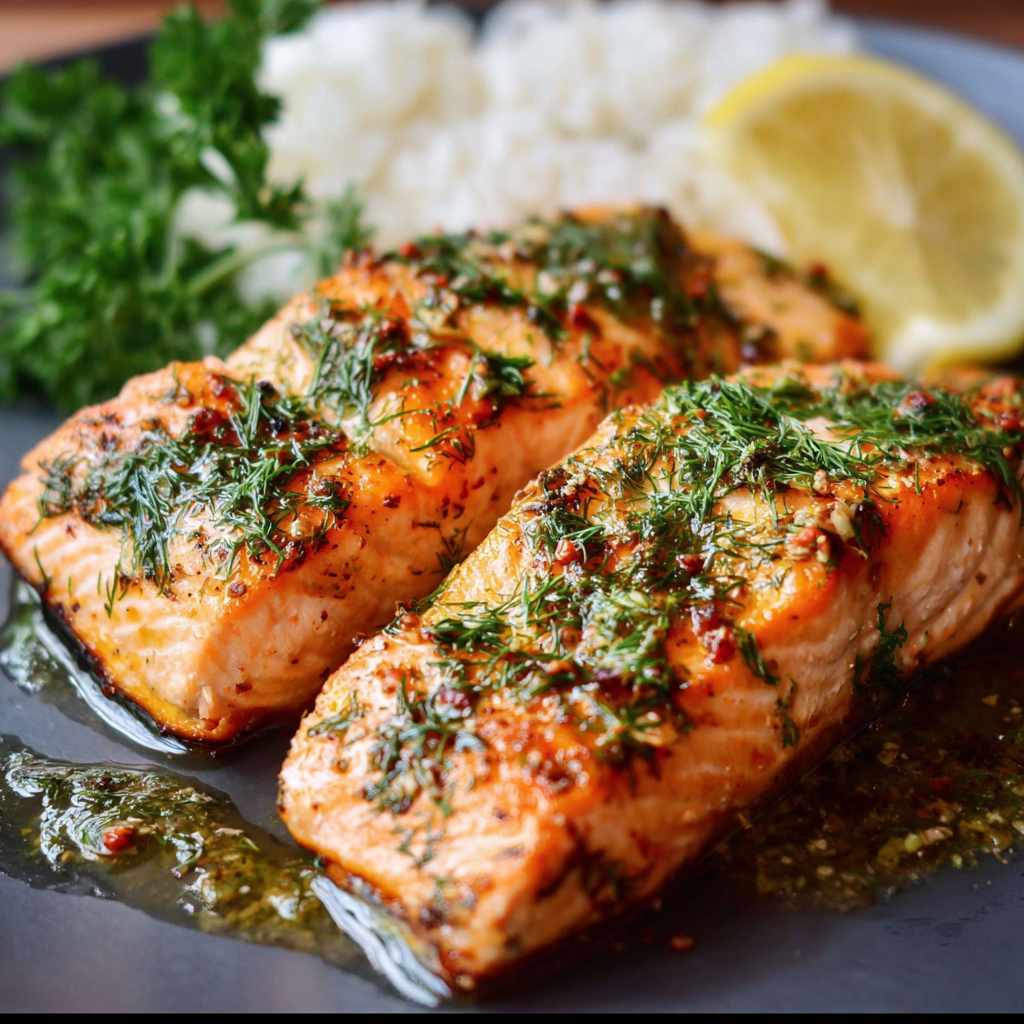
Introduction
Here is a statistic that reframes the entire conversation about weeknight cooking: the American Heart Association recommends eating fish at least twice per week for cardiovascular health, yet a 2024 survey by the Seafood Nutrition Partnership found that 67% of Americans who want to eat more fish cite “not knowing how to cook it quickly and confidently” as the primary reason they don’t. This quick baked salmon recipe is the direct answer to that gap.
Salmon is arguably the most forgiving fish in the home kitchen — it has enough natural fat to stay moist even if pulled a minute or two late, a flavor bold enough to stand up to strong seasonings, and a cook time so short that it fits into any weeknight schedule. An oven-baked fillet with a well-seasoned glaze or crust goes from refrigerator to table in under 25 minutes and delivers 40+ grams of protein, an extraordinary omega-3 contribution, and a result that competes with any restaurant salmon dish at a fraction of the price.
A 2023 meta-analysis in the New England Journal of Medicine found that regular salmon consumption — at least twice weekly — was associated with a 16% reduction in cardiovascular disease risk, driven primarily by the EPA and DHA omega-3 fatty acids found in particularly high concentrations in salmon compared to any other commonly consumed fish. This recipe makes that recommendation genuinely easy to keep.
Ingredients List
For the Salmon
- 4 salmon fillets, approximately 170–200g (6–7 oz) each, skin-on or skinless
- 1½ tbsp olive oil or avocado oil
- 1 tsp fine sea salt
- ½ tsp freshly ground black pepper
For the Garlic Herb Glaze
- 3 garlic cloves, finely minced
- 2 tbsp fresh lemon juice plus 1 tsp lemon zest
- 1 tbsp honey or maple syrup
- 1 tbsp Dijon mustard
- 1 tsp smoked paprika
- ½ tsp dried thyme or 1 tsp fresh thyme leaves
- 1 tbsp olive oil
- Pinch of cayenne pepper (optional)
For Serving
- Lemon wedges
- Fresh dill, parsley, or chives, finely chopped
- Flaky sea salt, for finishing
Timing
- Prep Time: 8 minutes
- Bake Time: 12–15 minutes
- Total Time: 20–23 minutes
Faster than any delivery order. The salmon bakes while you prepare the side dish, meaning the entire meal — protein and vegetables — can be on the table in under 25 minutes with minimal active effort.
Step-by-Step Instructions
Step 1: Prepare the Salmon
Remove the salmon from the refrigerator 10 minutes before cooking — this takes the chill off the fillet and promotes more even cooking from edge to center. Pat each fillet completely dry with paper towels. Surface moisture creates steam in the oven rather than allowing the glaze to caramelize and adhere properly to the fish. Dry fillets develop a better, stickier glaze surface and cook more evenly than wet ones.
Preheat the oven to 400°F (200°C). Line a baking sheet with foil or parchment paper and lightly brush with oil. If the fillets have skin, place them skin-side down — the skin acts as a natural barrier that protects the flesh from the direct heat of the pan and keeps the bottom moist throughout baking.
Step 2: Make the Garlic Herb Glaze
Whisk together the minced garlic, lemon juice, lemon zest, honey, Dijon mustard, smoked paprika, thyme, olive oil, and cayenne in a small bowl until smooth and emulsified. The glaze should be slightly thick and cohesive enough to coat the back of a spoon — if it seems too thin, add a touch more honey. Taste it before applying — it should be bold, tangy, slightly sweet, and garlicky. This is the primary flavor driver of the dish and deserves a moment of attention before it goes on the fish.
Step 3: Season and Glaze the Fillets
Season the salmon fillets with salt and pepper on both sides. Spoon the garlic herb glaze generously over the top surface of each fillet, using the back of the spoon to spread it evenly to the edges. Apply a thick, even layer — a thin application will cook off before developing the caramelized, sticky surface the recipe is built around.
Key tip: Reserve a small amount of the glaze to brush over the salmon immediately after baking — a second application on the hot, just-cooked fillet adds a fresh layer of flavor that the baked glaze, which becomes slightly more cooked and concentrated, does not replicate.
Step 4: Bake the Salmon
Place the glazed fillets on the prepared baking sheet and bake at 400°F (200°C) for 12–15 minutes. The precise time depends on the thickness of the fillets — as a reliable benchmark, salmon requires approximately 4–5 minutes of baking per 1cm of thickness at the thickest point. The salmon is done when it flakes easily at the thickest point when pressed gently with a fork, the glaze is caramelized and slightly darkened at the edges, and the flesh has turned from translucent to opaque throughout — or just slightly translucent at the very center for a medium-rare result.
For the most precise result, pull the salmon at an internal temperature of 125°F (52°C) for medium-rare — silky, moist, and yielding — or 130–135°F (54–57°C) for medium. The FDA safe temperature of 145°F (63°C) produces a fully cooked, flaky result that is safe for all diners including pregnant women and immunocompromised individuals.
Key tip: Salmon continues to cook from residual heat for 1–2 minutes after leaving the oven. Pull it slightly earlier than the target temperature and allow it to rest on the baking sheet — it will reach the correct temperature during the rest.
Step 5: Rest, Glaze Again, and Serve
Remove from the oven and immediately brush each fillet with the reserved glaze. Allow to rest for 3 minutes before serving — this brief rest allows the juices to redistribute and the glaze to set into a glossy, slightly sticky coating. Finish with a pinch of flaky sea salt, a scattering of fresh dill or parsley, and serve with lemon wedges alongside.
Nutritional Information
Per serving — based on 4 fillets with glaze.
| Nutrient | Per Serving | % Daily Value* |
|---|---|---|
| Calories | 365 kcal | 18% |
| Total Fat | 20g | 26% |
| Saturated Fat | 3.5g | 18% |
| Total Carbohydrates | 8g | 3% |
| Total Sugar | 5g | — |
| Protein | 40g | 80% |
| Dietary Fiber | 0.5g | 2% |
| Sodium | 520mg | 23% |
| Potassium | 920mg | 20% |
| Omega-3 (EPA + DHA) | 2.4g | — |
| Vitamin D | 70% DV | 70% |
| Vitamin B12 | 90% DV | 90% |
| Selenium | 60% DV | 60% |
*Based on a standard 2,000-calorie daily diet.
The omega-3 content — 2.4 grams of EPA and DHA per serving — exceeds the American Heart Association’s weekly recommendation of 1.8 grams in a single meal. The Vitamin D contribution of 70% of the daily recommended value makes this one of the most significant dietary sources of a nutrient that an estimated 40% of American adults are deficient in.
Healthier Alternatives
Lower sugar glaze: Replace honey with 1 teaspoon of pure maple syrup combined with ½ teaspoon of orange juice. The glaze will be slightly less sweet and marginally less sticky but retains its caramelizing properties and flavor complexity.
Herb crust variation: Replace the liquid glaze with a mixture of 3 tablespoons of finely chopped fresh herbs — dill, parsley, chives — combined with 1 tablespoon of Dijon mustard, 1 tablespoon of olive oil, and 2 tablespoons of panko breadcrumbs pressed onto the top of each fillet. The herb crust adds a satisfying textural contrast and a clean, fresh flavor profile.
Miso glaze: Replace the garlic herb glaze with a mixture of 2 tablespoons of white miso, 1 tablespoon of honey, 1 tablespoon of rice vinegar, and 1 teaspoon of sesame oil. Broil the last 2 minutes for a deeply savory, Japanese-inspired result with a notably different but equally compelling flavor profile.
Dairy-free and Whole30: The recipe is already dairy-free. For Whole30 compliance, replace honey with ½ teaspoon of fresh orange juice and ensure the Dijon mustard is Whole30-approved — most standard Dijon contains wine, which is compliant, but some varieties contain added sugar.
Lower sodium: Reduce the added salt to ½ teaspoon and use low-sodium Dijon mustard. The glaze provides sufficient flavor complexity that the sodium reduction is barely perceptible in the finished dish.
Serving Suggestions
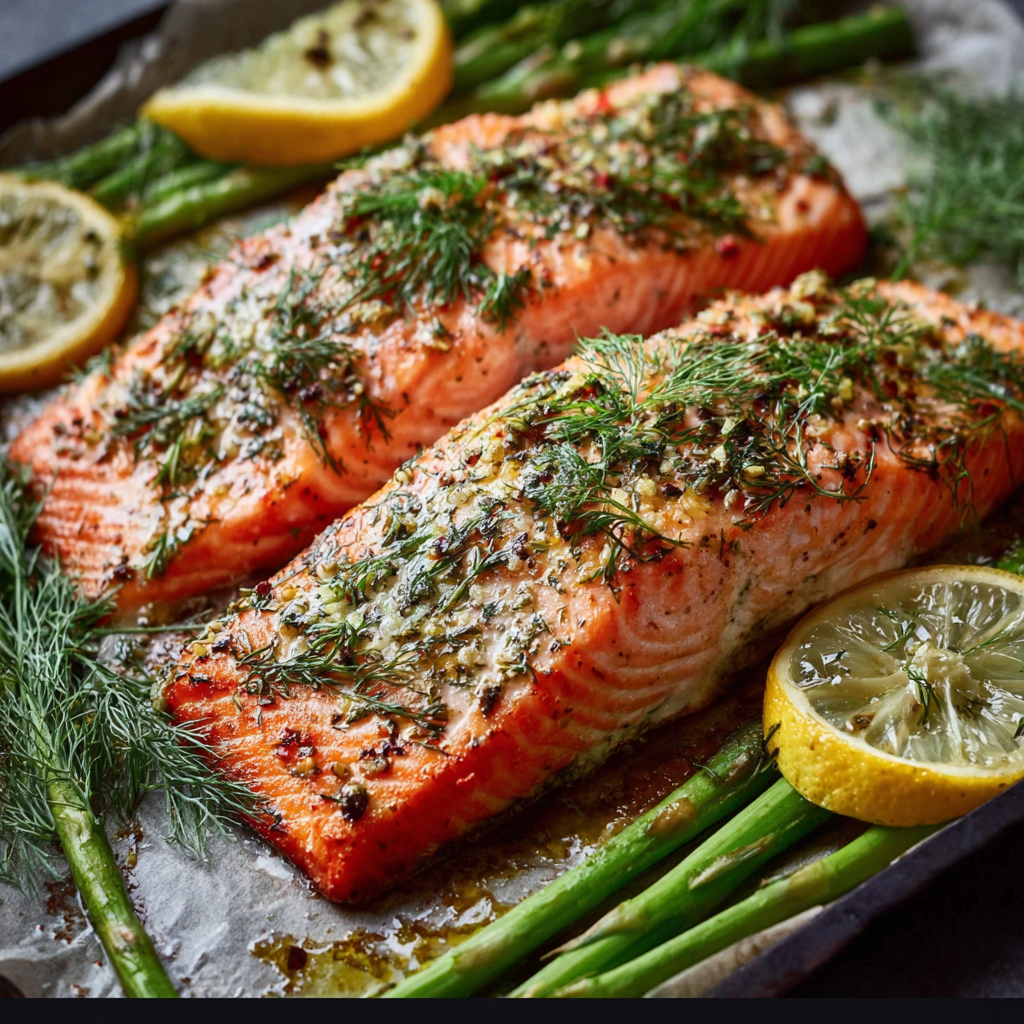
With roasted asparagus: Roast asparagus spears tossed in olive oil, salt, and lemon zest alongside the salmon on the same baking sheet — they cook in approximately the same time at the same temperature, making this a genuine one-pan dinner.
Over garlic herb rice: Serve over steamed jasmine or basmati rice finished with butter, garlic, and fresh parsley. The rice absorbs any glaze that runs from the salmon and creates a complete, deeply flavorful plate with minimal additional effort.
Mediterranean bowl: Flake the baked salmon over a bowl of couscous or quinoa with cherry tomatoes, cucumber, Kalamata olives, crumbled feta, and a drizzle of olive oil and lemon. A complete, nutritionally exceptional meal in a single bowl.
With creamy mashed potatoes: Serve alongside buttery mashed potatoes and steamed green beans for a classic, comfort-forward plate that works equally well for a casual Tuesday or an informal dinner party.
Salmon tacos: Flake the baked fillets into warm corn tortillas with shredded cabbage, sliced avocado, pickled red onion, and a chipotle lime crema. The garlic herb glaze pairs surprisingly well with the taco format and produces one of the most effortless fish taco meals achievable.
Common Mistakes to Avoid
Not drying the salmon before glazing. Wet salmon produces steam rather than caramelization, and the glaze slides off rather than adhering to the surface. Pat thoroughly dry — this takes 30 seconds and makes a visible difference in the finished appearance and flavor of the glaze.
Overcooking. Salmon is among the most forgiving fish for the home cook — until it isn’t. Overcooked salmon is chalky, dry, and significantly less flavorful than salmon pulled at the correct temperature. An instant-read thermometer eliminates all guesswork and is the single most reliable tool for consistently perfect salmon.
Skipping the rest. Three minutes of resting allows the juices to redistribute and the glaze to set. Salmon served immediately from the oven is perfectly fine — salmon rested for three minutes is noticeably better in both texture and how cleanly it portions.
Using too thin a glaze layer. A thin application of glaze cooks off completely during baking and leaves the salmon essentially unsauced. Apply generously — the glaze should be visibly thick and coating, not a thin film — and reserve some for a final post-bake application.
Baking from cold. Cold salmon placed directly from the refrigerator into a hot oven cooks unevenly — the exterior reaches the correct temperature and begins to overcook before the center has warmed through. Ten minutes at room temperature before baking produces a more even, consistent result.
Storing Tips
Refrigerator: Store cooled salmon fillets in an airtight container for up to 3 days. Cold baked salmon is excellent flaked over salads, stirred into pasta, or served in a grain bowl without reheating — the cold texture is pleasant and the flavor holds well.
Reheating: The oven at 275°F (135°C) for 10–12 minutes, covered loosely with foil, is the gentlest and most effective reheating method — it warms the salmon through without continuing to cook it. The microwave works at 50% power in 30-second intervals but risks overcooking the edges. A brief rest at room temperature for 20 minutes and serving cold or at room temperature is often the best approach for leftover salmon.
Freezer: Baked salmon can be frozen for up to 1 month, wrapped tightly in plastic wrap and then foil. Thaw overnight in the refrigerator. The texture softens slightly after freezing but remains entirely suitable for flaking into pasta, rice dishes, or salads.
Make-ahead: The garlic herb glaze can be prepared up to 5 days ahead and refrigerated in a sealed jar. On baking day, the active preparation reduces to 3 minutes — pat the fish dry, apply the glaze, and bake. One of the most efficient make-ahead strategies in any weeknight recipe repertoire.
Conclusion
Quick baked salmon proves that the healthiest dinner choice and the most delicious dinner choice are frequently the same thing. Forty grams of protein, 2.4 grams of omega-3 fatty acids, 90% of the daily Vitamin B12 requirement, and a caramelized garlic herb glaze that makes the whole kitchen smell extraordinary — in under 25 minutes, with one baking sheet, and virtually no skill requirement.
Make it this week and share your results in the comments — tell us which glaze variation you tried, what you served it alongside, and whether it convinced you to add salmon to your weekly rotation. Leave a review, share with someone who wants to cook more fish but doesn’t know where to start, and subscribe to our newsletter for more fast, nutritious, flavor-first recipes every week.
FAQs
How do I know when the salmon is done without a thermometer? Press the thickest part of the fillet gently with a fork — perfectly cooked salmon flakes into large, moist, opaque pieces with minimal resistance. Undercooked salmon resists the fork and appears translucent in the center. Overcooked salmon flakes into very small, dry pieces and feels firm. For a medium result, the very center should still appear very slightly translucent when the fillet is pressed open — it will finish cooking from residual heat during resting.
Should I bake salmon with the skin on or off? Skin-on is recommended for oven baking — the skin acts as a natural protective layer that shields the flesh from the direct heat of the pan, keeps the bottom of the fillet moist, and is easy to peel away after cooking if not desired. The skin also crisps slightly on the underside if the baking sheet is preheated before placing the fillets.
Can I use frozen salmon fillets? Yes — thaw overnight in the refrigerator for the best result. If short on time, place the sealed bag under cold running water for 20–30 minutes until thawed. Always dry frozen-thawed salmon extremely thoroughly before glazing — it retains significantly more surface moisture than fresh and requires extra attention at the drying stage.
What is the best type of salmon to use? Wild-caught sockeye salmon has the deepest flavor and the richest color, with a higher omega-3 content than farmed varieties. Atlantic farmed salmon is more widely available, consistently sized, and very forgiving to cook due to its higher fat content. King (Chinook) salmon is the most luxurious option — richest, fattiest, and most expensive. All varieties work well with this recipe; choose based on availability and budget.
Can I make this on a stovetop instead of the oven? Yes — pan-sear the glazed fillets skin-side down in a hot oven-safe skillet over medium-high heat for 3–4 minutes, then flip and cook for 2–3 minutes more. The stovetop version produces a crispier exterior but requires more attention and produces more spattering. The oven version is more hands-off and produces more even results for thicker fillets.
Can I double this recipe for a larger group? Easily — double all ingredients and use two baking sheets rather than crowding one. Space the fillets with room between each to allow heat to circulate properly. The baking time remains the same — check the thickest fillet with a thermometer rather than relying on timing alone when cooking larger quantities.