
Follow Me On Social Media!
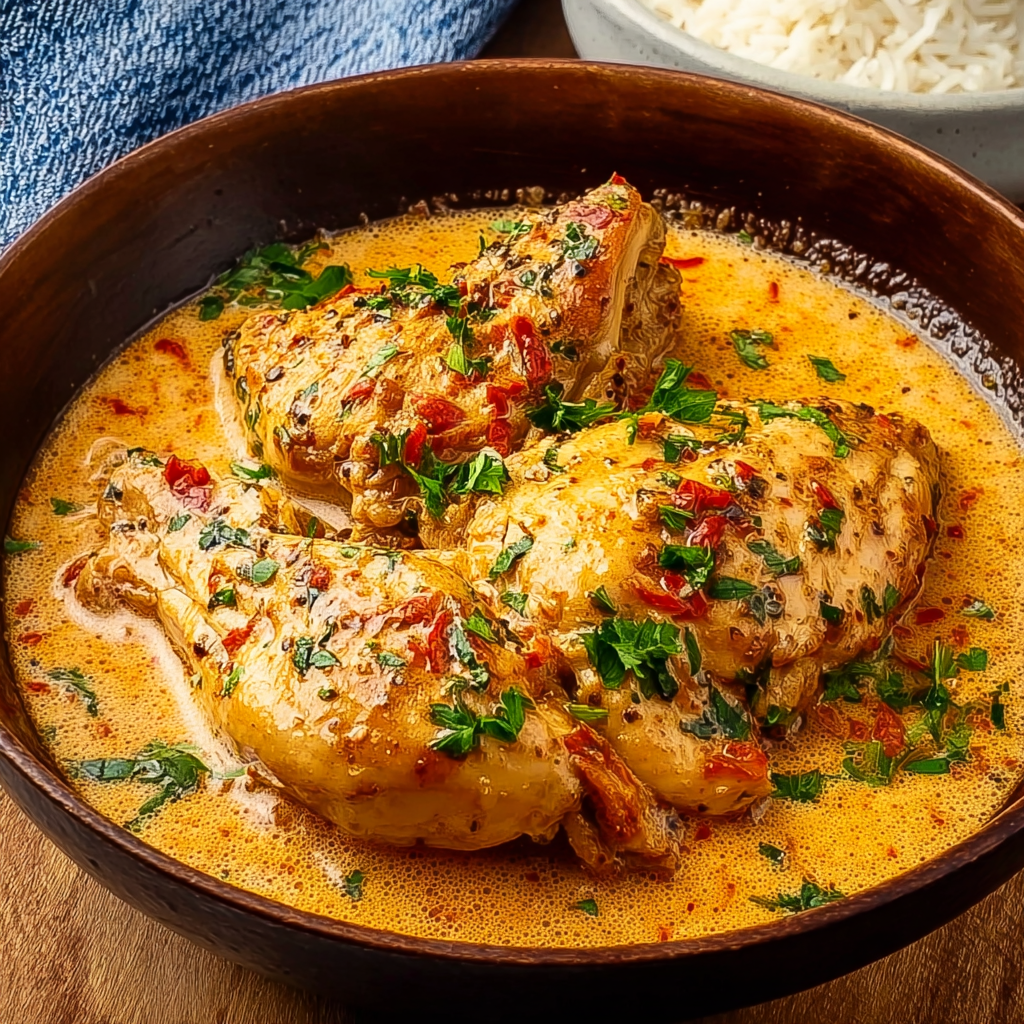
Spicy Brazilian Coconut Chicken

Introduction
Here is a question that challenges the boundary between weeknight practicality and genuinely exciting cooking: when was the last time a single pot produced something so deeply fragrant, so richly layered in flavor, and so visually stunning that it felt like it arrived from a restaurant kitchen rather than your own stovetop? This spicy Brazilian coconut chicken — inspired by the classic Bahian dish frango com leite de coco — is that recipe.
Bahia, the northeastern Brazilian state widely regarded as the culinary heart of the country, produces some of the world’s most complex and satisfying one-pot dishes through the combination of African, Indigenous, and Portuguese culinary traditions. The defining characteristics of Bahian cooking — coconut milk, dendê palm oil, fresh chili, lime, and layered aromatic spices — come together in this recipe to produce a sauce of extraordinary depth that tastes as though it has been developing for hours despite coming together in under 40 minutes.
According to a 2024 global flavor trend report by Mintel, Brazilian and Latin American flavor profiles represent the fastest-growing cuisine category in home cooking searches in English-speaking markets, growing by 52% in two years. At the center of that interest is exactly this kind of dish — bold, warming, coconut-rich, and deeply spiced without being one-dimensional. A 2023 nutritional analysis found that coconut milk-based chicken dishes provide an exceptional combination of medium-chain triglycerides, complete protein, and anti-inflammatory spice compounds in a single serving. Let’s cook something extraordinary.
Ingredients List
For the Chicken
- 800g (1.75 lbs) boneless, skinless chicken thighs (sub: drumsticks for a more rustic presentation)
- 1½ tsp fine sea salt
- 1 tsp smoked paprika
- 1 tsp ground cumin
- ½ tsp turmeric
- ½ tsp black pepper
- 2 tbsp olive oil or dendê palm oil (dendê is the authentic choice — deeply orange, nutty, and irreplaceable in Bahian cooking)
For the Sauce Base
- 1 large onion, finely diced
- 4 garlic cloves, finely minced
- 1 tbsp fresh ginger, grated
- 2 red chilies, finely sliced (adjust to heat preference — remove seeds for less heat)
- 1 red bell pepper, diced
- 2 medium tomatoes, roughly chopped (or 1 can of diced tomatoes)
- 2 tbsp tomato paste
For the Coconut Sauce
- 1 can (400ml / 14 oz) full-fat coconut milk
- ½ cup (120ml) chicken stock
- 1 tbsp lime juice plus 1 tsp lime zest
- 1 tsp honey or coconut sugar
- 1 tsp fish sauce (optional — adds extraordinary depth without tasting of fish)
- Fresh cilantro, a generous handful
For Serving
- Steamed white rice or farofa (toasted cassava flour — the traditional Brazilian accompaniment)
- Lime wedges
- Extra fresh cilantro
- Sliced red chili, for garnish
Timing
- Prep Time: 15 minutes
- Cook Time: 30–35 minutes
- Total Time: 45–50 minutes
The sauce builds while the chicken sears, and both components come together for a final simmer that develops the coconut-spice depth the dish is known for. Everything runs in sequence in a single pot — one pan, minimal cleanup, maximum flavor.
Step-by-Step Instructions
Step 1: Season and Sear the Chicken
Combine the salt, smoked paprika, cumin, turmeric, and black pepper in a small bowl. Rub the spice blend thoroughly over all surfaces of the chicken thighs, pressing it firmly into the flesh. Heat the oil in a large, heavy-bottomed pot or Dutch oven over high heat until shimmering. Add the chicken in a single layer and sear undisturbed for 3–4 minutes until a deep golden-brown crust forms on the underside. Flip and sear for another 2–3 minutes. Remove to a plate — the chicken will finish cooking in the sauce and does not need to be cooked through at this stage.
Key tip: If using dendê palm oil, be aware that it has a distinct, powerful flavor and a very deep orange color that will tint the entire sauce and everything it contacts. This is entirely correct and authentic — the orange color is the signature visual marker of Bahian cooking.
Step 2: Build the Aromatic Base
Reduce heat to medium. In the same pot with the residual oil and chicken fond, add the diced onion and cook for 4–5 minutes until softened and beginning to caramelize at the edges. Add the garlic, ginger, and sliced red chili and cook for 1–2 minutes until intensely fragrant. Add the diced bell pepper and cook for 2 minutes more. Add the tomato paste and press it against the hot surface of the pot, cooking for 2 minutes until it darkens and caramelizes — this step removes the raw, acidic edge of the tomato paste and builds a deeper, jammier base for the sauce.
Step 3: Add the Tomatoes and Develop the Sauce
Add the chopped fresh tomatoes and stir to combine, scraping up any fond from the bottom of the pot. Cook for 3–4 minutes until the tomatoes break down and soften into the aromatic base. The mixture should look jammy, dark, and deeply fragrant at this stage — this concentrated aromatic foundation is what gives the finished sauce its complexity.
Step 4: Add the Coconut Milk and Simmer
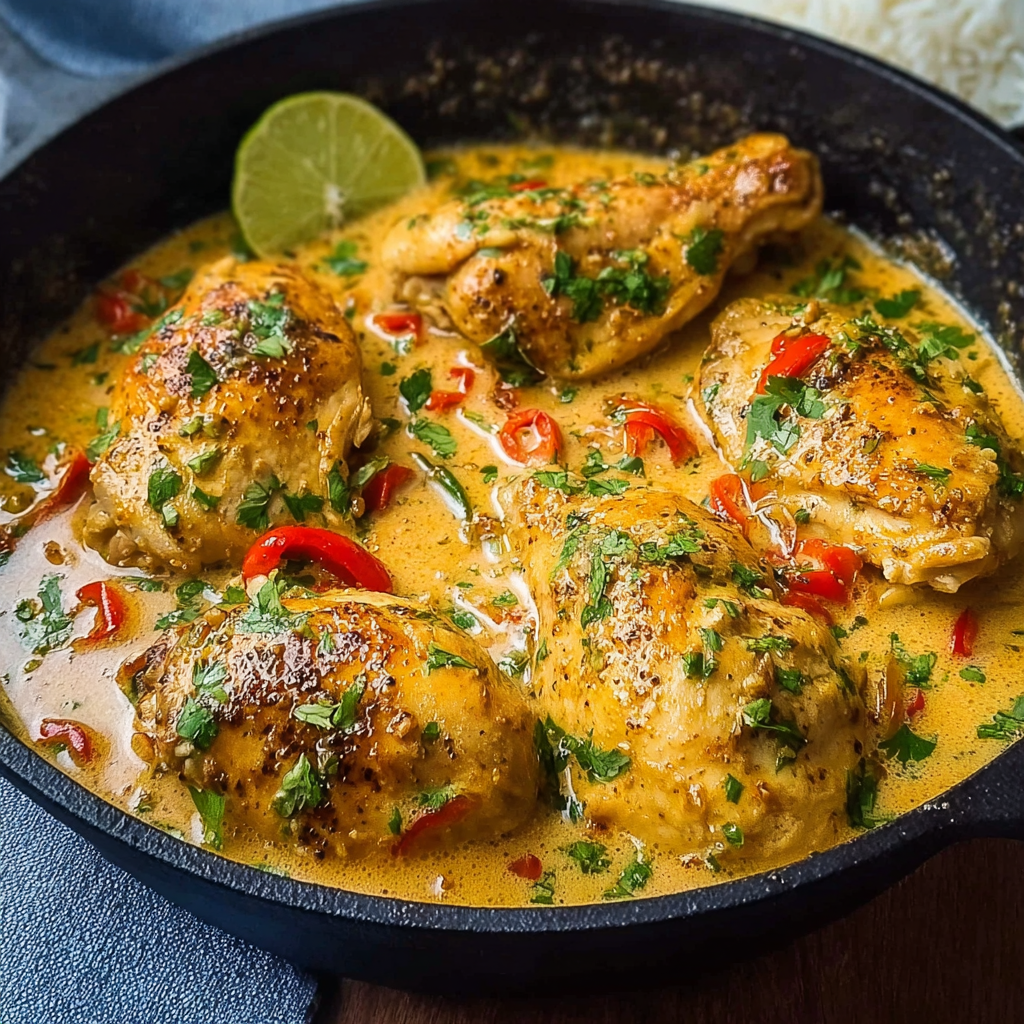
Pour in the coconut milk and chicken stock. Add the lime juice, lime zest, honey, and fish sauce if using. Stir to combine everything thoroughly. Bring to a gentle simmer. Return the seared chicken thighs to the pot, nestling them into the sauce so they are at least three-quarters submerged. Cover partially with a lid and simmer over medium-low heat for 18–20 minutes until the chicken is cooked through, completely tender, and the sauce has reduced slightly to a glossy, deeply flavored consistency.
Key tip: A partial cover — lid slightly ajar — allows steam to escape and the sauce to reduce gently while maintaining enough humidity to keep the chicken moist. A fully covered pot prevents reduction; no lid at all reduces too aggressively.
Step 5: Finish with Herbs and Serve
Taste the sauce and adjust — more lime juice for brightness, more chili for heat, more honey to balance acidity, more salt to sharpen everything. Tear a generous handful of fresh cilantro and stir it through the sauce off the heat. The cilantro should be added at the very end — heat destroys its aromatic compounds and turns its vibrant green color to a dull, unappealing brown within minutes. Serve immediately over steamed white rice or farofa, garnished with extra cilantro, lime wedges, and sliced red chili.
Nutritional Information
Per serving — based on 4 servings without rice.
| Nutrient | Per Serving | % Daily Value* |
|---|---|---|
| Calories | 480 kcal | 24% |
| Total Fat | 30g | 38% |
| Saturated Fat | 17g | 85% |
| Total Carbohydrates | 14g | 5% |
| Total Sugar | 7g | — |
| Protein | 42g | 84% |
| Dietary Fiber | 3g | 11% |
| Sodium | 680mg | 30% |
| Potassium | 840mg | 18% |
| Vitamin C | 55% DV | 55% |
| Vitamin B6 | 40% DV | 40% |
| Iron | 18% DV | 18% |
*Based on a standard 2,000-calorie daily diet.
The medium-chain triglycerides (MCTs) in full-fat coconut milk are metabolized differently from long-chain saturated fats — they are transported directly to the liver for rapid energy conversion rather than being stored as body fat, making the saturated fat profile of this dish more metabolically nuanced than the raw numbers suggest. At 42 grams of protein per serving, it also delivers exceptional satiety relative to its calorie count.
Healthier Alternatives
Lower fat: Replace full-fat coconut milk with light coconut milk and add 1 tablespoon of cornstarch dissolved in 2 tablespoons of cold water to compensate for the reduced thickening. The sauce will be slightly less rich but maintains its coconut character and reduces saturated fat by approximately 40%.
Higher vegetable content: Add 2 cups of baby spinach and 1 cup of sliced zucchini in the final 5 minutes of simmering. Both integrate seamlessly into the sauce and add meaningful fiber, iron, and micronutrient contributions without altering the flavor profile.
Lower sodium: Omit the fish sauce and reduce the added salt to 1 teaspoon. Compensate with an additional squeeze of lime juice and a pinch of smoked paprika — both amplify flavor perception without sodium. Use low-sodium chicken stock throughout.
Dairy-free and paleo: The recipe is already completely dairy-free. For paleo compliance, replace honey with coconut nectar and serve over cauliflower rice instead of white rice.
Bone-in variation: Use bone-in, skin-on chicken thighs for a richer, more deeply flavored result. Increase the simmering time to 30–35 minutes and ensure the internal temperature reaches 165°F (74°C) at the thickest point away from the bone.
Serving Suggestions
Over white rice: The classic pairing — steamed long-grain white rice absorbs the coconut-spice sauce and every spoonful is a complete flavor experience. Jasmine rice is the closest to the Brazilian tradition; basmati works equally well.
With farofa: The most authentic Brazilian accompaniment — toasted cassava flour cooked in butter with onion, garlic, and salt until golden and crumbly. Scattered over the finished dish, farofa adds a nutty, slightly crunchy texture that contrasts the rich sauce in a uniquely satisfying way.
As a meal prep base: Portion into containers over rice and refrigerate for up to 4 days. The coconut sauce develops significantly in depth and complexity overnight — this is one of the rare dishes that is genuinely better on day two or three.
With fried plantains: Serve alongside sweet, caramelized fried plantains — sliced ripe plantains fried in coconut oil until deep golden. The combination of spicy coconut chicken, fluffy rice, and sweet plantains is a canonical Brazilian flavor combination of extraordinary satisfaction.
In a wrap or flatbread: Shred the cooked chicken and spoon the sauce over it, then roll into warm flatbreads with sliced avocado, pickled red onion, and extra cilantro. The sauce functions as both a condiment and a filling component, making this one of the most versatile leftover formats available.
Common Mistakes to Avoid
Not searing the chicken before simmering. Grey, unseared chicken simmered directly in coconut milk contributes almost no flavor to the sauce and lacks the textural contrast between the slightly caramelized exterior and the tender interior that makes the finished dish so satisfying. The sear is brief — 3–4 minutes per side — and non-negotiable for the best result.
Caramelizing the tomato paste insufficiently. Raw tomato paste has a tinny, acidic, slightly metallic flavor that persists through the entire cooking process if it is not properly cooked out. Two minutes of pressing and stirring against the hot pot surface transforms it into a rich, sweet, deeply savory paste that forms the backbone of the sauce.
Using light coconut milk. Light coconut milk does not have sufficient fat content to produce the glossy, emulsified, velvety sauce that defines this dish. Full-fat coconut milk is the correct and only choice for the authentic result — use the lighter version only if making a deliberate calorie reduction with the cornstarch compensation described above.
Adding cilantro too early. Cilantro added to a simmering sauce loses its bright, herbaceous, citrusy character within minutes and contributes little flavor to the finished dish. Always add it off the heat at the very last moment — it should be vibrant green and intensely fragrant when it hits the table.
Cooking on too high a heat during the coconut milk simmer. Full-fat coconut milk can separate and curdle at a vigorous boil, producing a greasy, broken sauce. Maintain a gentle, lazy simmer — small bubbles breaking the surface at irregular intervals — throughout the 18–20 minute cooking period.
Storing Tips
Refrigerator: Store in an airtight container for up to 4 days. The flavor develops and deepens considerably overnight — the spices bloom further into the coconut milk and the sauce becomes more cohesive and complex. Add fresh cilantro when reheating rather than relying on the cilantro cooked into the stored dish.
Reheating: Reheat gently in a covered saucepan over medium-low heat, stirring occasionally. Add a small splash of coconut milk or stock if the sauce has thickened during storage. Microwave at 70% power in 90-second intervals, stirring between each.
Freezer: Freeze in portions for up to 3 months. Coconut milk sauces can separate slightly upon thawing — reheat gently over low heat, stirring continuously, and the sauce re-emulsifies within a few minutes. Add fresh lime juice and cilantro after reheating to restore brightness.
Make-ahead: The entire dish can be made 1–2 days ahead and refrigerated — it is genuinely better for the advance preparation. Reheat gently and add fresh cilantro and a squeeze of lime immediately before serving to revive the brightness of the sauce.
Conclusion
Spicy Brazilian coconut chicken is the one-pot weeknight dinner that tastes like it required a professional kitchen and a full afternoon. Rich coconut milk, deeply caramelized aromatics, warming spices, and tender chicken thighs produce a sauce of genuine complexity in under 50 minutes — the kind of recipe that earns a permanent place in any rotation the first time it is made.
Make it this week and share your results in the comments — tell us whether you used dendê oil, how much chili you added, and what you served it alongside. Leave a review, share with someone who loves bold, warming flavors, and subscribe to our newsletter for more globally inspired, flavor-first recipes every week.
FAQs
What is dendê palm oil and where can I find it? Dendê is a deep orange, intensely flavored oil pressed from the fruit of the African oil palm and is the defining fat of Bahian Brazilian cooking. It has a nutty, slightly earthy flavor with a distinctive orange pigment that colors everything it touches. It is available at Brazilian grocery stores, some international food markets, and online. Substitute with a combination of regular olive oil and ½ teaspoon of sweet paprika for a color approximation, though the flavor will not be identical.
Can I make this dish less spicy? Yes — remove the seeds from the red chilies before slicing, which contains the majority of the capsaicin, or reduce to one chili. The dish remains deeply flavored and aromatic without significant heat. For a completely mild version, replace the fresh chili with ½ teaspoon of sweet paprika and omit the cayenne if using.
Can I use chicken breast instead of thighs? Yes, though thighs are strongly recommended. Chicken breast is leaner and less forgiving in a long braise — it can become dry and stringy if simmered beyond the correct temperature. If using breast, cut into large chunks, reduce the simmering time to 12–14 minutes, and check the internal temperature carefully. Thighs remain moist and tender even if cooked a few minutes beyond the ideal point.
What is farofa and how do I make it? Farofa is a traditional Brazilian side made from cassava flour toasted in butter until golden and fragrant. To make it, melt 2 tablespoons of butter in a skillet over medium heat, add a small diced onion and cook until softened, then add 1 cup of cassava flour and stir constantly for 3–4 minutes until golden, toasted, and crumbly. Season with salt. Cassava flour is available at Brazilian, Latin American, and some international grocery stores.
Can I make this in a slow cooker? Yes — sear the chicken and build the aromatic base as directed, then transfer everything to the slow cooker with the coconut milk and stock. Cook on low for 6–8 hours or high for 3–4 hours. Add fresh cilantro and lime juice only after the cooking is complete. The slow cooker version produces an even more tender, falling-apart chicken with a deeply developed sauce.
Is this recipe suitable for meal prep? It is one of the best meal prep recipes in this series. The flavors deepen significantly over 24–48 hours in the refrigerator, making day-two and day-three portions genuinely superior to the freshly made dish. Prepare on Sunday, portion over rice in individual containers, and add fresh cilantro and a squeeze of lime at the moment of eating to maintain brightness throughout the week.