
Follow Me On Social Media!
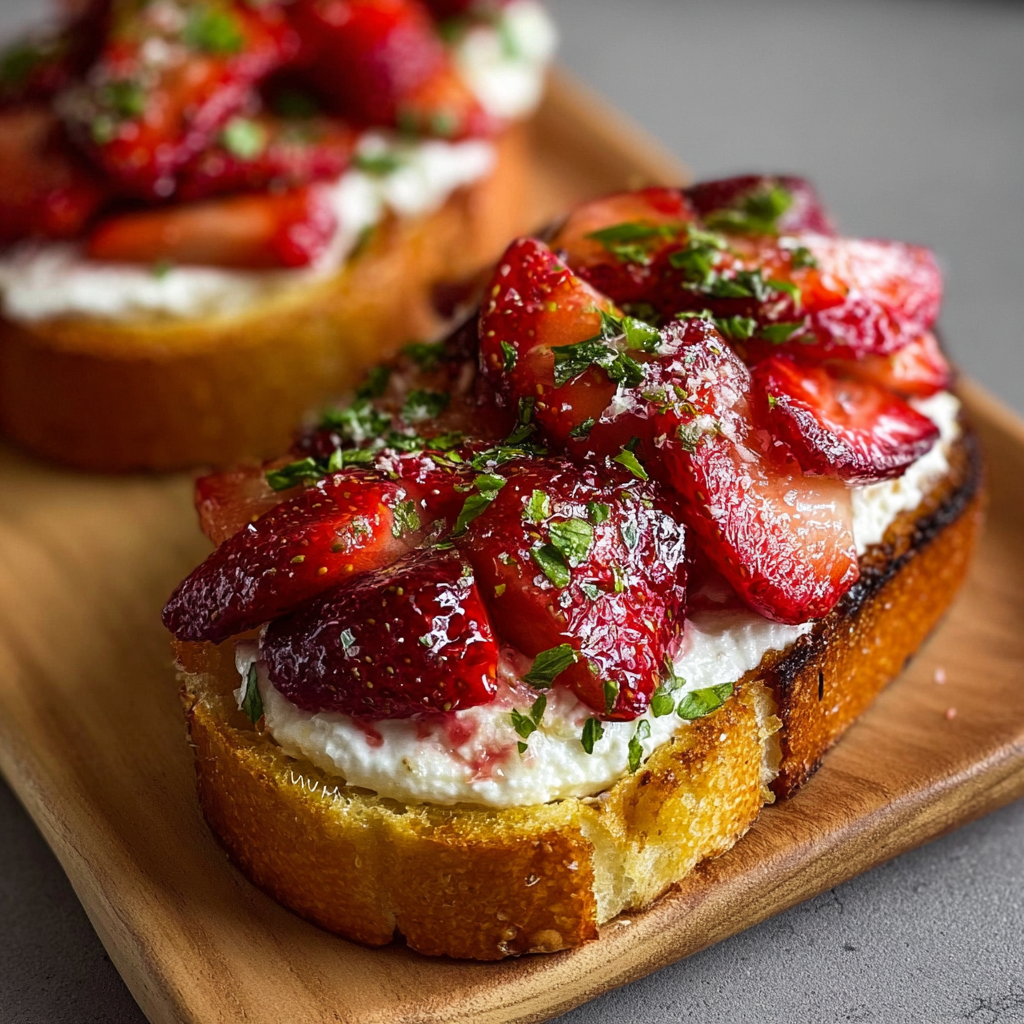
Whipped Ricotta & Roasted Strawberry Toast

Introduction
Here is a question that challenges every assumption about what breakfast or brunch can be: when was the last time something that took under 30 minutes made guests reach for their phones to photograph it before anyone touched a fork? According to a 2024 report by the Specialty Food Association, ricotta-based spreads grew by 39% in restaurant menu appearances over the past two years — driven by a consumer recognition that whipped ricotta occupies a uniquely compelling space between the richness of cream cheese, the lightness of whipped cream, and the subtle tang of good fresh dairy. This whipped ricotta and roasted strawberry toast puts that ingredient at the center of one of the most visually striking and genuinely delicious things you can make in a home kitchen in under 30 minutes.
Roasting strawberries is the technique that separates this toast from every other fruit-and-cheese combination. Raw strawberries on toast are pleasant. Roasted strawberries — collapsed, jammy, their natural sugars caramelized into a glossy, deeply concentrated syrup — are transformative. The heat drives off surface moisture and converts the fruit sugars into something richer, darker, and more complex than the fresh berry can offer, while the addition of a small amount of balsamic vinegar during roasting adds a wine-like depth that makes the strawberries taste simultaneously more like themselves and more sophisticated than they have any right to be.
A 2023 nutritional analysis published in the Journal of Agricultural and Food Chemistry found that roasting strawberries at moderate heat increases their concentration of ellagic acid — a polyphenol compound with significant antioxidant properties — by up to 30% compared to fresh strawberries, as moisture reduction concentrates the existing compounds. This toast is not just beautiful and delicious — it is measurably more nutritious than its fresh-strawberry equivalent.
Ingredients List
For the Roasted Strawberries
- 400g (14 oz) fresh strawberries, hulled and halved (frozen work well — thaw and drain first)
- 2 tbsp granulated sugar or honey
- 1 tbsp balsamic vinegar (the single most impactful optional ingredient in this recipe)
- ½ tsp pure vanilla extract
- Pinch of fine sea salt
For the Whipped Ricotta
- 250g (9 oz) full-fat ricotta (the quality of the ricotta determines the quality of everything — use the best available)
- 2 tbsp extra virgin olive oil, plus extra for finishing
- 1 tbsp fresh lemon juice
- 1 tsp lemon zest
- 1 tbsp honey
- ¼ tsp fine sea salt
- ¼ tsp freshly ground black pepper (optional — adds a sophisticated savory note)
For the Toast
- 4 thick slices of sourdough, country loaf, or brioche (1.5–2cm thick — structural integrity matters)
- 1 tbsp olive oil or butter, for grilling or toasting
For Finishing (Choose Any or All)
- Fresh basil leaves or micro basil
- Extra honey, for drizzling
- Flaky sea salt (Maldon or fleur de sel)
- Extra virgin olive oil drizzle
- Crushed pistachios or toasted pine nuts
- Fresh thyme leaves
- Freshly ground black pepper
Timing
- Roasting Time: 20–25 minutes
- Prep Time: 8 minutes (runs parallel to roasting)
- Toast Time: 3–4 minutes
- Total Time: 28–30 minutes
The roasted strawberries and the whipped ricotta can both be prepared up to 3 days ahead and refrigerated — meaning the day-of assembly takes literally 5 minutes. This make-ahead flexibility makes it one of the most practical impressive-looking brunch recipes available.
Step-by-Step Instructions
Step 1: Roast the Strawberries
Preheat the oven to 400°F (200°C). Toss the halved strawberries with sugar, balsamic vinegar, vanilla extract, and salt in a bowl until evenly coated. Spread in a single layer on a parchment-lined baking sheet — cut side up where possible, which allows the surface area to caramelize rather than steam. Do not crowd the berries — crowding creates steam and prevents the caramelization that makes roasted strawberries so dramatically better than their raw counterparts.
Roast for 20–25 minutes until the strawberries are collapsed, deeply colored, and the juices around them have thickened into a dark, glossy, jam-like syrup on the parchment. The berries should look almost overdone — this is exactly correct. Reserve every drop of the accumulated syrup — it is the most intensely flavored component of the entire dish and should be spooned over the finished toast along with the berries.
Key tip: Roasting time varies with strawberry size and ripeness. Very ripe, large strawberries may need the full 25 minutes; smaller, firmer berries may be done in 18. Watch for the syrup around the berries to thicken and the berry surfaces to develop a slightly wrinkled, jammy appearance.
Step 2: Make the Whipped Ricotta
Place the ricotta, olive oil, lemon juice, lemon zest, honey, salt, and black pepper in a food processor or blender. Process for 90 seconds — significantly longer than seems necessary — until the ricotta transforms from its natural grainy, slightly curdled texture into a completely smooth, creamy, cloud-like spread. Scrape down the sides once during processing. Taste and adjust — more lemon for brightness, more honey for sweetness, more salt to sharpen. The finished whipped ricotta should taste simultaneously rich, tangy, lightly sweet, and fresh.
Without a food processor, beat vigorously with a hand mixer or whisk for 2–3 minutes — the result will be slightly less silky but still substantially better than unwhipped ricotta in terms of spreadability and texture.
Key tip: Full-fat ricotta is essential. Part-skim or fat-free ricotta contains more whey and less fat, producing a thinner, slightly watery whipped spread that lacks the luscious, cloud-like consistency that makes this recipe so compelling.
Step 3: Grill or Toast the Bread
Brush each bread slice with olive oil or butter on both sides. Grill on a hot grill pan for 1–2 minutes per side until deep golden with char marks, or toast in a toaster until golden and crisp. The bread is structural as much as it is a flavor component — it must be toasted sufficiently to hold the weight of the ricotta and berries without becoming soggy immediately. A lightly toasted slice will be overwhelmed by the juicy roasted strawberry syrup within minutes.
Step 4: Assemble and Finish
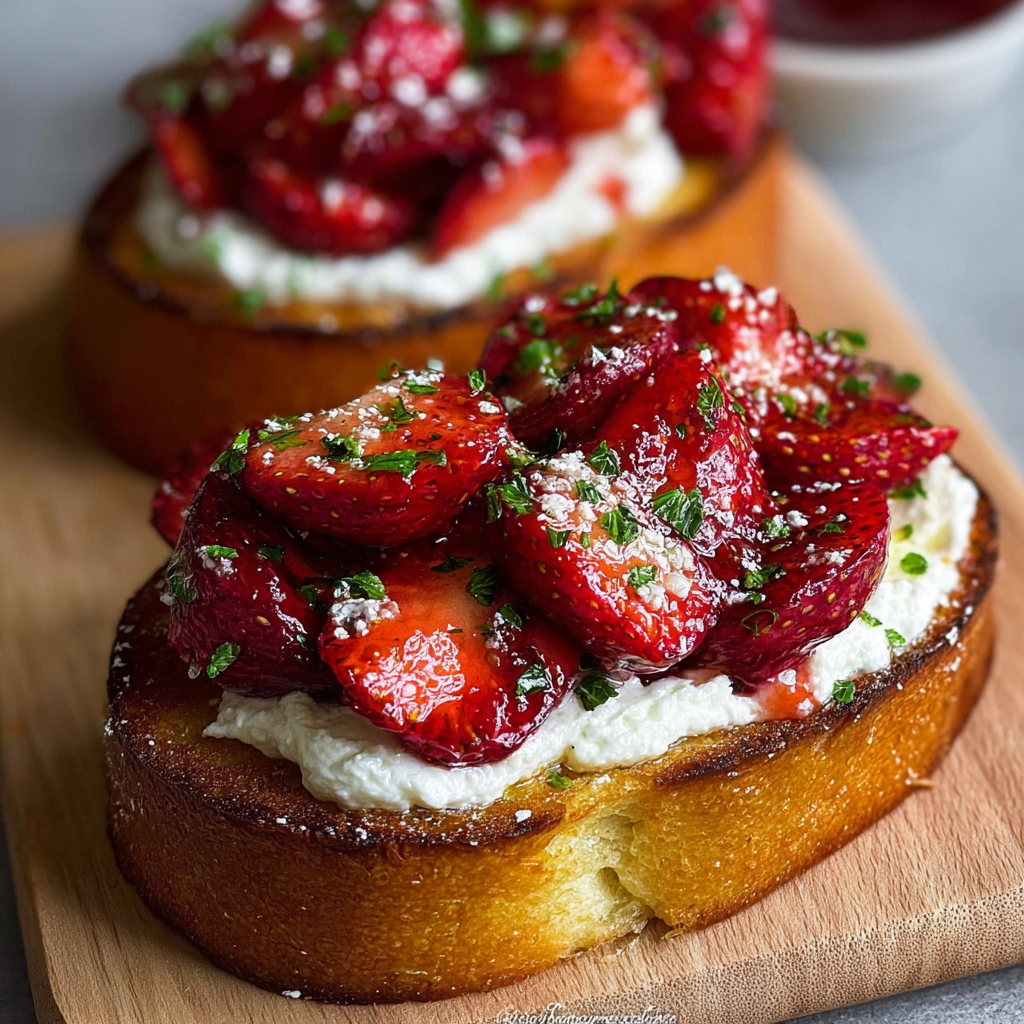
Spread a generous, thick layer of whipped ricotta — approximately 3–4 tablespoons — over each warm toast slice. Do not be conservative here; the ricotta is the base and should be visible, abundant, and cloud-like in appearance. Spoon the roasted strawberries over the ricotta, distributing them evenly and ensuring each toast gets a generous amount of the accumulated syrup. Apply the finishing touches — a drizzle of honey, a pinch of flaky sea salt, fresh basil leaves, crushed pistachios, a thin thread of olive oil, or fresh thyme — and serve immediately.
Nutritional Information
Per serving — based on 4 toasts with all components.
| Nutrient | Per Serving | % Daily Value* |
|---|---|---|
| Calories | 380 kcal | 19% |
| Total Fat | 16g | 21% |
| Saturated Fat | 6g | 30% |
| Total Carbohydrates | 48g | 17% |
| Total Sugar | 18g | — |
| Protein | 12g | 24% |
| Dietary Fiber | 3g | 11% |
| Sodium | 360mg | 16% |
| Calcium | 18% DV | 18% |
| Vitamin C | 55% DV | 55% |
| Iron | 12% DV | 12% |
| Vitamin A | 8% DV | 8% |
*Based on a standard 2,000-calorie daily diet.
The Vitamin C content — 55% of the daily recommended value — comes primarily from the strawberries and is retained effectively through the moderate roasting temperature. The calcium contribution of 18% of the daily value from the ricotta makes this a more nutritionally substantial breakfast than its elegant appearance might suggest.
Healthier Alternatives
Lower sugar: Reduce the sugar on the strawberries to 1 teaspoon and replace the honey in the ricotta with ½ teaspoon of pure stevia extract. Very ripe strawberries need minimal added sweetness and the balsamic vinegar provides sufficient complexity without sugar.
Higher protein: Add 2 tablespoons of hemp seeds sprinkled over the finished toast, and replace half the ricotta with an equal quantity of well-drained, blended cottage cheese. The protein content increases by approximately 8 grams per serving with a negligible change in texture or flavor.
Dairy-free: Replace ricotta with blended, soaked cashews — process 1 cup of soaked raw cashews with 2 tablespoons of lemon juice, 1 tablespoon of olive oil, and salt until completely smooth. The texture is remarkably similar to whipped ricotta and the flavor is rich and slightly tangy.
Gluten-free: Use a certified gluten-free sourdough or gluten-free artisan bread. Several excellent gluten-free sourdough options are now widely available that provide comparable structural integrity and flavor to conventional sourdough.
Lower calorie: Use a lighter bread — a thin slice of whole grain rather than a thick country loaf — and reduce the ricotta to 2 tablespoons per toast. The roasted strawberries are the dominant flavor component and the dish remains satisfying with a more modest ricotta application.
Serving Suggestions
Brunch centerpiece: Arrange on a large wooden board alongside a bowl of extra whipped ricotta, a jar of the roasted strawberry syrup, fresh basil, crushed pistachios, and honey. Let guests assemble their own toasts at the table — a format that makes brunch interactive, beautiful, and effortless to host.
With a fried or poached egg: Add a perfectly fried or soft-poached egg on top of the assembled toast. The runny yolk creates a rich additional sauce element that integrates with the strawberry syrup and ricotta in an unexpectedly excellent way — sweet, savory, and deeply satisfying.
As a dinner party starter: Cut each finished toast into three pieces and serve as elegant canapés before a main course of pasta or roasted chicken. The combination of roasted fruit, creamy cheese, and charred sourdough works as effortlessly as a starter as it does as a breakfast.
Dessert toast: Omit the black pepper and olive oil finish, increase the honey to 2 tablespoons, and top with a small scoop of vanilla ice cream or mascarpone alongside the roasted strawberries. The line between this as a breakfast dish and a dessert is genuinely blurred — both framings are entirely legitimate.
With prosciutto: Drape a thin slice of prosciutto over the ricotta before adding the roasted strawberries. The sweet-salty contrast of cured ham against jammy fruit and creamy cheese is one of the most reliably successful flavor combinations in Italian-inspired cooking.
Common Mistakes to Avoid
Crowding the strawberries on the baking sheet. Crowded berries steam in their own moisture rather than caramelizing in the dry oven heat. The result is stewed strawberries — soft and wet — rather than the jammy, concentrated, intensely flavored roasted version the recipe requires. A single layer with space between each berry is mandatory.
Using part-skim or low-fat ricotta. Lower-fat ricotta contains more whey and less fat, producing a thin, slightly watery spread that lacks the luscious, cloud-like consistency of full-fat ricotta. The fat is what makes whipped ricotta silky — there is no effective substitution within the dairy category.
Under-whipping the ricotta. Ricotta whipped for 30 seconds is barely different from unwhipped ricotta — grainy, slightly lumpy, and dense. Ninety seconds of continuous processing transforms the texture fundamentally. The extra time is the single most impactful variable in the ricotta component.
Under-toasting the bread. Lightly toasted bread softens and becomes soggy within minutes under the weight of the ricotta and the moisture of the roasted strawberry syrup. Toast aggressively — deep golden with grill marks or char — to create a structural base that holds up for the duration of the meal.
Not using the accumulated roasted strawberry syrup. The syrup that pools on the parchment during roasting is the most concentrated, flavorful component of the entire dish. Every drop should be scraped up and spooned over the finished toast. Leaving it behind is the equivalent of discarding the sauce from a braised dish.
Storing Tips
Roasted strawberries: Store with their syrup in a sealed jar in the refrigerator for up to 5 days. The flavor deepens and improves over the first 24–48 hours. Use as a toast topping, a yogurt or oatmeal addition, a pancake or waffle topping, or a dessert sauce throughout the week.
Whipped ricotta: Store in an airtight container in the refrigerator for up to 4 days. It will firm slightly as it chills — give it 10 minutes at room temperature and a brief stir before using. Do not freeze — the texture becomes grainy and watery after thawing.
Assembled toasts: Do not store assembled toasts — the bread softens irreversibly within 30 minutes. Assemble immediately before eating. The components are the make-ahead elements; the assembly is always done fresh.
Make-ahead strategy: Roast the strawberries and whip the ricotta up to 3 days ahead. Store both in the refrigerator. On the day of serving, toast the bread fresh and assemble in 5 minutes. This approach is ideal for entertaining — the impression of effort is disproportionate to the actual day-of work.
Conclusion
Whipped ricotta and roasted strawberry toast proves that the most visually stunning, genuinely impressive breakfast or brunch dish does not require pastry training, specialty equipment, or more than 30 minutes. Roasted strawberries that taste like concentrated summer, whipped ricotta that melts on contact, and properly toasted sourdough — three components, one technique, and a result that photographs beautifully and tastes even better than it looks.
Make it this weekend and share your results in the comments — tell us which finishing touches you used, whether you served it for breakfast or as a starter, and whether the roasted strawberries converted you from the fresh version permanently. Leave a review, share with someone who loves brunch, and subscribe to our newsletter for more fast, beautiful, flavor-forward recipes every week.
FAQs
Can I use frozen strawberries? Yes — thaw completely and drain thoroughly on paper towels before roasting. Frozen strawberries release significantly more moisture during roasting than fresh, which requires a longer roasting time of 30–35 minutes to achieve the same jammy, concentrated result. The flavor of the finished roasted berries is virtually identical to the fresh version.
What bread works best for this recipe? Sourdough is the top recommendation — its open crumb structure, slightly sour flavor, and sturdy crust hold up well under the weight and moisture of the toppings. Country loaf is equally excellent. Brioche produces a richer, more indulgent result that works particularly well for a dessert toast format. Avoid thin sandwich bread — it does not provide sufficient structural integrity for the toppings.
Can I make the whipped ricotta without a food processor? Yes — use a hand mixer on high speed for 2–3 minutes or whisk vigorously by hand for 3–4 minutes. The result will be slightly less perfectly smooth than the food processor version but still substantially more spreadable and texturally interesting than unwhipped ricotta. Warming the ricotta briefly to room temperature before whipping also helps achieve a smoother result without a machine.
Is the balsamic vinegar necessary? It is not strictly necessary but is very strongly recommended. The balsamic adds a wine-like acidity and depth that amplifies the strawberry flavor significantly — it makes the strawberries taste more intensely of strawberry while simultaneously adding complexity that the fruit alone cannot provide. A small amount of good-quality balsamic has an outsized flavor impact relative to its quantity.
Can I use other fruits instead of strawberries? Absolutely — roasted peaches, nectarines, cherries, figs, blueberries, and raspberries all work beautifully with whipped ricotta on toast. Each produces a distinctly different flavor profile. Roasted peaches with honey and thyme are a particularly excellent summer variation. Roasted figs with balsamic and walnuts produce an autumnal version of remarkable elegance.
How do I serve this for a larger group? Make the roasted strawberries and whipped ricotta in larger quantities — both scale effortlessly. Set up a self-serve toast bar with the components in bowls and jars alongside a toaster and the finishing touches in small dishes. This format is effortless to manage for groups of 6–12 and consistently produces the most enthusiastic brunch table reaction of any format.