Follow Me On Social Media!
Irresistible Salted Caramel Espresso Martini

Introduction
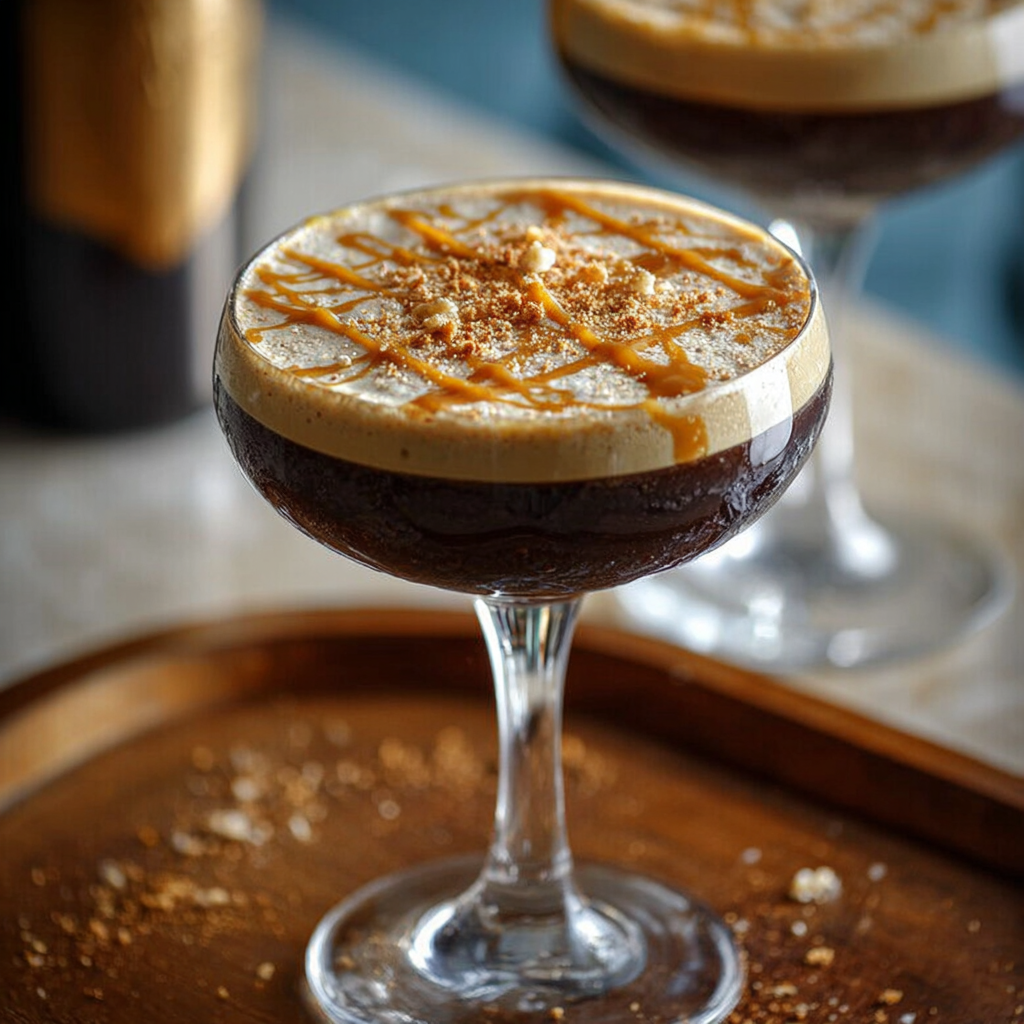
Here is a question that challenges everything you think you know about cocktail making: what if the most requested, most photographed, most consistently impressive drink you could serve at any dinner party or gathering required nothing more than a cocktail shaker, five ingredients, and five minutes? According to a 2024 report by the Distilled Spirits Council, the espresso martini has reclaimed its position as the single most ordered cocktail in bars across the United States and United Kingdom for the second consecutive year — driven by a consumer appetite for drinks that function simultaneously as a dessert, a digestif, and a caffeine delivery system. This salted caramel espresso martini takes that already-beloved formula and elevates it with a layer of complexity that the original simply does not have.
The addition of salted caramel to the classic espresso martini formula is not a novelty — it is a genuine flavor improvement. The caramel adds a buttery, toasted-sugar richness that softens the bitterness of the espresso, the salt cuts through the sweetness and amplifies every other flavor in the glass, and the result is a cocktail that tastes balanced, layered, and sophisticated in a way that the standard vodka-espresso combination rarely achieves on its own.
A 2023 consumer preference study by the Beverage Information Group found that flavor-enhanced espresso martini variants — including caramel, vanilla, and hazelnut versions — generated 40% higher satisfaction ratings than the classic version among home cocktail drinkers, driven by the perception of greater complexity and more interesting flavor development across the drink. This recipe delivers that complexity in the most practical, approachable format possible.
Ingredients List
For One Cocktail (Scale as needed)
- 50ml (1.7 oz) good-quality vodka (a clean, neutral vodka — Grey Goose, Ketel One, or Absolut)
- 30ml (1 oz) fresh espresso or very strong coffee, cooled (fresh espresso produces the best foam — do not substitute instant)
- 20ml (0.7 oz) coffee liqueur (Kahlúa is the classic choice; Mr. Black is a superior premium option)
- 20ml (0.7 oz) salted caramel syrup (store-bought or homemade — recipe below)
- Pinch of flaky sea salt (Maldon — applied directly to the foam after pouring)
Simple Homemade Salted Caramel Syrup (Makes enough for 8–10 cocktails)
- 1 cup (200g) granulated sugar
- ½ cup (120ml) water
- ½ cup (120ml) heavy cream, warmed
- 2 tbsp unsalted butter
- 1 tsp fine sea salt
- 1 tsp pure vanilla extract
For Garnish
- 3 whole espresso beans (the classic garnish — traditionally representing health, wealth, and happiness)
- A thin drizzle of caramel sauce around the inside of the glass
- Pinch of flaky sea salt on the foam
Timing
- Homemade Syrup: 12 minutes (make ahead — keeps for 2 weeks)
- Single Cocktail: 5 minutes
- Batch of 4: 8 minutes
The syrup is the only component that requires advance preparation. Made once and refrigerated, it is ready for cocktails on demand for two full weeks — meaning every subsequent cocktail takes precisely five minutes from shaker to glass.
Step-by-Step Instructions
Step 1: Make the Salted Caramel Syrup (If Making Homemade)
Combine the sugar and water in a medium saucepan over medium-high heat. Stir until the sugar dissolves, then stop stirring completely — stirring after dissolution promotes crystallization. Cook, swirling the pan occasionally, until the syrup turns a deep amber color — approximately 8–10 minutes. Remove from heat immediately and carefully pour in the warmed cream — the mixture will bubble dramatically. Stir until smooth, then add the butter, salt, and vanilla, stirring until fully incorporated. Cool completely before using or storing. Refrigerate in a sealed jar for up to 2 weeks.
Key tip: Watch the caramel closely in the final 2 minutes of cooking — the color change from light amber to perfect deep amber to burnt happens quickly and a burnt caramel is irreversibly bitter. Remove from heat the moment the color resembles a deep, rich amber and the kitchen smells of toasted sugar.
Step 2: Chill the Glass
Place the martini or coupe glass in the freezer for 3–5 minutes before making the cocktail, or fill with ice water and discard just before pouring. A properly chilled glass keeps the cocktail colder longer and significantly slows the collapse of the signature foam that defines a well-made espresso martini. A warm glass melts the foam within minutes of serving.
For an extra touch: drizzle a thin line of caramel sauce around the inside of the chilled glass before pouring — this creates a visible caramel swirl against the dark cocktail that is visually striking and adds a concentrated caramel hit with each sip.
Step 3: Combine Ingredients in the Shaker
Fill a cocktail shaker two-thirds full with ice. Add the vodka, cooled espresso, coffee liqueur, and salted caramel syrup. The order of addition is not technically critical, but adding the espresso last — directly over the other ingredients — helps it cool quickly on contact with the other cold liquids and produces a slightly better foam response during shaking.
Key tip: The espresso must be cooled before shaking — hot liquid in a sealed shaker creates pressure as steam builds, and the thermal shock of hot espresso hitting ice water produces a thin, weak foam rather than the thick, persistent, velvety foam that a well-made espresso martini is known for. Brew the espresso ahead and allow it to cool to room temperature, or pull it directly into an ice-filled vessel to cool rapidly.
Step 4: Shake Vigorously and Long
Seal the shaker and shake as hard and as fast as possible for a full 15–20 seconds — considerably longer and more vigorously than most cocktail recipes require. The espresso martini foam is produced by the rapid incorporation of air into the cold liquid under agitation — the more vigorous and sustained the shake, the thicker, denser, and more persistent the foam will be. This is not a gentle stir — it is a committed, two-handed, full-body shake.
Key tip: The outside of the shaker should be frosted and very cold to the touch after shaking — this confirms the cocktail has been sufficiently agitated and chilled. If the shaker is only slightly cool, shake for another 5 seconds.
Step 5: Double Strain and Pour
Using both the built-in strainer of the shaker and a fine mesh strainer held over the glass simultaneously — the double-strain technique — pour the cocktail in one smooth, continuous pour into the chilled glass. Pour from a moderate height of approximately 15–20cm above the glass — the distance allows the foam to separate from the liquid and settle on the surface rather than being submerged. The foam should arrive as a thick, smooth, persistent layer on top of the dark cocktail within seconds of pouring.
Step 6: Garnish and Serve
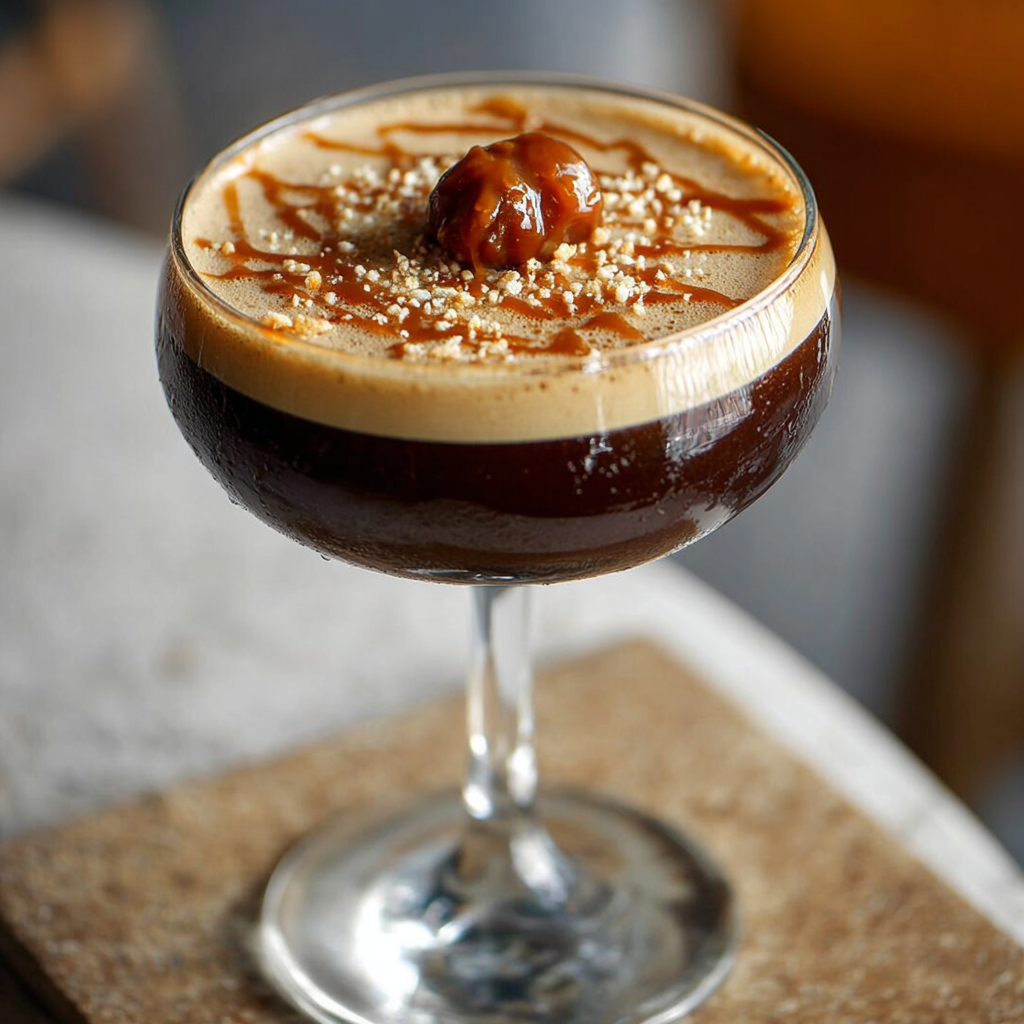
Immediately place three espresso beans in the center of the foam — they should rest on the surface without sinking, which confirms the foam is the correct density. Apply a very small pinch of flaky sea salt directly to the foam. Serve within 2 minutes — the foam begins to collapse after 3–5 minutes and the visual impact of the cocktail is maximized in the first moments after pouring.
Nutritional Information
Per cocktail — based on one serving with homemade salted caramel syrup.
| Nutrient | Per Serving | % Daily Value* |
|---|---|---|
| Calories | 265 kcal | 13% |
| Total Fat | 3g | 4% |
| Saturated Fat | 2g | 10% |
| Total Carbohydrates | 28g | 10% |
| Total Sugar | 26g | — |
| Protein | 0.5g | 1% |
| Sodium | 180mg | 8% |
| Caffeine | ~60–80mg | — |
*Based on a standard 2,000-calorie daily diet. Alcohol content approximately 14–16% ABV per serving.
At 265 calories per cocktail — comparable to a standard glass of wine — this drink sits in the moderate range for a dessert cocktail. The caffeine contribution of 60–80mg per serving is roughly equivalent to a standard shot of espresso and is worth noting for anyone consuming this in the evening.
Healthier Alternatives
Lower sugar: Replace the salted caramel syrup with a sugar-free caramel syrup — several excellent commercial options are available — and use a coffee liqueur with reduced sugar content such as Mr. Black, which contains significantly less sugar than Kahlúa. This reduces the total sugar per cocktail by approximately 60%.
Lower alcohol: Reduce the vodka to 30ml and increase the cold brew coffee to 40ml. The cocktail remains full-flavored and well-balanced with a meaningfully lower alcohol content — approximately 10% ABV.
Non-alcoholic version: Replace vodka with cold brew coffee, coffee liqueur with additional cold brew combined with 1 teaspoon of vanilla extract, and shake with the caramel syrup as directed. The foam will be less stable without the alcohol but the flavor profile is surprisingly compelling as a sophisticated non-alcoholic dessert drink.
Dairy-free caramel syrup: Replace the heavy cream in the homemade syrup with full-fat coconut cream. The resulting caramel has a subtle coconut note that integrates naturally into the cocktail without tasting overtly tropical.
Serving Suggestions
Dinner party dessert cocktail: Serve in elegant coupe glasses as the dessert course alongside a small plate of salted chocolate truffles or amaretti cookies. The combination of espresso, caramel, and a bite of chocolate is one of the most satisfying end-of-meal experiences available.
Brunch cocktail: Serve alongside a savory brunch spread as the coffee-cocktail hybrid that replaces both the Bloody Mary and the post-brunch coffee in a single elegant glass.
Batch cocktail for parties: Combine all liquid ingredients — vodka, cooled espresso, coffee liqueur, and caramel syrup — in a large pitcher without ice and refrigerate for up to 2 hours. When ready to serve, shake individual portions with ice and strain as directed. This batch approach eliminates any bar service lag at gatherings.
Caramel rim variation: Run a lime wedge around the rim of the chilled glass and dip into a mixture of fine sea salt and brown sugar before adding the caramel drizzle inside. The salted-sugar rim adds a textural and flavor element to each sip that intensifies the salted caramel character of the cocktail.
Holiday variation: Add ¼ teaspoon of ground cinnamon and a small pinch of ground nutmeg to the shaker with the other ingredients. The warm spice notes transform the cocktail into a genuinely festive, holiday-appropriate drink that feels seasonal without being clichéd.
Common Mistakes to Avoid
Using hot espresso. Hot espresso in a shaker creates pressure, produces weak foam, and delivers a warm rather than properly chilled cocktail. Always cool the espresso completely — to room temperature at minimum — before shaking.
Under-shaking. The foam does not produce itself — it requires sustained, vigorous mechanical agitation to form properly. Ten seconds of gentle shaking produces a thin, patchy, rapidly collapsing surface. Fifteen to twenty seconds of committed, hard shaking produces the thick, velvety, persistent foam the cocktail is known for.
Not chilling the glass. A warm glass compromises the temperature of the cocktail immediately on contact and melts the foam within minutes. The 3–5 minutes of glass chilling is one of the most impactful quality-of-experience steps in the entire recipe.
Skipping the double strain. A single strainer allows ice chips and fine coffee grounds through into the glass, producing a gritty, visually cloudy cocktail rather than the smooth, dark, glossy appearance the espresso martini is famous for.
Pouring too slowly. A slow pour submerges the foam into the cocktail rather than allowing it to float to the surface. One smooth, confident pour from a moderate height delivers the foam to the surface intact — hesitant pouring produces a mixed, foam-free result.
Storing Tips
Homemade salted caramel syrup: Store in a sealed glass jar in the refrigerator for up to 2 weeks. The syrup may thicken as it chills — allow to come to room temperature for 5 minutes or microwave for 10 seconds before measuring for cocktails.
Pre-batched cocktail mixture: The combined liquid ingredients — without ice — can be stored in a sealed bottle in the refrigerator for up to 24 hours. Shake individual portions with ice to order. Do not add salt or garnish until the moment of serving.
Espresso: Brew espresso up to 4 hours ahead and refrigerate in a sealed container. Beyond 4 hours, the espresso loses aromatic complexity and the foam response during shaking diminishes noticeably. Fresh espresso always produces the best foam and the most complex flavor.
The cocktail itself: Not suitable for storage — serve immediately after shaking. The foam collapses within 5 minutes and the temperature rises quickly once poured. Espresso martinis are made to order, always.
Conclusion
The salted caramel espresso martini proves that the most impressive cocktail in any gathering is not the most complicated — it is the one that looks beautiful, tastes extraordinary, and takes five minutes to make. Vodka, fresh espresso, coffee liqueur, and homemade salted caramel syrup, shaken hard and poured with confidence — a cocktail that earns its reputation every single time it is served.
Make it this weekend and share your results in the comments — tell us which vodka you used, whether you made the homemade syrup, and whether it replaced your usual after-dinner drink permanently. Leave a review, share with someone who loves espresso martinis, and subscribe to our newsletter for more fast, impressive, flavor-first recipes and cocktails every week.
FAQs
What is the best vodka for an espresso martini? A clean, neutral vodka allows the espresso and caramel flavors to remain the focus — Grey Goose, Ketel One, and Absolut are the most reliable choices in the mid-premium range. Avoid strongly flavored or heavily characterful vodkas, which compete with rather than support the other flavors. A caramel-flavored vodka can be used for an intensified caramel profile but tends to make the drink sweeter than most palates find ideal.
Why is my foam thin or non-existent? Three causes account for the majority of foam failures: espresso that was too hot when shaken, insufficient shaking duration or vigor, and espresso that was brewed too long ago and has lost its natural crema proteins. Use freshly brewed, completely cooled espresso and shake as hard and as long as possible — 15–20 full seconds — for the best foam result.
Can I use cold brew instead of espresso? Cold brew can be used but produces a less stable, thinner foam than freshly pulled espresso — the natural proteins in fresh espresso crema are the primary foam-forming agent in this cocktail. If using cold brew, use a highly concentrated variety and increase the volume to 40ml to compensate for the lower intensity. The flavor will be smoother and less bitter than the espresso version.
Can I make a large batch for a party? Yes — combine all liquid ingredients in a large pitcher or bottle without ice and refrigerate for up to 2 hours. When ready to serve, shake individual 120ml portions with a full shaker of ice for 15–20 seconds and strain as directed. This approach maintains the quality of the foam while eliminating the need to measure ingredients per cocktail throughout the evening.
Is there a non-alcoholic version that still produces foam? Yes — replace vodka with cold brew coffee and coffee liqueur with a combination of cold brew, vanilla extract, and a small amount of sugar-free chocolate syrup. The foam will be less stable but present — aquafaba (chickpea liquid) added at 10ml per cocktail improves foam stability in non-alcoholic versions significantly. Shake as vigorously as the alcoholic version.
How do I prevent the caramel from sinking to the bottom of the glass? The caramel syrup is denser than the vodka and espresso mixture and will settle if the cocktail sits undisturbed. The answer is not to prevent it but to embrace it — the slight caramel concentration at the bottom of the glass creates a more intensely sweet final sip that many drinkers consider the best part of the cocktail. If even distribution is preferred, reduce the caramel syrup to 15ml and increase slightly next time based on taste preference.