Follow Me On Social Media!
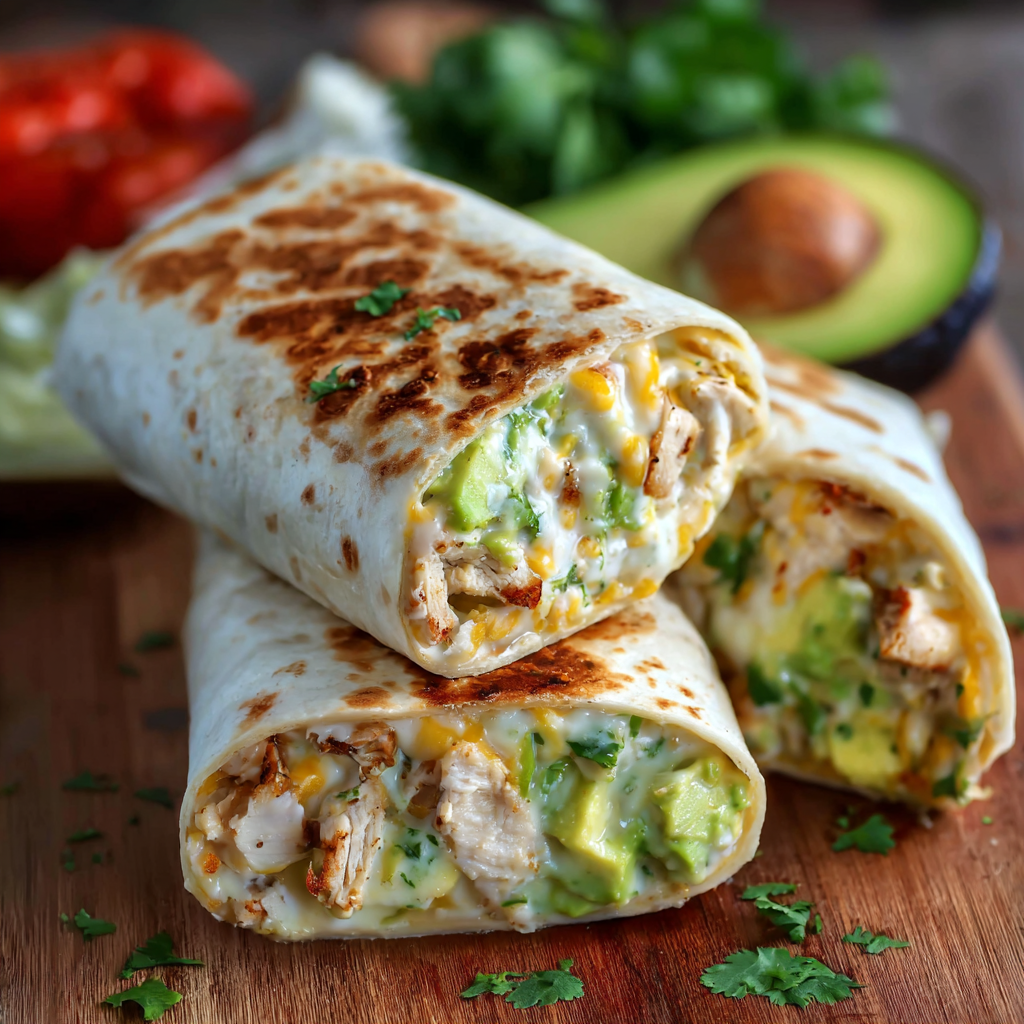
Chicken Avocado Ranch Burritos

Introduction
Here is a question worth asking the next time a weeknight dinner decision stalls into a 20-minute family negotiation: what if one recipe could simultaneously satisfy the person who wants something hearty and protein-rich, the person who wants something fresh and vegetable-forward, and the person who just wants something that tastes genuinely great without requiring a reservation or a delivery fee? According to a 2024 consumer research report by the NPD Group, burritos rank as the most ordered handheld meal across all age groups in the United States — yet fewer than 35% of households make them at home regularly, citing “not knowing how to make them as good as a restaurant” as the primary barrier. These chicken avocado ranch burritos dismantle that barrier completely.
The secret to a burrito that competes with any restaurant version is not a proprietary spice blend or a secret ingredient — it is the layering principle. Each component is seasoned and prepared individually so that every element contributes its own distinct flavor to the whole, rather than a single undifferentiated filling that tastes the same from first bite to last. The ranch element — a homemade or high-quality store-bought ranch combined with lime and fresh herbs — functions not just as a condiment but as the sauce that binds the entire burrito together, creating cohesion between the spiced chicken, creamy avocado, rice, beans, and cheese in every single bite.
A 2023 nutrition report by the Harvard T.H. Chan School of Public Health identified homemade burrito-style meals as one of the most nutritionally complete single-dish formats available — combining complete protein, complex carbohydrates, healthy fats, and fiber in a single serving — provided the components are chosen and prepared with quality ingredients rather than relying on processed fillings. This recipe does exactly that.
Ingredients List
For the Seasoned Chicken
- 600g (1.3 lbs) boneless, skinless chicken breast or thighs
- 1 tbsp olive oil
- 1 tsp smoked paprika
- 1 tsp ground cumin
- 1 tsp garlic powder
- ½ tsp onion powder
- ½ tsp chili powder
- ½ tsp fine sea salt
- ¼ tsp black pepper
- 1 tbsp fresh lime juice
For the Avocado Ranch Sauce
- 2 ripe avocados
- ½ cup (120ml) ranch dressing (high-quality store-bought or homemade)
- 2 tbsp fresh lime juice
- 1 garlic clove, finely minced
- 2 tbsp fresh cilantro, chopped (sub: flat-leaf parsley)
- ½ tsp fine sea salt
- 2–3 tbsp cold water (to adjust consistency)
For the Burrito Fillings
- 4 large flour tortillas (30cm / 12-inch — size matters for proper rolling)
- 1½ cups (280g) cooked white or brown rice, warm
- 1 can (400g) black beans, drained, rinsed, and warmed
- 1 cup (115g) shredded Monterey Jack or cheddar cheese
- 1 cup (240g) pico de gallo or fresh tomato salsa
- 1 cup (75g) shredded romaine lettuce or mixed greens
- ½ cup (120ml) sour cream
- 1 lime, cut into wedges
- Hot sauce, to taste
Timing
- Prep Time: 15 minutes
- Cook Time: 15 minutes
- Total Time: 30 minutes
Thirty minutes from cold ingredients to a fully assembled, restaurant-quality burrito. The avocado ranch sauce and the chicken cook simultaneously — sauce in the blender while the chicken sears on the stovetop — meaning both are ready at the same moment with no idle waiting time.
Step-by-Step Instructions
Step 1: Season and Cook the Chicken
Combine the smoked paprika, cumin, garlic powder, onion powder, chili powder, salt, and pepper in a small bowl. Rub the spice blend thoroughly over all surfaces of the chicken. Heat the olive oil in a large skillet over medium-high heat until shimmering. Add the chicken and cook undisturbed for 5–6 minutes until deeply golden on one side. Flip and cook for another 4–5 minutes until the internal temperature reaches 165°F (74°C). Remove from heat, squeeze lime juice over the hot chicken, and rest for 5 minutes before slicing or shredding.
Key tip: Resting the chicken before cutting is not optional — chicken sliced immediately loses significantly more juice onto the cutting board than chicken rested for 5 minutes. The lime juice squeezed over the resting chicken absorbs into the surface and adds brightness that cooked-in lime cannot replicate.
Step 2: Make the Avocado Ranch Sauce
While the chicken cooks, halve, pit, and scoop the avocados into a blender or food processor. Add the ranch dressing, lime juice, minced garlic, cilantro, and salt. Blend for 60–90 seconds until completely smooth and creamy. Add cold water one tablespoon at a time until the sauce reaches a fluid, easily spreadable consistency — thick enough to coat the back of a spoon but thin enough to spread across a tortilla without tearing it. Taste and adjust lime and salt. Transfer to a squeeze bottle or bowl.
Step 3: Warm the Tortillas
Heat each flour tortilla in a dry skillet over medium heat for 20–30 seconds per side until warm, pliable, and slightly toasted with small golden patches. Alternatively, wrap in a damp paper towel and microwave for 20 seconds. Cold tortillas tear and crack during rolling — warmth makes them flexible and cooperative. A properly warmed tortilla is the difference between a cleanly rolled, structurally sound burrito and a split, overfilled disaster.
Step 4: Assemble the Burritos
Lay a warm tortilla flat on a clean surface. Spread 2–3 tablespoons of the avocado ranch sauce across the center third of the tortilla, leaving a 3–4cm border on all sides. Layer in this order — rice, black beans, sliced or shredded chicken, shredded cheese, pico de gallo, sour cream, and romaine lettuce. The order of layering is deliberate: dense, warm ingredients at the base allow the cheese to melt slightly from the heat, while cool, fresh ingredients on top maintain their temperature and texture until the moment of eating.
Key tip: The most common burrito assembly mistake is overfilling. Each component should be a modest, restrained amount — the total filling should occupy no more than one-third of the tortilla’s surface area. A tight, properly filled burrito is far more satisfying to eat than a loosely wrapped, overfilled one that falls apart at the first bite.
Step 5: Roll the Burritos
Fold the two short sides of the tortilla inward over the filling. Starting from the edge closest to you, roll the tortilla away from you firmly and tightly, tucking the filling with your fingers as you roll. The roll should be firm enough that the burrito holds its shape without being squeezed so tightly that the filling pushes out the ends. For a toasted exterior, place the finished burrito seam-side down in the hot skillet for 1–2 minutes per side until the exterior is golden and lightly crispy — this seals the seam and adds a textural element that makes the burrito noticeably more satisfying.
Step 6: Serve
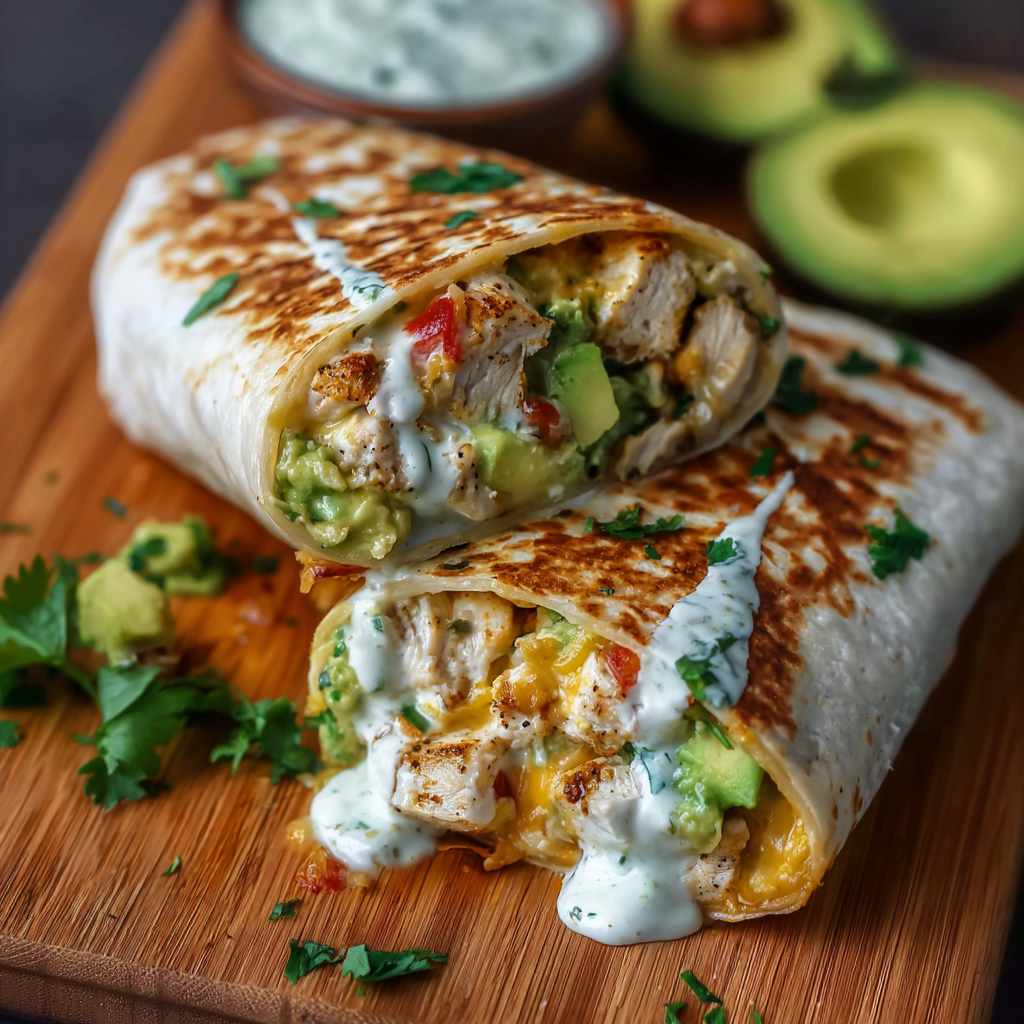
Slice each burrito in half on a diagonal — the cross-section reveals the layered interior and makes the burrito easier to eat. Serve with extra avocado ranch sauce for dipping, lime wedges, and hot sauce alongside.
Nutritional Information
Per serving — based on 4 burritos with all fillings.
| Nutrient | Per Serving | % Daily Value* |
|---|---|---|
| Calories | 720 kcal | 36% |
| Total Fat | 32g | 41% |
| Saturated Fat | 10g | 50% |
| Total Carbohydrates | 72g | 26% |
| Total Sugar | 5g | — |
| Protein | 44g | 88% |
| Dietary Fiber | 11g | 39% |
| Sodium | 980mg | 43% |
| Potassium | 1,020mg | 22% |
| Vitamin C | 25% DV | 25% |
| Vitamin A | 20% DV | 20% |
| Iron | 25% DV | 25% |
*Based on a standard 2,000-calorie daily diet.
At 44 grams of protein and 11 grams of fiber per burrito, this is one of the most nutritionally complete single-dish meals in this recipe series. The fiber content — 39% of the daily recommended value — comes from the combination of black beans, avocado, and whole grain rice (if used), and supports the sustained satiety that makes this format a particularly effective meal for managing hunger between meals.
Healthier Alternatives
Lower carbohydrate: Replace the flour tortilla with a large lettuce wrap — two overlapping leaves of iceberg or butter lettuce — and reduce the rice to ½ cup. This reduces total carbohydrates by approximately 45g per serving while maintaining the full protein and vegetable content of the original.
Higher fiber: Use whole wheat tortillas and brown rice in place of their refined counterparts. These two substitutions increase the total dietary fiber per serving by approximately 4–5 grams with a minimal flavor difference.
Lower sodium: Use no-salt-added canned black beans, reduce the seasoning salt in the chicken by half, and use a low-sodium ranch dressing. These three changes reduce the sodium per serving by approximately 30–35%.
Dairy-free: Replace sour cream with coconut yogurt and use a dairy-free ranch dressing — several excellent plant-based options are now widely available. Omit the cheese or replace with a plant-based cheddar alternative.
Vegan: Replace chicken with 2 cans of seasoned, pan-crisped chickpeas or a block of pressed, cubed, and spiced extra-firm tofu roasted at 425°F (220°C) for 25 minutes. Use dairy-free ranch, omit sour cream and cheese or use plant-based alternatives. The avocado ranch sauce remains identical.
Serving Suggestions
Family build-your-own burrito bar: Set all components in individual bowls at the center of the table and let everyone assemble their own. This format is ideal for families with different preferences — children can choose their fillings, adults can add hot sauce and extra ranch, and nobody negotiates. A large bowl of tortilla chips and extra salsa rounds out the spread.
Burrito bowl format: Skip the tortilla and serve all components layered in a wide bowl — rice base, beans, chicken, avocado ranch sauce drizzled over the top, pico de gallo, sour cream, and fresh lettuce. A lower-carbohydrate, utensil-required format that is equally satisfying and significantly easier to meal prep.
Meal prep wraps: Assemble fully, wrap tightly in foil, and refrigerate for up to 3 days. Reheat in a 350°F (175°C) oven for 15 minutes or in a skillet over medium heat, turning occasionally. The foil wrapping steams the interior while the direct heat crisps the exterior — a reheating method that produces a result close to the freshly made version.
With tortilla soup: Serve half a burrito alongside a bowl of simple tortilla soup — chicken broth, diced tomato, corn, black beans, and tortilla strips. The combination is a complete, deeply satisfying meal that balances the richness of the burrito with something lighter and brothy.
Common Mistakes to Avoid
Overfilling. The most universal burrito mistake. Filling that covers more than one-third of the tortilla surface cannot be rolled without splitting the tortilla or pushing filling out the ends. Less filling, rolled tightly, produces a better burrito than more filling rolled loosely — every time.
Using cold tortillas. Cold flour tortillas crack and tear during rolling. Twenty seconds of warmth in a dry skillet or microwave is all that is required to make them pliable — it is a 20-second investment with a significant structural payoff.
Not resting the chicken. Sliced immediately, chicken loses a visible amount of juice onto the cutting board and arrives in the burrito drier than it should be. Five minutes of resting is the entire margin between dry chicken and juicy chicken in a burrito.
Adding the avocado ranch too generously to the tortilla base. An over-sauced burrito base makes the tortilla wet and structurally weak, causing it to tear during rolling and become soggy within minutes. Two to three tablespoons spread in a controlled layer provides sufficient sauce without compromising the tortilla.
Rolling loosely. A loosely rolled burrito falls apart during eating and does not hold its shape for more than a few bites. Roll firmly, from the closest edge, tucking the filling with your fingers as you go. The finished burrito should feel dense and solid in the hand — not tight enough to squeeze filling out the ends, but firm enough to require a confident bite.
Storing Tips
Refrigerator: Wrap assembled burritos individually in foil and refrigerate for up to 3 days. The tortilla softens slightly during storage — the toasted exterior reheating method restores most of the original texture and is strongly preferred over microwave reheating for stored burritos.
Reheating: Place foil-wrapped burritos in a 350°F (175°C) oven for 15 minutes, unwrap for the final 3 minutes to re-crisp the exterior. Alternatively, reheat in a dry skillet over medium heat, turning every 2 minutes, until heated through and the exterior is golden.
Freezer: Assemble burritos without the lettuce, sour cream, and fresh pico de gallo — ingredients that do not freeze well. Wrap tightly in plastic wrap then foil and freeze for up to 2 months. Thaw overnight in the refrigerator and reheat as directed above, adding the fresh ingredients after reheating.
Component storage: Store the avocado ranch sauce with plastic wrap pressed directly onto the surface to prevent browning — it keeps for up to 2 days. The cooked chicken stores for up to 4 days refrigerated and is excellent used in salads, grain bowls, or tacos throughout the week.
Conclusion
Chicken avocado ranch burritos prove that the best version of a restaurant favorite is almost always the homemade one — more protein, better ingredients, completely customizable, and on the table in 30 minutes for a fraction of the cost. One recipe, four burritos, and a level of weeknight dinner satisfaction that justifies adding this to permanent rotation immediately.
Make them this week and share your results in the comments — tell us how you rolled yours, which hot sauce you chose, and whether the avocado ranch sauce earned its place as the standout component. Leave a review, share with someone who needs a better weeknight dinner option, and subscribe to our newsletter for more fast, flavor-first, family-friendly recipes every week.
FAQs
What size tortilla do I need for a proper burrito? A 30cm (12-inch) flour tortilla is the minimum size for a properly rollable burrito with adequate filling. Smaller tortillas produce either an under-filled burrito or one that cannot be fully closed. Most supermarkets stock “burrito-size” tortillas explicitly — look for this labeling rather than standard or fajita-size, which are typically 20–25cm and insufficient for the intended filling quantity.
Can I use rotisserie chicken to save time? Absolutely — shred approximately 3 cups of rotisserie chicken and toss with the spice blend and lime juice in a warm skillet for 2–3 minutes. This reduces total preparation time to under 15 minutes and produces a result that is nearly identical to the freshly cooked version. Rotisserie chicken is one of the most effective time-saving shortcuts in this entire recipe series.
How do I keep the avocado ranch from browning? Press plastic wrap directly onto the surface of the sauce, eliminating any air gap, and refrigerate immediately. The lime juice in the sauce acts as an antioxidant that significantly slows browning — the sauce stays vibrant green for up to 24 hours when stored correctly. Beyond 24 hours, some surface discoloration is normal and the flavor remains excellent.
Can I make the burritos ahead for meal prep? Yes — assemble without the lettuce and sour cream, wrap tightly in foil, and refrigerate for up to 3 days. Reheat as directed and add the fresh lettuce and a fresh dollop of sour cream after reheating. This approach produces a meal prep burrito that requires virtually no day-of preparation while maintaining the quality of the fresh components.
What can I substitute for ranch dressing? Sour cream thinned with lime juice and garlic makes an excellent simpler substitute. A combination of mayonnaise, buttermilk, garlic powder, onion powder, and dill produces a very close homemade ranch approximation. Greek yogurt thinned with lime juice and seasoned with garlic, dill, and chives produces a higher-protein, lower-fat alternative with a tangier flavor that works very well with the avocado.
Is this recipe suitable for children? It is one of the most reliably well-received family dinner recipes in this series. For younger children or sensitive palates, reduce the chili powder in the chicken seasoning to ¼ teaspoon, use a mild pico de gallo, and omit hot sauce from the assembly. The avocado ranch sauce is mild, creamy, and broadly appealing to children — it is frequently the component that generates the most enthusiasm at the table regardless of age.