Follow Me On Social Media!
Tiramisu Crinkle Cookies That Melt in Your Mouth

Introduction
Here is a question that deserves serious consideration the next time you are planning a bake sale, a holiday cookie exchange, or simply a Tuesday afternoon that could use improvement: what if a single cookie could deliver every flavor note of a classic Italian tiramisu — the espresso intensity, the mascarpone richness, the cocoa finish — in a format that fits in one hand, requires no refrigeration, no ladyfingers, no assembly, and produces a result so texturally extraordinary that people ask what is in them before they have swallowed the first bite? According to a 2024 baking trend report by King Arthur Baking Company, flavor-hybrid cookies — single cookies that capture the complete flavor profile of a more complex dessert — represent the fastest-growing subcategory in home baking, growing by 47% in recipe searches over the past two years. These tiramisu crinkle cookies are among the finest examples of that format.
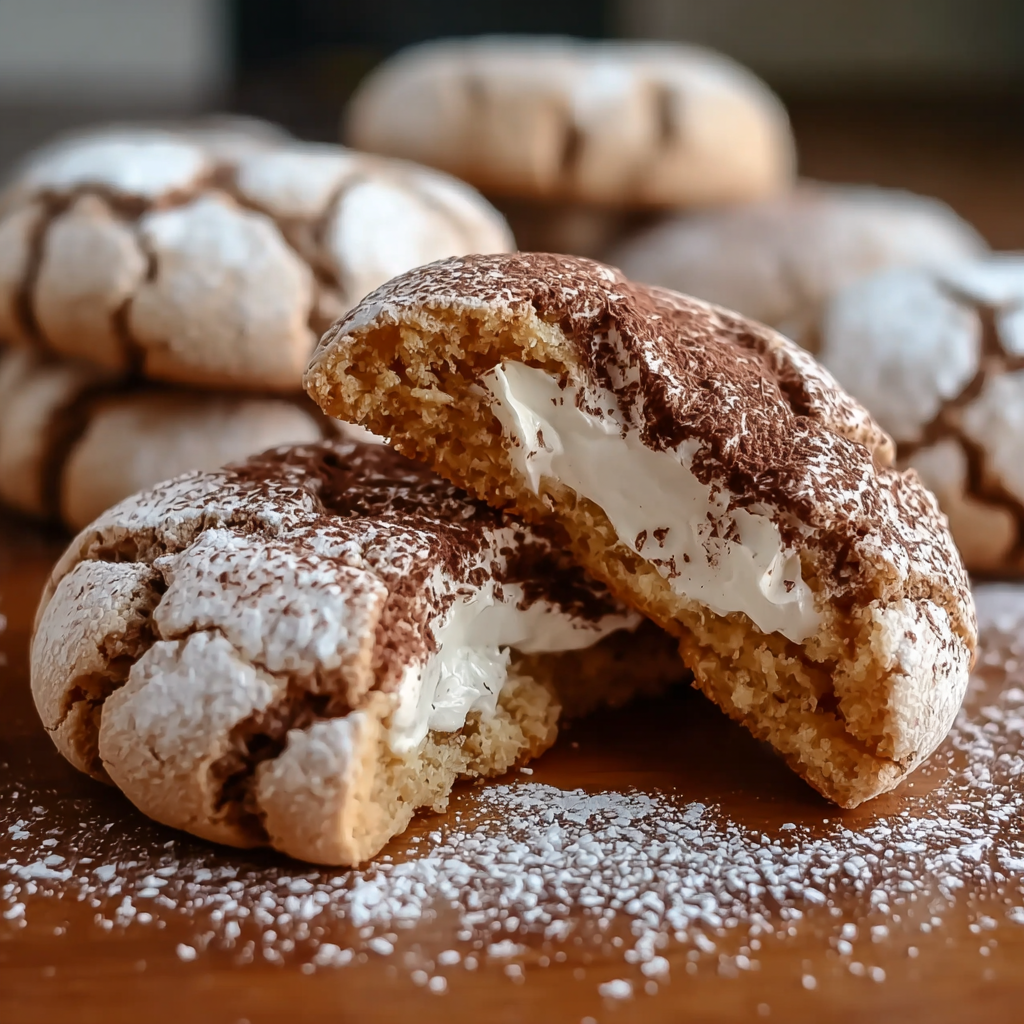
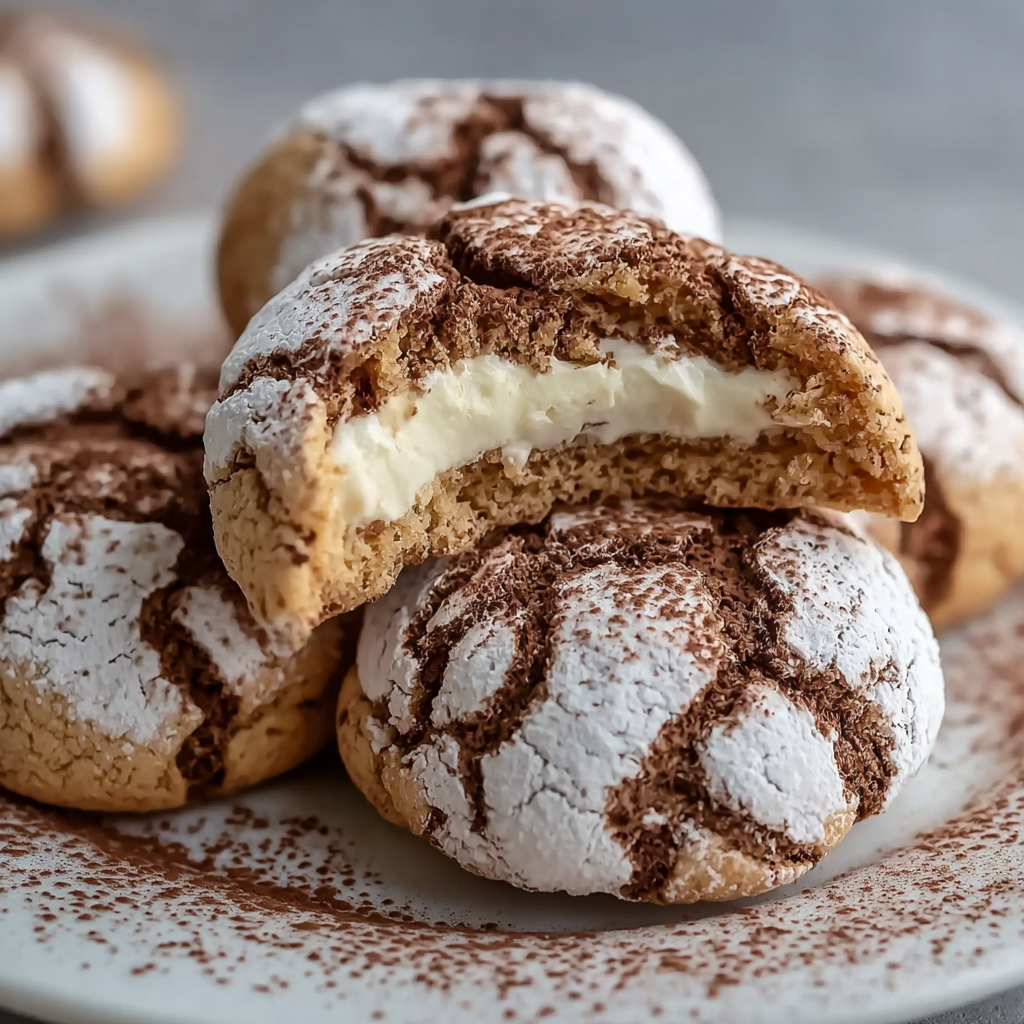
The crinkle cookie is a format built on a specific technical principle: a dough enriched with enough fat and sugar to produce a dense, fudgy, almost brownie-like interior, rolled in powdered sugar before baking, which melts and cracks as the cookie spreads in the oven — creating the signature white-dusted, deeply crinkled surface that gives the format its name. Applied to a tiramisu flavor profile — espresso-forward, mascarpone-enriched, cocoa-dusted — the result is a cookie with a shatteringly thin powdered sugar exterior, a dense, moist, almost truffle-like interior, and a flavor complexity that far exceeds the effort involved.
A 2023 food science study at the Culinary Institute of America identified the combination of espresso compounds and cocoa flavanols as one of the most synergistic flavor pairings in baking — the bitter, roasted notes of espresso amplify the chocolate character of cocoa by up to 35%, making both taste more intense and complex than either would alone. This recipe builds deliberately on that synergy.
Ingredients List
For the Cookie Dough
- 1¾ cups (210g) all-purpose flour
- ¼ cup (25g) unsweetened cocoa powder, sifted (Dutch-process for deepest flavor)
- 1½ tsp baking powder
- ¼ tsp fine sea salt
- 115g (½ cup / 1 stick) unsalted butter, softened
- 115g (4 oz) mascarpone cheese, room temperature (the non-negotiable ingredient — do not substitute)
- 1 cup (200g) granulated sugar
- 2 large eggs, room temperature
- 2 tsp pure vanilla extract
- 2 tbsp instant espresso powder (not instant coffee — espresso powder has a more concentrated, less bitter flavor)
- 1 tbsp coffee liqueur (Kahlúa or Mr. Black — optional but adds authentic tiramisu depth)
For Rolling
- ½ cup (60g) powdered sugar, sifted
For Finishing (Optional)
- Additional cocoa powder dusted over the top after baking
- Flaky sea salt, a very small pinch per cookie
Timing
- Prep Time: 20 minutes
- Chilling Time: 1 hour minimum (2 hours preferred)
- Bake Time: 11–13 minutes per batch
- Total Time: approximately 90 minutes (mostly chilling)
The chilling period is the only waiting involved — and it is non-negotiable. Chilled dough holds its shape during rolling, produces a more dramatic crinkle pattern as the cold surface cracks against the oven heat, and develops a deeper, more cohesive flavor as the espresso and cocoa bloom into the fat. The active hands-on time is under 25 minutes.
Step-by-Step Instructions
Step 1: Dissolve the Espresso
In a small bowl, combine the instant espresso powder with the coffee liqueur if using, or with 1 tablespoon of warm water if not. Stir until completely dissolved into a smooth, dark, intensely fragrant liquid. Dissolving the espresso before adding it to the dough ensures it distributes evenly throughout every cookie rather than creating concentrated pockets of bitterness where undissolved granules have settled.
Step 2: Cream the Butter, Mascarpone, and Sugar
Beat the softened butter and room temperature mascarpone together on medium speed for 2 full minutes until completely smooth with no visible lumps of either — the mascarpone should be fully incorporated into the butter rather than remaining as distinct white streaks. Add the granulated sugar and beat for another 2–3 minutes until the mixture is light, fluffy, and pale. The extended creaming time incorporates air that provides structure and lift during baking, contributing to the crinkle formation.
Key tip: Mascarpone that is too cold will not cream smoothly with the butter and will create a lumpy dough that produces uneven cookies. Remove it from the refrigerator at least 30 minutes before beginning — alongside the butter — to ensure both are genuinely at room temperature.
Step 3: Add Eggs, Vanilla, and Espresso
Add the eggs one at a time, beating well after each addition until fully incorporated. Add the vanilla extract and the dissolved espresso mixture and beat until evenly combined. The dough will appear smooth, slightly glossy, and noticeably darker from the espresso at this stage.
Step 4: Add the Dry Ingredients
In a separate bowl, whisk together the flour, sifted cocoa powder, baking powder, and salt. Add the dry ingredients to the wet mixture in two additions, mixing on low speed after each addition until just combined. Stop mixing the moment no dry streaks remain — overworking the dough develops gluten and produces a tough, bready cookie rather than the tender, fudgy interior the recipe is designed around. The finished dough will be soft, slightly sticky, and fragrant with espresso and cocoa.
Step 5: Chill the Dough
Cover the dough with plastic wrap pressed directly onto the surface and refrigerate for a minimum of 1 hour — 2 hours preferred, and overnight produces the best flavor development of all. Cold dough is essential for three reasons: it firms sufficiently to be rolled into balls without sticking, it produces a more pronounced crinkle as the cold surface cracks against the oven heat, and the resting period allows the espresso and cocoa to fully bloom into the fat and flour, producing a deeper, more cohesive flavor throughout.
Step 6: Roll in Powdered Sugar
Preheat the oven to 350°F (175°C). Line two baking sheets with parchment paper. Place the sifted powdered sugar in a shallow bowl. Using a medium cookie scoop or two tablespoons, portion the cold dough into balls of approximately 25–30g each. Roll each ball between your palms until smooth, then drop into the powdered sugar and roll to coat completely and generously — far more generously than seems necessary. The powdered sugar coating should be thick and white, with no visible dough showing through.
Key tip: The key to dramatic, clearly defined crinkles is a very generous powdered sugar coating — not a light dusting. A thin coating melts into the cookie during baking and produces faint, barely visible cracks rather than the bold, high-contrast crinkle pattern the cookie is known for. Roll, then roll again, then add one more roll.
Step 7: Bake
Place the coated dough balls on the prepared baking sheet, spacing 5cm (2 inches) apart. Bake at 350°F (175°C) for 11–13 minutes. The cookies are done when the powdered sugar surface has cracked dramatically into bold, dark-edged crinkles, the edges are just set, and the center still appears slightly underdone and soft. The cookies will look almost alarmingly underdone at the correct pull time — this is intentional. They will firm to a perfect fudgy, melt-in-the-mouth texture as they cool, and cookies pulled when they appear fully done will be dry and hard once cooled.
Step 8: Cool and Finish
Allow the cookies to cool on the baking sheet for 5 minutes before transferring to a wire rack — they are fragile while warm. Once fully cooled, dust lightly with additional cocoa powder through a fine mesh sieve for the authentic tiramisu visual finish and a final bitter cocoa note. Add a very small pinch of flaky sea salt to each cookie if using.
Nutritional Information
Per serving — based on 1 cookie from a batch of 22.
| Nutrient | Per Serving | % Daily Value* |
|---|---|---|
| Calories | 130 kcal | 7% |
| Total Fat | 6g | 8% |
| Saturated Fat | 3.5g | 18% |
| Total Carbohydrates | 18g | 7% |
| Total Sugar | 11g | — |
| Protein | 2g | 4% |
| Dietary Fiber | 0.5g | 2% |
| Sodium | 55mg | 2% |
| Calcium | 2% DV | 2% |
| Iron | 4% DV | 4% |
*Based on a standard 2,000-calorie daily diet.
At 130 calories per cookie with a genuinely satisfying flavor density — the espresso and cocoa combination produces a strong flavor impression at a relatively modest calorie count — these are among the more portion-efficient indulgent cookies available. The mascarpone contributes a richness that makes one or two cookies feel complete rather than prompting the consumption of six.
Healthier Alternatives
Lower sugar: Reduce the granulated sugar to ¾ cup (150g) and add ½ teaspoon of pure stevia extract. The cookie will spread slightly less and be subtly less sweet, but the espresso and cocoa flavors carry the flavor complexity without requiring maximum sugar.
Dairy-free: Replace mascarpone with a high-quality vegan cream cheese and butter with a plant-based vegan butter. The texture will be very slightly less rich but the espresso-cocoa flavor profile remains entirely intact. Ensure the vegan cream cheese is at room temperature before creaming.
Decaf version for children: Replace the espresso powder with an equal quantity of decaffeinated espresso powder, widely available in most supermarkets. The flavor is virtually identical to the caffeinated version — deep, roasted, and complex — without the caffeine content that makes these inappropriate for young children.
Darker chocolate depth: Add 2 tablespoons of finely chopped dark chocolate (70%+) folded into the finished dough before chilling. The small chocolate pieces melt during baking and create concentrated pockets of intense chocolate flavor throughout the interior.
Serving Suggestions
Cookie exchange centerpiece: Arrange on a tiered stand dusted with additional cocoa powder. The dramatic black-and-white visual of the crinkled cookies requires no additional decoration and consistently generates more attention than more elaborately decorated cookies at any exchange.
With a shot of espresso: Serve alongside a small espresso or macchiato. Dunking the cookie briefly into the espresso — exactly as one would dip a ladyfinger into tiramisu — produces a genuinely extraordinary eating experience and directly recreates the essence of the original dessert in portable format.
Dessert plate pairing: Arrange three cookies alongside a small quenelle of mascarpone cream — mascarpone beaten with powdered sugar and vanilla to soft peaks — and a fresh raspberry. A plated dessert that takes under 5 minutes to assemble and reads as considerably more effortful.
Gift tins: Layer between sheets of parchment paper in a decorative tin. Tiramisu crinkle cookies are among the most visually striking homemade gifts available — the contrasting black and white surface photographs beautifully and the flavor is distinctive enough to be immediately memorable.
Crumbled over ice cream: Roughly crumble leftover cookies over a scoop of vanilla or coffee ice cream with a drizzle of caramel sauce. Transforms a simple ice cream serving into a sophisticated dessert plate with leftover cookies.
Common Mistakes to Avoid
Not chilling the dough. Warm dough spreads too rapidly in the oven, producing thin, flat cookies with minimal crinkle and a crispy rather than fudgy texture. One hour of chilling is the absolute minimum — the colder the dough, the more dramatic the crinkle and the more cohesive the interior texture.
A thin powdered sugar coating. A light dusting melts into the cookie during baking and produces barely visible cracks. A generous, thick, almost excessive coating cracks boldly and creates the high-contrast black-and-white crinkle pattern the cookie is famous for. Roll twice if in doubt.
Cold mascarpone. Cold mascarpone does not cream smoothly with butter, creating lumps that survive baking as uneven white patches in the finished cookie. Genuine room temperature — pressing easily without resistance — is required for both the butter and the mascarpone.
Overbaking. These cookies look underdone when they are done. The center should appear soft and slightly raw at the correct pull time. Cookies that look fully set in the oven will be hard and dry once cooled. Trust the timer and the visual cues — bold crinkles, set edges, soft center — and pull them on schedule.
Using instant coffee instead of espresso powder. Instant coffee has a thinner, slightly more acidic, less roasted flavor than instant espresso powder and produces a noticeably less complex, less intense cookie. Espresso powder — available at most supermarkets and online — is the correct ingredient and the difference it produces is significant.
Storing Tips
Room temperature: Store in an airtight container for up to 5 days. The mascarpone content helps maintain the soft, fudgy texture considerably longer than standard butter-only cookies. Place a small piece of bread in the container to maintain moisture if storing beyond 3 days.
Refrigerator: Refrigerate for up to 8 days in an airtight container. The cold temperature firms the cookie to a denser, slightly more truffle-like texture that many people prefer to the room-temperature version. Allow 15 minutes at room temperature before serving for the best flavor expression.
Freezer — baked: Freeze in a single layer until solid, then transfer to a freezer bag with parchment between layers for up to 2 months. Thaw at room temperature for 30 minutes. The texture after thawing is virtually indistinguishable from freshly baked.
Freezer — unbaked dough balls: Roll the dough into balls — do not coat in powdered sugar yet — and freeze on a baking sheet until solid. Transfer to a freezer bag for up to 2 months. When ready to bake, coat in powdered sugar directly from frozen and bake at 350°F (175°C), adding 2–3 minutes to the baking time. Fresh-baked tiramisu crinkle cookies on demand with zero day-of preparation.
Conclusion
Tiramisu crinkle cookies prove that the most impressive cookie in any tin is not the most complicated one — it is the one that delivers a complete, recognizable, beloved flavor experience in a single, beautiful, hand-held bite. Espresso, mascarpone, cocoa, and the signature crinkle surface — everything tiramisu promises, in 130 calories, in a format that fits in a cookie tin and stays perfect for five days.
Bake a batch and share your results in the comments — tell us whether you used the coffee liqueur, how thick your powdered sugar coating was, and whether they survived long enough to be stored. Leave a review, share with someone who loves tiramisu, and subscribe to our newsletter for more technique-driven, flavor-first baking recipes every week.
FAQs
Can I make these without mascarpone? Mascarpone is the ingredient that defines both the flavor and the texture of these cookies — its high fat content and mild, sweet dairy flavor are what produce the melt-in-your-mouth interior and the authentic tiramisu character. Full-fat cream cheese is the closest substitute — use the same quantity — though the flavor will be slightly tangier and less rich than the mascarpone version. Do not substitute with ricotta or sour cream, which have insufficient fat content for the correct texture.
Why did my cookies not crinkle properly? Insufficient crinkle almost always results from one of three causes: dough that was not cold enough when it went into the oven, powdered sugar coating that was too thin, or an oven temperature that was too low. Ensure the dough is thoroughly chilled, coat generously — then coat again — and verify the oven temperature with an oven thermometer, as many home ovens run 15–25°F cooler than the set temperature.
Can I make these gluten-free? Yes — use a certified 1:1 gluten-free baking flour blend. The mascarpone provides additional binding that compensates partially for the absence of gluten, and the high fat and sugar content of the dough produces a fudgy texture that gluten-free flours handle well. The cookies will be slightly more delicate and should cool fully on the baking sheet before handling.
How do I get the coffee liqueur flavor without alcohol? Dissolve the espresso powder in 1 tablespoon of strong brewed decaf espresso cooled to room temperature instead of the liqueur. Alternatively, add ½ teaspoon of rum extract or vanilla extract combined with the dissolved espresso for a flavor approximation of the coffee liqueur without the alcohol content.
Can I make the dough the night before? Yes — overnight chilling is actually the recommended approach for the best flavor. The extended rest allows the espresso and cocoa to fully bloom into the fat and develop a depth and cohesion in the dough that shorter chilling does not produce. The dough keeps refrigerated for up to 48 hours before baking with no loss of quality.
How do I know if my oven temperature is accurate? An oven thermometer — available for under $10 at any kitchen supply store — is the most reliable tool. Most home ovens vary by 15–25°F from the set temperature, and this variance directly affects cookie baking results. If consistently producing cookies that are overdone despite following the timer, the oven likely runs hot — reduce the set temperature by 15°F and retest. If consistently underdone, increase by the same amount.