
Follow Me On Social Media!
Cod Piccata

Introduction
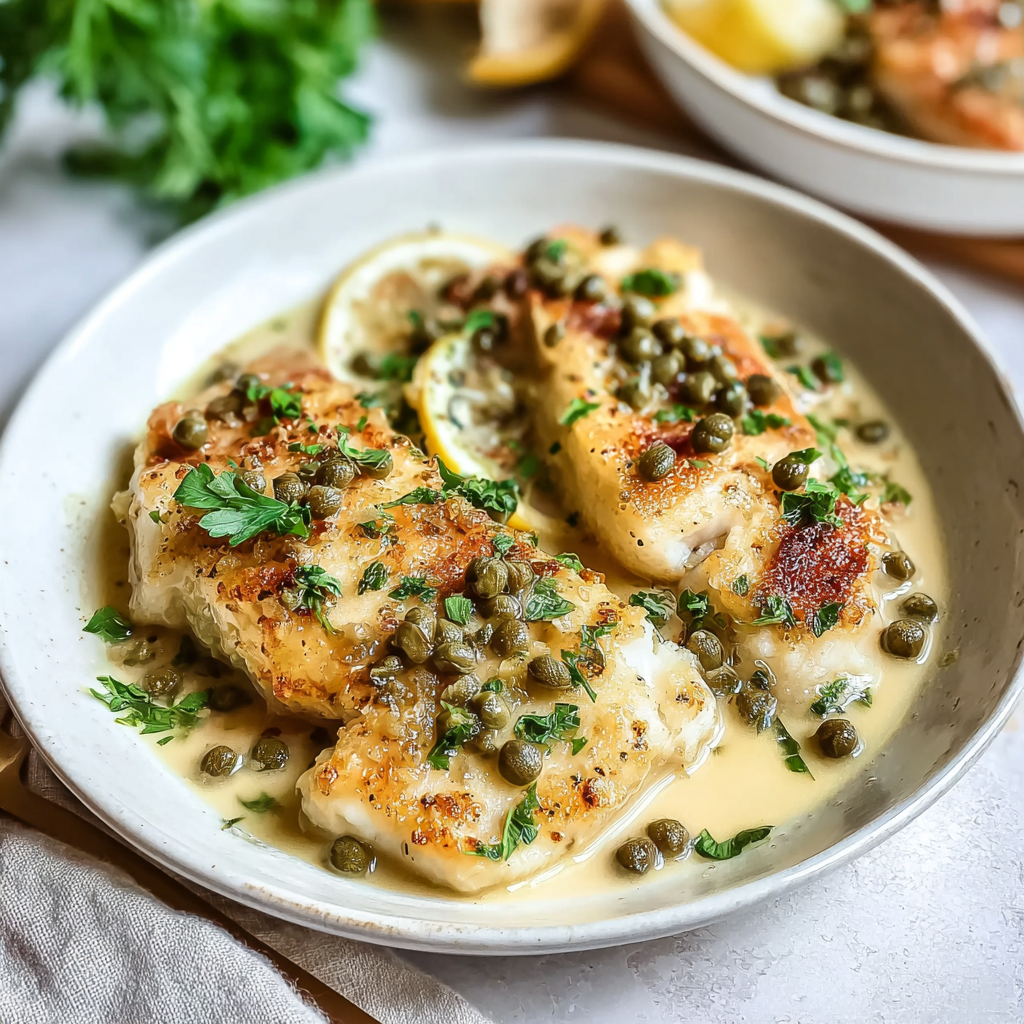
Here is a question that reframes one of the most classic Italian-American preparations: what happens when you take the bright, briny, butter-enriched piccata sauce — built around lemon, capers, and white wine — and apply it not to the chicken breast it usually adorns, but to a thick, flaky fillet of cod that cooks in under 8 minutes and absorbs those flavors with a depth and delicacy that chicken simply cannot match? According to a 2024 seafood consumption report by the National Oceanic and Atmospheric Administration, cod ranks as the third most consumed fish in the United States — yet the overwhelming majority of home cooks prepare it in fewer than three ways, most of them involving breadcrumbs or a baking dish. This cod piccata represents a fourth way that is faster, more elegant, and more deeply satisfying than any of them.
Piccata sauce is arguably the most efficient flavor-delivery system in Italian-American cooking: a pan sauce built in minutes from the fond of the seared protein, white wine, lemon juice, briny capers, and cold butter whisked in at the last moment to create a glossy, emulsified sauce that is simultaneously sharp, rich, and complex. Applied to cod — a fish with a clean, mild flavor and a firm, flaking texture that holds together in a hot pan — the result is a restaurant-quality plate that takes 20 minutes from start to finish and requires nothing more than a single skillet and pantry staples.
A 2023 nutritional review in the American Journal of Clinical Nutrition identified cod as one of the most protein-dense, lowest-calorie fish available — delivering 20 grams of protein per 100-gram serving at just 82 calories — making this one of the most nutritionally favorable restaurant-quality dinners in any weeknight rotation.
Ingredients List
For the Cod
- 4 cod fillets, approximately 170–200g (6–7 oz) each, skin-on or skinless
- ½ cup (60g) all-purpose flour, for dredging (sub: rice flour or cornstarch for gluten-free)
- 1 tsp fine sea salt
- ½ tsp freshly ground black pepper
- ½ tsp garlic powder
- 2 tbsp olive oil
- 1 tbsp unsalted butter
For the Piccata Sauce
- 3 tbsp unsalted butter, cold and cubed — divided
- 4 garlic cloves, finely minced
- ½ cup (120ml) dry white wine (sub: additional chicken stock with 1 tsp white wine vinegar)
- ½ cup (120ml) chicken or fish stock
- 3 tbsp fresh lemon juice (approximately 1½ lemons)
- 1 tsp lemon zest
- 3 tbsp capers, drained (add more to taste — capers are the soul of piccata)
- 2 tbsp fresh flat-leaf parsley, finely chopped
- Salt and pepper to taste
Timing
- Prep Time: 8 minutes
- Cook Time: 12–15 minutes
- Total Time: 20–25 minutes
Twenty minutes for a dinner that looks and tastes like a restaurant plate — this is the weeknight fish recipe that replaces every other version in your rotation. Start the pasta or vegetables before the fish and both arrive at the table simultaneously.
Step-by-Step Instructions
Step 1: Prepare the Cod
Pat the cod fillets completely dry with paper towels — surface moisture is the primary obstacle to a golden sear. Season generously on both sides with salt, pepper, and garlic powder. In a wide, shallow bowl, combine the flour with a pinch of salt and pepper. Dredge each fillet lightly in the flour, shaking off all excess — the flour coating should be thin and even, not thick and pasty. A thin flour coating creates the golden crust that gives the sauce something to cling to and protects the delicate fish from direct pan heat.
Key tip: Dredge the fish immediately before it goes into the pan — not in advance. Flour absorbs moisture from the fish over time and becomes gummy, producing a pasty coating rather than a crisp one.
Step 2: Sear the Cod
Heat the olive oil and 1 tablespoon of butter in a large, heavy skillet over medium-high heat until the butter is melted and the mixture is shimmering. Add the cod fillets — do not move them for 3–4 minutes until a deep golden crust forms on the underside. The fish will release naturally from the pan when it is ready to flip — forcing it before it releases will tear the crust. Flip carefully with a wide thin spatula and cook for another 2–3 minutes until the fish flakes easily at the thickest point and is cooked through. Transfer to a warm plate and tent loosely with foil.
Key tip: Cod is delicate and breaks apart easily — handle it as little as possible during cooking. A wide, thin fish spatula is the correct tool. A narrow spatula will split the fillet at the first contact.
Step 3: Build the Piccata Sauce
In the same skillet over medium heat, add 1 tablespoon of the cold butter. Add the minced garlic and cook for 30–45 seconds until golden and fragrant — watch closely, as garlic burns quickly in a pan that is still hot from the fish. Add the white wine and scrape the bottom of the pan with a wooden spoon to dissolve all the fond — the caramelized residue from the seared fish is concentrated flavor that forms the backbone of the sauce. Simmer the wine for 2 minutes until reduced by half.
Step 4: Finish the Sauce
Add the chicken stock, lemon juice, lemon zest, and capers. Increase the heat to medium-high and simmer for 2–3 minutes until the sauce reduces slightly and the flavors concentrate. Remove the pan from heat and swirl in the remaining 2 tablespoons of cold, cubed butter — one piece at a time — using a spoon or by swirling the pan. This technique, monter au beurre, emulsifies the cold butter into the hot sauce and produces the characteristic glossy, velvety finish that defines a proper piccata sauce. Season with salt and pepper and add the fresh parsley.
Key tip: Cold butter is essential for the emulsification. Room temperature or melted butter added to the sauce produces an oily, separated result rather than the smooth, cohesive sauce the technique is designed to create.
Step 5: Plate and Serve
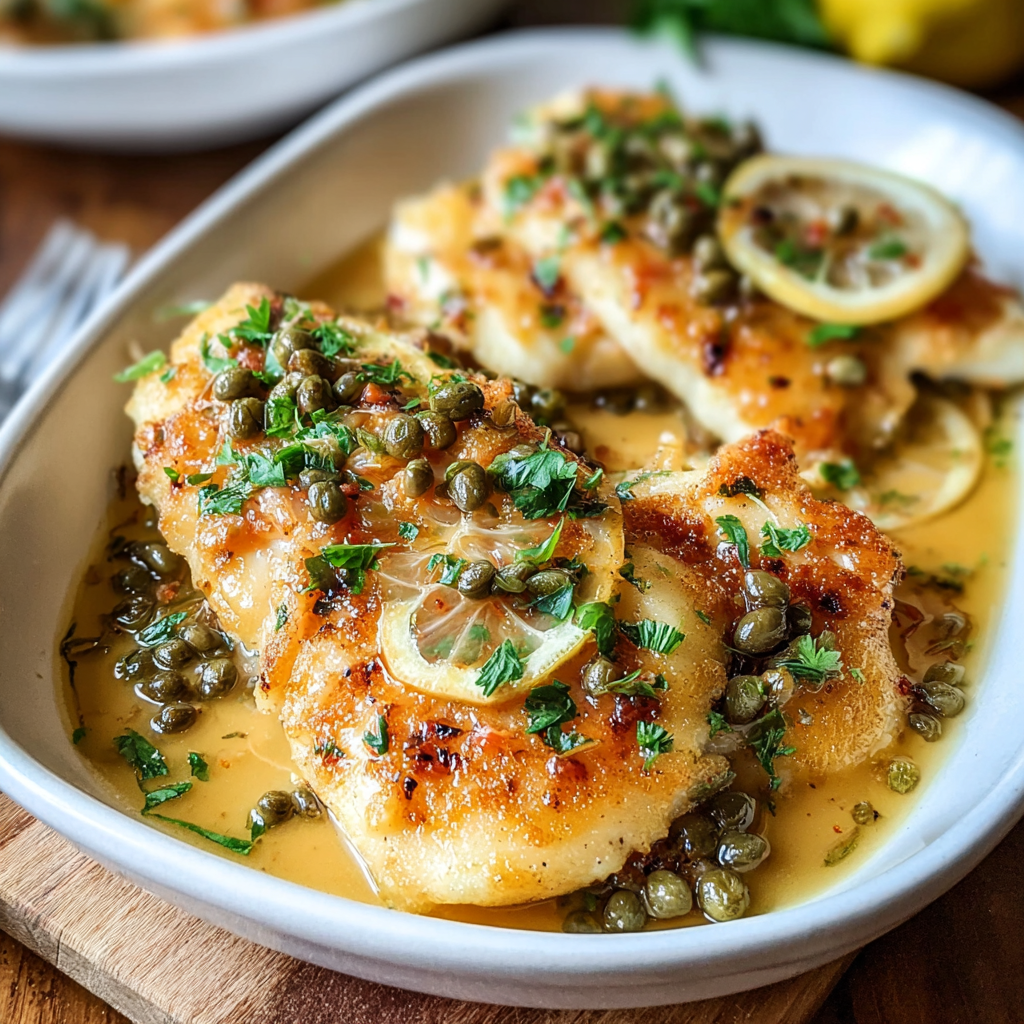
Return the cod to the pan for 30 seconds to warm through and coat with the sauce, or plate the fish and spoon the sauce generously over the top. Serve immediately over pasta, polenta, or with crusty bread alongside for sauce-mopping. Garnish with extra fresh parsley and lemon slices.
Nutritional Information
Per serving — based on 4 servings without sides.
| Nutrient | Per Serving | % Daily Value* |
|---|---|---|
| Calories | 355 kcal | 18% |
| Total Fat | 18g | 23% |
| Saturated Fat | 8g | 40% |
| Total Carbohydrates | 12g | 4% |
| Total Sugar | 1g | — |
| Protein | 34g | 68% |
| Dietary Fiber | 0.5g | 2% |
| Sodium | 620mg | 27% |
| Potassium | 680mg | 14% |
| Vitamin B12 | 35% DV | 35% |
| Selenium | 60% DV | 60% |
| Vitamin C | 18% DV | 18% |
*Based on a standard 2,000-calorie daily diet.
At 34 grams of protein and 355 calories per serving, cod piccata delivers one of the best protein-to-calorie ratios in any pan sauce preparation. The selenium content — 60% of the daily recommended value — is particularly notable, as cod is one of the richest dietary sources of this critical antioxidant mineral, which supports thyroid function and immune response.
Healthier Alternatives
Lower fat sauce: Reduce the finishing butter to 1 tablespoon and add 2 tablespoons of good-quality olive oil instead. The sauce will be slightly less rich but remains glossy and flavorful with a meaningfully lower saturated fat content.
Gluten-free: Replace all-purpose flour with rice flour or cornstarch for dredging — both produce a comparable golden crust with a slightly crisper texture. Every other ingredient in the recipe is naturally gluten-free.
Dairy-free: Replace all butter with a high-quality plant-based butter throughout — both in the searing step and the sauce finish. The emulsification technique works identically with plant-based butter and produces a comparable sauce consistency.
Lower sodium: Reduce the capers to 1 tablespoon and use a low-sodium chicken stock. The lemon juice provides sufficient acidity and brightness to compensate for the reduced caper brine, and the sauce remains vibrant and well-seasoned.
Higher omega-3: Substitute salmon or mackerel for the cod. Both are oily, omega-3-rich fish that stand up well to high-heat pan-searing and absorb the piccata sauce beautifully, with a richer, more intensely flavored result.
Serving Suggestions
Over angel hair pasta: Toss freshly cooked angel hair with a tablespoon of olive oil, place a fillet on top, and spoon the sauce generously over everything. The thin pasta absorbs the piccata sauce without competing with the delicate fish.
With creamy polenta: A soft, buttery polenta base beneath the cod creates a richness that complements the bright acidity of the piccata sauce — one of the most satisfying pairings in Italian-inspired cooking.
With roasted vegetables: Serve alongside oven-roasted asparagus, broccolini, or cherry tomatoes. The slight char on roasted vegetables provides a pleasant contrast to the silky, bright sauce.
Lighter lunch format: Flake the cooked cod over a simple arugula salad dressed with lemon and olive oil, drizzle the piccata sauce over the entire salad as a warm dressing, and serve with crusty bread. This transforms a dinner recipe into a sophisticated, restaurant-quality lunch.
With crusty sourdough: The simplest and arguably most satisfying format — one fillet, generous sauce, a thick slice of sourdough for mopping, and nothing else. This presentation lets the quality of the fish and the sauce speak without distraction.
Common Mistakes to Avoid
Not drying the fish before dredging. Wet fish + flour = gummy paste coating rather than a crisp, golden crust. Pat dry aggressively with paper towels and dredge immediately before the pan.
Moving the fish too early. Cod releases naturally from the pan when the crust is formed and ready to flip. Attempting to move it before that moment tears the crust and breaks the fillet. Leave it completely undisturbed until it releases on its own.
Adding warm or melted butter to finish the sauce. The emulsification of a piccata sauce depends entirely on the temperature differential between the hot reduced sauce and the cold butter. Room temperature butter produces a greasy, broken sauce. Keep the finishing butter refrigerator-cold until the moment it goes into the pan.
Over-reducing the sauce. A piccata sauce reduced too far becomes too acidic and too salty — the lemon and caper flavors become harsh rather than bright. The sauce should coat the back of a spoon lightly and flow easily — not be thick and syrupy.
Overcooking the cod. Cod goes from perfectly flaky and moist to dry, rubbery, and chalky within 1–2 minutes of reaching the correct internal temperature of 145°F (63°C). Pull the pan from the heat the moment the fish flakes easily at the thickest point and the center is just opaque.
Storing Tips
Refrigerator: Store fish and sauce separately in airtight containers for up to 2 days. The sauce reheats well; the fish is best eaten the day it is cooked.
Reheating the sauce: Reheat gently in a small saucepan over low heat, whisking in a small knob of cold butter at the end to restore the emulsification if it has separated during refrigeration.
Reheating the fish: Reheat in a covered skillet over medium-low heat with a splash of water or stock for 2–3 minutes. The microwave overheats the exterior before the interior warms and produces a rubbery, unpleasant texture — avoid it for fish reheating.
Freezer: Not recommended for the cooked dish — cod’s delicate texture does not survive freezing and thawing well. Raw cod fillets freeze excellently for up to 3 months wrapped tightly in plastic and stored in a freezer bag.
Conclusion
Cod piccata proves that the fastest path to a restaurant-quality weeknight dinner runs directly through a single skillet and a sauce built from pantry staples in under 5 minutes. Golden-crusted cod, a glossy lemon-caper-butter sauce, and 20 minutes of active cooking — this is the fish recipe that makes every other version feel like an underachievement.
Make it this week and share your results in the comments — tell us what you served it with, how much caper you used, and whether it replaced your usual fish recipe. Leave a review, share with someone who thinks weeknight fish has to be boring, and subscribe to our newsletter for more fast, elegant, flavor-first recipes every week.
FAQs
Can I use frozen cod? Yes — thaw overnight in the refrigerator and pat completely dry before dredging. Previously frozen cod releases slightly more moisture during cooking than fresh — an extra thorough drying step and an extra minute of searing on the first side compensates effectively.
What white wine works best in piccata sauce? Use a dry, unoaked white wine you would enjoy drinking — Pinot Grigio, Sauvignon Blanc, or Vermentino are all excellent choices. Avoid cooking wines, which contain added salt and produce a flat, slightly metallic sauce. The general rule: if you would not drink it, do not cook with it.
Can I substitute another fish? Absolutely. Halibut, tilapia, sea bass, and sole all work beautifully with piccata sauce. Salmon and swordfish are excellent for a richer, more substantial result. The technique is identical — adjust cooking time based on the thickness of the fillet and use the internal temperature of 145°F (63°C) as the reliable doneness indicator.
Why did my sauce break and turn oily? A broken piccata sauce is caused by butter added at too high a temperature or added too quickly. Remove the pan from heat entirely before adding the finishing butter, add it one piece at a time, and swirl rather than whisk — the gentler motion maintains the emulsion more reliably than vigorous whisking.
How do I keep the fish warm while making the sauce? Transfer the cooked fish to a warm plate — heated briefly in the oven at 200°F (95°C) — and tent loosely with foil. The foil traps residual heat without creating steam that softens the crust. The sauce takes under 5 minutes, meaning the fish loses minimal temperature during the process.
Is this recipe suitable for a dinner party? Yes, with one adaptation — sear the fish in batches up to 30 minutes ahead, hold in a low oven at 200°F (95°C) on a wire rack, and make the sauce at serving time directly in the pan. This separation of the searing and sauce steps makes the recipe entirely manageable for 6–8 guests without any simultaneous juggling.