Follow Me On Social Media!
Mediterranean Pasta Salad

Introduction
Here is a question that challenges one of the most persistent misconceptions about cold pasta: why does pasta salad — one of the most universally made dishes at every potluck, picnic, and summer gathering in the world — so consistently disappoint, arriving at the table either under-seasoned, dressed in a thin, watery vinaigrette that has pooled at the bottom of the bowl, or built from uninspired ingredients that could not justify their own presence on the fork? According to a 2024 consumer food survey by the Food Network, pasta salad ranks as the most frequently made and most frequently disappointing dish in the summer entertaining category — with the gap between expectation and reality attributed almost entirely to three avoidable technique failures.
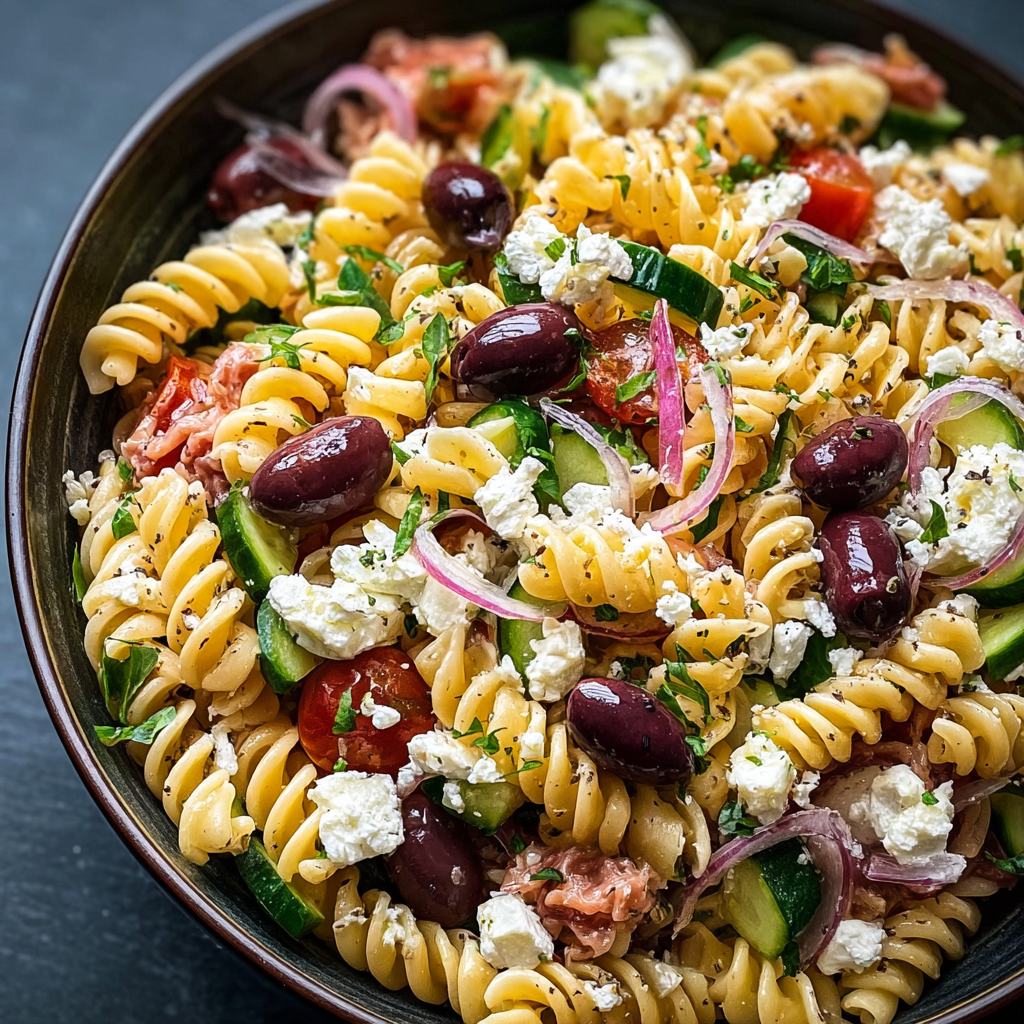
This Mediterranean pasta salad corrects all three. Pasta cooked past al dente and dressed while still warm — so it absorbs the vinaigrette rather than simply being coated by it. A bold, oregano-forward red wine vinaigrette built with enough acid and seasoning to remain vibrant after the inevitable dilution from the cold pasta and vegetables. And a filling selection of Mediterranean ingredients — Kalamata olives, sun-dried tomatoes, roasted red peppers, artichoke hearts, cucumber, feta, and fresh herbs — that each contribute distinct flavor, texture, and color rather than simply adding bulk.
A 2023 nutritional analysis published in the Journal of Nutrition identified the Mediterranean dietary pattern — defined by olive oil, legumes, vegetables, whole grains, and minimal processed ingredients — as the most consistently associated dietary approach with reduced cardiovascular disease risk, improved cognitive function, and longevity in population studies globally. This pasta salad delivers that pattern in one of its most accessible and immediately enjoyable formats.
Ingredients List
For the Pasta
- 400g (14 oz) short pasta (rotini, fusilli, farfalle, or penne — textured shapes hold the dressing best)
- 1 tbsp fine sea salt (for the pasta water)
- 1 tbsp extra virgin olive oil (tossed with the drained pasta to prevent sticking while warm)
For the Mediterranean Toppings
- 1 cup (150g) Kalamata olives, pitted and halved
- 1 cup (150g) cherry tomatoes, halved (or 3 medium roma tomatoes, diced)
- 1 cup (150g) roasted red peppers, drained and roughly chopped
- 1 cup (170g) artichoke hearts, drained and quartered (canned in water — not marinated)
- 1 English cucumber, diced (approximately 200g)
- ½ cup (75g) sun-dried tomatoes, roughly chopped (oil-packed — drain before using)
- ½ cup (80g) red onion, very finely diced
- 200g (7 oz) feta cheese, crumbled (block feta in brine — not pre-crumbled)
- ½ cup (50g) Parmesan, finely shaved or grated
- 1 can (400g / 15 oz) chickpeas, drained and rinsed (optional — adds protein and substance)
- ½ cup (75g) pepperoncini peppers, sliced (optional — adds heat and tang)
For the Red Wine Oregano Vinaigrette
- 5 tbsp extra virgin olive oil (good quality — it is a primary flavor driver)
- 3 tbsp red wine vinegar
- 1 tbsp fresh lemon juice
- 2 tsp dried oregano (Greek dried oregano — more intense than Italian)
- 1 tsp Dijon mustard (emulsifies the dressing and adds subtle depth)
- 2 garlic cloves, finely minced or pressed
- 1 tsp honey (balances the acidity)
- ¾ tsp fine sea salt
- ½ tsp freshly ground black pepper
- ½ tsp smoked paprika (optional — adds a warm, subtle depth)
For Finishing
- ¼ cup (15g) fresh flat-leaf parsley, roughly chopped
- 2 tbsp fresh basil, thinly sliced (add just before serving — basil bruises and darkens quickly)
- Extra feta and Parmesan, for topping
- Extra virgin olive oil, for a final drizzle
- Lemon wedges, to serve
Timing
- Pasta Cooking Time: 12–15 minutes
- Prep Time: 15 minutes (done while pasta cooks)
- Dressing Time: 5 minutes
- Chilling Time: 30 minutes minimum (1–2 hours strongly recommended)
- Total Time: 30–35 minutes active, 1–2 hours with chilling
The 1–2 hour chilling period is not merely about temperature — it is the window during which the pasta absorbs the vinaigrette, the flavors meld, and the salad transforms from a bowl of dressed ingredients into a cohesive, deeply flavored preparation where every component tastes of the whole.
Step-by-Step Instructions
Step 1: Cook the Pasta Correctly
Bring a very large pot of water to a rolling boil. Add the salt — the water should taste pleasantly salty, approximately as salty as a light broth. Cook the pasta 1–2 minutes past the al dente stage indicated on the package — for pasta salad, slightly softer pasta absorbs dressing more effectively and maintains a better texture after chilling than al dente pasta, which becomes too firm when cold.
Before draining, reserve ¼ cup of the starchy cooking water. Drain thoroughly and transfer immediately to a large mixing bowl while still hot. Drizzle with the tablespoon of olive oil and toss to coat — this prevents the warm pasta from sticking together during the cooling period.
Key tip: Dressing the pasta while it is still warm is the most impactful technique in this recipe. Warm pasta has open, expanded starch structures that absorb vinaigrette into the pasta itself rather than simply coating the exterior. Pasta dressed cold coats but does not absorb — producing a salad that tastes like pasta with dressing rather than pasta that has become the dressing.
Step 2: Make the Vinaigrette
In a jar or small bowl, combine the olive oil, red wine vinegar, lemon juice, dried oregano, Dijon mustard, minced garlic, honey, salt, pepper, and smoked paprika if using. Whisk vigorously or seal the jar and shake until the mustard has emulsified the oil and vinegar into a cohesive, slightly thickened dressing. Taste — it should be bold, acidic, and assertively seasoned. It will taste almost too strong at this stage — this is correct. Once it distributes across the pasta and all the toppings, it will mellow to the correct balance.
Step 3: Dress the Warm Pasta
Pour approximately two-thirds of the vinaigrette over the warm pasta and toss thoroughly until every piece is evenly coated. Add the reserved pasta cooking water — 1–2 tablespoons — if the pasta appears to be absorbing the dressing faster than it can be distributed evenly. The starchy pasta water helps carry the dressing into every crevice of the textured pasta shapes. Allow the dressed pasta to cool to room temperature — approximately 15 minutes — before adding the remaining toppings.
Step 4: Add the Toppings
Once the pasta has cooled to room temperature, add the Kalamata olives, cherry tomatoes, roasted red peppers, artichoke hearts, cucumber, sun-dried tomatoes, red onion, chickpeas if using, and pepperoncini if using. Pour the remaining vinaigrette over the top. Toss gently but thoroughly to distribute everything evenly. Add the crumbled feta and shaved Parmesan and fold in with a lighter touch — feta crumbles to dust if over-tossed, and you want visible pieces rather than an even coating.
Key tip: Add the cucumber just before serving rather than during the initial preparation — cucumber releases water progressively and begins to dilute the dressing after 30 minutes. If making well in advance, store diced cucumber separately and fold in at the last minute.
Step 5: Chill and Develop
Cover the bowl tightly with plastic wrap and refrigerate for a minimum of 30 minutes — 1–2 hours is strongly recommended. During this period, the pasta absorbs the remaining dressing, the dried oregano hydrates and releases its full aromatic character, the garlic mellows from sharp and raw to smooth and integrated, and every component begins to taste of the whole rather than of its individual ingredients.
Step 6: Finish and Serve
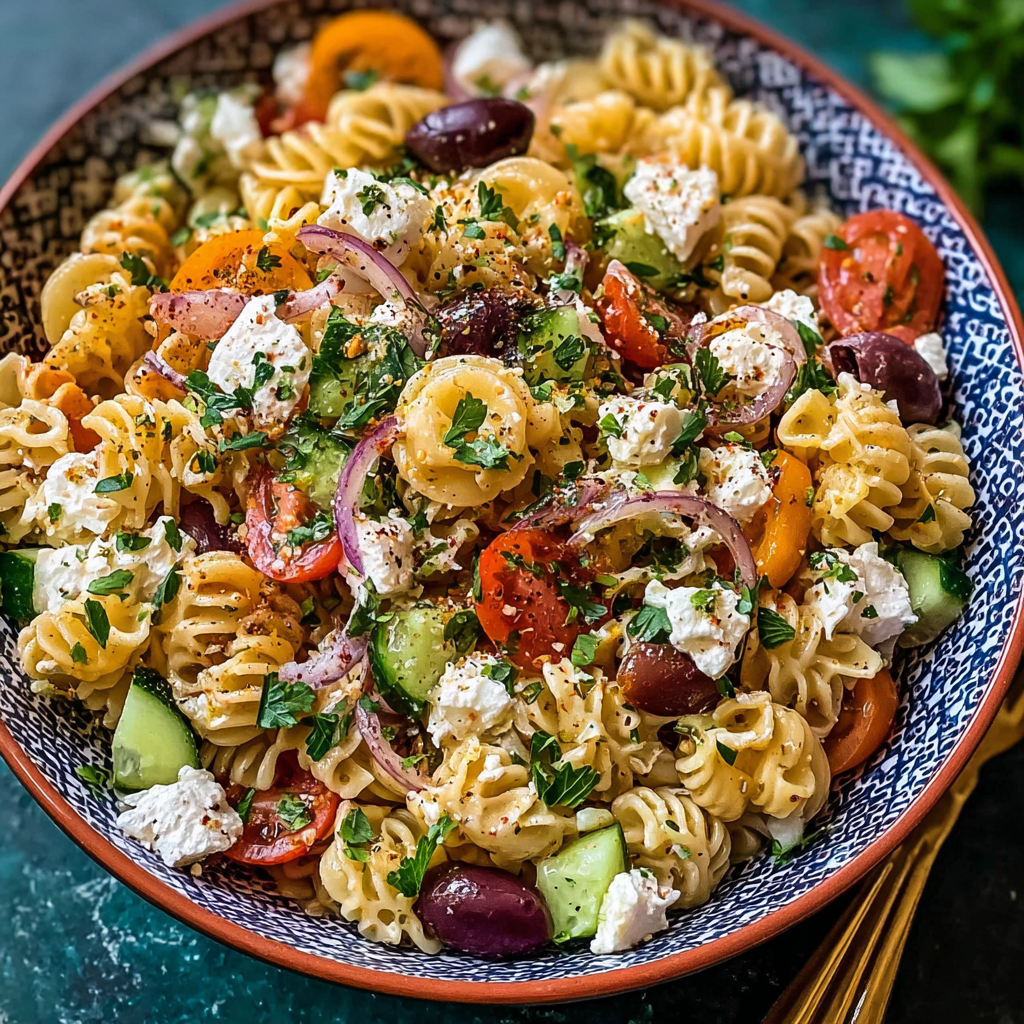
Remove from the refrigerator 15 minutes before serving to allow the olive oil — which solidifies slightly when cold — to return to its liquid state and the full aromatic character of the herbs and garlic to re-emerge. Taste and adjust — the salad may need additional salt, a small extra splash of red wine vinegar, or a drizzle of olive oil after the resting period as the pasta has absorbed some of the initial seasoning. Scatter fresh parsley and fresh basil over the top. Add extra crumbled feta and a final drizzle of extra virgin olive oil. Serve with lemon wedges alongside.
Nutritional Information
Per serving — based on 6 servings with chickpeas and feta.
| Nutrient | Per Serving | % Daily Value* |
|---|---|---|
| Calories | 540 kcal | 27% |
| Total Fat | 22g | 28% |
| Saturated Fat | 6g | 30% |
| Total Carbohydrates | 68g | 25% |
| Total Sugar | 8g | — |
| Protein | 18g | 36% |
| Dietary Fiber | 8g | 29% |
| Sodium | 780mg | 34% |
| Potassium | 680mg | 14% |
| Vitamin C | 45% DV | 45% |
| Iron | 22% DV | 22% |
| Calcium | 18% DV | 18% |
*Based on a standard 2,000-calorie daily diet.
At 18 grams of protein and 8 grams of dietary fiber per serving — driven by the chickpeas, feta, and pasta — this is one of the more nutritionally complete pasta salads available. The Vitamin C content at 45% of the daily recommended value comes primarily from the roasted red peppers and cherry tomatoes and makes this a meaningful micronutrient contributor for a side dish or light meal.
Healthier Alternatives
Higher protein: Double the chickpeas to 2 cans or add 200g of cooked, cooled chicken breast or canned tuna. Either addition pushes the protein content toward 28–32 grams per serving and makes the salad a genuinely substantial main course.
Whole grain: Use whole wheat pasta or a high-protein pasta — chickpea or lentil fusilli — in place of standard semolina pasta. Both increase the fiber content by 3–4 grams per serving and add a nuttier, more complex flavor that stands up well to the bold vinaigrette.
Lower fat: Reduce the olive oil in the dressing to 3 tablespoons and replace with 2 tablespoons of additional lemon juice and 1 tablespoon of water. The dressing will be less rich but remains emulsified with the mustard and well-seasoned. Reduce the feta to 100g for a further fat reduction with minimal flavor impact.
Vegan: Omit the feta and Parmesan. Replace with 3 tablespoons of nutritional yeast stirred into the dressing and an additional ½ cup of marinated, pitted olives for the salty, briny quality that feta contributes. Every other component is naturally vegan.
Gluten-free: Use certified gluten-free pasta — corn and rice blend or chickpea pasta work best for cold applications as they maintain better texture after chilling than some other gluten-free alternatives.
Serving Suggestions
As a potluck or picnic centerpiece: This is one of the most practical potluck dishes available — it travels well, improves with time, serves a crowd generously, and looks impressive in a large bowl with the colorful Mediterranean toppings visible. Make the full batch, transport in the mixing bowl, and scatter fresh herbs and extra feta immediately before serving.
As a standalone lunch: A generous serving with extra chickpeas and a piece of warm pita bread constitutes a complete, protein-and-fiber-rich lunch that requires no additional preparation and reheats from refrigerated storage effortlessly.
Alongside grilled protein: Serve as a side dish alongside grilled chicken, lamb kebabs, grilled fish, or halloumi. The bright, acidic vinaigrette cuts through the fat of any grilled protein with precision and makes this the most versatile Mediterranean side dish in any summer entertaining repertoire.
As part of a mezze spread: Serve in a wide, shallow bowl alongside hummus, tzatziki, warm pita, stuffed grape leaves, and a platter of crudités. The pasta salad anchors the spread as the most substantial component and provides the starchy, satiating element that the other mezze dishes lack.
Cold from the refrigerator: Unlike most pasta dishes, this salad is genuinely excellent eaten cold directly from the refrigerator — the flavors have deepened overnight and the texture is firm and satisfying. A reliable, ready-made lunch for up to 4 days from a single preparation.
Common Mistakes to Avoid
Dressing cold pasta. Cold pasta absorbs almost nothing — the dressing sits on the surface and pools at the bottom of the bowl. Dress immediately after draining while the pasta is still hot and the starch structures are open and absorbent. This is the single most impactful technique in the recipe.
Under-seasoning the dressing. A vinaigrette that tastes perfectly balanced in the bowl will taste underseasoned once distributed across 400 grams of pasta and a large volume of vegetables. Make it taste noticeably too strong before adding to the pasta — it will reach the correct balance by the time everything is combined.
Using pre-crumbled feta. Pre-crumbled feta is drier, saltier, and less flavorful than block feta in brine. It also disintegrates to dust under the first toss, producing an even white coating rather than visible, satisfying pieces. Buy the block every time.
Not tasting before serving. The pasta absorbs a significant portion of the seasoning during the chilling period. A salad that was well-seasoned before refrigeration often needs additional salt, vinegar, and olive oil after the rest. Always taste and adjust immediately before serving.
Adding basil too early. Fresh basil bruises, oxidizes, and turns black within 20–30 minutes of being cut and exposed to air and dressing. Add it in the final minute before the bowl goes to the table — not during preparation, not during the chilling period.
Storing Tips
Refrigerator: Store covered for up to 4 days — the flavor peaks at 24–48 hours when the vinaigrette has fully penetrated the pasta and the dried herbs have completely hydrated and mellowed. Stir well before each serving as the dressing will have settled.
Before serving from cold: Remove from the refrigerator 15 minutes before serving and add a small drizzle of fresh olive oil and an extra splash of red wine vinegar — both will have been absorbed during storage. Add fresh herbs and extra feta at the last moment.
Cucumber storage: If preparing more than 2 hours ahead, store the diced cucumber separately in the refrigerator and fold in just before serving to prevent it from diluting the dressing with released water.
Freezer: Not suitable for freezing — pasta salad does not survive the freeze-thaw cycle with acceptable texture. Prepare fresh and refrigerate only.
Scaling: This recipe scales directly and practically — double the batch for 12 servings, triple for 18. The dressing scales proportionally and the technique is identical at any volume.
Conclusion
This Mediterranean pasta salad proves that the difference between a disappointing pasta salad and a genuinely great one is almost entirely a function of three decisions — dressing warm pasta so it absorbs rather than merely coats, making the vinaigrette bold enough to survive the dilution of cold ingredients, and selecting toppings that each contribute distinct character rather than bulk. A salad that holds its flavor for 4 days, travels without deteriorating, serves a crowd without effort, and tastes like the Mediterranean table it references.
Make it and share your results in the comments — tell us which pasta shape you used, whether you added the chickpeas, and whether it replaced your usual potluck contribution. Leave a review, share with someone who needs a better pasta salad recipe, and subscribe to our newsletter for more globally inspired, technique-driven recipes every week.
FAQs
Why does my pasta salad taste bland after refrigerating? The pasta absorbs the seasoning from the dressing during refrigeration — a salad that was well-seasoned before chilling often tastes flat after several hours in the refrigerator. This is normal and entirely correctable: remove from the refrigerator 15 minutes before serving, add a fresh drizzle of extra virgin olive oil, an extra splash of red wine vinegar, and a pinch of salt. Toss to redistribute and taste again before serving.
What pasta shape works best? Rotini and fusilli are the top recommendations — their spiral shapes trap and hold dressing in the grooves, producing a more evenly flavored bite than smooth pasta shapes. Farfalle holds its shape well during chilling. Penne and rigatoni work well for a more substantial, hearty salad. Avoid spaghetti, linguine, and other long pasta shapes — they tangle in cold preparations and do not distribute the toppings evenly.
Can I make this the day before a party? This is actively recommended — the day-before version is better than the same-day version. The flavors meld, the pasta absorbs the dressing fully, and the dried oregano and garlic mellow into the vinaigrette. Prepare completely except for the fresh basil and the final olive oil drizzle. Add both immediately before serving the next day.
Can I add protein to make this a main course? Absolutely. Grilled chicken, canned tuna, cooked and cooled shrimp, sliced salami, or canned salmon all integrate naturally into the Mediterranean flavor profile. Add the protein cold alongside the other toppings in Step 4. For a vegetarian main course option, double the chickpeas and add a hard-boiled egg per serving.
How do I prevent the salad from becoming oily? Oil separation is a natural property of vinaigrette during refrigeration — the olive oil solidifies slightly at cold temperatures and appears to separate from the other ingredients. This is not a sign of a failed dressing — simply remove from the refrigerator 15 minutes before serving and toss vigorously. The dressing will re-emulsify at room temperature.
Is this recipe suitable for a crowd of 20 or more? Yes — triple the recipe and use a very large mixing bowl or divide between two bowls. The technique scales directly with no adjustments to cooking time or methodology. For events of this size, dress the pasta in batches — divide the warm pasta between two bowls, dress each separately with one-third of the vinaigrette, then combine once cooled and add the toppings.