
Follow Me On Social Media!
Healthy Purple Sweet Potato Jam

Introduction
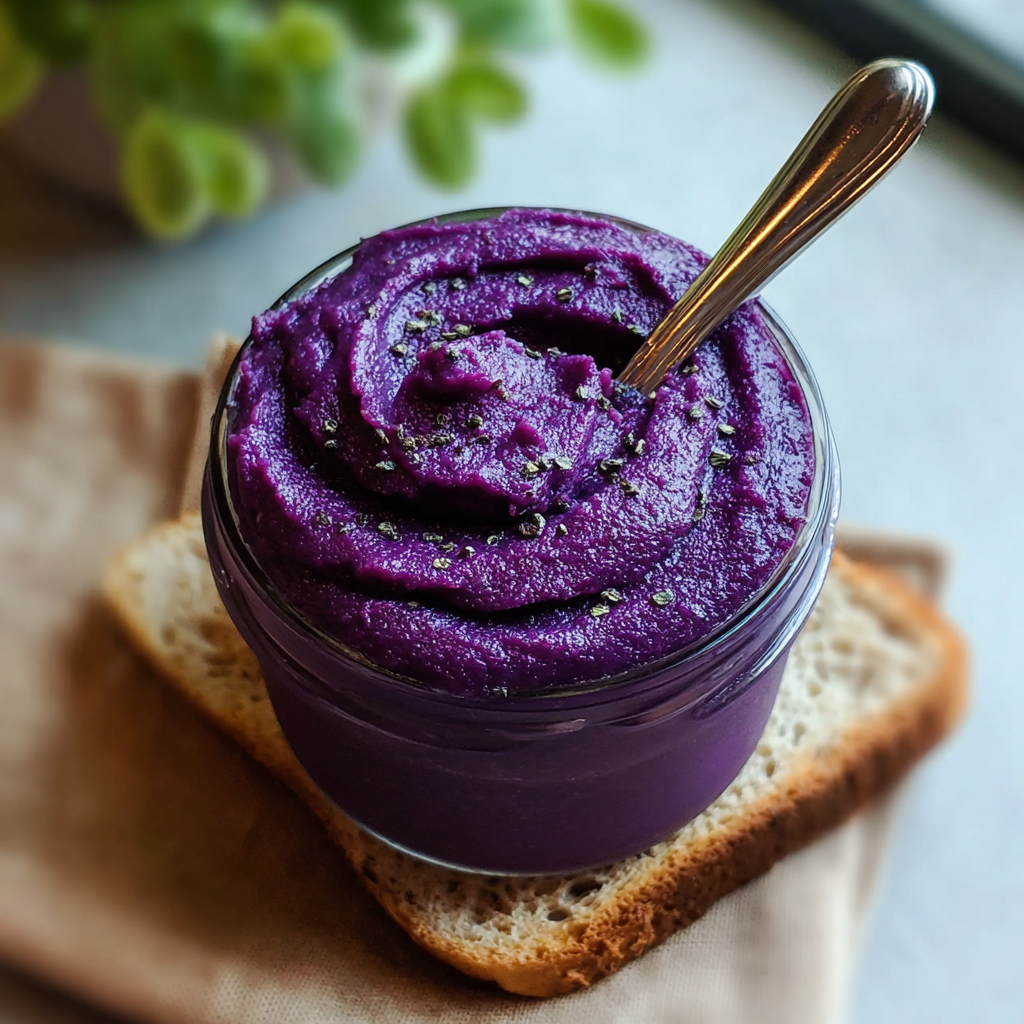
Here is a question that challenges the assumption that jam — one of the oldest preserved food categories in human history — must be built primarily on sugar, pectin, and the kind of long cooking time that fills the kitchen with steam and requires careful sterilization of multiple jars: what if the most visually stunning, most nutritionally interesting jam you have ever made required nothing more than purple sweet potatoes, a handful of pantry ingredients, 30 minutes on the stove, and produced a color so extraordinary that everyone who sees it assumes something artificial was responsible?
Purple sweet potato jam sits at the intersection of traditional preservation technique and genuinely novel ingredient territory. The purple sweet potato — known as ube in Filipino cuisine, murasaki imo in Japanese cooking, and increasingly available in Western supermarkets under various names — contains one of the highest concentrations of anthocyanin pigments of any commonly available food. These are the same pigments responsible for the color of blueberries, red cabbage, and acai berries — deeply purple-blue compounds that are simultaneously the most visually dramatic natural food colorant available and among the most studied antioxidant compounds in nutritional science.
According to a 2024 food trend report by the Specialty Food Association, purple sweet potato products — from lattes to ice cream to baked goods — represent one of the fastest-growing ingredient categories in specialty and natural food retail globally, driven by equal parts visual appeal and growing consumer awareness of anthocyanin’s documented health associations. This jam captures all of that in a spreadable format that works on toast, as a pastry filling, as a yogurt swirl, and as a genuinely conversation-starting addition to any cheese board.
A 2023 review in the journal Food Chemistry identified purple sweet potato anthocyanins as among the most stable natural colorants available — maintaining their vivid color through pH changes, moderate heat, and storage significantly better than most other natural pigment sources — meaning this jam holds its extraordinary color throughout cooking and during refrigerated storage.
Ingredients List
For the Purple Sweet Potato Jam
- 600g (1.3 lbs) purple sweet potatoes, peeled and roughly diced (approximately 2 medium-large)
- 150g (¾ cup) granulated sugar (sub: coconut sugar for a lower glycemic index and caramel depth)
- 3 tbsp fresh lemon juice (preserves the color and brightens the flavor — do not substitute)
- 1 tsp lemon zest
- ½ cup (120ml) water (for initial cooking)
- ½ tsp pure vanilla extract
- ¼ tsp ground cinnamon (adds a warm background note)
- ¼ tsp ground ginger (optional — adds brightness)
- Pinch of fine sea salt (essential — amplifies every other flavor)
Optional Flavor Additions (Choose One)
- 1 tbsp unsalted butter (stirred in at the end — adds richness and a glossy finish)
- 1 tsp rose water (adds a floral, Middle Eastern character)
- ½ tsp cardamom (adds warmth and aromatic complexity — particularly beautiful)
- 1 tbsp dark rum or brandy (adds depth and functions as a mild preservative)
- 2 tbsp coconut cream (creates a richer, more tropical flavor profile)
For Serving
- Sourdough or brioche toast
- Croissants or scones
- Greek yogurt or labneh
- Ricotta on crostini
- Cheese board accompaniment (particularly good with aged cheddar, brie, and goat cheese)
Timing
- Prep Time: 10 minutes
- Cook Time: 25–30 minutes
- Cooling Time: 20 minutes
- Total Time: approximately 55–60 minutes
This is among the fastest jam recipes available — the natural pectin and starch content of the sweet potato means no added pectin is required and the setting process happens naturally during cooking rather than through a lengthy reduction.
Step-by-Step Instructions
Step 1: Prepare and Cook the Purple Sweet Potatoes
Peel the purple sweet potatoes and cut into roughly even 2cm cubes — uniformity ensures even cooking but precision is not critical as everything will be blended. Place in a medium saucepan with the water and bring to a boil over medium-high heat. Reduce to a steady simmer, cover with a lid, and cook for 12–15 minutes until completely tender — a fork should slide through the largest piece with zero resistance.
Key tip: Cook the sweet potatoes in as little water as possible — just enough to prevent scorching. Excess water washes away the anthocyanin pigments that provide the jam’s extraordinary color and dilutes the flavor concentration. The minimal water approach produces a more vibrant color and a more intensely flavored jam.
Step 2: Blend Until Completely Smooth
Transfer the cooked sweet potatoes and any remaining cooking liquid to a blender or food processor. Blend on high speed for 90 seconds until completely smooth — the texture at this stage should be a silky, deep purple purée with no detectable lumps or fibrous pieces. For the smoothest possible jam, pass the blended purée through a fine mesh sieve, pressing firmly with a spatula to push everything through and leave any fibrous material behind.
The color of the purée at this stage will be vivid — somewhere between deep purple and magenta depending on the specific variety of purple sweet potato and its anthocyanin concentration. The addition of lemon juice in the next step will shift the color slightly toward a brighter, more pink-purple tone through the pH change that anthocyanins undergo in acidic environments.
Step 3: Cook the Jam Base
Return the smooth purée to the saucepan over medium-low heat. Add the sugar, lemon juice, lemon zest, cinnamon, ginger if using, and salt. Stir together until the sugar begins to dissolve. Cook over medium-low heat, stirring frequently, for 10–12 minutes until the jam has thickened to a spreadable consistency — it should hold its shape when a small spoonful is placed on a cold plate and allowed to cool for 30 seconds.
The jam will thicken further as it cools — remove from heat when it looks slightly looser than your target consistency. If it appears to be sticking to the bottom of the pan during cooking, reduce the heat immediately and stir more frequently — the natural sugars in the sweet potato caramelize quickly and can scorch before the jam visually shows signs of over-reduction.
Key tip: Test the set by placing a small spoonful on a plate that has been chilled in the freezer for 5 minutes. Push the jam with your fingertip — if it wrinkles and holds the pushed shape, it is set. If it flows back immediately, cook for another 3–5 minutes and test again.
Step 4: Add Optional Flavor Additions
Remove the pan from heat and stir in the vanilla extract and any optional flavor addition — butter for richness, cardamom for aromatic depth, rose water for floral character, or coconut cream for tropical richness. These additions are made off the heat to preserve their volatile aromatic compounds, which would dissipate under sustained high heat.
Step 5: Cool and Jar
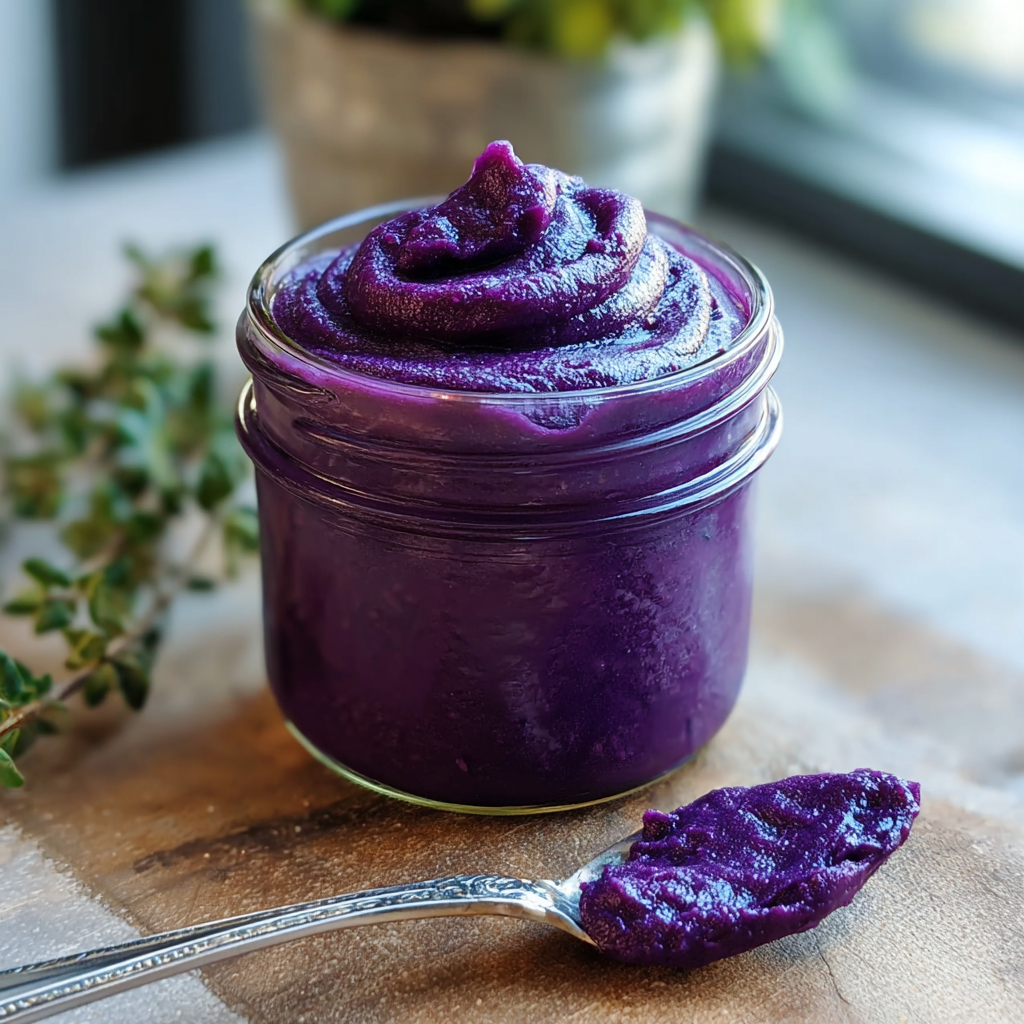
Allow the jam to cool in the pan for 10 minutes, stirring occasionally to release heat evenly. Transfer to clean glass jars — sterilized for longer storage, or simply clean for refrigerator use. The jam will continue to thicken as it cools and reaches its final consistency at room temperature approximately 30–40 minutes after leaving the stove.
Nutritional Information
Per serving — based on 2 tablespoons from a batch yielding approximately 400g of jam.
| Nutrient | Per Serving | % Daily Value* |
|---|---|---|
| Calories | 65 kcal | 3% |
| Total Fat | 0g | 0% |
| Saturated Fat | 0g | 0% |
| Total Carbohydrates | 16g | 6% |
| Total Sugar | 11g | — |
| Protein | 0.5g | 1% |
| Dietary Fiber | 1g | 4% |
| Sodium | 25mg | 1% |
| Potassium | 120mg | 3% |
| Vitamin A | 8% DV | 8% |
| Vitamin C | 6% DV | 6% |
| Anthocyanins | High | — |
*Based on a standard 2,000-calorie daily diet.
At 65 calories per 2-tablespoon serving with no fat and meaningful anthocyanin content, this jam delivers significantly more nutritional value than a conventional fruit jam of equivalent serving size. The anthocyanin content — which varies by potato variety and growing conditions — is associated in multiple large-scale studies with reduced oxidative stress markers, improved visual acuity, cardiovascular protection, and anti-inflammatory activity.
Healthier Alternatives
Lower sugar: Reduce the granulated sugar to 100g and compensate with 1 tablespoon of honey or agave syrup. The jam will be slightly less sweet and may require 2–3 additional minutes of cooking to reach the correct set consistency due to the lower sugar concentration affecting the evaporation rate.
Refined sugar-free: Replace all granulated sugar with coconut sugar in an equal quantity. Coconut sugar has a lower glycemic index than refined white sugar, contributes trace minerals, and adds a subtle butterscotch depth that complements the purple sweet potato beautifully without masking its distinctive flavor.
No added sugar: For a completely unsweetened version suitable for diabetic dietary requirements, omit the sugar entirely and cook the blended purée with lemon juice, cinnamon, and vanilla only. The jam will be less sweet and will set more loosely — increase the cooking time by 5 minutes to compensate for the reduced sugar concentration. The natural sweetness of the purple sweet potato provides a mild but pleasant background sweetness without any addition.
Higher fiber: Add 1 tablespoon of chia seeds to the cooked jam and stir well before jarring. The chia seeds will absorb liquid as the jam cools, adding texture, additional fiber, and omega-3 fatty acids without altering the flavor.
Spiced variation: Add ½ teaspoon of ground cardamom, ¼ teaspoon of ground cloves, and ¼ teaspoon of black pepper to the cooking jam for a spiced purple sweet potato jam that functions beautifully as a cheese board accompaniment and as a filling for sweet pastries.
Serving Suggestions
On sourdough toast: Spread generously on thick-sliced sourdough toast with a thin layer of salted butter beneath the jam. The extraordinary purple color against golden toast makes this one of the most visually striking breakfast preparations available from such simple ingredients.
With ricotta on crostini: Spread whipped ricotta on toasted crostini and top with a spoonful of purple sweet potato jam, a drizzle of honey, and a pinch of flaky sea salt. This combination — sweet, savory, creamy, and crunchy simultaneously — is one of the most successful appetizer formats in any entertaining repertoire.
As a yogurt swirl: Spoon 2 tablespoons over full-fat Greek yogurt or coconut yogurt and swirl decoratively with a knife. Add granola, toasted coconut, and fresh fruit for a breakfast bowl that is as nutritionally complete as it is visually extraordinary.
Cheese board accompaniment: Place a small pot of purple sweet potato jam alongside aged cheddar, brie, and a soft goat cheese on a wooden board with crackers, sliced apples, and toasted walnuts. The jam’s sweet, earthy flavor bridges the gap between the cheese varieties and provides a natural conversation starter.
As a pastry filling: Use as a filling for thumbprint cookies, croissant dough, or puff pastry pinwheels. The jam holds its color through moderate oven temperatures and produces a striking purple filling that makes any baked good look intentionally sophisticated.
In a layered trifle: Layer with vanilla pastry cream, pound cake cubes, and toasted coconut in individual glasses for a no-bake dessert that showcases the jam’s color in a particularly dramatic layered format.
Common Mistakes to Avoid
Using too much water for the initial cooking. Excess water dilutes the anthocyanin pigments and produces a paler, less vibrant jam. Use only the minimum water needed to prevent scorching — ½ cup for 600g of sweet potato is the correct ratio for maximum color retention.
Not blending long enough. Insufficiently blended sweet potato leaves fibrous pieces that produce an unpleasant texture in the finished jam. The full 90 seconds of high-speed blending — with a pause to scrape down the sides — is required for a genuinely smooth result.
Overcooking the jam. Purple sweet potato jam transitions from correctly set to over-reduced relatively quickly due to the natural starch content. The cold plate test is the most reliable doneness indicator — remove from heat the moment the jam wrinkles when pushed rather than continuing to cook until it looks thick in the pan.
Adding vanilla and delicate flavorings over the heat. Vanilla extract, rose water, and cardamom all contain volatile aromatic compounds that dissipate rapidly under sustained heat. Adding them to the jam while it is still on the stove reduces their contribution significantly. Add off the heat, stir in, and allow the residual warmth to bloom them gently.
Not adding lemon juice. Lemon juice serves two essential functions in this jam — it brightens the color through pH interaction with the anthocyanins and it provides the acidity that acts as a natural preservative. Omitting it produces a duller-colored, shorter-lived jam.
Storing Tips
Refrigerator: Store in a clean, sealed glass jar for up to 3 weeks. The jam’s color remains vivid during refrigerated storage due to the stability of the anthocyanin compounds at cold temperatures and low pH. Press plastic wrap directly onto the surface of the jam before sealing if the jar is not completely full — this eliminates any air gap that could accelerate surface oxidation.
Freezer: Freeze in freezer-safe sealed containers for up to 3 months. Thaw overnight in the refrigerator — the texture after thawing is slightly less firm than fresh but entirely pleasant. This approach is ideal for making a large batch and extending the shelf life significantly.
Sterilized jars for longer storage: For shelf-stable storage at room temperature, process in sterilized jars using a hot water bath canning method for 10 minutes. Properly processed jars are shelf-stable for up to 12 months. The color holds remarkably well in sterilized storage compared to most natural-color jams, which fade significantly during heat processing.
Make-ahead: This jam is an ideal make-ahead component for entertaining — made 1–2 days ahead, the flavor deepens and the set firms to its best consistency. The visual impact of a vivid purple jam on a cheese board or breakfast spread is always a conversation starter that costs no additional effort on the day.
Conclusion
Healthy purple sweet potato jam proves that the most visually extraordinary food in any kitchen is frequently the one built on the most honest ingredients — a vegetable so naturally beautiful that it requires no artificial enhancement, cooked simply and carefully to preserve the color and flavor that nature provided. Vivid purple, gently sweet, warmly spiced, and spreadable in under an hour: the jam that makes everyone ask what it is before they have tasted it and ask for the recipe after.
Make it and share your results in the comments — tell us which variety of purple sweet potato you used, which optional flavor addition you tried, and what you served it with first. Leave a review, share with someone who loves beautiful food or unusual ingredients, and subscribe to our newsletter for more creative, globally inspired preserves and recipes every week.
FAQs
Where can I find purple sweet potatoes? Purple sweet potatoes are increasingly available in Asian grocery stores — particularly those carrying Filipino, Japanese, or Korean products — under the names ube, Okinawan sweet potato, or murasaki imo. Specialty grocery stores and natural food retailers carry them with growing frequency. Online retailers ship them fresh or as a powder. In their absence, regular orange sweet potato produces a beautiful jam in a warm amber color — entirely different visually but equally delicious in flavor.
Why is my jam not purple — it turned brownish or grey? Color loss is caused by one of three factors: insufficient lemon juice (which is needed to maintain the acidic pH that keeps anthocyanins in their vivid purple-pink form), overcooking at too high a temperature (which degrades the anthocyanin pigments), or using a variety of purple sweet potato with lower anthocyanin concentration. Ensure the lemon juice quantity is maintained, cook at medium-low heat, and use the most deeply pigmented variety available for the most vibrant result.
Can I use ube extract or powder instead of fresh purple sweet potato? Yes — ube extract or powder is available at Filipino grocery stores and online. Use 2 tablespoons of ube extract or 3 tablespoons of ube powder combined with 300ml of water as a substitute for the fresh potato. The result is a smoother, more uniform jam with a more intensely artificial-appearing color — which some people prefer aesthetically. The fresh potato version produces a more nuanced, less homogeneous color and a more complex, earthy flavor.
Does the jam set firmly without pectin? Yes — purple sweet potato contains sufficient natural starch to set the jam to a spreadable consistency without any added pectin. The set will be softer than a traditional high-pectin fruit jam — more of a smooth, thick spread than a firm, sliceable preserve. This soft set is entirely appropriate and desirable for this style of jam. If a firmer set is desired, add 1 teaspoon of powdered pectin dissolved in 1 tablespoon of cold water during the final cooking stage.
Can I make this with orange sweet potato instead of purple? Yes — orange sweet potato produces an equally delicious jam in a beautiful warm amber color. The flavor profile is similar but less earthy and slightly sweeter. The anthocyanin health benefits are absent in orange sweet potato — they are replaced by beta-carotene, which is responsible for the orange color and provides a different but equally meaningful nutritional contribution.
Is this jam suitable for children? It is an excellent option for children — naturally sweet, free of artificial colors and preservatives, and nutritionally superior to conventional fruit jams. The vivid purple color is particularly appealing to children who are often attracted to unusual-colored foods. For very young children, omit the optional ginger and reduce the cinnamon to a pinch for a milder flavor profile.