Follow Me On Social Media!
Mediterranean Rice and Beans

Introduction
Here is a question that challenges one of the most persistent myths in everyday cooking: why do rice and beans — the combination that has sustained populations across every continent for millennia, that nutritional scientists consistently identify as one of the most complete plant-based protein sources available, and that costs less per serving than almost any other filling meal — so rarely receive the attention, the seasoning, and the technique that would transform them from a background staple into something genuinely worth cooking and eating?
According to a 2024 consumer food behavior report by the Food Marketing Institute, rice and beans rank as the most purchased pantry combination in American households yet one of the least enthusiastically consumed — with the primary complaint being monotony and lack of flavor rather than any issue with the format itself. This Mediterranean rice and beans recipe is the answer to that complaint. The same combination, treated with the aromatics, warm spices, fresh herbs, and layered technique of the Levantine kitchen — a tradition that has been making rice and legumes extraordinary for centuries — produces a dish that tastes nothing like the background staple and everything like a genuinely considered, deliberately flavored main course.
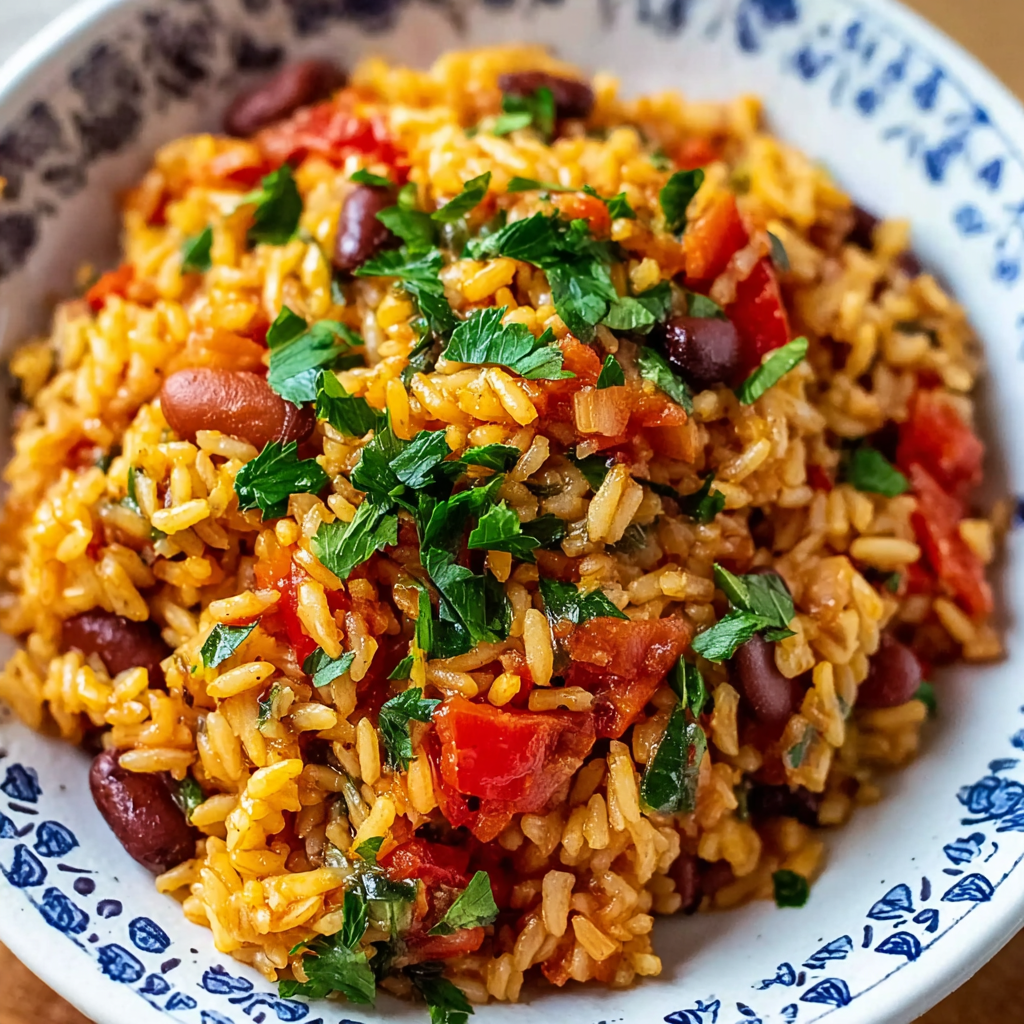
Fragrant long-grain rice cooked with sautéed onions caramelized to a deep amber, cumin-spiced chickpeas and white beans, roasted cherry tomatoes, garlic, and a finish of fresh lemon and herbs — this is the dish known in various forms across Lebanon, Syria, Egypt, and Turkey as a cornerstone of everyday cooking. A 2023 nutritional review published in the Journal of Nutritional Science confirmed that the combination of rice and legumes provides a complete amino acid profile — the lysine-limited amino acids in rice are supplied by the legumes, and the methionine-limited amino acids in legumes are supplied by the rice — making this one of the few plant-based combinations that qualifies as a complete protein source equivalent to animal protein.
Ingredients List
For the Rice
- 1½ cups (280g) long-grain white rice (basmati is the traditional and most fragrant choice)
- 2¾ cups (660ml) chicken or vegetable stock (stock instead of water is the single most impactful upgrade)
- 1 tbsp unsalted butter or olive oil
- ½ tsp fine sea salt
- ¼ tsp ground turmeric (gives the rice a beautiful golden color and anti-inflammatory compounds)
For the Caramelized Onions
- 2 large onions, thinly sliced
- 3 tbsp olive oil
- ½ tsp fine sea salt
- ½ tsp granulated sugar (accelerates caramelization)
For the Beans and Vegetables
- 1 can (400g / 15 oz) chickpeas, drained and rinsed
- 1 can (400g / 15 oz) white beans — cannellini or butter beans, drained and rinsed
- 1 cup (150g) cherry tomatoes, halved
- 4 garlic cloves, finely minced
- 1 tsp ground cumin
- 1 tsp smoked paprika
- ½ tsp ground coriander
- ½ tsp ground allspice (the defining Levantine spice note)
- ¼ tsp ground cinnamon
- ¼ tsp cayenne pepper (optional)
- 2 tbsp extra virgin olive oil
- Salt and black pepper to taste
For Finishing
- 3 tbsp fresh lemon juice (approximately 1½ lemons)
- 1 tsp lemon zest
- ¼ cup (15g) fresh flat-leaf parsley, roughly chopped
- 2 tbsp fresh mint, roughly chopped (optional — adds brightness)
- 2 tbsp extra virgin olive oil, for drizzling
- Flaky sea salt, to finish
For Serving (Optional)
- Labneh or Greek yogurt
- Warm pita bread
- Simple cucumber and tomato salad
- Harissa or zhug, on the side
Timing
- Caramelized Onion Time: 25–30 minutes (the most time-consuming step — start first)
- Rice Cook Time: 18 minutes
- Bean and Vegetable Time: 12 minutes
- Total Time: approximately 45 minutes (with parallel cooking)
The caramelized onions are made simultaneously with the rice and beans — start the onions first, then manage the rice and beans in parallel. Everything converges at the same moment with careful sequencing.
Step-by-Step Instructions
Step 1: Start the Caramelized Onions
Heat the olive oil in a large, wide skillet over medium heat. Add the thinly sliced onions, salt, and sugar. Stir to coat in the oil and spread into as even a layer as possible across the pan. Cook, stirring every 3–4 minutes, for 25–30 minutes total — passing through stages of soft and translucent (10 minutes), beginning to turn golden (15–18 minutes), and finally reaching a deep amber brown with a jammy, sweet, intensely flavored character (25–30 minutes). Do not rush this step with high heat — caramelization requires patience and moderate temperature to develop the complex sugars that give the onions their sweetness without bitterness.
Key tip: A pinch of sugar accelerates the caramelization process by providing additional simple sugars for the Maillard reaction. It does not make the onions taste sweet — it makes them taste more deeply caramelized.
Step 2: Cook the Rice
Rinse the basmati rice in cold water until the water runs clear — approximately 3–4 rinses. This removes surface starch that would make the cooked rice sticky and clumped rather than separate and fluffy. In a medium saucepan, melt the butter over medium heat. Add the drained, rinsed rice and stir for 2 minutes until the grains are coated in butter and beginning to toast slightly — this toasting step adds a subtle nuttiness and helps the grains remain separate during cooking. Add the stock, salt, and turmeric. Bring to a boil, then reduce to the lowest heat setting, cover with a tight-fitting lid, and cook for 15–17 minutes until all liquid is absorbed. Remove from heat and rest, covered, for 5 minutes. Fluff with a fork.
Key tip: Do not lift the lid during the 15–17 minutes of rice cooking. The steam trapped inside the pot is the cooking medium — releasing it drops the internal temperature and interrupts the even absorption that produces fluffy, separate rice grains.
Step 3: Prepare the Beans and Vegetables
While the onions and rice cook simultaneously, heat 2 tablespoons of olive oil in a separate skillet or in the same pan as the onions if they are removed first. Add the minced garlic and cook for 30–45 seconds until fragrant but not browned. Add the cumin, smoked paprika, coriander, allspice, cinnamon, and cayenne. Stir the spices into the oil and cook for 60 seconds — blooming the dried spices in the hot oil releases their fat-soluble aromatic compounds and produces a more deeply flavored base than adding them directly to liquid.
Add the halved cherry tomatoes and cook for 3–4 minutes until they have softened and begun to release their juices. Add the drained chickpeas and white beans. Stir to coat everything in the spiced tomato mixture and cook for 4–5 minutes until the beans are warmed through and beginning to absorb the surrounding flavors. Season generously with salt and black pepper.
Step 4: Combine and Finish
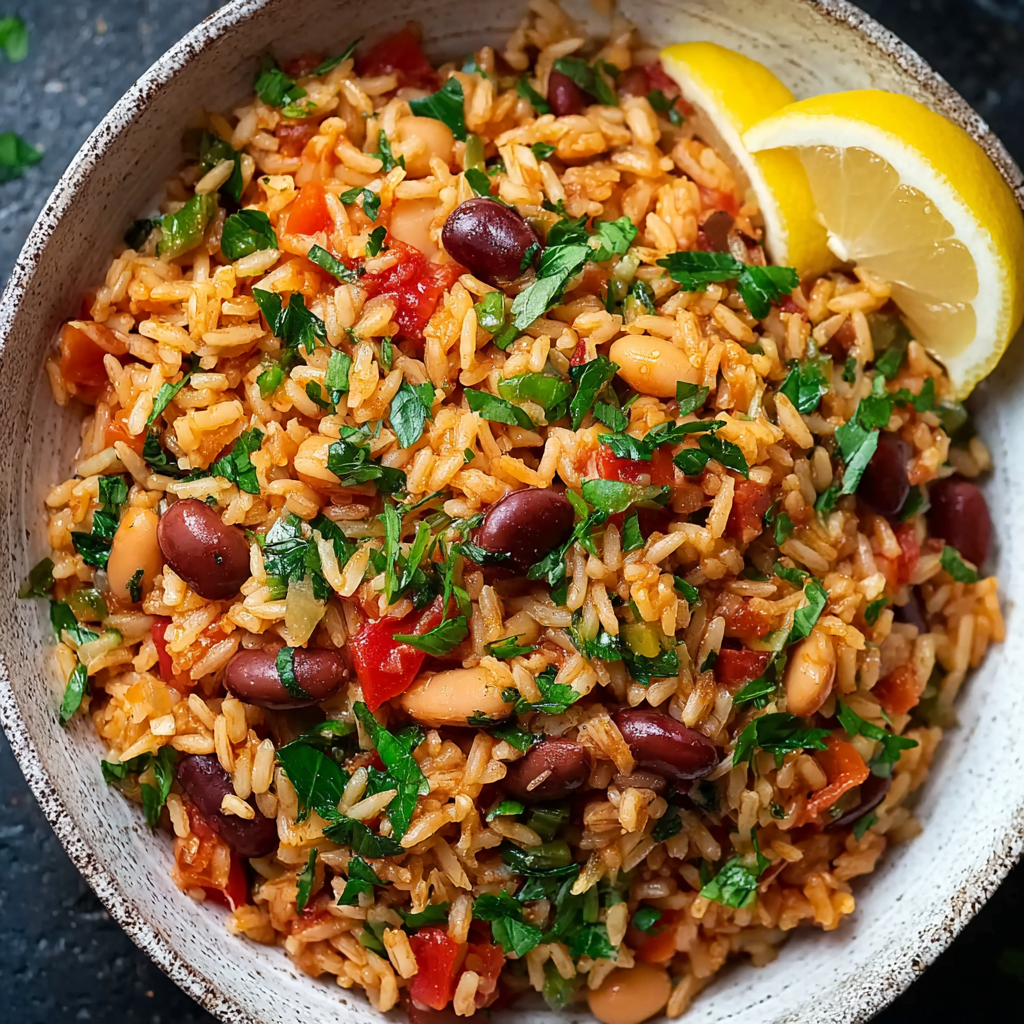
Spread the cooked rice across a large serving platter or wide, shallow bowl. Spoon the bean and tomato mixture over the rice, distributing evenly. Arrange the caramelized onions across the top — their deep color against the golden rice and the red-spiced beans creates the visual signature of the dish. Squeeze the lemon juice evenly over the entire surface and scatter the lemon zest, fresh parsley, and mint if using. Drizzle generously with extra virgin olive oil and finish with a pinch of flaky sea salt.
Key tip: Finishing with fresh lemon juice applied directly to the finished dish — rather than cooked into the beans — preserves the volatile aromatic citrus compounds that cooking destroys. The fresh lemon brightness is what lifts the entire dish from earthy and warming to vibrant and complete.
Step 5: Serve
Bring the platter to the table directly — the visual impact of the layered dish served from a single platter is considerable and communicates the generous, communal spirit of Mediterranean cooking. Serve with labneh or Greek yogurt alongside for the cool, tangy contrast that balances the warm spiced beans, warm pita for scooping, and a simple cucumber and tomato salad for freshness and crunch.
Nutritional Information
Per serving — based on 4 servings with both bean varieties.
| Nutrient | Per Serving | % Daily Value* |
|---|---|---|
| Calories | 520 kcal | 26% |
| Total Fat | 16g | 21% |
| Saturated Fat | 2.5g | 13% |
| Total Carbohydrates | 78g | 28% |
| Total Sugar | 8g | — |
| Protein | 18g | 36% |
| Dietary Fiber | 14g | 50% |
| Sodium | 620mg | 27% |
| Potassium | 820mg | 17% |
| Iron | 30% DV | 30% |
| Folate | 45% DV | 45% |
| Magnesium | 22% DV | 22% |
*Based on a standard 2,000-calorie daily diet.
The dietary fiber content at 50% of the daily recommended value per serving — driven by the combination of two bean varieties — is one of the highest of any main course recipe in this collection. The folate content at 45% of the daily recommended value reflects the significant contribution of legumes and fresh herbs and is particularly important for cellular function, DNA synthesis, and — for those of childbearing age — neural tube development.
Healthier Alternatives
Higher protein: Add 200g of cooked, shredded chicken breast or canned tuna folded through the bean mixture. Either addition pushes the protein content above 30 grams per serving while maintaining the Mediterranean character of the dish.
Lower carbohydrate: Replace the white rice with cauliflower rice — process raw cauliflower florets in a food processor until fine, then sauté in olive oil for 4–5 minutes. The dish becomes significantly lower in carbohydrates while the beans, vegetables, and spices remain identical and continue to carry the flavor.
Brown rice variation: Replace white basmati with brown basmati rice for an additional 2–3 grams of fiber per serving and a lower glycemic index. Increase the cooking liquid to 3 cups and the cooking time to 40–45 minutes. The nuttier flavor of brown rice integrates naturally into the warm spice profile.
Oil-free: Replace the olive oil throughout with water or vegetable stock for sautéing, using the Maillard browning that occurs when water fully evaporates to develop flavor rather than fat-mediated sautéing. The onions will caramelize more slowly but the result is genuinely fat-free and still deeply flavorful.
Added greens: Fold 2 large handfuls of baby spinach or kale into the bean mixture in the final 2 minutes of cooking — the greens wilt immediately and add iron, Vitamin K, and additional folate with no impact on the dish’s fundamental flavor profile.
Serving Suggestions
Family platter style: Serve the entire recipe on a large, wide platter at the center of the table with small bowls of labneh, harissa, warm pita, and a simple salad alongside. This is the format that communicates the dish’s cultural context most fully and encourages the kind of communal, multi-component eating that makes Mediterranean food so satisfying.
With labneh and olive oil: Place a generous spoonful of labneh — strained yogurt — in the center of each bowl of rice and beans. Drizzle with extra virgin olive oil, sprinkle with sumac and fresh herbs. The cool, tangy labneh against the warm, spiced beans is one of the most effective temperature and flavor contrasts in Levantine cooking.
As a meal prep base: Divide into four airtight containers and refrigerate. Each day, reheat the rice and beans and add fresh lemon juice, fresh herbs, and a spoonful of labneh or Greek yogurt at the moment of eating. A nutritionally complete, high-fiber lunch is available every day from a single Sunday preparation session.
Topped with a fried egg: Fry an egg in good olive oil until the whites are set and the edges are slightly crispy. Place on top of the warm rice and beans — the yolk breaks over the spiced beans and acts as a rich, golden sauce that enriches the entire bowl. This format pushes the protein content above 24 grams per serving.
As a stuffing: Use the rice and bean mixture as a stuffing for roasted bell peppers, hollowed zucchini, or portobello mushrooms. Top with feta cheese and bake at 375°F (190°C) for 20 minutes for a completely different presentation format from the same recipe.
Common Mistakes to Avoid
Rushing the caramelized onions. Onions that have been cooked at too high a temperature for too short a time are soft and golden but lack the deep, jammy sweetness of properly caramelized onions. They taste good but not extraordinary. Twenty-five to thirty minutes at medium heat is the correct time investment — the transformation that occurs in the final 10 minutes is dramatic and worth every minute.
Not rinsing the basmati rice. Unrinsed basmati rice releases excess surface starch into the cooking water and produces a sticky, clumped result rather than the separate, fluffy grains that make this dish so texturally pleasing. Three to four cold water rinses until the water runs clear is the correct preparation.
Skipping the spice bloom. Dry spices added directly to liquid produce a flat, one-dimensional flavor compared to spices bloomed in hot oil for 60 seconds before the liquid is added. The fat-soluble aromatic compounds in cumin, coriander, allspice, and cinnamon are only released through fat and heat — the bloom step is the technique that produces a deeply flavored, aromatic dish rather than a merely spiced one.
Adding lemon juice during cooking. Lemon juice heated for more than 2–3 minutes loses the volatile aromatic terpene compounds that give it its characteristic bright, fresh character. Apply the fresh lemon juice as a finishing element — directly to the plated dish immediately before serving — for the maximum aromatic and flavor impact.
Under-seasoning. Both the rice and the beans should be generously seasoned individually — a dish where each component is well-seasoned produces a more uniformly flavorful result than one where only the final assembled dish is adjusted. Taste and season at every stage.
Storing Tips
Refrigerator: Store in an airtight container for up to 5 days. This is one of the recipes that improves most dramatically with overnight storage — the spices continue to develop and meld, the beans absorb the surrounding aromatics more deeply, and the caramelized onion flavor permeates the rice. The day-two version is definitively better than the day-one version.
Reheating: Add a splash of water or stock to the container before reheating in the microwave at 70% power in 90-second intervals — the added liquid prevents the rice from drying. On the stovetop, reheat in a covered skillet over medium-low heat with 2–3 tablespoons of water for 3–4 minutes until steaming. Add fresh lemon juice and fresh herbs after reheating — both will have lost their brightness during storage and cooking.
Freezer: Freeze in individual airtight portions for up to 3 months. The rice and beans freeze and reheat very well. Thaw overnight in the refrigerator and reheat as above. Add fresh lemon juice, olive oil drizzle, and fresh herbs after reheating for a result that is nearly indistinguishable from freshly made.
Make-ahead: The caramelized onions can be made up to 4 days ahead and refrigerated — they reheat in 2 minutes in a skillet over medium heat and are virtually indistinguishable from freshly made. Pre-caramelizing the onions reduces the day-of cooking time to under 20 minutes.
Conclusion
Mediterranean rice and beans proves that the most humble combination in any pantry becomes something genuinely extraordinary when treated with the attention, the spicing, and the technique it deserves. Caramelized onions, bloomed warm spices, two varieties of beans, golden turmeric rice, and a finish of fresh lemon and herbs — the same two ingredients that have sustained populations across every continent, transformed by the Levantine kitchen into something that earns its place at any table.
Make it and share your results in the comments — tell us how long your onions took to caramelize, which optional additions you included, and whether it replaced your usual weeknight rice dish. Leave a review, share with someone who underestimates rice and beans, and subscribe to our newsletter for more globally inspired, technique-driven plant-forward recipes every week.
FAQs
Can I use dried beans instead of canned? Yes — and dried beans produce a more flavorful, firmer-textured result than canned. Soak 200g each of dried chickpeas and white beans overnight in cold water. Drain, cover with fresh water, and simmer for 60–90 minutes until completely tender. Drain and use in place of the canned beans. The additional time is significant — canned beans are the recommended option for weeknight cooking.
Why is my basmati rice not fluffy and separate? Three most common causes: insufficient rinsing left excess surface starch that caused clumping, the lid was lifted during cooking releasing the steam needed for even absorption, or the rice was not allowed to rest off the heat for the full 5 minutes after cooking. Address all three in the next attempt — the difference between sticky, clumped basmati and perfectly fluffy, separate grains is entirely a function of these three steps.
Can I add meat to make this a non-vegetarian version? Yes — browned ground lamb seasoned with the same spice blend, added to the bean mixture in Step 3, is the most traditional meat addition in the Levantine tradition. Shredded rotisserie chicken folded through the beans is a faster alternative. Pan-fried halloumi sliced and laid across the finished platter adds protein and a satisfying crust without changing the fundamental character of the dish.
What is the difference between this dish and mujaddara? Mujaddara is the closest relative — the Lebanese dish of lentils, rice, and caramelized onions that is considered the defining version of this format. This recipe uses chickpeas and white beans rather than lentils, incorporates cherry tomatoes, and includes a broader warm spice blend — producing a more complex, less austere result than classic mujaddara while sharing its fundamental philosophy of legumes and rice elevated by caramelized onion and warm spice.
How do I make the caramelized onions faster? The only reliable shortcut for caramelized onions is a pressure cooker or Instant Pot — cook sliced onions with olive oil and a splash of water on the sauté function for 15–20 minutes, stirring occasionally, until golden. The result is comparable to stovetop caramelization in significantly less time. Any other shortcut — high heat, baking soda addition, added liquid — produces onions that are browned but not genuinely caramelized, lacking the deep sweetness that makes the finished dish distinctive.
Is this recipe suitable for a vegan diet? The base recipe is entirely vegan when vegetable stock is used in place of chicken stock and olive oil replaces the butter in the rice cooking step. Every other component — chickpeas, white beans, cherry tomatoes, spices, olive oil, lemon, and fresh herbs — is naturally vegan. The optional labneh and yogurt accompaniments are the only non-vegan elements, and both have direct vegan substitutes — coconut yogurt or cashew labneh — that work equally well alongside the warm spiced beans.