Follow Me On Social Media!
Frozen Greek Yogurt & Blueberry Bites

Introduction
Here is a question worth asking the next time the afternoon demands something cold and sweet and the freezer holds nothing worth reaching for: what if the most refreshing, most nutritious, most genuinely satisfying frozen bite available required three ingredients, four minutes of active preparation, and delivered a frozen treat with more protein per serving than most commercial yogurt-covered snacks while tasting considerably better than any of them?
According to a 2024 consumer snack behavior report by the Specialty Food Association, frozen yogurt-based bites and clusters represent the single fastest-growing category in the healthy frozen snack segment globally — driven by the recognition that Greek yogurt’s natural tanginess, when frozen around a piece of fresh or frozen fruit, produces a bite with a complexity of flavor that no commercial frozen yogurt product achieves. The contrast between the creamy, slightly tart yogurt exterior and the sweet, jammy, cold-burst fruit interior is one of the most satisfying small eating experiences available from such a simple preparation.
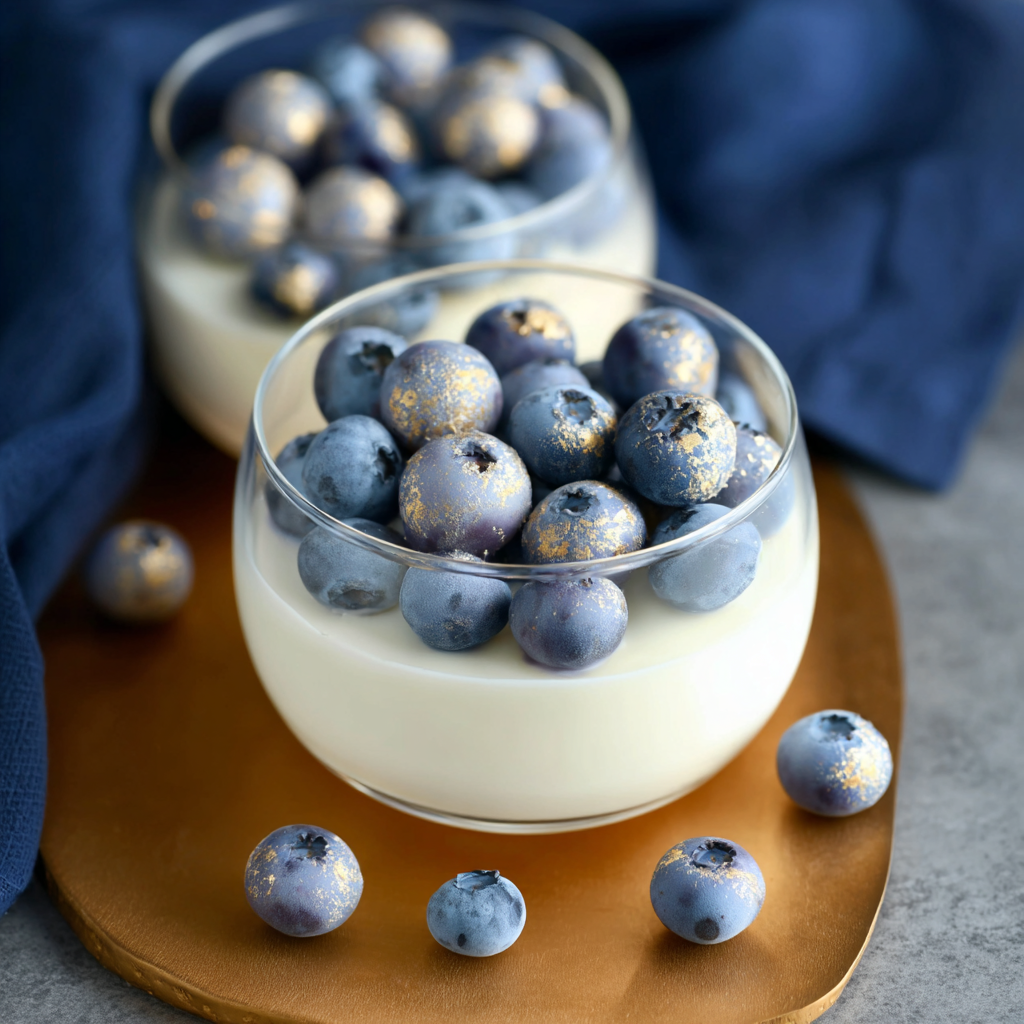
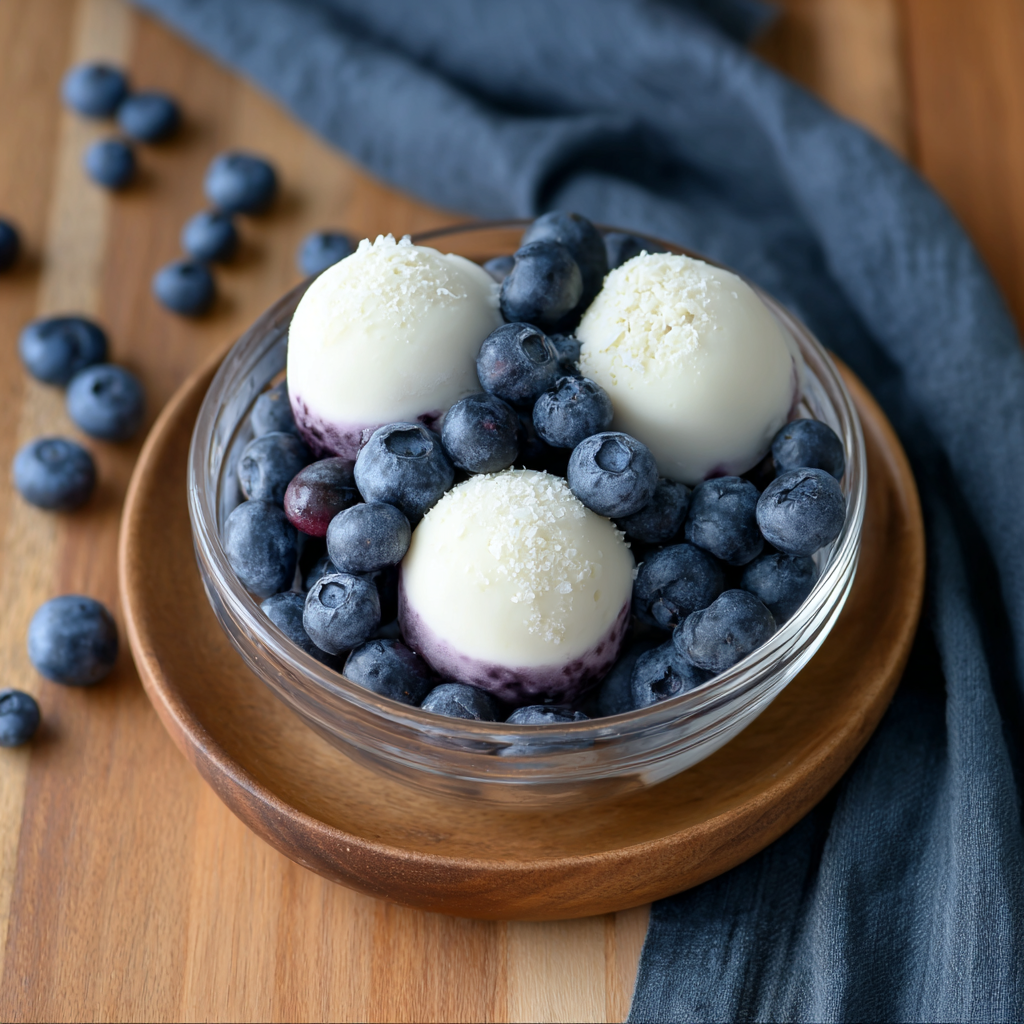
These frozen Greek yogurt and blueberry bites are the purest expression of that principle. Fresh blueberries — or frozen, thawed, and dried — coated in a sweetened vanilla Greek yogurt, frozen on a parchment-lined tray until solid, and served directly from the freezer as a snack, a dessert, or a component of a more elaborate frozen board. The yogurt coating softens from its initial icy firmness within 30 seconds of being held, producing a creamy, tangy exterior that gives way to the sweet, slightly tart blueberry at the center — a texture and flavor sequence that makes these bites genuinely difficult to stop eating.
A 2023 nutritional review in the British Journal of Nutrition identified blueberries as containing one of the highest concentrations of anthocyanins of any commonly available fruit — the same class of antioxidant polyphenols found in purple sweet potato and red cabbage — with a specific anthocyanin profile associated in multiple large-scale studies with improved cognitive function, cardiovascular protection, and reduced inflammatory markers. Combined with Greek yogurt’s probiotic content and complete protein, these bites deliver a micronutrient contribution that is genuinely exceptional for a frozen treat of any kind.
Ingredients List
For the Bites
- 2 cups (300g) fresh blueberries (or frozen blueberries, fully thawed and patted very dry)
- 1½ cups (360g) full-fat plain Greek yogurt (10% fat — the higher fat content prevents excessive iciness)
- 2–3 tbsp raw honey or maple syrup (adjust to taste — the sweetener also slightly lowers the freezing point for a less icy texture)
- 1 tsp pure vanilla extract
- Pinch of fine sea salt (amplifies the blueberry flavor and the yogurt’s natural tang)
Optional Flavor Additions (Choose One or None)
- 1 tsp lemon zest (the most complementary addition — the citrus brightens the blueberry significantly)
- ½ tsp ground cinnamon (adds warm depth)
- 1 tbsp chia seeds (stirred into the yogurt — adds omega-3 and texture)
- 2 tbsp peanut or almond butter (stirred into the yogurt — adds protein and richness)
Optional Toppings (Applied Before Freezing)
- 2 tbsp granola, roughly crushed (pressed into the coated blueberry before freezing — adds crunch)
- 1 tbsp toasted coconut flakes
- 1 tbsp mini chocolate chips
- 1 tsp flaky sea salt (for a sweet-salty version)
Timing
- Active Prep Time: 4 minutes
- Freeze Time: 2 hours minimum (3–4 hours for fully solid bites)
- Total Time: 4 minutes active + freezing
The fastest recipe in this collection by active preparation time. The freezer does everything after the first 4 minutes.
Step-by-Step Instructions
Step 1: Prepare the Yogurt Coating
Combine the Greek yogurt, honey, vanilla extract, and salt in a medium bowl. Whisk together for 30 seconds until completely smooth and the honey is fully dissolved. Add any optional flavor additions at this stage. Taste — the yogurt mixture should be noticeably sweeter than the target final flavor, as freezing significantly dulls the perception of sweetness.
Step 2: Prepare the Blueberries
If using fresh blueberries, sort and remove any stems, damaged, or shriveled berries — the quality of each individual blueberry is visible in the finished bite, so using only firm, plump, fully ripe berries produces a meaningfully better result. Rinse gently and pat completely dry with paper towels — surface moisture prevents the yogurt from adhering to the blueberry skin and causes the coating to slide off rather than clinging firmly.
If using frozen blueberries, thaw completely at room temperature or overnight in the refrigerator, then spread on paper towels and press gently but firmly to remove all surface moisture. Frozen blueberries release significant moisture during thawing — insufficiently dried frozen blueberries produce a watery, thin yogurt coating that freezes to an icy shell rather than a creamy one.
Key tip: Dry blueberries = thick, creamy coating that adheres firmly. Wet blueberries = thin, icy coating that slides off. This single preparation step determines the quality of the finished bite more than any other decision in the recipe.
Step 3: Coat the Blueberries
Line a baking sheet or flat plate with parchment paper — not wax paper, which sometimes sticks to the frozen yogurt coating. Working in batches of approximately 20 blueberries at a time, add the blueberries to the yogurt mixture and stir gently with a spoon until every berry is evenly and generously coated. Using a fork, lift each coated blueberry individually and place on the parchment-lined sheet — tapping the fork gently against the bowl edge to remove any excess yogurt before placing. The coating should be visible but not thick — a thin, even layer that will freeze to a creamy exterior without becoming an impenetrable ice shell.
For an even simpler approach, add all blueberries to the yogurt at once, stir gently to coat, and use a spoon to transfer individual coated blueberries to the parchment in small clusters of 3–4 berries each — the cluster format creates slightly larger, more visually charming bites that are easier to handle than individual berry-sized pieces.
Key tip: Individual coated berries placed with space between them on the parchment freeze without sticking together and can be stored loose in a bag. Clusters frozen touching each other produce charming multi-berry bites but require slightly longer freezing time for the interior to set fully.
Step 4: Add Toppings Before Freezing
If using any toppings — granola, coconut flakes, chocolate chips, or flaky salt — scatter or press them onto the yogurt-coated blueberries immediately before freezing, while the coating is still wet and sticky. Toppings added after freezing do not adhere to the set yogurt surface.
Step 5: Freeze
Place the parchment-lined sheet in the freezer in a flat, level position and freeze for a minimum of 2 hours — 3–4 hours produces completely solid bites that are easier to handle and transfer to storage containers. The bites are ready when the yogurt coating is completely solid and the bites release cleanly from the parchment without sticking or deforming.
Step 6: Transfer and Store
Peel the frozen bites from the parchment and transfer immediately to an airtight container or zip-lock freezer bag — working quickly to prevent the bites from softening and sticking together during handling. Layer between sheets of parchment if storing in a container to prevent the bites from fusing into a solid mass during extended freezer storage.
Nutritional Information
Per serving — based on ¼ cup (approximately 15 bites) of the finished frozen bites.
| Nutrient | Per Serving | % Daily Value* |
|---|---|---|
| Calories | 85 kcal | 4% |
| Total Fat | 2.5g | 3% |
| Saturated Fat | 1.5g | 8% |
| Total Carbohydrates | 12g | 4% |
| Total Sugar | 10g | — |
| Protein | 5g | 10% |
| Dietary Fiber | 1g | 4% |
| Sodium | 35mg | 2% |
| Calcium | 8% DV | 8% |
| Vitamin C | 10% DV | 10% |
| Anthocyanins | High | — |
*Based on a standard 2,000-calorie daily diet.
At 85 calories per quarter-cup serving with 5 grams of protein — and essentially no added fat beyond the natural dairy fat in the Greek yogurt — these bites represent one of the most favorable calorie-to-satisfaction ratios in any frozen snack category. The anthocyanin content from the blueberries is the most distinctive nutritional contribution — genuinely high relative to almost any other commonly consumed food.
Healthier Alternatives
No added sweetener: Omit the honey entirely — very ripe, sweet blueberries provide sufficient natural sweetness for most palates. The yogurt’s natural tang against the blueberry sweetness is actually more interesting without added sweetener for those who prefer less sweet snacks.
Higher protein: Stir 2 tablespoons of unflavored or vanilla protein powder into the yogurt base — whisk until completely smooth before coating the blueberries. This pushes the protein content above 8 grams per serving without meaningfully altering the flavor.
Dairy-free: Replace full-fat Greek yogurt with full-fat coconut yogurt — the fat content is comparable and the freeze texture is nearly identical. The flavor shifts toward tropical but complements the blueberry well. Oat-based Greek-style yogurt also works well for a neutral-flavored dairy-free version.
Added omega-3: Stir 1 tablespoon of chia seeds into the yogurt base before coating. The chia seeds add texture, omega-3 fatty acids, and additional fiber — their dark spots are visible in the coating and add visual interest to the finished bites.
With other fruits: Replace blueberries with raspberries, blackberries, halved strawberries, or sliced banana — each produces a different but equally compelling bite with the same yogurt coating. Mixed berry bites combine multiple fruits in a single batch for visual variety.
Serving Suggestions
As a direct freezer snack: Eaten directly from the freezer bag or container — the most practical and most common format. Allow to sit for 30–60 seconds before eating for the ideal texture — the coating softens from icy to creamy while the blueberry interior remains cold and firm.
As a dessert board element: Pile a generous quantity of frozen bites on a board alongside other cold elements — additional fresh berries, a small bowl of honey, dark chocolate squares, and toasted nuts. The contrast of the white yogurt coating against the purple blueberry visible through the translucent coating is visually striking at the serving temperature.
Smoothie addition: Add 10–15 frozen bites to a blender with oat milk and a banana for a blueberry yogurt smoothie that uses the bites as a flavor base — the frozen yogurt coating contributes creaminess while the blueberries provide flavor and the anthocyanin content.
As an ice cream topping: Scatter 10–15 bites over a bowl of vanilla ice cream immediately from the freezer. The frozen yogurt bites provide textural contrast against the ice cream and slow the melting rate of the surrounding scoop, extending the ice cream eating experience.
Children’s snack format: Serve in a small bowl with a spoon for children who prefer a spoon-based eating format for small frozen items. The small size, the familiar flavor combination, and the visible blueberry within the coating make these particularly appealing to children who enjoy being able to see what they are eating.
Common Mistakes to Avoid
Not drying the blueberries. Surface moisture is the primary cause of yogurt coating failure — it creates a barrier between the blueberry skin and the yogurt that prevents adhesion and produces a thin, watery coating that freezes to an icy shell rather than a creamy one. Paper towels and a firm but gentle press are the solution.
Using low-fat or non-fat Greek yogurt. Low-fat yogurt freezes to a hard, icy texture rather than the creamy, slightly yielding texture of full-fat yogurt. The fat content interferes with ice crystal formation and is the primary determinant of texture quality in any frozen yogurt preparation.
Not sweetening sufficiently before freezing. Freezing suppresses the perception of sweetness significantly — a yogurt mixture that tastes correctly sweet at room temperature will taste noticeably less sweet when frozen. Sweeten the yogurt base more assertively than the target final flavor before freezing.
Placing on wax paper. Wax paper can adhere to frozen yogurt coatings and tear the coating surface when the bites are removed. Parchment paper releases cleanly from the frozen yogurt surface consistently.
Not working in batches. Coating all the blueberries at once and leaving them sitting in the yogurt while the first ones are placed produces over-coated, clumped blueberries by the final batch. Work in batches of 20 and transfer to the parchment sheet promptly.
Storing Tips
Freezer: Store in an airtight container or zip-lock bag with parchment layers between rows for up to 2 months. After 2 months, ice crystals begin to form on the exterior of the coating and the texture becomes progressively icier — still edible but less pleasant.
Preventing clumping: Ensure the bites are completely frozen and separated on the parchment before transferring to the storage container. Bites that are not fully frozen fuse together in the container and must be broken apart — damaging the coating.
Serving from frozen: The optimal eating temperature is 30–60 seconds after removal from the freezer — the coating softens from icy to creamy while the blueberry interior remains cold and firm. Beyond 3 minutes at room temperature, the coating begins to weep and the blueberries release juice.
Batch preparation: This recipe doubles and triples easily — prepare a double batch on Sunday using two baking sheets and a full container of Greek yogurt. A month’s worth of daily snacks requires approximately 15 minutes of weekend preparation.
Conclusion
Frozen Greek yogurt and blueberry bites prove that the most nutritious frozen snack in the freezer is also frequently the simplest — three ingredients, four minutes, and a result that delivers the protein and probiotics of Greek yogurt, the extraordinary anthocyanin content of blueberries, and the textural satisfaction of a creamy frozen coating around a sweet, cold fruit interior. A snack that requires no willpower to choose over worse alternatives because it is genuinely, completely better than any of them.
Make a batch and share your results in the comments — tell us which optional additions you tried, whether you made individual bites or clusters, and how long they lasted in your freezer. Leave a review, share with someone who needs a better frozen snack solution, and subscribe to our newsletter for more minimal-effort, maximum-nutrition recipes every week.
FAQs
Can I use frozen blueberries? Yes — with a critical preparation step. Frozen blueberries must be completely thawed and very thoroughly dried before coating — they release substantial moisture during thawing that prevents yogurt adhesion if not removed. Spread on several layers of paper towels and press gently but firmly to absorb all surface moisture before coating. The finished bites are comparable in quality to fresh blueberry versions when the drying step is properly executed.
Why is my yogurt coating falling off the blueberries? Two causes: blueberries that were not thoroughly dried, which prevents adhesion; or yogurt that is too thin because a low-fat variety was used or the honey was added without sufficient stirring to fully dissolve and incorporate. Ensure the blueberries are completely dry before coating, use full-fat Greek yogurt, and whisk the yogurt base until completely smooth before beginning.
Can I make these without honey? Yes — and many people prefer the unsweetened version for its more genuinely yogurt-forward character. The natural sweetness of ripe blueberries against the tang of unsweetened full-fat Greek yogurt produces a bite that is complex and interesting rather than simply sweet. For those who prefer some sweetness, 1 tablespoon of honey rather than the full 3 tablespoons produces a lightly sweetened version that satisfies most palates.
How do I make these for a child who doesn’t like the tartness of Greek yogurt? Use a combination of ½ Greek yogurt and ½ plain whole-milk yogurt — the mixed base retains some of the protein benefit while producing a milder, less tangy coating. Adding an extra tablespoon of honey and ½ teaspoon of vanilla to the mixed base produces a noticeably sweeter, milder coating that is broadly appealing to children who find Greek yogurt too tart.
Can I add other fruits? Yes — raspberries, blackberries, halved cherries, and grape halves all work well with the same yogurt coating technique. Sliced strawberries produce flat bites rather than round ones — appealing in a different way. Halved grapes are an excellent nut-free, school-appropriate alternative that children particularly enjoy. Mango chunks produce a tropical variation that pairs beautifully with coconut yogurt instead of Greek.
Do I need any special equipment? No — a bowl, a fork, a baking sheet, and parchment paper are the only requirements. No molds, no piping bags, and no specialist freezer equipment. The simplicity of the equipment requirement is part of what makes this one of the most accessible frozen treat preparations available.