Follow Me On Social Media!
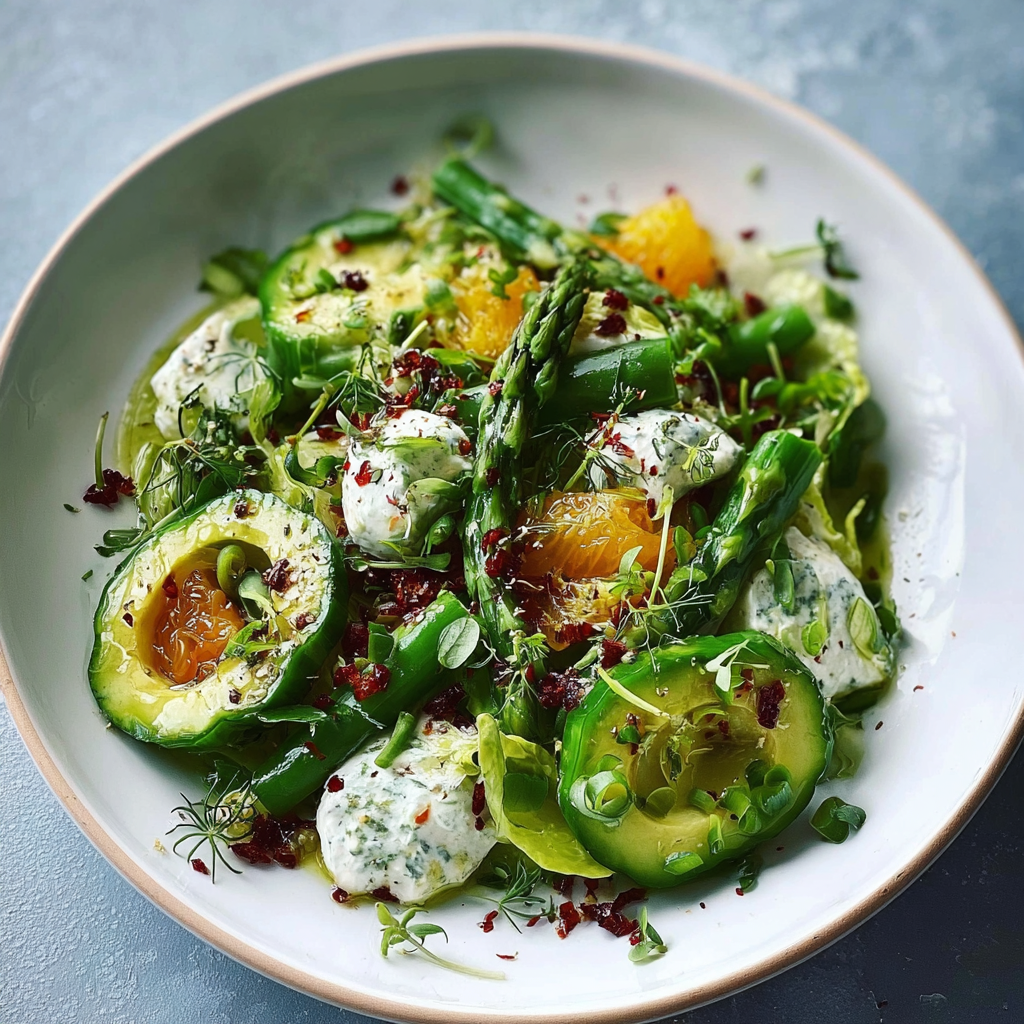
Easy Green Salad

Introduction
Here is a question that cuts to the heart of everyday cooking: why does the salad — the preparation that should require the least effort, the fewest ingredients, and the shortest time of anything on the table — so consistently underperform, arriving as a bowl of cold, undressed, under-seasoned leaves that nobody is genuinely excited to eat, when the version that makes everyone reach for a second serving requires only the same ingredients treated with the same intentionality applied to every other component of the meal?
According to a 2024 consumer eating behavior report by the Food Marketing Institute, salad is the most frequently prepared and most frequently described as disappointing side dish in American home cooking — with the primary complaints being insufficient seasoning, dressing applied too early or in too small a quantity, and ingredients that provide no textural contrast beyond the leaves themselves. This easy green salad corrects all three with the same philosophy applied to every recipe in this collection: deliberate ingredient selection, correct technique at every step, and the understanding that a salad is not an afterthought but a dish that deserves the same attention as everything else on the table.
The formula is simple and reproducible: a base of at least two different greens with complementary textures and flavors, a supporting cast of ingredients that provide sweet, savory, crunchy, and creamy elements in every bowl, and a properly made vinaigrette — emulsified, well-seasoned, and applied at the last possible moment — that coats every leaf rather than pooling at the bottom of the bowl. Once understood, this formula produces a salad that can be varied infinitely with different greens, different add-ins, and different dressings while always delivering the same result: a salad that tastes like it was made by someone who cared.
A 2023 nutritional review in the American Journal of Clinical Nutrition identified mixed green salads prepared with olive oil-based dressings as one of the highest-bioavailability fat-soluble vitamin delivery mechanisms in the diet — the fat in the dressing significantly increasing the absorption of fat-soluble Vitamins A, E, and K from the surrounding greens compared to fat-free dressings, explaining why a properly dressed salad is measurably more nutritious than an undressed or fat-free dressed equivalent.
Ingredients List
For the Salad Base
- 4 cups (120g) romaine lettuce, chopped or torn (provides crunch and structure)
- 2 cups (60g) mixed spring greens or arugula (provides tenderness and peppery complexity)
- 1 cup (30g) baby spinach (provides iron, folate, and a softer texture)
For the Supporting Ingredients
- 1 cup (150g) cherry tomatoes, halved
- 1 English cucumber, thinly sliced or diced
- ¼ red onion, very thinly sliced (or pickled red onion — see FAQ)
- 1 ripe avocado, diced
- ½ cup (60g) croutons (store-bought or homemade — see Step 1)
- ¼ cup (35g) toasted nuts or seeds (pepitas, sunflower seeds, sliced almonds, or candied walnuts)
- ¼ cup (30g) cheese (crumbled feta, shaved Parmesan, or goat cheese)
For the Classic Lemon Dijon Vinaigrette
- 3 tbsp extra virgin olive oil (good quality — it is a primary flavor driver)
- 1 tbsp fresh lemon juice
- 1 tsp red wine vinegar
- 1 tsp Dijon mustard (the emulsifier — prevents the dressing from separating)
- ½ tsp honey
- 1 small garlic clove, finely minced or pressed
- ¼ tsp fine sea salt
- ¼ tsp freshly ground black pepper
Timing
- Crouton Time: 10 minutes (if making homemade — skip if using store-bought)
- Prep Time: 10 minutes
- Total Time: 10–20 minutes
Step-by-Step Instructions
Step 1: Make Croutons (Optional but Recommended)
For homemade croutons — which are dramatically better than commercial ones — cut 2 thick slices of day-old bread into 2cm cubes. Toss with 2 tablespoons of olive oil, a pinch of garlic powder, salt, and dried Italian herbs. Spread on a baking sheet and bake at 375°F (190°C) for 10–12 minutes until golden and crispy throughout. Allow to cool completely before adding to the salad — hot croutons wilt the surrounding greens.
Step 2: Make the Vinaigrette
Combine the Dijon mustard, garlic, honey, salt, and pepper in a small bowl or jar. Add the lemon juice and red wine vinegar and whisk to combine. Add the olive oil in a slow, steady stream while whisking continuously — the mustard emulsifies the oil and acid into a cohesive, slightly thickened dressing that coats leaves rather than sliding off them. Taste and adjust — more lemon for brightness, more honey for balance, more salt to sharpen all flavors.
Key tip: The Dijon mustard is both a flavor component and the functional emulsifier of the dressing. Without it, the oil and vinegar separate immediately and pool at the bottom of the salad bowl. With it, the dressing remains cohesive long enough to coat every leaf evenly.
Step 3: Prepare the Greens
Wash all greens in cold water if not pre-washed and spin completely dry in a salad spinner — or pat dry with clean kitchen towels. Wet greens dilute the dressing and prevent it from clinging to the leaf surfaces. Dry greens are the physical prerequisite for a properly dressed salad — this is the most commonly skipped step and the one that most directly explains why home salads taste under-dressed even when generous quantities of dressing are applied.
Combine the romaine, spring greens, and spinach in a large bowl — large enough that the greens can be tossed without spilling.
Step 4: Prepare the Toppings
Slice the cucumber, halve the cherry tomatoes, thinly slice the red onion, and dice the avocado — tossing the avocado immediately with a squeeze of lemon juice to prevent browning. Prepare all components before dressing the greens — once the dressing is applied, the clock is running.
Step 5: Dress the Salad
Pour approximately two-thirds of the vinaigrette over the greens and toss thoroughly — using two large spoons, tongs, or your hands — until every leaf is lightly and evenly coated. Taste a leaf — it should taste of the dressing without being wet or heavy. Add more dressing if needed, a tablespoon at a time. The goal is full, even coverage without pooling.
Key tip: Dressing the greens before adding the toppings — rather than pouring the dressing over the assembled salad — produces the most even coating. The tomatoes, cucumber, and other toppings added after dressing the greens then settle on a properly coated base rather than a pooled dressing beneath undressed leaves.
Step 6: Add Toppings and Serve
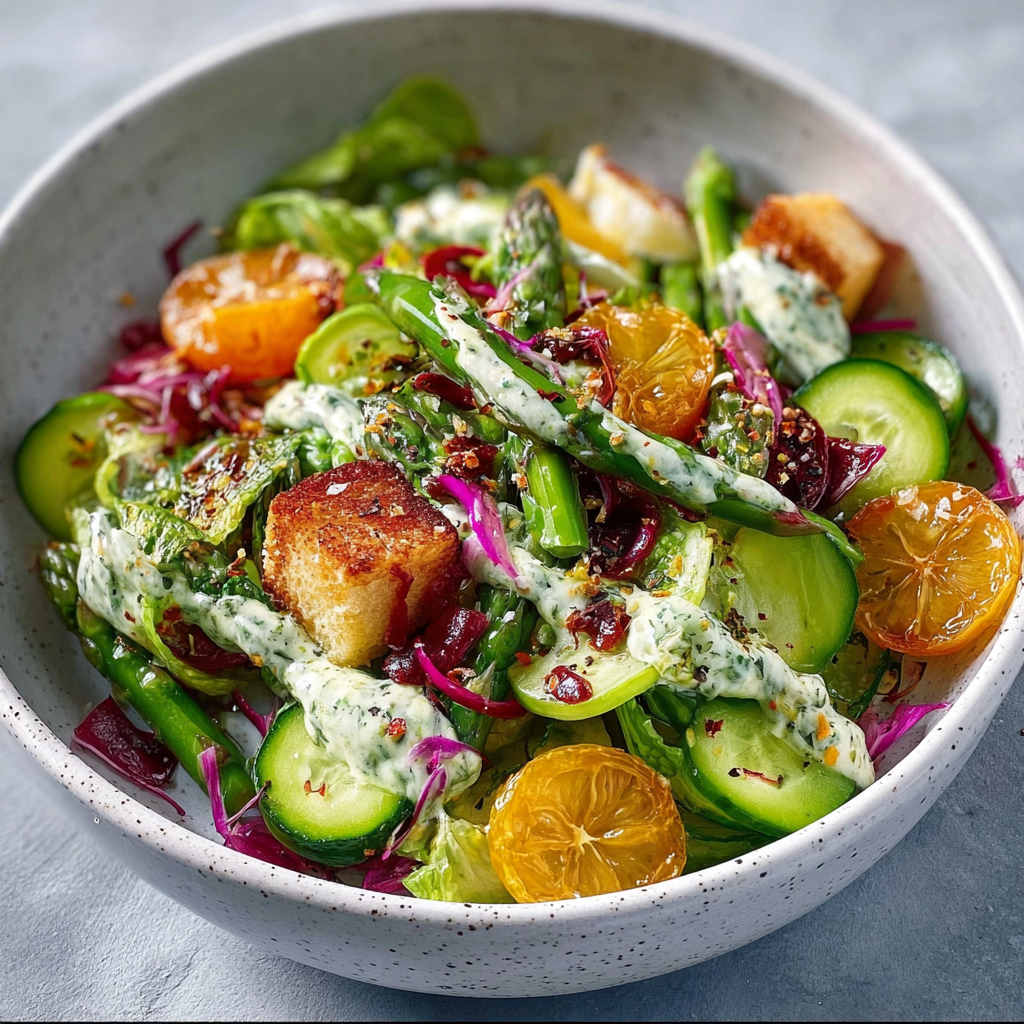
Arrange the dressed greens in a wide, shallow serving bowl or on individual plates. Add the cherry tomatoes, cucumber, red onion, and avocado over the dressed greens. Scatter the croutons, toasted nuts or seeds, and cheese over the top. Drizzle the remaining dressing over the toppings if desired. Serve immediately — this is the most important instruction in the recipe.
Nutritional Information
Per serving — based on 4 servings with feta cheese, pepitas, and vinaigrette.
| Nutrient | Per Serving | % Daily Value* |
|---|---|---|
| Calories | 280 kcal | 14% |
| Total Fat | 22g | 28% |
| Saturated Fat | 4g | 20% |
| Total Carbohydrates | 18g | 7% |
| Total Sugar | 5g | — |
| Protein | 7g | 14% |
| Dietary Fiber | 5g | 18% |
| Sodium | 320mg | 14% |
| Vitamin C | 35% DV | 35% |
| Vitamin K | 120% DV | 120% |
| Folate | 25% DV | 25% |
*Based on a standard 2,000-calorie daily value.
The Vitamin K content — 120% of the daily recommended value per serving — from the combined contribution of romaine, spinach, and arugula makes this one of the most significant single-meal Vitamin K sources available from any salad preparation. The fat from the olive oil dressing and avocado increases the absorption of the fat-soluble vitamins in the greens by a measurable and nutritionally meaningful degree.
Healthier Alternatives
Higher protein: Add grilled chicken, canned tuna, hard-boiled eggs, cooked chickpeas, or seared tofu to transform this side salad into a complete, meal-worthy main. Each addition pushes the protein content above 20 grams per serving.
Lower fat: Reduce the olive oil in the dressing to 2 tablespoons and increase the lemon juice and vinegar slightly. Replace the avocado with additional cucumber for volume without fat. The salad remains well-dressed and flavorful with meaningful fat reduction.
Anti-inflammatory focus: Replace the romaine with a base of shredded kale and purple cabbage — both with higher antioxidant content than romaine — and add blueberries, walnuts, and a turmeric-enhanced vinaigrette.
Lower calorie: Omit the croutons and reduce the cheese to 2 tablespoons. The salad remains satisfying through the avocado, nuts, and vinaigrette — both contribute significantly more flavor per calorie than croutons or a large cheese quantity.
Serving Suggestions
As a dinner side: Serve alongside any pasta, grilled protein, or roasted vegetable main. The bright, acidic vinaigrette is specifically well-suited to cutting through rich cream sauces and fatty proteins — a Caesar alongside pasta versus this lemon Dijon vinaigrette alongside pasta are not interchangeable in the way they balance the overall meal.
As a meal with protein: Add grilled chicken, seared salmon, or roasted chickpeas and serve as a standalone lunch or light dinner. The avocado, nuts, and cheese provide sufficient fat and protein for a genuinely satiating main course salad.
On a dinner party table: Serve in a large, wide, shallow bowl — a wide bowl allows every component to be visible on the surface rather than buried. A salad that looks as good as it tastes is a better dinner party salad than one that tastes good but appears as a mound of undifferentiated leaves.
Mediterranean version: Replace the feta with Kalamata olives and sun-dried tomatoes, add artichoke hearts and roasted red peppers, and use a red wine vinegar and oregano vinaigrette for a Mediterranean salad that functions as an entirely different dish from the same basic formula.
Common Mistakes to Avoid
Wet greens. The single most impactful preparation error — wet greens dilute and repel the dressing rather than absorbing it. Spin or pat completely dry before dressing.
Dressing too early. Dressed salad left to sit for more than 10–15 minutes wilts and releases water as the salt in the dressing draws moisture from the leaves. Dress immediately before serving.
Too little dressing. Under-dressed salad tastes flat and dry. Every leaf should be lightly coated — taste a leaf after tossing and add more dressing if it tastes of nothing but green.
Not emulsifying the dressing. Un-emulsified dressing pools at the bottom of the bowl — the oil and vinegar separate and the leaves receive either all oil or all acid rather than a balanced coating. The Dijon mustard and the whisking technique are what produce a stable, leaf-coating emulsion.
Adding croutons too early. Croutons soften within 5 minutes of contact with dressed greens — add them immediately before serving.
Storing Tips
Undressed salad: Store the prepared greens and toppings separately from the dressing for up to 2 days — the greens in one container, the toppings in another, the dressing in a sealed jar. Assemble and dress at the moment of eating.
Dressing: Stores in a sealed jar in the refrigerator for up to 1 week. The oil will solidify slightly at refrigerator temperature — bring to room temperature for 10 minutes and shake vigorously before using.
Dressed salad: Not suitable for storage — dress only the quantity that will be eaten immediately.
Conclusion
An easy green salad proves that the most consistently underestimated dish on any table is also one of the most immediately improvable — dry greens, a properly emulsified vinaigrette applied at the last moment, textural contrast from croutons and nuts, and the understanding that a salad dressed with intention is a different dish entirely from a salad dressed as an afterthought. The same ingredients, treated with the same care as everything else on the table, produce a salad that earns its place rather than simply occupying it.
Make it and share your results in the comments — tell us which greens you used, which cheese you chose, and whether the emulsified vinaigrette made the difference it always does. Leave a review, share with someone who makes salad every night and could make it better, and subscribe to our newsletter for more everyday excellence recipes every week.
FAQs
How do I make quick pickled red onion? Slice ½ a red onion very thinly and place in a small jar. Combine ¼ cup of red wine vinegar, ¼ cup of water, 1 teaspoon of sugar, and ½ teaspoon of salt — pour over the onion and leave for 20 minutes at room temperature. The onion turns vivid pink and loses its sharp, raw bite, becoming tangy and complex. Refrigerate for up to 2 weeks. This single addition improves any green salad more dramatically than almost any other single change.
What greens work best for this formula? The most effective base is a combination of at least one sturdy, crunchy green — romaine, iceberg, or little gem — and one tender, more flavorful green — arugula, watercress, or spring mix. The contrast between textures and flavor intensities makes the salad more interesting than a single-green preparation. Avoid greens that wilt immediately — delicate butter lettuce and baby greens are best used in small quantities as accents rather than as the primary base.
Can I make the vinaigrette without Dijon mustard? The Dijon mustard serves as the emulsifier — without it, the dressing separates almost immediately and pools rather than coating leaves. A small amount of honey or a pinch of xanthan gum can function as partial substitutes, but neither produces as stable an emulsion as Dijon. Whole grain mustard works identically to Dijon and adds visible mustard seeds for visual interest.
How do I prevent the avocado from browning in a meal prep context? Toss diced avocado with lemon or lime juice immediately after cutting and store with plastic wrap pressed directly onto the surface to minimize air contact. Consume within 24 hours — avocado deteriorates in texture and flavor beyond this window regardless of preparation method. For meal prep extending beyond 24 hours, add fresh avocado daily.
What is the correct dressing-to-greens ratio? A general guideline is 1–2 tablespoons of dressing per 2 cups (60g) of greens — enough to coat every leaf lightly without any visible pooling at the bottom of the bowl. The most reliable test is tasting a dressed leaf — it should taste of the dressing’s flavor profile without any sensation of wetness or heaviness. Add dressing in small increments and taste after each addition rather than applying the full quantity at once.
Can I use a store-bought dressing? Yes — a good quality store-bought vinaigrette produces a result that is significantly better than a homemade dressing made with poor quality olive oil or insufficient seasoning. The most important technique factors — dry greens, correct timing of dressing application, and proper tossing — apply equally to store-bought and homemade dressings. A great vinaigrette is better than a mediocre homemade one, regardless of origin.