Follow Me On Social Media!
Slow Cooker Beef and Vegetable Foil Packets
Tender slow cooker beef chuck, potatoes, carrots, and onion in individual foil packets. Includes the full recipe, folding instructions, cooking tips, and storage advice.

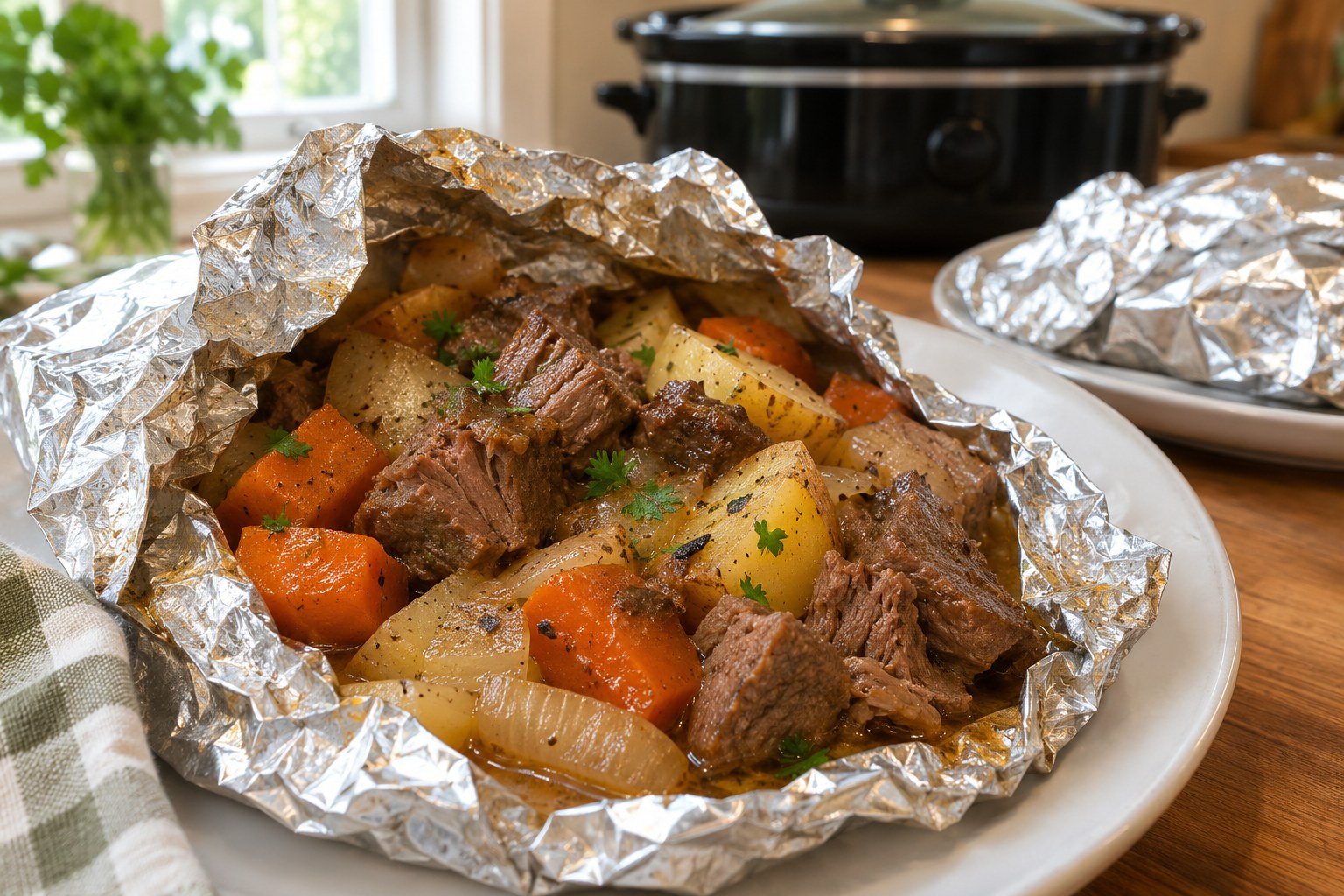
Slow Cooker Beef and Vegetable Foil Packets bring together tender beef, potatoes, carrots, and onion in individual parcels filled with savory cooking juices. The foil holds each serving together while the slow cooker supplies gentle heat, making this a comforting dinner with a simple presentation.
This version uses beef chuck rather than lean steak. Chuck benefits from a long cooking time and becomes tender alongside sturdy root vegetables. A little broth, garlic, paprika, and dried herbs give the filling flavor without turning the meal into a large pot of soup.
Expect the beef and vegetables to have a soft, braised texture. Slow cooking in a closed packet produces moisture rather than crisp, roasted edges. Open each parcel over a plate or shallow bowl so you can enjoy the juices with the potatoes.
Why You’ll Love This Dinner
- A complete main course: Beef and hearty vegetables cook together in each packet.
- Simple seasonings: Garlic, herbs, and broth create a familiar savory flavor.
- Easy portions: Four packets make four generous servings.
- Gentle cooking: Beef chuck has time to soften without needing constant attention.
- Flexible serving: Eat from a supported, opened packet or transfer everything into bowls.
Choosing the Right Beef
Boneless beef chuck is a practical choice for this recipe. Cut away large pieces of hard exterior fat and divide the meat into roughly 1-inch cubes. A little marbling helps the cooked beef stay rich and satisfying, but large pockets of fat can leave the packet greasy.
Packaged stew meat can work if it is cut from chuck, although mixed cuts may soften at different rates. Check the label or ask the butcher when possible. For the most consistent result, start with one piece of chuck and cut evenly sized cubes yourself.
Lean sirloin and tender steak cuts are less suited to this long cooking schedule. They can become dry rather than improving with extra time. This recipe is designed around a cut that benefits from slow braising, so a different beef cut may need a different cooking method.
Vegetables That Hold Up to Slow Cooking
Baby potatoes or waxy yellow potatoes keep their shape well. Cut them into pieces no larger than about 1 inch so they soften alongside the beef. Large whole potatoes can remain firm in the center even after smaller ingredients are ready.
Carrots cut into thick half-inch slices bring sweetness and body. Onion softens and flavors the packet juices. Keep the vegetables substantial enough to survive the long cooking time without turning them into oversized chunks that cook unevenly.
Quick-cooking vegetables such as zucchini, broccoli, and asparagus are not direct substitutes for the full cooking period. If you want those alongside the packets, cook them separately near serving time.
Slow Cooker Beef and Vegetable Foil Packets Recipe
Yield: 4 packets
Servings: 4
Prep: 25 minutes
Cooking: Approximately 7-8 hours on LOW or 4-5 hours on HIGH
Rest: 5 minutes
Total: About 7 hours 30 minutes to 8 hours 30 minutes on LOW
Ingredients
- 1 1/2 pounds (680 g) boneless beef chuck, trimmed and cut into 1-inch cubes
- 1 pound (450 g) baby potatoes, cut into pieces no larger than 1 inch
- 3 medium carrots, cut into 1/2-inch slices
- 1 medium onion, cut into thick slices
- 2 tablespoons olive oil
- 3 garlic cloves, minced
- 1 teaspoon paprika
- 1 teaspoon dried thyme
- 1/2 teaspoon dried rosemary, crushed
- 3/4 teaspoon fine salt, or to taste
- 1/2 teaspoon ground black pepper
- 1/2 cup (120 ml) low-sodium beef broth, divided among packets
- 1 cup (240 ml) hot water, for the bottom of the slow cooker
- Chopped fresh parsley, optional, for serving
Equipment
- A 6- to 7-quart oval slow cooker whose instructions permit foil packets
- Heavy-duty aluminum foil
- A large mixing bowl
- Tongs and a wide spatula
- An instant-read food thermometer
Step-by-Step Instructions
- Check the fit. Check your slow cooker’s instructions for permitted foil use and loading limits. Four loosely arranged packets must fit inside with the lid fully closed. Do not force them into a smaller cooker, pack them tightly, or cover the rim with foil.
- Prepare the ingredients. Use fully thawed beef. Cut the meat, potatoes, carrots, and onion as described. Similar-sized pieces help the packets cook consistently.
- Season. Place the beef and vegetables in a large bowl. Add the oil, garlic, paprika, thyme, rosemary, salt, and pepper. Toss until the seasoning is distributed.
- Build four packets. Lay out four large sheets of heavy-duty foil, each about 18 inches long. If needed, double the foil for strength. Divide the mixture among the sheets, keeping the vegetables beneath and around the beef. Add 2 tablespoons broth to each portion.
- Seal with room inside. Bring the long foil edges together above the filling and fold them over twice. Fold in the short ends to hold in the liquid, leaving a little headroom for steam. Keep the seams on top. Do not wrap the food into a tightly compressed ball.
- Load the cooker. Add 1 cup hot water to the bottom of the crock. Set the packets inside, seams upward, with room around them where possible. Lightly overlap only as needed without tightly compressing them. Stay within the appliance’s recommended fill limit and close the lid completely.
- Cook. Cook on LOW for approximately 7-8 hours or HIGH for 4-5 hours. These times are estimates; packet shape, stacking, meat thickness, and your appliance affect the result. Keep the lid closed between checks.
- Check every packet. Carefully open each packet enough to test a thick piece of beef and a potato. Beef should be fork-tender and potatoes should offer little resistance. Beef from whole cuts must reach at least 145°F (63°C), followed by a 3-minute rest, for safety; chuck usually needs substantially more cooking to become tender. Continue cooking if the meat is still chewy or the vegetables are firm.
- Lift out and rest. Support each packet from underneath with a wide spatula while using tongs for stability. Place on a rimmed plate and rest for 5 minutes. Open away from your face and hands because hot steam will escape.
- Serve with the juices. Sprinkle with parsley if desired. Spoon the liquid inside each packet over the beef and vegetables. The water beneath the packets is not a serving sauce.
How to Fold a Packet That Holds Its Juices
A broad, shallow packet works better than a tall mound of ingredients. Spread the filling into the middle of the foil, leaving a generous border. Bring the long sides together above the food and make small, firm folds rather than pinching the foil directly against the beef.
Fold the short ends upward so the seams sit above the level of the broth. This helps contain liquid when the packet is moved. Check for tears before adding it to the cooker, especially near sharp potato corners or compressed folds.
If a packet tears, wrap it in a second sheet rather than trying to patch a wet hole. Keep the double layer reasonably smooth so it does not make the parcel unnecessarily bulky. Always support filled packets from beneath; foil alone is not a sturdy handle.
Do You Need to Brown the Beef First?
Browning is optional. The basic recipe starts with raw, thawed chuck, which cooks fully during the long slow-cooker period. The finished beef will have a braised appearance rather than the dark exterior of grilled steak.
If you want a deeper browned flavor, sear the beef in small batches in a hot skillet with a little additional oil, then assemble the packets and start cooking promptly. Searing is a flavor step, not a substitute for cooking the beef through. Allow extra preparation time, and continue to judge the finished meat by temperature and tenderness.
Avoid crowding the skillet if you choose this option. Too much beef at once releases moisture and makes the meat steam. A few browned surfaces are enough; you do not need to cook each cube fully before assembling.
Tips for Tender Beef and Evenly Cooked Vegetables
Give chuck enough time. Beef can be safely cooked before it is tender enough to enjoy. If it is chewy, it often needs more time for the connective tissue to soften rather than less cooking.
Cut the potatoes small enough. Root vegetables can be surprisingly slow to soften in a slow cooker. Keep the recommended size and place them low in each packet.
Do not overfill the cooker. Packet walls add bulk. If four servings will not fit comfortably, reduce the recipe or use a larger suitable appliance instead of pressing the lid into place.
Check more than one serving. An upper packet and a lower packet can heat at different rates. Open and test every packet before serving rather than assuming one result represents the entire cooker.
Keep the added liquid modest. The beef and vegetables release moisture. The broth is there to flavor the packet juices, not to turn each portion into a bowl of stew.
Simple Variations
Garlic and Herb
Add another minced garlic clove if you enjoy a stronger garlic flavor. Finish with fresh parsley or chives after cooking rather than relying only on dried herbs.
Mushroom and Beef
Add a small handful of thickly sliced mushrooms to each packet, provided the cooker still has enough room. Mushrooms release moisture, so keep the broth amount modest and expect extra juices.
A Little Heat
Add a pinch of chili flakes to the seasoning mixture. Start small so the vegetables remain balanced with the beef. Hot sauce can also be offered at the table.
Different Root Vegetables
Replace some of the carrots with similarly sized parsnip pieces. Sweet potatoes soften more quickly than waxy potatoes and may become very soft during the full cooking time, so they are not the best choice if you want firm, defined chunks.
What to Serve Alongside
The packets already contain protein, potatoes, and vegetables, so a simple green salad is usually enough. Crusty bread is useful for the juices, while steamed green beans add a fresh contrast to the soft root vegetables.
If you enjoy this style of dinner, try our slow cooker beef pot roast with baby potatoes for a larger shared meal. For dessert, 2-Ingredient Apple Pie Cups make an easy individual serving.
Make-Ahead Preparation
Cut the beef and vegetables the evening before and refrigerate them in separate covered containers. Keep the raw beef on a lower refrigerator shelf away from ready-to-eat foods. Assemble and start the cooker when you are ready rather than leaving loaded packets sitting at room temperature.
For the best potato texture and color, cut the potatoes close to assembly time. You can measure the dry seasonings ahead to reduce morning preparation. Do not use a delayed-start timer with raw meat in the cooker.
Storage and Reheating
After serving, transfer leftovers out of the foil and into shallow, covered storage containers. Refrigerate within 2 hours of cooking, or within 1 hour if the surrounding temperature is above 90°F (32°C). Use refrigerated leftovers within 3-4 days.
Reheat the beef and vegetables with their juices in a covered oven-safe dish or a microwave-safe container until the food reaches 165°F (74°C). Add a small splash of broth if needed to keep the beef moist. Remove all foil before microwaving.
Freeze cooled portions in suitable containers for up to 2 months for best quality. Thaw in the refrigerator before reheating. The potatoes may become a little softer after freezing, but the beef and juices generally reheat well.
Frequently Asked Questions
Can I Start with Frozen Beef?
No. Thaw the beef completely in the refrigerator before using this slow-cooker recipe. Frozen cubes can heat unevenly, particularly inside folded packets.
Can I Use Regular Foil?
Heavy-duty foil is easier to handle. If using standard foil, double it and check the folds for tears. The packets must be strong enough to hold both food and liquid when lifted.
Will the Food Taste Grilled?
No. A covered slow cooker produces moist heat, so these packets taste closer to a gentle braise. Paprika and optional searing add flavor, but they do not create the texture of grilled foil packets.
Why Are the Potatoes Still Firm?
The pieces may be too large, the cooker may be crowded, or the packet may need more time. Reseal it and continue cooking. Check the size of the pieces and test every packet before serving.
Can I Double the Recipe?
Only if you have sufficient suitable cooker capacity without packing the parcels tightly or exceeding its fill guidance. Two cookers are often more practical than forcing eight large packets into one crock. Do not assume the cooking time will stay identical when the load changes.
Food safety guidance: USDA guidance on slow-cooker ingredients and safe minimum internal temperatures.