Follow Me On Social Media!
Ultra-Indulgent Lobster Mac & Cheese

Introduction
Here is a question that reframes the most beloved comfort food in American cooking: what happens when the dish that has comforted more people through more difficult evenings than any other — macaroni and cheese, in its most fundamentally satisfying form — is treated not as a background staple but as a canvas for the most luxurious shellfish available, and the result is not a compromise between comfort and luxury but the complete realization of both simultaneously?
According to a 2024 consumer dining behavior report by the National Restaurant Association, lobster mac and cheese ranks as the single most ordered premium comfort food dish in upscale casual dining — driven by the recognition that the combination of sweet, tender lobster meat and a deeply flavored, multi-cheese cream sauce creates a textural and flavor experience that neither achieves independently. Yet the home cook version of this dish has an unfortunately poor reputation — produced most often from a boxed mix with canned lobster, or from a single-cheese béchamel that lacks the depth and complexity of the restaurant version — creating a gap between expectation and reality that this recipe is specifically designed to close.
This ultra-indulgent lobster mac and cheese is built on the two techniques that separate a genuinely extraordinary mac and cheese from any mediocre equivalent. First: a four-cheese sauce built on a proper béchamel base — Gruyère for nuttiness, sharp cheddar for depth, fontina for melt, and Parmesan for salt and umami — each chosen not for individual excellence but for what they contribute to the collective sauce. Second: a shellfish stock made from the lobster shells that infuses the cream sauce with a flavor of concentrated, sweet crustacean that no commercial stock and no canned lobster can approximate — transforming a cream sauce from generic richness to something specifically, unmistakably lobster.
A 2023 nutritional analysis in the Journal of the American College of Nutrition identified lobster as one of the most selenium-dense, copper-rich, and complete-protein seafood sources available — with a micronutrient profile that makes it not merely a luxury ingredient but a genuinely exceptional nutritional contribution to any dish it enters.
Ingredients List
For the Lobster
- 2 live lobsters (approximately 700g / 1.5 lbs each — or 400g / 14 oz of fresh or thawed lobster tail meat)
- Or: 400g (14 oz) cooked lobster tail meat, roughly chopped (the premium shortcut — removes the live lobster cooking step)
- 1 tbsp unsalted butter (for finishing the lobster meat)
- 1 tbsp cognac or dry sherry (for flambéing or deglazing the lobster — optional but aromatic)
- Salt and white pepper
For the Lobster Shell Stock (If Cooking Live Lobster)
- Reserved lobster shells and heads
- 1 tbsp olive oil
- 1 small onion, roughly chopped
- 1 carrot, roughly chopped
- 1 celery stalk, roughly chopped
- 2 garlic cloves
- 1 tbsp tomato paste
- ½ cup (120ml) dry white wine
- 3 cups (720ml) water or light chicken stock
- 1 bay leaf
- 3 sprigs fresh thyme
For the Four-Cheese Béchamel
- 4 tbsp unsalted butter
- 4 tbsp all-purpose flour
- 2 cups (480ml) whole milk, warmed
- 1 cup (240ml) heavy cream
- 1 cup (240ml) lobster shell stock (or additional cream if not making stock)
- 1 cup (115g) Gruyère, freshly shredded
- 1 cup (115g) sharp cheddar, freshly shredded
- ½ cup (55g) fontina or Havarti, freshly shredded
- ½ cup (50g) Parmesan, freshly grated
- 1 tbsp Dijon mustard
- 1 tsp Worcestershire sauce
- ½ tsp smoked paprika
- ¼ tsp cayenne pepper
- ¼ tsp ground nutmeg (the classical béchamel seasoning)
- Salt and white pepper to taste
For the Pasta
- 450g (1 lb) cavatappi, large elbow macaroni, or rigatoni (cavatappi — corkscrew tubes — holds the sauce most effectively)
For the Breadcrumb Topping
- 1 cup (60g) panko breadcrumbs
- 3 tbsp unsalted butter, melted
- ¼ cup (25g) Parmesan, finely grated
- 1 tsp smoked paprika
- ½ tsp garlic powder
- 1 tbsp fresh chives or parsley, finely chopped
- Pinch of cayenne
Timing
- Shell Stock: 30 minutes (if making from scratch)
- Pasta Cook Time: 12 minutes
- Sauce: 20 minutes
- Assembly and Bake: 25 minutes
- Total Time: 60–90 minutes (depending on whether shell stock is made)
Step-by-Step Instructions
Step 1: Cook the Lobster and Make the Shell Stock
If using live lobsters, bring a very large pot of salted water to a rolling boil. Plunge the lobsters head-first into the boiling water and cook for 8 minutes — the shells will turn vivid red and the meat will be just cooked through. Remove immediately and transfer to a bowl of ice water for 2 minutes to stop the cooking. Crack the shells and extract the tail and claw meat — chop roughly into 2–3cm pieces and refrigerate.
Reserve all shells, heads, and any accumulated juices. Heat the olive oil in a large saucepan over medium-high heat. Add the lobster shells and heads and cook for 3–4 minutes, stirring occasionally, until the shells are fragrant and beginning to caramelize — this roasting of the shells develops the deepest, most complex shellfish flavor in the stock. Add the onion, carrot, celery, and garlic. Cook for 2 minutes. Add the tomato paste and stir for 60 seconds. Deglaze with the white wine and allow to reduce by half. Add the water or stock, bay leaf, and thyme. Bring to a boil, reduce to a simmer, and cook for 20 minutes. Strain through a fine mesh sieve, pressing the shells firmly to extract maximum flavor, and set aside.
Key tip: The shell stock is the single most impactful technique in this recipe. The roasted shell stock infuses the cream sauce with a concentrated crustacean flavor that no commercial stock, no added seasoning, and no canned lobster can produce — it is the technique that makes the finished dish taste specifically and unmistakably of lobster throughout rather than merely having pieces of lobster distributed through a generic cream sauce.
Step 2: Sauté the Lobster Meat
In a skillet over medium-high heat, melt the butter until foaming. Add the cooked lobster pieces and sauté for 60 seconds — just enough to warm and very lightly caramelize the surface. Add the cognac or sherry and stir for 30 seconds. Season with salt and white pepper. Transfer to a plate and set aside — the lobster will finish warming in the sauce during the final bake.
Step 3: Cook the Pasta
Bring a large pot of generously salted water to a boil. Cook the pasta 3 minutes less than the package instructions — significantly under al dente. The pasta continues cooking during the baking phase and absorbs the surrounding cream sauce — pasta cooked to al dente before baking produces overcooked, mushy pasta in the finished dish.
Step 4: Make the Four-Cheese Béchamel
In a large, heavy-bottomed saucepan, melt the butter over medium heat. Add the flour and whisk continuously for 2 minutes until the roux turns lightly golden and smells faintly nutty — cooking out the raw flour taste completely. Gradually add the warm milk in a slow, steady stream, whisking continuously to prevent lumps. Add the heavy cream and the lobster shell stock. Whisk until completely smooth and bring to a gentle simmer — cook for 4–5 minutes, stirring frequently, until the sauce thickens to a coating consistency.
Remove from heat. Add the Dijon mustard, Worcestershire sauce, smoked paprika, cayenne, and nutmeg. Add the Gruyère, cheddar, and fontina — stirring continuously until each addition melts completely before the next is added. Stir in the Parmesan. Taste and adjust salt and white pepper. The finished sauce should be smooth, glossy, deeply flavored, and slightly looser than the target final consistency — it will tighten during baking.
Key tip: All cheese must be freshly shredded from blocks — anti-caking agents in pre-shredded cheese prevent proper melting and produce a grainy, slightly gritty sauce rather than the smooth, cohesive emulsion of freshly shredded cheese.
Step 5: Combine and Assemble
Preheat the oven to 375°F (190°C). Combine the under-cooked pasta with the cheese sauce in a large bowl — tossing to coat every piece evenly. The sauce should coat every strand generously — add a splash of pasta cooking water if the mixture appears too thick. Fold in the sautéed lobster pieces gently — distribute evenly without breaking the lobster into smaller pieces.
Transfer to a buttered 9×13-inch (23x33cm) baking dish or individual oven-safe ramekins for individual presentations.
Step 6: Make and Apply the Breadcrumb Topping
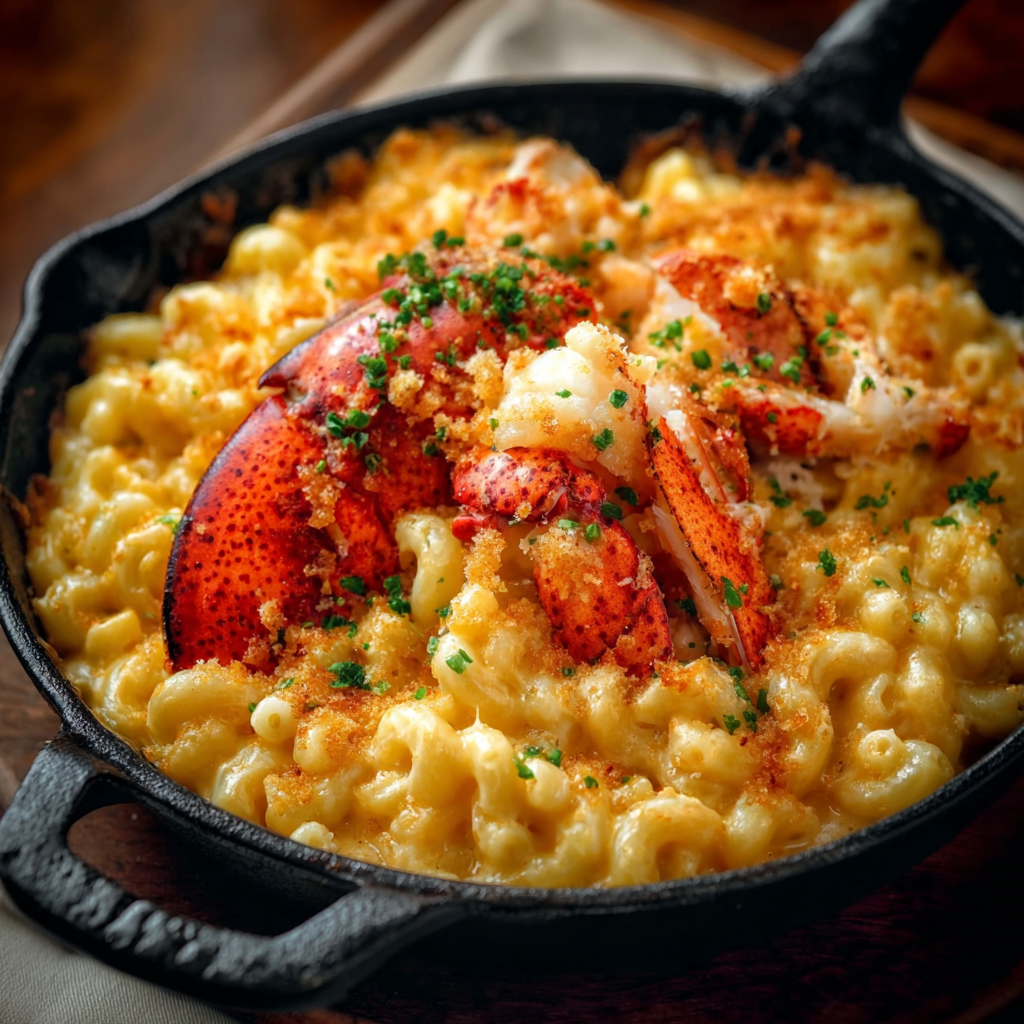
Combine the panko breadcrumbs, melted butter, Parmesan, smoked paprika, garlic powder, fresh chives or parsley, and cayenne in a bowl. Toss until every crumb is evenly coated and slightly clumped — the butter prevents the crumbs from drying out during baking and promotes even, deep golden browning. Scatter generously and evenly across the entire surface of the mac and cheese — covering completely to the edges.
Step 7: Bake and Serve
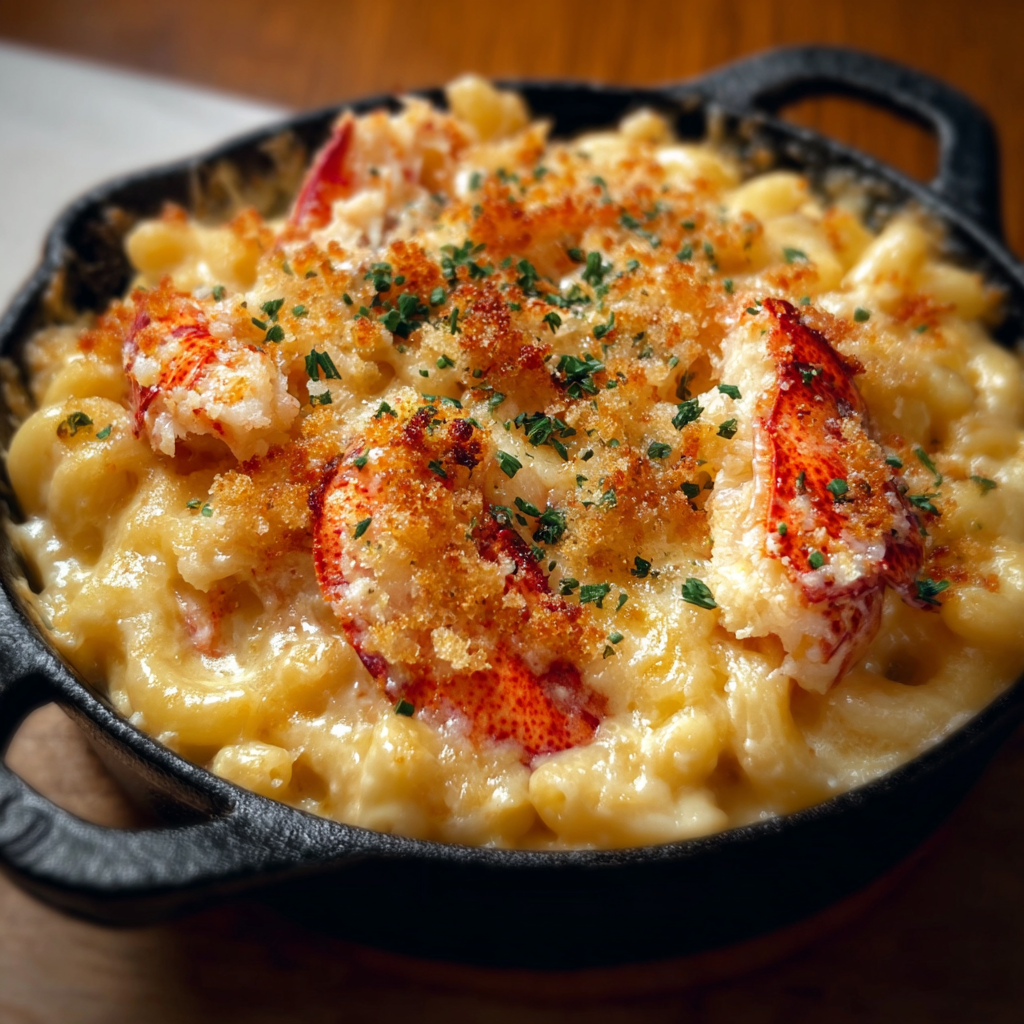
Bake at 375°F (190°C) for 20–25 minutes until the sauce is bubbling actively through the breadcrumb topping, the surface is deeply golden with darker patches distributed across it, and the edges are slightly caramelized against the dish sides. For the most dramatically browned top, switch to the broiler for the final 2–3 minutes.
Allow to rest for 5 minutes before serving — the sauce thickens slightly during resting and the portions hold their shape more cleanly. Serve immediately while the cheese is molten and the breadcrumb topping is at its crispiest.
Nutritional Information
Per serving — based on 6 servings.
| Nutrient | Per Serving | % Daily Value* |
|---|---|---|
| Calories | 720 kcal | 36% |
| Total Fat | 36g | 46% |
| Saturated Fat | 20g | 100% |
| Total Carbohydrates | 62g | 23% |
| Total Sugar | 6g | — |
| Protein | 42g | 84% |
| Dietary Fiber | 2g | 7% |
| Sodium | 880mg | 38% |
| Calcium | 45% DV | 45% |
| Selenium | 55% DV | 55% |
| Vitamin B12 | 35% DV | 35% |
*Based on a standard 2,000-calorie daily value.
The calcium content at 45% of the daily recommended value — from the four-cheese sauce — and the selenium at 55% of the daily value from the lobster make this one of the most calcium and selenium-rich pasta preparations available. At 42 grams of protein per serving, it exceeds most dedicated protein-forward dinner preparations while tasting entirely of indulgence.
Healthier Alternatives
Lighter sauce: Replace the heavy cream with evaporated milk — it produces comparable creaminess with approximately 60% less fat. Reduce the total cheese quantity to 2 cups and use the shell stock to compensate for the volume reduction — the lobster flavor in the stock maintains the sauce’s depth.
Higher vegetable content: Add 2 cups of roughly chopped baby spinach or roasted asparagus cut into 3cm pieces — both fold naturally into the pasta and sauce without disrupting the lobster character.
Gluten-free: Use certified gluten-free pasta and replace the all-purpose flour in the roux with an equal amount of rice flour or cornstarch — the sauce behavior is nearly identical. Use gluten-free panko for the breadcrumb topping.
More accessible version: Replace live lobster with 400g of frozen and thawed lobster tail meat — available at most well-stocked supermarkets — and replace the shell stock with a high-quality seafood or lobster stock from a specialty grocer. The result is approximately 85% of the quality of the live lobster version at a fraction of the complexity and cost.
Serving Suggestions
As a standalone dinner: Serve in wide, shallow bowls directly from the baking dish with a simple arugula salad dressed with lemon juice and olive oil alongside — the peppery bitterness of arugula cuts through the richness of the cheese sauce with precision and makes the meal feel balanced rather than overwhelming.
As a dinner party showpiece: Bake in individual cast iron skillets or ramekins and serve directly in the vessel — each guest receives their own personal, bubbling, perfectly browned mac and cheese with whole pieces of lobster visible on the surface. This individual presentation communicates both luxury and care simultaneously.
With champagne or white Burgundy: The combination of lobster mac and cheese with a glass of well-chilled Chablis or a Blanc de Blancs champagne is one of the most unexpectedly harmonious food and wine pairings available — the mineral acidity of the wine cutting through the richness of the sauce in a way that makes every subsequent sip taste more refreshing.
As a holiday side dish: Serve as a premium side dish at Thanksgiving or Christmas alongside a more traditional roast — 1–2 cups per person as a side produces one of the most enthusiastically received additions to any holiday table.
Leftover croquettes: Form cold leftover mac and cheese into patties, coat in breadcrumbs, and pan-fry in butter until golden — these mac and cheese croquettes with leftover lobster are genuinely extraordinary and require no additional preparation beyond shaping and frying.
Common Mistakes to Avoid
Skipping the shell stock. The shell stock is the technique that transforms this from an expensive mac and cheese into an extraordinary one. If time does not permit making it from scratch, purchase a high-quality bottled lobster stock — but do not substitute plain cream or chicken stock, which produce a mac and cheese that happens to have lobster in it rather than one that tastes of lobster throughout.
Using pre-shredded cheese. The anti-caking agents in pre-shredded cheese produce a grainy, slightly broken sauce rather than the smooth, cohesive, glossy sauce that makes this dish ultra-indulgent. Shred all four cheeses freshly from blocks immediately before making the sauce.
Over-cooking the pasta before baking. Pasta cooked to full al dente before going into the sauce absorbs the cream sauce during baking and becomes overcooked and mushy in the finished dish. Under-cooking by 3 minutes is the correct preparation.
Over-cooking the lobster. Lobster that is cooked beyond just-done becomes rubbery and loses its characteristic sweetness. The 8-minute boil for live lobster, the 60-second sauté for the pieces, and the 20–25 minute bake are calibrated to produce lobster at the correct texture throughout — do not extend any of these stages.
Not resting before serving. Lobster mac and cheese served directly from the oven has a sauce that is too fluid to hold a clean portion. The 5-minute rest allows the sauce to thicken to the correct, creamy, scoopable consistency.
Storing Tips
Refrigerator: Store in a covered baking dish for up to 3 days. The pasta continues to absorb the sauce during refrigeration — add a generous splash of cream or milk before reheating and stir to restore the original creamy consistency.
Reheating: Cover with foil and reheat in a 350°F (175°C) oven for 20–25 minutes until bubbling — remove the foil for the final 5 minutes to re-crisp the breadcrumb topping. The microwave reheats effectively at 70% power in 90-second intervals but does not restore the breadcrumb topping crispness.
Freezer: Not recommended for the assembled baked dish — the pasta texture and the cream sauce both deteriorate significantly during freezing and thawing. The shell stock, made in advance, freezes excellently for up to 3 months.
Make-ahead: Assemble the entire dish — pasta, sauce, and lobster combined, breadcrumb topping applied — and refrigerate unbaked for up to 24 hours. Bake directly from cold at 375°F (190°C) for 35–40 minutes. This make-ahead approach is ideal for dinner parties — all preparation is complete the evening before and the oven does the work while guests arrive.
Conclusion
Ultra-indulgent lobster mac and cheese proves that the combination of comfort and luxury is not a contradiction but a collaboration — that the dish reaching its full potential requires both the deeply satisfying richness of a four-cheese cream sauce and the extraordinary shellfish flavor that only a roasted lobster shell stock can deliver. The result is a mac and cheese that earns every component of its name: ultra because of the shell stock and the four-cheese béchamel, indulgent because of what it tastes like, and genuinely worth making for anyone at your table who deserves something genuinely extraordinary.
Make it and share your results in the comments — tell us whether you made the shell stock, which cheese combination you used, and whether the individual ramekin presentation made the occasion it always does. Leave a review, share with someone who loves both lobster and comfort food, and subscribe to our newsletter for more special occasion, genuinely impressive recipes every week.
FAQs
Can I make this with frozen lobster tails instead of live lobster? Yes — frozen and thawed lobster tail meat is the most practical substitution and produces approximately 85% of the quality of the live lobster version. For the shell stock, purchase a high-quality bottled lobster bisque or seafood stock rather than making from scratch. The difference in the finished dish between fresh shell stock and commercial stock is significant but the commercial version is entirely acceptable for a weeknight or when live lobster is unavailable.
What is the best pasta shape for mac and cheese? Cavatappi — the corkscrew tube pasta — is the optimal shape for this preparation. The hollow tube holds cream sauce inside while the outer corkscrew surface holds additional sauce on the outside — producing more sauce per bite than any other shape. Large elbow macaroni is the most traditional choice. Rigatoni provides large, sauce-filling tubes. Avoid long pasta shapes — they do not hold the sauce effectively and make portioning from a baking dish awkward.
How do I prevent a grainy cheese sauce? Three techniques prevent graininess: use freshly shredded block cheese rather than pre-shredded; add the cheese off the heat or over the lowest possible heat — high heat denatures the cheese proteins and causes separation; and add the cheese in small additions rather than all at once, stirring until each addition melts completely before adding more.
Can I use a different shellfish instead of lobster? Yes — jumbo shrimp, crab meat, or scallops all work beautifully in this preparation. Jumbo shrimp should be peeled, deveined, and briefly sautéed identically to the lobster — use shrimp shells for a comparable shell stock. Crab meat requires no cooking — fold in at the final assembly stage. Large scallops should be seared briefly in butter and served whole on top of the finished mac and cheese for a dramatic presentation.
Is this recipe suitable for a dinner party? It is one of the most practical and most impressive dinner party preparations in this collection — the entire dish can be assembled up to 24 hours ahead and baked while guests arrive, the individual ramekin format eliminates any serving awkwardness, and the visual impact of a perfectly browned, bubbling mac and cheese with visible lobster on the surface is immediately impressive. Pair with champagne for an occasion that fully justifies the preparation.
How do I tell when live lobster is cooked correctly? The shells turn completely vivid red and the tail meat turns from translucent to fully opaque white. The tail should curl slightly when separated from the body. The most reliable method is internal temperature — the tail meat should reach 140°F (60°C) at its thickest point. At 8 minutes for a 700g (1.5 lb) lobster in vigorously boiling salted water, this temperature is reliably achieved.