Follow Me On Social Media!
Vegan Bao Buns: Soft, Fluffy, and Deliciously Plant-Based

Introduction
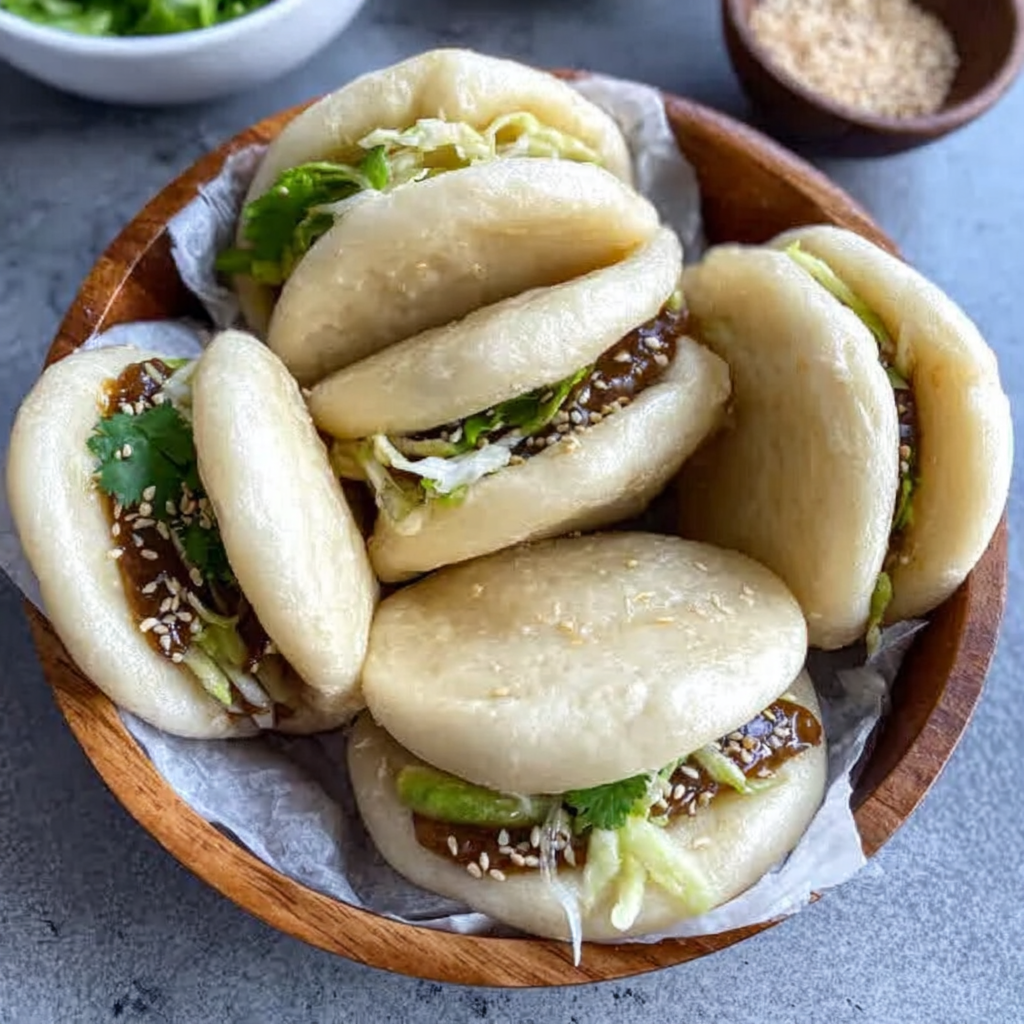
Did you know that steamed buns have been enjoyed for centuries across Asia and are now one of the fastest-growing plant-based comfort foods worldwide? Many people assume that creating soft, pillowy bao buns at home requires advanced baking skills, but the truth is that Vegan Bao Buns are surprisingly simple to make with everyday ingredients.
These fluffy steamed buns feature a light, airy texture and a subtle sweetness that pairs beautifully with a variety of fillings. Whether you’re preparing them for a weeknight dinner, meal prep, or an impressive gathering, Vegan Bao Buns offer endless customization possibilities while remaining completely dairy-free and egg-free.
NLP Keywords: vegan steamed buns, plant-based bao, homemade bao buns, fluffy vegan bread, Asian steamed buns, dairy-free bao, vegan comfort food, bao bun recipe, vegan sandwich buns, soft steamed bread.
Ingredients List
For the Bao Dough
- 3 cups all-purpose flour
- 2¼ teaspoons instant yeast
- 2 tablespoons granulated sugar
- ½ teaspoon salt
- ¾ cup warm water
- ¼ cup unsweetened plant-based milk
- 2 tablespoons vegetable oil
For Shaping
- 1 tablespoon vegetable oil for brushing
- Small squares of parchment paper
Suggested Vegan Fillings
- Crispy tofu
- Teriyaki mushrooms
- Hoisin jackfruit
- Korean-style cauliflower
- Marinated tempeh
- Pickled vegetables
- Cucumber ribbons
- Shredded carrots
- Fresh cilantro
Ingredient Substitutions
- Bread flour can be used for a slightly chewier texture.
- Coconut sugar may replace granulated sugar.
- Olive oil can substitute vegetable oil.
- Oat milk, soy milk, or almond milk all work well.
Timing
| Task | Time |
|---|---|
| Preparation Time | 20 minutes |
| Rising Time | 90 minutes |
| Steaming Time | 12 minutes |
| Total Time | 122 minutes |
Although the process takes about 2 hours, most of the time is hands-off rising, making these Vegan Bao Buns easier than many homemade bread recipes.
Ingredients Tips
Before starting, ensure your water is warm but not hot. Water between 100°F and 110°F (38°C–43°C) helps activate the yeast without killing it.
For the fluffiest Vegan Bao Buns, use fresh yeast and allow adequate proofing time.
Step-by-Step Instructions
Step 1: Activate the Dough
In a large mixing bowl, combine:
- Warm water
- Plant-based milk
- Sugar
- Yeast
Let the mixture sit for 5 minutes until slightly foamy.
Pro Tip: If no foam appears, your yeast may be inactive and should be replaced.
Step 2: Form the Dough
Add:
- Flour
- Salt
- Vegetable oil
Mix until a rough dough forms.
Knead for 8–10 minutes until smooth and elastic.
Step 3: First Rise
Place the dough in a lightly oiled bowl.
Cover and allow it to rise in a warm location for approximately 60–90 minutes, or until doubled in size.
Tip: A warm kitchen encourages faster and more consistent rising.
Step 4: Divide the Dough
Punch down the risen dough gently.
Transfer to a lightly floured surface and divide into 10–12 equal portions.
Roll each portion into a smooth ball.
Step 5: Shape the Bao Buns
Roll each ball into an oval shape approximately ¼ inch thick.
Lightly brush one side with oil.
Fold the oval in half to create the traditional bao shape.
Place each bun on an individual parchment square.
Step 6: Second Rise
Cover the shaped buns loosely.
Allow them to rise for another 20–30 minutes.
This second proof contributes significantly to their soft texture.
Step 7: Steam the Bao Buns
Arrange buns in a steamer basket with space between them.
Steam over gently simmering water for 10–12 minutes.
Avoid lifting the lid during steaming.
Step 8: Rest Before Opening
Turn off the heat and let the buns sit for 2 minutes before opening the steamer.
This helps prevent wrinkling and collapsing.
Step 9: Fill and Serve
Carefully open the warm buns and fill them with your favorite plant-based ingredients.
Serve immediately for the best texture and flavor.
Tips
- Use parchment paper under each bun to prevent sticking.
- Do not overcrowd the steamer basket.
- Allow both rises to complete fully for maximum fluffiness.
- Keep the steaming water at a gentle simmer rather than a vigorous boil.
- Prepare fillings while the dough rises to save time.
Nutritional Information
Approximate values per bun (without filling):
| Nutrient | Amount |
|---|---|
| Calories | 170 |
| Carbohydrates | 31g |
| Protein | 4g |
| Fat | 3g |
| Saturated Fat | 0.5g |
| Fiber | 1g |
| Sugar | 3g |
| Sodium | 120mg |
Nutritional Highlights
- Completely dairy-free and egg-free.
- Lower in fat than many baked bread products.
- Suitable for vegan and vegetarian diets.
- Easy to customize with nutrient-rich fillings.
Healthier Alternatives for the Recipe
Whole Wheat Version
Replace up to 50% of the all-purpose flour with whole wheat flour for additional fiber.
Lower Sugar Option
Reduce the sugar by half while maintaining proper yeast activity.
High-Protein Filling
Stuff buns with seasoned tofu, tempeh, or edamame-based fillings.
Gluten-Free Adaptation
Use a gluten-free flour blend specifically formulated for yeast breads.
Vegetable-Packed Version
Add extra fresh vegetables and leafy greens to increase nutrient density.
Serving Suggestions
Classic Asian-Inspired Meal
Serve with crispy tofu, pickled vegetables, and fresh herbs.
Family Dinner
Create a bao bar where everyone chooses their own fillings.
Party Appetizer
Prepare mini Vegan Bao Buns with assorted fillings for entertaining.
Meal Prep Lunch
Store buns and fillings separately for quick assembly during the week.
Fusion Style
Fill with barbecue jackfruit, avocado, and crunchy slaw for a modern twist.
Common Mistakes to Avoid
Using Water That Is Too Hot
Excessive heat can kill the yeast and prevent proper rising.
Skipping the Second Rise
The second proof helps create the signature fluffy texture.
Overcrowding the Steamer
Buns expand during steaming and require adequate space.
Opening the Lid Too Early
Sudden temperature changes can cause buns to collapse.
Under-Kneading the Dough
Proper gluten development is essential for soft, airy buns.
Storing Tips for the Recipe
Refrigerator Storage
Store cooled Vegan Bao Buns in an airtight container for up to 4 days.
Freezer Storage
Freeze individually wrapped buns for up to 3 months.
Reheating
Steam for 2–3 minutes or microwave briefly with a damp paper towel.
Make-Ahead Tip
Prepare and freeze the buns before filling them. Reheat and stuff just before serving.
Meal Prep Strategy
Batch-make buns and store various fillings separately for quick lunches and dinners.
Conclusion
Vegan Bao Buns are soft, fluffy, and incredibly versatile, making them a fantastic addition to any plant-based meal. With simple ingredients, easy preparation, and endless filling options, these steamed buns are perfect for weeknight dinners, meal prep, and entertaining. Try this recipe, share your results in the review section, leave a comment on our blog, and subscribe for more delicious vegan recipes and cooking inspiration.
FAQs
What are Vegan Bao Buns made of?
They are typically made with flour, yeast, water, plant-based milk, sugar, salt, and oil, making them completely dairy-free and egg-free.
Can I freeze Vegan Bao Buns?
Yes. Once cooled, freeze them in airtight containers for up to 3 months.
Why did my bao buns collapse?
Common causes include opening the steamer too quickly, under-proofing, or using inactive yeast.
Can I make them without a bamboo steamer?
Absolutely. Any steamer basket that fits over a pot of simmering water will work.
What fillings work best?
Tofu, mushrooms, jackfruit, tempeh, pickled vegetables, and fresh herbs are all excellent options.
Can I prepare the dough ahead of time?
Yes. The dough can be refrigerated overnight after the first rise.
Are Vegan Bao Buns healthy?
They can be part of a balanced diet, especially when paired with protein-rich and vegetable-based fillings.
How do I keep bao buns soft?
Store them in airtight containers and reheat with steam to restore moisture and softness.