Follow Me On Social Media!
Mexican-Style Eggs Benedict

Introduction
Here is a question that challenges the brunch status quo: why does Eggs Benedict — one of the most beloved breakfast formats in the world — almost always arrive at the table in exactly the same form it has occupied for the past century, when the core concept of a poached egg on a rich sauce on a toasted base is one of the most adaptable flavor frameworks in all of brunch cooking? According to a 2024 report by the National Restaurant Association, Eggs Benedict and its variations represent the single most ordered brunch item across full-service restaurants in North America — yet consumer satisfaction surveys consistently show that diners crave more global flavor profiles in their brunch experiences.
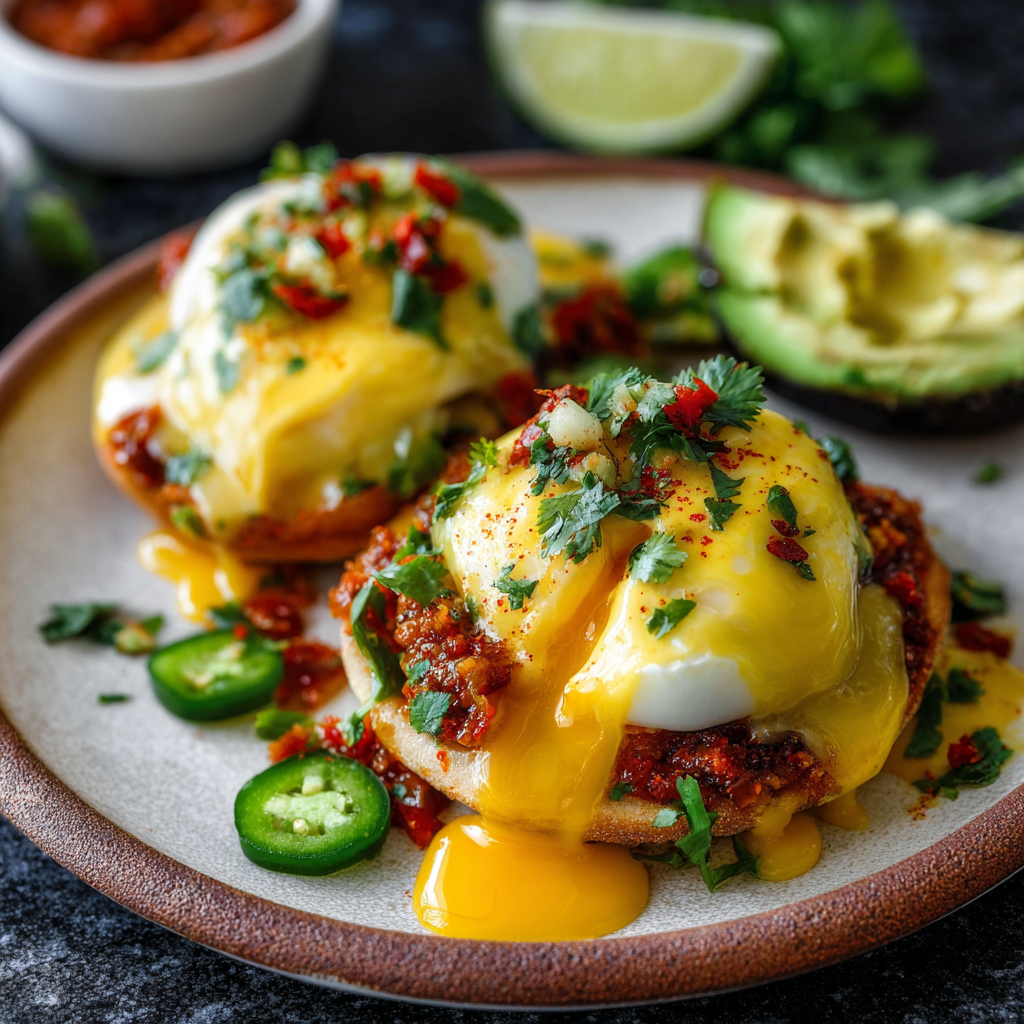
This Mexican-style Eggs Benedict answers that craving directly. Instead of Canadian bacon and hollandaise on an English muffin, this version builds on a toasted corn tortilla or crispy tostada, layers on refried beans and seasoned chorizo, crowns it with a perfectly poached egg, and finishes with a smoky chipotle hollandaise that replaces the classic butter-lemon sauce with something that has depth, heat, and the distinctive complexity of Mexican pantry ingredients. Every element of the original format is honored — the crispy base, the rich sauce, the runny yolk — and every element is transformed.
A 2023 food culture report by Bon Appétit identified Mexican-inspired brunch dishes as the fastest-growing brunch category in American restaurants, driven by a younger consumer base that grew up with more globally diverse flavor references and expects weekend brunch to be as exciting as any other meal. This recipe delivers that excitement in a format that is achievable at home with straightforward technique and widely available ingredients.
Ingredients List
For the Base
- 4 corn tostadas or 4 corn tortillas, pan-fried until crispy (sub: toasted English muffins for a more traditional base)
- 1 can (400g / 15 oz) refried beans, warmed (sub: black beans mashed with cumin and garlic)
- 1 tbsp butter or oil, for warming the beans
For the Chorizo
- 200g (7 oz) Mexican chorizo, casing removed (sub: Spanish chorizo finely diced, or soyrizo for vegan)
- ½ tsp smoked paprika
- ¼ tsp ground cumin
For the Poached Eggs
- 4 large eggs, very fresh (fresher eggs hold their shape better during poaching)
- 1 tbsp white wine vinegar
- Water, for poaching
For the Chipotle Hollandaise
- 3 large egg yolks
- 115g (½ cup / 1 stick) unsalted butter, melted and warm
- 1–2 chipotle peppers in adobo sauce, finely minced (adjust to heat preference)
- 1 tbsp fresh lime juice
- 1 tsp adobo sauce from the can
- ¼ tsp fine sea salt
- ¼ tsp smoked paprika
- Warm water, to adjust consistency
For Toppings and Garnish
- 1 ripe avocado, sliced or roughly smashed
- ¼ cup (15g) fresh cilantro, roughly chopped
- 2 radishes, thinly sliced
- 1 jalapeño, thinly sliced (optional)
- Cotija cheese or feta, crumbled (optional)
- Hot sauce, to finish
- Lime wedges, to serve
Timing
- Prep Time: 15 minutes
- Cook Time: 20 minutes
- Total Time: 35 minutes
The key to executing this without stress is sequencing: cook the chorizo first, warm the beans, make the hollandaise, then poach the eggs last. Everything waits for the eggs — not the other way around.
Step-by-Step Instructions
Step 1: Cook the Chorizo
Heat a skillet over medium-high heat. Add the Mexican chorizo and break it apart with a wooden spoon. Cook for 6–8 minutes until fully cooked, deeply colored, and slightly crispy at the edges. Add the smoked paprika and cumin, stir to combine, and cook for 30 more seconds. Remove from heat and set aside — the chorizo fat left in the pan can be used to fry the tortillas for extra flavor.
Step 2: Crisp the Tortillas
If using corn tortillas rather than pre-made tostadas, heat 1 tablespoon of oil (or the chorizo fat) in the skillet over medium-high heat. Fry each tortilla for 60–90 seconds per side until golden and rigid. Drain on paper towels. The tortilla should hold its shape completely when topped — a floppy base means the entire stack collapses at the first cut.
Step 3: Make the Chipotle Hollandaise
Fill a small saucepan with 5cm (2 inches) of water and bring to a gentle simmer. Place a heatproof bowl over the saucepan — the bowl should sit above the water without touching it. Add the egg yolks and lime juice to the bowl and whisk vigorously and continuously for 2–3 minutes until the mixture thickens, turns pale, and leaves a ribbon trail when the whisk is lifted. Remove from heat.
Very slowly — a few drops at a time initially — drizzle the warm melted butter into the yolk mixture while whisking constantly. The emulsification happens gradually — adding butter too quickly before the sauce has begun to thicken causes it to break. Once roughly a third of the butter is incorporated and the sauce is visibly thickening, add the remaining butter in a thin, steady stream. Whisk in the minced chipotle, adobo sauce, smoked paprika, and salt. If the sauce is too thick, add warm water a teaspoon at a time until it falls from the whisk in a slow, thick ribbon. Keep warm over the water bath with the heat off, whisking occasionally.
Key tip: If the hollandaise begins to scramble or break, remove from heat immediately, add 1 tablespoon of cold water, and whisk vigorously — this often rescues a breaking sauce if caught early.
Step 4: Warm the Beans
In a small saucepan over medium-low heat, warm the refried beans with the butter, stirring until smooth and spreadable. Season with salt and cumin to taste. Keep warm until assembly.
Step 5: Poach the Eggs
Bring a wide, shallow saucepan of water to a gentle simmer — small bubbles breaking the surface, not a rolling boil. Add the white wine vinegar. Crack each egg into a small individual cup. Create a gentle whirlpool in the water with a spoon and slide one egg into the center. Cook for 3 minutes for a runny yolk, 3½ for a semi-set yolk. Remove with a slotted spoon onto a paper towel and repeat with remaining eggs. For four simultaneous poaches, use a large pan and skip the whirlpool — slide the eggs in quickly from their cups spaced around the pan.
Key tip: Fresh eggs poach cleanly because the whites are tighter and more cohesive. Older eggs spread widely and produce ragged, wispy whites. If your eggs are not very fresh, add an extra teaspoon of vinegar to the water.
Step 6: Assemble and Serve
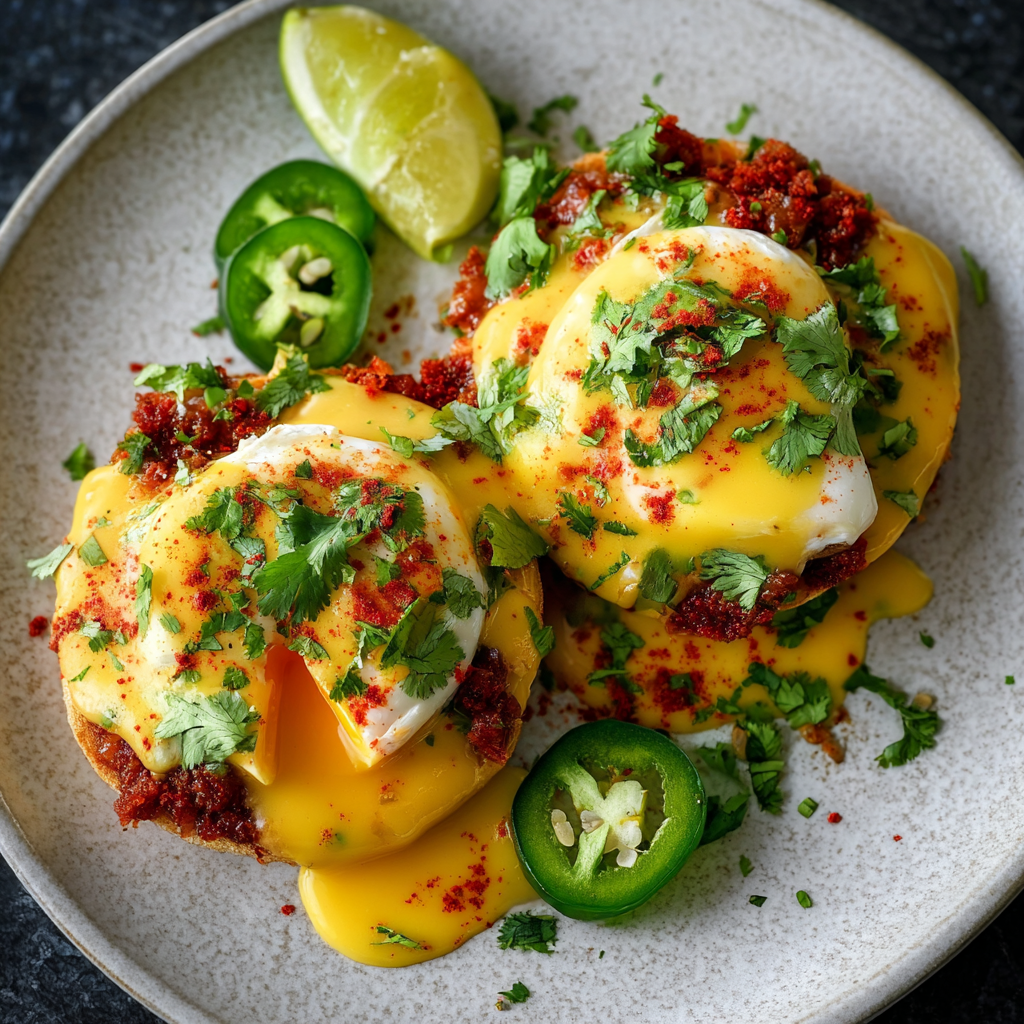
Working quickly, spread a generous layer of warm refried beans over each tostada. Top with a spoonful of the cooked chorizo. Add a few slices of avocado. Place a freshly poached egg on top. Spoon the chipotle hollandaise generously over the egg — enough to coat the yolk and begin to pool around the sides. Finish with crumbled cotija, sliced radishes, jalapeño, fresh cilantro, and a pinch of smoked paprika. Serve immediately with lime wedges and hot sauce on the side.
Nutritional Information
Per serving — based on 4 servings with all toppings.
| Nutrient | Per Serving | % Daily Value* |
|---|---|---|
| Calories | 620 kcal | 31% |
| Total Fat | 46g | 59% |
| Saturated Fat | 18g | 90% |
| Total Carbohydrates | 28g | 10% |
| Total Sugar | 3g | — |
| Protein | 28g | 56% |
| Dietary Fiber | 7g | 25% |
| Sodium | 880mg | 38% |
| Potassium | 680mg | 14% |
| Vitamin A | 30% DV | 30% |
| Vitamin C | 20% DV | 20% |
| Iron | 20% DV | 20% |
*Based on a standard 2,000-calorie daily diet.
At 28 grams of protein and 7 grams of fiber per serving — driven by the combination of eggs, chorizo, beans, and avocado — this is one of the more nutritionally complete brunch plates available. The fiber content is particularly notable for a brunch dish and comes primarily from the refried beans and avocado.
Healthier Alternatives
Lower fat hollandaise: Replace half the butter with plain Greek yogurt whisked in off the heat at the end. The sauce will be slightly tangier and less rich but entirely delicious, with the saturated fat content reduced by approximately 40%.
Lighter protein: Replace the chorizo with seasoned ground turkey — 1 teaspoon each of smoked paprika, cumin, garlic powder, chili powder, and a pinch of cayenne — cooked in 1 tablespoon of olive oil. Nearly identical in flavor profile with significantly less fat.
Vegan version: Use soyrizo, replace poached eggs with sliced firm tofu seasoned with black salt (which mimics the sulfurous flavor of egg), and make a vegan hollandaise from aquafaba, lemon juice, turmeric, and plant-based butter. Every other component is naturally vegan.
Higher fiber: Swap refried beans for whole black beans simmered with cumin, garlic, and chipotle — the additional fiber from whole beans versus refried increases the fiber content by 3–4 grams per serving.
Lower sodium: Use homemade refried beans from scratch without added salt, and reduce the adobo sauce in the hollandaise to ½ teaspoon. These two changes reduce sodium per serving by approximately 25%.
Serving Suggestions
Brunch table spread: Serve all components in separate dishes at the table — warm tostadas in a basket, beans and chorizo in small skillets, hollandaise in a small pitcher — and let guests assemble their own. This interactive format works exceptionally well for groups and eliminates the timing pressure of plating four perfect stacks simultaneously.
Huevos rancheros hybrid: Add a spoonful of warm salsa roja or tomatillo salsa beneath the poached egg alongside the beans for an additional layer of sauce that references huevos rancheros while maintaining the Benedict format.
With elote-style corn: Serve a small portion of charred corn kernels tossed with mayonnaise, cotija, chili powder, and lime on the side — a miniature elote salad that mirrors the Mexican flavors of the main dish and makes the plate feel like a complete restaurant-quality brunch.
Stacked tostada tower: Build a double-stacked version with two tostadas per serving, doubling the bean and chorizo layers for a more substantial meal that serves well for a late, leisurely brunch as the only course of the day.
Next-day scramble: Repurpose any leftover chorizo, beans, and hollandaise into a scrambled egg breakfast — fold everything into soft-scrambled eggs in a skillet and serve on toast with avocado. Leftover hollandaise thinned with a splash of cream makes an excellent finishing sauce for the scramble.
Common Mistakes to Avoid
Adding butter too quickly to the hollandaise. The emulsification of hollandaise is a gradual process — the first addition must be drop by drop to establish the emulsion before the remaining butter can be added in a thin stream. Adding butter too quickly before the emulsion has formed produces a broken, greasy sauce that is difficult to rescue.
Poaching eggs in vigorously boiling water. Boiling water breaks the egg whites apart and produces ragged, wispy poached eggs. The water must be at a gentle simmer — small, lazy bubbles — for the whites to set smoothly around the yolk.
Not pre-warming all components before assembly. Cold beans under a warm egg on a room-temperature tostada produces a lukewarm plate that tastes far less vibrant than one where every component arrives hot. Keep the beans warm on the lowest heat, the chorizo warm in the pan, and assemble immediately before serving.
Using a floppy tortilla base. A tostada or tortilla that is not fully crispy will collapse immediately under the weight of the beans, egg, and sauce. Ensure the tortilla is rigid and completely dry before building the stack.
Making hollandaise too far in advance. Hollandaise is best made within 30 minutes of serving. Extended holding causes the emulsion to separate and the sauce to either thicken excessively or break. If held over warm water, whisk every few minutes and add drops of warm water to maintain consistency.
Storing Tips
Components separately: Store the chorizo, beans, and hollandaise in separate airtight containers. The assembled stack cannot be stored — it must be built and eaten immediately for the correct textural experience.
Chorizo: Refrigerate for up to 4 days. Reheat in a dry skillet over medium heat for 2–3 minutes until warmed through and the edges crisp again.
Refried beans: Refrigerate for up to 5 days. Reheat in a saucepan over low heat with a splash of water, stirring frequently.
Hollandaise: Hollandaise does not store well — it is best made fresh each time. If storing briefly, keep in a warm water bath for up to 1 hour and whisk before serving. Refrigerated hollandaise separates and is very difficult to restore.
Tostadas: Store at room temperature in an airtight bag for up to 3 days. Re-crisp in a dry skillet for 60 seconds per side if they have softened.
Conclusion
Mexican-style Eggs Benedict proves that the greatest classic brunch dishes are not destinations — they are departures. A crispy tostada, smoky chorizo, silky refried beans, a trembling poached egg, and chipotle hollandaise with enough heat and complexity to make hollandaise feel reinvented — this is a brunch plate that makes the familiar feel genuinely exciting and makes the table reluctant to move on to anything else.
Make it this weekend and share your results in the comments — tell us how spicy you made the hollandaise, which toppings you added, and whether it replaced the classic version in your brunch rotation. Leave a review, share with someone who loves both Mexican food and brunch, and subscribe to our newsletter for more globally inspired, flavor-first recipes every week.
FAQs
Can I make the hollandaise in a blender? Yes — blender hollandaise is faster and nearly foolproof. Add the egg yolks, lime juice, chipotle, adobo sauce, salt, and paprika to a blender and blend for 30 seconds. With the blender running, slowly pour the hot melted butter through the feed hole in a thin, steady stream. The hollandaise will emulsify within 60 seconds. Adjust consistency with warm water. This method produces a slightly less silky result than the double-boiler technique but is far more reliable for beginners.
How do I keep the poached eggs warm while cooking multiple servings? Poach all eggs 30 seconds less than desired doneness, then hold them in a bowl of warm (not hot) water at approximately 140°F (60°C). When ready to serve, return briefly to simmering water for 30 seconds to reheat. This restaurant technique allows multiple eggs to be poached ahead and served simultaneously.
Can I use Spanish chorizo instead of Mexican chorizo? Yes, with a texture difference. Spanish chorizo is cured and firm — dice it finely and pan-fry until crispy rather than crumbling. The flavor is slightly different — smokier and less spicy than Mexican chorizo — but works beautifully in the context of this dish.
What is the best substitute for cotija cheese? Feta is the most widely available substitute — it has a comparable salty, slightly tangy, crumbly character that works very well. Ricotta salata and Parmesan finely grated are also good alternatives. In the absence of any of these, a pinch of flaky sea salt over the finished dish provides the salty accent that cotija contributes.
Can I make this for a large group? Yes — scale the chorizo and beans as needed, make a double batch of hollandaise, and use the warm-water holding technique for the poached eggs. Set up an assembly line and build the stacks quickly in sequence. For groups of 8 or more, the family-style serving format — all components at the table for self-assembly — eliminates the timing challenge entirely.
Is this recipe suitable for a vegetarian? With two substitutions it is. Replace the chorizo with seasoned black beans or soyrizo, and ensure the refried beans used do not contain lard — many canned refried beans are made with lard, but vegetarian versions are widely available and clearly labeled. Every other component of the recipe is naturally vegetarian.