Follow Me On Social Media!
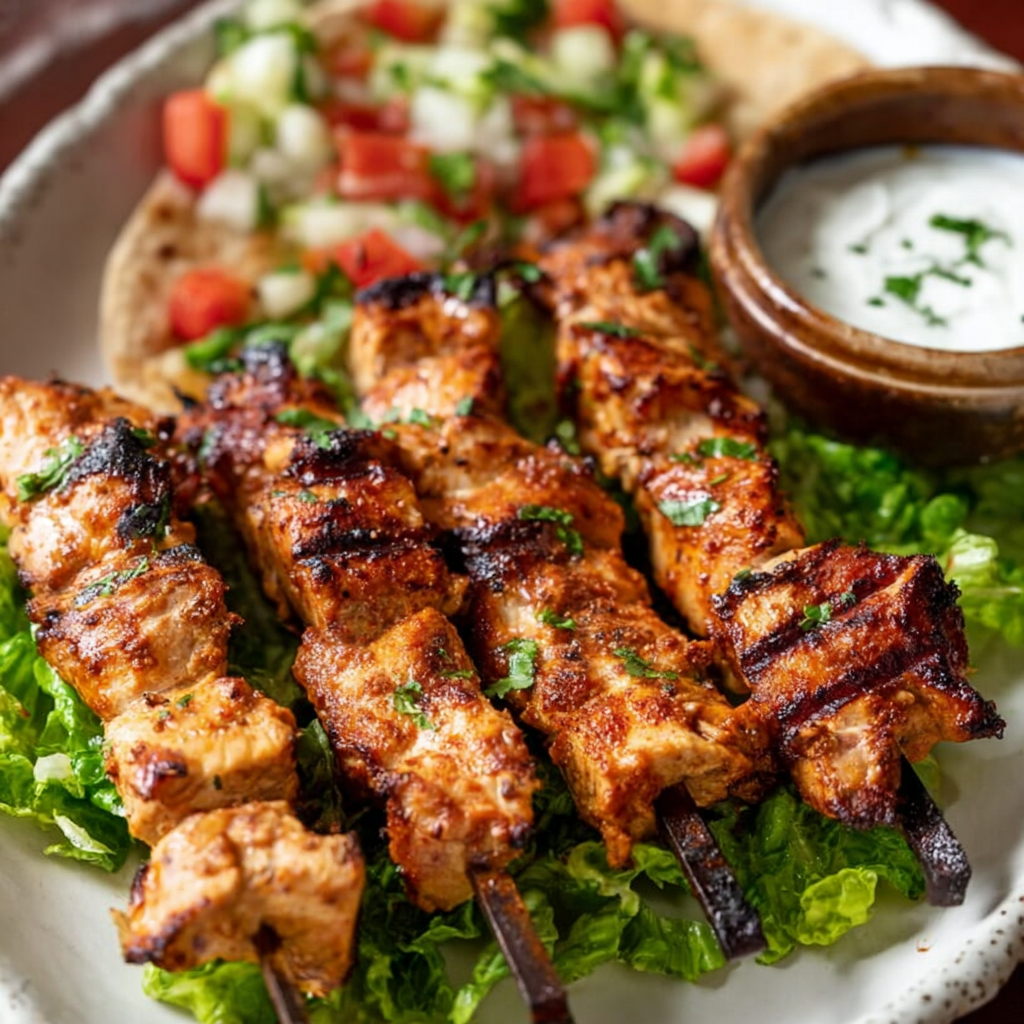
Authentic Shish Tawook

Introduction
Here is a question that challenges the assumption that the most memorable grilled chicken you have ever eaten required a special piece of equipment, an exotic spice collection, or a professional kitchen: when was the last time a marinade alone — nothing more than a bowl of ingredients, a few hours of patience, and a hot grill — transformed an ordinary chicken breast into something so juicy, so deeply flavored, and so completely unlike every other version of the same cut that you immediately understood why certain dishes transcend the cultures they come from and become globally beloved?
Shish tawook — the Lebanese grilled chicken skewer that has earned its place on restaurant menus from Beirut to London to São Paulo — is that dish. The marinade is its genius: a combination of yogurt, tomato paste, garlic, lemon juice, and a specific spice blend of cinnamon, allspice, and cumin that tenderizes the chicken to an almost impossibly juicy texture, infuses the flesh with warm, aromatic flavor at every level, and produces a char on the grill that caramelizes the tomato and yogurt sugars into something deeply savory and slightly sweet simultaneously.
According to a 2024 global food trend report by Euromonitor International, Lebanese cuisine — and specifically Levantine grilled meats — represents one of the most significant rising trends in Western food culture, driven by the recognition that the yogurt-and-spice marinades of the Levant produce a grilling result that neither dry rubs nor oil-based marinades can replicate. A 2023 food science review in the journal Meat Science confirmed that the lactic acid in yogurt-based marinades produces measurably greater protein denaturation — tenderizing the muscle fibers more effectively than acid-only or enzyme-only marinades — while the fat content of the yogurt protects the lean chicken breast from drying during high-heat cooking. This is a dish built on centuries of empirical knowledge confirmed by modern food science.
Ingredients List
For the Shish Tawook Marinade
- 700g (1.5 lbs) boneless, skinless chicken breast or thighs, cut into 4cm (1½-inch) cubes (thighs are more forgiving — breast is more traditional)
- ½ cup (120ml) full-fat plain yogurt (Greek or Lebanese-style — do not use low-fat)
- 2 tbsp tomato paste
- 3 tbsp extra virgin olive oil
- 3 tbsp fresh lemon juice
- 1 tsp lemon zest
- 6 garlic cloves, finely minced or pressed
- 1 tsp fine sea salt
- 1 tsp ground cinnamon (the defining warm spice of shish tawook — do not reduce)
- 1 tsp ground allspice
- 1 tsp ground cumin
- ½ tsp smoked paprika
- ½ tsp ground white pepper
- ¼ tsp ground ginger
- ¼ tsp cayenne pepper (optional — adjust to heat preference)
- 1 tbsp dried oregano
For the Garlic Sauce (Toum) — Traditional Accompaniment
- 6 garlic cloves
- ½ tsp fine sea salt
- 3 tbsp fresh lemon juice
- ½ cup (120ml) neutral oil (sunflower or canola — not olive oil)
- 2 tbsp ice water
For Serving
- Warm pita bread
- Fresh tomatoes, sliced
- Pickled turnips (the traditional Lebanese accompaniment — vibrant pink, tangy)
- Fresh cucumber, sliced
- Fresh parsley sprigs
- Lemon wedges
- Mixed greens or fattoush salad
Timing
- Marinade Time: 4 hours minimum (overnight is significantly better)
- Prep Time: 15 minutes
- Grill Time: 10–12 minutes
- Total Time: 4–12 hours marinating + 25 minutes active
The overnight marinade is the single highest-impact optional decision in this recipe. Four hours produces good shish tawook. Overnight produces extraordinary shish tawook — the yogurt’s lactic acid has sufficient time to penetrate deeply into the muscle fiber, the spice compounds fully infuse the flesh, and the garlic mellows from sharp to deeply savory throughout the meat.
Step-by-Step Instructions
Step 1: Make the Marinade
In a large bowl, combine the yogurt, tomato paste, olive oil, lemon juice, lemon zest, minced garlic, salt, cinnamon, allspice, cumin, smoked paprika, white pepper, ginger, cayenne, and dried oregano. Whisk together until completely smooth and evenly combined — the tomato paste requires a moment of vigorous whisking to fully incorporate into the yogurt without leaving streaks. The finished marinade should be a uniform, deep orange-pink color with a thick, coating consistency.
Taste the marinade before adding the chicken — it should taste boldly of garlic and warm spice, noticeably salty, and slightly tangy from the yogurt and lemon. If it tastes under-seasoned at this stage, the chicken will be under-seasoned after marinating. Adjust before the chicken goes in.
Step 2: Marinate the Chicken
Add the chicken cubes to the marinade and toss thoroughly until every surface is completely and generously coated. Press the marinade into the chicken with your hands — active coating ensures no surface is left uncovered. Cover the bowl tightly with plastic wrap and refrigerate for a minimum of 4 hours — overnight is strongly recommended.
Key tip: Do not marinate for longer than 24 hours. The lactic acid in the yogurt continues to work beyond this point and can over-tenderize the chicken, producing a slightly mushy texture rather than the juicy, firm bite the recipe is designed around.
Step 3: Make the Toum (Garlic Sauce)
Place the garlic cloves and salt in a food processor and process until finely minced. Add 1 tablespoon of the lemon juice and process for 30 seconds. With the processor running, add the oil in the thinnest possible stream — drops at first, then a thin thread — alternating with the remaining lemon juice and ice water until the mixture emulsifies into a thick, white, creamy sauce with the consistency of mayonnaise. This emulsification is built on the same principle as aioli — oil droplets suspended in water through the action of the garlic’s natural emulsifying compounds.
Key tip: If the toum breaks and appears oily rather than emulsified, add 1 tablespoon of ice water with the processor running and process vigorously — the sauce often re-emulsifies. The ice water temperature is critical — warm or room-temperature water prevents emulsification.
Step 4: Thread and Prepare the Skewers
Remove the chicken from the refrigerator 20 minutes before grilling to take the chill off — cold chicken placed on a hot grill creates a larger temperature differential that can produce an overcooked exterior before the center reaches the correct temperature. Thread the marinated chicken pieces onto metal skewers or pre-soaked wooden skewers — 4–5 pieces per skewer — pressing each piece firmly onto the skewer and leaving minimal space between pieces. Shake off any excess marinade that would drip into the grill and cause flare-ups.
Step 5: Grill the Skewers
Preheat a gas grill to medium-high or prepare a charcoal grill for direct cooking with a clean, oiled grate. For a grill pan on the stovetop, preheat over high heat for 3 minutes.
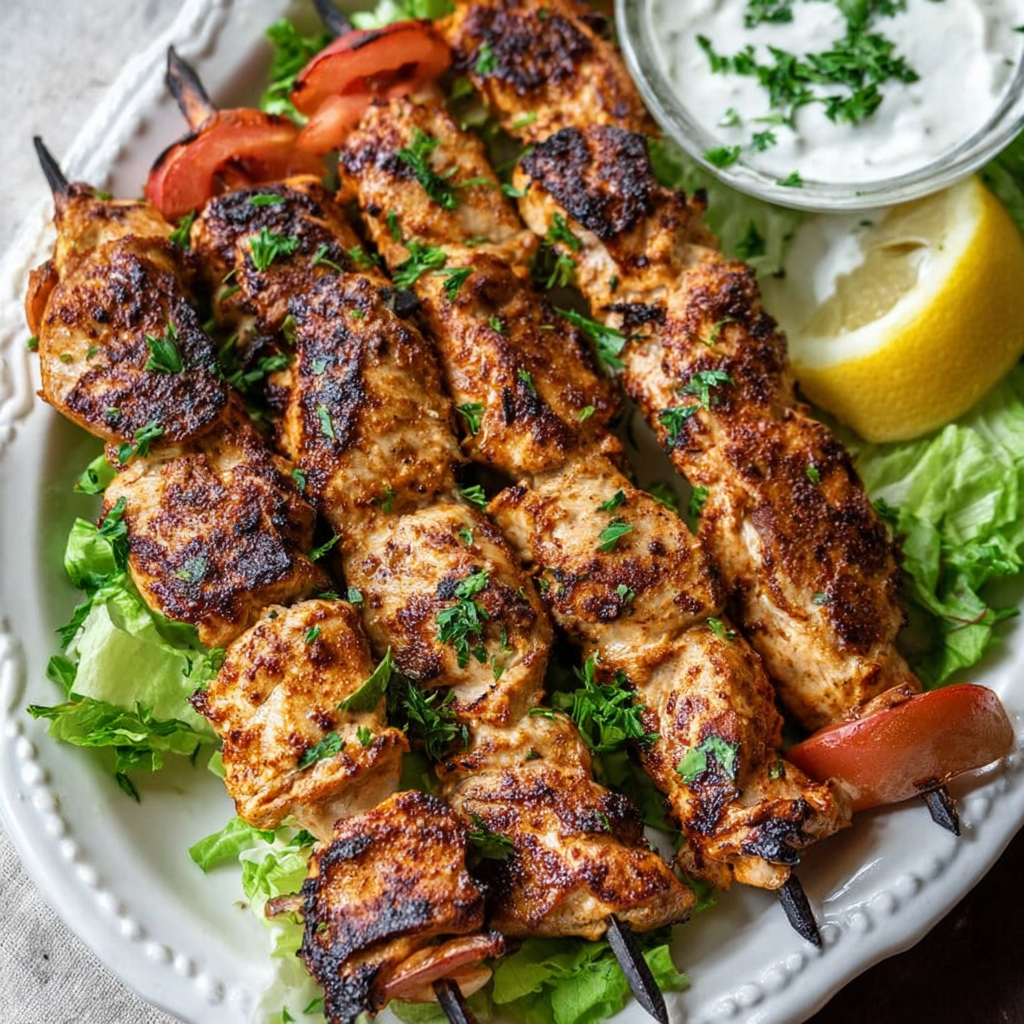
Place the skewers on the hot grill and cook undisturbed for 3–4 minutes until the first side develops a deep golden char with caramelized edges. Rotate 90 degrees and cook for another 3 minutes for the second char side. Turn to cook the remaining sides — 2–3 minutes each — until the chicken is cooked through to an internal temperature of 165°F (74°C) and the exterior has a deep, caramelized color on all surfaces.
Key tip: The yogurt marinade will cause the exterior to char more quickly than an oil-based marinade — the sugars in the yogurt and tomato paste caramelize rapidly at grill temperatures. Monitor closely in the first 3–4 minutes and reduce the heat slightly if the exterior is browning faster than the interior is cooking through.
Step 6: Rest and Serve
Transfer the skewers to a warm plate and rest for 3–4 minutes — the residual heat continues cooking the interior and the resting period allows the juices to redistribute through the meat rather than running out at the first cut. Serve immediately on warm pita with toum, pickled turnips, sliced tomatoes, cucumber, fresh parsley, and lemon wedges.
Nutritional Information
Per serving — based on 4 servings with chicken breast, without pita or toum.
| Nutrient | Per Serving | % Daily Value* |
|---|---|---|
| Calories | 320 kcal | 16% |
| Total Fat | 14g | 18% |
| Saturated Fat | 3g | 15% |
| Total Carbohydrates | 6g | 2% |
| Total Sugar | 3g | — |
| Protein | 42g | 84% |
| Dietary Fiber | 1g | 4% |
| Sodium | 680mg | 30% |
| Potassium | 680mg | 14% |
| Vitamin B6 | 55% DV | 55% |
| Selenium | 45% DV | 45% |
| Niacin | 65% DV | 65% |
*Based on a standard 2,000-calorie daily diet.
At 42 grams of protein and 320 calories per serving — one of the highest protein-to-calorie ratios in any grilled meat preparation — shish tawook is genuinely exceptional from a sports nutrition perspective. The niacin content at 65% of the daily recommended value supports energy metabolism and DNA repair, while the Vitamin B6 at 55% supports immune function and neurotransmitter synthesis.
Healthier Alternatives
Lower fat: Use boneless, skinless chicken breast exclusively and reduce the olive oil in the marinade to 1 tablespoon. The yogurt provides sufficient fat to protect the breast from drying during grilling without the additional oil.
Dairy-free: Replace the yogurt with full-fat coconut yogurt — the lactic acid content is comparable and the marinade behavior is nearly identical. The flavor shifts slightly toward tropical but the tenderizing effect and coating consistency are maintained.
Lower sodium: Reduce the salt in the marinade to ½ teaspoon and compensate with an additional teaspoon of lemon zest, which amplifies the perception of seasoning without contributing sodium.
Higher vegetable content: Alternate the chicken pieces on the skewers with chunks of zucchini, red onion, cherry tomatoes, and bell pepper. The vegetables absorb the residual marinade and develop beautiful char marks alongside the chicken — a complete, nutritionally balanced skewer format.
Oven method: Preheat the oven to 450°F (230°C) with a broiler-safe rack. Place the skewers on the rack over a foil-lined baking sheet and broil for 8–10 minutes, turning once, until charred and cooked through. A cast iron grill pan on the highest stovetop setting also produces excellent results.
Serving Suggestions
Classic Lebanese wrap: Slide the chicken from the skewer into a warm pita, add a generous spoonful of toum, pickled turnips, sliced tomatoes, and fresh parsley. Wrap tightly in foil or parchment. This is the street food format and the most satisfying way to eat shish tawook.
Mezze plate: Arrange 2 skewers per person on a plate alongside a scoop of toum, a spoonful of hummus, a pile of pickled turnips, sliced cucumber and tomato, and warm pita triangles. This is the restaurant format — the one that communicates the full context and culture of the dish.
Rice plate: Serve over Lebanese rice with vermicelli — white rice toasted with thin pasta noodles in butter — with a fattoush salad alongside. This is the family dinner format and the most complete, satisfying version of the meal.
Shish tawook bowl: Remove the chicken from the skewers and serve over a base of tabbouleh or herbed couscous with cherry tomatoes, cucumber, a dollop of toum, and a drizzle of pomegranate molasses. A contemporary bowl format that references the traditional dish without being bound by it.
Cold the next day: Slice leftover shish tawook and serve cold in a pita with hummus, arugula, and pickled vegetables. Cold shish tawook retains remarkable flavor and is one of the finest leftover preparations in any cuisine.
Common Mistakes to Avoid
Marinating for less than 4 hours. The yogurt needs time to penetrate the chicken — a 30-minute marinade produces chicken that is flavored on the surface only. Four hours is the functional minimum; overnight is the target.
Using low-fat yogurt. Low-fat yogurt lacks the fat content that protects the chicken from drying during high-heat cooking and produces a marinade that is thinner and less coating than the full-fat version. Full-fat is not optional here — it is a structural ingredient.
Cutting the chicken too small. Pieces smaller than 3cm cook through before the exterior has time to caramelize properly, producing dry, overcooked chicken with pale, uncharred surfaces. Four-centimeter cubes are the correct size — they give the interior time to cook through while the exterior develops the caramelized color the dish requires.
Not allowing the grill to preheat fully. A grill that is not fully preheated produces chicken that sticks, steams, and fails to develop the caramelized exterior that defines shish tawook. A properly preheated grill creates an immediate sear that prevents sticking and begins the caramelization process the moment the skewer makes contact.
Skipping the resting period. Chicken cut immediately off the grill releases its juices immediately — producing dry meat and a wet cutting board. Three to four minutes of resting allows the muscle fibers to relax and the juices to redistribute, producing a dramatically juicier result from the same cooking time.
Storing Tips
Cooked chicken: Store in an airtight container in the refrigerator for up to 4 days. The flavor develops and deepens overnight — cold shish tawook the following day is one of the most flavorful leftover preparations available from any grilled recipe.
Toum: Store in an airtight container in the refrigerator for up to 2 weeks. The flavor mellows over the first 24–48 hours from sharp and raw to smooth and rounded — many people prefer the 2-day-old toum to the freshly made version.
Raw marinated chicken: The marinated but uncooked chicken can be refrigerated for up to 24 hours or frozen in its marinade for up to 2 months. Thaw overnight in the refrigerator and grill directly. This make-ahead approach is ideal for entertaining — all preparation is complete days in advance.
Reheating: Reheat cooked chicken in a covered skillet over medium heat with a splash of water for 2–3 minutes. The microwave works at 70% power in 60-second intervals but produces a slightly drier result than stovetop reheating.
Conclusion
Authentic shish tawook proves that the most memorable grilled chicken is not a function of equipment, exotic ingredients, or professional technique — it is a function of a yogurt marinade built on centuries of Levantine culinary knowledge, applied with patience and served with the accompaniments that complete it. Forty-two grams of protein, a caramelized char, and a garlic sauce that makes everything taste better — this is Lebanese grilling at its most direct, most honest, and most extraordinary.
Make it and share your results in the comments — tell us how long you marinated, whether you made the toum, and which serving format you chose. Leave a review, share with someone who loves Lebanese food or simply loves great grilled chicken, and subscribe to our newsletter for more globally inspired, authentically rooted recipes every week.
FAQs
What is the difference between shish tawook and regular chicken kebab? The defining difference is the marinade composition — specifically the combination of yogurt, tomato paste, cinnamon, and allspice that is unique to the Levantine tradition. Regular chicken kebabs typically use oil-based marinades with cumin and chili as the primary spices. The yogurt in shish tawook tenderizes the chicken more effectively than oil, and the cinnamon-allspice combination produces a warm, aromatic character entirely distinct from other kebab traditions. The toum accompaniment is also specific to the Lebanese preparation.
Can I make shish tawook without a grill? Yes — a cast iron grill pan preheated over the highest stovetop setting produces excellent results with visible char marks and a comparable caramelization. A broiler at its highest setting — with the rack positioned 10cm from the element — also works well. The outdoor grill adds a smoky dimension that indoor methods cannot replicate, but the flavor of the marinade is compelling enough to make the indoor versions genuinely excellent.
Why is my toum not emulsifying? Three common causes: the oil was added too quickly before the emulsion had established, the garlic contained insufficient natural emulsifying compounds due to age or drying, or the water added was not cold enough. Ensure the oil is added drop by drop initially and the water is ice-cold. If the toum breaks, add 1–2 tablespoons of ice water with the processor running — it often re-emulsifies with this intervention.
Can I use chicken thighs instead of breast? Yes — and many Lebanese cooks prefer thighs for their higher fat content, which makes them more forgiving on the grill and produces a juicier, more flavorful result. Cut to the same 4cm cube size and reduce the grill time by 1–2 minutes per side as thighs cook slightly faster than breast at equivalent cube sizes.
Where can I find pickled turnips? Middle Eastern grocery stores carry pickled turnips — labeled lift in Arabic — in glass jars. The characteristic vibrant pink color comes from a slice of raw beetroot added to the pickling brine. They are an essential accompaniment to shish tawook and many other Lebanese grilled dishes. They can be made at home in 3–4 days by combining sliced turnips, a slice of raw beetroot, garlic, salt, and white wine vinegar in a jar and leaving at room temperature until the color transfers.
How do I know when the chicken is cooked through without a thermometer? Press the center of the largest chicken cube firmly with a metal skewer or the tip of a knife — the juices that run out should be completely clear with no pink tinge. The texture should feel firm and springy rather than soft and yielding. For absolute reliability, an instant-read thermometer inserted into the thickest piece should read 165°F (74°C). Of these methods, the thermometer is the most reliable — it eliminates guesswork entirely and is worth the modest investment for any home cook who grills regularly.