Follow Me On Social Media!
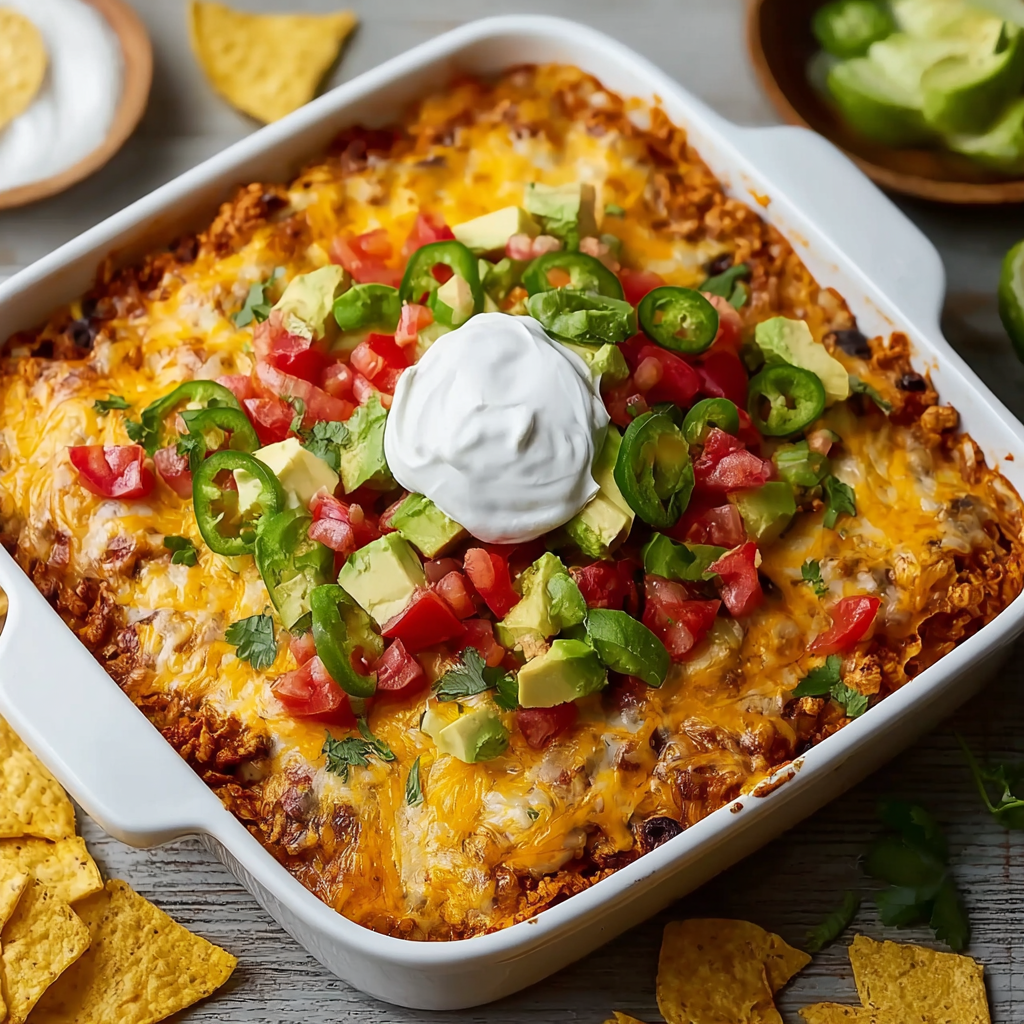
Chicken Taco Casserole

Introduction
Here is a question worth asking before any busy weeknight: what if the flavors of taco night — the seasoned protein, the melted cheese, the bright salsa, the satisfying crunch — could be assembled into a single baking dish in 15 minutes, required no standing at the stove building individual tacos, fed six people from one vessel, and produced leftovers that were genuinely better reheated the next day than they were fresh from the oven?
According to a 2024 consumer meal planning report by the NPD Group, taco-flavored dishes represent the single most frequently requested flavor profile in American weeknight cooking — yet the traditional taco format, with its individual assembly requirements and its tendency to produce a counter covered in separate components and a kitchen that needs significant cleaning, creates a logistical challenge that casserole format entirely eliminates. This chicken taco casserole takes every element of taco night — the seasoned chicken, the black beans, the corn, the cheese, the salsa, the sour cream, the tortilla crunch — and bakes them together into a cohesive, deeply flavored casserole that delivers the complete taco experience in a format that is dramatically more practical for a weeknight.
The defining technique is the tortilla layer — corn tortillas torn and layered through the casserole at multiple levels, which absorb the salsa and cooking juices and transform during baking into something between a soft dumpling and a crispy chip depending on where they sit in the dish, providing textural complexity and the corn flavor that is the structural base of every great taco. A 2023 culinary food science review confirmed that corn tortilla starch absorbs surrounding liquid and sauce during baking at a rate that produces optimal textural variation — crispy where exposed to direct oven heat and tender where submerged in sauce — making layered tortillas in a casserole one of the most effective techniques for simultaneously achieving multiple textures from a single ingredient.
Ingredients List
For the Chicken Filling
- 600g (1.3 lbs) cooked, shredded chicken (rotisserie chicken is the ideal shortcut — or poach 2 large breasts in seasoned stock)
- 1 can (400g / 15 oz) black beans, drained and rinsed
- 1 cup (150g) frozen or canned corn, drained
- 1 can (400g / 15 oz) diced tomatoes with green chiles (Rotel — or diced tomatoes + ½ tsp cayenne)
- 1 cup (240ml) red or green salsa (jarred — use your preferred heat level)
- 115g (4 oz) cream cheese, softened and cut into small cubes
- 1 tsp ground cumin
- 1 tsp chili powder
- 1 tsp garlic powder
- ½ tsp smoked paprika
- ½ tsp onion powder
- ½ tsp fine sea salt
- ¼ tsp cayenne pepper (optional)
For the Casserole Layers
- 12 small corn tortillas (6-inch / 15cm — torn into rough thirds)
- 2 cups (230g) shredded Mexican blend or sharp cheddar cheese, divided
- ½ cup (120ml) sour cream (spread between layers for creaminess)
For Topping
- Reserved 1 cup (115g) shredded cheese
- ½ cup (120ml) additional salsa (poured over the top before baking)
- ¼ tsp smoked paprika (dusted over the cheese topping)
For Serving
- Fresh cilantro, roughly torn
- Diced avocado or guacamole
- Additional sour cream
- Sliced jalapeños
- Sliced spring onions
- Hot sauce
- Lime wedges
Timing
- Prep Time: 15 minutes
- Bake Time: 30–35 minutes
- Resting Time: 10 minutes
- Total Time: 55–60 minutes
With rotisserie chicken, the active preparation time is 15 minutes — making this one of the fastest assembled casseroles in any dinner rotation. The oven does the remaining work.
Step-by-Step Instructions
Step 1: Make the Chicken Filling
In a large bowl, combine the shredded chicken, black beans, corn, diced tomatoes with green chiles, salsa, cream cheese cubes, cumin, chili powder, garlic powder, smoked paprika, onion powder, salt, and cayenne. Stir until the cream cheese begins to distribute through the mixture — it does not need to be fully incorporated at this stage as the oven heat will melt it completely. The filling should be moist but not soupy — if the salsa and tomatoes produce a particularly liquid filling, drain 2–3 tablespoons of excess liquid before assembling.
Key tip: The cream cheese is the element that transforms this casserole from a simple layered bake into something with the rich, creamy character that makes it worth returning to. It melts into the filling during baking and produces a binding, creamy layer that holds the chicken, beans, and corn together cohesively rather than allowing them to separate.
Step 2: Preheat and Prepare
Preheat the oven to 375°F (190°C). Grease a 9×13-inch (23x33cm) baking dish generously with butter, cooking spray, or a small amount of olive oil.
Step 3: Layer the Casserole
The layering order is structured to produce the best textural and flavor result — do not deviate from it:
Bottom layer: Arrange torn corn tortilla pieces in a single, overlapping layer across the entire base of the greased dish — covering every part of the bottom.
First filling layer: Spread half the chicken filling evenly over the tortilla layer.
Sour cream layer: Drop spoonfuls of half the sour cream across the chicken filling and spread gently — it does not need to be perfectly even.
First cheese layer: Scatter ½ cup of the shredded cheese over the sour cream.
Second tortilla layer: Arrange another layer of torn tortilla pieces over the cheese — covering completely.
Second filling layer: Spread the remaining chicken filling over the tortillas.
Second sour cream layer: Distribute the remaining sour cream across the second filling layer.
Final cheese layer: Scatter the remaining 1 cup of cheese across the top. Pour the additional ½ cup of salsa over the cheese layer. Dust with smoked paprika.
Key tip: The bottom tortilla layer is the most important structural component — it absorbs the cooking juices and salsa from the filling layers above and transforms during baking into a tender, flavorful base that prevents the filling from adhering to the dish. The top tortilla layer, sandwiched between filling layers, develops a softer, dumpling-like texture that provides a different but equally satisfying textural element within the casserole.
Step 4: Bake
Cover the dish tightly with aluminum foil and bake at 375°F (190°C) for 20 minutes — the covered environment traps steam and allows the filling to heat through evenly and the tortillas to soften and absorb the surrounding liquid. Remove the foil and continue baking for another 10–15 minutes until the cheese is completely melted, bubbling across the surface, and developing golden patches, and the edges of the casserole are visibly bubbling through the cheese.
For an extra-golden, slightly crisped cheese top: switch to the broiler for the final 2–3 minutes and watch closely.
Step 5: Rest and Serve
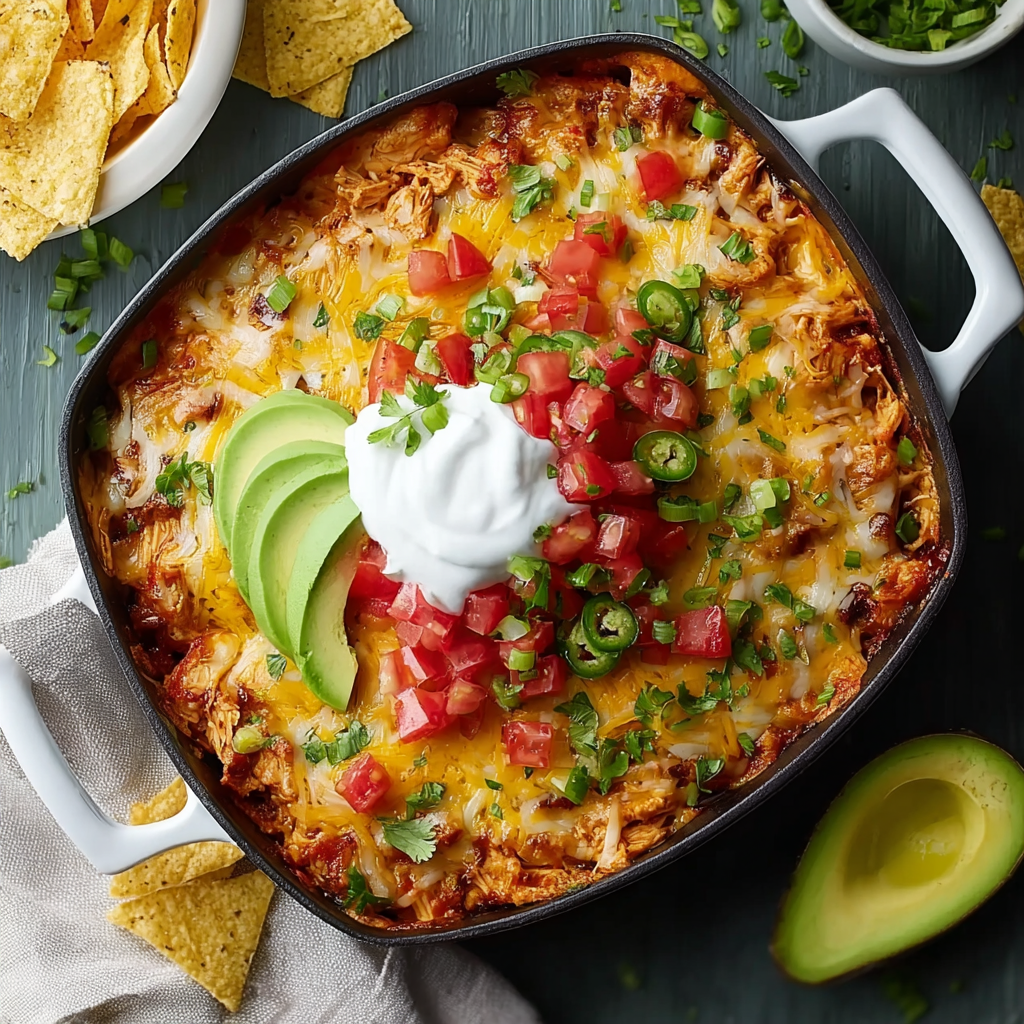
Remove from the oven and allow to rest for 10 minutes before cutting — the resting period allows the filling to set and firm slightly, making the casserole significantly easier to portion into clean, coherent squares rather than loose, crumbling scoops. Top with fresh cilantro, diced avocado, sliced jalapeños, and spring onions. Serve with additional sour cream, hot sauce, and lime wedges alongside.
Nutritional Information
Per serving — based on 6 servings with all toppings.
| Nutrient | Per Serving | % Daily Value* |
|---|---|---|
| Calories | 520 kcal | 26% |
| Total Fat | 22g | 28% |
| Saturated Fat | 10g | 50% |
| Total Carbohydrates | 46g | 17% |
| Total Sugar | 5g | — |
| Protein | 38g | 76% |
| Dietary Fiber | 8g | 29% |
| Sodium | 840mg | 37% |
| Potassium | 720mg | 15% |
| Vitamin C | 20% DV | 20% |
| Calcium | 30% DV | 30% |
| Iron | 22% DV | 22% |
*Based on a standard 2,000-calorie daily diet.
At 38 grams of protein and 8 grams of dietary fiber per serving — the fiber driven by the black beans, corn, and corn tortillas — this casserole exceeds the satiety threshold identified in nutritional research as producing reliable appetite regulation through the subsequent 4–5 hours. The calcium at 30% of the daily recommended value reflects the combined contribution of the cheese, sour cream, and cream cheese.
Healthier Alternatives
Lower fat: Replace cream cheese with Neufchâtel — ⅓ less fat — and use reduced-fat sour cream and a reduced-fat Mexican blend cheese. These three substitutions reduce the saturated fat content by approximately 35% while the bold Tex-Mex flavors from the salsa, spices, and beans remain fully present.
Higher protein: Add an additional can of black beans to the filling and use Greek yogurt in place of sour cream throughout — both inside the casserole and as a topping. The Greek yogurt substitution increases the protein content per serving by approximately 4 grams.
Gluten-free: Corn tortillas are naturally gluten-free — verify that the salsa, canned tomatoes, and spice blends used are certified gluten-free, as these can occasionally contain wheat-based additives or be subject to cross-contamination.
Lower sodium: Use a low-sodium salsa, no-salt-added canned tomatoes, and reduce the salt in the chicken filling to ¼ teaspoon. These three changes reduce the sodium per serving by approximately 25–30% without meaningfully impacting the flavor given the bold spice base.
Vegetarian: Replace the shredded chicken with an additional can of black beans, 1 cup of diced roasted sweet potato, and 1 cup of sautéed mushrooms. The filling remains protein-rich from the expanded bean quantity and deeply flavored from the Tex-Mex spice blend.
Serving Suggestions
Taco night replacement: Serve directly from the baking dish at the center of the table with the topping components in small bowls alongside — sour cream, guacamole, jalapeños, cilantro, hot sauce, and lime. This family-style format preserves the interactive, customizable spirit of taco night in a single-dish format.
With Mexican rice: Serve alongside a simple Mexican-style rice — white rice cooked in tomato broth with cumin and garlic — for a meal that replicates the complete taqueria plate experience from a single oven and one side dish.
Meal prep containers: Cut into 6 individual squares, place in airtight containers with a spoonful of salsa over each piece, and refrigerate. A complete, protein-rich lunch that reheats in under 3 minutes and tastes excellent the next day when the tortillas have fully absorbed the surrounding flavors.
Loaded with fresh toppings: For a more complete, restaurant-style presentation, top each serving generously — fanned avocado, a spoonful of pico de gallo, sour cream drizzled from a squeeze bottle, a scattering of cotija cheese, and torn cilantro. The richly topped casserole reads as a composed dish rather than a weeknight bake.
Game day format: Cut into small squares and serve as party finger food with cocktail napkins alongside — each square is a self-contained taco bite that holds together well and travels from dish to hand without falling apart.
Common Mistakes to Avoid
Filling that is too wet. Excess liquid from the salsa and canned tomatoes produces a casserole that is soupy rather than cohesive and prevents the cheese from crisping properly on the surface. Drain excess liquid before assembling and choose a thicker salsa rather than a pourable one.
Not resting before portioning. A casserole portioned directly from the oven produces loose, falling-apart squares because the filling is still molten. The 10-minute rest allows the cream cheese and cheese to firm slightly and the tortillas to absorb the final cooking liquid — producing clean, coherent squares.
Under-seasoning the chicken filling. The tortillas, beans, and cream cheese all moderate the perceived seasoning of the chicken mixture after baking. Season the filling more assertively than tastes comfortable during preparation — it will reach the correct balance in the finished casserole.
Skipping the foil for the first bake. Uncovered baking from the beginning browns the cheese before the interior filling has time to heat through and the tortillas have time to soften and absorb the surrounding liquid. The foil-covered first phase is the technique that produces evenly cooked filling and properly textured tortillas before the uncovered crisping phase.
Not greasing the dish. The bottom tortilla layer, soaked in cooking juices, will adhere firmly to an ungreased dish and tear apart when portioned. A generously greased dish allows clean removal of every square.
Storing Tips
Refrigerator: Cover tightly and refrigerate for up to 5 days. The flavors develop and deepen overnight — this casserole is genuinely better on day two as the tortillas fully absorb the surrounding flavors and the spice blend integrates completely. One of the best make-ahead weeknight dinners available.
Reheating individual portions: Microwave at 70% power for 90 seconds, or reheat in a 350°F (175°C) oven covered with foil for 15 minutes. The oven method restores the cheese’s melted, slightly crisped character more effectively than the microwave. Add fresh toppings — avocado, cilantro, sour cream — after reheating rather than before.
Freezer: Freeze the assembled, unbaked casserole — covered tightly with plastic wrap and then foil — for up to 3 months. Bake directly from frozen at 375°F (190°C) covered for 45 minutes, then uncovered for 15–20 minutes until heated through and the cheese is melted. Alternatively, freeze baked portions in individual containers for up to 3 months — thaw overnight and reheat as directed.
Make-ahead: Assemble the complete casserole up to 24 hours ahead and refrigerate unbaked. Add 10 minutes to the covered baking time when cooking from cold. This make-ahead approach reduces the weeknight effort to removing a dish from the refrigerator and placing it in the oven.
Conclusion
Chicken taco casserole proves that the most beloved weeknight flavor profile — the bold, spiced, cheesy, salsa-bright combination that defines taco night — does not require the individual assembly, the cluttered counter, or the standing-at-the-stove time that the traditional format demands. Fifteen minutes of assembly, 35 minutes of baking, and a single dish that feeds six with leftovers that improve overnight: the casserole that earns its place as the permanent weeknight hero the recipe title promises.
Make it this week and share your results in the comments — tell us which salsa heat level you chose, which toppings you piled on, and whether it replaced traditional taco night in your household. Leave a review, share with someone who loves Tex-Mex but needs a more practical weeknight format, and subscribe to our newsletter for more crowd-feeding, flavor-first casserole recipes every week.
FAQs
Can I use flour tortillas instead of corn tortillas? Yes — flour tortillas produce a softer, less distinctly corn-flavored casserole that is equally delicious. They absorb liquid more readily than corn tortillas and can become very soft throughout, producing a less textured result. For maximum textural variety — some crispy, some tender — corn tortillas are strongly recommended.
Can I use raw chicken instead of pre-cooked? Yes — with a modification. Dice raw chicken breasts or thighs into 2cm pieces, toss with the taco spice blend and 1 tablespoon of olive oil, and spread in a single layer on a baking sheet. Roast at 425°F (220°C) for 12–15 minutes until cooked through before combining with the other filling ingredients. Using raw chicken directly in the casserole without pre-cooking produces unevenly cooked chicken by the time the casserole is finished.
What salsa works best? A medium-thickness jarred salsa with a heat level matching your household’s preference is the best choice — neither a watery pico de gallo style nor an extremely thick salsa. Herdez, Newman’s Own, and Frontera are all reliable brands with good texture and flavor. Green salsa (salsa verde) produces a brighter, tangier casserole with a different flavor character that is equally excellent.
Can I add rice to the casserole? Yes — add 1 cup of cooked rice to the chicken filling mixture and reduce the salsa by ¼ cup to compensate for the rice’s starch. The rice absorbs the surrounding flavors during baking and adds substance that transforms the casserole from a filling side-dish-sized portion to a very substantial main course.
How do I prevent the casserole from drying out on reheating? The most effective approach is adding 2–3 tablespoons of salsa over each portion before reheating — the additional liquid rehydrates the tortillas and filling as it heats. Cover with a damp paper towel for microwave reheating or with foil for oven reheating. The cream cheese in the filling also helps retain moisture during storage and reheating.
Is this suitable for a crowd of 12 or more? Double the recipe and use two 9×13-inch pans — or use a large, deep 16×12-inch roasting pan for the full double batch. The technique and timing are identical. For a large group, assemble both pans the night before and bake fresh on the day — this eliminates all day-of preparation and produces the best possible result from a casserole that benefits from the overnight rest.