Follow Me On Social Media!
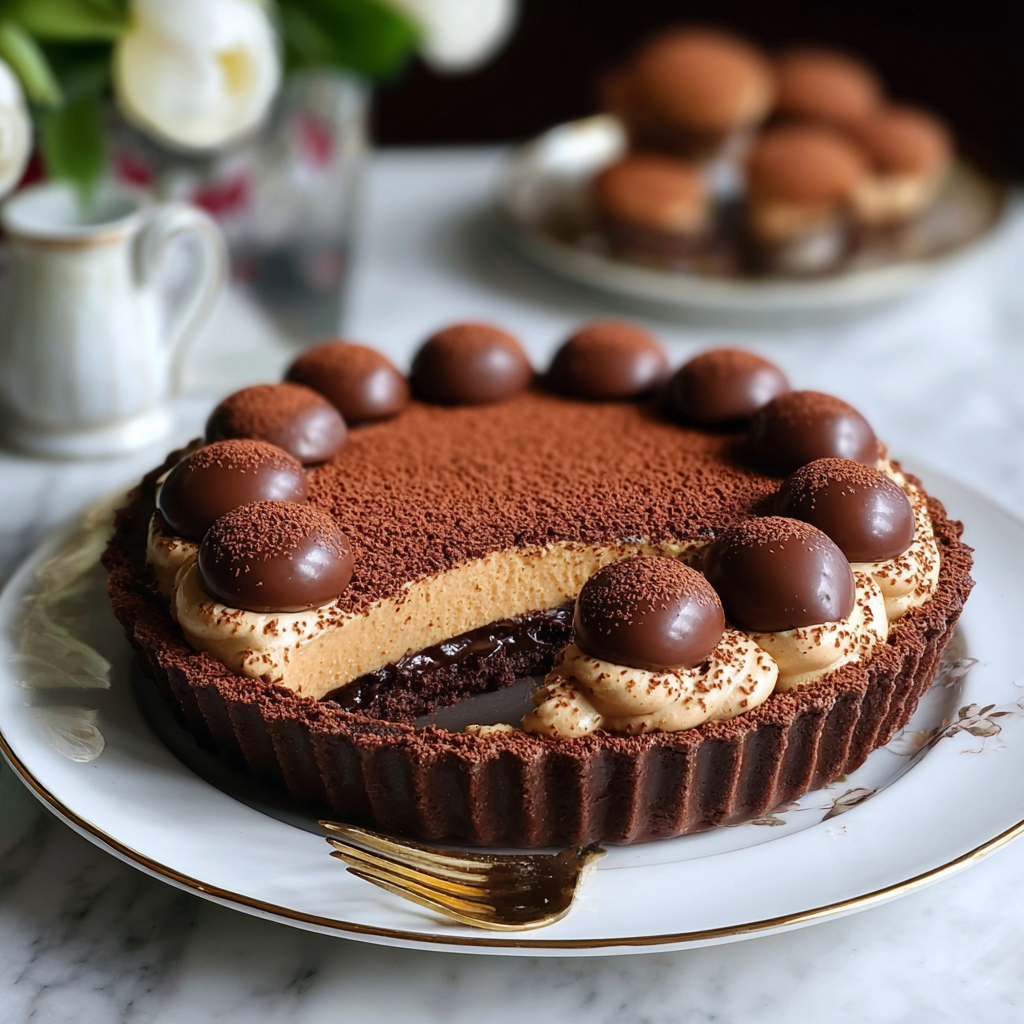
Chocolate Espresso Mascarpone Tart

Introduction
Here is a question worth asking the next time you consider ordering dessert at a restaurant: what if the most sophisticated, most visually striking, most genuinely impressive tart you have ever served required no pastry school training, no specialized equipment beyond a tart pan, and a total of 30 minutes of active work? According to a 2024 report by the James Beard Foundation, chocolate-based tarts represent the single most ordered plated dessert in fine dining restaurants across North America — yet the techniques behind the best versions are considerably more accessible than most home bakers believe.
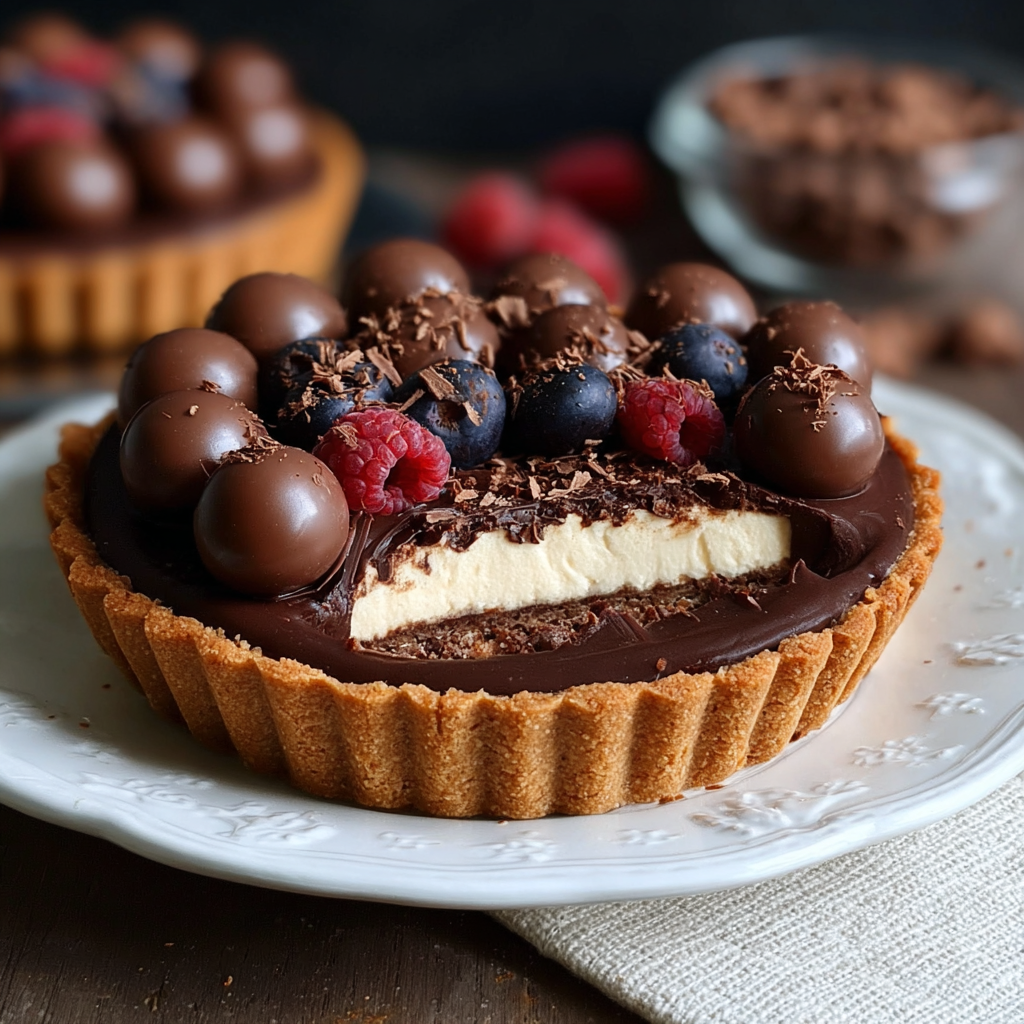
This chocolate espresso mascarpone tart is built on three components that each justify their inclusion individually and become extraordinary together: a deep, buttery chocolate shortcrust shell with a satisfying snap; a ganache-style chocolate espresso filling that sets to a dense, truffle-like consistency with a surface so glossy it reflects light; and a cloud of lightly sweetened mascarpone cream that cuts through the intensity of the chocolate with cool, dairy richness. The espresso does not make the tart taste like coffee — it makes the chocolate taste more completely, more intensely like itself, amplifying every roasted, bitter, complex note that high-quality dark chocolate contains.
A 2023 sensory study published in the Journal of Food Science confirmed that caffeine compounds in espresso enhance the perception of chocolate bitterness and complexity by suppressing sweetness receptors temporarily — producing the same effect as salt on savory food, but for chocolate. This tart uses that science deliberately.
Ingredients List
For the Chocolate Shortcrust Shell
- 180g (1½ cups) all-purpose flour
- 30g (3 tbsp) unsweetened cocoa powder, sifted
- 60g (¼ cup) powdered sugar, sifted
- ¼ tsp fine sea salt
- 115g (½ cup) unsalted butter, cold and cubed
- 1 large egg yolk
- 2–3 tbsp ice-cold water
For the Chocolate Espresso Filling
- 250g (9 oz) dark chocolate, 70%+ cacao, finely chopped
- 200ml (¾ cup + 1 tbsp) heavy cream
- 60ml (¼ cup) whole milk
- 2 tbsp strong brewed espresso or 1½ tsp instant espresso dissolved in 2 tbsp hot water
- 2 tbsp unsalted butter, room temperature and cubed
- 1 tbsp honey or maple syrup
- 1 tsp pure vanilla extract
- ¼ tsp fine sea salt
For the Mascarpone Cream
- 250g (9 oz) mascarpone cheese, cold
- 150ml (⅔ cup) heavy cream, cold
- 2 tbsp powdered sugar, sifted
- 1 tsp pure vanilla extract
- ½ tsp lemon zest (optional — adds a subtle brightness)
For Finishing
- Flaky sea salt (Maldon or fleur de sel)
- Dark chocolate shavings or cocoa powder dusting
- Fresh raspberries or candied espresso beans (optional)
Timing
- Pastry Prep and Chill: 45 minutes (including 30 minutes rest)
- Blind Bake: 20 minutes
- Filling Prep: 10 minutes
- Setting Time: 2 hours minimum
- Mascarpone Cream: 5 minutes
- Total Time: approximately 3.5 hours (mostly hands-off)
Make this the day before serving — the filling sets to its best, most truffle-like consistency overnight and the flavors develop considerably during refrigeration. Day-of active work is under 20 minutes.
Step-by-Step Instructions
Step 1: Make the Chocolate Shortcrust Pastry
In a large bowl, whisk together the flour, cocoa powder, powdered sugar, and salt. Add the cold cubed butter and work it into the flour using your fingertips, a pastry cutter, or a food processor until the mixture resembles coarse breadcrumbs with no butter pieces larger than a small pea. Add the egg yolk and mix briefly, then add ice-cold water one tablespoon at a time, mixing gently until the dough just comes together into a cohesive ball — stop the moment it holds together when pressed. The dough should not be smooth or elastic.
Flatten into a disc, wrap in plastic wrap, and refrigerate for 30 minutes minimum. Cold rest relaxes the gluten and firms the butter, producing a pastry that is easier to roll and less likely to shrink during baking.
Key tip: Do not overwork the pastry dough. Gluten development from overworking produces a tough, leathery shell rather than the crisp, crumbly, melt-in-the-mouth texture the recipe is designed around. Handle minimally and stop as soon as the dough coheres.
Step 2: Roll, Line, and Blind Bake
Preheat the oven to 375°F (190°C). On a lightly floured surface, roll the chilled pastry to approximately 3–4mm thickness in a circle large enough to line a 9-inch (23cm) loose-bottomed tart pan with approximately 2cm of overhang. Roll the pastry around the rolling pin and unroll it over the tart pan — do not stretch it into place, as stretched pastry shrinks dramatically during baking. Press gently into the corners and up the sides. Trim the overhang by rolling the pin across the top of the pan.
Line the pastry shell with parchment paper and fill with ceramic baking beans, dried rice, or dried lentils. Blind bake for 15 minutes, then remove the parchment and weights and bake for a further 5–7 minutes until the base looks dry and set. The shell should feel firm and slightly darker than raw — it will continue cooking slightly from the heat of the filling. Allow to cool completely before filling.
Step 3: Make the Chocolate Espresso Filling
Place the finely chopped dark chocolate in a large heatproof bowl. In a small saucepan, combine the heavy cream, milk, espresso, honey, and salt. Heat over medium heat, stirring occasionally, until the mixture just reaches a simmer — small bubbles breaking at the edges, not a rolling boil. Pour the hot cream mixture over the chopped chocolate and let it sit undisturbed for 2 minutes. Then stir gently from the center outward in slow, deliberate circles until the chocolate is completely melted and the ganache is smooth and glossy. Add the room-temperature butter cubes and the vanilla extract, stirring gently until the butter is fully incorporated and the ganache has a deep, mirror-like shine.
Key tip: Stir gently and slowly — vigorous stirring incorporates air bubbles into the ganache that create a matte, slightly grainy surface rather than the glossy, reflective finish that makes this tart visually extraordinary. Patience in this step is directly rewarded in the appearance of the finished tart.
Step 4: Fill and Set
Pour the warm ganache into the cooled tart shell. Tap the tart pan gently on the counter 3–4 times to release any surface bubbles. If any bubbles remain, pass a kitchen torch briefly over the surface or use a toothpick to pop them individually. Allow the tart to cool at room temperature for 20 minutes, then refrigerate uncovered for a minimum of 2 hours — overnight is significantly better. The filling is set when it holds its shape cleanly when the pan is tilted and has developed a matte, slightly firm surface.
Step 5: Make the Mascarpone Cream
Just before serving, combine the cold mascarpone, cold heavy cream, powdered sugar, vanilla extract, and lemon zest in a cold mixing bowl. Beat on medium speed until the mixture holds soft, billowy peaks — do not over-beat to stiff peaks, which produces a dense, heavy cream rather than the light, cloud-like texture that contrasts the ganache filling most effectively. Use immediately or refrigerate for up to 2 hours.
Step 6: Finish and Serve
Remove the tart from the refrigerator 20 minutes before serving — cold ganache is dense and slightly waxy, and a brief rest at room temperature allows the filling to soften to its most silky, yielding texture. Spoon or pipe the mascarpone cream over the surface of the tart — either covering it completely for a dramatic contrast or piped in soft rosettes around the edge to allow the dark, glossy ganache to remain visible in the center. Finish with flaky sea salt, dark chocolate shavings or a fine dusting of cocoa powder, and fresh raspberries or candied espresso beans if using. Slice with a hot, clean knife wiped between each cut.
Nutritional Information
Per serving — based on 10 servings with mascarpone cream.
| Nutrient | Per Serving | % Daily Value* |
|---|---|---|
| Calories | 495 kcal | 25% |
| Total Fat | 36g | 46% |
| Saturated Fat | 22g | 110% |
| Total Carbohydrates | 38g | 14% |
| Total Sugar | 22g | — |
| Protein | 6g | 12% |
| Dietary Fiber | 3g | 11% |
| Sodium | 145mg | 6% |
| Iron | 20% DV | 20% |
| Magnesium | 18% DV | 18% |
| Calcium | 10% DV | 10% |
*Based on a standard 2,000-calorie daily diet.
The iron content — 20% of the daily recommended value per serving — comes primarily from the high-percentage dark chocolate and is notably significant for a dessert. Dark chocolate at 70%+ cacao is one of the most concentrated dietary sources of both iron and magnesium available in the dessert category.
Healthier Alternatives
Lower saturated fat: Replace half the heavy cream in the filling with full-fat coconut milk. The ganache will be slightly less rich with a very faint coconut note that is pleasant rather than intrusive — and the saturated fat profile shifts toward medium-chain fatty acids, which metabolize differently than dairy-derived saturated fats.
Dairy-free: Replace butter with refined coconut oil throughout, use full-fat coconut cream in the filling, and substitute the mascarpone cream with whipped coconut cream sweetened with maple syrup and flavored with vanilla. The tart loses some dairy richness but gains a tropical character that works well with the dark chocolate.
Lower sugar: Reduce the honey in the filling to 1 teaspoon and use 85% cacao chocolate. The tart will be intensely bittersweet — some will find this more sophisticated, others will want additional sweetness from the mascarpone cream. Adjust the powdered sugar in the cream upward by 1 tablespoon to compensate.
Gluten-free shell: Replace all-purpose flour with a certified gluten-free 1:1 baking blend plus an additional tablespoon of cold butter to compensate for the reduced binding capacity of gluten-free flour. The shell will be slightly more fragile — handle carefully during blind baking.
Higher protein: Add 2 tablespoons of almond flour to the pastry in place of equal all-purpose flour and serve with a side of Greek yogurt lightly sweetened with honey rather than mascarpone cream — this adds protein while maintaining a cool, tangy counterpoint to the rich filling.
Serving Suggestions
With fresh raspberries: The acidity of fresh raspberries against the bittersweet ganache is one of the most classically justified flavor pairings in pastry — the fruit cuts the richness and the chocolate amplifies the berry. Scatter generously over the mascarpone cream just before serving.
As individual tartlets: Divide the pastry and filling among eight 4-inch (10cm) individual tart pans. Reduce the blind bake time to 12 minutes and the filled setting time to 1 hour. Individual portions are particularly elegant for dinner parties and eliminate the need for slicing at the table.
With a shot of espresso: Serve each slice alongside a single shot of freshly pulled espresso — the same flavor that amplifies the chocolate in the tart amplifies it again when consumed alongside it. A simple and sophisticated pairing.
Flambéed with cognac: For a dramatic table presentation, warm 2 tablespoons of cognac in a small pan, ignite carefully, and pour over the mascarpone cream just as the lights are dimmed. Extinguishes in seconds and adds a warm, boozy complexity to the cream that is briefly extraordinary.
At room temperature: Always serve at room temperature rather than cold — the ganache filling at refrigerator temperature is too firm and too waxy to show its best texture and flavor. Twenty minutes of resting transforms it from dense and slightly resistant to silky, yielding, and deeply expressive.
Common Mistakes to Avoid
Overworking the pastry. Excessive handling develops gluten and produces a tough, leathery shell. Work minimally, stop the moment the dough coheres, and let the refrigerator rest do the remaining work.
Not blind baking properly. An unbaked or partially blind-baked shell will be soggy and underdone beneath the ganache — the filling is not hot enough or long enough in contact with the pastry to cook raw dough. Blind bake fully and allow to cool completely before filling.
Boiling the cream mixture. Cream brought to a full boil before pouring over the chocolate loses moisture rapidly, scorches the milk solids, and can cause the ganache to separate. A gentle simmer — small bubbles at the edges — is the correct temperature.
Stirring the ganache vigorously. Aggressive stirring incorporates air and produces a matte, slightly grainy ganache rather than the mirror-like, glossy filling that defines this tart. Stir slowly, deliberately, and from the center outward.
Filling a warm shell. A warm tart shell melts the bottom of the ganache prematurely and can cause the filling to seep into the pastry or set unevenly. Always cool the shell to room temperature before pouring the filling.
Serving straight from the refrigerator. Cold ganache is firm, slightly waxy, and muted in flavor. Twenty minutes at room temperature is the single most important serving instruction — it transforms the texture from dense to silky and allows the full complexity of the chocolate and espresso to express themselves.
Storing Tips
Refrigerator: Store loosely covered with plastic wrap — avoiding contact with the ganache surface — for up to 5 days. The filling improves over the first 48 hours as the chocolate and espresso flavors integrate and deepen.
Make-ahead: This tart is ideally made 24 hours ahead. Bake the shell, prepare the filling, and refrigerate overnight without the mascarpone cream — apply the cream within 2 hours of serving for the freshest texture and best presentation.
Freezer: Freeze the filled, untopped tart — without mascarpone cream — for up to 1 month. Wrap the entire tart pan in two layers of plastic wrap and one layer of foil. Thaw overnight in the refrigerator and bring to room temperature before adding the cream and garnishes.
Mascarpone cream: Make fresh on the day of serving — pre-made mascarpone cream loses its light, airy texture within 4–5 hours as the cream begins to weep and the mascarpone firms. Fifteen minutes of preparation on the day of serving is the better approach.
Conclusion
The chocolate espresso mascarpone tart proves that fine dining dessert quality is not a function of professional training — it is a function of good ingredients, an understanding of a few fundamental techniques, and the patience to let a ganache set overnight. Thirty minutes of active work, three components that belong together completely, and a finished result that justifies every minute of the setting time the moment it reaches the table.
Make it for your next occasion and share your results in the comments — tell us what chocolate percentage you used, whether you served it with raspberries, and what the table reaction was. Leave a review, share with someone who takes dessert seriously, and subscribe to our newsletter for more technique-driven, show-stopping dessert recipes every week.
FAQs
Can I make the pastry shell in advance? Yes — the blind-baked shell stores well at room temperature in the tart pan, loosely covered with plastic wrap, for up to 2 days. This makes it an ideal component to prepare well ahead, reducing day-of work to the filling and cream only.
What if my ganache is grainy or separated? Grainy ganache is almost always caused by overheating the cream or adding it too hot directly to the chocolate. To rescue separated ganache: add 1–2 tablespoons of warm cream and stir very gently from the center — in most cases the emulsion re-forms. If it does not, briefly warm the bowl over a pan of simmering water while stirring gently until smooth.
Can I use milk chocolate instead of dark? Yes, though the character of the tart changes substantially — it becomes sweeter, less complex, and loses the bittersweet tension between the chocolate and the espresso that makes this recipe distinctive. If using milk chocolate, reduce the honey to ½ teaspoon and increase the espresso slightly to maintain some complexity. A 50/50 blend of milk and dark chocolate produces a middle-ground result that many people prefer.
How do I get a perfectly smooth ganache surface? Pour the ganache from a low height directly into the center of the tart shell and tilt the pan gently in all directions to spread it to the edges rather than using a spatula — spatula marks disturb the surface. Tap gently to release bubbles and do not touch the surface again until it is fully set.
Is the espresso flavor strong? No — 2 tablespoons of espresso in the volume of filling used produces a flavor that is detectable as a deepening of the chocolate rather than as a distinct coffee note. Most people who do not enjoy coffee find this tart entirely acceptable and simply perceive it as an unusually complex, rich chocolate dessert. To make it more detectably coffee-flavored, increase to 3 tablespoons.
Can I make this without a tart pan? A 9-inch springform pan works as a substitute — line the base with parchment and press the pastry up the sides as evenly as possible. The release is less clean than a proper tart pan but entirely manageable. Individual ramekins can also be used for a rustic, crustless ganache pot variation — skip the pastry entirely and simply pour the ganache directly into buttered ramekins.