Follow Me On Social Media!
Coconut & Mango Chia Pudding

Introduction
Here is a question worth asking the next time breakfast feels like an obligation rather than an occasion: what if the most nourishing, visually stunning, genuinely satisfying morning meal you could make required exactly five minutes of active preparation the night before and produced something so good that it feels more like dessert than breakfast — without functioning like one nutritionally? According to a 2024 consumer wellness report by Mintel, overnight breakfast preparations represent the fastest-growing category in the health-conscious breakfast segment globally, driven by working adults who want genuinely nutritious mornings without any morning effort. Chia pudding leads that category — and this version, built on the tropical pairing of coconut and mango, is the recipe that explains why.
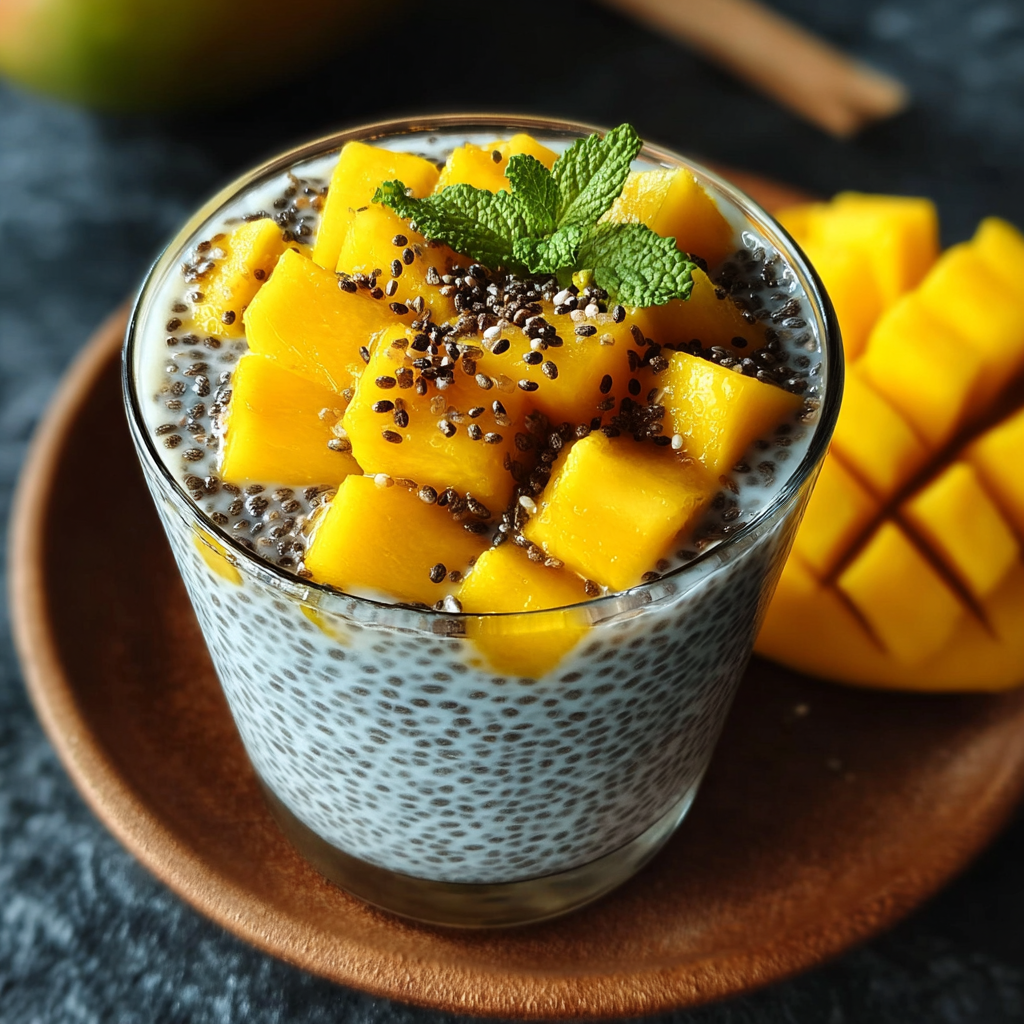
This coconut and mango chia pudding layers silky, set chia pudding made with full-fat coconut milk against a vibrant, naturally sweet mango purée to produce a breakfast — or dessert — that is simultaneously high in fiber, rich in omega-3 fatty acids, naturally sweetened, dairy-free, vegan, and so visually striking that it photographs beautifully before the first spoonful. The combination of coconut and mango is one of the most scientifically supported flavor pairings in tropical fruit chemistry — both contain overlapping volatile aromatic compounds, principally lactones and esters, that make each taste more intensely of itself when paired with the other.
A 2023 nutritional review in the British Journal of Nutrition identified chia seeds as one of the most nutrient-dense foods per calorie available — delivering complete protein, alpha-linolenic acid (the plant-based omega-3 precursor), soluble fiber, calcium, and magnesium in concentrations that exceed most dedicated supplement products. This pudding makes all of that indistinguishable from a treat.
Ingredients List
For the Coconut Chia Pudding Base
- 6 tbsp (60g) chia seeds (white or black — white produces a more visually striking result against the mango)
- 1 can (400ml) full-fat coconut milk, well shaken (sub: light coconut milk for a lower-fat version)
- ½ cup (120ml) unsweetened oat milk or almond milk (thins the coconut milk to the right consistency)
- 2 tbsp maple syrup or honey (adjust to taste)
- 1 tsp pure vanilla extract
- Pinch of fine sea salt (amplifies the coconut flavor significantly)
For the Mango Layer
- 2 large ripe mangoes, peeled and diced (approximately 400g flesh — Alphonso or Ataulfo varieties for the most vibrant flavor)
- 1 tbsp fresh lime juice
- 1 tsp lime zest
- 1 tbsp maple syrup (optional — depends on the sweetness of the mangoes)
- Pinch of fine sea salt
For Topping and Garnish
- Fresh mango slices or cubes
- Toasted coconut flakes
- Fresh passion fruit pulp (optional — extraordinary flavor combination)
- Fresh mint sprigs
- Lime zest curls
- Granola (optional — adds crunch)
- Hemp seeds or extra chia seeds (optional — extra protein and texture)
Timing
- Active Prep Time: 10 minutes
- Setting Time: 4 hours minimum (overnight is strongly preferred)
- Total Time: 10 minutes active, overnight with setting
Prepare the evening before and wake up to breakfast that requires nothing more than adding the mango layer and garnishes — a genuinely effortless morning that feels significantly more considered than the preparation warrants.
Step-by-Step Instructions
Step 1: Make the Coconut Chia Base
In a large bowl or measuring jug, combine the full-fat coconut milk, oat milk, maple syrup, vanilla extract, and salt. Whisk together until the coconut milk is fully smooth and the sweetener is dissolved. Add the chia seeds and whisk vigorously for 60 seconds to distribute them evenly throughout the liquid — preventing them from settling in a mass at the bottom before the gelling process begins.
Wait 5 minutes, then whisk again for 30 seconds — this second whisking is the critical step that prevents the chia seeds from clumping together as they begin to absorb liquid. Clumped chia seeds produce a lumpy, uneven pudding with pockets of dry seeds surrounded by set gel; evenly dispersed seeds produce a uniformly smooth, set pudding.
Key tip: The ratio of 6 tablespoons of chia seeds to 520ml of liquid produces a firmly set, spoonable pudding. For a looser, more pourable consistency — suitable for layering or drinking — reduce to 4 tablespoons. For an even firmer, sliceable pudding, increase to 7 tablespoons.
Step 2: Set the Pudding
Cover the bowl or divide the mixture into individual serving glasses or jars — portioning into individual servings before setting produces cleaner, more accurate portion control and a more elegant presentation. Refrigerate for a minimum of 4 hours — overnight produces the best result. The pudding is correctly set when it holds its shape when a spoon is inserted and withdrawn and the surface does not flow back to cover the indentation.
Step 3: Make the Mango Purée
Place three-quarters of the diced mango flesh, the lime juice, lime zest, optional maple syrup, and salt in a blender or food processor. Blend until completely smooth — approximately 60–90 seconds. The purée should be fluid, vivid orange-yellow, and intensely fragrant. Taste and adjust with additional lime juice for brightness or maple syrup for sweetness — ripe mango varies significantly in natural sweetness between varieties and seasons. Reserve the remaining diced mango for garnish.
Key tip: The purée should be made as close to serving time as possible for the most vibrant color and flavor. Mango oxidizes and dulls in color after 24 hours even under refrigeration — for advance preparation, store covered with plastic wrap pressed directly onto the surface.
Step 4: Layer and Assemble
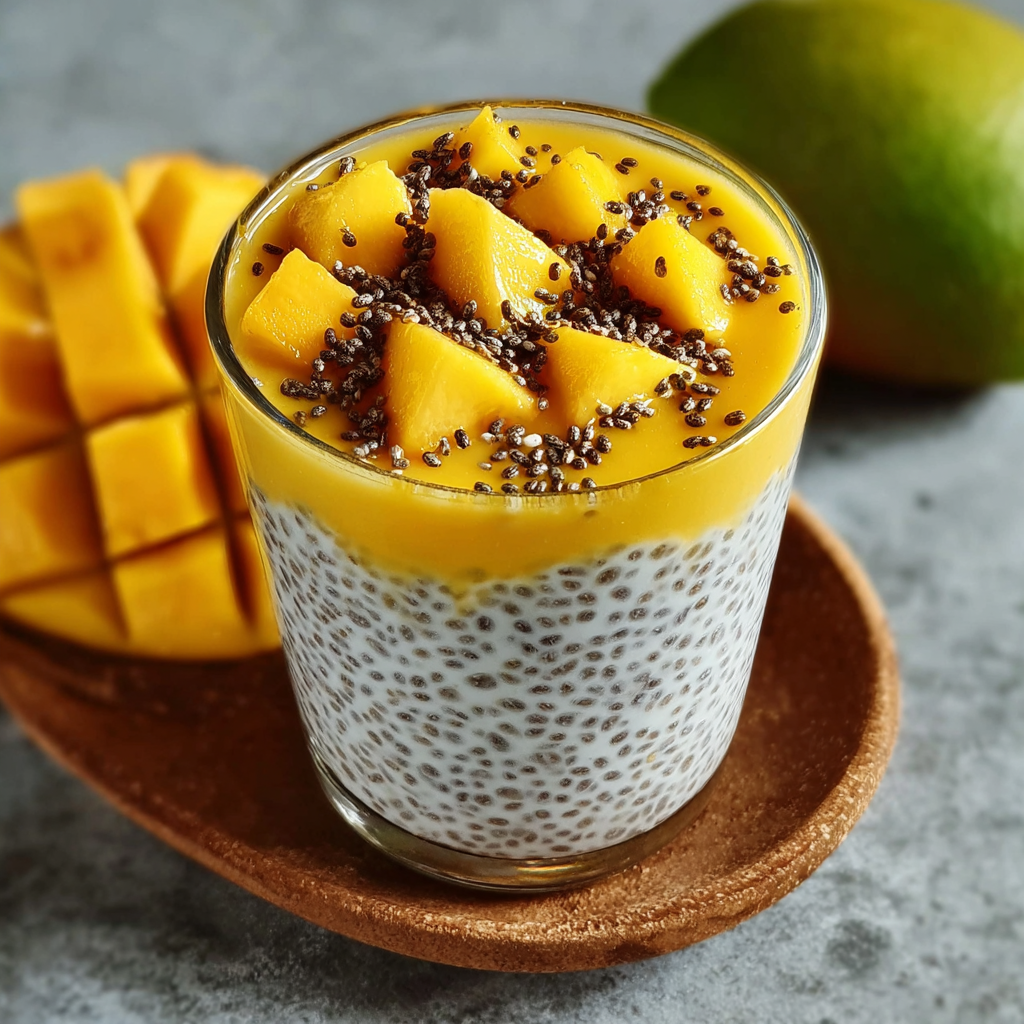
Remove the set chia pudding from the refrigerator. If the pudding has separated slightly — with a small layer of liquid on top — stir briefly to re-incorporate before layering. Spoon or pour the mango purée generously over the surface of the set chia pudding — pour slowly against the back of a spoon placed just above the surface of the pudding for the cleanest, most distinct layer boundary. The contrast between the cream-white chia base and the vivid orange-yellow mango layer is the visual signature of this recipe.
Step 5: Garnish and Serve
Top with fresh mango cubes, toasted coconut flakes, passion fruit pulp if using, fresh mint, and lime zest curls. Add granola, hemp seeds, or extra chia seeds if desired. Serve immediately from the refrigerator — cold, set, and at its best textural and flavor state.
Nutritional Information
Per serving — based on 4 servings with mango purée and coconut flake topping, without granola.
| Nutrient | Per Serving | % Daily Value* |
|---|---|---|
| Calories | 380 kcal | 19% |
| Total Fat | 22g | 28% |
| Saturated Fat | 16g | 80% |
| Total Carbohydrates | 42g | 15% |
| Total Sugar | 24g | — |
| Protein | 7g | 14% |
| Dietary Fiber | 12g | 43% |
| Sodium | 95mg | 4% |
| Potassium | 480mg | 10% |
| Calcium | 22% DV | 22% |
| Vitamin C | 55% DV | 55% |
| Iron | 20% DV | 20% |
| Omega-3 (ALA) | 4.5g | — |
*Based on a standard 2,000-calorie daily diet.
The fiber content — 12 grams per serving, 43% of the daily recommended value — is driven by the chia seeds, which contain approximately 10 grams of fiber per 30-gram serving. The omega-3 ALA content of 4.5 grams per serving exceeds the daily adequate intake for most adults in a single breakfast. Vitamin C at 55% of the daily value comes primarily from the mango and contributes to collagen synthesis, immune function, and iron absorption.
Healthier Alternatives
Lower fat: Replace full-fat coconut milk with light coconut milk — the pudding will be slightly less rich and may require an additional tablespoon of chia seeds to achieve the same set consistency due to the lower fat content affecting gelling behavior.
Higher protein: Stir 2 tablespoons of unflavored or vanilla pea protein powder into the liquid before adding the chia seeds. Alternatively, top with a large dollop of coconut Greek yogurt or hemp seeds — 3 tablespoons of hemp seeds adds 10 grams of complete plant protein per serving.
Lower sugar: Omit the maple syrup from both the pudding base and the mango purée — very ripe Alphonso or Ataulfo mangoes are sweet enough to require no added sweetener. The natural sugars in the mango and the subtle sweetness of the coconut milk provide sufficient background sweetness for most palates.
Gut health focus: Add 1 tablespoon of psyllium husk to the chia base — it thickens the pudding further and adds additional soluble prebiotic fiber that supports gut microbiome diversity alongside the chia seeds’ existing fiber contribution.
Frozen mango version: Replace fresh mango with thawed frozen mango in both the purée and the garnish. Frozen mango is often of comparable or superior quality to out-of-season fresh mango, is available year-round, and is significantly more affordable.
Serving Suggestions
Layered parfait glasses: Layer the chia pudding and mango purée alternately in tall parfait glasses — three layers of each — for a visually dramatic, striped presentation that requires no garnish beyond a mint leaf to look professionally assembled.
Breakfast meal prep jars: Divide into 4 mason jars, layer with mango purée, seal, and refrigerate. A complete, visually stunning breakfast is available every morning of the week from a single 10-minute Sunday preparation session.
As a dessert: Serve in wide, shallow bowls drizzled with a little extra coconut cream, a scattering of toasted coconut flakes, and a piece of fresh mango arranged artfully on top. This presentation elevates the pudding from breakfast to a plated dessert of genuine sophistication.
Smoothie bowl base: Blend the set chia pudding with additional mango purée until smooth and thick — pour into a wide bowl and top with granola, fresh fruit, coconut flakes, and a drizzle of honey. This produces a smoothie bowl with significantly more fiber, protein, and sustained energy than a conventional blended fruit smoothie bowl.
Tropical trifle: Layer in a large glass bowl with fresh mango, toasted coconut, crushed gingersnap cookies, and passion fruit pulp for a crowd-serving tropical trifle that serves 8–10 from a double batch of the base recipe.
Common Mistakes to Avoid
Not whisking twice. A single whisk before refrigerating allows chia seeds to settle and clump before the gelling process distributes them evenly. The second whisk at the 5-minute mark — when the seeds have just begun to swell — is the intervention that redistributes them before they bond together permanently into lumps.
Using light coconut milk from a carton. Carton coconut milk has insufficient fat content to produce a rich, creamy pudding base — the result is watery and lacks the characteristic coconut richness that makes this recipe distinctive. Use canned, full-fat coconut milk for the base, adding carton oat or almond milk only for consistency adjustment.
Insufficient setting time. A chia pudding removed from the refrigerator after 2 hours will be partially set — the surface holds its shape but the interior is still liquid. Four hours is the functional minimum; overnight produces the uniformly set, clean-slicing consistency that makes the pudding easy to layer with the mango purée without the layers mixing.
Making the mango purée too far in advance. Mango oxidizes and loses its vibrant color within 24 hours of blending — the purée turns from a vivid orange-yellow to a duller, browner tone. Make the purée within a few hours of serving and press plastic wrap directly onto the surface during refrigeration to minimize oxidation.
Adding garnishes before refrigerating. Toasted coconut flakes, granola, and fresh fruit should be added at the moment of serving only — refrigerated overnight, they soften and lose the textural contrast they are intended to provide.
Storing Tips
Set chia pudding without mango: Stores covered in the refrigerator for up to 5 days. The texture improves over the first 24 hours and remains consistent and enjoyable through day 5. This is the most practical meal prep approach — a batch of chia pudding bases prepared on Sunday provides 5 days of effortless breakfasts.
Mango purée: Store in an airtight container with plastic wrap pressed directly onto the surface for up to 3 days. The color dulls slightly after day 2 but the flavor remains excellent.
Assembled jars: Store covered for up to 3 days. Add fresh garnishes at the time of eating — the toppings deteriorate during refrigerated storage.
Freezer: The chia pudding base freezes surprisingly well for up to 1 month in sealed containers. Thaw overnight in the refrigerator and stir to re-incorporate any liquid that has separated during freezing. The texture after thawing is comparable to fresh. Do not freeze with the mango purée layer — freeze the base only.
Conclusion
Coconut and mango chia pudding proves that the most nourishing breakfast is not the most time-consuming one — it is the one that is prepared with intention the evening before and delivers on every promise the next morning. Silky coconut chia base, vibrant mango purée, crispy toasted coconut, and fresh mint — a complete, protein-and-fiber-rich tropical breakfast in five minutes of preparation and eight hours of effortless setting.
Make it tonight and share your results in the comments — tell us which mango variety you used, whether you added passion fruit, and whether it replaced your usual breakfast routine. Leave a review, share with someone who needs a better morning, and subscribe to our newsletter for more make-ahead, plant-forward recipes every week.
FAQs
Why is my chia pudding not setting properly? The three most common causes are insufficient chia seeds relative to liquid — the ratio must be at least 3 tablespoons per cup of liquid — seeds that were old and had lost their gelling potency, or insufficient setting time. Verify the ratio, check the seed freshness (fresh chia seeds smell neutral and gel within minutes of contact with liquid), and allow the full overnight setting time. If still too liquid after overnight, add 1 additional tablespoon of chia seeds, stir thoroughly, and refrigerate for another 2 hours.
What mango variety produces the best flavor? Alphonso mangoes — imported from India, typically available from April through June — produce the most intensely flavored, aromatic, and naturally sweet purée of any commercially available variety. Ataulfo (Honey) mangoes are the most widely available alternative with comparable sweetness and a fiber-free flesh that blends into a completely smooth purée. Tommy Atkins — the most common supermarket variety — is less sweet and less aromatic but entirely acceptable, particularly if enhanced with extra lime juice and a small additional amount of sweetener.
Can I use a different fruit instead of mango? Yes — passion fruit pulp thinned with a little orange juice produces an extraordinarily vibrant, acidic alternative. Fresh or frozen raspberries blended with a small amount of honey produce a striking pink layer. Papaya purée is the most tropical substitution and shares flavor chemistry with mango. Any fruit purée of similar consistency works in the layering format.
Is this recipe suitable for children? It is an excellent option for children — naturally sweet, vibrantly colored, and delivered in a format that feels like dessert. For very young children, ensure the chia seeds are fully set and not in a semi-liquid state that could be a choking concern. Fully set chia pudding, where the seeds have swelled to their maximum size and are firmly embedded in gel, is entirely safe for children who have begun eating solid foods.
Can I make this without coconut milk? Yes — any full-fat, creamy plant milk works as a substitute. Cashew milk produces the most neutral, creamy base. Oat milk produces a slightly thinner set that requires an extra tablespoon of chia seeds to compensate. Regular dairy milk works well for non-vegan versions. The coconut flavor that complements the mango will be absent without coconut milk — compensate with ½ teaspoon of coconut extract if desired.
How do I get perfectly distinct layers? The key is fully set pudding — liquid or partially set pudding mixes with the mango purée on contact. Ensure the chia base is completely firm before adding the mango layer. Pour the purée very slowly against the back of a spoon held just above the pudding surface — this disperses the impact and prevents the purée from breaking through and mixing with the base. For multiple alternating layers, refrigerate for 20 minutes between each layer addition.