Follow Me On Social Media!
Creamy Beef & Spinach Gratin

Introduction
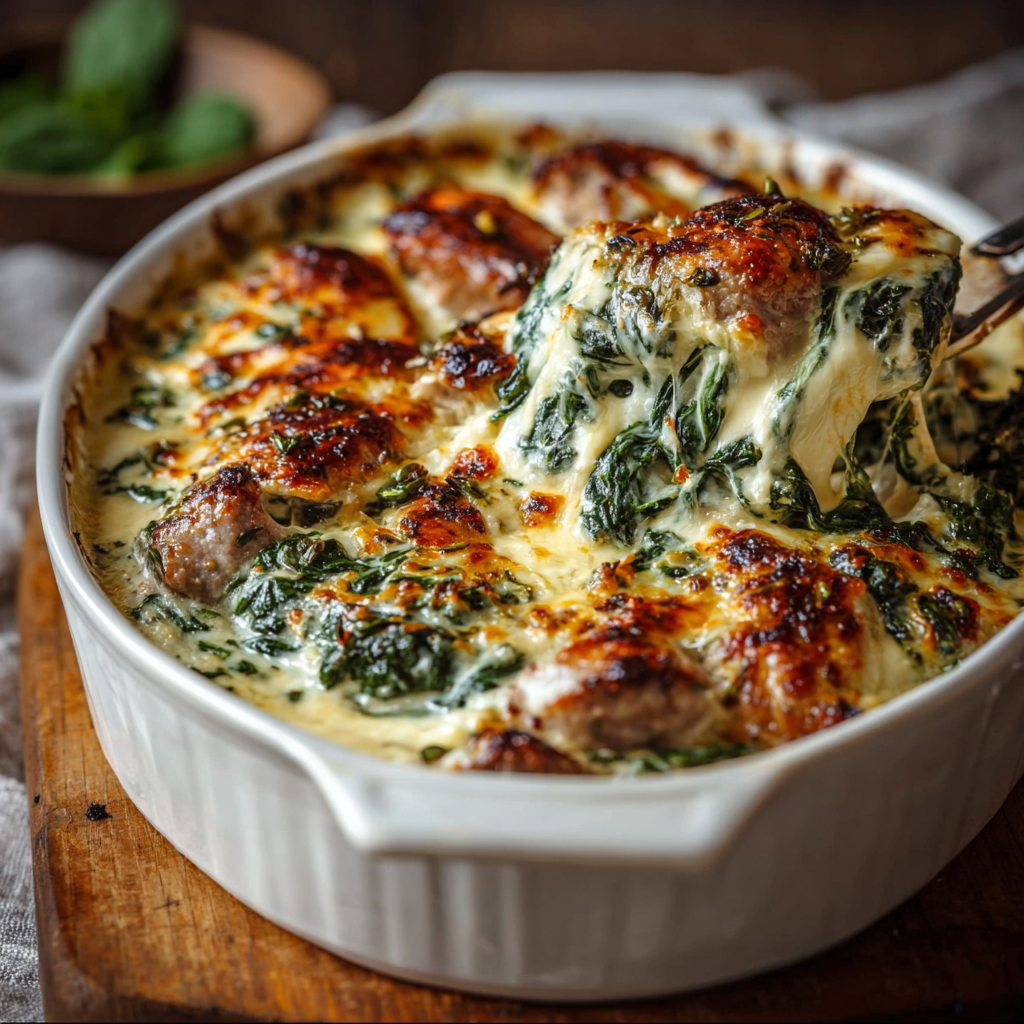
Here is a question worth asking the next time comfort food is called for: when was the last time a dinner that came together in a single baking dish — requiring nothing more than browned beef, wilted spinach, and a cream sauce topped with bubbling, golden cheese — produced the kind of silence at the table that only genuinely satisfying food can create? According to a 2024 consumer food report by the James Beard Foundation, gratin-style preparations represent one of the fastest-growing dinner formats in American home cooking — driven by the recognition that the combination of a richly flavored base, a cream-enriched sauce, and a caramelized cheese crust produces results that are simultaneously more impressive and more effortless than almost any other baked dinner format.
This creamy beef and spinach gratin applies that principle to one of the most universally available and universally satisfying protein and vegetable combinations available. Seasoned ground beef browned with garlic and aromatics, combined with wilted spinach, layered into a baking dish with a Béchamel-inspired cream sauce, and finished with a crust of Gruyère and Parmesan that caramelizes during baking into the golden, slightly crunchy, deeply savory topping that defines the gratin format at its most compelling. It is a complete, protein-rich, vegetable-forward dinner from a single dish in under an hour — and it tastes considerably more refined than the preparation time and ingredient cost suggest.
A 2023 nutritional analysis in the Journal of the Academy of Nutrition and Dietetics identified the combination of iron-rich red meat and Vitamin C-containing dark leafy greens in a single meal as producing one of the most favorable iron absorption profiles available — the Vitamin C in spinach converting iron to its most bioavailable form and the fat in the cream sauce enhancing the absorption of the spinach’s fat-soluble nutrients simultaneously.
Ingredients List
For the Beef Base
- 600g (1.3 lbs) lean ground beef (80/20 for flavor, or 90/10 for a leaner result)
- 1 medium onion, finely diced
- 4 garlic cloves, finely minced
- 1 tsp fine sea salt
- ½ tsp freshly ground black pepper
- 1 tsp smoked paprika
- ½ tsp ground cumin
- ½ tsp dried oregano
- ½ tsp dried thyme
- 1 tbsp Worcestershire sauce
- 1 tbsp tomato paste
- 1 tbsp olive oil
For the Spinach
- 500g (1.1 lbs) fresh spinach (or 300g frozen spinach, thawed and squeezed very dry)
- 2 garlic cloves, minced
- 1 tbsp olive oil or butter
- Salt and pepper to taste
- ¼ tsp ground nutmeg (the classical spinach seasoning — do not skip)
For the Cream Sauce
- 3 tbsp unsalted butter
- 3 tbsp all-purpose flour
- 2 cups (480ml) whole milk, warmed
- ½ cup (120ml) heavy cream
- 1 tsp Dijon mustard
- ½ tsp fine sea salt
- ¼ tsp white pepper
- ¼ tsp ground nutmeg
- ½ cup (50g) Parmesan, finely grated (stirred into the sauce)
For the Gratin Topping
- 1 cup (115g) Gruyère cheese, freshly shredded (sub: sharp cheddar or Emmental)
- ¼ cup (25g) Parmesan, finely grated
- ¼ cup (15g) panko breadcrumbs (optional — adds an extra crunch layer)
- 1 tbsp unsalted butter, melted (tossed with panko if using)
Timing
- Prep Time: 15 minutes
- Cook Time: 20 minutes
- Bake Time: 25–30 minutes
- Total Time: approximately 60 minutes
Step-by-Step Instructions
Step 1: Brown the Beef
Heat the olive oil in a large skillet over medium-high heat. Add the diced onion and cook for 3–4 minutes until softened. Add the ground beef and break apart with a wooden spoon — cook for 7–9 minutes, stirring occasionally, until deeply browned with no pink remaining and the edges beginning to caramelize. This deep browning — not merely cooking through — is the Maillard reaction at work, producing the complex, savory flavor compounds that form the flavor foundation of the entire gratin. Drain excess fat, leaving approximately 1 tablespoon in the pan.
Add the minced garlic, smoked paprika, cumin, oregano, thyme, salt, and pepper. Stir the spices into the hot beef for 60 seconds to bloom them in the residual fat. Add the tomato paste and press it against the pan surface for 1–2 minutes until caramelized and darkened slightly. Add the Worcestershire sauce, stir to combine, and remove from heat.
Step 2: Wilt the Spinach
In a separate large skillet or the same pan after removing the beef, heat the olive oil over medium heat. Add the minced garlic and cook for 30 seconds. Add the fresh spinach in batches — it wilts dramatically — and cook for 2–3 minutes until fully wilted and bright green. Season with salt, pepper, and nutmeg. Transfer to a colander and press firmly with a spoon to remove as much liquid as possible. Excess spinach moisture is the primary cause of a watery, under-set gratin — thorough pressing is essential.
Key tip: Fresh spinach releases a surprising amount of water when wilted — 500g reduces to approximately 120g of pressed spinach. Press in the colander, then wrap in a clean kitchen towel and squeeze once more to remove any remaining moisture. This double-press technique produces spinach dry enough to integrate cleanly into the gratin without diluting the cream sauce.
Step 3: Make the Cream Sauce
In a medium saucepan, melt the butter over medium heat. Add the flour and whisk continuously for 1–2 minutes until the roux turns golden and smells slightly nutty — cooking out the raw flour taste completely. Gradually add the warm milk in a slow, steady stream, whisking continuously, until the sauce is smooth and the flour has fully dissolved. Add the heavy cream, Dijon mustard, salt, white pepper, and nutmeg. Bring to a gentle simmer and cook for 3–4 minutes, stirring frequently, until the sauce thickens to a coating consistency. Remove from heat and stir in the grated Parmesan until melted and smooth.
Key tip: Warm milk integrates into the roux far more smoothly than cold — heat it briefly in the microwave before adding to virtually eliminate the risk of lumps.
Step 4: Assemble the Gratin
Preheat the oven to 375°F (190°C). Grease a 9×13-inch (23x33cm) baking dish or a 28cm (11-inch) oval gratin dish. Spread the seasoned beef mixture in an even layer across the bottom of the dish. Distribute the pressed spinach evenly over the beef layer. Pour the cream sauce over the top, spreading it gently with a spatula to cover every surface and allow it to seep down into the beef and spinach layers beneath.
Combine the shredded Gruyère and remaining Parmesan in a bowl. If using panko, toss it with the melted butter until evenly coated and combine with the cheese. Scatter the cheese — and panko if using — generously and evenly across the entire surface of the gratin, covering completely to the edges.
Step 5: Bake Until Golden
Bake at 375°F (190°C) for 25–30 minutes until the sauce is bubbling actively around the edges and through the cheese topping, and the cheese surface is deeply golden with darker, caramelized patches distributed across it. For a more dramatically bronzed top, switch to the broiler for the final 3–4 minutes and watch closely — the cheese can go from perfect to burnt in under 90 seconds under a broiler.
Step 6: Rest and Serve
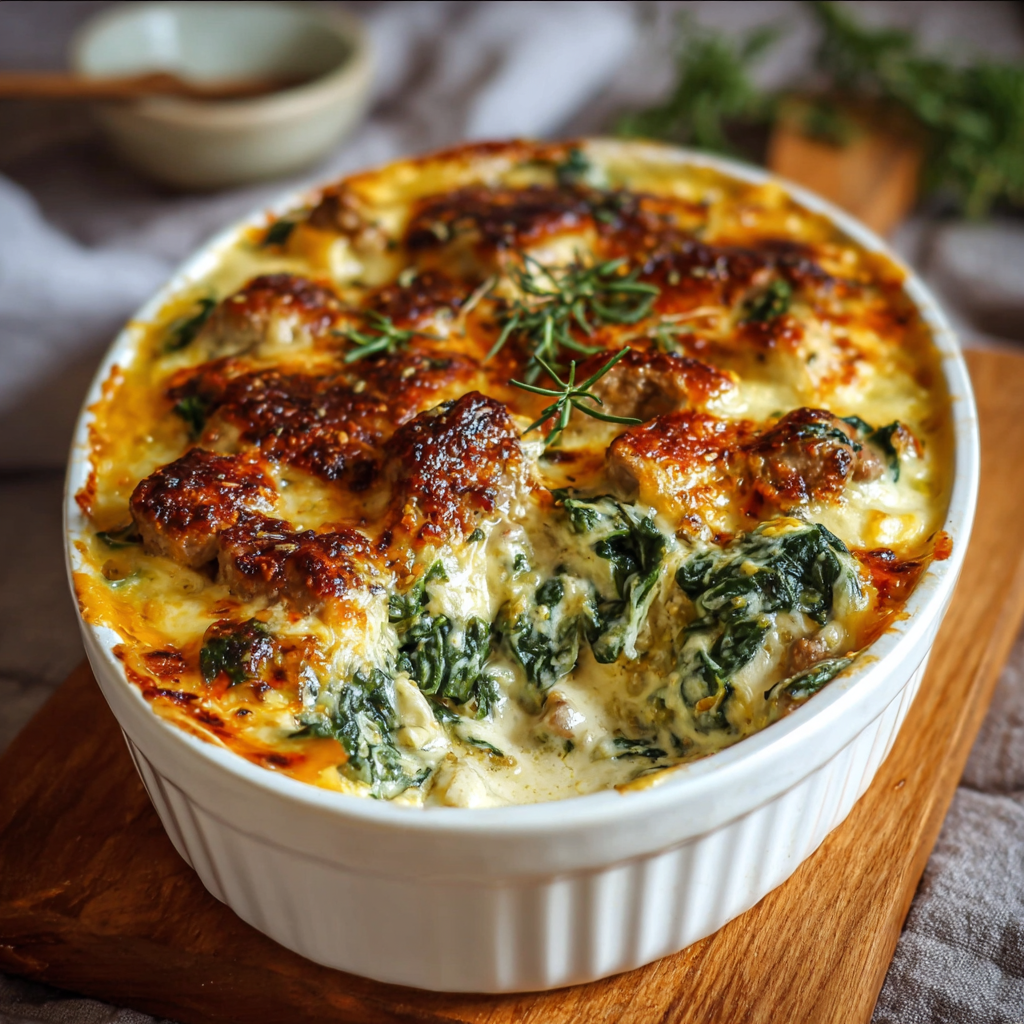
Remove from the oven and allow to rest for 8–10 minutes before serving — the sauce continues to thicken from residual heat during this period and the gratin becomes significantly easier to portion cleanly. Serve directly from the baking dish with a large spoon, scooping through all layers to ensure every portion contains beef, spinach, sauce, and the golden cheese crust.
Nutritional Information
Per serving — based on 6 servings.
| Nutrient | Per Serving | % Daily Value* |
|---|---|---|
| Calories | 520 kcal | 26% |
| Total Fat | 34g | 44% |
| Saturated Fat | 17g | 85% |
| Total Carbohydrates | 14g | 5% |
| Total Sugar | 5g | — |
| Protein | 38g | 76% |
| Dietary Fiber | 2g | 7% |
| Sodium | 740mg | 32% |
| Iron | 35% DV | 35% |
| Calcium | 38% DV | 38% |
| Vitamin K | 280% DV | 280% |
*Based on a standard 2,000-calorie daily diet.
The Vitamin K content — 280% of the daily recommended value — comes entirely from the spinach and makes this one of the most significant single-meal sources of this fat-soluble vitamin that supports bone metabolism and blood coagulation. The iron at 35% of the daily value from the ground beef, and the calcium at 38% from the cheese and cream sauce, make this a genuinely notable micronutrient contributor for a comfort food dinner.
Healthier Alternatives
Lower fat: Replace heavy cream with additional whole milk and reduce the butter in the sauce to 2 tablespoons. Use 90/10 ground beef throughout. These three changes reduce the saturated fat content by approximately 40% while preserving the fundamental richness of the gratin format.
Higher vegetable content: Add 1 cup of finely diced mushrooms to the beef in Step 1 and substitute half the spinach with a finely chopped leek sautéed until soft. Both additions increase the vegetable content significantly without altering the structural integrity of the gratin.
Gluten-free: Replace the all-purpose flour in the roux with an equal amount of cornstarch — whisk the cornstarch with 2 tablespoons of cold milk before adding to the warm milk rather than making a traditional roux. Use certified gluten-free panko or omit the breadcrumb topping. Every other component is naturally gluten-free.
Lower carbohydrate: Omit the flour roux and replace the cream sauce with a simple reduction of heavy cream with Parmesan whisked in — simmer 1½ cups of heavy cream with the Parmesan and seasonings until reduced by one-third and thickened. This approach eliminates the flour entirely and reduces the carbohydrates per serving to under 6 grams.
Lean beef substitution: Replace the ground beef with ground turkey seasoned more assertively — increase the Worcestershire sauce to 1½ tablespoons and add ½ teaspoon of ground coriander to compensate for the reduced fat-derived flavor of turkey relative to beef.
Serving Suggestions
As a complete dinner: The gratin is self-contained — protein, vegetable, and sauce in a single dish. Serve with crusty bread for sauce-mopping and a simple green salad dressed with lemon vinaigrette to provide freshness and acidity against the rich cream sauce.
Over pasta: Serve a generous spoonful of the gratin over cooked penne or rigatoni for a pasta-forward presentation that stretches the recipe to feed 8. The cream sauce and beef combination functions as a complete pasta sauce requiring no additional preparation.
With roasted vegetables: Serve alongside roasted asparagus, broccolini, or cherry tomatoes — the slight char on any roasted vegetable provides a pleasant contrast to the creamy, rich gratin.
Individual ramekins for dinner parties: Assemble the gratin in individual oven-safe ramekins for a plated presentation that eliminates the serving challenge of scooping cleanly from a shared dish. Each guest receives their own golden-topped, perfectly portioned individual gratin — elegant and entirely practical for 6–8 guests.
Next-day baked potato topping: Scoop leftover cold gratin over a baked potato, add a spoonful of sour cream and fresh chives, and microwave until heated through. One of the finest leftover repurposings available from any gratin recipe.
Common Mistakes to Avoid
Not browning the beef deeply enough. Grey ground beef that has merely been cooked through contributes a fraction of the flavor that properly browned, caramelized beef contributes. The deeper the browning — approaching the edge of char on the smallest pieces — the more complex and satisfying the flavor of the finished gratin.
Not pressing the spinach thoroughly. Insufficiently pressed spinach releases moisture during baking that dilutes the cream sauce and produces a watery, under-set gratin that cannot be portioned cleanly. The double-press technique — colander and then kitchen towel — is the standard that produces consistently dry spinach.
Not cooking the roux long enough. A roux that is not cooked for the full 1–2 minutes retains a raw, starchy, slightly chalky flavor that persists through the cream sauce and remains detectable in the finished gratin. The roux should smell slightly nutty and turn from pale white to light golden before the milk is added.
Adding cold milk to the roux. Cold milk causes the roux to seize and form lumps that are extremely difficult to whisk smooth after the fact. Warm milk — heated briefly in the microwave — integrates smoothly from the first addition.
Cutting the resting time short. A gratin served directly from the oven has a sauce that is too fluid to hold a clean portion — it runs across the plate and undermines the visual presentation. The 8–10 minute rest allows the sauce to thicken to the correct scoopable consistency.
Storing Tips
Refrigerator: Cover tightly with foil or plastic wrap and refrigerate for up to 4 days. The flavors deepen and meld overnight — the day-two version is noticeably more cohesive and deeply flavored than the day-one.
Reheating: Cover with foil and reheat in a 350°F (175°C) oven for 20–25 minutes until heated through and the sauce is bubbling at the edges again. Remove the foil for the final 5 minutes to re-crisp the cheese topping. The microwave reheats individual portions effectively at 70% power in 90-second intervals but does not restore the crispy cheese crust.
Freezer: Cool completely, cover tightly with two layers of plastic wrap and one layer of foil, and freeze for up to 3 months. Thaw overnight in the refrigerator and reheat covered in a 350°F oven for 30–35 minutes. The texture after freezing is slightly softer than fresh but entirely acceptable.
Make-ahead for entertaining: Assemble the complete gratin — beef, spinach, sauce, and cheese topping — up to 24 hours ahead and refrigerate unbaked. Add 10 minutes to the baking time when cooking from cold. This make-ahead approach is ideal for dinner parties — all preparation is complete the day before and the oven does the work while guests arrive.
Conclusion
Creamy beef and spinach gratin proves that the most satisfying comfort food dinners are built on the simplest, most honest combination of ingredients — properly browned beef, well-seasoned spinach, a smooth cream sauce, and a generous crust of bubbling, golden Gruyère — executed with the attention and patience that transforms everyday ingredients into something genuinely worth gathering around. One dish, one hour, a dinner that earns every second of the silence it creates at the table.
Make it and share your results in the comments — tell us which cheese combination you used, whether you added the panko topping, and how long the leftovers lasted. Leave a review, share with someone who needs a better weeknight comfort food option, and subscribe to our newsletter for more warming, deeply flavored, one-dish recipes every week.
FAQs
Can I use frozen spinach instead of fresh? Yes — frozen spinach is an excellent practical substitute. Thaw completely and squeeze very thoroughly — frozen spinach retains significantly more water than fresh and requires particularly aggressive pressing to remove sufficient moisture. Squeeze in batches in a clean kitchen towel until no further water is released. The flavor is comparable to fresh spinach in a cooked preparation like this gratin.
What cheese works best if Gruyère is unavailable? Sharp cheddar is the most widely available and most flavorful substitute — it melts cleanly and provides a bold, slightly tangy flavor that works well in the gratin context. Emmental produces a milder, more neutral result closer to Gruyère in character. Fontina is an excellent premium alternative with a particularly smooth, luxurious melt. A combination of any two of these produces a more complex flavor than a single cheese.
Can I add pasta to make this a complete pasta bake? Yes — cook 250g of short pasta (penne, rigatoni, or rotini) to 2 minutes under al dente, drain, and combine with the beef and spinach mixture before adding to the baking dish. Increase the cream sauce by 50% to accommodate the pasta’s absorption. This produces a hearty pasta gratin that feeds 8 comfortably and requires no separate side dish.
Why is my gratin watery after baking? Excess water from insufficiently pressed spinach is the most common cause — it dilutes the cream sauce during baking and prevents it from setting to the correct consistency. The second most common cause is not cooking the cream sauce to a sufficiently thick consistency before assembling. The sauce should coat the back of a spoon thickly before it goes into the dish — it will thin slightly during baking as it absorbs moisture from the beef and spinach.
Can I make this recipe with a different protein? Yes — ground lamb produces a richer, more robustly flavored gratin with a distinctly Mediterranean character. Ground pork is milder and more delicate than beef. Ground turkey is the leanest option — season more assertively than with beef, as turkey has less inherent flavor. Diced cooked chicken breast or shredded rotisserie chicken works well for a white-meat version with a slightly different texture profile.
Is this recipe suitable for children? It is one of the most reliably popular family dinners in this category — the familiar flavors of seasoned beef, cheese, and cream sauce in a format that contains hidden spinach make it an excellent option for children who are resistant to vegetables. The spinach is entirely incorporated into the surrounding flavors and textures and is rarely detectable as a distinct element. Reduce the cumin and smoked paprika by half for younger or more sensitive palates.