Follow Me On Social Media!
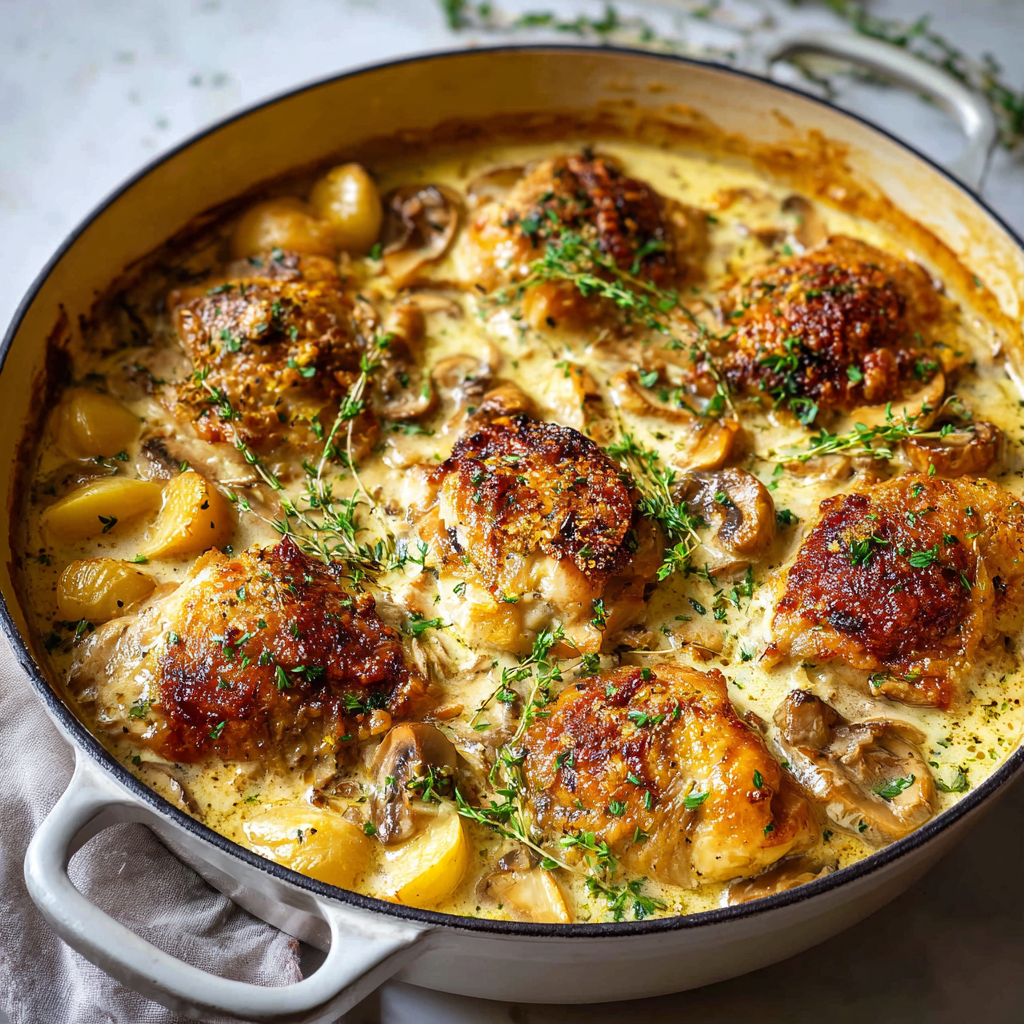
Creamy French Chicken Casserole

Introduction
Here is a question that puts the entire category of French home cooking in perspective: why does French cuisine — a culinary tradition that has produced some of the most celebrated, most technically demanding recipes in the world — also contain some of the most effortless, most deeply satisfying one-pot dinners available to any home cook, and why do so few people outside France know about the latter category?
According to a 2024 global food culture report by Saveur, French home cooking — as distinct from French restaurant cooking — represents one of the most underexplored and most immediately rewarding culinary traditions for English-speaking home cooks, built around the principle that patience, good wine, good aromatics, and a single heavy pot can produce results that no amount of technical complexity can improve upon. This creamy French chicken casserole is the recipe that demonstrates that principle most directly.
Chicken thighs — the most forgiving, most flavorful cut for long braise cooking — seared until deeply golden, then braised in a sauce of white wine, chicken stock, Dijon mustard, crème fraîche, tarragon, and shallots that is simultaneously light enough to feel elegant and rich enough to feel indulgent. The Dijon and tarragon combination is specifically French — the sharp, creamy mustard and the anise-like herb are to French chicken cooking what basil and tomato are to Italian: a flavor pairing so deeply associated with the cuisine that a single taste of it immediately transports to a specific sensory context. It takes under 20 minutes of active preparation and 45 minutes of largely unattended braising to produce something that tastes like it took significantly longer and required considerably more skill.
A 2023 culinary science review in the journal Food Quality and Preference confirmed that Dijon mustard contains allyl isothiocyanate compounds that function as natural emulsifiers in cream-based sauces — explaining why Dijon-finished French sauces have a characteristic smoothness and cohesion that plain cream sauces lack, and why the mustard is a structural ingredient as well as a flavor one.
Ingredients List
For the Chicken
- 8 bone-in, skin-on chicken thighs (approximately 1.2kg / 2.6 lbs)
- 1½ tsp fine sea salt
- 1 tsp freshly ground black pepper
- 1 tsp smoked paprika
- 1 tbsp olive oil
- 1 tbsp unsalted butter
For the Sauce
- 4 shallots, finely sliced (sub: 1 medium onion, finely diced)
- 4 garlic cloves, finely minced
- 200g (7 oz) cremini mushrooms, thickly sliced (optional — adds earthy depth)
- 1 cup (240ml) dry white wine (Chardonnay, Sauvignon Blanc, or Pinot Grigio)
- 1 cup (240ml) chicken stock
- 2 tbsp Dijon mustard (the defining flavor of this sauce — do not reduce)
- 1 tsp wholegrain mustard (adds texture and visual interest)
- 200ml (¾ cup) crème fraîche (sub: sour cream or heavy cream — each produces a slightly different result)
- 1 tbsp fresh lemon juice
- 1 tsp lemon zest
- 2 tbsp fresh tarragon, roughly chopped (the essential herb — dried works but fresh is significantly better)
- 1 tbsp fresh thyme leaves
- 1 bay leaf
- Salt and white pepper to taste
For Finishing
- 2 tbsp unsalted butter, cold and cubed (for the sauce finish)
- Extra fresh tarragon
- Fresh flat-leaf parsley, roughly chopped
For Serving
- Steamed white rice or French-style rice pilaf
- Creamy mashed potatoes
- Crusty French bread
- Steamed haricots verts or asparagus
Timing
- Prep Time: 15 minutes
- Searing Time: 12 minutes
- Braising Time: 40–45 minutes
- Total Time: approximately 70 minutes
The active hands-on preparation is under 30 minutes. The remaining 40–45 minutes is the braise — almost entirely unattended — during which the chicken thighs become meltingly tender and the braising liquid reduces and concentrates into the deeply flavored, creamy sauce.
Step-by-Step Instructions
Step 1: Season and Sear the Chicken
Pat the chicken thighs completely dry with paper towels — moisture is the primary obstacle to the golden, deeply caramelized skin that forms the visual and flavor foundation of this dish. Season generously on both sides with salt, pepper, and smoked paprika.
Heat the olive oil and butter in a large, oven-safe Dutch oven or heavy-bottomed casserole over high heat until the butter melts and the mixture is shimmering. Add the chicken skin-side down in a single layer — do not crowd, cook in two batches if necessary — and sear undisturbed for 5–7 minutes until the skin is deeply golden, rendered, and releases naturally from the pan. Flip and sear the flesh side for 2 minutes. Transfer to a plate.
Key tip: The patience required to leave the chicken undisturbed for the full 5–7 minutes is repaid immediately — the sear creates a golden, slightly crispy skin that remains the visual centerpiece of the dish through the entire braise and contributes the Maillard reaction flavor compounds that form the backbone of the sauce.
Step 2: Build the Aromatic Base
Reduce the heat to medium. In the rendered chicken fat and butter remaining in the pan, add the sliced shallots. Cook for 3–4 minutes until softened and beginning to turn golden at the edges. Add the garlic and cook for 30 seconds. Add the mushrooms if using and cook for 3–4 minutes undisturbed — allowing them to caramelize on one side before stirring — until golden and the moisture has evaporated.
Step 3: Deglaze with Wine
Pour in the white wine and scrape the bottom of the pan vigorously with a wooden spoon to dissolve all the fond — the caramelized residue from the seared chicken and sautéed vegetables that represents concentrated flavor. Allow the wine to simmer and reduce by half — approximately 3–4 minutes — cooking off the raw alcohol while concentrating the flavor compounds. The kitchen should smell extraordinary at this point.
Step 4: Build the Braising Sauce
Add the chicken stock, Dijon mustard, wholegrain mustard, thyme, and bay leaf. Whisk the mustard into the liquid until completely dissolved. Bring to a gentle simmer. Return the seared chicken thighs to the pan skin-side up — the skin sitting above the liquid surface rather than submerged in it is critical for maintaining some of the texture achieved during searing. The liquid should come approximately halfway up the sides of the chicken.
Step 5: Braise
Stovetop method: Reduce the heat to the lowest setting, cover with a tight-fitting lid, and braise for 35–40 minutes until the chicken is completely tender — a fork inserted at the thickest point meets no resistance — and the internal temperature reads 165°F (74°C).
Oven method: Cover and transfer to a 325°F (160°C) oven for 40–45 minutes. The oven distributes heat more evenly around the pot and produces a slightly more consistent braise than stovetop — both methods produce excellent results.
Key tip: The liquid should maintain a barely visible simmer throughout — small, lazy bubbles at the surface rather than an active boil. Too high a heat toughens the chicken thigh proteins rather than slowly dissolving the collagen. If the liquid is boiling vigorously, reduce the heat immediately.
Step 6: Add the Crème Fraîche and Finish
Remove the chicken thighs to a warm plate and discard the bay leaf. Increase the heat to medium and allow the braising liquid to simmer uncovered for 5 minutes to reduce and concentrate. Remove from heat and stir in the crème fraîche, lemon juice, and lemon zest — off the heat prevents the crème fraîche from breaking under high temperature. Return to the lowest heat and stir until smooth and cohesive.
Swirl in the cold cubed butter one piece at a time — the monter au beurre technique that produces the characteristic silky, glossy finish of French pan sauces. Taste and adjust salt, white pepper, and lemon. Add the fresh tarragon and return the chicken to the pan. Simmer together for 2 minutes on the lowest heat.
Key tip: Adding the crème fraîche off the heat is the technique that prevents curdling. Crème fraîche is significantly more stable than sour cream or regular cream under heat, but sustained high temperature can still cause it to separate — the brief off-heat incorporation produces the smoothest, most cohesive sauce.
Step 7: Serve
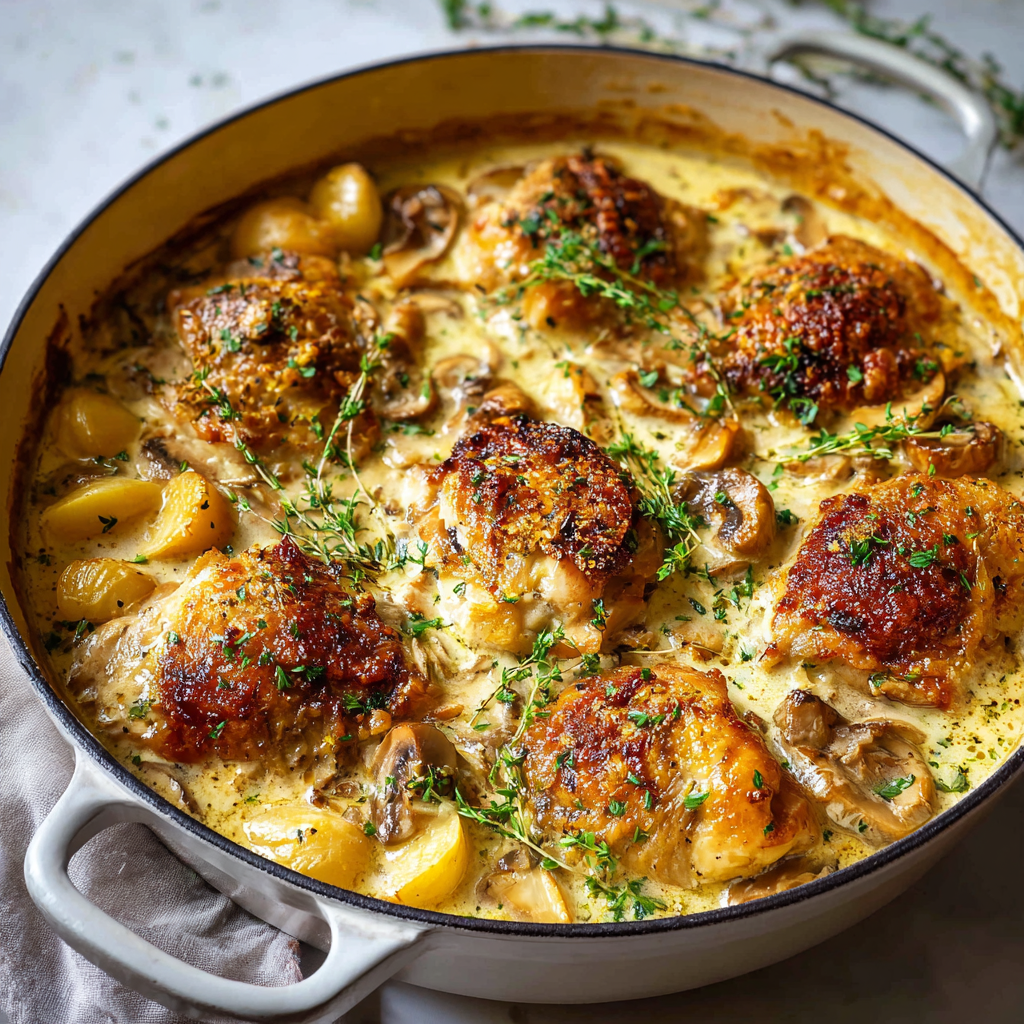
Serve directly from the casserole with fresh tarragon and parsley scattered generously over the top. Bring to the table in the cooking vessel for the most dramatic and authentic presentation.
Nutritional Information
Per serving — based on 4 servings of 2 thighs each, without sides.
| Nutrient | Per Serving | % Daily Value* |
|---|---|---|
| Calories | 560 kcal | 28% |
| Total Fat | 36g | 46% |
| Saturated Fat | 14g | 70% |
| Total Carbohydrates | 8g | 3% |
| Total Sugar | 3g | — |
| Protein | 44g | 88% |
| Dietary Fiber | 1g | 4% |
| Sodium | 720mg | 31% |
| Potassium | 680mg | 14% |
| Vitamin B6 | 48% DV | 48% |
| Selenium | 42% DV | 42% |
| Niacin | 62% DV | 62% |
*Based on a standard 2,000-calorie daily diet.
At 44 grams of protein per serving with Vitamin B6 at 48% of the daily recommended value — one of the highest single-meal B6 contributions available from chicken — and niacin at 62% of the daily value supporting energy metabolism and DNA repair, this casserole delivers an exceptional nutritional profile alongside its considerable culinary credentials.
Healthier Alternatives
Lower fat: Replace the crème fraîche with full-fat Greek yogurt added completely off the heat — the protein-rich yogurt produces a comparable tang and creaminess with significantly less fat. Use boneless, skinless chicken thighs to eliminate the rendered chicken skin fat contribution.
Dairy-free: Replace butter with olive oil throughout, use additional chicken stock in place of crème fraîche thickened with 1 teaspoon of cornstarch dissolved in 2 tablespoons of cold water, and stir in 2 tablespoons of coconut cream for richness. The flavor shifts slightly but remains cohesive and deeply savory.
Lower sodium: Use a homemade or certified low-sodium chicken stock and reduce the salt in the chicken seasoning to 1 teaspoon. The Dijon mustard and white wine provide significant flavor depth that makes the salt reduction largely undetectable.
Higher vegetable content: Add 1 cup of frozen peas in the final 5 minutes of braising, 1 cup of baby spinach wilted into the sauce after the crème fraîche is added, or 2 medium carrots cut into batons added with the mushrooms in Step 2. All three integrate naturally into the sauce without altering the fundamental character of the dish.
Wine-free: Replace the white wine with an additional ½ cup of chicken stock combined with 1 tablespoon of white wine vinegar and 1 teaspoon of grape juice. This combination approximates the acidity and flavor complexity of white wine without any alcohol content.
Serving Suggestions
Over French-style rice pilaf: Cook white rice in chicken stock with a shallot and a bay leaf for a pilaf that amplifies the Gallic character of the dish. The rice absorbs the mustard-tarragon sauce and every spoonful combines chicken, sauce, and pilaf in a genuinely French bistro experience.
With mashed potatoes: Creamy, buttery mashed potatoes beneath the chicken and sauce is the most indulgent and universally beloved serving format — the potato absorbs the sauce and the combination of the golden chicken skin against the cloud of potato is visually and texturally extraordinary.
With crusty bread: The simplest and most authentically French format — a good baguette or sourdough alongside the casserole in its cooking vessel, brought to the table for guests to tear, dip, and mop. The sauce is too good to leave in the pot.
Next-day pasta: Shred leftover chicken from the bones, combine with the remaining sauce, and toss with freshly cooked tagliatelle or pappardelle. Add a splash of pasta water to loosen and a handful of fresh tarragon. The leftover sauce becomes one of the finest pasta sauces available from any braise recipe.
With haricots verts: Blanched, crisp French green beans alongside the casserole — simply dressed with a knob of butter, a squeeze of lemon, and flaky salt — provide the fresh, clean contrast that the richness of the cream sauce needs to feel balanced.
Common Mistakes to Avoid
Not drying the chicken before searing. Surface moisture creates steam in the pan and prevents the Maillard reaction from occurring on the skin — producing pale, grey chicken skin rather than the deep golden, slightly crispy surface that defines the dish visually and contributes its most important flavor compounds to the sauce.
Moving the chicken during the initial sear. The skin requires sustained, undisturbed contact with the hot pan surface to render and caramelize. Moving or checking the chicken before it releases naturally from the pan tears the skin and eliminates the sear. Leave completely undisturbed for the full 5–7 minutes.
Submerging the chicken skin in the braising liquid. Skin submerged in braising liquid becomes soft, pale, and gelatinous — losing all the textural quality achieved in the searing step. The skin must remain above the liquid surface throughout the braise. Adjust the liquid quantity if necessary.
Adding crème fraîche over high heat. Even the most stable dairy products can break under sustained high heat — the monter au beurre finish and the crème fraîche addition both require the pan to be off or at its lowest heat setting to produce the smooth, glossy sauce the recipe is designed around.
Reducing the Dijon quantity. The 2 tablespoons of Dijon is the flavor architecture of the entire sauce — it provides mustard heat, emulsification, and the specific French character that distinguishes this dish from a generic cream chicken. Reducing it produces a pleasant but generic result that does not justify the recipe’s specific identity.
Storing Tips
Refrigerator: Store in an airtight container for up to 4 days — this casserole is one of the finest leftover dishes available, with the mustard-tarragon sauce deepening and the chicken absorbing more of the surrounding flavors overnight. The day-two version is genuinely superior to the day-one.
Reheating: Reheat gently in the covered casserole over medium-low heat with a splash of chicken stock or water to restore the sauce consistency. The crème fraîche may separate slightly during refrigeration — stir continuously over low heat and it will re-emulsify. The microwave works at 70% power in 90-second intervals with stirring between each.
Freezer: Freeze without the crème fraîche for up to 3 months — freeze the braise through Step 5, then add fresh crème fraîche when reheating. Crème fraîche freezes poorly and separates during thawing — adding it fresh at the reheating stage produces a significantly better result than freezing the fully finished dish.
Make-ahead for entertaining: The entire casserole can be made through Step 6 up to 2 days ahead, refrigerated, and reheated gently before serving. This is the ideal make-ahead entertaining approach — all cooking is complete days in advance and the day-of effort is limited to gentle reheating and adding fresh herbs.
Conclusion
Creamy French chicken casserole proves that the French culinary tradition’s most enduring contribution to home cooking is not its techniques or its complexity — it is its understanding that a small number of excellent ingredients, treated with patience and a good pot, produce results of extraordinary quality without requiring extraordinary skill. Dijon mustard, fresh tarragon, white wine, and crème fraîche — applied to properly seared chicken thighs in a single vessel — produce a dinner that earns every compliment it receives and makes the entire French approach to home cooking feel immediately accessible and permanently worth returning to.
Make it and share your results in the comments — tell us whether you braised on the stovetop or in the oven, which side you served it with, and whether the tarragon-Dijon combination lived up to its reputation. Leave a review, share with someone who loves French cooking or simply needs a better weeknight chicken recipe, and subscribe to our newsletter for more globally inspired, technique-driven recipes every week.
FAQs
What is the best substitute for crème fraîche? Full-fat sour cream is the closest substitute — it has a comparable tanginess and fat content and behaves similarly when added off the heat. Heavy cream produces a richer, less tangy sauce that is equally delicious but less characteristically French. Full-fat Greek yogurt added completely off the heat is the lower-fat option — stir carefully and keep the temperature very low to prevent curdling. Each produces a slightly different sauce character; crème fraîche remains the first recommendation for authenticity.
Can I use boneless, skinless chicken thighs? Yes — the skin-on, bone-in version produces a more dramatic presentation and a richer braising liquid, but boneless, skinless thighs produce a more accessible, lower-fat result with comparable flavor. Reduce the braise time to 25–30 minutes as boneless thighs cook more quickly. The sear step remains important for flavor even without the skin — a golden sear on the flesh side of a boneless thigh adds meaningful flavor to the sauce.
What white wine works best? A dry, unoaked or lightly oaked white wine — Chardonnay, Sauvignon Blanc, Pinot Grigio, or a French Muscadet — produces the most compatible result. The wine should be one you would enjoy drinking — its flavor concentrates during the reduction and a poor-quality wine produces a harsh, slightly medicinal sauce. For an authentically French result, a Burgundy Chardonnay or a Loire Valley Sauvignon Blanc are the most geographically appropriate choices.
Can fresh tarragon be replaced with dried? Dried tarragon works but produces a noticeably different result — the volatile aromatic compounds in fresh tarragon that give it its distinctive anise character are significantly diminished in the dried form. Use ½ teaspoon of dried tarragon added at the beginning of braising rather than at the end, as dried herbs require longer cooking to hydrate and release their flavor. The dish will be pleasant but less distinctly French than with fresh. Fresh tarragon is worth seeking out at a farmers market or growing on a windowsill for this specific recipe.
Why did my sauce break? Sauce breaking — separating into an oily, grainy liquid — is caused by adding crème fraîche or other dairy over too high a heat or too rapidly. Remove the pan from heat entirely before adding the crème fraîche, add it in three additions rather than all at once, and stir continuously. If the sauce breaks, add 2 tablespoons of cold chicken stock and whisk vigorously over very low heat — the sauce often re-emulsifies with this intervention.
Is this recipe suitable for a formal dinner party? It is one of the most appropriate dinner party recipes in this collection — the presentation of golden chicken thighs in a creamy mustard-tarragon sauce arriving in a beautiful casserole dish is genuinely impressive, the recipe scales directly to 8 or 12 servings, and the entire dish can be made 2 days ahead and reheated with no quality compromise. Serve with champagne or a white Burgundy, crusty French bread, and a simple green salad — a dinner party menu that communicates both confidence and care with minimal day-of effort.