Follow Me On Social Media!
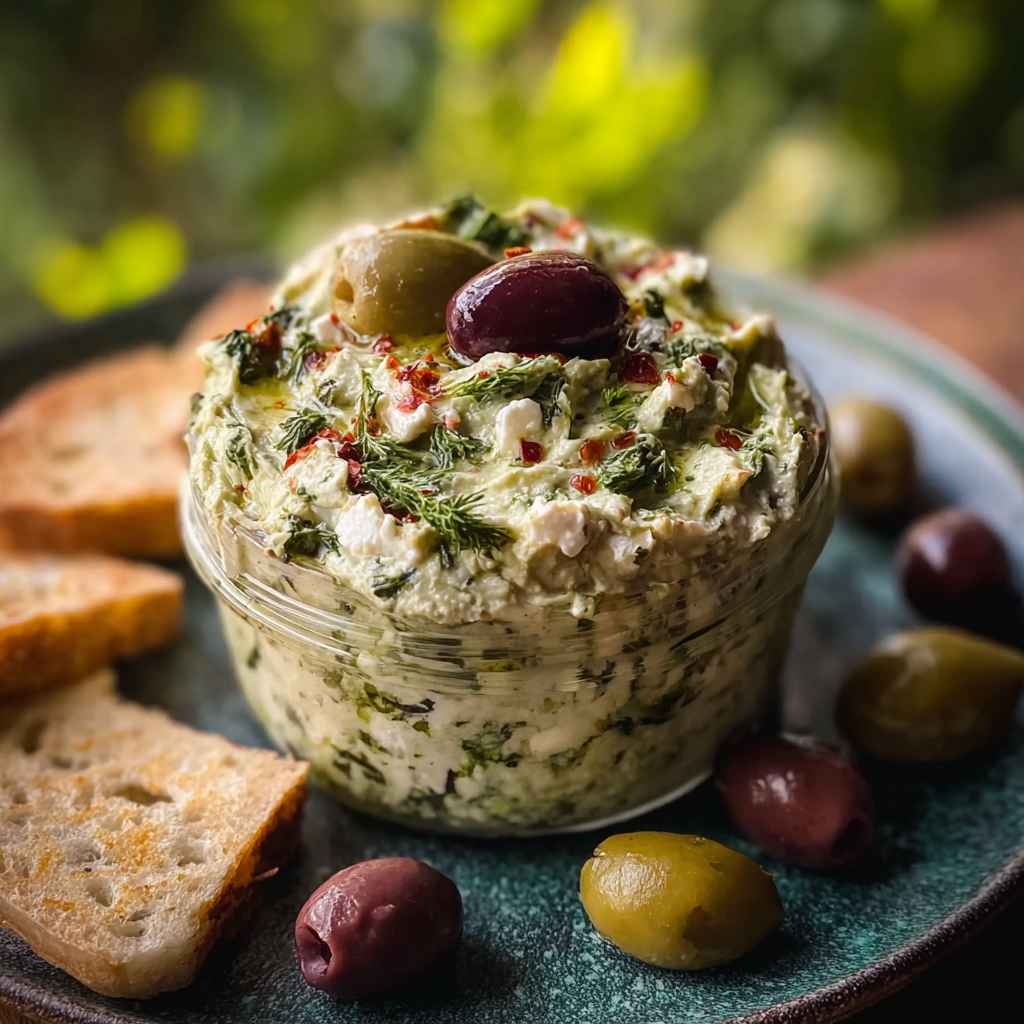
Creamy Green Olive & Feta Spread

Introduction
When was the last time a recipe that takes under 10 minutes and costs less than $8 stopped a dinner party in its tracks? According to a 2024 report by the Specialty Food Association, Mediterranean dips and spreads are the fastest-growing appetizer category globally — up 44% in three years. The best versions are never store-bought. They are homemade, and far simpler than anyone expects.
This creamy green olive and feta spread delivers the briny depth of good green olives, the sharp richness of quality feta, and a layered complexity that makes people assume something far more laborious is responsible. It works as a dip, a sandwich spread, a pasta sauce, or a topping for grilled fish and chicken. No cooking, no special skill, nine minutes from start to finish.
Ingredients List
Core Ingredients
- 200g (1½ cups) pitted green olives, drained (Castelvetrano are ideal — buttery, mild, brilliantly green)
- 200g (7 oz) block feta cheese, crumbled (avoid pre-crumbled — it’s drier and less flavorful)
- 3 tbsp extra virgin olive oil, plus extra for finishing
- 2 garlic cloves, roughly chopped
- 2 tbsp fresh lemon juice plus 1 tsp lemon zest
- ¼ tsp freshly ground black pepper
- 2–4 tbsp cold water (to adjust consistency)
Optional Additions (any combination works)
- 1 tbsp capers, drained
- ½ tsp red chili flakes
- 2 tbsp fresh dill or parsley
- 1 tsp dried oregano
- 1 tsp honey (balances the salt and acid beautifully)
For Serving
- Warm pita, crusty bread, or crudités
- Extra virgin olive oil and flaky sea salt, to finish
- Fresh dill or chili flakes, for garnish
Timing
- Prep Time: 5 minutes
- Processing Time: 3–4 minutes
- Total Time: under 10 minutes
Make it up to 3 days ahead — it only improves as the flavors meld in the refrigerator.
Step-by-Step Instructions
Step 1: Drain and Prep
Drain the olives and blot on paper towels — excess brine dilutes the spread and prevents it from thickening properly. Crumble the feta, chop the garlic, and have everything measured before starting. The food processor does all the work from here.
Step 2: Pulse the Base
Add olives, feta, garlic, lemon juice, lemon zest, and black pepper to the food processor. Pulse 8–10 times in short bursts to create an even, roughly chopped base before continuous processing begins.
Step 3: Stream in the Oil
With the processor running, stream in the olive oil slowly through the feed tube. Process for 30–45 seconds, scraping down the sides once. Add cold water one tablespoon at a time, pulsing between additions, until the spread reaches your preferred consistency — thicker for a dip, looser for a sauce or sandwich spread.
Key tip: Stop while the spread still looks slightly under-processed. It comes together further as it sits. Over-processing produces a paste that loses all textural character.
Step 4: Taste and Adjust
Taste before adding any salt — feta and olives together are already substantially salty and most batches need none at all. Add more lemon juice for brightness, more pepper for heat, or any optional additions now. Pulse 3–4 times to incorporate without fully blending them in.
Step 5: Plate and Serve
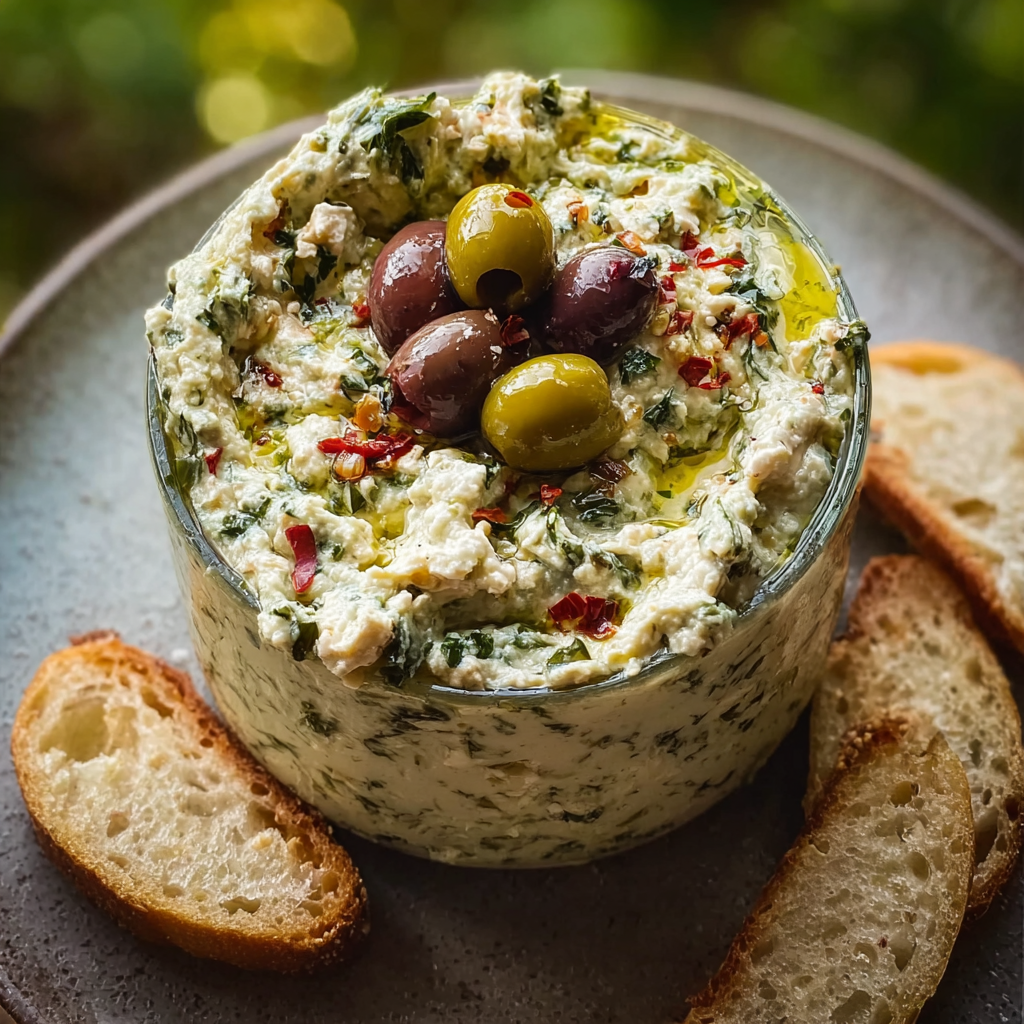
Transfer to a wide shallow bowl and create swoops across the surface with the back of a spoon — this catches the finishing oil and garnishes. Drizzle generously with olive oil, scatter fresh dill or chili flakes, and finish with a pinch of flaky sea salt. Serve with warm pita and crudités, or refrigerate covered for up to 5 days.
Nutritional Information
Per serving — based on 8 servings as a dip, without bread or crudités.
| Nutrient | Per Serving | % Daily Value* |
|---|---|---|
| Calories | 145 kcal | 7% |
| Total Fat | 13g | 17% |
| Saturated Fat | 4g | 20% |
| Total Carbohydrates | 2g | 1% |
| Protein | 5g | 10% |
| Sodium | 580mg | 25% |
| Calcium | 15% DV | 15% |
| Vitamin E | 10% DV | 10% |
*Based on a standard 2,000-calorie diet.
At 145 calories with 13 grams of predominantly monounsaturated fat, this spread delivers a genuinely heart-favorable fat profile. The lemon juice also enhances calcium absorption from the feta — a small but meaningful nutritional bonus.
Healthier Alternatives
Lower sodium: Rinse both the feta and olives under cold water before using — reduces sodium by 20–30% without noticeably altering flavor.
Lower fat: Reduce olive oil to 1 tablespoon and add 2–3 extra tablespoons of cold water. Cuts fat by approximately 35%.
Dairy-free: Replace feta with cashew-based vegan feta — blend soaked cashews with lemon juice, apple cider vinegar, nutritional yeast, garlic, and salt until smooth and tangy.
Higher protein: Add 3 tablespoons of plain Greek yogurt to the processor. Blends seamlessly, adds protein, and contributes a pleasant creamy tang.
Gut health boost: Add 2 tablespoons of the olive brine back into the spread during processing for a natural probiotic contribution from the fermentation process.
Serving Suggestions
Mezze board anchor: Serve alongside hummus, baba ganoush, warm pita, and marinated olives. The vivid green color and bold flavor make it the natural centerpiece.
Bruschetta topping: Spread on grilled sourdough with halved cherry tomatoes, balsamic glaze, and fresh basil — a starter that reads far more sophisticated than the effort involved.
Pasta sauce: Thin with 3–4 tablespoons of hot pasta cooking water and toss immediately with freshly cooked pasta and baby spinach. The starchy water emulsifies everything into a glossy, clinging sauce.
Grilled protein topping: Spoon over freshly grilled salmon, chicken thighs, or lamb chops. The heat of the protein warms the spread and the combination of brine, lemon, and feta against charred meat is quietly extraordinary.
Stuffed vegetables: Spoon into halved mini peppers, hollowed cherry tomatoes, or endive leaves for a no-cook canapé that assembles in minutes and consistently outperforms its effort level.
Common Mistakes to Avoid
Using pre-crumbled feta. Drier, saltier, and less flavorful than block feta in brine. Always buy the block.
Not draining the olives. Excess brine dilutes the spread and prevents it from thickening. Drain and blot before processing.
Over-processing. The rustic, textured character is the point. A smooth, uniform paste loses what makes this spread distinctive — stop early.
Adding salt before tasting. The feta and olives together almost always provide sufficient salt. Taste first, every time.
Using low-quality olive oil. Olive oil is a primary flavor component here, not a background one. A poor-quality oil makes the spread taste flat and slightly greasy. Use the best you have.
Serving straight from the food processor. Even 15 minutes of resting allows the flavors to settle and the garlic to mellow. A 24-hour refrigerator rest is even better.
Storing Tips
Refrigerator: Store in an airtight container with a thin layer of olive oil over the surface to prevent oxidation. Keeps for up to 5 days and improves significantly over the first 48 hours.
Serving from cold: Remove 20–30 minutes before serving — cold feta and olive oil firm up considerably and need time to return to their creamy best.
Freezer: Not recommended. The emulsion breaks during freezing and cannot be rescued by re-processing.
Conclusion
Under 10 minutes, five core ingredients, one food processor — that is the entire distance between you and a Mediterranean spread that anchors a mezze board, transforms a pasta, elevates a sandwich, and generates more recipe requests than dishes that took three hours. Make it ahead, let it rest, and watch it disappear.
Try this recipe and share your results in the comments — tell us which olive variety you used, which additions you tried, and how fast it disappeared. Leave a review, share it with someone who loves Mediterranean food, and subscribe to our newsletter for more fast, flavor-forward recipes every week.
FAQs
What green olives work best? Castelvetrano olives are the top choice — buttery, mild, and brilliantly green with a sweetness that balances the feta perfectly. Manzanilla is the most widely available alternative. Avoid stuffed or heavily marinated varieties, which muddy the clean flavor the spread is built around.
Can I make this without a food processor? Yes. Finely chop the olives and mince the garlic by hand, then mash everything together with a fork. The result is chunkier and more rustic — which many people actually prefer for serving with crusty bread.
Is it very salty? Pleasingly briny, not aggressively salty — provided no extra salt is added without tasting first. Rinsing both the feta and olives beforehand reduces the sodium noticeably. Castelvetrano olives are the mildest choice for anyone salt-sensitive.
Can I use black olives? You can — Kalamata olives work best. The spread becomes darker, earthier, and more mellow, losing some of the bright briny quality that makes the green version distinctive. Good, but a different spread entirely.
How long does it keep? Up to 5 days refrigerated with an olive oil layer on top. Best between days 2 and 4, when the flavors have fully melded and the garlic has mellowed from sharp to smooth and integrated.
Can I use it as a pasta sauce? Absolutely. Reserve ½ cup of pasta cooking water, thin the spread with the hot starchy water gradually until fluid, and toss immediately with drained pasta over low heat for 60 seconds. One of the most effortless pasta sauces imaginable.