Follow Me On Social Media!
Creamy Pumpkin Pasta

Introduction
Here is a question worth asking every autumn and arguably every month of the year: what if the most comforting, most deeply flavored pasta sauce you could make in under 30 minutes came not from a long-simmered meat ragù or a slow-reduced cream sauce, but from a can of pumpkin purée, a handful of aromatics, and ten minutes on the stovetop? According to a 2024 trend report by the Specialty Food Association, pumpkin-based savory dishes grew by 39% in recipe searches globally — driven by home cooks discovering that pumpkin’s natural starch, subtle sweetness, and velvety texture make it one of the most effective pasta sauce bases in the entire category.
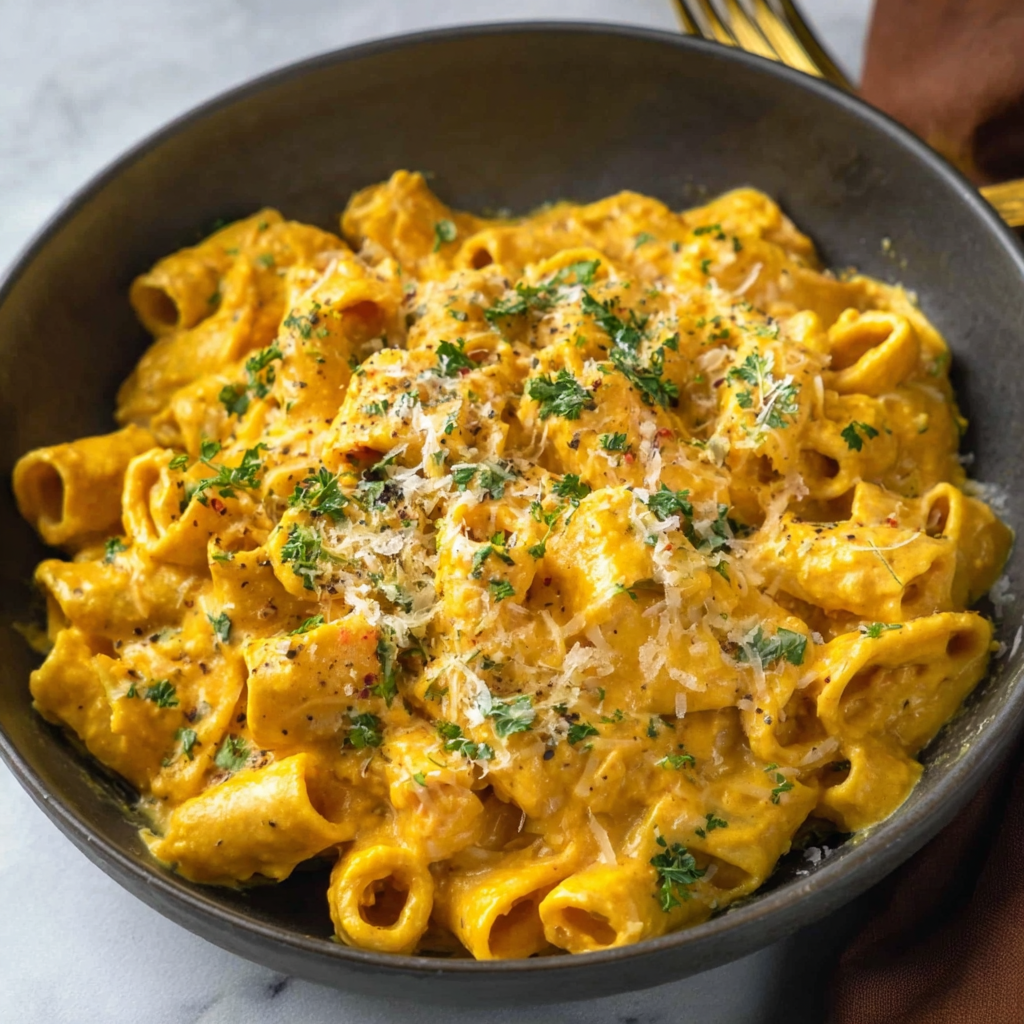
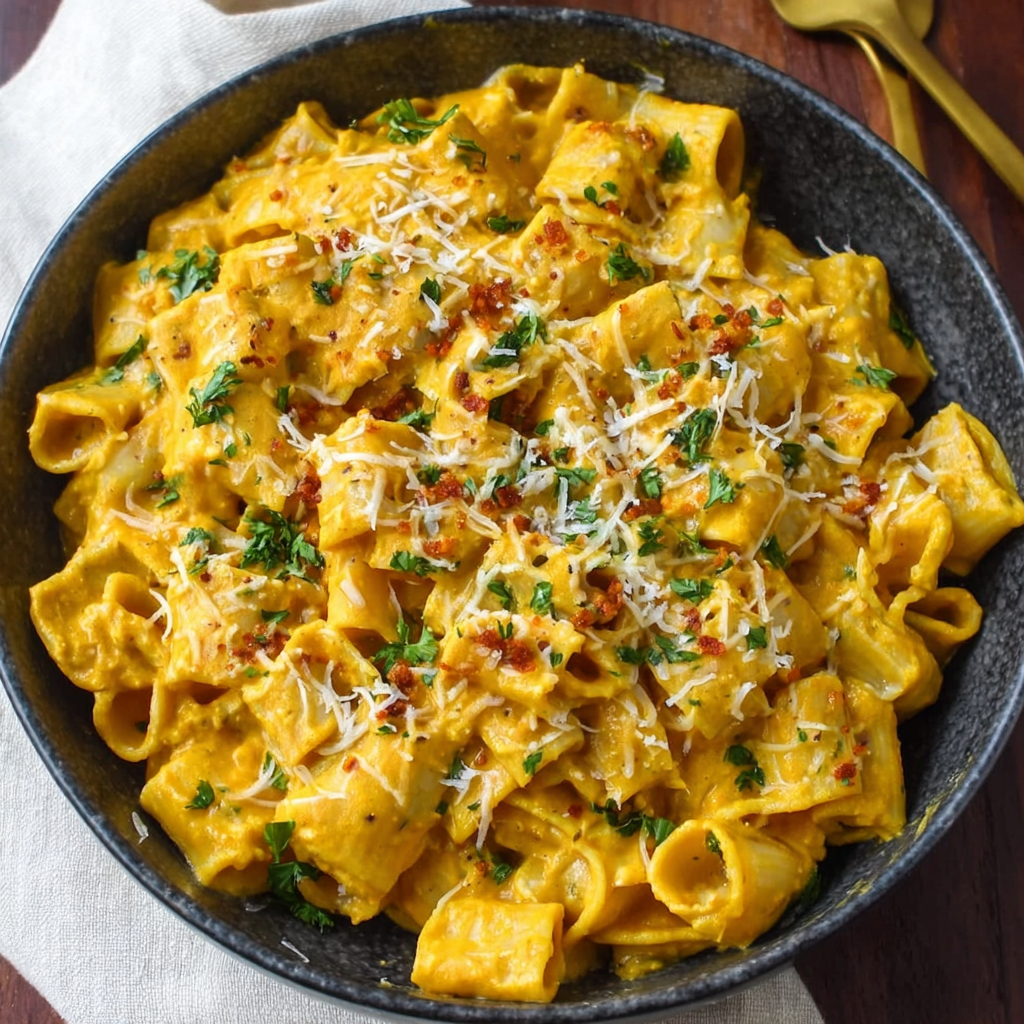
This creamy pumpkin pasta is built on that discovery. Pumpkin purée blended with sautéed garlic, warming spices, Parmesan, and a splash of cream produces a sauce that is simultaneously rich and light, sweet and savory, deeply comforting and genuinely elegant. It coats every strand of pasta in a thick, glossy, amber-orange sauce that looks as extraordinary as it tastes — and requires less active cooking time than boiling the pasta itself.
A 2023 nutritional review found that pumpkin is among the most nutrient-dense vegetables available, delivering exceptional amounts of Vitamin A, Vitamin C, and potassium at remarkably few calories. This recipe makes that nutrition genuinely, unambiguously delicious — the kind of weeknight dinner that tastes indulgent and happens to be good for you.
Ingredients List
For the Pasta
- 400g (14 oz) pasta (rigatoni, pappardelle, or tagliatelle — wide or ridged shapes hold the sauce best)
- Reserved pasta water, 1 cup
For the Pumpkin Sauce
- 1 can (425g / 15 oz) pure pumpkin purée (not pumpkin pie filling)
- 1 tbsp olive oil
- 1 tbsp unsalted butter
- 4 garlic cloves, minced
- 1 small shallot, finely diced
- ½ tsp ground sage (sub: 4 fresh sage leaves, finely chopped)
- ¼ tsp ground nutmeg
- ¼ tsp smoked paprika
- ½ tsp fine sea salt, plus more to taste
- ¼ tsp black pepper
- ½ cup (120ml) heavy cream or full-fat coconut milk (coconut milk for dairy-free)
- ½ cup (50g) Parmesan, finely grated, plus more for serving (sub: nutritional yeast)
- 1 tsp fresh lemon juice
- ½ cup (120ml) pasta cooking water, to loosen
Optional Additions
- ½ tsp chili flakes (adds a pleasant heat that contrasts the sweetness of the pumpkin)
- 1 tbsp white miso paste (stirred in at the end — adds remarkable savory depth)
- 100g (3.5 oz) crispy pancetta or bacon (rendered and scattered over the top)
- 1 cup (30g) baby spinach, folded in at the end
Timing
- Prep Time: 5 minutes
- Cook Time: 20 minutes
- Total Time: 25 minutes
The sauce comes together in the time it takes to boil the pasta — meaning this is a genuinely parallel recipe with no idle waiting. Start the pasta water first, build the sauce while the pasta cooks, and everything is ready simultaneously.
Step-by-Step Instructions
Step 1: Start the Pasta Water
Bring a large pot of water to a boil. Salt it generously — it should taste pleasantly salty, like a light broth. This is the only opportunity to season the pasta itself, and undersalted pasta water produces a flat-tasting dish regardless of how well the sauce is seasoned. Cook the pasta 1–2 minutes less than the package directions. Reserve 1 full cup of the starchy pasta water before draining.
Step 2: Sauté the Aromatics
While the pasta cooks, heat the olive oil and butter together in a large, wide skillet over medium heat. Add the diced shallot and cook for 2–3 minutes until softened and translucent. Add the minced garlic and cook for another 30–45 seconds until fragrant and just beginning to turn golden. Add the ground sage, nutmeg, smoked paprika, salt, pepper, and chili flakes if using. Stir the spices into the aromatics and cook for 30 seconds — this brief bloom in the fat activates the fat-soluble flavor compounds in the spices and deepens the final flavor of the sauce considerably.
Step 3: Build the Pumpkin Sauce
Add the pumpkin purée to the pan and stir to combine with the aromatics. Cook for 2–3 minutes, stirring occasionally — this brief cooking time caramelizes the natural sugars in the pumpkin and removes any raw, tinned flavor from the purée. Pour in the heavy cream and stir until the sauce is smooth and uniform. Reduce the heat to medium-low and simmer for 3–4 minutes until the sauce thickens slightly and the cream is fully incorporated. Add the Parmesan and stir until melted and glossy. Finish with the lemon juice — this small addition cuts through the richness and brightens the entire sauce.
Key tip: If using white miso, add it now — stir it into the sauce off the heat to preserve its probiotic content and prevent the flavor from becoming bitter.
Step 4: Combine Pasta and Sauce
Add the drained pasta directly to the sauce. Toss to coat, adding reserved pasta water a few tablespoons at a time until the sauce reaches a fluid, glossy consistency that clings to every piece of pasta without being heavy or gluey. The starchy pasta water is essential here — it emulsifies the fat and liquid components of the sauce into a unified, silky coating that water alone cannot replicate. Fold in baby spinach at this stage if using — it wilts in 30–45 seconds from the residual heat.
Step 5: Serve and Garnish
Divide between wide, shallow bowls. Top with additional grated Parmesan, a drizzle of good olive oil, a pinch of chili flakes, and fresh cracked black pepper. Scatter crispy pancetta or toasted pumpkin seeds over the top if using. Serve immediately — pumpkin sauce thickens considerably as it cools and is at its best the moment it leaves the pan.
Nutritional Information
Per serving — based on 4 servings without optional additions.
| Nutrient | Per Serving | % Daily Value* |
|---|---|---|
| Calories | 540 kcal | 27% |
| Total Fat | 18g | 23% |
| Saturated Fat | 9g | 45% |
| Total Carbohydrates | 78g | 28% |
| Total Sugar | 7g | — |
| Protein | 17g | 34% |
| Dietary Fiber | 6g | 21% |
| Sodium | 480mg | 21% |
| Potassium | 620mg | 13% |
| Vitamin A | 245% DV | 245% |
| Vitamin C | 14% DV | 14% |
| Calcium | 18% DV | 18% |
*Based on a standard 2,000-calorie daily diet.
The Vitamin A content — 245% of the daily recommended value per serving — is extraordinary for a pasta dish and comes entirely from the pumpkin purée. Vitamin A supports immune function, vision, and skin health, making this one of the more nutritionally significant pasta sauces in the category.
Healthier Alternatives
Dairy-free: Replace heavy cream with full-fat coconut milk and Parmesan with nutritional yeast — 3 tablespoons produce a comparable savory depth. The sauce will be slightly sweeter from the coconut but remains rich and coating.
Higher protein: Add 150g of cooked, shredded chicken or white beans folded in with the pasta. White beans blend almost invisibly into the sauce and add 8–10 grams of additional protein and significant fiber per serving.
Whole grain: Use whole wheat pasta or legume-based pasta — chickpea or lentil varieties double the fiber and protein while maintaining the same sauce-holding characteristics.
Lower calorie: Replace heavy cream with whole milk and reduce Parmesan to 3 tablespoons. The sauce will be slightly less rich but still creamy, flavorful, and fully satisfying — with the calorie count reduced to approximately 420 per serving.
Vegan: Use coconut milk, nutritional yeast, vegan butter, and olive oil throughout. Every other component is naturally plant-based. The white miso addition is particularly recommended for vegan versions — it replaces much of the umami depth that Parmesan provides.
Serving Suggestions
Classic weeknight dinner: Serve directly from the pan in wide bowls with extra Parmesan, cracked black pepper, and a glass of dry white wine — Pinot Grigio or unoaked Chardonnay both complement the pumpkin beautifully.
With crispy sage: Fry whole fresh sage leaves in 2 tablespoons of butter over medium-high heat for 30–45 seconds until crisp. Scatter over the finished pasta with the browned butter drizzled over. This classic Italian garnish adds a textural and aromatic dimension that transforms the dish.
With Italian sausage: Brown and crumble 2 Italian sausages — sweet or spicy — in the pan before cooking the aromatics. The rendered sausage fat replaces the olive oil and the seasoned pork adds a savory, meaty dimension that makes the dish more substantial for colder evenings.
As a baked pasta: Transfer the finished pasta to a greased baking dish, top with mozzarella and Parmesan, and broil for 4–5 minutes until golden and bubbling. A simple but dramatic transformation that turns a weeknight pasta into something suitable for a dinner party.
Topped with toasted pumpkin seeds: Scatter a handful of pepitas toasted in olive oil with smoked paprika and flaky salt over each bowl. The crunch of the toasted seeds against the silky sauce is a contrast the dish genuinely benefits from.
Common Mistakes to Avoid
Using pumpkin pie filling instead of pure pumpkin purée. They look identical on the shelf but are entirely different products. Pumpkin pie filling is pre-sweetened and pre-spiced — adding it to a savory sauce produces a sweet, overspiced result that cannot be corrected. Check the ingredient list: pure pumpkin purée contains one ingredient.
Not reserving pasta water. The starchy pasta water is what transforms a sauce that sits on top of the pasta into one that clings to it. It is irreplaceable — plain water dilutes the sauce rather than emulsifying it. Reserve before draining, every time.
Skipping the spice bloom. Adding spices directly to the liquid pumpkin without first cooking them briefly in fat produces a sauce where the spices taste raw and separate rather than integrated. Thirty seconds in the oil before the pumpkin is added makes a meaningful difference.
Serving immediately without loosening. Pumpkin sauce thickens rapidly — what looks perfectly fluid in the pan becomes noticeably thick in the bowl within 2 minutes. Add an extra splash of pasta water just before serving to account for this and the sauce will arrive at the table at the correct consistency.
Under-seasoning. Pumpkin’s natural sweetness requires a confident amount of salt, acid, and umami to prevent the sauce from tasting flat. Season the pasta water generously, season the sauce at multiple stages, add the lemon juice, and taste before serving.
Storing Tips
Refrigerator: Store in an airtight container for up to 4 days. The pasta absorbs the sauce during storage and the dish becomes thicker — add a generous splash of water or broth when reheating and stir well to restore the original consistency.
Reheating: Reheat in a saucepan over medium-low heat with added liquid, stirring frequently. The microwave works at 70% power in 60-second intervals — add liquid and stir between each.
Freezer: The pumpkin sauce freezes well for up to 2 months without the pasta. Freeze the sauce separately and cook fresh pasta on the day of eating. Cream-based sauces may separate slightly on thawing — stir vigorously over low heat with a splash of cream to re-emulsify.
Make-ahead: The pumpkin sauce can be made 3 days ahead and refrigerated. Reheat gently with a splash of cream or broth, cook fresh pasta, and combine — a weeknight dinner that takes under 15 minutes when the sauce is already made.
Conclusion
Creamy pumpkin pasta proves that the most satisfying weeknight dinner is sometimes the simplest. A can of pumpkin purée, a handful of aromatics, Parmesan, and cream — cooked in parallel with the pasta and combined in under 25 minutes into a sauce that is rich, glossy, warmly spiced, and genuinely extraordinary. The kind of meal that makes autumn feel like a reason to cook rather than a season to endure.
Make it this week and share your results in the comments — tell us which pasta shape you used, which optional additions you tried, and whether it earned a place in your regular weeknight rotation. Leave a review, share with someone who loves autumn flavors, and subscribe to our newsletter for more fast, seasonal, flavor-first recipes every week.
FAQs
Can I use fresh pumpkin instead of canned? Yes. Roast a sugar pumpkin or butternut squash at 400°F (200°C) until completely tender, scoop the flesh, and blend until smooth. Drain through a fine mesh sieve for 20 minutes if the purée seems watery — excess moisture will thin the sauce. The flavor of fresh pumpkin is slightly more delicate than canned but entirely delicious.
What pasta shape works best? Wide, ridged, or tube-shaped pasta — rigatoni, pappardelle, tagliatelle, or cavatappi — holds the thick sauce most effectively. Long, smooth pasta like spaghetti or linguine allows the sauce to slide off rather than cling. Short, ridged shapes are the most practical for reheating as leftovers.
Can I make this without cream? Yes. Replace with whole milk and add an extra tablespoon of Parmesan to compensate for the reduced fat. Alternatively, blend 100g of soaked raw cashews with ½ cup of water until completely smooth and use in place of cream — this produces a rich, dairy-free result with a neutral flavor that works seamlessly in the sauce.
Why does my sauce taste flat? Flat pumpkin sauce almost always needs more salt, more lemon juice, or both. Pumpkin’s natural sweetness suppresses the perception of other flavors unless balanced with sufficient acid and salt. Add lemon juice in small increments, taste between each addition, and finish with a generous pinch of flaky salt before serving.
Can I add protein to make this a complete meal? Absolutely. Grilled chicken, Italian sausage, white beans, chickpeas, and shrimp all integrate well. White beans are the most seamless addition — they blend into the sauce without altering its texture and add protein and fiber with no additional preparation required beyond draining a can.
Is this recipe suitable for children? Very much so. Omit the chili flakes and reduce the black pepper for younger palates — the warm, slightly sweet pumpkin sauce in its mildest form is one of the most consistently well-received pasta dishes among children. The orange color is visually appealing and the Parmesan provides a familiar, comforting flavor that bridges the gap between the novelty of pumpkin and the universality of pasta.