Follow Me On Social Media!
Creamy Vegan Cajun Pasta

Introduction
Here is a question that challenges the assumption that cream-based pasta sauces are inherently dependent on dairy: what if the silkiest, richest, most deeply flavored Cajun pasta sauce you have ever eaten was built entirely from plants — and what if the primary reason most people cannot tell the difference is that the creaminess was never about the cream to begin with, but about the fat, the emulsification, and the bold spicing that carries the sauce?
According to a 2024 report by the Plant Based Foods Association, vegan pasta dishes represent the fastest-growing category in plant-based cooking — driven not by dietary restriction but by the discovery that cashew cream, coconut milk, and blended vegetable bases can achieve a richness and body that rivals any dairy-based sauce when properly constructed. Yet the majority of vegan cream pasta recipes underdeliver on the one element that makes Cajun food worth eating: the heat, the depth, and the layered spice complexity that distinguishes genuine Cajun seasoning from the pale, generic “spicy pasta” category.
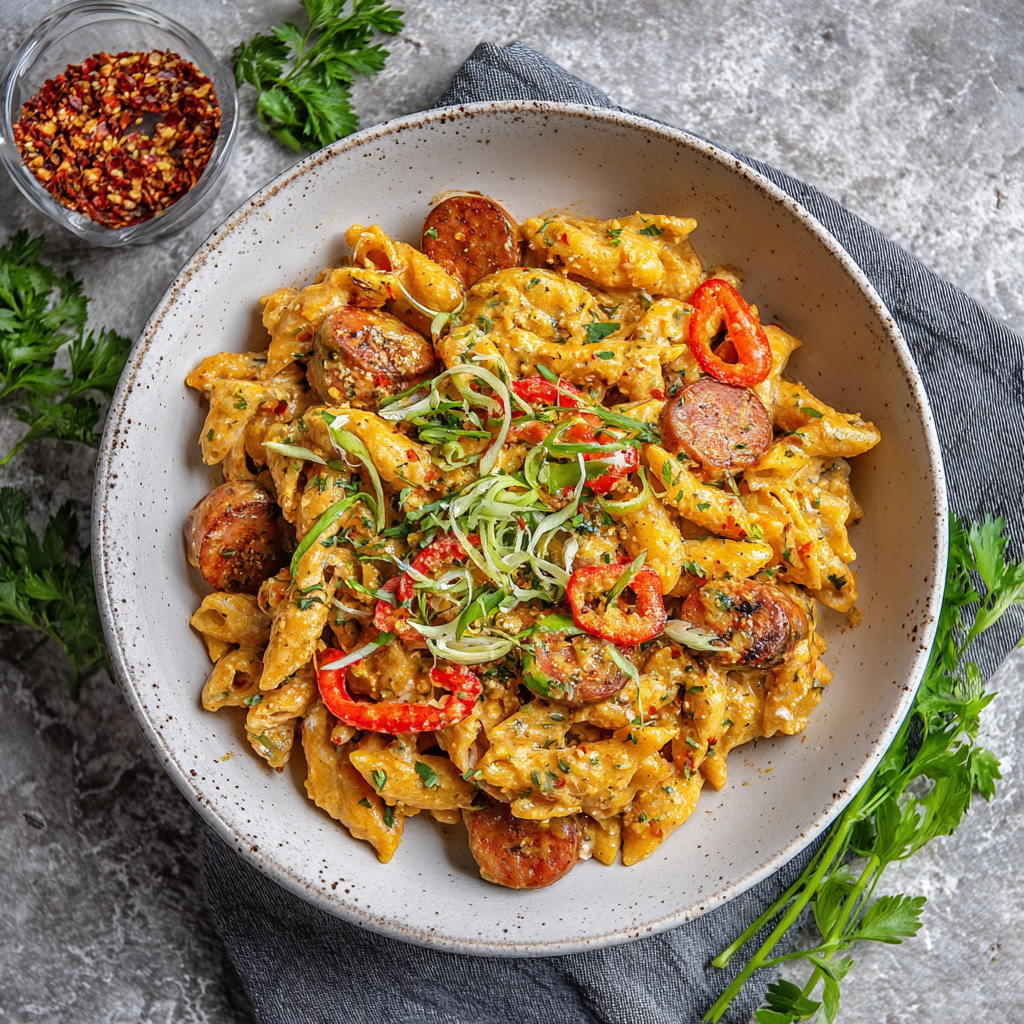
This creamy vegan Cajun pasta delivers on all counts. A cashew cream base — blended to an extraordinary silkiness — enriched with coconut milk and Cajun-spiced sautéed vegetables, finished with smoked paprika, cayenne, garlic, and a touch of tomato paste that adds depth without heaviness. The sauce coats every strand of pasta with the kind of glossy, clinging richness that makes people reach for the bowl before the fork has left their mouth. At no point does it taste like a compromise. At no point does it taste like dairy cream was the thing that was missing. It tastes like exactly what it is: a genuinely great Cajun pasta that happens to contain no animal products.
A 2023 nutritional review in the Journal of Nutrition identified cashews as one of the most nutritionally complete tree nuts available — delivering copper, magnesium, zinc, and healthy monounsaturated fats alongside a protein content that, when blended into cream, contributes both the silky mouthfeel and a meaningful nutritional profile absent from dairy cream equivalents.
Ingredients List
For the Cashew Cream
- 1 cup (140g) raw cashews, soaked in cold water for 4 hours or in boiling water for 30 minutes
- 1 cup (240ml) water (for blending)
- 1 tbsp nutritional yeast (adds savory depth)
- 1 tsp fresh lemon juice
- ¼ tsp fine sea salt
For the Cajun Spice Blend (or use 2 tbsp store-bought Cajun seasoning)
- 1 tsp smoked paprika
- 1 tsp sweet paprika
- 1 tsp garlic powder
- ½ tsp onion powder
- ½ tsp dried oregano
- ½ tsp dried thyme
- ½ tsp fine sea salt
- ¼ tsp cayenne pepper (increase to ½ tsp for more heat)
- ¼ tsp freshly ground black pepper
- ¼ tsp white pepper
For the Pasta and Sauce
- 400g (14 oz) penne, rigatoni, or fettuccine
- 2 tbsp olive oil
- 1 medium onion, finely diced
- 1 red bell pepper, thinly sliced
- 1 green bell pepper, thinly sliced
- 4 garlic cloves, finely minced
- 200g (7 oz) cremini mushrooms, thickly sliced (optional — adds umami depth)
- 2 tbsp tomato paste
- ½ cup (120ml) dry white wine or vegetable stock
- 1 can (400ml) full-fat coconut milk (shake well before opening)
- The prepared cashew cream
- 1 cup (240ml) vegetable stock
- 1 tsp Dijon mustard
- Salt to taste
For Finishing and Serving
- Fresh flat-leaf parsley or basil, roughly chopped
- Sliced spring onions
- Vegan Parmesan or nutritional yeast, for the table
- Extra smoked paprika, for dusting
- Lemon wedges
- Crushed red pepper flakes (for those who want more heat)
Timing
- Cashew Soaking: 30 minutes (in hot water) or 4 hours (cold water)
- Prep Time: 15 minutes
- Cook Time: 20 minutes
- Total Time: 35 minutes (after soaking)
Step-by-Step Instructions
Step 1: Make the Cashew Cream
Drain the soaked cashews and rinse under cold water. Place in a high-powered blender with 1 cup of fresh water, nutritional yeast, lemon juice, and salt. Blend on the highest speed for 90 seconds — pausing once to scrape down the sides — until completely smooth with absolutely no grainy texture. The cashew cream should pour like heavy cream and leave no visible particles when rubbed between two fingers. If any graininess remains, blend for another 30–60 seconds.
Key tip: A high-powered blender — Vitamix, Blendtec, or equivalent — produces a genuinely silky cashew cream in 90 seconds. A standard blender requires 3–4 minutes of blending with a 1-minute rest between passes to prevent the motor from overheating, and may still produce a slightly less smooth result. The smoothness of the cashew cream directly determines the smoothness of the finished sauce — under-blended cream produces a gritty texture that no amount of cooking corrects.
Step 2: Cook the Pasta
Bring a large pot of generously salted water to a boil. Cook the pasta 2 minutes less than the package directions — it will finish cooking in the sauce. Reserve 1 cup of starchy pasta water before draining. Set aside.
Step 3: Sauté the Vegetables
Heat the olive oil in a large, wide skillet over medium-high heat. Add the diced onion and cook for 3–4 minutes until softened. Add the sliced bell peppers and cook for 3–4 more minutes until slightly softened and beginning to char at the edges — the slight char on the peppers is the visual and flavor equivalent of the grill char in traditional Cajun cooking and adds a smoky complexity to the finished sauce. Add the garlic and cook for 30 seconds. Add the mushrooms if using and cook for 2–3 minutes undisturbed until golden.
Key tip: The slight char on the bell peppers is intentional and important — resist the urge to stir too frequently. Undisturbed contact with the hot pan surface for 2–3 minutes produces the caramelized edges that make the vegetables taste of something more than simply cooked.
Step 4: Add the Cajun Spice Blend and Tomato Paste
Add the entire Cajun spice blend to the vegetables and stir continuously for 60 seconds — blooming the dried spices in the hot oil releases their fat-soluble aromatic compounds and produces a more deeply flavored, more integrated spice presence than spices added directly to liquid. Add the tomato paste and press against the hot pan surface for 1–2 minutes until caramelized and darkened slightly.
Step 5: Deglaze and Build the Sauce
Add the white wine or vegetable stock and scrape the bottom of the pan to incorporate all the caramelized fond. Allow to reduce by half — approximately 2 minutes. Pour in the full-fat coconut milk and stir to combine. Add the prepared cashew cream, vegetable stock, and Dijon mustard. Stir everything together and bring to a gentle simmer over medium heat.
Simmer for 5–8 minutes, stirring frequently, until the sauce reduces slightly and thickens to a coating consistency — it should coat the back of a spoon and hold a line when a finger is drawn through it. The coconut milk and cashew cream work together to produce a sauce with a body and richness that neither achieves independently: the coconut milk contributes sweetness and fat; the cashew cream contributes neutral richness and protein-based body.
Step 6: Finish with Pasta
Add the drained pasta to the sauce and toss to coat every piece evenly. Add the reserved pasta water a few tablespoons at a time if the sauce is too thick — the starchy pasta water loosens the sauce without diluting the flavor and helps it cling to the pasta rather than pooling at the bottom of the bowl. Cook together for 2 minutes over medium heat until the pasta has absorbed some of the sauce and reached the correct doneness.
Taste and adjust — more Cajun seasoning for heat and spice, more salt for overall flavor, more lemon juice for brightness. The sauce should be boldly, assertively spiced — the pasta absorbs and moderates the seasoning, so what tastes slightly too intense at this stage will taste correct in the finished bowl.
Step 7: Serve
Divide between warm bowls. Top generously with fresh parsley or basil, sliced spring onions, and a dusting of smoked paprika. Add vegan Parmesan or a tablespoon of nutritional yeast over the top. Finish with a squeeze of lemon and red pepper flakes for those who want additional heat. Serve immediately.
Nutritional Information
Per serving — based on 4 servings.
| Nutrient | Per Serving | % Daily Value* |
|---|---|---|
| Calories | 620 kcal | 31% |
| Total Fat | 28g | 36% |
| Saturated Fat | 12g | 60% |
| Total Carbohydrates | 78g | 28% |
| Total Sugar | 8g | — |
| Protein | 18g | 36% |
| Dietary Fiber | 6g | 21% |
| Sodium | 680mg | 30% |
| Potassium | 620mg | 13% |
| Vitamin C | 85% DV | 85% |
| Iron | 20% DV | 20% |
| Magnesium | 22% DV | 22% |
*Based on a standard 2,000-calorie daily diet.
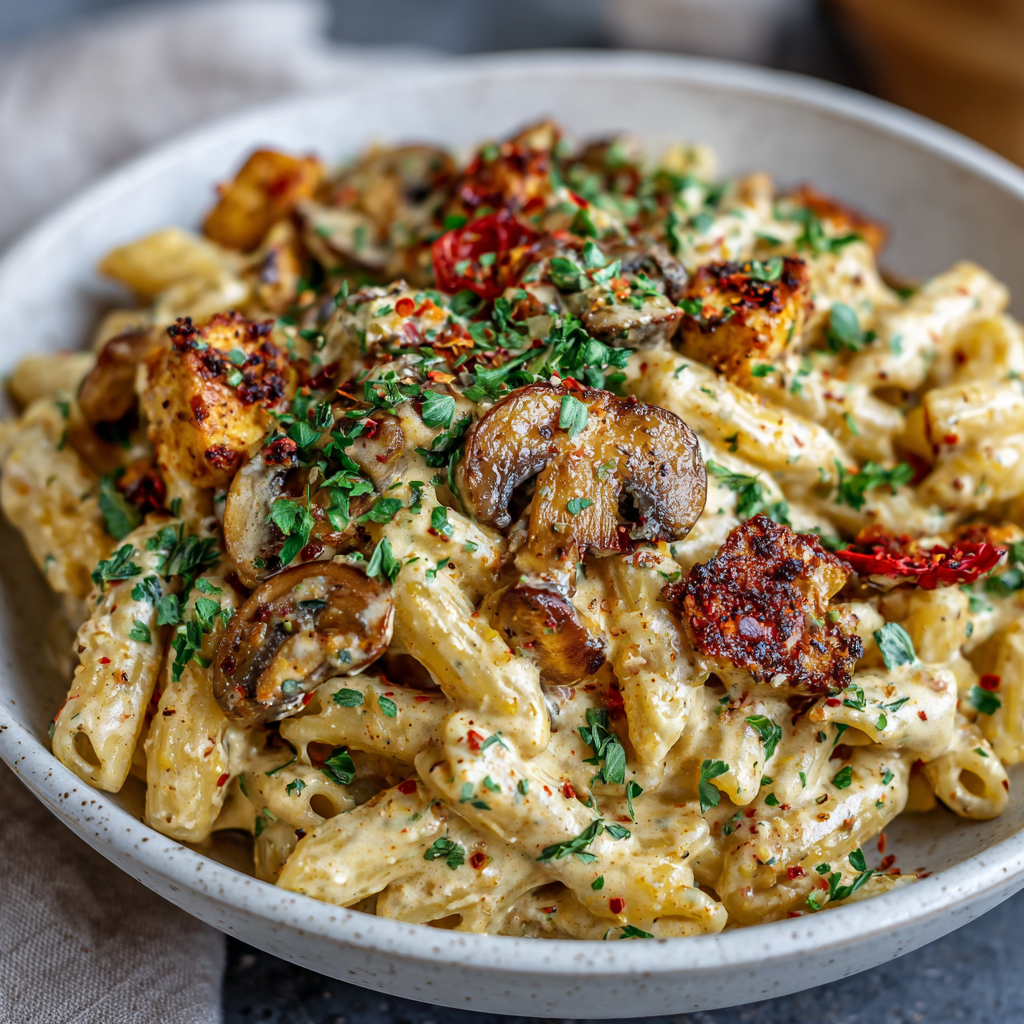
The Vitamin C content — 85% of the daily recommended value per serving — comes primarily from the red and green bell peppers and makes this one of the most meaningful single-meal Vitamin C sources in a pasta preparation. The magnesium at 22% of the daily value reflects the significant contribution of cashews, supporting muscle function, nerve transmission, and energy metabolism.
Healthier Alternatives
Lower fat: Replace the full-fat coconut milk with light coconut milk and reduce the cashews to ¾ cup, adding an additional ¼ cup of water for blending. The sauce will be slightly less rich but remains creamy and well-flavored — and the fat content reduces by approximately 35%.
Higher protein: Add 1 cup of canned chickpeas or white beans drained and rinsed to the sauce alongside the pasta, or serve with grilled tofu seasoned with Cajun spice. Either addition pushes the protein content above 25 grams per serving while maintaining the character of the dish.
Nut-free: Replace the cashew cream with a base of 1 cup of silken tofu blended smooth with 1 tablespoon of nutritional yeast, 1 teaspoon of lemon juice, and ¼ cup of water. The texture is comparable and the result is entirely nut-free — suitable for school or allergy-sensitive environments.
Higher vegetable content: Add 2 cups of baby spinach or kale wilted into the sauce in the final 2 minutes of cooking, and increase the bell pepper quantity to 2 of each color. These additions increase the fiber, iron, and Vitamin K content significantly without altering the Cajun flavor profile.
Whole grain pasta: Use whole wheat pasta or a legume-based pasta — chickpea or lentil penne — to increase the fiber content by 3–4 grams per serving and reduce the glycemic index of the dish.
Serving Suggestions
With Cajun-spiced tofu: Cube 400g of extra-firm pressed tofu, toss with Cajun seasoning and 1 tablespoon of olive oil, and pan-sear until golden and slightly charred. Serve on top of the pasta for a complete, high-protein vegan main that reads as a restaurant-quality composed dish.
As a meal prep: Divide into four containers without the fresh toppings. Add a splash of vegetable stock before reheating — the sauce thickens considerably overnight — and apply fresh herbs, spring onions, and lemon at eating time.
With garlic bread: Serve alongside thick-sliced sourdough rubbed with garlic and olive oil and toasted until golden. The bread is essential for the sauce that inevitably pools at the bottom of the bowl.
Family-style in the pan: Bring the skillet directly to the table and serve from the pan with a large fork and spoon. Top the pan surface with all garnishes before arriving at the table — the visual of the vibrant, spiced pasta in a large pan loaded with herbs and spring onions is one of the most appealing presentations in casual home cooking.
Spicy shrimp addition (non-vegan): For non-vegan guests, toss 300g of large shrimp with Cajun seasoning and sear in a separate pan for 2–3 minutes per side. Serve on top of the pasta — the combination of Cajun-spiced shrimp and creamy vegan cashew sauce is extraordinary and makes this a dish that accommodates mixed dietary preferences at a single table.
Common Mistakes to Avoid
Under-blending the cashew cream. Grainy cashew cream produces a grainy sauce that cannot be corrected by cooking. Blend for the full 90 seconds at high speed, rub between two fingers to test smoothness, and continue blending if any graininess remains.
Not charring the bell peppers. Peppers simply softened rather than slightly charred produce a sauce that tastes pleasant but generic. The caramelized edges and slight blackening at the tips are the Cajun-adjacent flavor note that distinguishes this recipe from any other creamy vegetable pasta.
Skipping the spice bloom. Dried spices added directly to liquid produce a flat, one-dimensional flavor. The 60-second bloom in hot oil releases the fat-soluble aromatic compounds that make Cajun seasoning so distinctive — this step is the technique that makes the dish taste genuinely spiced rather than merely sprinkled.
Not seasoning the pasta water. Unseasoned pasta is the most common source of flat, under-flavored pasta dishes. The water should taste pleasantly salty — like a light broth — before the pasta is added.
Not reserving pasta water. The starchy pasta water is essential for adjusting the sauce consistency without diluting the flavor. Reserve it before draining — it is not retrievable afterward.
Not tasting and adjusting before serving. The pasta absorbs a significant amount of seasoning as it finishes in the sauce. What tasted correctly seasoned before the pasta was added will taste flat after — always taste and adjust at the final stage.
Storing Tips
Refrigerator: Store in an airtight container for up to 4 days. The sauce thickens significantly during refrigeration as the pasta continues to absorb liquid — add 2–3 tablespoons of vegetable stock or water per portion when reheating and stir over medium-low heat until creamy.
Reheating: Stovetop over medium-low heat with added liquid is the best method — it restores the sauce’s original creamy consistency. Microwave at 70% power in 90-second intervals with stirring between each and a small amount of added liquid.
Freezer: Freeze the sauce separately from the pasta for best results — the pasta texture deteriorates significantly during freezing. Freeze the sauce in airtight containers for up to 3 months, thaw overnight in the refrigerator, and cook fresh pasta on the day of serving.
Cashew cream storage: Excess cashew cream stores in a sealed jar in the refrigerator for up to 5 days. Use as a base for soups, as a pasta sauce enricher, or as a dairy-free cream substitute in any recipe calling for heavy cream.
Conclusion
Creamy vegan Cajun pasta proves that the most satisfying plant-based cooking is not the cooking that tries to approximate dairy — it is the cooking that understands what creaminess actually requires and achieves it through different but equally effective means. Cashew cream and coconut milk, spiced with a genuine Cajun blend, built on caramelized vegetables and bloomed spices, finished with pasta water and lemon — a sauce that is richer, bolder, and more deeply flavored than most dairy-based equivalents and requires no apology to anyone at the table.
Make it and share your results in the comments — tell us whether you could detect the cashew cream, how spicy you made it, and whether it converted any dairy skeptics at your table. Leave a review, share with someone following a plant-based diet who misses creamy pasta, and subscribe to our newsletter for more bold, technique-driven vegan recipes every week.
FAQs
Can I skip soaking the cashews? If you have a high-powered blender — Vitamix or equivalent — cashews soaked in boiling water for just 30 minutes blend sufficiently smooth. Without a high-powered blender, the full 4-hour cold soak is necessary to soften the cashews enough for a standard blender to achieve a smooth cream. Using unsoaked cashews in any blender produces a gritty cream that cannot be corrected.
What can I substitute for cashews if I have a nut allergy? Sunflower seeds soaked and blended identically to cashews produce a comparable creaminess with a slightly earthier flavor. Silken tofu blended smooth with nutritional yeast, lemon juice, and a splash of water produces a neutral, protein-rich cream. Hemp seeds blended with water and nutritional yeast produce a thinner but silky cream. Each substitution produces a slightly different flavor character — all are entirely appropriate for this recipe.
Is the coconut flavor detectable in the finished sauce? The bold Cajun spice blend, the tomato paste, the Dijon mustard, and the garlic collectively mask the coconut flavor almost completely in the finished sauce — most people cannot identify coconut as an ingredient when asked. If you are particularly sensitive to coconut flavor, use a neutral-tasting coconut milk or replace with an equal quantity of additional cashew cream thinned with vegetable stock.
Can I make this recipe gluten-free? Yes — use certified gluten-free pasta and verify that the Cajun seasoning blend contains no wheat-based fillers. Every other component of the recipe is naturally gluten-free. Chickpea or brown rice pasta are the most reliable gluten-free options for a dish where the pasta will finish cooking in a sauce.
How do I make this dish less spicy for children? Reduce the cayenne to a pinch or eliminate it entirely, and reduce the black and white pepper by half. The smoked and sweet paprika, garlic, onion, and herb components of the Cajun blend remain and produce a flavorful, aromatic sauce without any significant heat. The fully de-spiced version is approachable for children while remaining genuinely flavorful for adults.
Can I add protein to this dish? Yes — pan-seared tempeh marinated in Cajun spice and olive oil, crispy roasted chickpeas seasoned with the Cajun blend, or sautéed king oyster mushrooms torn into strips all integrate naturally into the sauce. For non-vegan versions, shrimp or chicken seared with Cajun seasoning and placed on top of the finished pasta produces the classic Cajun pasta restaurant format.