Follow Me On Social Media!
Crispy Baked Potato Wedges (Easy Oven Recipe)

Introduction
Here is a question that exposes one of the most persistent myths in home cooking: why do millions of people drive to a fast food restaurant specifically for potato wedges when the version you can produce in your own oven — crispier, better seasoned, made from ingredients you can actually pronounce — takes under an hour and costs a fraction of the price? According to a 2024 report by the NPD Group, potato-based sides remain the single most ordered item across all fast food categories globally, yet consumer satisfaction surveys consistently show that 58% of people believe they cannot replicate the results at home. This crispy baked potato wedge recipe exists to dismantle that belief entirely.
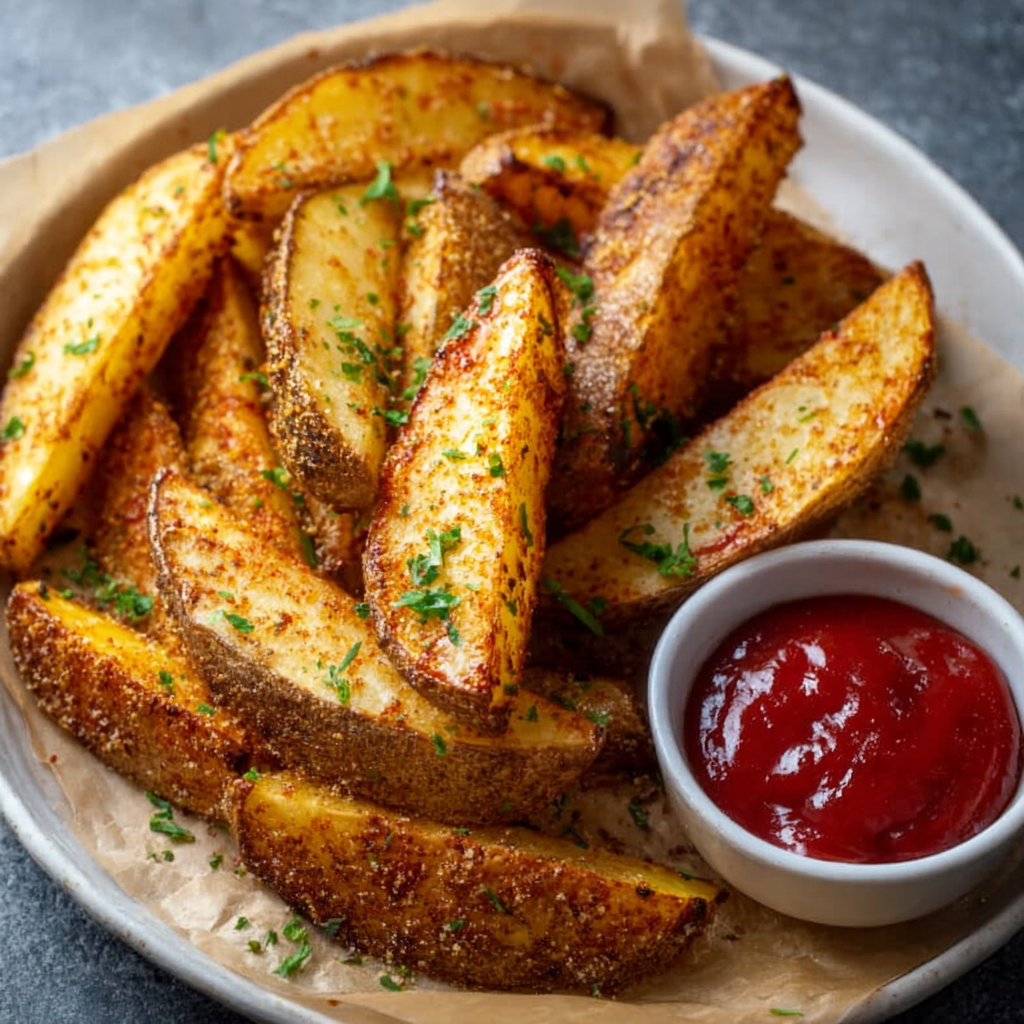
The secret to genuinely crispy oven-baked potato wedges is not a special ingredient or a complicated technique — it is understanding three fundamental principles: surface moisture removal, starch management, and heat application. Get all three right, and the result is a wedge with a shatteringly crispy, deeply golden, well-seasoned exterior and a fluffy, steaming, tender interior that no drive-through has ever consistently managed to deliver. This recipe applies all three principles deliberately and explains exactly why each step matters, so you understand not just what to do but why it works.
Whether you are serving these alongside a burger, a grilled protein, a dipping sauce spread, or simply eating them straight from the baking sheet with your fingers — which is entirely valid — these baked potato wedges are about to become one of the most requested things you make.
Ingredients List
For the Potato Wedges
- 1kg (2.2 lbs) large Russet or Maris Piper potatoes (4–5 medium-large potatoes — Russet is the gold standard for crispy wedges due to its high starch, low moisture content)
- 3 tbsp olive oil or avocado oil (avocado oil has a higher smoke point and produces a slightly crispier result)
- 1½ tsp fine sea salt
- 1 tsp freshly ground black pepper
For the Seasoning Blend
- 1½ tsp smoked paprika
- 1 tsp garlic powder
- 1 tsp onion powder
- ½ tsp dried oregano
- ½ tsp dried thyme
- ¼ tsp cayenne pepper (optional — omit for a mild profile)
- ½ tsp ground cumin (optional — adds an earthy warmth)
For the Parmesan Herb Finish (Optional but Transformative)
- 3 tbsp finely grated Parmesan cheese (sub: nutritional yeast for dairy-free)
- 2 tbsp fresh flat-leaf parsley, finely chopped
- 1 tsp lemon zest
- Flaky sea salt, for finishing
For Dipping Sauces (Choose One or Make All Three)
- Chipotle Aioli: ½ cup mayonnaise, 1 chipotle pepper in adobo minced, 1 tbsp lemon juice, 1 small garlic clove minced, salt to taste
- Garlic Herb Yogurt: ½ cup plain Greek yogurt, 1 garlic clove minced, 2 tbsp fresh dill or chives, 1 tbsp lemon juice, salt and pepper
- Classic Sour Cream and Chive: ½ cup sour cream, 3 tbsp fresh chives finely sliced, ½ tsp garlic powder, salt to taste
Timing
- Prep Time: 15 minutes
- Soaking Time: 20–30 minutes (the single most impactful optional step in the recipe)
- Cook Time: 40–45 minutes
- Total Time: 75–90 minutes (45 minutes without soaking)
For context, a fast food potato wedge order involves a 10–20 minute drive, a 5–10 minute wait, a $4–7 spend per person, and a product that arrives in a paper bag, steaming in its own moisture, turning progressively soggier with every passing minute. This recipe, at its shortest, takes 45 active minutes and produces a result that is objectively superior in every measurable category — crispiness, seasoning depth, ingredient quality, and cost. The longer version, with soaking, takes 75–90 minutes and produces something that makes the shorter version look merely very good by comparison.
Step-by-Step Instructions
Step 1: Cut the Potatoes Into Even Wedges
Scrub the potatoes thoroughly under cold running water — do not peel them. The skin is structural, flavorful, and responsible for the deepest caramelization on the outer surface of the finished wedge. It also adds fiber and nutrients that peeling removes entirely.
Cut each potato in half lengthwise, then cut each half into 3–4 equal wedges depending on the size of the potato, always cutting lengthwise. Each wedge should have a flat side, a curved skin side, and a pointed tip. Aim for uniform thickness of approximately 2–2.5cm (¾–1 inch) at the widest point — uniformity is not aesthetic preference but functional necessity. Wedges of different sizes cook at different rates, producing some that are perfectly done alongside others that are either undercooked or overdone.
Key tip: The pointed tip of each wedge is the most vulnerable part — it will cook faster than the thick base and can char before the rest of the wedge is done. Ensure no wedge tip is thinner than 1cm (⅜ inch) when cutting.
Step 2: Soak the Wedges in Cold Water (Highly Recommended)
Place the cut wedges in a large bowl, cover completely with cold water, and soak for a minimum of 20 minutes — or up to 4 hours in the refrigerator. This step removes surface starch from the potato, which is the primary cause of the gummy, pale exterior that plagues oven-baked potato wedges that refuse to crisp. The water will turn visibly cloudy within the first few minutes, which is exactly what you want to see — that cloudiness is dissolved starch leaving the potato.
After soaking, drain the wedges and rinse under cold running water. Transfer to a clean kitchen towel and dry as thoroughly as possible — this step requires genuine effort. Pat, press, and blot until the surfaces are completely dry. Then set the wedges aside uncovered on the towel for 5–10 minutes to air-dry further.
Key tip: If you are short on time and skipping the soak, at minimum rinse the cut wedges under cold water for 60 seconds, then dry extremely thoroughly. The soaked version will always be crispier, but a well-dried un-soaked wedge is substantially better than a wet one.
Step 3: Season the Wedges
Preheat your oven to 425°F (220°C). If you have a convection setting, use it — convection circulates hot air around the wedges and produces a noticeably crispier result than conventional bake mode.
Place the completely dry wedges in a large bowl. Drizzle with oil and toss to coat every surface evenly. In a small bowl, combine the salt, pepper, smoked paprika, garlic powder, onion powder, oregano, thyme, cayenne, and cumin. Sprinkle the seasoning blend over the oiled wedges and toss thoroughly once more until every wedge is evenly and generously coated on all surfaces. The oil acts as an adhesive for the spices — no oil means the seasoning falls off during roasting rather than baking into the surface.
Step 4: Arrange on the Baking Sheet
Line a large baking sheet — or two, if needed — with parchment paper. For even crispier results, place a wire rack on top of the parchment and arrange the wedges on the rack. The wire rack elevates each wedge above the baking sheet, allowing hot air to circulate underneath and crisp the bottom surface simultaneously with the top — eliminating the soft, pale underside that plagues sheet-pan roasted potatoes.
If using the sheet pan directly without a rack, arrange the wedges skin-side down in a single layer with the cut flat side facing up. This orientation places the skin — which is more durable and crisp-friendly — in direct contact with the hot pan surface while protecting the more delicate flesh from direct heat. Ensure every wedge has space around it — crowding is the enemy of crispiness, as it creates steam rather than allowing the dry heat needed for caramelization.
Key tip: For maximum crispiness, heat the empty baking sheet in the oven for 5 minutes before adding the wedges. Placing cold wedges on a cold pan delays the crisping process — placing them on an already-hot surface immediately begins caramelizing the contact side.
Step 5: Bake to Crispy Perfection
Roast at 425°F (220°C) for 25 minutes without opening the oven door. After 25 minutes, flip each wedge carefully using tongs, rotating them to expose the other flat cut side to the pan or rack. Return to the oven for a further 15–20 minutes until deeply golden, visibly crispy across all surfaces, and tender when pierced at the thickest point with a fork.
In the final 5 minutes, if the wedges need additional color, switch the oven to the broil setting and watch closely — they can go from perfectly golden to over-browned in under 2 minutes under a broiler. Pull them the moment they reach the color and crispiness level you want.
Step 6: Apply the Parmesan Herb Finish and Serve
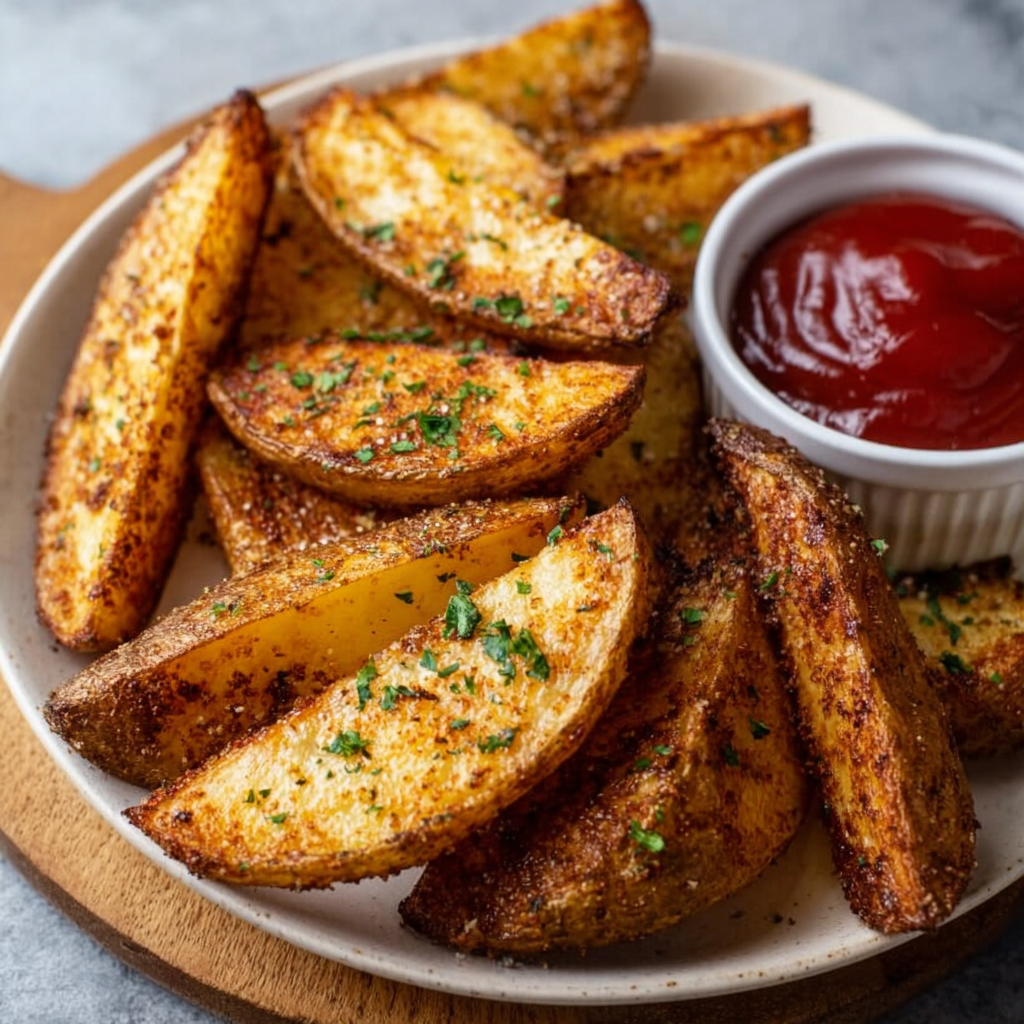
Remove the wedges from the oven and transfer immediately to a large serving bowl or platter. While they are still at their hottest — within 60 seconds of leaving the oven — sprinkle the finely grated Parmesan over the top and toss briefly. The residual heat from the wedges melts the Parmesan into a thin, savory, golden coating on the exterior. Add the fresh parsley and lemon zest, toss once more, and finish with a generous pinch of flaky sea salt. Serve immediately alongside your chosen dipping sauce.
Nutritional Information
Per serving — based on 4 servings, without dipping sauce or Parmesan finish. Values are approximate.
| Nutrient | Per Serving | % Daily Value* |
|---|---|---|
| Calories | 285 kcal | 14% |
| Total Fat | 11g | 14% |
| Saturated Fat | 1.5g | 8% |
| Total Carbohydrates | 44g | 16% |
| Total Sugar | 2g | — |
| Protein | 5g | 10% |
| Dietary Fiber | 4g | 14% |
| Sodium | 590mg | 26% |
| Potassium | 880mg | 19% |
| Vitamin C | 28% DV | 28% |
| Vitamin B6 | 22% DV | 22% |
| Iron | 10% DV | 10% |
*Based on a standard 2,000-calorie daily diet. Values vary based on potato size, oil quantity, and whether the Parmesan finish is included.
At 285 calories per serving with 4 grams of fiber and 880mg of potassium — 19% of the daily recommended value — these wedges deliver a genuinely meaningful nutritional contribution for a side dish. Potassium is among the most widely under-consumed minerals in Western diets, and potatoes are one of its most accessible and affordable dietary sources.
Healthier Alternatives for the Recipe
Lower calorie: Reduce the oil to 1½ tablespoons and use a pastry brush or spray mister to apply it as evenly as possible across all wedge surfaces. This reduces the fat contribution by approximately 40% while maintaining sufficient coverage for both seasoning adhesion and surface crisping.
Dairy-free Parmesan finish: Replace the Parmesan with 2 tablespoons of nutritional yeast combined with ½ teaspoon of garlic powder and a pinch of salt. Nutritional yeast provides an almost indistinguishable savory, cheesy depth with zero dairy content and a meaningful addition of B vitamins.
Higher fiber: Leave the skins on — which this recipe already does — and serve with a fiber-rich dipping sauce made from white bean purée blended with lemon, garlic, and olive oil rather than a mayonnaise or sour cream base.
Sweet potato variation: Replace Russet potatoes with an equal weight of sweet potatoes. Sweet potato wedges are lower on the glycemic index, higher in Vitamin A, and produce a slightly softer, less crispy result — compensate by increasing the oven temperature to 450°F (230°C) and reducing the cook time by 5–8 minutes.
Lower sodium: Reduce the sea salt to ¾ teaspoon and replace the remaining seasoning with additional herbs — smoked paprika, oregano, and thyme all amplify the perception of saltiness and allow a reduction in actual sodium without making the wedges taste bland.
Air fryer adaptation: Cook the seasoned wedges in a preheated air fryer at 400°F (200°C) for 18–22 minutes, shaking the basket every 6–7 minutes. The air fryer uses up to 75% less oil than traditional frying and produces a result that rivals the oven version in crispiness — in some cases exceeding it due to the more intense, concentrated heat circulation.
Serving Suggestions
Classic burger side: Serve alongside a homemade beef or chicken burger, a cold beer or sparkling water, and a ramekin of chipotle aioli for dipping. This is the combination that makes every other fast food option feel unnecessary.
Loaded wedges: Transfer the baked wedges to an oven-safe platter. Top with shredded cheddar and return to a 400°F (200°C) oven for 3–4 minutes until the cheese is melted and beginning to bubble. Remove and top with sour cream, crispy bacon bits, sliced jalapeños, spring onions, and hot sauce. This is a shareable appetizer format that consistently disappears faster than any other dish at the table.
Steak night side: Serve alongside a pan-seared ribeye or sirloin with a simple green salad dressed with red wine vinaigrette. The wedges replace fries as the starch component and hold their own against a full steak dinner without apology.
Dipping sauce spread: Arrange three or four small ramekins of different dipping sauces — chipotle aioli, garlic herb yogurt, sriracha mayo, and truffle aioli — around a large platter of wedges and serve as a shareable starter or party snack. The interactive format makes this one of the easiest and most reliable crowd-pleasing appetizers in any entertaining repertoire.
Fish and wedges: Serve alongside oven-baked or air-fried white fish fillets with malt vinegar and tartar sauce for a significantly healthier, homemade take on the classic fish and chips format. The wedges hold up beautifully to malt vinegar in a way that standard thin-cut fries do not.
Breakfast wedges: Serve cold leftover wedges in a skillet with a drizzle of oil over medium-high heat, tossed with diced bell pepper, onion, and smoked paprika until everything is caramelized and hot. Top with fried or scrambled eggs and hot sauce. Leftover wedges make one of the finest breakfast hash bases available with almost no additional effort.
Common Mistakes to Avoid
Not drying the wedges thoroughly after soaking or rinsing. Surface moisture steams the potato in the oven rather than roasting it, producing a pale, soft exterior regardless of temperature or timing. The drying step should be approached with genuine thoroughness — paper towels, a clean kitchen towel, and several minutes of air-drying produce measurably crispier results than a perfunctory pat.
Crowding the baking sheet. This is the most universally committed error in oven roasting. Crowded wedges release steam that has nowhere to escape, creating a humid micro-environment on the baking sheet that prevents any caramelization from occurring. A single, well-spaced layer across two baking sheets if necessary is always the correct approach.
Using waxy potatoes. Waxy varieties such as red potatoes and new potatoes have a higher moisture content and lower starch content than Russet or Maris Piper — characteristics that are excellent for potato salad and boiling but fundamentally incompatible with crispy roasting. High-starch, low-moisture potatoes are the only correct choice for this recipe.
Skipping the oven preheat. Wedges placed in a cold oven warm gradually and release steam throughout the initial heating phase, producing a partially steamed potato rather than a properly roasted one. A fully preheated oven at the correct temperature is the starting condition for every crispy roasted potato recipe without exception.
Under-seasoning. Potatoes have a significant capacity to absorb seasoning, and the large surface area of a wedge with its skin on requires more seasoning than you might instinctively apply. Season more generously than feels comfortable — taste a wedge before serving and add flaky salt if needed.
Pulling the wedges too early. Genuinely crispy potato wedges take longer than most recipes suggest. The exterior must be deeply, confidently golden — not pale gold but a rich amber-brown — before they are ready. If in doubt, give them another 5 minutes. The difference between a very good wedge and an extraordinary one is often the last 5 minutes of baking that most home cooks skip.
Storing Tips for the Recipe
Refrigerator: Store leftover wedges in an airtight container for up to 4 days. They will soften as they cool and lose most of their exterior crispiness during refrigeration — this is normal and entirely reversible with the right reheating method.
Reheating: The air fryer at 400°F (200°C) for 5–7 minutes is the single best reheating method for potato wedges — it restores crispiness to a level indistinguishable from freshly baked. A hot oven at 425°F (220°C) for 10–12 minutes on a wire rack is a close second. The microwave produces uniformly soft, limp wedges and should be avoided for reheating purposes.
Freezer: Fully cooked and cooled wedges can be frozen in a single layer on a baking sheet until solid, then transferred to a freezer bag for up to 2 months. Reheat directly from frozen in the oven at 425°F (220°C) for 15–18 minutes or in the air fryer at 400°F (200°C) for 10–12 minutes. The texture after freezing is slightly softer than fresh but entirely acceptable and substantially better than any frozen commercial wedge product.
Make-ahead: Soak, dry, and season the raw wedges up to 24 hours ahead and refrigerate uncovered on a parchment-lined baking sheet. Uncovered refrigeration continues to draw moisture from the potato surface, further enhancing crispiness when they eventually go into the oven. This make-ahead approach actually produces crispier wedges than same-day preparation in most cases.
Conclusion
These crispy baked potato wedges prove that the fast food version was never the benchmark worth chasing — it was simply the most convenient option in the absence of a better one. With the right potato variety, a thorough dry, proper spacing, and a fully preheated oven, you can produce wedges that are crispier, better seasoned, more nutritious, and more satisfying than anything arriving in a paper bag.
Ready to bake? Make these this week and share your results in the comments — tell us whether you soaked your wedges, which seasoning blend you used, and which dipping sauce won the table. Leave a review, share this with someone who has given up on homemade wedges, and subscribe to our newsletter for more technique-driven, flavor-first recipes delivered to your inbox every week. Your baking sheet is about to become your favorite piece of kitchen equipment.
FAQs
Why are my potato wedges not getting crispy in the oven? The four most common causes are insufficient drying, crowding on the baking sheet, using waxy potatoes, and an oven that was not fully preheated. Address all four simultaneously — high-starch potatoes dried thoroughly, spaced generously on a preheated sheet in a fully preheated oven — and the result will be dramatically different from any previous attempt.
Do I really need to soak the potatoes? The soak is optional but produces a measurably crispier result by removing surface starch that would otherwise create a gummy, pale exterior. If skipping the soak, at minimum rinse the cut wedges under cold water for 60 seconds, then dry extremely thoroughly. The soaked version is worth the extra time whenever the schedule allows.
Can I use an air fryer instead of the oven? Absolutely — and the air fryer often produces an even crispier result in significantly less time. Cook at 400°F (200°C) for 18–22 minutes in batches, shaking the basket every 6–7 minutes. Do not overcrowd the basket — the same single-layer, well-spaced principle applies in an air fryer as in the oven.
What potato variety is best for crispy wedges? Russet potatoes are the definitive choice — their high starch and low moisture content are precisely the characteristics that produce the crispiest exterior and fluffiest interior. Maris Piper is the closest European equivalent and performs identically. Avoid any waxy variety including red potatoes, fingerlings, or new potatoes.
Can I make these wedges ahead of time for a dinner party? Yes. Soak, dry, and season the raw wedges up to 24 hours in advance, then refrigerate uncovered on a parchment-lined baking sheet — the overnight refrigeration further dehydrates the surface and enhances crispiness. Bake fresh on the day of serving. Alternatively, bake fully, reheat in a 425°F oven for 10 minutes just before serving, and finish with the Parmesan herb topping at the last moment.
Should I peel the potatoes? No. The skin adds structural integrity, protects the flesh from drying out during the long roast, contributes a deeper caramelization and flavor complexity on the outer surface, and adds fiber and nutrients that peeling removes. Scrub thoroughly under cold water and leave the skin on — it is genuinely one of the best parts of a properly made potato wedge.