Follow Me On Social Media!
Crispy Cucumber Edamame Salad

Introduction
Here is a question worth asking at the start of any summer: when was the last time a salad — not a main course, not a bowl of something elaborate, but an actual salad — made you stop mid-bite because of how genuinely satisfying and complete it tasted? According to a 2024 consumer food trend report by Mintel, plant-forward salads with significant protein content and textural contrast represent the fastest-growing meal category among health-conscious consumers globally — yet the gap between the average home salad and the salads generating the most enthusiasm on food platforms remains almost entirely a function of technique rather than exotic ingredients.
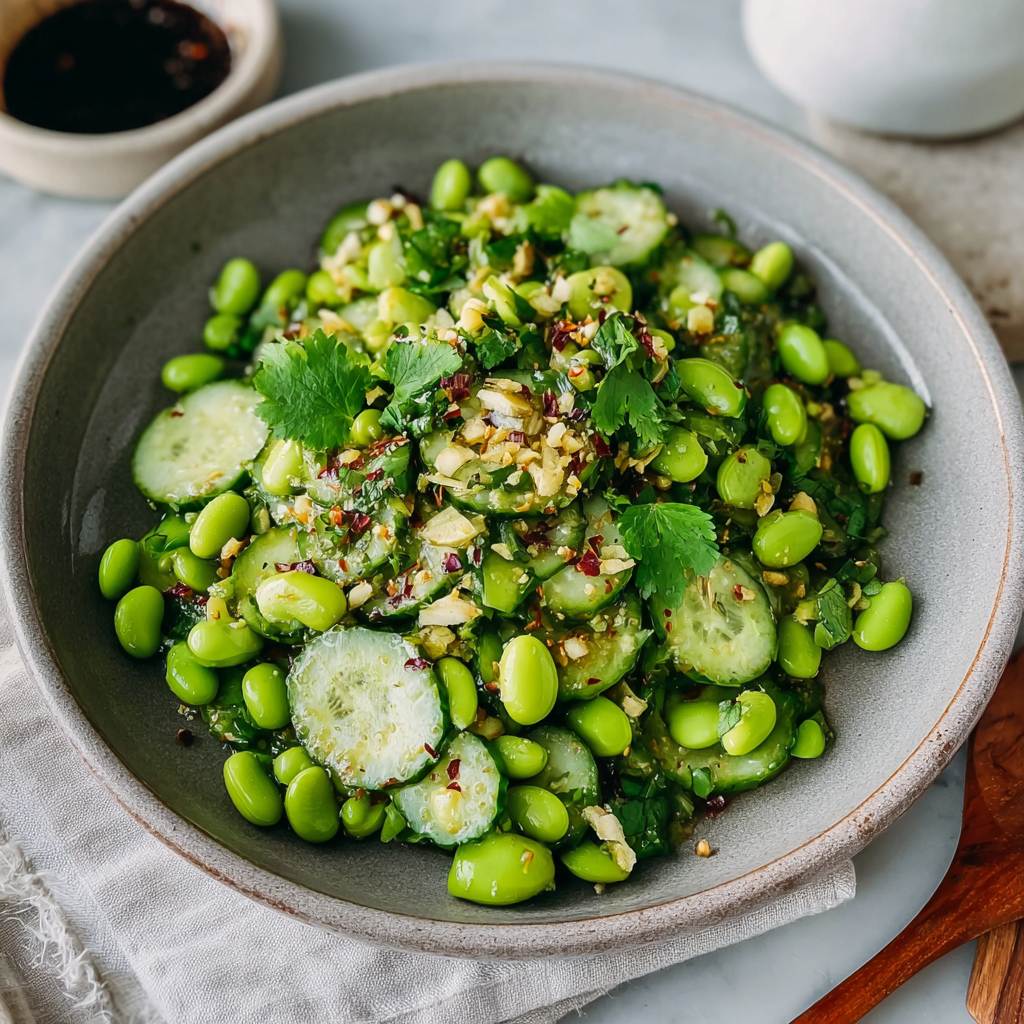
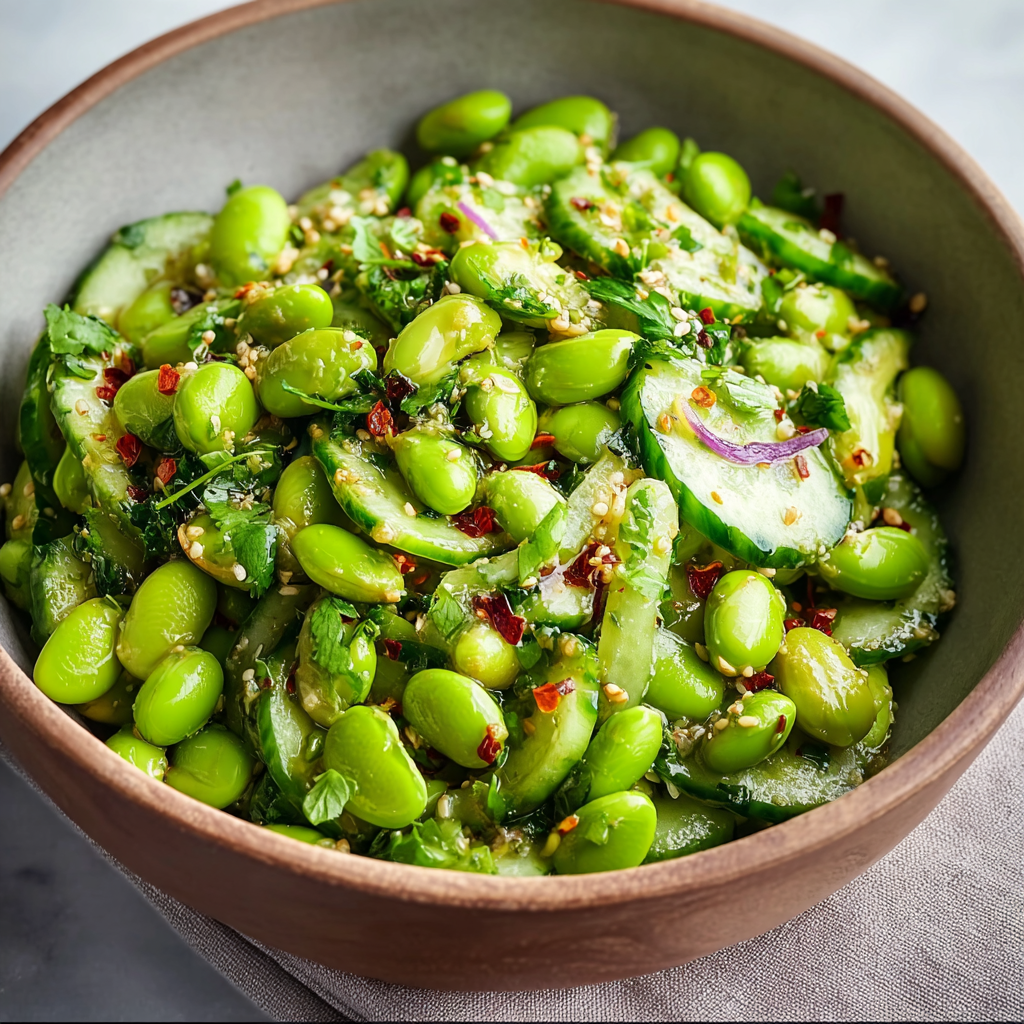
This crispy cucumber edamame salad closes that gap with a combination that is simultaneously simple and architecturally considered. Shatteringly crispy cucumber — achieved through a salting and pressing technique that removes the excess moisture responsible for the watery, flavorless cucumber in most salads — combined with protein-dense shelled edamame, a sesame-ginger dressing that is bright, nutty, and deeply savory, and a garnish of toasted sesame seeds and crispy shallots that adds crunch and depth at every level. It is a salad that holds its texture, carries its dressing, and satisfies as a complete meal or as a side that outperforms everything else on the table.
A 2023 nutritional review in the Journal of Nutritional Science identified edamame as one of the most nutritionally complete plant-based protein sources available — providing all nine essential amino acids in proportions that closely match human dietary requirements, alongside meaningful contributions of iron, calcium, folate, and Vitamin K. This salad makes all of that genuinely, effortlessly delicious.
Ingredients List
For the Salad
- 2 large English cucumbers (approximately 600g total)
- 1½ cups (225g) shelled edamame, cooked (from frozen — thaw and pat dry)
- 1 cup (80g) shredded red cabbage (adds crunch and color)
- ½ cup (75g) cherry tomatoes, halved
- 3 spring onions, thinly sliced on the diagonal
- 1 large carrot, julienned or shaved into ribbons with a peeler
- ½ avocado, diced (optional — adds richness and healthy fat)
- 1 tsp fine sea salt (for the cucumber pressing step)
For the Sesame Ginger Dressing
- 3 tbsp toasted sesame oil
- 2 tbsp rice vinegar
- 1 tbsp soy sauce or tamari (tamari for gluten-free)
- 1 tbsp honey or maple syrup
- 1 tsp fresh ginger, finely grated
- 1 small garlic clove, finely minced
- 1 tsp toasted sesame seeds
- ½ tsp chili garlic sauce or sambal oelek (optional)
- 1 tbsp fresh lime juice
- Salt to taste
For the Crispy Toppings
- 2 tbsp toasted sesame seeds, white and black combined
- 2 tbsp crispy fried shallots (store-bought or homemade)
- 1 tbsp roasted peanuts or cashews, roughly chopped (optional)
- Fresh cilantro or mint, roughly torn
- Sliced fresh chili (optional)
Timing
- Cucumber Pressing Time: 20–30 minutes (the most impactful optional step)
- Prep Time: 15 minutes
- Total Time: 35–45 minutes (10 minutes without pressing)
The cucumber pressing step is where the difference between an excellent salad and a mediocre one is determined. Pressed, dried cucumber retains its crunch for hours in dressing. Unpressed cucumber releases water that dilutes the dressing and produces a waterlogged salad within 20 minutes. The 20 minutes is worth every second.
Step-by-Step Instructions
Step 1: Press the Cucumbers
Slice the cucumbers into rounds approximately 5mm thick, or cut lengthwise into quarters and then into irregular bite-sized chunks — the irregular cut creates more surface area for the dressing to cling to. Place in a colander set over a bowl, sprinkle with the teaspoon of fine sea salt, and toss to coat evenly. Leave to drain for 20–30 minutes. The salt draws moisture out of the cucumber cells through osmosis — by the end of the resting period, a significant quantity of water will have accumulated in the bowl beneath. Rinse the cucumber briefly under cold water to remove excess salt, then pat thoroughly dry with paper towels or a clean kitchen towel. Press firmly — the drier the cucumber, the longer the salad maintains its crunch.
Key tip: Do not skip or shorten the pressing step if texture matters. The difference between salted-and-pressed cucumber and unsalted cucumber in a dressed salad is dramatic — pressed cucumber remains crisp for 2–3 hours after dressing while unpressed cucumber turns limp within 15–20 minutes.
Step 2: Make the Sesame Ginger Dressing
Combine the sesame oil, rice vinegar, soy sauce, honey, grated ginger, minced garlic, sesame seeds, chili sauce, and lime juice in a small bowl or jar. Whisk together until the honey is fully dissolved and the dressing is smooth and emulsified. Taste — it should be simultaneously nutty, bright, savory, and gently sweet, with the ginger and garlic providing a clean, aromatic heat. Adjust with additional lime juice for brightness, soy sauce for depth, or honey for sweetness. The dressing should taste assertive — it will be distributed across a significant volume of vegetables and needs to be bold enough to come through clearly in every bite.
Step 3: Prepare All Remaining Components
Thaw the edamame if frozen and pat dry — wet edamame dilutes the dressing just as wet cucumber does. Shred the red cabbage finely. Julienne the carrot or use a vegetable peeler to create long, thin ribbons. Slice the spring onions on the diagonal for visual interest. Halve the cherry tomatoes. Dice the avocado if using and toss immediately with a few drops of lime juice to prevent browning.
Step 4: Assemble the Salad
In a large mixing bowl, combine the pressed and dried cucumber, edamame, shredded cabbage, carrot, spring onions, and cherry tomatoes. Pour approximately three-quarters of the dressing over the salad and toss thoroughly — using tongs or two large spoons — until every component is evenly coated. Taste a piece of cucumber and a few edamame and adjust with the remaining dressing, additional lime juice, or a pinch of salt.
Key tip: Dress the salad 5–10 minutes before serving rather than immediately — this brief resting period allows the vegetables to absorb the dressing flavors without becoming limp. More than 20 minutes of dressing contact before serving starts to soften the textures.
Step 5: Plate and Garnish
Transfer to a wide serving bowl or platter. Arrange the diced avocado over the top. Scatter toasted sesame seeds, crispy fried shallots, chopped peanuts or cashews, and fresh cilantro or mint generously over the surface. Finish with sliced fresh chili if using. Serve immediately — the crispy toppings must go on at the last possible moment to preserve their texture.
Nutritional Information
Per serving — based on 4 servings with avocado and peanuts.
| Nutrient | Per Serving | % Daily Value* |
|---|---|---|
| Calories | 310 kcal | 16% |
| Total Fat | 18g | 23% |
| Saturated Fat | 2.5g | 13% |
| Total Carbohydrates | 28g | 10% |
| Total Sugar | 10g | — |
| Protein | 14g | 28% |
| Dietary Fiber | 8g | 29% |
| Sodium | 480mg | 21% |
| Potassium | 680mg | 14% |
| Vitamin C | 40% DV | 40% |
| Vitamin K | 35% DV | 35% |
| Folate | 28% DV | 28% |
| Iron | 18% DV | 18% |
*Based on a standard 2,000-calorie daily diet.
At 14 grams of complete plant protein per serving — driven by the edamame — alongside 8 grams of dietary fiber and meaningful contributions of Vitamin C, Vitamin K, folate, and iron, this salad delivers a nutritional profile that rivals many dedicated health bowls at a fraction of the caloric cost. The folate content — 28% of the daily recommended value — is particularly significant for a salad, as folate supports DNA synthesis, cell division, and neurological function.
Healthier Alternatives
Higher protein: Double the edamame to 3 cups and add a portion of shelled hemp seeds — 3 tablespoons scattered over the finished salad adds 10 grams of additional complete plant protein per serving with a mild, nutty flavor that integrates naturally into the sesame dressing.
Lower sodium: Reduce the soy sauce in the dressing to 1 teaspoon and replace with 1 tablespoon of coconut aminos, which contains approximately 65% less sodium than conventional soy sauce. Omit the salt from the cucumber pressing and substitute with a light splash of rice vinegar instead — the acid draws some moisture out via a similar mechanism with zero sodium contribution.
Nut-free: Omit the peanuts or cashews and replace with an additional tablespoon of toasted sesame seeds and a scattering of pumpkin seeds. The textural contribution is comparable and the result is entirely nut-free for school or allergy-sensitive settings.
Lower fat: Reduce the sesame oil in the dressing to 1 tablespoon and replace with an additional tablespoon of rice vinegar and 1 tablespoon of water. The dressing will be lighter in body and less rich but remains bright and well-flavored — the reduction in calories from the dressing alone is approximately 80 calories per serving.
Added whole grain: Stir ½ cup of cooked and cooled edamame soba noodles into the salad for a more substantial, meal-worthy version that increases the fiber and protein content while maintaining the Japanese-inspired flavor profile of the dressing.
Serving Suggestions
As a standalone lunch: Serve in a wide bowl with an extra drizzle of sesame oil, additional crispy shallots, and a wedge of lime. The 14 grams of protein and 8 grams of fiber make this a genuinely complete and satiating lunch that holds energy levels through the afternoon.
As a barbecue side: Serve alongside grilled chicken thighs, teriyaki salmon, or Korean-style short ribs. The bright, acidic dressing cuts through the richness of grilled proteins with precision and makes this the most versatile and distinctive side dish at any summer gathering.
As part of a grain bowl: Spoon over a base of warm jasmine rice, brown rice, or quinoa. The contrast of warm grain and cool, crisp salad components creates a bowl with exceptional textural complexity and a complete macronutrient profile.
In a wrap or rice paper roll: Use the dressed salad as a filling for large rice paper rolls or a lettuce wrap, adding a few strips of grilled tofu or chicken. This format transforms the salad into a shareable, interactive starter with minimal additional effort.
Meal prep format: Store the pressed and dried cucumber, edamame, and vegetables separately from the dressing and toppings in airtight containers in the refrigerator for up to 3 days. Dress and top individual portions at the moment of serving — a complete, fresh-textured salad available every day from a single Sunday preparation session.
Common Mistakes to Avoid
Skipping the cucumber pressing step. Unpressed cucumber releases water that pools at the bottom of the salad bowl, dilutes the dressing progressively, and turns crisp vegetables limp within minutes. The salting and pressing step is the single technique most responsible for the textural superiority of this salad over a standard cucumber salad. Never skip it.
Not drying the edamame. Wet edamame from the freezer or from rinsing behaves identically to unpressed cucumber — releasing water that dilutes the dressing and softens the surrounding vegetables. Pat dry thoroughly before adding to the salad.
Adding toppings too early. Crispy shallots, toasted sesame seeds, and chopped nuts absorb moisture from the dressed salad within minutes and lose their textural contribution entirely. Add all crispy toppings at the absolute last moment — immediately before the bowl goes to the table.
Under-seasoning the dressing. A dressing that tastes perfectly seasoned in the bowl will taste flat once distributed across a large volume of raw vegetables. Taste the dressing and then taste it again after tossing with the vegetables — season the assembled salad, not just the dressing in isolation.
Dressing too far in advance. The optimal window between dressing and serving is 5–10 minutes — long enough for the flavors to begin penetrating the vegetables but short enough to preserve the textural contrast. Beyond 20 minutes, the cabbage softens, the cucumber loses its crunch, and the avocado oxidizes. Plan the timing accordingly.
Storing Tips
Undressed components: Store the pressed and dried cucumber, cooked edamame, shredded cabbage, and carrots together in an airtight container for up to 3 days. The spring onions and cherry tomatoes are best added fresh each day — they deteriorate in texture and flavor more quickly than the other components.
Dressing: Store in a sealed jar in the refrigerator for up to 1 week. The sesame oil will solidify slightly at refrigerator temperature — bring to room temperature for 10 minutes and shake vigorously before using. The ginger and garlic flavor intensifies over the first 24 hours.
Assembled salad: Not recommended for storage beyond 1 hour — the dressed salad deteriorates in texture rapidly. Dress individual portions at the moment of eating for the best experience.
Avocado: Add fresh at the time of serving only — pre-cut avocado browns within 2 hours regardless of lime juice treatment and becomes unpleasant in both appearance and texture in a dressed salad.
Conclusion
Crispy cucumber edamame salad proves that the difference between a forgettable salad and a genuinely satisfying one comes down entirely to technique and intentionality — salted and pressed cucumber that stays crisp for hours, a bold sesame-ginger dressing that coats rather than pools, and a garnish of crispy toppings that is applied at the last possible moment. A summer salad that holds its texture, carries its flavor, and satisfies completely as a lunch, a side, or the best thing on the table at any barbecue.
Make it and share your results in the comments — tell us whether you pressed the cucumbers, which protein you served it alongside, and whether the crispy shallots made the difference they always do. Leave a review, share with someone who needs a better summer salad, and subscribe to our newsletter for more technique-driven, plant-forward recipes every week.
FAQs
Can I make this salad without edamame? Yes — replace with an equal quantity of shelled broad beans, canned and drained chickpeas, or cooked and cooled shelled peas. Each alternative produces a different but entirely compatible flavor with the sesame ginger dressing. The protein content will vary depending on the substitute chosen — chickpeas and broad beans are the closest in protein density to edamame.
How do I make crispy fried shallots at home? Peel and thinly slice 3–4 large shallots into rings. Toss with 1 tablespoon of cornstarch until lightly coated. Heat 2cm of neutral oil in a small saucepan over medium heat. Fry the shallots in batches for 3–4 minutes until deep golden and crispy — they continue to darken after removal, so pull them slightly before they reach the target color. Drain on paper towels and season lightly with salt. Store at room temperature in an airtight container for up to 3 days.
Can I use a different dressing? The sesame ginger dressing is designed specifically to complement the edamame and cucumber combination — its nuttiness, acidity, and aromatic heat create a coherent flavor profile across the entire salad. A miso-tahini dressing, a yuzu ponzu, or a simple rice vinegar and ginger dressing all work in the same flavor family. A Western vinaigrette would produce a technically competent but tonally inconsistent result.
Is this salad suitable for meal prep? It is one of the most practical meal prep salads available — the pressed cucumber and edamame maintain their texture for 3 days in the refrigerator without dressing. Prepare the components on Sunday, dress individual portions each morning, and add toppings at the moment of eating. This approach produces a fresh-textured, fully flavored salad every day from a single preparation session.
Can I add grilled protein to make this a complete meal? Absolutely — sliced grilled chicken thighs, seared tofu, cooked and chilled shrimp, or grilled salmon all work beautifully alongside the sesame ginger dressing. Add the protein on top of the finished salad and drizzle with a small amount of extra dressing. The complete meal version pushes the protein content well above 30 grams per serving.
Why is my salad watery after dressing? Watery salad is caused by cucumber that was not sufficiently pressed and dried, edamame that was not patted dry, or the salad sitting dressed for too long before serving. Address all three — press the cucumber for the full 20–30 minutes, dry the edamame thoroughly, and serve within 10–15 minutes of dressing. A salad dressed 30 minutes before serving will always be wetter than one dressed immediately before.