Follow Me On Social Media!
Garlic Parmesan Roasted Shrimp

Introduction
Here is a question that reframes weeknight cooking entirely: what if the most impressive, most deeply flavored, most protein-dense dinner you could make on any given evening required one bowl, one baking sheet, 20 minutes from start to finish, and produced something that looked and tasted like a restaurant appetizer made into a complete meal?
According to a 2024 consumer cooking behavior report by the NPD Group, shrimp ranks as the most purchased seafood in American households for the twenty-third consecutive year — yet the majority of home cooks prepare it in fewer than three ways, most of them involving a skillet, a sauce, and significantly more active cooking time than this preparation requires. Roasting shrimp in the oven — a technique that most home cooks have never tried — produces a result that is simultaneously better and faster than pan-searing: the high, dry heat of the oven caramelizes the shrimp’s natural sugars on all surfaces simultaneously, without the need to flip, without the risk of steaming from overcrowding, and with the added benefit of allowing the Parmesan and garlic coating to form a golden, slightly crunchy crust that pan-searing cannot achieve without burning the cheese before the shrimp is cooked.
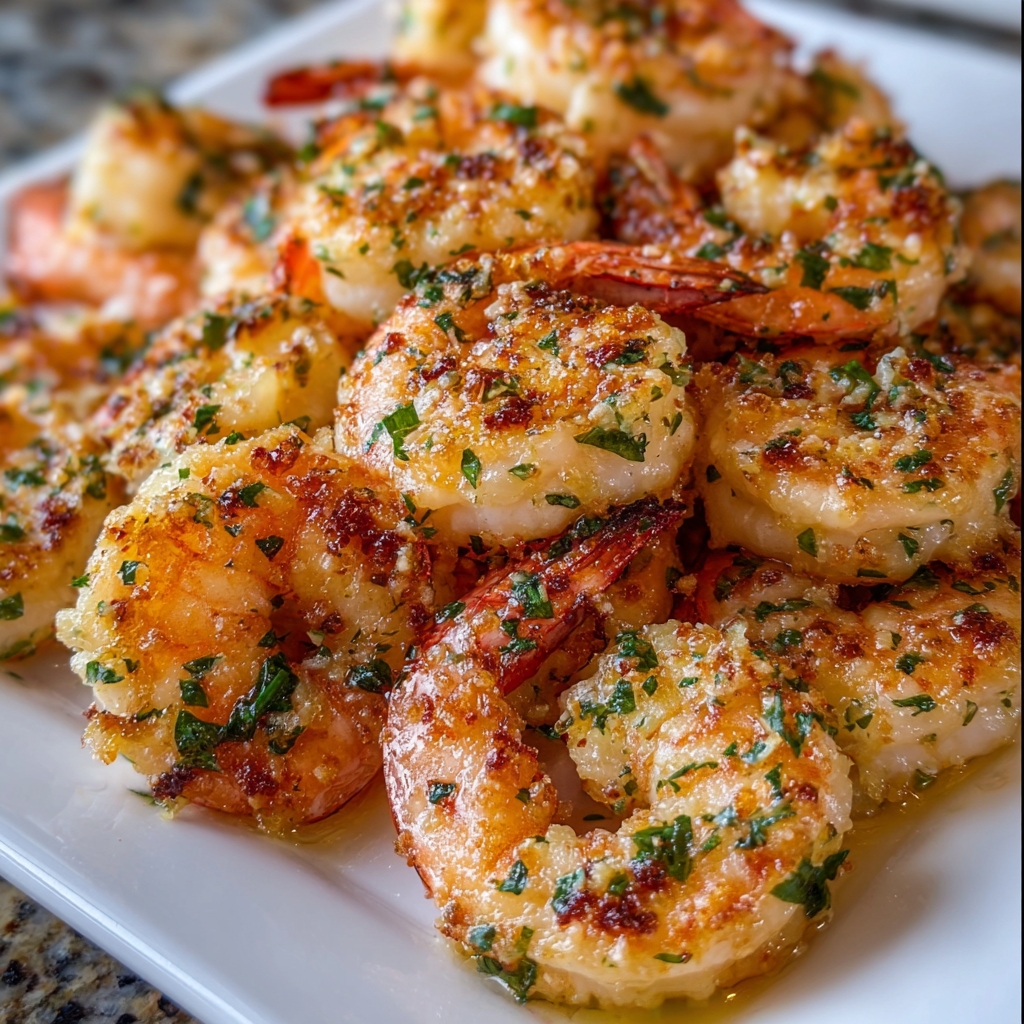
This garlic Parmesan roasted shrimp applies that technique to the most universally appealing flavor combination available for shellfish. Large shrimp tossed in garlic, lemon zest, Parmesan, butter, and herbs, roasted at high heat for exactly 8 minutes — producing shrimp with a golden, crispy cheese crust, a lightly caramelized exterior, and a center that is just barely cooked, juicy, and sweet. It is the recipe that makes a baking sheet and 20 minutes feel like the most productive combination in any kitchen.
A 2023 sports nutrition review in the Journal of the International Society of Sports Nutrition identified shrimp as one of the most bioavailable complete protein sources available in any food category — with all nine essential amino acids present at ratios that closely match human muscle protein requirements — making this one of the most nutritionally efficient high-protein dinners in any cuisine.
Ingredients List
For the Shrimp
- 700g (1.5 lbs) large raw shrimp, peeled and deveined (21/25 count per pound — large enough to develop a proper crust before overcooking)
- 1 tsp fine sea salt
- ½ tsp freshly ground black pepper
- ½ tsp smoked paprika
For the Garlic Parmesan Coating
- 4 tbsp unsalted butter, melted
- 4 garlic cloves, finely minced (or 1½ tsp garlic powder for a more even, less pungent distribution)
- 1 tsp lemon zest
- 1 tbsp fresh lemon juice
- ½ tsp red pepper flakes (optional — adds a gentle background heat)
- ½ tsp dried Italian seasoning or dried oregano
- ½ tsp dried thyme
- ¾ cup (75g) Parmesan cheese, finely grated (fresh from the block — not pre-grated canister Parmesan)
- 2 tbsp fresh flat-leaf parsley, finely chopped (half for the coating, half for finishing)
- 1 tbsp olive oil
For Serving
- Extra fresh lemon juice and lemon wedges
- Additional fresh parsley
- Flaky sea salt, for finishing
- Crusty bread, for sauce-mopping (the butter and cheese that pool on the baking sheet are worth mopping)
- Or steamed rice, pasta, or a simple green salad
Timing
- Prep Time: 8 minutes
- Roasting Time: 8–10 minutes
- Total Time: 16–18 minutes
The fastest complete protein-centered dinner in this collection. Start the pasta water or rice before mixing the coating and both will be ready simultaneously.
Step-by-Step Instructions
Step 1: Prepare the Shrimp
Pat the shrimp completely and thoroughly dry with paper towels — press firmly on every surface. Surface moisture is the primary obstacle to the caramelized, golden exterior this recipe is designed around. Any water remaining on the shrimp surface creates steam in the oven, preventing the Maillard reaction from occurring and producing pale, steamed shrimp rather than the lightly caramelized, golden result the recipe requires. Season the dried shrimp with salt, pepper, and smoked paprika and toss to coat.
Key tip: Dry shrimp = golden shrimp. Wet shrimp = pale, steamed shrimp. This preparation step determines the visual and flavor outcome of the recipe more directly than any other single action.
Step 2: Make the Garlic Parmesan Coating
In a large bowl, combine the melted butter, minced garlic, lemon zest, lemon juice, red pepper flakes, Italian seasoning, dried thyme, olive oil, half the Parmesan, and half the fresh parsley. Whisk together until completely combined. The mixture should be a loose, aromatic paste — not completely liquid but not stiff — that coats the shrimp without pooling excessively on the baking sheet.
Step 3: Coat the Shrimp
Add the seasoned, dried shrimp to the bowl with the coating and toss thoroughly until every shrimp is evenly and generously coated on all surfaces. The coating should cling to the shrimp — if it appears too loose and slides off, add an additional 1–2 tablespoons of Parmesan to thicken it slightly.
Step 4: Arrange for Roasting
Preheat the oven to 425°F (220°C). Line a large baking sheet with parchment paper — not aluminum foil, which can cause the Parmesan to stick and tear when the shrimp are removed. Arrange the coated shrimp in a single layer on the prepared baking sheet with each shrimp touching or slightly overlapping — unlike vegetables, which benefit from maximum spacing, shrimp coated in Parmesan actually benefit from slight adjacency as the cheese melts and connects adjacent shrimp into small clusters that develop a more dramatic golden crust.
Scatter the remaining Parmesan evenly over the top of all the shrimp — this additional layer provides the visual golden topping that makes the finished dish so appealing.
Key tip: Preheating the baking sheet in the oven for 5 minutes before adding the shrimp provides an immediate searing heat from below that contributes to the golden bottom crust. Slide the parchment with the arranged shrimp directly onto the preheated sheet for the fastest, crispiest result.
Step 5: Roast
Roast at 425°F (220°C) for 8–10 minutes. Do not flip — the high oven heat simultaneously caramelizes the top surface through the Parmesan crust and cooks the shrimp from below through the preheated baking sheet. The shrimp are done when they are pink and opaque throughout, the Parmesan is golden with some darker patches, and the butter and cheese mixture is bubbling actively around the shrimp. If the Parmesan is not golden after 8 minutes, switch to the broiler for 60–90 seconds and watch closely.
Key tip: Shrimp overcook rapidly — the window between perfectly cooked and rubbery is approximately 90 seconds at 425°F. Check at 8 minutes without exception. The shrimp should have just turned from translucent to opaque at the thickest point — the residual heat from the hot baking sheet continues cooking them for 1–2 minutes after the oven is turned off.
Step 6: Finish and Serve
Remove from the oven and allow to rest on the baking sheet for 2 minutes. The residual heat from the hot pan completes the cooking gently. Scatter the remaining fresh parsley over the top. Squeeze fresh lemon juice generously over the entire surface — the acid applied to the hot, just-cooked shrimp brightens every flavor component dramatically. Finish with a pinch of flaky sea salt.
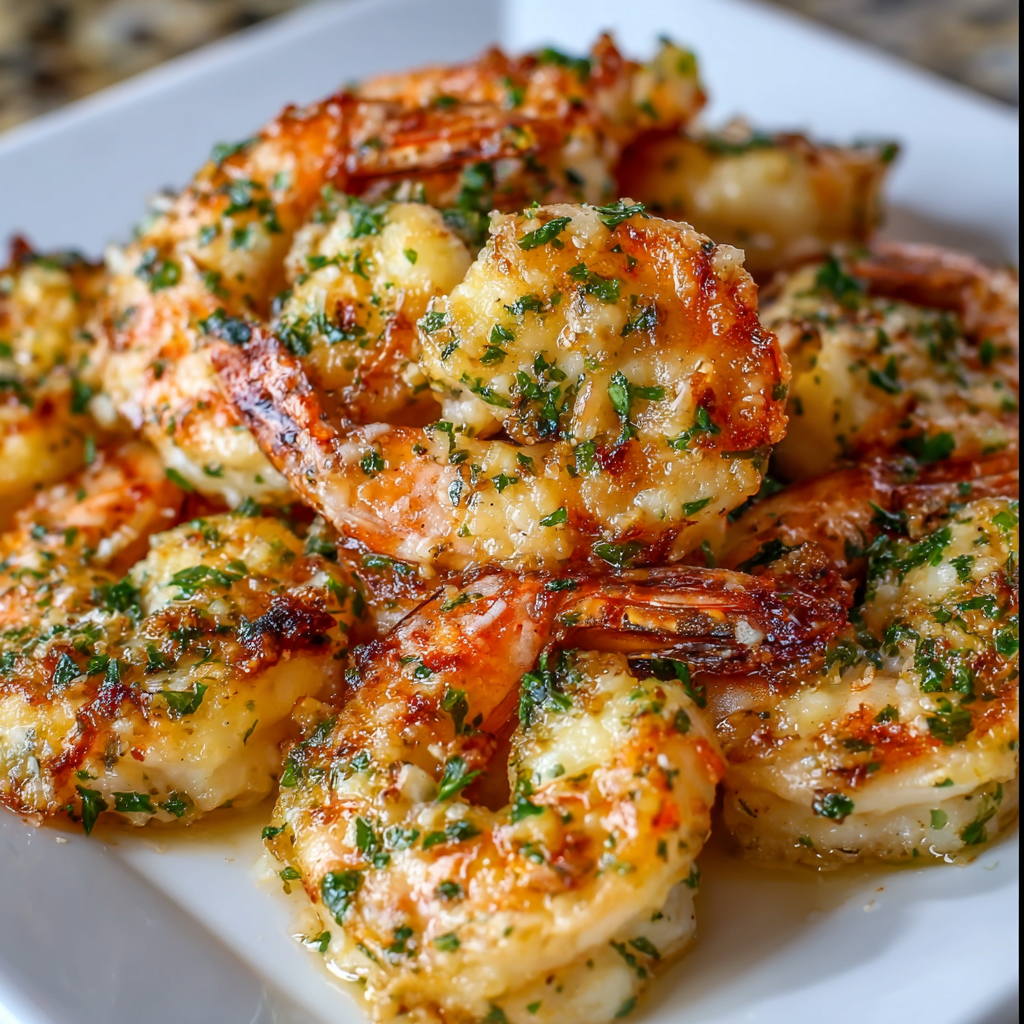
Serve directly from the baking sheet or transfer to a warm plate, ensuring the golden Parmesan crust remains intact. Include the buttery, garlicky cooking juices that have pooled on the parchment — these are the sauce that makes crusty bread alongside an absolute requirement.
Nutritional Information
Per serving — based on 4 servings without bread or sides.
| Nutrient | Per Serving | % Daily Value* |
|---|---|---|
| Calories | 340 kcal | 17% |
| Total Fat | 18g | 23% |
| Saturated Fat | 8g | 40% |
| Total Carbohydrates | 3g | 1% |
| Total Sugar | 0.5g | — |
| Protein | 40g | 80% |
| Dietary Fiber | 0g | 0% |
| Sodium | 680mg | 30% |
| Selenium | 62% DV | 62% |
| Vitamin B12 | 28% DV | 28% |
| Calcium | 20% DV | 20% |
*Based on a standard 2,000-calorie daily diet.
At 40 grams of protein and just 340 calories per serving — with 3 grams of total carbohydrates — this is one of the most favorable protein-to-calorie ratios of any dinner recipe in this collection. The selenium content at 62% of the daily recommended value places shrimp among the richest single-meal selenium sources available, supporting thyroid function, antioxidant defense, and immune response.
Healthier Alternatives
Lower fat: Reduce the butter to 2 tablespoons and increase the olive oil to 2 tablespoons. The coating will be slightly less rich but remains cohesive and flavorful. Alternatively, replace all the butter with olive oil for a dairy-free, lower saturated fat version that produces a comparable crust.
Dairy-free: Replace butter with refined coconut oil or a high-quality plant-based butter, and replace Parmesan with 3 tablespoons of nutritional yeast combined with 1 tablespoon of almond flour for a comparable coating texture. The flavor shifts slightly but remains savory and aromatic.
Lower sodium: Reduce the added salt and use a reduced-sodium Parmesan if available. The garlic, lemon, and herbs carry sufficient flavor to support a meaningful salt reduction — shrimp contains natural sodium that reduces the need for aggressive added seasoning.
Higher fiber: Serve over a base of wilted spinach or roasted broccoli rather than rice or pasta — both cook in the oven simultaneously with the shrimp at the same temperature and are ready in the same time window.
Air fryer adaptation: Cook the coated shrimp in a single layer in a preheated air fryer at 400°F (200°C) for 6–8 minutes. The air fryer produces a crispier, drier crust than the oven version and uses no additional oil beyond the coating itself.
Serving Suggestions
Over pasta: Toss cooked angel hair or linguine with the buttery cooking juices from the baking sheet, a splash of pasta water, and extra lemon juice. Arrange the roasted shrimp over the top. This is the most immediately satisfying complete-meal format and produces a plate that resembles a restaurant dish of genuine quality.
Appetizer platter: Arrange on a warm serving board with lemon wedges, a bowl of garlic aioli for dipping, and crusty bread alongside. This format works beautifully for dinner parties — the entire platter can be prepared in 20 minutes with zero stove-top involvement.
Over salad: Arrange warm shrimp over a simple salad of arugula, shaved Parmesan, cherry tomatoes, and a lemon vinaigrette. The warm shrimp slightly wilt the arugula and the cooking juices from the shrimp act as an additional warm dressing component.
Shrimp tacos: Remove the Parmesan crust-adhered shrimp from the sheet and serve in warm corn tortillas with shredded cabbage, sliced avocado, pickled red onion, and a lime crema. The Parmesan-crusted shrimp in a taco is an unexpectedly excellent combination that produces one of the most distinctive taco fillings available from a simple weeknight recipe.
Over rice with garlic butter sauce: Serve over steamed jasmine rice with the buttery, garlicky pan drippings spooned over the top — the drippings absorb into the rice and produce a garlic butter rice that rivals the shrimp as the most compelling element on the plate.
Common Mistakes to Avoid
Not drying the shrimp thoroughly. This is the most impactful preparation step and the most commonly skipped. Wet shrimp steam rather than roast — producing pale, grey, rubbery results with no golden crust. Paper towels, a firm press, and 30 seconds of attention produce a dramatically different result.
Using pre-grated canister Parmesan. Powdered, shelf-stable Parmesan contains cellulose anti-caking agents that prevent proper melting and produce a dry, white coating rather than the golden, slightly crunchy, cohesive crust that fresh Parmesan produces. Always use freshly grated Parmesan from a block for any application where the cheese is meant to melt and brown.
Overcooking the shrimp. Shrimp at 425°F have a 90-second window between perfect and over-done. Check at 8 minutes without exception and rely on the visual indicator — fully opaque and pink — rather than waiting for a color cue on the Parmesan that may come slightly later. If the shrimp are done but the Parmesan is not yet golden, 60 seconds under the broiler bridges the gap without overcooking the shrimp.
Using aluminum foil instead of parchment. The Parmesan melts to aluminum foil and tears off the shrimp when removed, eliminating the crust entirely. Parchment paper releases cleanly and preserves the full crust.
Not finishing with fresh lemon juice. The lemon juice applied after roasting — to hot shrimp — brightens every flavor component in a way that lemon juice cooked into the coating cannot replicate. The volatile citrus aromatic compounds in fresh lemon juice are destroyed by oven heat; applied after cooking, they are fully present and transform the dish.
Storing Tips
Refrigerator: Store in an airtight container for up to 2 days. The Parmesan crust softens during refrigeration — reheating is essential for any recovery of the original texture.
Reheating: An air fryer at 375°F (190°C) for 3–4 minutes restores the Parmesan crust to close to its original texture — the most effective reheating method. A 400°F (200°C) oven on a wire rack for 5 minutes is equally effective. The microwave reheats but produces softened, slightly rubbery shrimp with no crust — acceptable for a quick lunch but not for a deliberate dinner.
Freezer: Not recommended for the cooked, Parmesan-crusted shrimp — the texture degrades significantly during freezing and thawing. Raw, cleaned, and dried shrimp freeze excellently for up to 3 months — prepare the coating fresh on the day of cooking.
Make-ahead: The coating mixture can be prepared and refrigerated for up to 24 hours. Toss with the shrimp immediately before roasting — do not coat and refrigerate as the salt in the Parmesan and the lemon juice begin to cure the shrimp surface and affect the texture.
Conclusion
Garlic Parmesan roasted shrimp proves that the most impressive weeknight dinner does not require the most time or the most technique — it requires understanding that a hot oven, properly dried shrimp, and a coating of butter, garlic, and freshly grated Parmesan produce a result that is simultaneously faster, more consistently golden, and more deeply flavored than any stovetop method. Twenty minutes, one baking sheet, and 40 grams of protein per serving: the weeknight recipe that earns its permanent place in any kitchen.
Make it tonight and share your results in the comments — tell us which serving format you chose, whether you preheated the baking sheet, and whether the Parmesan crust lived up to its name. Leave a review, share with someone who loves shrimp but needs a faster weeknight method, and subscribe to our newsletter for more fast, protein-first, flavor-driven recipes every week.
FAQs
What size shrimp works best? Large to extra-large shrimp — labeled 21/25 or 16/20, meaning the number of shrimp per pound — are the optimal size for roasting with a Parmesan coating. They are large enough to develop a proper crust before the interior overcooks, and substantial enough that 5–6 shrimp per serving looks and feels generous. Smaller shrimp cook through before the Parmesan has time to brown — the result is pale cheese over overcooked shrimp.
Can I use frozen shrimp? Yes — and frozen shrimp is often fresher than “fresh” shrimp at the seafood counter, which is typically previously frozen and thawed. Thaw overnight in the refrigerator or under cold running water for 10 minutes. The drying step is especially critical with previously frozen shrimp, which release additional surface moisture during thawing.
Can I make this dairy-free? Yes — replace the butter with refined coconut oil or plant-based butter, and replace the Parmesan with a combination of 3 tablespoons of nutritional yeast and 2 tablespoons of almond flour. The coating will be less dramatically golden but remains flavorful and provides a comparable textural contribution. Nutritional yeast alone without the almond flour is too fine to provide meaningful crust structure.
How do I prevent the garlic from burning? Minced garlic can burn before the shrimp are cooked at high oven temperatures — particularly if the garlic pieces are large. Mince very finely — nearly to a paste — or use garlic powder instead, which distributes more evenly and does not burn at 425°F. A combination of minced garlic and garlic powder — half of each — provides both the fresh garlic flavor and the even distribution that prevents burning.
Can I add other cheese? Yes — a combination of Parmesan and Pecorino Romano produces a sharper, more intensely flavored crust. Adding 2 tablespoons of Gruyère to the Parmesan produces a more melting, gooier crust with a slightly nuttier flavor. Any hard or semi-hard cheese with good melting properties works in combination with the Parmesan — it provides the browning qualities and sharp flavor that form the base of the crust.
Is this recipe suitable for a dinner party? Entirely — it is one of the most practical dinner party recipes in this collection. The shrimp can be coated up to 1 hour ahead and refrigerated on the baking sheet, ready to roast. The 8-minute cooking time means the shrimp go into the oven after guests arrive and are on the table before the conversation has moved to a second topic. A single batch serves 4 as a main course — double for 8 guests and use two baking sheets roasted simultaneously on separate oven racks.