Follow Me On Social Media!
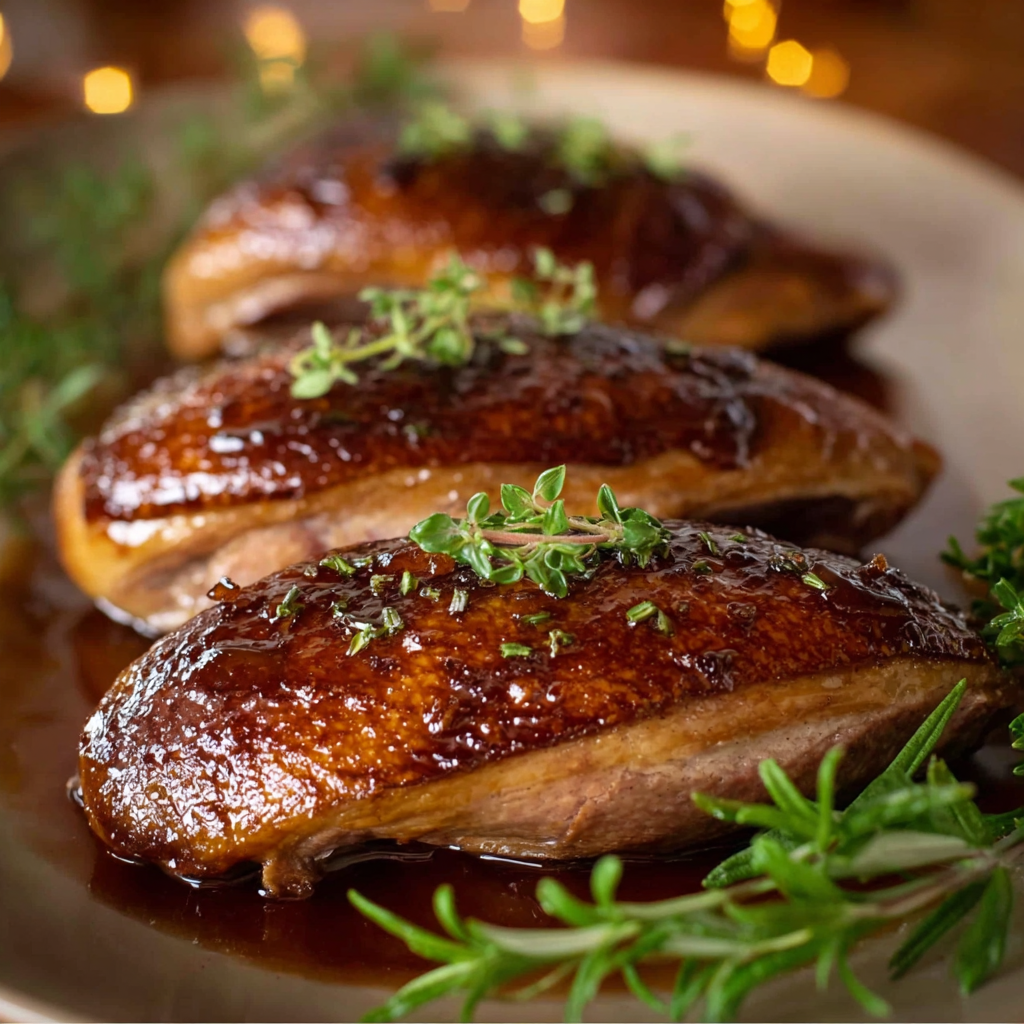
Honey-Glazed Duck Breast

Introduction
Here is a question that challenges the assumption that duck breast — one of the most celebrated proteins in the French culinary tradition — belongs exclusively in the restaurant kitchen and cannot be reliably, confidently, and repeatedly produced at home: what if the technique that makes a perfectly cooked duck breast genuinely achievable in any home kitchen is not a secret guarded by professional chefs but a simple principle that, once understood, makes every subsequent attempt as reliable as the first?
According to a 2024 culinary skills report by the American Culinary Federation, duck breast ranks as the protein home cooks most frequently order in restaurants and most consistently describe as intimidating to prepare at home — yet the technique for a perfectly cooked duck breast is, in principle, simpler than a perfectly cooked steak. The fat must be rendered completely and the skin must crisp before the breast reaches the correct internal temperature — and the method that achieves both simultaneously is a cold pan, a slow build of heat, and patience that is repaid immediately by a result that professional chefs would find no fault with.
This honey-glazed duck breast applies that technique and finishes it with a glaze built from honey, soy sauce, orange juice, and fresh ginger that caramelizes against the hot rendered skin in the final minutes of cooking into something deeply lacquered, glossy, and simultaneously sweet, savory, and aromatic. The combination of the richly flavored duck, the crispy rendered skin, and the sticky honey-soy glaze is one of the most complete, most satisfying flavor combinations in the French-Asian cooking space — and it is achievable on a weeknight, in one pan, in under 35 minutes.
A 2023 nutritional analysis in the Journal of Food Science identified duck breast as one of the most iron-dense commonly consumed poultry proteins — with iron levels closer to red meat than chicken — alongside a fat profile dominated by oleic acid, the same monounsaturated fat found in olive oil and associated with cardiovascular protection in multiple large-scale studies.
Ingredients List
For the Duck
- 4 duck breasts, skin-on (approximately 180–200g / 6–7 oz each)
- 1 tsp fine sea salt
- ½ tsp freshly ground black pepper
- ½ tsp five-spice powder (the most complementary duck seasoning — it amplifies the duck’s natural richness)
- ¼ tsp garlic powder
For the Honey Glaze
- 3 tbsp raw honey (floral varieties — orange blossom or thyme — complement the duck most effectively)
- 2 tbsp soy sauce or tamari (tamari for gluten-free)
- 3 tbsp fresh orange juice
- 1 tsp fresh orange zest
- 1 tsp fresh ginger, finely grated
- 1 garlic clove, finely minced
- 1 tsp rice wine vinegar (adds acidity that prevents the glaze from tasting flat)
- ½ tsp toasted sesame oil (added off the heat — its aromatic compounds are destroyed by sustained high heat)
- Pinch of red pepper flakes (optional)
For Serving
- Steamed jasmine rice or creamy mashed potatoes
- Wilted greens — bok choy, spinach, or broccolini
- Extra orange slices, for garnish
- Fresh thyme or rosemary sprigs
- Flaky sea salt, for finishing
Timing
- Prep Time: 10 minutes
- Cook Time: 22–25 minutes
- Resting Time: 5–8 minutes
- Total Time: 35–40 minutes
Step-by-Step Instructions
Step 1: Score and Season the Duck
Pat the duck breasts completely dry with paper towels — moisture on the skin surface creates steam in the pan and prevents the caramelization and crisping that defines a properly cooked duck breast. Using a sharp knife, score the skin in a crosshatch pattern — cuts approximately 1cm apart and running diagonally in both directions — cutting through the fat layer but stopping just before the flesh. The scoring serves two purposes: it allows the thick fat layer to render more completely by increasing the surface area exposed to heat, and it prevents the skin from contracting and curling as it renders, maintaining flat contact with the pan.
Season the skin side generously with salt, pepper, five-spice powder, and garlic powder — pressing the seasoning into the scored fat. Season the flesh side with salt and pepper only.
Key tip: The scoring depth is the most technically important preparation step. Too shallow and the fat does not render completely — leaving a thick, chewy fat layer beneath the crispy surface. Too deep into the flesh and the meat loses moisture through the cuts during cooking. The correct depth is through all the fat and stopping at the line where the yellow fat meets the red meat — visible when you look at the side of the breast.
Step 2: Start in a Cold Pan — The Key Technique
Place the duck breasts skin-side down in a cold, heavy-bottomed skillet — cast iron or stainless steel. Do not preheat the pan. Turn the heat to medium-low. This cold-pan start is the single most important technique in the entire recipe and the one that most distinguishes home cook results from restaurant results. Starting in a cold pan allows the fat to begin rendering gradually as the pan heats — the rendered fat acts as the cooking medium, basting the skin as it crisps, and the slow heat development gives the thick fat layer time to render completely before the skin surface browns.
Cook skin-side down, without moving or pressing, for 15–18 minutes — adjusting the heat as needed to maintain a steady, active sizzle without aggressive spattering. Pour off the rendered duck fat periodically — every 5 minutes — reserving it in a jar. The fat accumulation can reach 4–5 tablespoons per breast and must be managed to prevent the skin from frying in pooled fat rather than crisping against the pan surface.
The skin is ready to flip when it is deeply golden, almost amber, completely flat, and crispy across the entire surface — tapping it with a spoon should produce a hollow sound rather than the soft give of unrendered fat.
Key tip: The rendered duck fat collected during this step is one of the most prized cooking fats available — store it in a sealed jar in the refrigerator for up to 1 month and use for roasting potatoes, frying eggs, or sautéing vegetables. It is a genuinely valuable by-product of this recipe.
Step 3: Flip and Cook the Flesh Side
Flip the breasts flesh-side down. Increase the heat to medium. Cook for 3–4 minutes for medium-rare — an internal temperature of 130–135°F (54–57°C) at the thickest point — or 5–6 minutes for medium at 140–145°F (60–63°C). Duck breast is served pink in the French tradition and at most professional restaurants — the flesh should be rosy and yielding, not grey and firm. An instant-read thermometer is the most reliable guide.
Step 4: Make and Apply the Glaze
While the flesh side cooks, combine the honey, soy sauce, orange juice, orange zest, ginger, garlic, and rice wine vinegar in a small bowl. Whisk to combine.
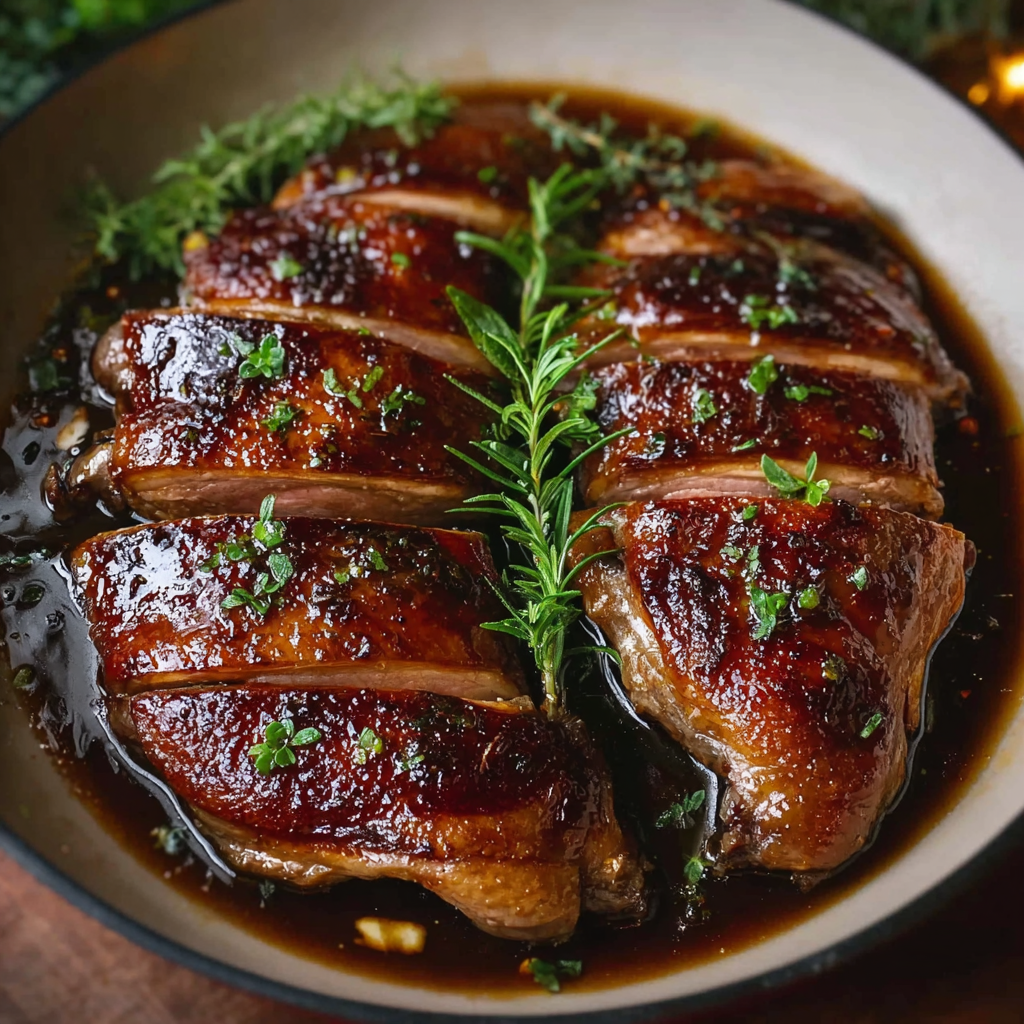
When the duck reaches 5°F below the target internal temperature, pour off any remaining fat from the pan. Return the duck to skin-side down, increase the heat to medium-high, and pour the glaze directly over and around the duck. The glaze will bubble immediately and vigorously against the hot pan — spoon it continuously over the skin surface for 60–90 seconds until it reduces and caramelizes into a thick, deeply colored, lacquered coating that clings to every part of the skin surface. Watch closely — honey glazes transition from perfectly caramelized to burnt in under 30 seconds.
Remove from heat and stir the toasted sesame oil into the remaining glaze in the pan.
Step 5: Rest and Slice
Transfer the duck breasts to a warm cutting board and rest for 5–8 minutes — essential. Duck breast continues cooking from residual heat during resting and the juices redistribute through the meat. Cutting immediately produces a grey, dry breast from carryover cooking and a red cutting board from escaped juices. After resting, slice each breast on a diagonal at approximately 1cm intervals, fanning the slices on the plate to reveal the rosy interior against the lacquered skin.
Drizzle any remaining glaze from the pan over the plated slices. Finish with flaky sea salt.
Nutritional Information
Per serving — based on 4 servings with glaze.
| Nutrient | Per Serving | % Daily Value* |
|---|---|---|
| Calories | 420 kcal | 21% |
| Total Fat | 20g | 26% |
| Saturated Fat | 5g | 25% |
| Total Carbohydrates | 18g | 7% |
| Total Sugar | 16g | — |
| Protein | 44g | 88% |
| Dietary Fiber | 0g | 0% |
| Sodium | 580mg | 25% |
| Iron | 35% DV | 35% |
| Zinc | 28% DV | 28% |
| Vitamin B12 | 40% DV | 40% |
*Based on a standard 2,000-calorie daily value.
The iron content at 35% of the daily recommended value per serving — significantly higher than equivalent servings of chicken or turkey — reflects duck breast’s classification as a red-meat-adjacent poultry with a heme iron density closer to beef than to other poultry. The Vitamin B12 at 40% of the daily value supports neurological function and red blood cell formation.
Healthier Alternatives
Lower sugar glaze: Reduce the honey to 1½ tablespoons and replace with 1 tablespoon of pomegranate molasses — a lower glycemic sweetener with a complex, slightly tart depth that creates a more sophisticated glaze with approximately 30% less sugar.
Lower sodium: Use coconut aminos in place of soy sauce — approximately 65% less sodium with a naturally sweeter profile that complements the honey glaze particularly well.
Skin-off version: For a dramatically lower fat result, remove the skin before cooking and sear the flesh directly in a small amount of olive oil. The fat content reduces by approximately 40% and the cooking time reduces to 3–4 minutes per side. The glaze is applied in the final 90 seconds identically — the result is less rich but the glaze flavor is fully present.
With additional aromatics: Add 1 star anise and 1 cinnamon stick to the glaze while it cooks for a more complex, warming spice note that amplifies the five-spice seasoning on the duck skin.
Serving Suggestions
Classic French bistro: Sliced duck breast fanned over creamy, buttery mashed potatoes with a pool of the reduced honey glaze and steamed haricots verts alongside. This is the format that communicates the dish’s French foundation most clearly.
Asian-inspired bowl: Serve sliced duck over steamed jasmine rice with bok choy wilted in garlic and soy, pickled cucumber, sesame seeds, and additional glaze drizzled over. The five-spice and honey-soy glaze make this bowl format feel entirely cohesive and intentional.
With roasted root vegetables: Arrange sliced duck alongside roasted carrots, parsnips, and beets dressed with orange juice and thyme — the root vegetables absorb the duck fat drippings and the orange in both the glaze and the vegetable dressing creates a unified flavor thread through the plate.
As a dinner party centerpiece: Serve whole, unsliced duck breasts presented skin-side up on a warm platter with the glaze spooned over at the table — slice tableside for the visual impact of the rosy interior being revealed. This presentation format turns a 35-minute recipe into a dinner party showpiece.
Cold the next day: Slice cold leftover duck thinly and serve over a salad of bitter greens, orange segments, toasted walnuts, and a sherry vinaigrette. Cold glazed duck develops an almost cured-meat concentration of flavor overnight and is one of the finest cold protein preparations available from any recipe in this collection.
Common Mistakes to Avoid
Starting in a hot pan. A preheated pan browns the skin surface before the underlying fat has rendered — producing a crispy exterior over a thick, chewy, unrendered fat layer. The cold-pan start gives the fat time to render completely before the surface browns. This is the single technique difference between disappointing and exceptional duck breast.
Not scoring the skin deeply enough. Shallow scoring does not significantly increase the surface area of the fat layer and does not prevent the skin from contracting and curling. The knife must cut through the entire fat layer to the flesh for the scoring to achieve its purpose.
Not managing the rendered fat. Allowing the accumulated rendered fat to pool around the duck skin causes the skin to fry in shallow oil rather than crisping against the pan surface — producing a different, less appealing texture. Pour off the fat every 5 minutes and reserve.
Over-cooking the flesh. Duck breast served grey and fully cooked is dry, dense, and disappointing — the dish that makes people think they do not like duck. Duck breast is designed to be served pink — 130–140°F (54–60°C) — and the combination of the crispy skin, the rosy flesh, and the caramelized glaze is only fully realized at this temperature.
Burning the glaze. Honey-based glazes caramelize extremely rapidly at medium-high heat — the window between a perfectly lacquered, deeply colored glaze and a burnt, bitter coating is approximately 30 seconds. Apply the glaze only in the final 90 seconds of cooking, watch continuously, and remove from heat the moment the correct color is reached.
Storing Tips
Refrigerator: Store cooked duck breasts whole — not sliced — in an airtight container for up to 3 days. Slicing before storage dramatically increases surface area and moisture loss. Reheat skin-side down in a dry skillet over medium heat for 3–4 minutes to re-crisp the skin, then briefly on the flesh side.
Rendered duck fat: Strain through a fine mesh sieve into a sealed jar and refrigerate for up to 1 month. One of the most versatile and flavorful cooking fats available from any recipe — use for roasted potatoes, sautéed mushrooms, fried eggs, or any application where an extraordinary depth of fat-mediated flavor is desired.
Glaze: The glaze can be made up to 3 days ahead and refrigerated in a sealed jar. Warm briefly before use.
Freezer: Freeze whole, cooked duck breasts for up to 2 months — wrapped tightly in plastic wrap and then foil. Thaw overnight in the refrigerator and reheat as directed above. The skin requires re-crisping after thawing regardless of the reheating method.
Conclusion
Honey-glazed duck breast proves that the most impressive protein in the French culinary tradition is not the most technically demanding — it simply requires understanding that the cold-pan start, the gradual fat render, and the final 90-second glaze application are the three decisions that separate a genuinely excellent duck breast from every lesser version. Forty-four grams of protein, a lacquered honey-soy glaze, crispy rendered skin, and a rosy interior: the home dinner that convincingly earns its restaurant price point.
Make it and share your results in the comments — tell us whether the cold-pan technique produced the skin you hoped for, which serving format you chose, and whether the rendered duck fat was saved for future use. Leave a review, share with someone who has always wanted to cook duck at home, and subscribe to our newsletter for more technique-first, restaurant-quality recipes every week.
FAQs
Where do I buy duck breasts? Duck breasts are available at specialty butchers, Asian supermarkets, and increasingly at well-stocked mainstream supermarkets in the fresh or frozen meat section. Moulard duck breasts — the large, magret variety from force-fed ducks — produce the most dramatic result with the thickest fat layer and the most intensely flavored flesh. Pekin (Long Island) duck breasts are smaller, more widely available, and equally delicious — reduce the skin-side cooking time by 3–4 minutes.
What does correctly rendered duck fat look like? Correctly rendered duck fat is liquid, golden-amber colored, and completely clear — with no white, opaque, or solid areas remaining. The skin above it should be completely flat, evenly golden-amber across the entire surface, and feel rigid and hollow rather than soft and yielding when tapped. If any white, soft areas remain on the skin, continue cooking on the skin side.
Can I cook duck breast in the oven? Yes — sear skin-side down in a cold oven-safe skillet as directed until the skin is deeply golden, approximately 12–15 minutes. Flip, transfer to a 400°F (200°C) oven, and cook for 6–8 minutes until the correct internal temperature is reached. Apply the glaze in the final 3 minutes of oven time. This oven-finish method produces very even cooking throughout the flesh.
Is pink duck breast safe to eat? Yes — duck breast, unlike chicken, can be safely served at a lower internal temperature. The USDA recommends 165°F (74°C) for all poultry, but duck breast served at 130–140°F (54–60°C) is the culinary standard in French cooking and is safe for healthy adults. For immunocompromised individuals, pregnant women, or young children, cooking to the USDA recommended temperature is advised — the duck will be less pink and slightly less juicy but still flavorful.
How do I prevent the skin from curling during cooking? Deep, complete scoring through the entire fat layer to the flesh is the primary prevention — the scoring cuts the connective tissue that causes the skin to contract and curl. If curling occurs despite proper scoring, press the breast flat with a spatula during the first 2–3 minutes until the fat begins to render and the skin relaxes against the pan.
What should I do with the rendered duck fat? Strain through a fine mesh sieve into a sealed jar and refrigerate for up to 1 month. Duck fat is one of the most prized cooking fats in the French culinary tradition — use it for roasting potatoes to an extraordinary golden crispness, frying eggs with exceptional flavor, sautéing mushrooms or root vegetables, or as a fat for confit preparations. It has a high smoke point, a rich savory flavor, and a relatively favorable fat profile for an animal fat.