Follow Me On Social Media!
Lebanese Spicy Potatoes (Batata Harra)

Introduction
Here is a question that reframes how you think about potatoes entirely: what if the most exciting, most vibrantly flavored potato dish you have ever eaten was not a French preparation, not an American comfort food, not a Spanish tapa — but a Lebanese street food staple that has been cooked in home kitchens and served at family tables across the Levant for generations, and that most Western home cooks have never encountered? According to a 2024 global food culture report by Saveur, Lebanese cuisine represents one of the fastest-growing culinary interests in Western food media — driven by the recognition that the Levantine pantry produces flavor combinations of extraordinary complexity from a remarkably small number of ingredients.
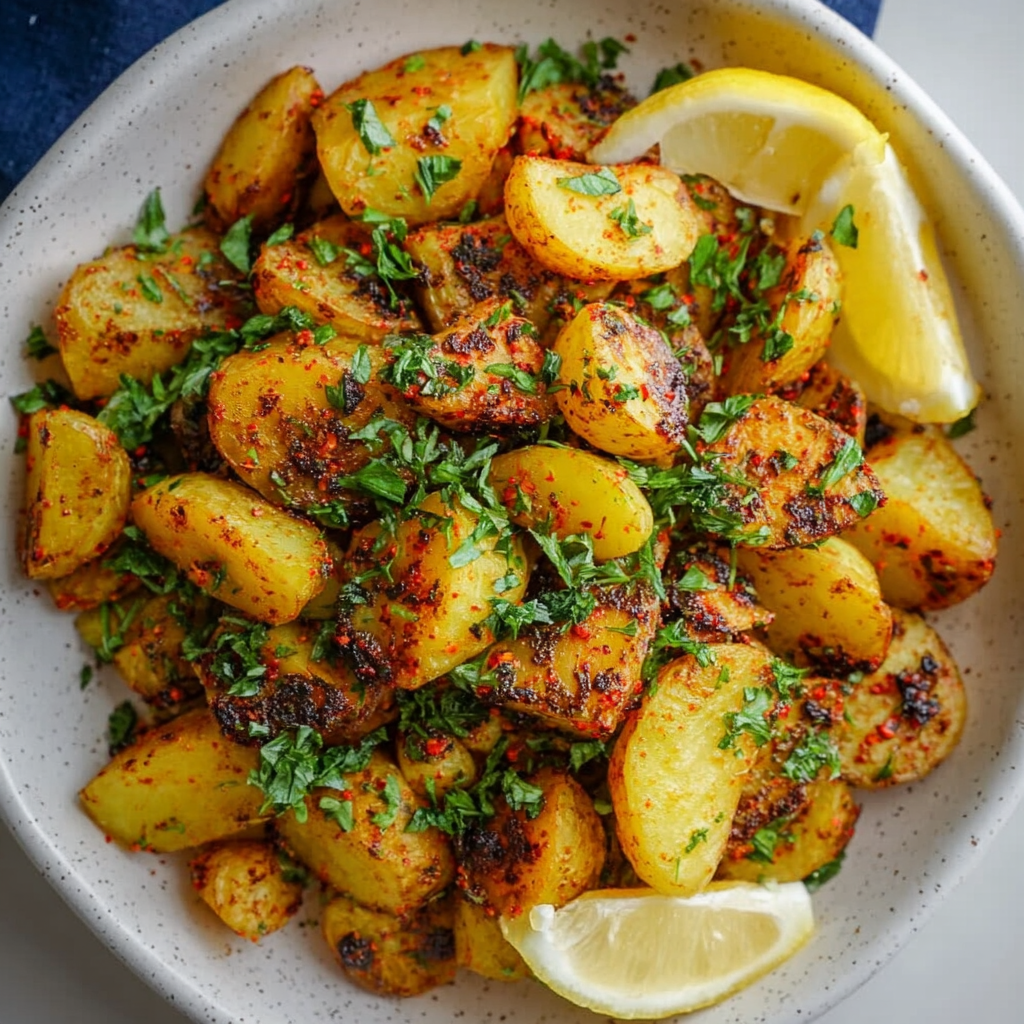
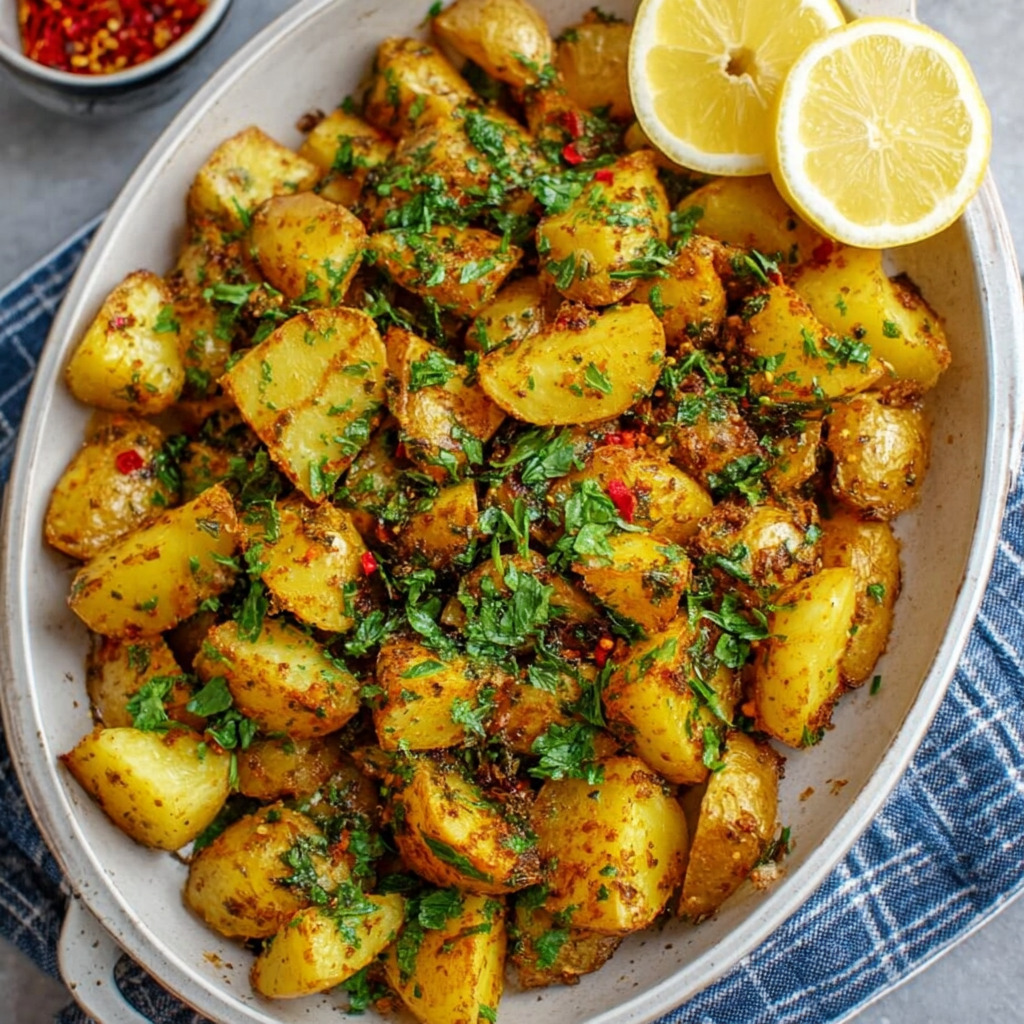
Batata harra — literally “spicy potatoes” in Arabic — is the dish that demonstrates that principle most immediately. Crispy fried or roasted potato cubes tossed in a sauce of olive oil, garlic, fresh chili, lemon juice, and cilantro, finished with a scattering of fresh herbs — it is a preparation of deliberate simplicity that produces an experience of layered, vibrant, genuinely addictive flavor. The heat from the chili, the brightness of the lemon, the pungency of the raw garlic, and the herbal freshness of the cilantro applied to properly crisped potato creates a combination that functions simultaneously as a side dish, a mezze component, a snack, and an argument for why Lebanese cooking deserves a permanent place in every home cook’s regular rotation.
A 2023 nutritional review in the European Journal of Nutrition identified the combination of raw garlic and fresh lemon juice — both core components of batata harra — as one of the most studied culinary pairings for cardiovascular protection, with allicin from the garlic and Vitamin C from the lemon jointly supporting endothelial function and antioxidant activity at clinically meaningful levels when consumed regularly as part of a Mediterranean dietary pattern.
Ingredients List
For the Potatoes
- 1kg (2.2 lbs) Yukon Gold or waxy potatoes, peeled and cut into 2cm (¾-inch) cubes (uniform size is essential for even cooking)
- Neutral oil, for frying (vegetable or sunflower — approximately 3–4 cups for shallow frying, or 3 tbsp for oven roasting)
- 1 tsp fine sea salt
For the Harra Sauce
- 4 tbsp extra virgin olive oil
- 6 garlic cloves, finely minced (this is not a dish for garlic restraint)
- 2–3 fresh red chilies, finely chopped (adjust to heat preference — seeds removed for less heat)
- 1 tsp red pepper flakes (in addition to fresh chili — the combination produces a more complex heat)
- 1 tsp ground cumin (optional but traditional in many Lebanese kitchens)
- ½ tsp smoked paprika (optional — adds color and a subtle warmth)
- 3 tbsp fresh lemon juice (approximately 1½ lemons — fresh only)
- 1 tsp lemon zest
- 1 tsp fine sea salt, or to taste
For Finishing
- ½ cup (20g) fresh cilantro, roughly chopped (the essential finishing herb — sub: flat-leaf parsley for cilantro-averse)
- 2 tbsp fresh flat-leaf parsley, roughly chopped
- Extra lemon wedges, to serve
- Flaky sea salt, for finishing
Timing
- Prep Time: 10 minutes
- Cook Time: 20–25 minutes (frying) or 35–40 minutes (oven roasting)
- Total Time: 30–50 minutes
Step-by-Step Instructions
Step 1: Prepare the Potatoes
Peel and cut the potatoes into even 2cm cubes. Rinse briefly under cold water and pat completely dry with paper towels — this is essential for both frying and roasting. Wet potatoes splatter dangerously in hot oil and steam rather than crisp in the oven. Dry potatoes produce the crispy exterior that is the textural foundation of a proper batata harra.
Key tip: Soaking the cut potatoes in cold water for 20 minutes before drying removes surface starch and produces an even crispier exterior in both the frying and oven roasting methods. If time allows, this step is worth the extra 20 minutes.
Step 2: Cook the Potatoes — Two Methods
Shallow frying (traditional and crispiest): Heat 3–4cm of neutral oil in a large, heavy skillet or Dutch oven to 350°F (175°C). Fry the dried potato cubes in two or three batches — never crowded — for 8–10 minutes per batch, stirring occasionally, until deeply golden on all surfaces. Remove with a slotted spoon onto a paper-towel-lined plate. Season immediately with salt while still hot.
Oven roasting (lower fat and equally excellent): Preheat the oven to 425°F (220°C) with a baking sheet inside for 5 minutes. Toss the dried potato cubes with 3 tablespoons of neutral oil and 1 teaspoon of salt. Spread in a single layer on the preheated baking sheet — the hot surface immediately begins crisping the contact side. Roast for 20 minutes, flip, and roast for another 15–20 minutes until deeply golden and crispy on all surfaces.
Key tip for frying: Allow the oil to return to temperature between batches — frying in cold oil produces soft, oil-saturated potatoes rather than crispy ones. A thermometer is the most reliable guide, but the panko-drop test works — a small piece of potato should sizzle immediately on contact.
Step 3: Make the Harra Sauce
While the potatoes cook, heat the olive oil in a small skillet over medium heat. Add the minced garlic and cook for 60–90 seconds, stirring constantly — the garlic should turn lightly golden and fragrant but must not burn. Burnt garlic is irreversibly bitter and cannot be corrected. Add the fresh chili and red pepper flakes and cook for another 30 seconds. Remove from heat and add the lemon juice, lemon zest, cumin, and smoked paprika. Stir together — the sauce will sizzle as the lemon hits the warm oil. Taste and adjust the chili heat, lemon acidity, and salt.
Key tip: The sauce is made in a separate small pan rather than directly over the potatoes — this gives precise control over the garlic cooking and prevents any risk of burning while managing the potatoes simultaneously.
Step 4: Toss and Finish
Transfer the hot, crispy potatoes to a large bowl. Pour the warm harra sauce over the potatoes immediately and toss to coat every piece evenly — the warmth of both the potatoes and the sauce allows maximum absorption of the garlic, chili, and lemon flavors into the potato surface. Add the fresh cilantro and parsley and toss once more. Taste and adjust — this is the most important moment in the recipe. More lemon for brightness, more salt to sharpen the garlic, more chili for heat.
Step 5: Serve
Transfer to a serving plate or bowl. Finish with a pinch of flaky sea salt, extra fresh cilantro, and lemon wedges alongside. Serve immediately — batata harra is at its best when the potatoes are still hot and crispy from the oil or oven, the garlic sauce is warm and fragrant, and the fresh herbs have just been scattered rather than having had time to wilt.
Nutritional Information
Per serving — based on 4 servings, oven-roasted method.
| Nutrient | Per Serving | % Daily Value* |
|---|---|---|
| Calories | 290 kcal | 15% |
| Total Fat | 14g | 18% |
| Saturated Fat | 2g | 10% |
| Total Carbohydrates | 38g | 14% |
| Total Sugar | 2g | — |
| Protein | 4g | 8% |
| Dietary Fiber | 4g | 14% |
| Sodium | 490mg | 21% |
| Potassium | 880mg | 19% |
| Vitamin C | 40% DV | 40% |
| Vitamin B6 | 25% DV | 25% |
| Iron | 8% DV | 8% |
*Based on a standard 2,000-calorie daily diet.
At 290 calories with 14 grams of predominantly monounsaturated fat from olive oil and 880mg of potassium per serving, the oven-roasted version delivers a genuinely favorable nutritional profile for a potato side dish. The Vitamin C at 40% of the daily recommended value comes from the combination of fresh chili, lemon juice, and parsley — an unexpectedly significant micronutrient contribution.
Healthier Alternatives
Air fryer method: Toss the dried potato cubes with 1 tablespoon of oil and cook in the air fryer at 400°F (200°C) for 18–20 minutes, shaking every 6 minutes. Produces a result that rivals shallow frying in crispiness with a fraction of the oil — the lowest-fat method for achieving genuine crispiness.
Lower fat sauce: Reduce the olive oil in the harra sauce to 2 tablespoons and compensate with 1 tablespoon of additional lemon juice. The sauce will be less rich but the garlic, chili, and lemon flavors remain fully present and vibrant.
Higher protein: Serve alongside a generous scoop of hummus or labneh — both are traditional Lebanese accompaniments that add meaningful protein and complementary flavor to the dish. A whole meal format of batata harra, hummus, warm pita, and a simple salad provides a complete, plant-based dinner.
Lower heat: Remove all seeds and white membrane from the fresh chilies, reduce to a single chili, and omit the red pepper flakes entirely. The garlic and lemon still produce a bright, vibrant dish with the warmth of cumin and paprika providing flavor without any significant heat.
Sweet potato variation: Replace Yukon Gold potatoes with an equal weight of sweet potatoes cut to the same size. The sweeter, lower-glycemic flesh takes on the harra sauce beautifully — the chili heat against the natural sweetness of the potato creates a particularly compelling flavor contrast.
Serving Suggestions
As part of a Lebanese mezze spread: Serve alongside hummus, baba ganoush, tabbouleh, fattoush, warm pita, and stuffed grape leaves. Batata harra is one of the essential warm components of a traditional Lebanese mezze table and the one that consistently disappears first.
Alongside grilled protein: Serve next to grilled chicken shawarma, lamb kofta, grilled sea bass with chermoula, or beef kebabs. The bright, acidic sauce cuts through the fat of any grilled protein with the same precision as a chimichurri or salsa verde.
As a standalone snack: Serve in a bowl with a wedge of lemon and a small pot of garlic labneh or hummus alongside. This is the street food format — eaten hot from the pan with fingers or a fork — and it is the format in which batata harra is at its most joyful and honest.
In a wrap: Stuff warm batata harra into a warm pita with shredded cabbage, sliced tomato, pickled turnip, and a drizzle of tahini. This format transforms the side dish into a complete, satisfying sandwich in the Lebanese street food tradition.
Topped with a fried egg: Fry an egg in a small amount of the leftover harra sauce oil and place on top of a generous serving of batata harra. The yolk breaks over the spicy potatoes and acts as a rich, mellowing sauce that tempers the heat while amplifying the garlic. One of the finest breakfast or brunch potato dishes available.
Common Mistakes to Avoid
Not drying the potatoes thoroughly. Wet potatoes are dangerous in hot oil — they splatter violently and produce steam that lowers the oil temperature and inhibits crisping. In the oven, wet potatoes steam rather than roast. Paper towels and a firm press are non-negotiable before any cooking method.
Crowding the frying pan. Crowded potatoes lower the oil temperature below the frying threshold and produce oil-saturated, soft cubes rather than crispy ones. Work in batches with space between each piece — always.
Burning the garlic. The harra sauce is built on garlic that is golden and fragrant — not brown, not dark, and absolutely not burnt. Burnt garlic produces a bitter, unpleasant sauce that cannot be corrected. Medium heat, constant attention, and 60–90 seconds maximum.
Adding the sauce too late. The sauce should be added to the potatoes while both are warm — warm potatoes absorb the garlic and lemon flavors into their surface rather than simply being coated. Cold potatoes receiving room-temperature sauce produce a result that tastes like potatoes with sauce on them rather than potatoes that have become the sauce.
Under-seasoning. Potatoes require assertive seasoning — the salt during cooking, the salt in the harra sauce, and the finishing flaky salt are all necessary. A flat, under-seasoned batata harra is a dish that has failed to deliver on its potential. Taste at every stage and season with conviction.
Storing Tips
Refrigerator: Store cooled batata harra in an airtight container for up to 3 days. The potatoes soften during refrigeration but the flavor — particularly the garlic and lemon — intensifies considerably overnight, producing a dish that many people prefer cold or at room temperature the following day.
Reheating: An air fryer at 400°F (200°C) for 5–6 minutes restores significant crispiness. A 425°F (220°C) oven on a wire rack for 10 minutes is equally effective. The microwave reheats but produces a soft texture — add a fresh squeeze of lemon and a scattering of fresh cilantro after reheating regardless of method to restore brightness.
Make-ahead: The harra sauce can be made up to 24 hours ahead and refrigerated. Reheat gently before tossing with freshly fried or roasted potatoes — the sauce flavor improves overnight as the garlic and chili mellow into the olive oil. The potatoes should always be cooked fresh for the best textural result.
Freezer: Not recommended — potatoes develop an unpleasant, mealy texture when frozen and thawed. Prepare fresh and consume within the refrigerator storage window.
Conclusion
Batata harra proves that the most exciting potato dish in your repertoire does not require French technique, duck fat, or elaborate preparation — it requires good olive oil, an unreasonable quantity of garlic, fresh chili, real lemon juice, and the understanding that the best food in the world is often the simplest food executed with confidence and conviction. A Lebanese staple that deserves a permanent place at every table it visits.
Make it and share your results in the comments — tell us whether you fried or roasted, how much chili you used, and whether it replaced your usual potato side dish. Leave a review, share with someone who loves Lebanese food or simply loves potatoes, and subscribe to our newsletter for more globally inspired, boldly flavored recipes every week.
FAQs
What potatoes work best for batata harra? Yukon Gold is the top recommendation — their medium starch content produces a crispy exterior and a creamy, non-mealy interior that holds together well during both frying and tossing with the sauce. Waxy potatoes such as red potatoes and new potatoes also work well and hold their shape exceptionally. Avoid russet potatoes — their high starch content produces a fluffy interior that crumbles when tossed with the sauce.
Can I make batata harra without fresh chilies? Yes — increase the red pepper flakes to 1½ teaspoons and add ½ teaspoon of cayenne pepper to the sauce. The heat profile will be slightly less fresh and complex than with fresh chilies but remains entirely satisfying. Aleppo pepper flakes — available at Middle Eastern grocery stores — are a particularly authentic and nuanced substitute that provides a fruity, moderately hot character well-suited to the Lebanese flavor profile.
Is batata harra always served hot? Traditionally, yes — the dish is at its best when the potatoes are freshly cooked, the sauce is warm, and the herbs are freshly scattered. However, batata harra served at room temperature or slightly warm is entirely conventional in the mezze context, where dishes are prepared in advance and served across an extended meal. The flavor at room temperature is arguably more complex — the garlic has mellowed and the lemon has fully integrated — though the textural contrast of crispy potato is diminished.
Can I use garlic powder instead of fresh garlic? The character of the dish changes significantly. Fresh garlic cooked briefly in olive oil produces a sweet, pungent, aromatic flavor that is the defining character of harra sauce. Garlic powder produces a milder, less complex result without the same aromatic impact. If fresh garlic is unavailable, use 1½ teaspoons of garlic powder added to the warm oil — the result is acceptable but not representative of the authentic dish.
What is the correct level of heat for batata harra? Batata harra translates directly as “spicy potatoes” — heat is not optional but a definitional characteristic of the dish. The traditional level is assertive — the chili should be clearly present in every bite without overwhelming the garlic and lemon. Two medium fresh chilies with seeds removed produces a moderate heat that most palates find exciting rather than challenging. Adjust to personal preference, but avoid reducing the chili to the point where the dish loses its defining character.
Can I serve batata harra cold? At room temperature, yes — and the flavor is genuinely excellent, with the garlic mellowed and the lemon more integrated. Directly from the refrigerator, the olive oil solidifies and the texture of the cold potato is less appealing. If serving a pre-made batch, allow 20 minutes at room temperature before serving and add a fresh squeeze of lemon and additional cilantro to restore the bright, vibrant character the dish is known for.