Follow Me On Social Media!
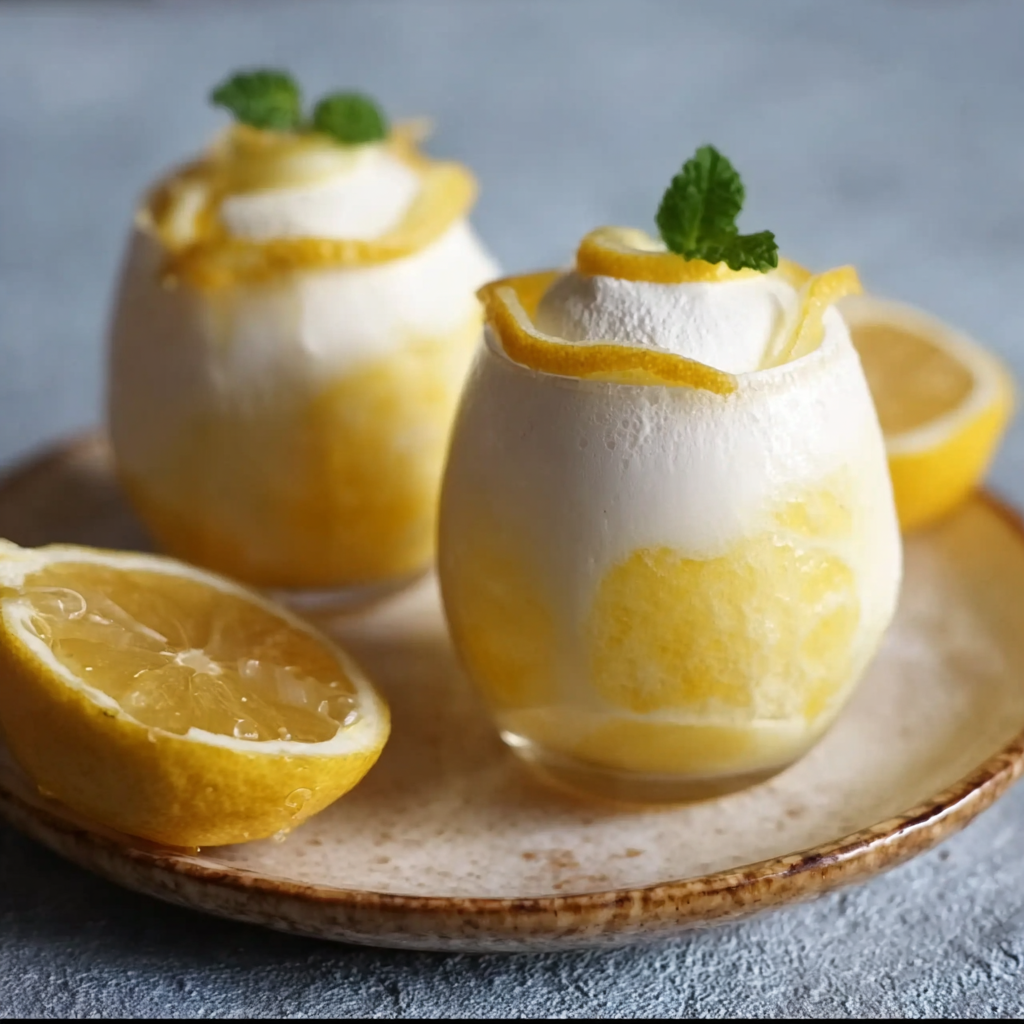
Lemon Sorbet in a Shell

Introduction
Here is a question that reframes the entire category of homemade frozen desserts: what if the most elegant, restaurant-worthy palate cleanser or dinner party dessert you could serve required nothing more than fresh lemons, sugar, water, and the lemon shells themselves as the serving vessel — producing a presentation so visually striking that guests photograph it before they eat it, and a flavor so clean, so bright, and so intensely lemony that it makes every other frozen dessert feel somehow muted by comparison?
According to a 2024 report by the National Restaurant Association, citrus-forward frozen desserts represent the fastest-growing dessert category in fine dining — driven by a consumer shift toward lighter, more palate-refreshing finishes after rich meals, and a renewed appreciation for the kind of simple, ingredient-led elegance that does not require a professional pastry kitchen to achieve. Lemon sorbet served in a hollowed lemon shell is, in this context, the perfect dessert — visually impeccable, naturally vegan, naturally gluten-free, and built entirely around the quality of a single ingredient.
A 2023 nutritional review in the Journal of Food Science identified lemon as one of the most antioxidant-dense citrus fruits available — with particularly high concentrations of hesperidin, eriocitrin, and limonene in both the juice and the zest — compounds associated with cardiovascular protection, anti-inflammatory activity, and liver health. This sorbet extracts flavor from both the juice and the zest, producing a concentration of lemon flavor and beneficial compounds that a juice-only recipe cannot replicate.
Ingredients List
For the Lemon Sorbet
- 8 large lemons (the shells become the serving vessels — choose lemons with thick, unblemished skins)
- 200g (1 cup) granulated sugar
- 240ml (1 cup) water
- Pinch of fine sea salt (amplifies the lemon flavor significantly)
- 1 tbsp lemon zest (from the lemons before juicing — add to the syrup)
- 1 large egg white (optional — creates a smoother, creamier texture without an ice cream machine)
Optional Flavor Additions
- 1 tbsp fresh mint, finely chopped (steeped in the warm syrup for 5 minutes then strained)
- ½ tsp pure vanilla extract (adds a subtle floral depth)
- 1 tbsp limoncello (alcohol lowers the freezing point and produces a softer, more scoopable sorbet)
- ½ tsp fresh ginger, finely grated (adds warmth and complexity)
For Garnish
- Fresh mint sprigs
- Extra lemon zest curls
- Edible flowers (optional — stunning visual impact)
- A light dusting of powdered sugar (optional)
- Flaky sea salt (a single pinch per shell — the sweet-salty contrast is extraordinary)
Timing
- Prep Time: 20 minutes
- Cooling Time: 30 minutes
- Churning or Freezing Time: 2–4 hours
- Final Freeze in Shells: 2 hours minimum
- Total Time: approximately 5–6 hours (mostly hands-off)
The active preparation is under 25 minutes. The remainder is cooling, freezing, and patience — all of which cost nothing and return everything in the form of a dessert that tastes better for the time invested.
Step-by-Step Instructions
Step 1: Prepare the Lemon Shells
Select 6 of the most visually attractive lemons for the serving shells — uniform size and shape produces the most striking presentation. Using a sharp knife, cut a thin slice from the bottom of each lemon to create a flat base that allows it to stand upright without wobbling. Cut a wider cap from the top — approximately one-quarter of the lemon — and set the caps aside. Using a small spoon or melon baller, carefully scoop out all the lemon flesh and membrane from inside each shell, working around the interior without puncturing the skin. Squeeze the flesh and pulp through a fine mesh sieve to extract as much juice as possible — this juice will form the base of the sorbet.
Use the remaining 2 lemons for additional juice if needed. You need approximately 240ml (1 cup) of fresh lemon juice total. Zest these remaining lemons before juicing and reserve the zest for the syrup.
Key tip: Place the hollowed shells in the freezer immediately after preparation — frozen shells are firmer, easier to fill without distortion, and produce a more dramatic temperature contrast when the sorbet is scooped and served. They can be stored frozen for up to 1 month before use.
Step 2: Make the Lemon Simple Syrup
Combine the sugar, water, lemon zest, and salt in a small saucepan over medium heat. Stir gently until the sugar dissolves completely — approximately 3–4 minutes. Do not boil vigorously. If adding mint or ginger, add at this stage and steep off the heat for 5 minutes before straining. Remove from heat and allow to cool completely — a minimum of 30 minutes at room temperature or 15 minutes over an ice bath. Hot syrup added to the lemon juice cooks the fresh citrus notes and produces a cooked, slightly flat flavor rather than the bright, vibrant freshness the recipe is designed around.
Key tip: The syrup must be completely cold before combining with the lemon juice. This is the most commonly skipped step and the most responsible for flat, dull sorbet flavor.
Step 3: Combine and Taste
Combine the completely cooled syrup with the fresh lemon juice and whisk together. Taste — the mixture should be intensely lemony, clearly sweet, and slightly more acidic and sweet than the finished sorbet will taste, since freezing dulls flavor perception significantly. If it tastes perfectly balanced at room temperature, it will taste flat from the freezer. Adjust with additional lemon juice for brightness or a small amount of additional dissolved sugar syrup for sweetness. Add limoncello, vanilla, or ginger if using.
Step 4: Freeze — Two Methods
With an ice cream machine: Pour the cooled mixture into the machine and churn according to the manufacturer’s instructions — typically 20–25 minutes until the sorbet has the consistency of a thick, soft-serve texture. Transfer to a freezer-safe container and freeze for 1–2 hours until firm enough to scoop cleanly.
Without an ice cream machine: Pour the mixture into a wide, shallow freezer-safe container. Freeze for 1 hour until the edges are frozen and the center is slushy. Remove and beat vigorously with a fork or hand mixer to break up the ice crystals — this step is critical for a smooth rather than grainy texture. Return to the freezer for 45 minutes and repeat the beating process. After the second beating, whip the egg white to soft peaks in a separate bowl and fold it into the partially frozen sorbet before returning to the freezer. The egg white introduces protein that interferes with large ice crystal formation, producing a smoother texture that closely approximates machine-churned sorbet. Freeze for 1 further hour until completely firm.
Key tip: The egg white is the most impactful technique for improving the texture of a no-churn sorbet — it is optional but produces a result that is dramatically smoother than sorbet made without it.
Step 5: Fill the Lemon Shells
Remove the frozen lemon shells from the freezer. Working quickly, scoop the sorbet generously into each shell — mounding it above the rim of the shell in a slightly rounded dome. Replace the lemon cap at a jaunty angle on top of the mounded sorbet. Return the filled shells to the freezer for a minimum of 2 hours — or overnight — until the sorbet is completely firm and set within the shell.
Step 6: Garnish and Serve
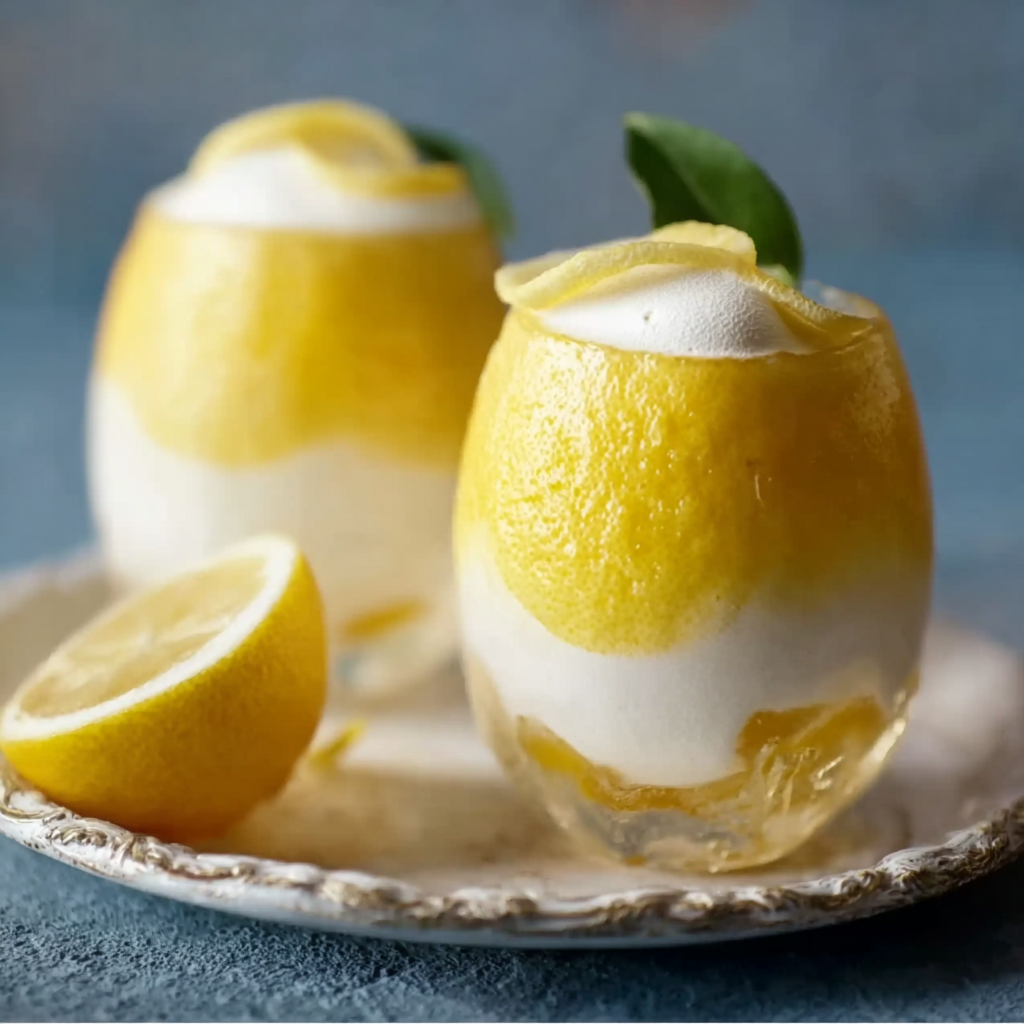
Remove the filled shells from the freezer 5 minutes before serving to allow the sorbet to soften slightly from its hardest, most frozen state to the ideal scooping and eating temperature. Place each shell on a small plate or a bed of crushed ice. Tuck a small sprig of fresh mint between the sorbet and the lemon cap. Add a curl of lemon zest, a single edible flower, and a pinch of flaky sea salt. Serve immediately.
Nutritional Information
Per serving — based on 6 lemon shells without optional additions.
| Nutrient | Per Serving | % Daily Value* |
|---|---|---|
| Calories | 145 kcal | 7% |
| Total Fat | 0g | 0% |
| Saturated Fat | 0g | 0% |
| Total Carbohydrates | 38g | 14% |
| Total Sugar | 34g | — |
| Protein | 1g | 2% |
| Dietary Fiber | 0.5g | 2% |
| Sodium | 40mg | 2% |
| Vitamin C | 35% DV | 35% |
| Folate | 5% DV | 5% |
| Potassium | 5% DV | 5% |
*Based on a standard 2,000-calorie daily diet.
At 145 calories per serving with zero fat and 35% of the daily Vitamin C requirement, lemon sorbet in a shell is one of the most nutritionally efficient desserts available — delivering genuine refreshment and meaningful micronutrient contribution at a caloric cost that leaves room for the rest of the meal to breathe. It is naturally vegan, naturally gluten-free, and free of all major allergens.
Healthier Alternatives
Lower sugar: Reduce the granulated sugar to 150g and replace the remaining sweetness with 2 tablespoons of agave nectar — agave has a higher sweetness intensity than sugar, meaning a smaller quantity produces comparable sweetness with fewer calories. The sorbet will be slightly softer due to the lower sugar content, which raises the freezing point slightly.
Refined sugar-free: Replace all granulated sugar with an equal weight of raw honey dissolved in the warm water. Honey produces a slightly floral, less sharp sweetness that complements the lemon with a different but equally pleasant flavor character.
Blood orange variation: Replace 3 of the lemons with blood oranges — using the orange shells as additional serving vessels and combining the juices in a 60:40 lemon-to-blood-orange ratio. The result is a visually dramatic deep rose-colored sorbet with a more complex, less sharp citrus flavor.
Herb-infused version: Steep 6–8 fresh basil leaves or a small handful of lemon verbena in the warm syrup for 10 minutes before straining. Both produce a sorbet with a distinctly more complex, aromatic character that elevates the dessert from simple to sophisticated with a single additional ingredient.
Electrolyte boost: Add 2 tablespoons of coconut water to the sorbet base — its natural potassium and magnesium content makes this an unexpectedly functional post-exercise frozen treat when served without the sugar quantity reduction.
Serving Suggestions
As a palate cleanser: Serve between the main course and dessert course — a classic fine dining use of sorbet that resets the palate and creates anticipation for the final course. The lemon shell format adds visual punctuation to the transition between courses.
As the dessert course: Serve two shells per person alongside a small almond biscotti or a thin langue de chat cookie. The textural contrast of crisp cookie against cold, smooth sorbet is one of the simplest and most effective dessert combinations available.
With prosecco or champagne: Fill champagne flutes halfway with chilled prosecco and add a small scoop of lemon sorbet directly to the glass — it creates a sgroppino, the classic Venetian digestif, in an effortlessly elegant format that works as a dessert cocktail or a summer celebration aperitivo.
Citrus flight: Serve one lemon shell alongside a lime sorbet served in a lime shell and an orange sorbet served in a small orange — a three-shell citrus sorbet flight that is one of the most visually spectacular and impressively simple dessert presentations in the entertaining repertoire.
Topped with limoncello: Drizzle 1 teaspoon of chilled limoncello over the mounded sorbet at serving — it melts slightly into the surface and creates a boozy, intensely citrusy top layer that contrasts with the pure sorbet beneath.
Common Mistakes to Avoid
Using warm syrup. Adding hot or warm syrup to the fresh lemon juice cooks the volatile aromatic compounds responsible for the bright, fresh citrus flavor — producing a cooked, slightly flat sorbet rather than the vibrant, sharp result the recipe is designed around. Cool completely before combining.
Under-sweetening the base. Freezing dulls taste perception significantly — a base that tastes perfectly sweet at room temperature will taste noticeably flat from the freezer. The mixture should taste slightly over-sweet before freezing — trust the process and the tasting notes rather than the instinct to reduce sugar.
Skipping the beating steps for no-churn sorbet. Without an ice cream machine, the beating steps are the only mechanism available for breaking up large ice crystals. Skipping them produces a granular, icy texture that is technically frozen sorbet but texturally disappointing. Each beating step takes 2 minutes and produces a meaningfully smoother result.
Not freezing the shells before filling. Room-temperature shells warm the sorbet on contact and produce a partially melted filling that takes significantly longer to firm up in the shell and may develop ice crystals at the shell-sorbet interface. Frozen shells maintain the sorbet temperature and produce a cleaner, more uniform result.
Serving directly from the freezer without resting. Sorbet at its hardest frozen state is difficult to eat, muted in flavor, and unyielding to a spoon. Five minutes at room temperature softens the exterior to the ideal consistency — fluid enough to eat effortlessly, cold enough to be refreshing.
Storing Tips
Filled shells in the freezer: Store covered loosely with plastic wrap for up to 2 weeks. The flavor is best within the first week — the lemon zest and citrus compounds in the shell gradually begin to leach into the sorbet and intensify the flavor over the first 3–4 days in a pleasant way, but beyond a week the quality begins to diminish.
Sorbet without shells: Store in an airtight freezer container for up to 1 month. Press plastic wrap directly onto the surface of the sorbet before sealing — this prevents ice crystals from forming on the surface during storage.
Unfilled shells: Store the prepared, hollowed lemon shells in a zip-lock bag in the freezer for up to 1 month. Having shells prepared and frozen in advance reduces the day-of preparation to mixing the sorbet base and filling — a 20-minute process.
Make-ahead strategy: Make the sorbet and fill the shells up to 3 days before serving. Store covered in the freezer and remove 5 minutes before serving. This is the ideal dinner party approach — zero day-of dessert effort beyond plating and garnishing.
Conclusion
Lemon sorbet in a shell proves that the most memorable desserts are frequently the simplest — built around the quality of a single ingredient, elevated by a presentation that makes the natural beauty of the ingredient its own decoration, and requiring nothing from the cook except attention to a handful of techniques that, once understood, produce a perfect result every single time. Four ingredients, one vessel, five hours of mostly waiting — and a dessert that earns its place at any table, from a casual summer dinner to a formal celebration.
Make it and share your results in the comments — tell us whether you used an ice cream machine or the no-churn method, which flavor additions you tried, and whether the presentation landed the reaction it deserves. Leave a review, share with someone who loves lemon desserts, and subscribe to our newsletter for more elegant, technique-driven dessert recipes every week.
FAQs
Do I need an ice cream machine? No — the no-churn method with the egg white technique produces a result that approaches machine-churned quality for most home purposes. The texture will be slightly less uniformly smooth than a machine-churned sorbet but entirely delicious and presentable. An ice cream machine produces a superior result if available — but the recipe is designed to be fully achievable without one.
How do I prevent the sorbet from becoming too icy? Three factors produce a smoother sorbet: the correct sugar concentration (which lowers the freezing point and inhibits large crystal formation), the egg white addition (which physically interrupts crystal growth), and thorough beating during the no-churn freezing process. Limoncello — if using — also contributes by further lowering the freezing point. All three working together produce a sorbet that is smooth rather than granular.
Can I use bottled lemon juice? The flavor difference between fresh-squeezed and bottled lemon juice in a recipe where lemon is the only flavor is stark, immediate, and impossible to overlook. Bottled lemon juice tastes flat, slightly artificial, and lacks the volatile aromatic compounds that give fresh lemon sorbet its characteristic brightness. Fresh lemon juice is non-negotiable for this recipe — the entire dessert is built around its quality.
How many lemons do I need in total? 8 large lemons — 6 for the shells and 2 additional for supplementary juice and zest. Large lemons with thick skins are strongly preferred for the shells — thin-skinned lemons produce fragile shells that are difficult to hollow without puncturing. Yield varies by lemon size and juiciness — have 1–2 extra lemons available as a buffer.
Can I make this with limes or oranges instead? Yes — lime sorbet served in lime shells is one of the most stunning variations and pairs beautifully with a small drizzle of tequila for a margarita-inspired dessert. Orange sorbet in orange shells requires a slightly larger vessel and slightly less sugar in the base due to the orange’s natural sweetness. The technique is identical for all three citrus fruits.
How far in advance can I make this for a dinner party? Up to 3 days ahead — the shells can be hollowed and frozen up to 1 month ahead, the sorbet can be made and churned up to 3 days ahead, and the filled shells can be stored frozen for up to 3 days before serving. This makes it one of the most practical dinner party desserts available — complete, beautiful, and requiring zero day-of effort beyond the five-minute rest before plating.