Follow Me On Social Media!
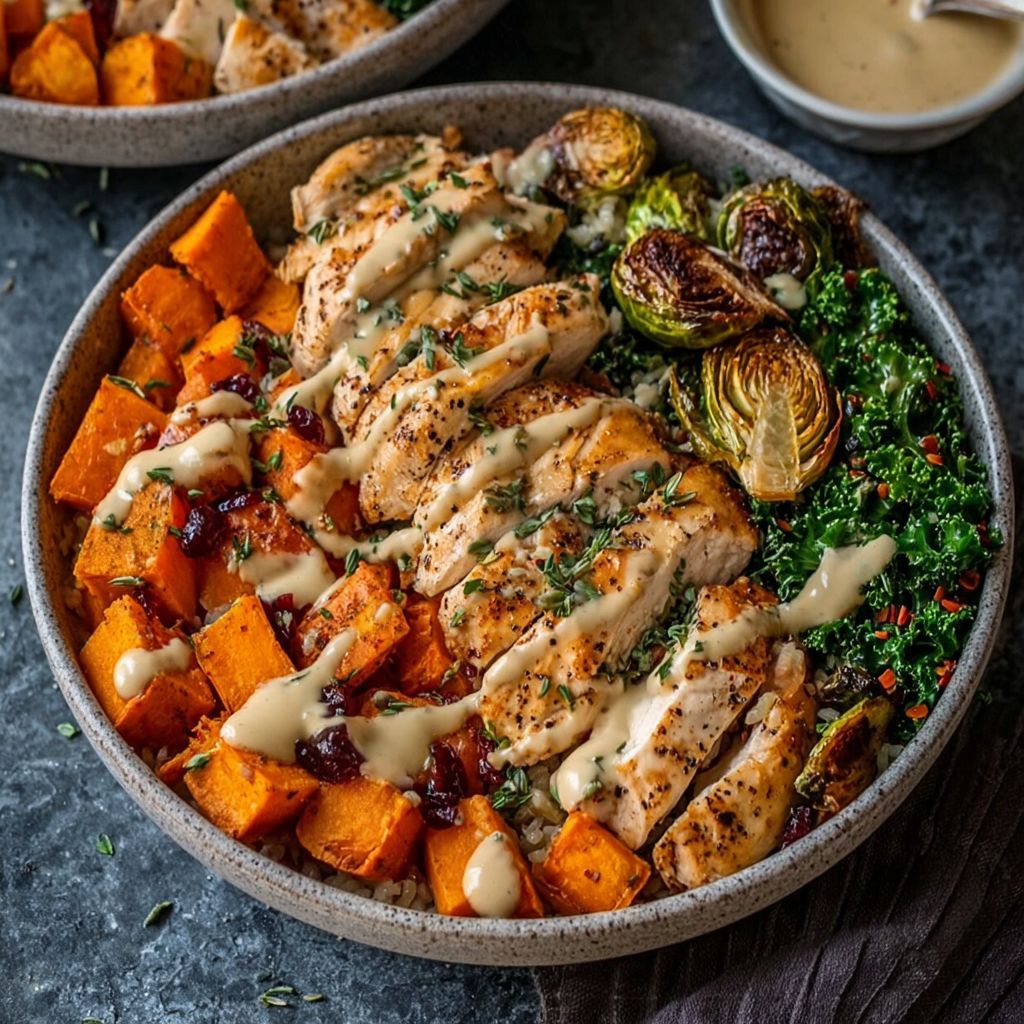
Maple Dijon Chicken Sweet Potato Bowls (High-Protein & Flavor-Packed)

Introduction
Here is a question worth asking at the start of any meal prep week: what if a single bowl recipe could simultaneously satisfy your need for something genuinely delicious, hit your protein targets, and come together in under 45 minutes with nothing more than a sheet pan and a skillet? According to a 2024 wellness and nutrition report by the International Food Information Council, 71% of Americans actively seek meals that combine high protein with complex carbohydrates and vegetables in a single serving — yet fewer than 30% of home cooks feel confident executing that combination without the result tasting like a meal plan rather than a meal. These maple Dijon chicken sweet potato bowls solve that problem directly.
The maple Dijon sauce is the axis around which everything in this bowl rotates. It is simultaneously sweet, tangy, savory, and just sharp enough from the mustard to cut through the natural sweetness of the roasted sweet potato and the richness of the chicken — a four-ingredient sauce that behaves like something a restaurant spent weeks developing. Paired with caramelized sweet potatoes, seared high-protein chicken, and a base of your choice, this bowl delivers 45+ grams of protein, genuine flavor complexity, and the kind of satisfying completeness that makes it one of the most repeatable recipes in any weekly rotation.
A 2023 food trend analysis by Datassential found that maple-mustard flavor profiles grew by 38% in restaurant menu appearances, driven by consumer appetite for sweet-savory combinations that feel indulgent without being heavy. This recipe brings that profile home and builds an entire meal around it.
Ingredients List
For the Maple Dijon Sauce
- 3 tbsp pure maple syrup
- 2 tbsp Dijon mustard
- 1 tbsp whole grain mustard (adds texture and visual appeal)
- 2 tbsp olive oil
- 1 tbsp apple cider vinegar
- 2 garlic cloves, finely minced
- ½ tsp smoked paprika
- ¼ tsp fine sea salt
- ¼ tsp black pepper
For the Chicken
- 600g (1.3 lbs) boneless, skinless chicken thighs (sub: chicken breast for lower fat)
- Salt and pepper to taste
- 1 tbsp olive oil
For the Roasted Sweet Potatoes
- 700g (1.5 lbs) sweet potatoes, peeled and cut into 2cm cubes
- 2 tbsp olive oil
- ½ tsp smoked paprika
- ½ tsp garlic powder
- ½ tsp fine sea salt
- ¼ tsp black pepper
For the Bowl Base (Choose One)
- Cooked quinoa, brown rice, or farro
- Mixed greens or baby spinach
- Cauliflower rice for a lower-carb option
For Toppings
- 2 tbsp pumpkin seeds or chopped pecans (toasted)
- 2 tbsp dried cranberries
- 2 spring onions, thinly sliced
- Fresh parsley or arugula
- Extra maple Dijon sauce for drizzling
Timing
- Prep Time: 15 minutes
- Cook Time: 30 minutes
- Total Time: 45 minutes
The sweet potatoes and chicken cook simultaneously — sweet potatoes in the oven, chicken on the stovetop — meaning the total active time is well under 20 minutes. Start the grain base first, roast the sweet potatoes, and sear the chicken while both are running. Everything finishes at roughly the same time.
Step-by-Step Instructions
Step 1: Make the Maple Dijon Sauce
Whisk together the maple syrup, both mustards, olive oil, apple cider vinegar, minced garlic, smoked paprika, salt, and pepper in a small bowl until completely smooth and emulsified. Divide the sauce into two equal portions — one for marinating and cooking the chicken, one reserved for drizzling over the finished bowls. This two-portion approach ensures the sauce used for raw chicken never contacts the finished dish.
Step 2: Roast the Sweet Potatoes
Preheat the oven to 425°F (220°C). Toss the cubed sweet potatoes with olive oil, smoked paprika, garlic powder, salt, and pepper until evenly coated. Spread in a single layer on a parchment-lined baking sheet with space between each piece — crowding creates steam rather than caramelization. Roast for 25–30 minutes, flipping halfway, until deeply golden on the cut sides and tender throughout. The edges should be slightly caramelized and the centers completely soft.
Key tip: Dry the sweet potato cubes with a paper towel before seasoning. Surface moisture prevents caramelization and produces pale, soft-edged cubes rather than the golden, slightly crispy result this bowl is built around.
Step 3: Sear and Glaze the Chicken
Season the chicken thighs with salt and pepper. Heat olive oil in a large skillet over medium-high heat until shimmering. Add the chicken smooth-side down and sear undisturbed for 4–5 minutes until deeply golden. Flip and cook for another 3–4 minutes. Reduce heat to medium-low, pour the first portion of maple Dijon sauce over the chicken, and toss to coat. Cook for 2–3 more minutes, turning occasionally, until the sauce thickens and caramelizes onto the chicken and it reaches an internal temperature of 165°F (74°C). The sauce will reduce and cling to the chicken in a glossy, deeply golden glaze.
Key tip: Do not add the sauce until the chicken is almost fully cooked — the sugar in the maple syrup burns quickly at high heat. Adding it in the final 2–3 minutes over reduced heat produces a caramelized glaze rather than a burnt coating.
Step 4: Rest and Slice the Chicken
Transfer the glazed chicken to a cutting board and rest for 5 minutes. Slice against the grain into strips or bite-sized pieces. Resting allows the juices to redistribute — chicken sliced immediately loses significantly more moisture onto the cutting board than chicken allowed to rest.
Step 5: Assemble the Bowls
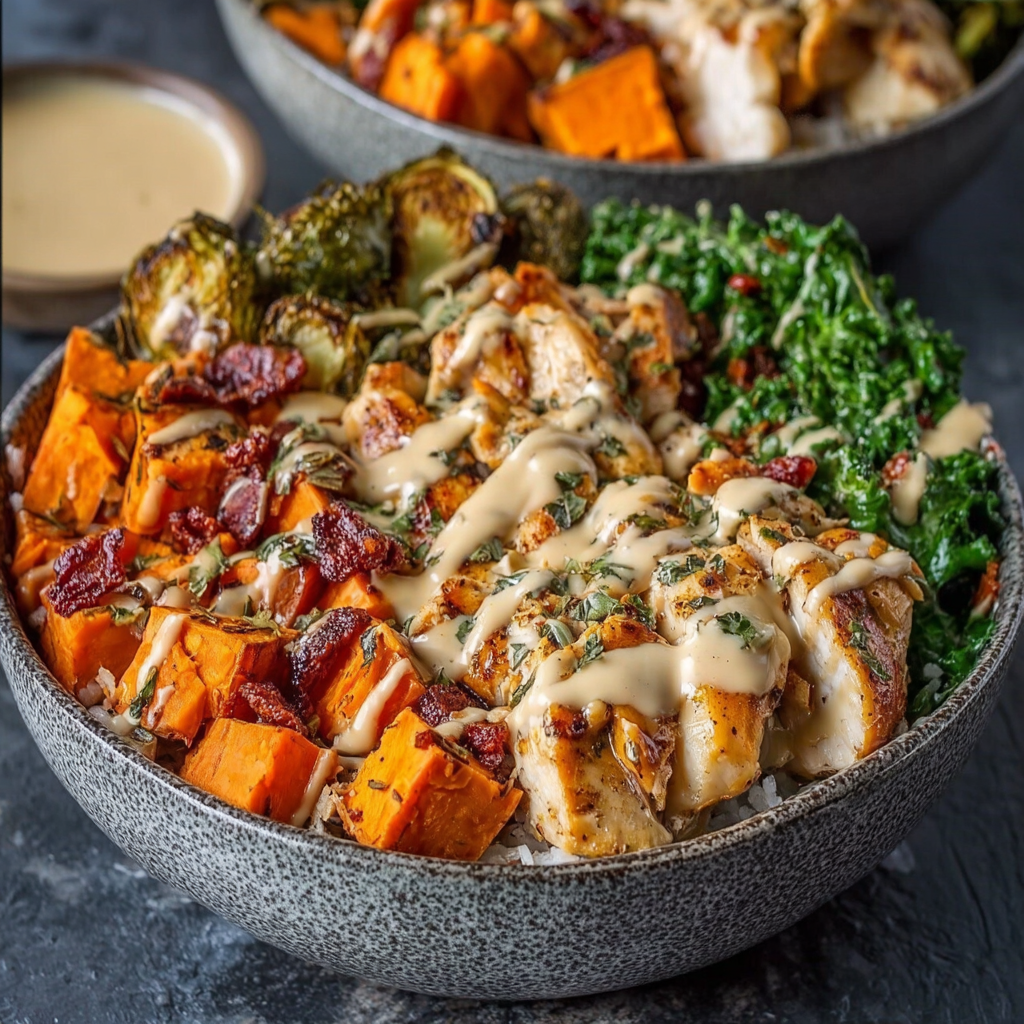
Divide the grain base or greens between four bowls. Add a generous portion of roasted sweet potatoes to each bowl. Arrange the sliced glazed chicken alongside the sweet potatoes. Scatter toasted pumpkin seeds, dried cranberries, spring onions, and fresh parsley over the top. Drizzle generously with the reserved maple Dijon sauce. Serve immediately or pack into airtight containers for meal prep.
Nutritional Information
Per serving — based on 4 bowls with quinoa base.
| Nutrient | Per Serving | % Daily Value* |
|---|---|---|
| Calories | 580 kcal | 29% |
| Total Fat | 22g | 28% |
| Saturated Fat | 4g | 20% |
| Total Carbohydrates | 58g | 21% |
| Total Sugar | 18g | — |
| Protein | 46g | 92% |
| Dietary Fiber | 8g | 29% |
| Sodium | 620mg | 27% |
| Potassium | 980mg | 21% |
| Vitamin A | 280% DV | 280% |
| Vitamin C | 30% DV | 30% |
| Iron | 18% DV | 18% |
*Based on a standard 2,000-calorie daily diet.
The Vitamin A content — 280% of the daily recommended value — comes almost entirely from the sweet potatoes and represents one of the highest single-meal Vitamin A contributions of any recipe in this series. At 46 grams of protein and 8 grams of fiber per serving, this bowl delivers complete macronutrient balance in a single dish.
Healthier Alternatives
Lower sugar: Reduce maple syrup to 1½ tablespoons and add ½ teaspoon of monk fruit sweetener to maintain the sweetness level. The sauce will be slightly less glossy but equally flavorful.
Lower carb: Use cauliflower rice as the base and reduce the sweet potato quantity to 400g. This brings total carbohydrates per serving to approximately 28g without compromising the flavor profile of the bowl.
Higher fiber: Use farro as the grain base instead of white rice — farro contains nearly three times the fiber of white rice and a pleasantly chewy, nutty texture that complements the sweet potato and chicken beautifully.
Dairy-free and whole30 compliant: The recipe is already dairy-free. For Whole30, replace maple syrup with ½ teaspoon of orange juice concentrate and substitute Dijon for a Whole30-approved mustard without added sweeteners.
Vegan adaptation: Replace chicken with two cans of drained white beans or a block of pressed, cubed extra-firm tofu. Toss in half the maple Dijon sauce and roast at 400°F (200°C) for 25 minutes until golden and glazed. The sauce works equally well on plant-based protein.
Serving Suggestions
Meal prep bowls: Assemble four containers with grain base, sweet potatoes, and sliced chicken. Store the sauce, toppings, and any greens separately. The assembled components keep for 4 days refrigerated — add fresh toppings and sauce at the moment of eating.
Warm grain bowl dinner: Serve with a simple side of roasted broccolini and a glass of dry white wine or sparkling water with lemon. The maple Dijon sauce pairs particularly well with the slight bitterness of broccolini.
Salad format: Skip the grain base entirely and build over a large bed of arugula or mixed greens. The warm sweet potato and chicken will slightly wilt the greens — which is desirable — and the maple Dijon sauce functions as the salad dressing.
Stuffed sweet potato: Halve and roast whole sweet potatoes instead of cubing them, and pile the sliced glazed chicken, toppings, and sauce directly into the hollowed potato halves. A format that is visually dramatic and requires zero grain cooking.
With a fried egg on top: Add a fried or soft-poached egg on top of the assembled bowl for a brunch variation that pushes the protein content toward 55 grams per serving and adds a richness from the yolk that integrates with the maple Dijon sauce beautifully.
Common Mistakes to Avoid
Adding the maple Dijon sauce to the chicken too early. The maple syrup burns at high heat, producing a bitter, acrid coating rather than a caramelized glaze. Always add the sauce only when the chicken is almost fully cooked and the heat has been reduced to medium-low.
Crowding the sweet potato pan. Sweet potatoes crowded on the baking sheet steam rather than roast, producing pale, soft-edged cubes rather than the caramelized, slightly crispy result that makes them the best component of the bowl. Use two pans if necessary.
Not dividing the sauce. Using the same sauce for marinating raw chicken and drizzling over the finished bowl is a food safety risk. Divide the sauce before any contact with raw protein — always.
Skipping the chicken rest. Five minutes of resting redistributes the juices back into the muscle fibers. Sliced immediately, the chicken loses a significant amount of moisture and arrives in the bowl drier than a rested piece.
Under-seasoning the sweet potatoes. Sweet potatoes have a naturally high sugar content that can make them taste flat without sufficient salt and spice. Season generously and taste one before assembling the bowls — if it tastes flat, add flaky sea salt directly before serving.
Storing Tips
Refrigerator: Store all components separately in airtight containers for up to 4 days. The maple Dijon sauce keeps for up to 2 weeks refrigerated in a sealed jar — make a double batch for use as a salad dressing, sandwich spread, or marinade throughout the week.
Reheating: Reheat the chicken and sweet potatoes together in a skillet over medium heat with a splash of water for 2–3 minutes, or microwave at 70% power in 90-second intervals. The sauce can be drizzled cold or warmed briefly — both work well.
Freezer: The glazed chicken freezes well for up to 2 months in a sealed bag. The sweet potatoes freeze adequately but soften considerably upon thawing — best made fresh or refrigerated rather than frozen. Thaw chicken overnight in the refrigerator before reheating.
Make-ahead sauce: The maple Dijon sauce is the most valuable make-ahead component in this recipe. Made in a large batch and stored in the refrigerator, it transforms any protein or vegetable into a version of this bowl in under 20 minutes on any weeknight.
Conclusion
These maple Dijon chicken sweet potato bowls prove that a high-protein, nutrient-dense meal and a genuinely crave-worthy dinner are not mutually exclusive categories. A four-ingredient sauce, one sheet pan, and one skillet produce a bowl with 46 grams of protein, 280% of the daily Vitamin A requirement, and a flavor profile that makes it the most requested recipe in any meal prep rotation it enters.
Make it this week and share your results in the comments — tell us which base you chose, whether you tried the fried egg variation, and how many days the meal prep lasted before it was all gone. Leave a review, share with someone who needs a better meal prep option, and subscribe to our newsletter for more high-protein, flavor-first bowl recipes every week.
FAQs
Can I use chicken breast instead of thighs? Yes — chicken breast works well but requires more careful attention during searing as it overcooks more quickly than thighs. Slice breast into thicker strips before cooking, reduce the searing time to 3 minutes per side, and pull from the heat the moment it reaches 165°F (74°C). The leaner profile of breast meat reduces the fat per serving by approximately 6 grams.
Can I roast the chicken instead of pan-searing it? Absolutely. Toss the chicken thighs in half the sauce, place on the same baking sheet as the sweet potatoes in a separate section, and roast at 425°F (220°C) for 22–25 minutes until cooked through. This produces an oven-only version that requires even less active attention and produces excellent results.
What grain base works best? Quinoa is the top recommendation — it provides a complete protein, cooks in 15 minutes, and has a neutral flavor that allows the maple Dijon sauce to remain the dominant flavor of the bowl. Farro is the best choice for maximum fiber and texture. Brown rice is the most budget-friendly option. All three work well.
Can I make the sauce ahead? Yes — and it is strongly recommended. The sauce keeps for up to 2 weeks refrigerated and improves over the first 24–48 hours as the garlic mellows and the flavors integrate. Make a double or triple batch and use it as a salad dressing, grain bowl sauce, or protein marinade throughout the week.
Is this recipe suitable for meal prep? It is one of the most reliable meal prep recipes in this entire series. The components hold independently for 4 days, reheat well, and the sauce — applied fresh at the moment of eating — keeps every bowl tasting freshly made rather than reheated. Prepare on Sunday for ready-made lunches through Thursday.
How do I make this recipe Whole30 compliant? Replace the maple syrup with ½ teaspoon of freshly squeezed orange juice and use a Whole30-approved Dijon mustard without added sugar or wine. The sauce will be slightly less sweet but equally savory and complex. Serve over cauliflower rice and omit the dried cranberries, which contain added sugar in most commercial varieties.