Follow Me On Social Media!
Matcha Overnight Oats

Introduction
Here is a question worth asking before the next busy morning: what if the most energizing, most nutritionally complete, most genuinely satisfying breakfast you could have was entirely finished before you went to sleep the night before — requiring not a single additional action in the morning beyond opening the refrigerator and adding a topping?
According to a 2024 consumer wellness report by Mintel, overnight oats represent the most consistently prepared make-ahead breakfast category among health-conscious working adults globally — yet the majority of overnight oat preparations fall into a predictable flavor monotony of berries and honey that fails to take advantage of the format’s extraordinary potential for genuinely sophisticated, deeply flavored breakfast combinations. Matcha — the Japanese stone-ground green tea powder that has become one of the most studied functional food ingredients in nutritional science — transforms the overnight oat format from pleasant utility into something that tastes considered, complex, and genuinely exciting to return to every morning.
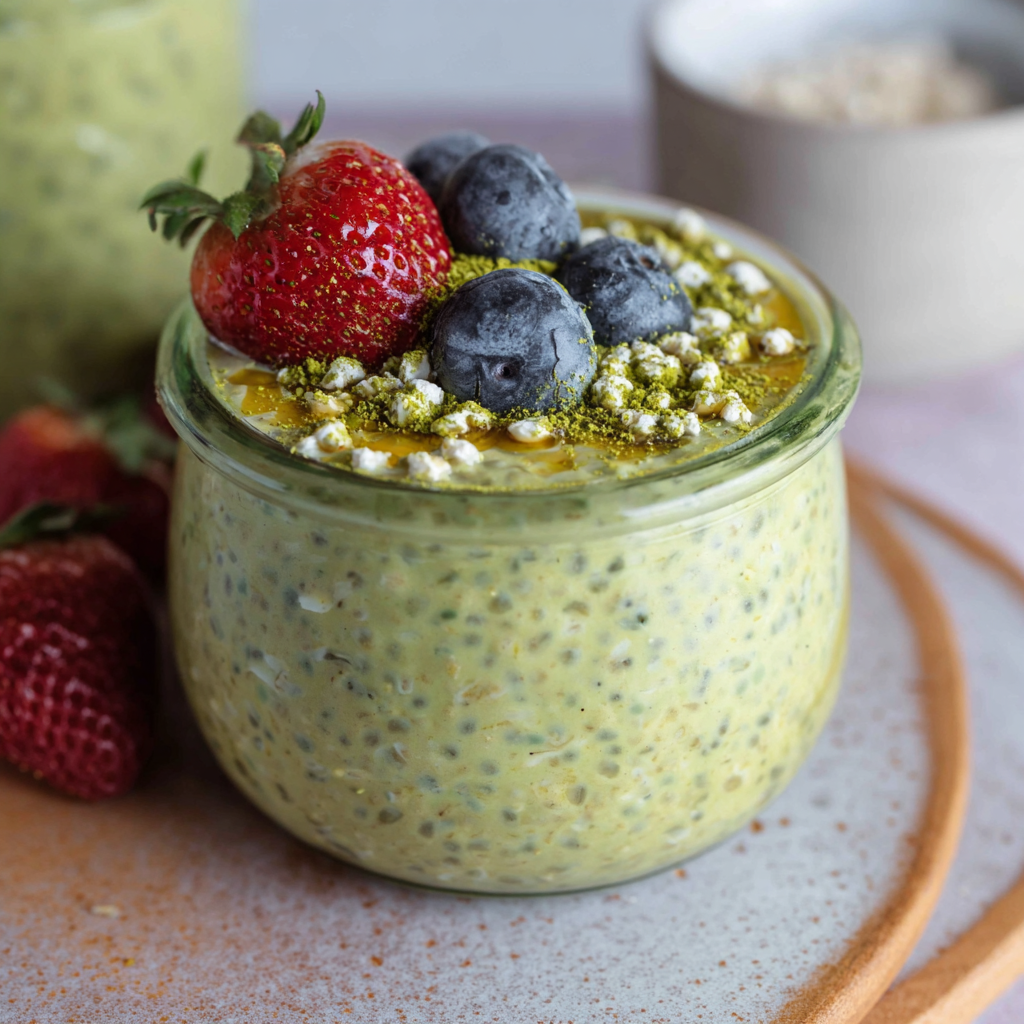
These matcha overnight oats combine the earthy, slightly bitter, deeply umami character of ceremonial-grade matcha with the natural creaminess of overnight-soaked rolled oats, the sweetness of honey and ripe banana, and the protein contribution of Greek yogurt into a breakfast that is simultaneously energizing through matcha’s combination of caffeine and L-theanine, filling through the sustained-release carbohydrates of oats and the protein of yogurt, and genuinely delicious in the way that makes preparing the next batch feel like a priority rather than an obligation.
A 2023 review in the Journal of Nutritional Biochemistry identified L-theanine — the amino acid unique to tea leaves and most concentrated in shade-grown matcha — as producing a measurably different cognitive state than caffeine alone, characterized by alert calm rather than stimulated anxiety, with studies showing improved sustained attention, faster reaction times, and reduced perceived stress compared to equivalent caffeine from coffee. The oats’ beta-glucan fiber and the yogurt’s complete protein extend this alert state through the morning by maintaining stable blood glucose — producing a breakfast that is as functionally compelling as it is culinarily excellent.
Ingredients List
For the Base (Per Jar — Double or Triple for Meal Prep)
- ½ cup (45g) old-fashioned rolled oats (not instant — the texture after overnight soaking is dramatically better)
- 1 tsp ceremonial-grade matcha powder (culinary grade works but ceremonial produces a smoother, less bitter flavor)
- 1 tbsp chia seeds (absorb liquid overnight and contribute omega-3, fiber, and a pudding-like texture)
- ¾ cup (180ml) milk of choice (whole milk, oat milk, or almond milk — each produces slightly different results)
- ¼ cup (60g) full-fat plain Greek yogurt (adds protein, creaminess, and a pleasant tang)
- 1–2 tbsp honey or maple syrup (matcha requires more sweetener than plain overnight oats — its bitterness needs balancing)
- ½ tsp vanilla extract
- Pinch of fine sea salt
Optional Add-Ins (Mixed Into the Base)
- 1 tbsp natural almond or peanut butter (adds healthy fat and protein — matcha and nut butter is a quietly extraordinary pairing)
- 1 tbsp hemp seeds (adds complete plant protein)
- ½ ripe banana, mashed (natural sweetness and creaminess)
For Toppings (Added at Serving)
- Fresh fruit: mango cubes, kiwi slices, raspberries, or sliced banana
- 2 tbsp granola (added immediately before eating for crunch)
- 1 tsp matcha powder, dusted over the surface (the most visually impactful finishing touch)
- Drizzle of honey or maple syrup
- Toasted sesame seeds or black sesame (the Japanese pairing with matcha is particularly beautiful)
- White chocolate chips (the sweetness complements matcha’s bitterness in a particularly compelling way)
- Coconut flakes, toasted
Timing
- Active Prep Time: 5 minutes (the evening before)
- Overnight Rest: 6–8 hours (minimum 4 hours)
- Morning Prep: 2 minutes (toppings only)
- Total Time: 5 minutes active
The overnight rest is not merely convenient — it is the technique that transforms hard, chewy oats and dry chia seeds into a creamy, pudding-like texture where every component has absorbed the surrounding liquid and the flavors have fully integrated.
Step-by-Step Instructions
Step 1: Bloom the Matcha
Place the matcha powder in the bottom of a jar or bowl. Add 2 tablespoons of the milk — warm if possible, approximately 70–80°C (160–175°F) — and whisk vigorously with a small whisk, a matcha whisk (chasen), or a fork until the matcha is completely dissolved with no dry clumps remaining. This blooming step is the most important preparation in the recipe — matcha powder is hydrophobic and will not dissolve evenly in cold milk without this prior whisking step, producing a gritty, uneven mixture with visible clumps of undissolved matcha throughout the finished oats.
Key tip: Sifting the matcha powder through a fine mesh sieve before blooming eliminates any pre-existing clumps and produces a completely smooth bloom in half the time. Matcha that has been stored improperly may have clumped in the container — sifting before use addresses this reliably.
Step 2: Build the Overnight Oat Base
To the bloomed matcha, add the rolled oats, chia seeds, remaining milk, Greek yogurt, honey or maple syrup, vanilla extract, and salt. Stir thoroughly until every component is evenly distributed and the matcha is uniformly colored throughout — the finished mixture should be an even, vibrant green with no streaks of white yogurt or yellow milk visible. Add any optional add-ins at this stage.
Taste the mixture before refrigerating — it should taste noticeably more bitter than the target final flavor, as the overnight soak mellows the matcha’s bitterness significantly. If it tastes pleasant and balanced at this stage, add an additional ½ teaspoon of honey — the morning version will taste insufficiently sweet.
Step 3: Refrigerate Overnight
Seal the jar or cover the bowl with plastic wrap and refrigerate for a minimum of 4 hours — overnight (6–8 hours) produces the best result. During this period, the oats absorb the surrounding milk and yogurt and soften completely, the chia seeds absorb the remaining liquid and swell to produce a pudding-like body, the matcha mellows from sharp and slightly bitter to smooth and earthy, and every flavor integrates into a cohesive, deeply flavored breakfast.
Key tip: Use a jar with sufficient volume for the oats to expand — overnight oats approximately double in volume during soaking. A ½ cup of dry oats requires at least a 400ml (14 oz) jar.
Step 4: Morning Assembly
Remove from the refrigerator and stir once — the mixture may have separated slightly, with excess liquid sitting on top. If the texture is thicker than preferred, add a splash of milk and stir to adjust. Taste and add additional honey if needed.
Add all toppings immediately before eating — never the night before, as granola softens, fresh fruit releases juice, and any other textural component deteriorates during refrigeration. The toppings should be added in the last 60 seconds before the first spoonful.
Nutritional Information
Per serving — single jar with Greek yogurt, chia seeds, and honey, without toppings.
| Nutrient | Per Serving | % Daily Value* |
|---|---|---|
| Calories | 385 kcal | 19% |
| Total Fat | 9g | 12% |
| Saturated Fat | 2.5g | 13% |
| Total Carbohydrates | 60g | 22% |
| Total Sugar | 22g | — |
| Protein | 16g | 32% |
| Dietary Fiber | 8g | 29% |
| Sodium | 110mg | 5% |
| Calcium | 22% DV | 22% |
| Iron | 18% DV | 18% |
| Magnesium | 20% DV | 20% |
*Based on a standard 2,000-calorie daily diet.
The dietary fiber content at 29% of the daily recommended value — driven by the combination of oat beta-glucan, chia seed soluble fiber, and the oat cell wall polysaccharides — makes this one of the highest single-meal fiber contributions available from a breakfast preparation. The magnesium at 20% of the daily recommended value reflects the combined contribution of oats, chia seeds, and matcha — all among the most meaningful dietary magnesium sources available.
Healthier Alternatives
Higher protein: Add 1 scoop of vanilla or unflavored protein powder to the base mixture — whisk smooth before adding the oats. This pushes the protein content above 30 grams per serving, making the jar a genuinely complete post-workout recovery breakfast. Plant-based pea protein integrates particularly smoothly.
Lower sugar: Reduce the honey to 1 teaspoon and add ½ a ripe, mashed banana — the natural fructose provides sweetness with additional potassium, Vitamin B6, and prebiotic fiber. Medjool dates blended smooth with the milk before adding to the oats produce a refined-sugar-free sweetness with a caramel depth that pairs beautifully with matcha.
Dairy-free: Replace Greek yogurt with coconut yogurt and use oat or almond milk throughout. Oat milk produces the creamiest, most neutral-flavored dairy-free version — its natural sweetness also reduces the need for added sweetener.
Lower calorie: Reduce the rolled oats to ⅓ cup and increase the chia seeds to 2 tablespoons — the chia seeds produce more volume-per-calorie and keep the satiating fiber content high while reducing the total calorie count by approximately 60 calories per jar.
Gut health focus: Add 1 tablespoon of psyllium husk and use a probiotic-rich kefir in place of milk. The psyllium husk thickens the mixture further and adds additional prebiotic fiber alongside the beta-glucan from the oats and the inulin from the chia seeds — a breakfast with an extraordinary prebiotic and probiotic combination in a single jar.
Serving Suggestions
Japanese-inspired: Top with fresh mango cubes, a drizzle of condensed milk, black sesame seeds, and a dusting of matcha powder. This is the format that most clearly communicates the Japanese provenance of the matcha and produces the most visually striking presentation — the green oats, the orange mango, the black sesame, and the white condensed milk drizzle create a genuinely beautiful bowl.
Tropical variation: Top with diced fresh mango, toasted coconut flakes, a drizzle of coconut cream, and crushed macadamia nuts. The tropical pairing with matcha is less traditional but unexpectedly harmonious — the coconut and macadamia amplify the richness of the base while the mango brightens it.
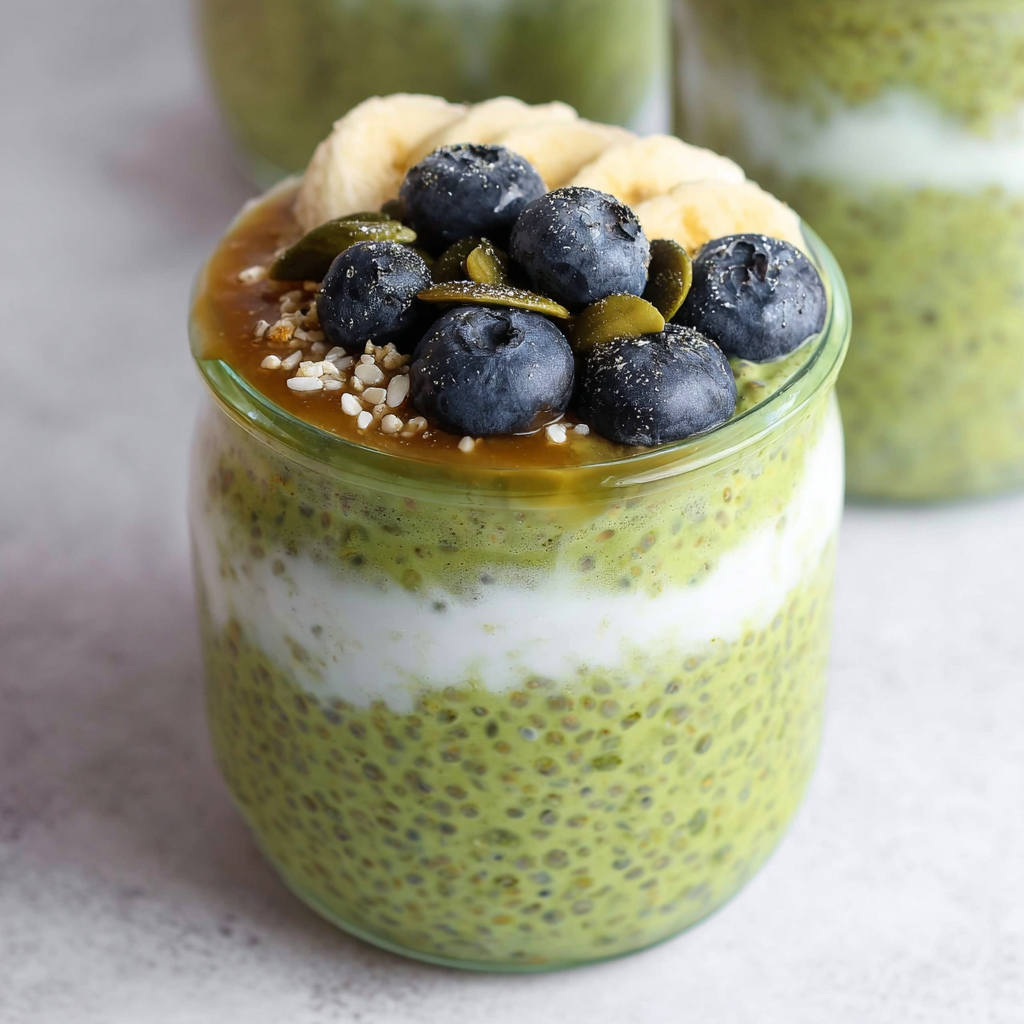
Classic breakfast bowl: Top with granola, sliced banana, fresh raspberries, and a drizzle of honey. This is the most universally accessible format and the one that introduces matcha overnight oats most gently to someone unfamiliar with the matcha flavor.
Meal prep format: Prepare 5 jars simultaneously on Sunday evening — 5 days of breakfast complete in under 15 minutes. Store in the refrigerator and add toppings each morning directly before eating. This is the most practical format for working adults and the one that produces the greatest daily consistency in nutritional intake.
As a dessert: Serve chilled matcha overnight oats in a small glass with white chocolate chips, toasted coconut, and a maraschino cherry — the dessert format turns an everyday breakfast into an elegant after-dinner treat that tastes considerably more indulgent than it is.
Common Mistakes to Avoid
Not blooming the matcha before adding other ingredients. Matcha powder added directly to cold milk or yogurt without prior whisking in warm liquid produces a gritty, clumped mixture with visible green powder throughout rather than the smooth, even coloring of properly bloomed matcha. Two minutes of whisking with warm milk eliminates this entirely.
Using too little sweetener. Matcha is significantly more bitter than most breakfast ingredients and requires more sweetener to balance than plain overnight oats. The common mistake is using the same sweetener quantity as a plain overnight oat recipe and producing oats that taste flat or harsh in the morning. Start with 1½ tablespoons of honey for a ½ cup of oats with 1 teaspoon of matcha.
Using instant oats. Instant oats dissolve into a porridge-like paste during overnight soaking rather than maintaining the chewy, pleasantly textured result of old-fashioned rolled oats. The texture difference between instant and rolled oats in overnight preparations is dramatic — always use old-fashioned rolled oats.
Adding toppings the night before. Granola softens completely, fresh fruit releases juice that dilutes the surrounding mixture, and any other textural element deteriorates overnight. Add all toppings within 60 seconds of eating, without exception.
Not tasting before refrigerating. The bitterness of matcha mellows significantly during overnight soaking, but a mixture that tastes correctly balanced at room temperature will taste insufficiently sweet in the morning after the matcha has softened. The mixture should taste slightly too sweet and slightly too bitter simultaneously when first assembled — both extremes mellow toward balance overnight.
Storing Tips
Refrigerator: Store sealed jars for up to 5 days — the texture and flavor improve over the first 24 hours as the oats fully hydrate and the matcha integrates completely. After day 3, the oats become progressively softer and the chia seeds continue absorbing liquid, producing a thicker texture that some people prefer and others find too dense.
Adjusting texture on subsequent days: Add a splash of milk and stir before eating — each additional day in the refrigerator requires a small amount of additional liquid to restore the original consistency as the oats continue absorbing.
Freezer: Freeze without toppings in sealed jars for up to 2 months. Thaw overnight in the refrigerator. The texture after thawing is slightly softer than fresh but remains entirely acceptable — a practical approach for batch preparation that extends beyond the refrigerator window.
Topping storage: Pre-portion toppings into small containers alongside the oat jars in the refrigerator for the most efficient morning routine — everything is ready to add with zero decision-making required.
Conclusion
Matcha overnight oats prove that the most nourishing, most energizing, and most genuinely delicious breakfast is also one of the most effortless — five minutes the evening before, five minutes of toppings in the morning, and a jar that delivers the alert calm of L-theanine, the sustained energy of oat beta-glucan, the protein of Greek yogurt, and a flavor combination so distinctive and satisfying that returning to plain overnight oats feels like a step backward. The breakfast that makes mornings worth preparing for.
Make a batch tonight and share your results in the comments — tell us which matcha grade you used, which toppings you chose, and whether the L-theanine effect was as distinctive as the recipe suggests. Leave a review, share with someone who needs a better morning routine, and subscribe to our newsletter for more make-ahead, functional, deeply flavored breakfast recipes every week.
FAQs
What is the difference between ceremonial and culinary matcha? Ceremonial-grade matcha is made from the youngest, most shade-grown tea leaves, stone-ground to a fine powder, and intended for drinking as tea — it has the smoothest, least bitter flavor and the most vibrant green color of any grade. Culinary-grade matcha is made from older, larger leaves with a slightly more bitter, less nuanced flavor designed for use in baked goods where other flavors are present. For overnight oats where the matcha is the primary flavor, ceremonial grade produces a measurably better result — less bitter, more complex, more vibrant. The cost difference is significant but the flavor difference justifies it for daily preparation.
How much matcha should I use per jar? One teaspoon per ½ cup of oats is the standard ratio — producing a clearly matcha-flavored but balanced result. For a more intense, more bitter matcha character, use 1½ teaspoons and increase the honey proportionally. For an introduction to matcha flavor for those unfamiliar with it, ½ teaspoon produces a subtly earthy green tea note that is approachable without being challenging.
Can I make matcha overnight oats without chia seeds? Yes — the chia seeds contribute body, omega-3 fatty acids, and additional fiber but the recipe works without them. Omitting the chia seeds produces a slightly less thick, less pudding-like texture — compensate by reducing the milk by 2 tablespoons to maintain the correct final consistency. The chia seeds are recommended for their nutritional contribution and textural improvement but are not structural to the recipe.
Why are my overnight oats too thick in the morning? Oats and chia seeds continue absorbing liquid overnight — a mixture assembled with the correct consistency before refrigerating will be significantly thicker in the morning. Add 2–3 tablespoons of milk and stir vigorously before eating to restore the original creamy, flowing consistency. This adjustment takes 30 seconds and produces the correct texture from what would otherwise be an unpleasantly dense breakfast.
Can I eat matcha overnight oats warm? Yes — transfer to a microwave-safe bowl and heat at 70% power for 60–90 seconds, stirring once. The warmed version loses the refreshing, cold-breakfast character of the overnight format but gains the comforting quality of warm porridge. The matcha flavor is slightly more prominent when warm. Add toppings after warming and adjust with additional milk if the heated version has thickened beyond the preferred consistency.
Is matcha overnight oats suitable for children? Matcha contains caffeine — approximately 30–40mg per teaspoon, comparable to one-third of a standard coffee serving. For children, reduce the matcha to ¼ teaspoon for a gentle green tea flavor with minimal caffeine, or use hojicha powder — a roasted Japanese green tea with less than 10% of matcha’s caffeine content — as a substitute that produces a warm, caramel-toned overnight oat with comparable Japanese character and no meaningful stimulant effect.