Follow Me On Social Media!
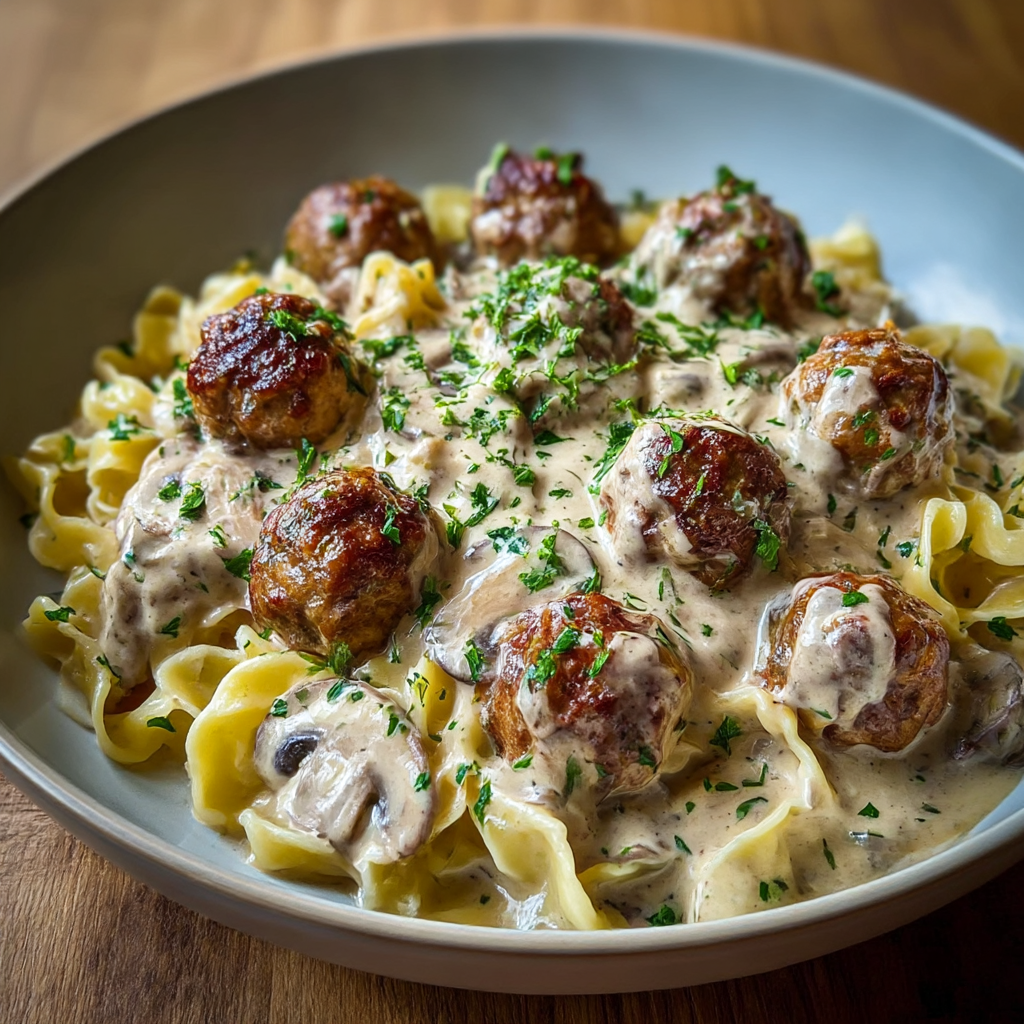
Meatball Stroganoff

Introduction
Here is a question worth asking on any evening when comfort food is the only acceptable answer: what happens when you take the two most satisfying elements of two separate classic dishes — the deeply flavored, yielding meatball from Italian-American cooking and the silky, tangy, mushroom-enriched cream sauce from Russian stroganoff — and combine them into a single preparation that honors both traditions while producing something more compelling than either achieves independently?
According to a 2024 comfort food trend report by the Food Network, stroganoff-style preparations rank as the most searched cream sauce dinner category in American home cooking — yet the standard beef strip version, while excellent, represents only one possibility within the sauce format that made the dish famous. This meatball stroganoff makes the case that meatballs — with their combination of seasoned, browned exterior and tender, juicy interior — are the superior protein format for stroganoff sauce, providing more surface area for the sauce to cling to, more concentrated beef flavor per bite, and the deeply satisfying experience of a self-contained morsel of seasoned meat in a glossy, tangy cream sauce that coats every noodle and every meatball simultaneously.
The sauce is built on the classic stroganoff principles — sautéed mushrooms, sautéed onions, beef broth, Dijon mustard, Worcestershire, and sour cream added at the very end — but the meatballs contribute an additional layer of flavor: the browning of their surfaces creates fond in the pan, which dissolves into the sauce and adds the kind of concentrated beef richness that strip beef, seared only briefly, cannot develop in equivalent time. A 2023 culinary science review in the journal Food Quality and Preference confirmed that ground beef browned in small pieces — as in meatballs — develops a significantly higher concentration of Maillard reaction flavor compounds per gram of protein than larger cuts seared for equivalent time, explaining why meatball-based dishes consistently taste more deeply savory than their ingredient lists suggest.
Ingredients List
For the Meatballs
- 500g (1.1 lbs) ground beef (80/20 — the fat keeps the meatballs juicy through the sauce braise)
- ½ cup (50g) fresh breadcrumbs (from 1–2 slices of crustless white bread — blended or grated)
- ¼ cup (60ml) whole milk (soaked with the breadcrumbs — the panade technique)
- 1 large egg
- 3 garlic cloves, finely minced
- ¼ cup (15g) fresh flat-leaf parsley, finely chopped
- 1 tsp fine sea salt
- ½ tsp freshly ground black pepper
- ½ tsp smoked paprika
- ½ tsp dried thyme
- ¼ tsp ground nutmeg (classical meatball seasoning — subtle but essential)
- 2 tbsp Parmesan, finely grated (optional — adds savory depth)
For the Stroganoff Sauce
- 2 tbsp unsalted butter
- 1 tbsp olive oil
- 1 medium onion, finely diced
- 4 garlic cloves, finely minced
- 350g (12 oz) cremini mushrooms, thickly sliced
- 2 tbsp all-purpose flour
- 1 cup (240ml) beef stock (good quality — it is the primary flavor base)
- ½ cup (120ml) dry white wine (sub: additional beef stock with 1 tsp white wine vinegar)
- 1 tbsp Worcestershire sauce
- 1 tbsp Dijon mustard
- 1 tsp smoked paprika
- ½ tsp dried thyme
- 1 bay leaf
- Salt and white pepper to taste
- ½ cup (120ml) sour cream (full-fat — added completely off the heat)
- 2 tbsp fresh flat-leaf parsley, roughly chopped (for finishing)
For Serving
- 400g (14 oz) egg noodles, tagliatelle, or wide pasta
- Extra sour cream alongside
- Fresh dill or parsley, for garnish
- Crusty bread, for sauce-mopping
Timing
- Meatball Prep: 10 minutes
- Browning the Meatballs: 8 minutes
- Sauce Building: 15 minutes
- Braising Time: 15 minutes
- Total Time: approximately 50 minutes
Step-by-Step Instructions
Step 1: Make the Panade and the Meatball Mixture
Combine the fresh breadcrumbs and whole milk in a large bowl and mash together with a fork until a smooth paste forms — this is the panade, the technique used in professional kitchens to produce meatballs that remain tender and moist through frying, browning, and braising. The starch from the bread absorbs the milk, swells, and creates a gel that coats the protein fibers of the meat and prevents them from contracting and toughening under heat. Without the panade, meatballs browned and then braised in sauce become dense and rubbery — with it, they remain tender and yielding throughout the cooking process.
Add the ground beef, egg, minced garlic, parsley, salt, pepper, smoked paprika, dried thyme, nutmeg, and Parmesan to the panade. Mix with your hands until just combined — vigorous over-mixing develops the protein network in the meat and produces dense, tough meatballs. The mixture should hold together when pressed but feel slightly sticky and loose rather than firm and cohesive.
Key tip: The panade is the most important technique in the recipe. A meatball without a panade that is browned and then braised in liquid will be dense and dry by the time the sauce is finished. The panade-enriched meatball remains tender through the entire process.
Step 2: Shape the Meatballs
Using slightly wet hands — which prevent the mixture from sticking — roll the mixture into balls approximately 4cm (1½ inches) in diameter. Uniform size ensures even cooking — smaller meatballs cook through more quickly and can overcook during the sauce braise, while larger meatballs take too long to cook through. Place on a parchment-lined plate as they are shaped.
Refrigerate the shaped meatballs for 10 minutes before browning — the brief chill firms the exterior and allows the meatballs to hold their shape more reliably during the browning stage, producing rounder, less deformed meatballs with a more even crust.
Step 3: Brown the Meatballs
Heat 1 tablespoon of oil in a large, wide skillet over medium-high heat until shimmering. Working in batches — never crowding the pan — brown the meatballs for 2–3 minutes per side until a deep golden-brown crust has formed on all surfaces. They do not need to be cooked through at this stage — they will finish in the sauce. Transfer to a plate and set aside.
The fond left in the pan from browning the meatballs — the dark, caramelized residue on the pan bottom — is concentrated flavor. Do not clean the pan or discard this residue. The sauce is built directly in the same pan, incorporating every bit of this flavor.
Key tip: Medium-high rather than high heat produces the most even, controlled browning without burning. The meatballs should sizzle immediately on contact with the pan and produce a clean, golden crust without developing dark, charred patches before the interior has time to warm.
Step 4: Build the Sauce Base
In the same pan with the meatball fond, reduce the heat to medium and add the butter and remaining tablespoon of oil. Add the diced onion and cook for 4–5 minutes until softened and translucent. Add the garlic and cook for 30 seconds. Add the sliced mushrooms in a single layer — leave undisturbed for 2 full minutes to allow one side to caramelize before stirring. Cook for another 2 minutes until the mushrooms are golden and the moisture has evaporated.
Sprinkle the flour over the mushroom and onion mixture and stir continuously for 1–2 minutes until the raw flour smell disappears and the mixture turns slightly golden — this is the roux that will thicken the sauce. The flour must be cooked for the full 1–2 minutes or a raw, starchy flavor will persist through the finished sauce regardless of the cooking time that follows.
Step 5: Build the Liquid and Return the Meatballs
Add the white wine to the pan and scrape vigorously to dissolve the meatball fond from the bottom — this deglazing step incorporates the most concentrated flavor in the pan into the sauce. Allow to reduce by half — approximately 2 minutes. Add the beef stock, Worcestershire sauce, Dijon mustard, smoked paprika, dried thyme, and bay leaf. Stir together and bring to a gentle simmer.
Return the browned meatballs to the sauce, nestling them into the liquid so each one is at least halfway submerged. Cover with a lid and braise over the lowest heat setting for 15 minutes until the meatballs are cooked through and the sauce has thickened slightly around them.
Step 6: Add the Sour Cream
Remove the pan from heat entirely. Remove and discard the bay leaf. Allow the sauce to cool for 2 minutes — it should be hot but not actively bubbling. Add the sour cream in two additions, stirring gently after each until completely incorporated into the sauce. The sauce will lighten from a deep brown to a warm, creamy taupe — the characteristic color of a properly finished stroganoff. Return to the absolute lowest heat setting and warm gently for 2–3 minutes — do not allow to simmer or boil, which would cause the sour cream to curdle and separate.
Taste and adjust — additional Dijon for sharpness, Worcestershire for depth, salt and white pepper for seasoning. Add the fresh parsley and stir through.
Key tip: Sour cream curdled by heat cannot be rescued. Remove from heat, wait 2 minutes, add the sour cream off the heat, and then return to the gentlest possible warmth. This sequence produces a smooth, silky sauce every time.
Step 7: Serve
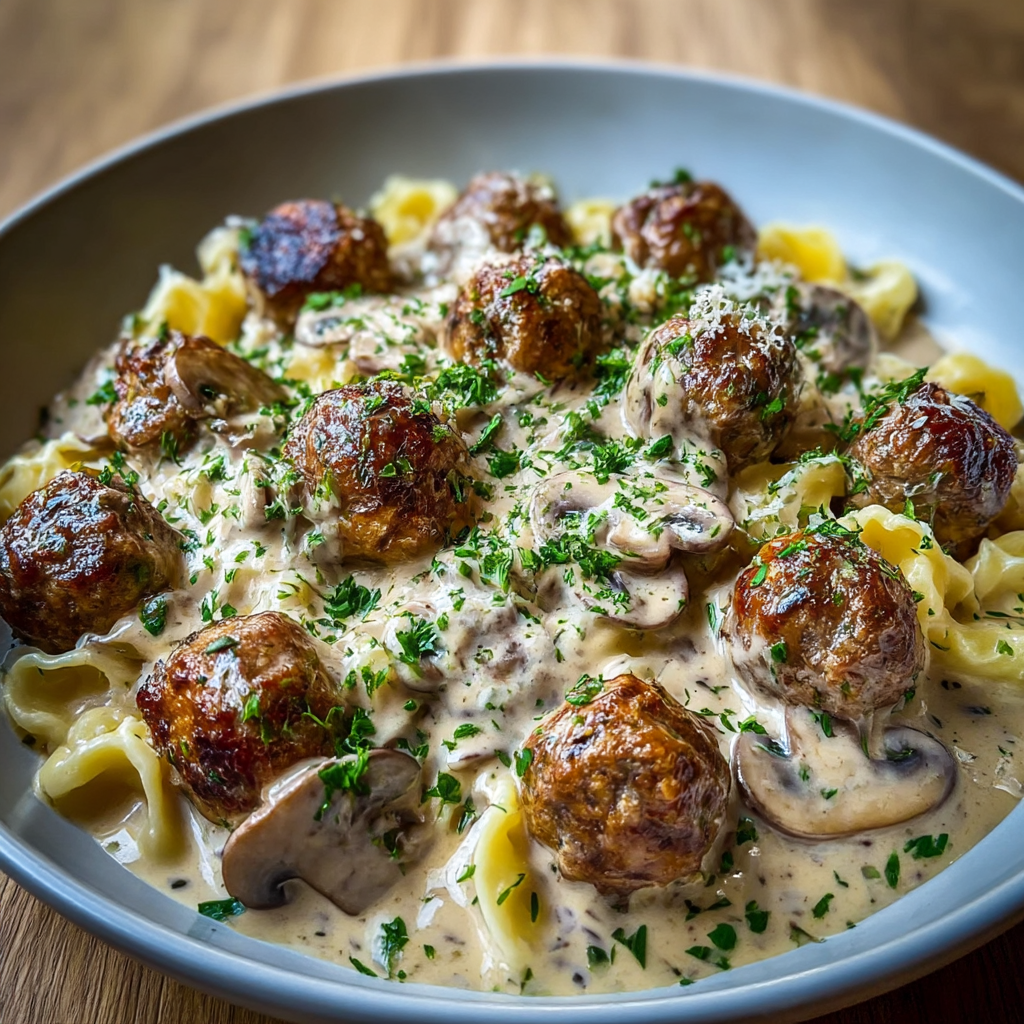
Cook the egg noodles or pasta according to package directions. Serve the meatball stroganoff generously over the pasta, ensuring every portion gets multiple meatballs and an equal share of the mushroom-enriched sauce. Garnish with fresh dill or parsley, a small extra dollop of sour cream, and serve with crusty bread alongside.
Nutritional Information
Per serving — based on 4 servings with egg noodles.
| Nutrient | Per Serving | % Daily Value* |
|---|---|---|
| Calories | 680 kcal | 34% |
| Total Fat | 30g | 38% |
| Saturated Fat | 12g | 60% |
| Total Carbohydrates | 64g | 23% |
| Total Sugar | 6g | — |
| Protein | 42g | 84% |
| Dietary Fiber | 4g | 14% |
| Sodium | 820mg | 36% |
| Potassium | 820mg | 17% |
| Iron | 28% DV | 28% |
| Zinc | 35% DV | 35% |
| Vitamin B12 | 50% DV | 50% |
*Based on a standard 2,000-calorie daily diet.
The Vitamin B12 content at 50% of the daily recommended value — from the ground beef — and the zinc at 35% of the daily value support neurological function and immune response respectively, making this one of the more nutritionally complete comfort food dinners in any category.
Healthier Alternatives
Leaner meatballs: Replace 80/20 ground beef with a combination of 90/10 ground beef and ground turkey in equal parts. Increase the milk in the panade by 1 tablespoon to compensate for the reduced fat content and maintain moisture through the braising process.
Lower fat sauce: Replace the sour cream with full-fat Greek yogurt added completely off the heat. The yogurt produces a tangier, slightly less rich sauce with comparable creaminess and significantly less saturated fat.
Higher vegetable content: Double the mushrooms to 700g and add 1 cup of baby spinach wilted into the sauce in the final 2 minutes of braising. The additional mushrooms deepen the umami character of the sauce while the spinach adds iron, folate, and Vitamin K.
Gluten-free: Replace the breadcrumbs in the panade with an equal weight of cooked white rice mashed smooth, use cornstarch instead of flour in the sauce roux, and serve over certified gluten-free pasta or steamed rice.
Lower sodium: Use a low-sodium beef stock, reduce the Worcestershire sauce to 1½ teaspoons, and omit the salt from the meatball mixture — the Parmesan contributes sufficient seasoning alongside the other aromatics.
Serving Suggestions
Over egg noodles: The classic and most complementary format — the wide, flat noodles catch the sauce in their curves and provide the starchy, slightly chewy base that makes every forkful a combination of noodle, sauce, and meatball.
Over mashed potatoes: Spoon the meatball stroganoff over a generous mound of buttery mashed potatoes for the most indulgent, most comfort-forward serving format — the mashed potato absorbs the sauce and creates a unified, extraordinarily satisfying plate.
With crusty bread and a simple salad: The sauce is too good to leave in the pan — serve with thick slices of sourdough for mopping alongside a bitter green salad with a sharp vinaigrette that cuts through the richness of the cream sauce.
Rice bowl format: Serve over steamed jasmine rice for a lighter, Asian-adjacent stroganoff bowl that works well for meal prep containers — the rice absorbs the sauce beautifully and the entire preparation holds its flavor and texture over several days.
Next-day pasta bake: Combine leftover meatball stroganoff with cooked penne, transfer to a baking dish, top with shredded mozzarella and breadcrumbs, and bake at 375°F (190°C) for 20 minutes. The leftover becomes a completely different, equally compelling meal.
Common Mistakes to Avoid
Skipping the panade. A meatball without a panade that goes through browning and then 15 minutes of braising in liquid will be dense, rubbery, and dry. The panade is not optional — it is the technique that makes meatballs suitable for sauce braising.
Overcrowding the pan during browning. Crowded meatballs create steam that prevents caramelization and produces grey, pale meatballs with no fond. Work in batches and give each meatball space — the fond created by proper browning is the flavor foundation of the entire sauce.
Not cooking the roux long enough. A raw flour roux produces a starchy, chalky sauce regardless of cooking time. The 1–2 minutes of continuous stirring after the flour is added is required to fully cook the flour and develop a roux that thickens the sauce without leaving any raw flour flavor.
Adding sour cream over heat. This is the most commonly made and most damaging mistake in any stroganoff recipe. The sour cream must be added off the heat and then returned to the absolute gentlest warmth. Sour cream added to a simmering sauce curdles immediately and cannot be restored.
Under-seasoning. The sauce must be tasted and adjusted after the sour cream is incorporated — the dairy rounds and mellows the seasoning significantly, and what tasted correct before the sour cream will taste flat after. Final seasoning adjustment after the sour cream is incorporated is essential.
Storing Tips
Refrigerator: Store in an airtight container for up to 4 days. The sauce may thicken considerably during refrigeration as the starch and gelatin continue to absorb liquid — add a splash of beef stock when reheating and stir to restore the original consistency.
Reheating: Reheat very gently in a covered saucepan over medium-low heat — the same sour cream sensitivity that applies during cooking applies during reheating. Do not allow to boil. The microwave works at 50–60% power in 90-second intervals with stirring between each.
Freezer: Freeze without the sour cream — freeze the braised meatballs and sauce through Step 5, before the sour cream is added. Thaw overnight in the refrigerator, reheat gently, and add fresh sour cream off the heat when ready to serve. The sour cream in a frozen and thawed sauce separates and cannot be restored.
Make-ahead: The meatballs can be shaped, browned, and refrigerated up to 2 days before completing the recipe. The sauce base can be prepared and refrigerated separately for up to 2 days. Combining and braising takes 15 minutes from this prepared state — a genuinely fast weeknight assembly from make-ahead components.
Conclusion
Meatball stroganoff proves that the most satisfying evolution of a classic dish is not a reinvention but a considered recombination — taking the meatball’s concentrated beef flavor and tender, sauce-absorbing surface and applying it to the silky, tangy, mushroom-enriched cream sauce of a great stroganoff to produce something that honors both traditions completely and surpasses both independently. A dinner that earns every minute of the 50 it requires.
Make it and share your results in the comments — tell us whether you used the panade technique, which pasta or base you chose, and whether the leftovers survived to become the next-day pasta bake. Leave a review, share with someone who loves both meatballs and stroganoff, and subscribe to our newsletter for more deeply flavored, comfort-food-first recipes every week.
FAQs
Can I use store-bought frozen meatballs? Yes — and it reduces the active preparation time to under 20 minutes. Brown the frozen meatballs directly from frozen in the pan over medium heat for 4–5 minutes per side, then proceed with the sauce as directed. The panade advantage is absent, so the meatballs will be slightly firmer than homemade, but the sauce compensates considerably. The fond from browning commercial meatballs still contributes flavor to the sauce.
What mushroom variety works best? Cremini mushrooms are the top recommendation — their denser, meatier texture holds up through the full cooking process without becoming mushy, and their more pronounced earthy flavor is significantly more complex than white button mushrooms. Shiitake mushrooms add intense umami depth and work beautifully in combination with cremini. King oyster mushrooms, sliced into thick coins, produce an almost meaty texture that complements the meatballs well. A combination of two varieties produces the most interesting result.
Can I make this recipe in a slow cooker? Yes — brown the meatballs and build the sauce base as directed, then transfer everything to the slow cooker and cook on low for 4–5 hours or high for 2–3 hours. Add the sour cream with the slow cooker set to warm — not on any active heat setting — and stir well before serving. The slow cooker method produces extremely tender meatballs with a slightly less concentrated sauce than the stovetop version, which can be addressed by reducing the sauce on the stovetop for 5 minutes before adding the sour cream.
Why did my sour cream curdle? The sauce was too hot when the sour cream was added, or the sauce was allowed to boil after incorporation. Remove the pan from heat entirely, wait 2 minutes, then add the sour cream in two additions while stirring gently. If curdling has already occurred, add 2 tablespoons of cold beef stock and whisk vigorously over the lowest heat — the sauce sometimes re-emulsifies with this intervention.
Can I substitute crème fraîche for sour cream? Yes — crème fraîche is significantly more heat-stable than sour cream and can be added over low heat rather than requiring the full off-heat technique. The flavor is less tangy and more neutral than sour cream, producing a richer, less acidic sauce that many people prefer. Use the same quantity as the sour cream called for in the recipe.
Is this recipe suitable for children? It is one of the most reliably popular family dinners in this collection — the familiar meatball format, the mild cream sauce, and the pasta base make it broadly accessible. For younger children, reduce the Dijon mustard by half and omit the Worcestershire sauce. The nutmeg in the meatballs adds a subtle warmth that most children find pleasant rather than challenging.