Follow Me On Social Media!
Melting Chorizo Chicken

Introduction
Here is a question worth asking the next time a weeknight dinner needs to be both fast and genuinely memorable: what happens when you combine two of the most flavor-efficient proteins in any kitchen — chicken thighs and Spanish chorizo — in a single pan, allow the chorizo fat to render into a deeply colored, paprika-rich cooking medium, and let the chicken braise in that fat alongside white wine, tomatoes, and garlic until it is tender enough to pull apart with a spoon? According to a 2024 global ingredient trend report by Euromonitor International, Spanish chorizo ranks as the fastest-growing charcuterie ingredient in home cooking globally — driven by the understanding that a relatively small quantity of high-fat, intensely spiced cured sausage can transform an otherwise ordinary dish into something that tastes like it has been cooking for hours.
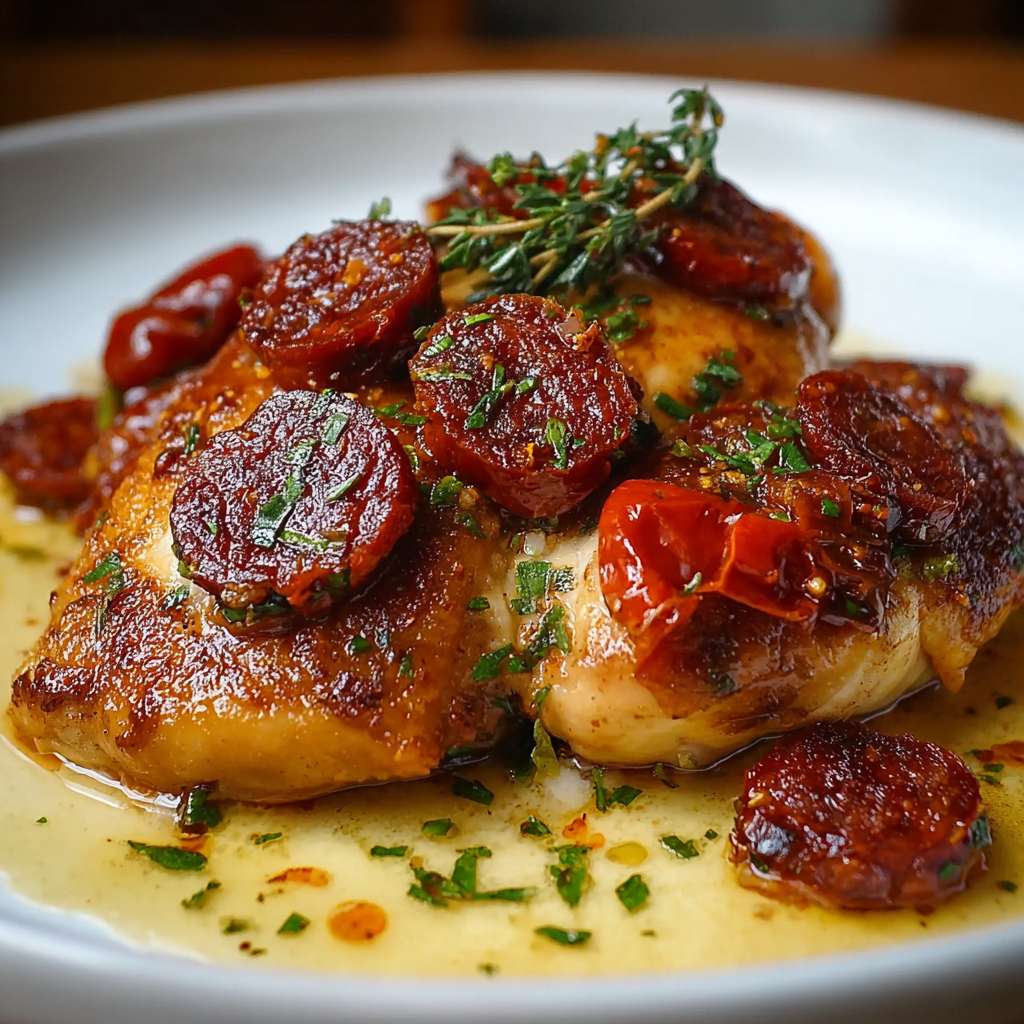
This melting chorizo chicken earns its name from the texture the chicken thighs achieve through the combination of high initial searing heat and a long, gentle braise in chorizo fat, wine, and tomatoes — the collagen in the thighs slowly converts to gelatin, the fat from the chorizo enriches the braising liquid into something almost sauce-like in its body and depth, and the result is chicken that genuinely melts — pulling away from the bone at the lightest pressure and carrying with it the smoked paprika, garlic, and wine flavors of everything it cooked alongside.
A 2023 culinary science review in the journal Food Quality and Preference identified the combination of smoked paprika and pork fat — the defining flavor pairing of Spanish chorizo — as producing a Maillard reaction product profile that is among the most umami-dense and aromatically complex of any spice-fat combination studied, explaining why dishes built on chorizo fat consistently taste more developed and layered than their cooking time suggests.
Ingredients List
For the Chicken
- 8 bone-in, skin-on chicken thighs (approximately 1.2kg / 2.6 lbs)
- 1 tsp fine sea salt
- ½ tsp freshly ground black pepper
- 1 tsp smoked paprika
- ½ tsp garlic powder
For the Braise
- 200g (7 oz) Spanish chorizo, sliced into 1cm rounds (semi-cured, not raw Mexican chorizo)
- 1 large onion, finely diced
- 1 red bell pepper, thinly sliced
- 6 garlic cloves, finely minced
- 1 tsp smoked paprika
- ½ tsp dried thyme
- ½ tsp dried oregano
- ½ cup (120ml) dry white wine (sub: dry sherry or additional stock)
- 1 can (400g / 14 oz) crushed tomatoes
- ½ cup (120ml) chicken stock
- 1 tbsp tomato paste
- 1 tsp sherry vinegar or red wine vinegar (added at the end — brightens the finished sauce)
For Finishing
- 2 tbsp fresh flat-leaf parsley, roughly chopped
- 1 tsp fresh thyme leaves
- Flaky sea salt, to finish
- Extra virgin olive oil, for drizzling
For Serving
- Crusty bread, for sauce-mopping
- Steamed white rice or creamy polenta
- Simple green salad
Timing
- Prep Time: 12 minutes
- Cook Time: 55–65 minutes
- Total Time: approximately 70 minutes
The active hands-on preparation is under 20 minutes. The remainder is the braise — the most productive hands-off cooking period in any recipe, during which the oven or stovetop converts ordinary chicken thighs into something that earns its name.
Step-by-Step Instructions
Step 1: Season and Sear the Chicken
Pat the chicken thighs completely dry with paper towels. Season generously on both sides with salt, pepper, smoked paprika, and garlic powder. Heat a large, wide, oven-safe skillet or Dutch oven over high heat until very hot. Add the chicken skin-side down without oil — the chicken skin contains sufficient fat to sear without additional oil in a properly preheated pan. Cook undisturbed for 5–7 minutes until the skin is deeply golden, rendered, and releases naturally from the pan. Flip and sear for another 2 minutes on the flesh side. Transfer to a plate.
Key tip: The skin-down sear without added oil is the technique that produces the most deeply golden, rendered chicken skin. Adding oil prevents the skin fat from rendering completely and produces a less crispy result. Start with a completely dry, very hot pan and trust the process.
Step 2: Render the Chorizo
Reduce the heat to medium. Add the chorizo rounds to the rendered chicken fat in the pan. Cook for 3–4 minutes, turning occasionally, until the chorizo is golden on both sides and has released its vivid orange-red fat into the pan. Remove the chorizo with a slotted spoon and set aside with the chicken — it will return to the braise. The pan should now contain a pool of deeply colored, smoky, paprika-rich fat that will form the flavor foundation of the entire dish.
Key tip: Do not drain this fat. The rendered chorizo fat is not a by-product — it is the primary cooking medium for everything that follows. Every component that cooks in it absorbs its smoked paprika richness in a way that no added spice can replicate.
Step 3: Build the Aromatic Base
Add the diced onion and sliced red pepper to the chorizo fat. Cook over medium heat for 6–8 minutes, stirring occasionally, until the onion is softened, the pepper is tender, and both are beginning to caramelize at the edges and take on the vivid orange color of the surrounding fat. Add the minced garlic, smoked paprika, dried thyme, and oregano. Cook for 60 seconds until the garlic is fragrant and the spices have bloomed in the fat.
Add the tomato paste and press it against the hot surface for 1–2 minutes, stirring constantly, until it caramelizes from a raw red to a deeper, jammy brick-red. This caramelization removes the tinny, raw tomato flavor and adds a concentrated sweetness to the sauce base.
Step 4: Deglaze and Build the Braising Liquid
Pour in the white wine and scrape the bottom of the pan vigorously to dissolve all the fond — every caramelized bit that releases into the liquid is concentrated flavor that would otherwise be wasted. Allow the wine to simmer and reduce by half — approximately 2–3 minutes — cooking off the raw alcohol while concentrating the flavor compounds. Add the crushed tomatoes and chicken stock. Stir to combine into a unified braising liquid and bring to a gentle simmer.
Step 5: Braise the Chicken
Return the seared chicken thighs to the pan skin-side up, nestling them into the tomato-chorizo braising liquid — the skin should sit above the liquid surface rather than being submerged, which keeps it from softening into the sauce. Tuck the reserved chorizo rounds around and between the chicken pieces. The liquid should come approximately halfway up the sides of the chicken.
For stovetop braising: Reduce the heat to the lowest setting, cover with a tight-fitting lid, and cook for 35–40 minutes until the chicken is completely tender and the meat pulls away from the bone with minimal pressure.
For oven braising: Preheat the oven to 325°F (160°C). Cover the pan and transfer to the oven for 40–45 minutes until the chicken is meltingly tender.
Step 6: Uncover and Reduce
Remove the lid and increase the heat to medium — or increase the oven temperature to 400°F (200°C). Cook uncovered for 10–15 minutes until the sauce reduces to a thicker, more concentrated consistency and the chicken skin re-crisps slightly on the exposed top surface. The sauce should coat the back of a spoon thickly and the chorizo rounds should be glistening and deeply flavored.
Step 7: Finish and Serve
Add the sherry vinegar — stir it into the sauce around the chicken rather than over the skin. Taste and adjust salt, acidity, and seasoning. Scatter fresh parsley and thyme leaves generously over the top. Drizzle with a thread of extra virgin olive oil. Serve directly from the pan with crusty bread, rice, or polenta alongside.
Nutritional Information
Per serving — based on 4 servings of 2 thighs each, without bread or rice.
| Nutrient | Per Serving | % Daily Value* |
|---|---|---|
| Calories | 580 kcal | 29% |
| Total Fat | 36g | 46% |
| Saturated Fat | 11g | 55% |
| Total Carbohydrates | 14g | 5% |
| Total Sugar | 7g | — |
| Protein | 48g | 96% |
| Dietary Fiber | 3g | 11% |
| Sodium | 880mg | 38% |
| Potassium | 820mg | 17% |
| Vitamin C | 55% DV | 55% |
| Iron | 22% DV | 22% |
| Vitamin B6 | 45% DV | 45% |
*Based on a standard 2,000-calorie daily diet.
At 48 grams of protein per serving with Vitamin B6 at 45% of the daily recommended value — supporting energy metabolism and immune function — and Vitamin C at 55% from the tomatoes and red pepper, this is a nutritionally complete single-pan dinner of genuine substance.
Healthier Alternatives
Lower fat: Remove the chicken skin before serving — the skin contributes approximately 8 grams of fat per thigh and its primary role is achieved during searing. Removing after braising reduces the fat content significantly while retaining all the flavor developed during cooking.
Lower sodium: Reduce the chorizo to 150g and supplement its flavor with an additional teaspoon of smoked paprika and ¼ teaspoon of ground cumin. Use a low-sodium chicken stock throughout.
Leaner protein: Replace bone-in thighs with boneless, skinless chicken thighs — reduce the braise time to 25–30 minutes and the uncovered reduction to 8 minutes, as boneless thighs cook more quickly and dry out faster than bone-in.
Higher vegetable content: Add 1 cup of canned butter beans or chickpeas to the braising liquid alongside the chicken. Both absorb the chorizo-tomato sauce beautifully and add fiber, plant protein, and a satisfying heft that makes the dish more complete as a standalone meal.
Dairy-free and gluten-free: This recipe is naturally both — verify only that the chorizo brand contains no gluten additives, which some commercially produced chorizos include as a filler.
Serving Suggestions
With crusty bread: The single most important accompaniment — the chorizo-tomato braising liquid is one of the finest pan sauces in this recipe repertoire and crusty bread is the only appropriate tool for ensuring none of it is left in the pan. Sourdough and ciabatta are both excellent.
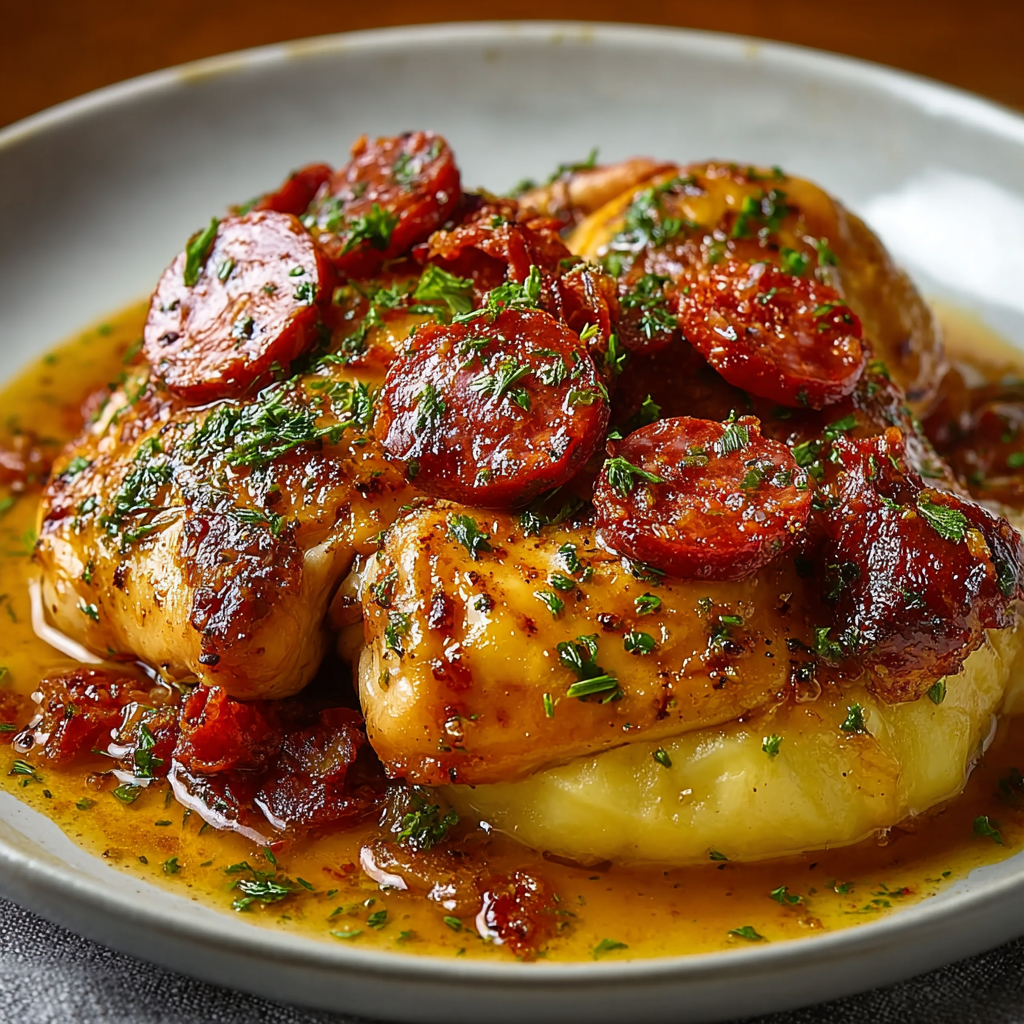
Over creamy polenta: Spoon the chicken and generous amounts of sauce over a bowl of soft, buttery polenta. The richness of the polenta against the bright, acidic tomato-chorizo sauce creates a balance that makes this the most satisfying cold-weather version of the dish.
With steamed white rice: The sauce absorbs into the rice and every spoonful becomes a combination of tender chicken, glistening chorizo, and deeply flavored tomato sauce — a combination that requires no further embellishment.
Next-day pasta: Shred any leftover chicken from the bones, combine with the remaining sauce, and toss with cooked pasta over low heat. The leftover chorizo-tomato sauce is one of the finest pasta sauces available from any braise recipe — deeply flavored, already perfectly seasoned, and ready in the time it takes to boil pasta.
At room temperature: The dish holds at room temperature for up to 2 hours and develops an even more concentrated, cohesive flavor as it cools. Served at room temperature with good bread and a simple salad, it is a genuinely excellent casual dinner party format.
Common Mistakes to Avoid
Adding oil before searing the chicken. The chicken skin contains sufficient fat to sear without additional oil — adding oil prevents the skin from rendering fully and produces a less golden, less crispy result. A properly preheated, dry pan is the starting condition for the best chicken skin.
Draining the chorizo fat. The orange-red rendered chorizo fat is the flavor foundation of the entire dish. Draining it is the single most damaging mistake possible in this recipe — every subsequent component cooked in it absorbs the smoked paprika, garlic, and pork fat compounds that make the finished sauce so distinctive.
Submerging the chicken skin in the braising liquid. Skin submerged in liquid turns soft, pale, and gelatinous rather than maintaining any of the golden sear achieved in Step 1. The skin must sit above the liquid surface throughout the braise — adjust the liquid quantity if necessary and maintain this positioning.
Not caramelizing the tomato paste. Raw tomato paste added directly to liquid has a metallic, slightly acidic flavor that persists through the entire braise. The 1–2 minutes of active stirring against the hot pan surface transforms it from raw to caramelized — the difference in the finished sauce is dramatic and worth the attention.
Skipping the uncovered reduction. The braising liquid at the end of the covered phase is thinner and less concentrated than the finished sauce should be. The 10–15 minutes of uncovered cooking concentrates the flavors, reduces the liquid to a proper coating consistency, and re-crisps the chicken skin — all three outcomes are essential to the finished dish.
Storing Tips
Refrigerator: Store cooled chicken and sauce in an airtight container for up to 4 days. The flavor improves significantly overnight as the chorizo compounds continue to permeate the sauce and the braising liquid deepens in color and intensity.
Reheating: Reheat gently in a covered skillet over medium-low heat with a splash of additional chicken stock if the sauce has thickened during refrigeration. The microwave works at 70% power in 90-second intervals but does not re-crisp the skin — the stovetop is always preferable for this dish.
Freezer: Freeze the chicken and sauce together in airtight containers for up to 3 months. Thaw overnight in the refrigerator. The skin loses its texture during freezing — accept this and focus on the sauce and chicken flesh, both of which freeze and reheat excellently.
Make-ahead: This dish is ideal for making 24 hours ahead — the day-two version is demonstrably better than the day-one version. Prepare completely, refrigerate overnight, and reheat gently before serving. The skin can be re-crisped briefly under a hot broiler for 2–3 minutes if desired.
Conclusion
Melting chorizo chicken earns its name entirely — tender, fall-from-the-bone chicken thighs braised in a chorizo-paprika-tomato sauce that tastes like hours of slow cooking delivered in 70 minutes, from a single pan, with enough sauce to make everyone at the table reach for bread. The kind of weeknight dinner that feels like an occasion.
Make it and share your results in the comments — tell us whether you braised on the stovetop or in the oven, which side you served it with, and whether the sauce lived up to what the chorizo promised. Leave a review, share with someone who loves Spanish flavors, and subscribe to our newsletter for more single-pan, deeply flavored recipes every week.
FAQs
What type of chorizo should I use? Spanish semi-cured chorizo — the firm, sliceable variety sold in links or as a whole sausage — is the correct choice. It has been cured and smoked, producing the characteristic deep red color and the richness of fat that renders cleanly during cooking. Do not use raw Mexican chorizo, which crumbles rather than slices, renders differently, and produces a completely different flavor profile. Look for chorizo labeled “Spanish-style” or “semi-cured” at specialty food stores, delis, and most well-stocked supermarkets.
Can I use boneless, skinless chicken thighs? Yes — reduce the braise time to 25–30 minutes and the uncovered reduction phase to 8 minutes. Boneless, skinless thighs cook faster and lack the collagen contribution of bone-in thighs, which means the sauce will be slightly less gelatinous. The flavor remains excellent. The searing step is still important — even without skin, a golden sear on boneless thighs adds flavor compounds that improve the finished sauce significantly.
Can I make this in a slow cooker? Yes — complete the searing and aromatic base steps on the stovetop as directed, then transfer everything to the slow cooker. Cook on low for 6–7 hours or high for 3–4 hours. The skin will not re-crisp in the slow cooker — place the finished chicken under a hot broiler for 3–4 minutes before serving if a crisped skin is desired. The sauce will be excellent.
What can I substitute for the white wine? Dry sherry — fino or manzanilla — is the most thematically appropriate substitute and produces a slightly more complex, nutty braising liquid that suits the Spanish character of the dish particularly well. Additional chicken stock with 1 teaspoon of sherry vinegar or white wine vinegar approximates the acidity and flavor contribution of white wine without any alcohol content.
Why is my sauce thin rather than thick and coating? Thin sauce is caused by insufficient uncovered reduction time. After the covered braise, increase the heat and simmer uncovered for the full 10–15 minutes — or longer if needed — until the sauce visibly thickens and coats the back of a spoon. If still too thin, remove the chicken to a warm plate, increase the heat to medium-high, and reduce the sauce aggressively for 5–8 minutes before returning the chicken.
Is this recipe suitable for a dinner party? It is one of the most practical dinner party recipes available — the full dish can be made 24 hours ahead, the flavor improves overnight, and reheating requires only a covered skillet over low heat. The visual impact of the deeply colored sauce and glistening chorizo rounds arriving at the table in the cooking vessel is considerable and entirely effortless. Scale directly for larger groups — double the recipe for 8, using two wide pans or a large Dutch oven.