Follow Me On Social Media!
Pistachio Cream Tiramisu

Introduction
Here is a question that challenges every assumption about tiramisu: what happens when you take one of the most beloved desserts in the world — a recipe so perfectly conceived that generations of Italian grandmothers have seen no reason to change it — and replace the coffee with the sweet, grassy, faintly earthy richness of pistachio cream? According to a 2024 trend report by the Italian Culinary Institute, pistachio-flavored desserts experienced a 67% global increase in consumer interest, driven largely by viral social media content originating in Sicily — where pistachio cultivation has a centuries-old tradition and where the local variety, grown near the slopes of Mount Etna, is considered among the finest in the world.
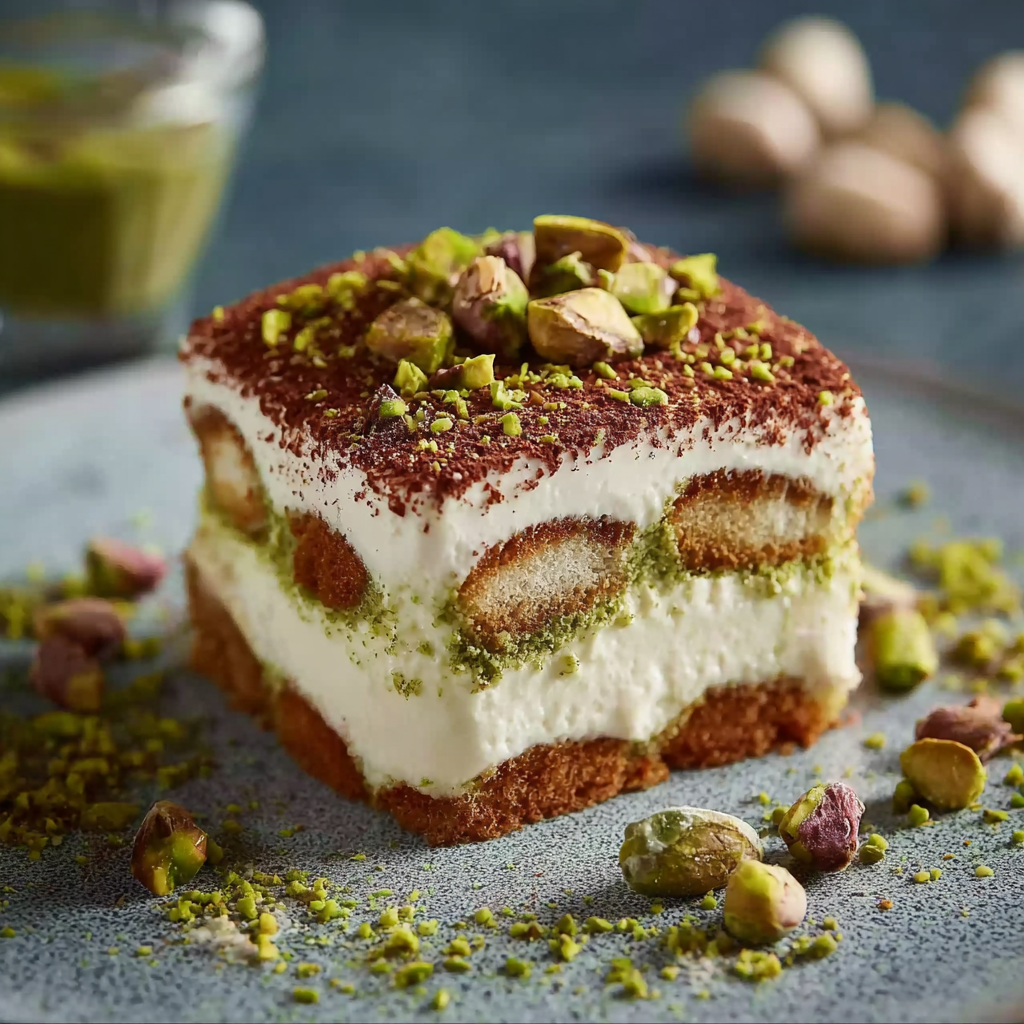
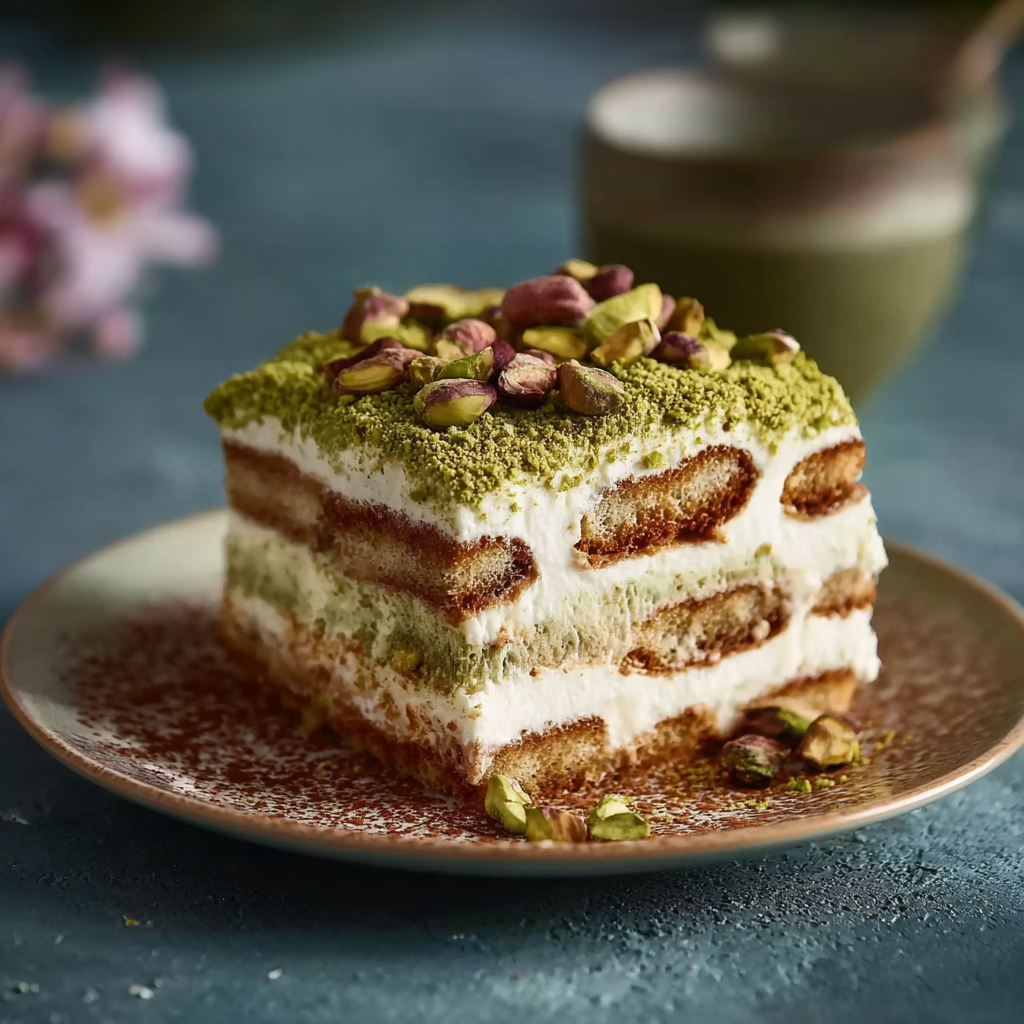
This pistachio cream tiramisu is the dessert that results when that Sicilian tradition meets the classic Northern Italian layered dessert. Ladyfinger biscuits soaked in a sweetened pistachio milk instead of espresso, layered with a mascarpone cream enriched with real pistachio paste, and finished with crushed pistachios rather than cocoa powder — it is simultaneously faithful to the spirit of tiramisu and genuinely, distinctly its own creation. The flavor is more delicate than the original, the color is extraordinary, and the response from anyone who tries it for the first time is, without exception, a request for the recipe.
A 2023 nutritional review in the European Journal of Nutrition identified pistachios as one of the most nutrient-complete tree nuts available, contributing complete protein, heart-healthy monounsaturated fats, lutein for eye health, and one of the highest antioxidant contents of any nut category. This is a dessert that tastes indulgent and delivers more nutritional value per serving than its ingredients suggest.
Ingredients List
For the Pistachio Soaking Liquid
- 1 cup (240ml) whole milk or oat milk
- 3 tbsp pistachio paste or pistachio cream (Bronte pistachio paste is the gold standard — look for 100% pistachio with no added sugar)
- 2 tbsp honey or sugar
- ½ tsp pure vanilla extract
- Pinch of fine sea salt
For the Pistachio Mascarpone Cream
- 500g (18 oz) full-fat mascarpone cheese, cold
- 4 large eggs, separated
- 100g (½ cup) granulated sugar, divided — 60g for yolks, 40g for whites
- 4 tbsp pistachio paste or pistachio cream
- 1 tsp pure vanilla extract
- ¼ tsp fine sea salt
- 200ml (¾ cup) heavy whipping cream, very cold (optional — adds extra lightness)
For the Layers
- 24–28 Savoiardi ladyfinger biscuits (approximately 200g)
- Reserved pistachio soaking liquid
For Finishing
- 80g (⅔ cup) roasted, unsalted pistachios, finely chopped
- 2 tbsp pistachio cream, warmed slightly for drizzling
- Powdered sugar, for a light dusting (optional)
- Edible gold leaf or edible flowers (optional — for special occasions)
Timing
- Prep Time: 30 minutes
- Assembly Time: 15 minutes
- Chilling Time: 6 hours minimum (overnight is strongly preferred)
- Total Time: 45 minutes active, overnight with chilling
The overnight rest is where this tiramisu transforms from assembled to extraordinary — the ladyfingers fully absorb the pistachio soaking liquid, the cream sets to a perfectly sliceable consistency, and the flavors meld into something more cohesive and deeply flavored than the components suggest individually.
Step-by-Step Instructions
Step 1: Make the Pistachio Soaking Liquid
Gently warm the milk in a small saucepan over low heat until steaming but not boiling. Remove from heat and whisk in the pistachio paste, honey, vanilla, and salt until the paste is fully dissolved and the liquid is smooth, fragrant, and a warm green. Pour into a wide, shallow bowl and allow to cool completely before using — dipping ladyfingers in warm liquid makes them disintegrate rather than soak evenly. The cooled liquid should be thin enough to pour but flavorful enough to perfume every layer of the finished tiramisu.
Step 2: Beat the Egg Yolks
In a large heatproof bowl set over a saucepan of barely simmering water, combine the egg yolks and 60g of the sugar. Whisk continuously and vigorously for 4–5 minutes until the mixture triples in volume, turns pale and fluffy, and forms a thick ribbon that falls slowly from the whisk when lifted — this is the zabaglione base that gives tiramisu its characteristic richness and food-safe egg preparation. Remove from heat and allow to cool for 5 minutes.
Key tip: The water should barely simmer — small, lazy bubbles only. Vigorous boiling scrambles the yolks. The mixture should feel warm, not hot, to the touch throughout cooking.
Step 3: Beat the Mascarpone and Pistachio Paste
Add the cold mascarpone to the cooled zabaglione and fold gently until just combined and smooth. Add the pistachio paste, vanilla extract, and salt, and fold until evenly distributed and the cream has taken on an even, pale green color throughout. Do not over-mix — mascarpone turns grainy and loose if worked too aggressively.
Step 4: Make the Meringue
In a clean, grease-free bowl, beat the egg whites with a pinch of salt on medium speed until foamy. Gradually add the remaining 40g of sugar while continuing to beat, increasing to high speed, until the meringue holds firm, glossy peaks that stand without drooping. Fold the meringue into the pistachio mascarpone mixture in three additions — the first firmly to lighten the base, the second and third with a gentle, sweeping fold that preserves the air. If using heavy cream, whip to soft peaks separately and fold in after the meringue.
Step 5: Assemble the Tiramisu
Working quickly, dip each ladyfinger into the cooled pistachio soaking liquid for exactly 2–3 seconds per side — long enough to absorb flavor but not long enough to become soggy and structurally compromised. Arrange in a single layer across the base of a 9×13-inch (23x33cm) dish or equivalent, cutting ladyfingers to fit neatly if necessary.
Spread half the pistachio cream evenly over the first ladyfinger layer, smoothing the surface with an offset spatula. Repeat with a second layer of dipped ladyfingers and the remaining cream. Smooth the top completely flat — a perfectly smooth, level surface is the canvas for the final garnish. Cover tightly with plastic wrap and refrigerate for a minimum of 6 hours.
Key tip: Count the dipping time — 2 to 3 seconds per side produces a ladyfinger that is moist but still holds structure. Under-soaked ladyfingers taste dry in the finished tiramisu. Over-soaked ones collapse and make the layers indistinct.
Step 6: Garnish and Serve
Remove from the refrigerator 10 minutes before serving. Scatter the finely chopped pistachios generously and evenly across the entire surface — the green of the pistachios against the pale cream is the visual signature of this dessert. Drizzle the slightly warmed pistachio cream in thin, irregular lines across the top. Add a light dusting of powdered sugar if desired, or edible gold leaf for a special occasion presentation. Slice with a sharp knife wiped clean between cuts and serve immediately.
Nutritional Information
Per serving — based on 10 servings.
| Nutrient | Per Serving | % Daily Value* |
|---|---|---|
| Calories | 480 kcal | 24% |
| Total Fat | 34g | 44% |
| Saturated Fat | 16g | 80% |
| Total Carbohydrates | 34g | 12% |
| Total Sugar | 22g | — |
| Protein | 12g | 24% |
| Dietary Fiber | 2g | 7% |
| Sodium | 160mg | 7% |
| Potassium | 340mg | 7% |
| Vitamin E | 15% DV | 15% |
| Iron | 10% DV | 10% |
| Calcium | 12% DV | 12% |
*Based on a standard 2,000-calorie daily diet.
At 12 grams of protein per serving — higher than most desserts due to the eggs, mascarpone, and pistachios — this tiramisu delivers a more nutritionally complete profile than its category typically produces. The pistachio contribution of Vitamin E, healthy fats, and antioxidant compounds makes this genuinely one of the more nutritionally interesting classic dessert adaptations.
Healthier Alternatives
Lower fat: Replace half the mascarpone with an equal weight of full-fat Greek yogurt. The cream will be slightly tangier and less silky but remains rich, light, and deeply pistachio-flavored with approximately 30% less saturated fat.
Lower sugar: Reduce the sugar in the yolk mixture to 40g and eliminate the sugar in the meringue, replacing it with 2 tablespoons of honey. The pistachio paste provides significant natural sweetness that supports a meaningful reduction.
Dairy-free: Replace mascarpone with a high-quality cashew cream cheese blended with 2 tablespoons of coconut cream, and use oat milk for the soaking liquid. The result is fully plant-based with a comparable richness, though the flavor shifts slightly toward a nuttier, less delicate profile.
Egg-free: Replace the zabaglione base and meringue with 400ml of whipped heavy cream folded directly into the mascarpone and pistachio paste. The result loses some structural lightness but remains deeply flavorful and is suitable for those avoiding raw egg.
Higher pistachio intensity: Use 6 tablespoons of pistachio paste in the cream and reduce the sugar by 1 tablespoon to compensate for the added sweetness of the paste. For the most intense pistachio flavor, use 100% pure pistachio paste without additives.
Serving Suggestions
Classic rectangular dish: The most traditional presentation — sliced into clean rectangles and plated individually with an extra drizzle of pistachio cream and a small pile of crushed pistachios on the side.
Individual glasses: Layer the tiramisu in stemless wine glasses or wide champagne coupes for a dinner party presentation that requires no slicing, no serving skills, and produces a visually stunning layered effect visible through the glass.
Pistachio tiramisu cake: Press the assembled tiramisu into a springform pan lined with plastic wrap and freeze for 2 hours until firm enough to unmold. Invert onto a serving plate, remove the plastic, and garnish the outside with crushed pistachios and a pistachio cream drizzle. This format works beautifully as a celebration cake alternative.
With fresh berries: Serve each portion alongside a small pile of fresh raspberries or sliced strawberries. The acidity and brightness of fresh berries cut through the richness of the mascarpone cream with remarkable effectiveness and add a color contrast that makes the plate more visually dynamic.
Miniature portions: Assemble in small espresso cups or shot glasses for a two-bite dessert suitable for cocktail parties, holiday spreads, or as an accompaniment to coffee service. The mini format is enormously charming and allows guests to taste without committing to a full serving.
Common Mistakes to Avoid
Using warm soaking liquid. Warm liquid softens the ladyfingers too quickly and makes them structurally unstable — they collapse rather than holding the layers of cream. Cool the soaking liquid completely before dipping.
Over-soaking the ladyfingers. Two to three seconds per side is the precise target. Longer produces a wet, structurally compromised layer that merges with the cream and makes the tiramisu impossible to slice cleanly. Set a timer if needed.
Over-working the mascarpone. Mascarpone has a lower melting point than most dairy products and turns grainy and liquid if beaten too aggressively or for too long. Fold rather than beat throughout the cream assembly.
Under-chilling the tiramisu. Six hours produces a functional result. Overnight produces the correct result — fully set, cleanly sliceable, with deeply melded flavors. No shortcut exists for the setting time.
Using pistachio spread with additives. Many commercial pistachio spreads contain white chocolate, palm oil, and artificial coloring — products that produce a sweet, artificial flavor rather than the genuine, deep pistachio character the recipe requires. Look for 100% pistachio paste with no additional ingredients, or use a high-quality natural pistachio cream.
Skipping the zabaglione step. Raw egg yolks beaten directly into the mascarpone without the double-boiler heating step produce a food safety risk and a denser, less aerated cream. The 5-minute zabaglione process is both the safety measure and the technique responsible for the light, mousse-like texture of the finished cream.
Storing Tips
Refrigerator: Cover tightly with plastic wrap and refrigerate for up to 3 days. The flavor improves noticeably over the first 24 hours as the layers meld. After day 3 the ladyfingers begin to break down and the texture becomes less defined.
Freezer: Cover the assembled tiramisu tightly and freeze for up to 1 month. Thaw overnight in the refrigerator — the texture after thawing is slightly denser than fresh but entirely pleasant. This is an excellent option for preparing well in advance of a special occasion.
Serving from cold: Remove from the refrigerator 10 minutes before serving to allow the mascarpone cream to soften slightly from its coldest, firmest state to the ideal serving temperature — cool but not rigid.
Make-ahead: This tiramisu is genuinely better made 24 hours ahead than on the day of serving. It is the ideal make-ahead dinner party dessert — zero day-of effort beyond garnishing and slicing.
Conclusion
Pistachio cream tiramisu is the rare dessert adaptation that genuinely rivals the original — not by competing with it but by occupying an entirely different and equally compelling flavor space. Pale green, deeply pistachio-flavored, impossibly light, and set to a sliceable perfection that rewards the overnight wait in every single bite. Make it for any occasion that deserves something truly memorable and make it the night before so it can become the best version of itself.
Make it and share your results in the comments — tell us which pistachio paste you used, whether you tried the individual glass format, and whether it generated the reaction it deserves. Leave a review, share with someone who loves both pistachios and tiramisu, and subscribe to our newsletter for more elegant, globally inspired dessert recipes every week.
FAQs
Where can I find pistachio paste? Specialty Italian delis, Middle Eastern grocery stores, and gourmet food shops typically carry 100% pistachio paste. Online retailers are the most reliable source for high-quality Sicilian pistachio paste — search specifically for Bronte pistachio paste for the finest available. Avoid products labeled “pistachio spread” or “pistachio cream” that list white chocolate or palm oil as primary ingredients — these are confectionery products rather than pure pistachio paste.
Can I make my own pistachio paste? Yes. Blanch 200g of raw unsalted pistachios in boiling water for 2 minutes, drain, and rub in a clean towel to remove as much skin as possible. Blend in a high-powered food processor for 8–10 minutes, scraping down the sides frequently, until a smooth, oily paste forms. Add 1 tablespoon of neutral oil if the paste is too thick and process further. Homemade paste has a more rustic, intense flavor than commercial versions and is entirely suitable for this recipe.
Can I make this without raw eggs? Yes — two options. First, use the double-boiler zabaglione technique as described, which heats the yolks to food-safe temperature. Second, replace the entire egg component with 400ml of heavy cream whipped to soft peaks and folded directly into the mascarpone and pistachio paste. The egg-free version is slightly denser and less airy but equally delicious.
Why is my cream runny and not holding its shape? The most common causes are mascarpone that was over-beaten and broke down, egg whites that were not whipped to firm peaks, or a zabaglione that was too warm when the mascarpone was added. Ensure the zabaglione is fully cooled before folding in the mascarpone, beat the whites to firm glossy peaks, and fold rather than stir throughout the assembly.
Can I use a different nut paste? Yes — hazelnut paste produces a tiramisu reminiscent of a Nutella-inspired version. Almond paste produces a more delicate, floral result. Walnut paste has a more bitter, complex character that works well with a touch of honey in the soaking liquid to balance it. Each produces a distinct and legitimate variation on the formula.
How far in advance can I make this? Up to 2 days in the refrigerator — after which the ladyfingers begin to break down and the layers lose their distinction. For the optimal result, make it exactly 24 hours before serving. The tiramisu can also be frozen for up to 1 month, thawed overnight in the refrigerator, and served the following day with freshly applied garnishes.