Follow Me On Social Media!
Raw Avocado & Lime Mousse

Introduction
Here is a question that reframes everything you think you know about mousse: what if the creamiest, silkiest, most indulgent-tasting dessert you could make required no cream, no eggs, no cooking, no gelatin, and exactly five minutes of active preparation? According to a 2024 report by the Plant Based Foods Association, avocado-based desserts represent one of the fastest-growing categories in raw and plant-based cooking — driven by a consumer base that has discovered what professional raw food chefs have known for decades: the fat profile of a ripe avocado produces a texture so smooth, so voluptuous, and so satisfying that it functions as a direct substitute for heavy cream in cold dessert applications.
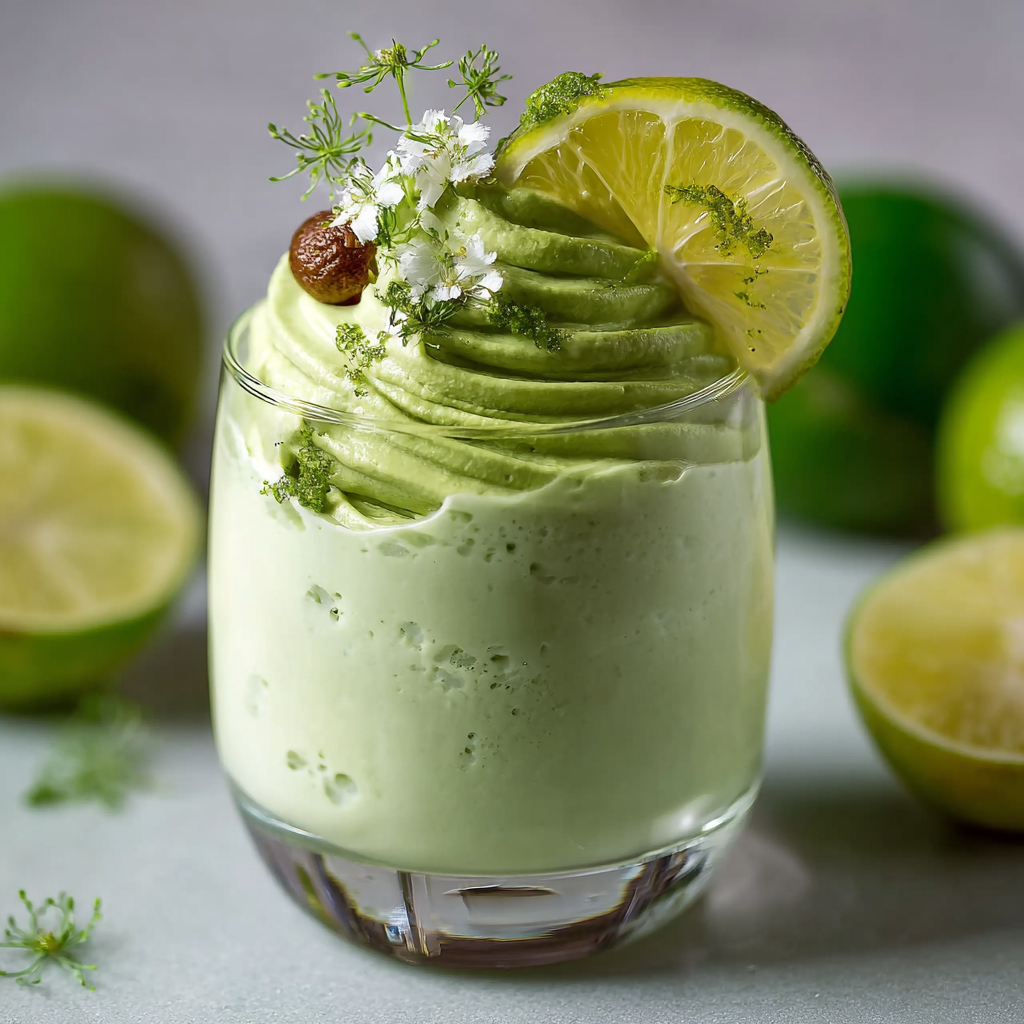
This raw avocado and lime mousse is the proof of that principle. Ripe avocados blended with fresh lime juice, a touch of natural sweetener, and vanilla extract produce a mousse that is simultaneously bright, rich, tangy, and deeply satisfying — a dessert that tastes as though considerably more effort and considerably more dairy were involved. It is naturally vegan, naturally gluten-free, naturally refined sugar-free when sweetened with maple syrup or honey, and delivers a fat profile composed almost entirely of heart-favorable monounsaturated fatty acids.
A 2023 review in the Journal of Nutritional Science identified avocados as one of the most nutrient-dense whole foods available, with a single fruit contributing meaningful amounts of potassium, folate, Vitamins C, E, K, and B6 alongside 10 grams of dietary fiber. This mousse makes all of that nutritional density genuinely, unambiguously delicious.
Ingredients List
For the Mousse
- 3 large ripe avocados (Hass variety — the darker the skin, the riper and creamier)
- 4 tbsp fresh lime juice (approximately 2–3 limes — fresh only, never bottled)
- 2 tsp lime zest
- 4 tbsp pure maple syrup or honey (adjust to taste)
- 1 tsp pure vanilla extract
- ¼ tsp fine sea salt (amplifies every other flavor)
- 3 tbsp full-fat coconut cream (from the top of a refrigerated can — adds richness and smoothness)
- Optional: ¼ tsp spirulina or matcha powder (deepens the green color)
For Serving
- Fresh lime zest curls
- Crushed graham crackers, toasted coconut, or granola (for texture contrast)
- Fresh berries — raspberries or blueberries pair particularly well
- Coconut whipped cream
- Dark chocolate shavings
- Fresh mint leaves
Timing
- Prep Time: 5 minutes
- Blending Time: 3–4 minutes
- Chill Time: 30 minutes (optional but recommended)
- Total Time: 10 minutes active, 40 minutes with chilling
One of the fastest desserts in any repertoire. Make it up to 4 hours ahead — pressed plastic wrap prevents browning and the lime juice stabilizes the color remarkably well.
Step-by-Step Instructions
Step 1: Select and Prepare the Avocados
Halve, pit, and scoop the avocado flesh into a food processor or high-powered blender. The quality of the avocado determines the quality of the mousse more than any other ingredient — use avocados that yield gently to thumb pressure, show no dark strings when the flesh is cut, and have a bright, clean green color throughout. Even a small amount of brown, stringy, or underripe flesh will produce a mousse with visible lumps, a slightly bitter flavor, or a fibrous texture that no amount of blending corrects. Inspect every avocado before adding it.
Key tip: If the avocados are not quite ripe, speed-ripen them by placing them in a paper bag with a banana overnight. The ethylene gas released by the banana accelerates ripening considerably.
Step 2: Blend Until Completely Smooth
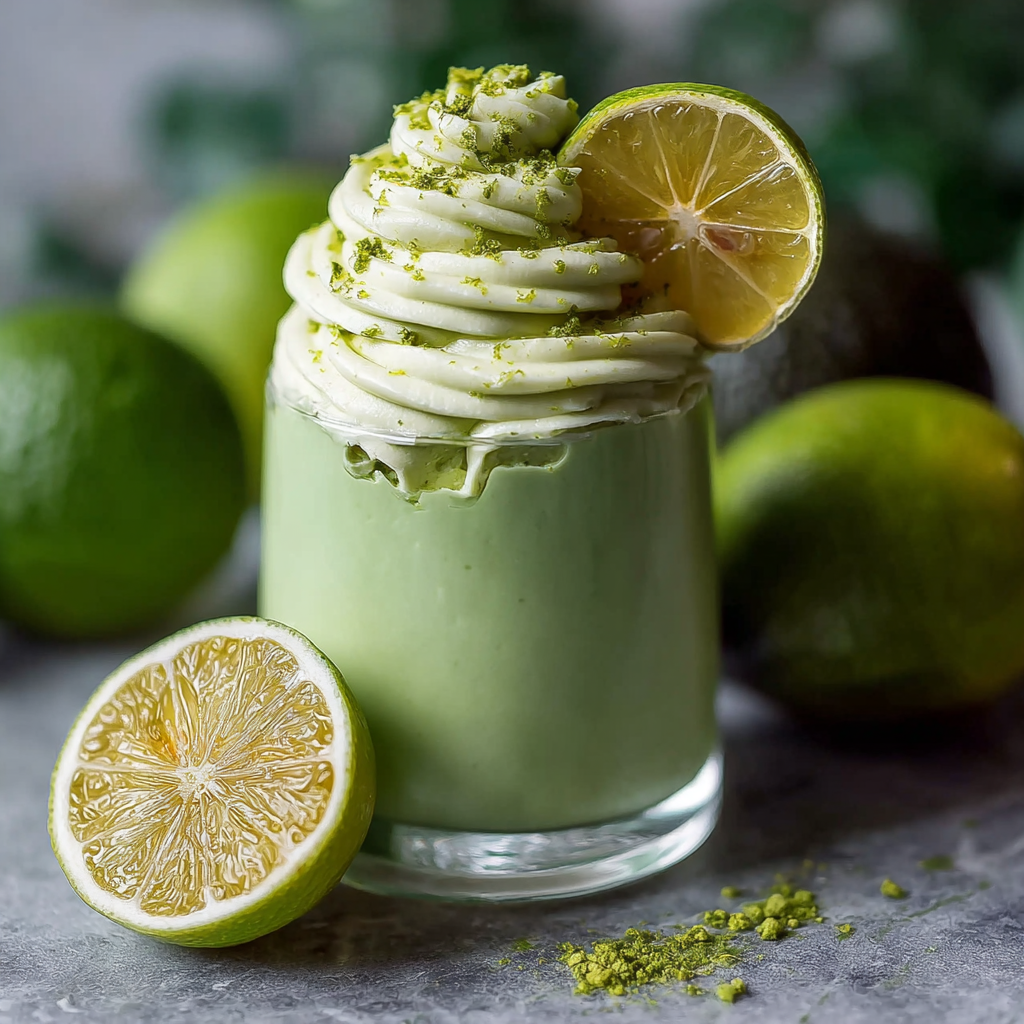
Add the lime juice, lime zest, maple syrup, vanilla extract, salt, and coconut cream to the food processor or blender with the avocado. Process continuously for 2–3 full minutes — significantly longer than seems necessary. Avocado mousse requires extended processing to break down every last fiber and air pocket and produce a genuinely silky, uniform texture. Scrape down the sides thoroughly at least twice during processing. The finished mousse should be completely smooth with no visible lumps, an even, vibrant green color, and a texture that falls from the spatula in thick, glossy ribbons.
Key tip: A high-powered blender produces a smoother result than a food processor — if you have one, use it. If using a food processor, process for an extra minute beyond when it appears done.
Step 3: Taste and Adjust
This step is essential and non-negotiable. Taste the mousse and adjust with precision — more lime juice for brightness and acidity, more maple syrup for sweetness, more salt to sharpen the overall flavor, more coconut cream for richness. The balance between lime acidity, avocado richness, and sweetness is what makes or breaks this mousse — it should taste simultaneously tangy, rich, and sweet in roughly equal measure, with none of the three qualities dominating.
Step 4: Chill and Serve
Spoon the mousse into serving glasses, ramekins, or small bowls. Press a sheet of plastic wrap directly onto the surface of each portion — direct contact with the plastic prevents the oxidation that causes browning. Refrigerate for 30 minutes before serving for the cleanest, most set texture. Garnish with fresh lime zest, berries, a spoonful of coconut whipped cream, and dark chocolate shavings or toasted coconut. Serve immediately after garnishing.
Nutritional Information
Per serving — based on 4 servings without toppings.
| Nutrient | Per Serving | % Daily Value* |
|---|---|---|
| Calories | 285 kcal | 14% |
| Total Fat | 22g | 28% |
| Saturated Fat | 5g | 25% |
| Total Carbohydrates | 24g | 9% |
| Total Sugar | 12g | — |
| Protein | 3g | 6% |
| Dietary Fiber | 10g | 36% |
| Sodium | 115mg | 5% |
| Potassium | 720mg | 15% |
| Folate | 30% DV | 30% |
| Vitamin C | 22% DV | 22% |
| Vitamin E | 15% DV | 15% |
| Vitamin K | 30% DV | 30% |
*Based on a standard 2,000-calorie daily diet.
At 10 grams of dietary fiber per serving — 36% of the daily recommended value — this mousse delivers more fiber than most savory meals. The fat content is composed primarily of oleic acid, the same monounsaturated fatty acid found in olive oil and associated in multiple large-scale studies with reduced cardiovascular disease risk and improved cholesterol profiles.
Healthier Alternatives
Lower sugar: Reduce maple syrup to 2 tablespoons and add 3–4 Medjool dates blended smooth with a tablespoon of water. Dates provide natural sweetness alongside fiber, potassium, and magnesium that refined sweeteners do not.
Higher protein: Add 2 tablespoons of unflavored hemp protein powder or a scoop of vanilla pea protein to the blender. Hemp protein has a mild, slightly nutty flavor that integrates naturally into the mousse without altering the texture significantly.
Lower calorie: Reduce to 2 avocados and increase the coconut cream to 5 tablespoons. The mousse will be slightly less rich but maintains its smooth, creamy texture with approximately 60 fewer calories per serving.
Chocolate version: Add 3 tablespoons of Dutch-process cocoa powder and increase the maple syrup by 1 tablespoon to compensate for the bitterness. The result — a chocolate avocado mousse — is one of the most convincing dairy-free chocolate desserts in existence, and the lime cuts through the chocolate with remarkable elegance.
Superfood boost: Add 1 teaspoon of spirulina powder, 1 tablespoon of hemp seeds, and 1 teaspoon of maca powder. The spirulina deepens the color to a vivid jewel green and adds a protein and mineral contribution that makes this mousse a genuinely functional food.
Serving Suggestions
In small shot glasses: Serve as a two-bite amuse-bouche before a dinner party main course — topped with a single raspberry and a curl of lime zest. Elegant, unexpected, and conversation-starting.
As a tart filling: Pour into a pre-baked tart shell made from blended dates, nuts, and coconut oil. Refrigerate until set and serve sliced as a no-bake raw tart that requires no oven and produces an impressive result.
Layered parfait: Layer in tall glasses with crushed graham crackers, fresh mango, and coconut whipped cream for a tropical parfait that works equally well as a dinner party dessert or a weekend breakfast.
Frozen as an ice cream substitute: Transfer to a freezer-safe container and freeze for 2 hours until semi-frozen. Scoop like ice cream and serve immediately — the texture is remarkably similar to a premium gelato with a brighter, fruitier character.
On toast: Spread thickly on toasted sourdough with extra lime zest, a drizzle of honey, and flaky sea salt. Avocado lime mousse on toast occupies a compelling space between breakfast and dessert that requires no further justification.
Common Mistakes to Avoid
Using underripe avocados. Underripe avocados contain more starch and less developed fat, producing a mousse that is grainy, slightly bitter, and impossible to blend smooth regardless of processing time. Wait for full ripeness — patience here is the most important ingredient.
Using bottled lime juice. Bottled lime juice is chemically treated to extend shelf life and tastes noticeably flat and slightly artificial compared to fresh. The lime flavor is the primary flavor driver of this mousse — fresh juice is non-negotiable.
Under-processing. Two to three minutes of continuous processing feels like a long time, but avocado fiber requires sustained mechanical action to break down completely. A mousse processed for 45 seconds will feel slightly grainy — a mousse processed for 3 full minutes will be genuinely silky.
Not pressing plastic wrap directly onto the surface. Air contact causes oxidation and browning within 20–30 minutes. Direct contact with plastic wrap is the single most effective prevention method — it eliminates the air gap entirely and keeps the mousse vivid green for up to 4 hours.
Skipping the seasoning adjustment. The balance of acid, sweetness, and salt is what separates a compelling mousse from a bowl of blended avocado. Lime juice and salt, in particular, are what prevent the mousse from tasting flat or one-dimensional. Taste and adjust every time without exception.
Storing Tips
Refrigerator: Store with plastic wrap pressed directly onto the surface in an airtight container for up to 24 hours. The lime juice significantly slows oxidation but does not prevent it indefinitely — the mousse will begin to brown slightly after 24 hours, though the flavor remains excellent.
Serving from cold: Serve directly from the refrigerator — the cold temperature firms the mousse to its best texture and the chill amplifies the refreshing lime brightness.
Freezer: Freeze in a sealed container for up to 1 month as a frozen dessert. Thaw in the refrigerator for 20 minutes for a semi-frozen, gelato-like consistency, or fully thaw and re-blend briefly to restore the mousse texture.
Not suitable for advance preparation beyond 24 hours: Unlike most make-ahead desserts, avocado mousse does not improve with age. Make it on the day of serving or at most the evening before — freshness is a core quality of the recipe.
Conclusion
Raw avocado and lime mousse proves that the most elegant, satisfying desserts are not always the most complicated. Five ingredients, five minutes, and the natural fat profile of a ripe avocado produce a mousse that rivals cream-based versions in richness and surpasses them in nutritional value, versatility, and the kind of bright, clean flavor that makes people ask for the recipe before they have finished the first spoonful.
Make it and share your results in the comments — tell us which toppings you chose, whether you tried the chocolate variation, and how quickly it disappeared. Leave a review, share with someone who loves avocado, and subscribe to our newsletter for more fast, plant-forward recipes every week.
FAQs
How do I prevent the mousse from turning brown? Press plastic wrap directly onto the surface of the mousse immediately after blending — eliminate any air gap entirely. The lime juice in the recipe also acts as an antioxidant that significantly slows browning. Made and stored correctly, the mousse stays vivid green for up to 4 hours.
Can I make this without coconut cream? Yes. Replace with 3 tablespoons of plain Greek yogurt for a non-vegan version with a slightly tangier flavor, or simply omit and add an extra tablespoon of lime juice. The mousse will be slightly less rich but entirely smooth and delicious.
How ripe should the avocados be? Fully, completely ripe — yielding gently to pressure across the entire surface with no firm spots. The flesh should be uniformly bright green with no brown areas or dark strings. Under-ripe avocados are the single most common cause of grainy, bitter mousse.
Can I make a chocolate version? Absolutely — add 3 tablespoons of Dutch-process cocoa powder and 1 extra tablespoon of maple syrup to the blender. The lime and chocolate combination is surprisingly sophisticated and one of the most convincing dairy-free chocolate mousse recipes available.
Is this suitable for children? It is an excellent option for children — naturally sweet, nutritionally dense, and visually appealing in its vivid green color. For children who resist the green color, fold in 2 tablespoons of cocoa powder and present it as chocolate mousse. The avocado flavor is entirely undetectable beneath the cocoa.
Can I use lemon instead of lime? Yes — lemon produces a slightly softer, more floral mousse with less of the punchy citrus brightness that lime contributes. Use the same quantity of fresh lemon juice and zest. Meyer lemon, if available, produces a particularly delicate and elegant result.