Follow Me On Social Media!
Thai Coconut Chicken Curry

Introduction
Here is a question worth asking on any night the takeout temptation strikes: what if the most aromatic, deeply flavored Thai curry you have ever eaten could be on your table in 35 minutes, made entirely from ingredients available at any supermarket, and taste more vibrant and fresh than anything arriving in a plastic container? According to a 2024 global food trend report by Euromonitor International, Thai cuisine ranks as the third most popular ethnic food category worldwide — yet fewer than 15% of home cooks who regularly order Thai food have ever attempted to make it themselves, citing complexity and unfamiliar ingredients as the primary barriers.
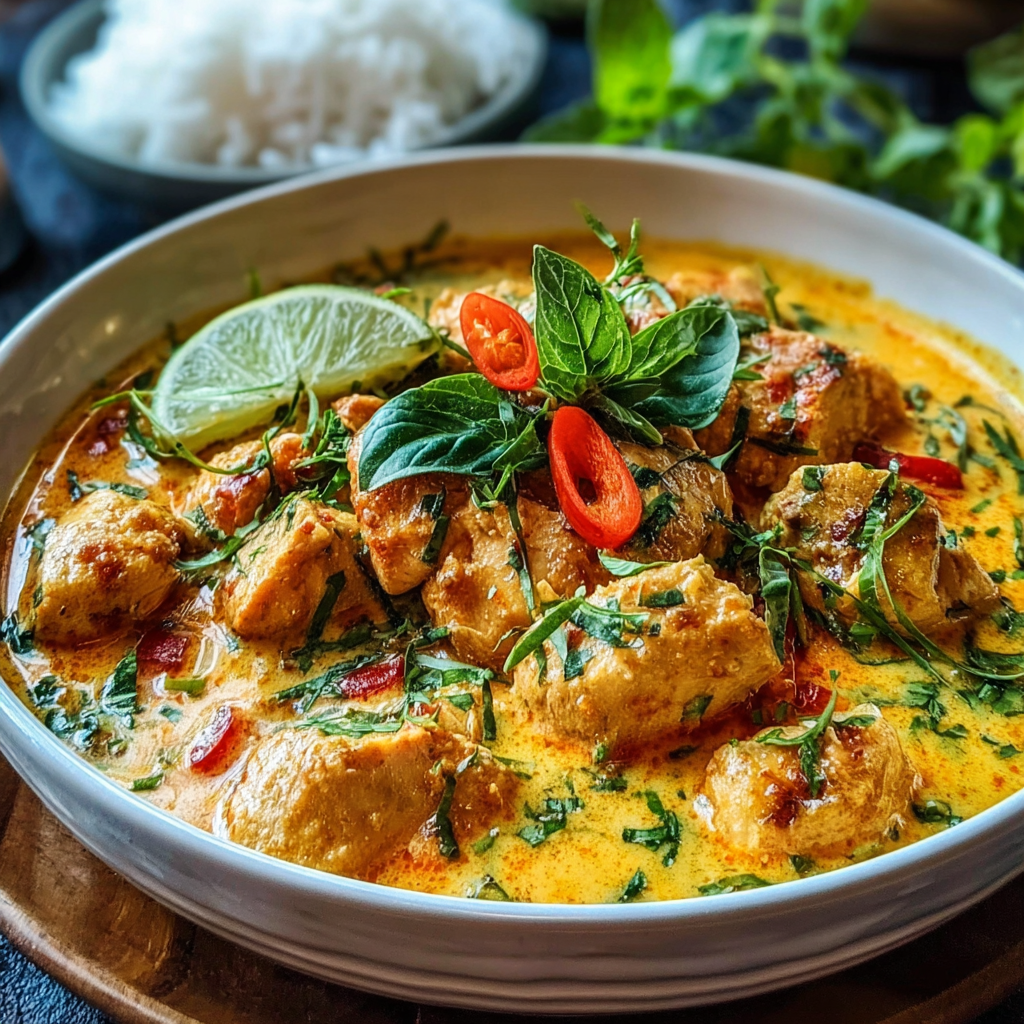
This Thai coconut chicken curry dismantles both barriers completely. Built on a foundation of good-quality Thai red curry paste, full-fat coconut milk, and fresh aromatics, this recipe produces a curry with the layered complexity of a restaurant version — fragrant lemongrass, warming ginger, the rich sweetness of coconut, the bright acidity of lime — in a single pan and a fraction of the time. It is simultaneously one of the most flavor-efficient recipes in any cuisine: a short ingredient list, a straightforward technique, and a result that tastes like considerably more effort was involved.
A 2023 review in the British Journal of Nutrition identified the key compounds in Thai curry spices — capsaicin from chilies, curcumin from turmeric, and gingerol from ginger — as among the most studied anti-inflammatory dietary compounds available, with consistent associations with reduced systemic inflammation markers in regular consumers of Southeast Asian cuisine. This curry delivers all of that in a bowl that needs no nutritional justification beyond the fact that it is genuinely, unambiguously delicious.
Ingredients List
For the Chicken
- 600g (1.3 lbs) boneless, skinless chicken thighs, cut into 4cm pieces (thighs stay juicy — breast works but is less forgiving)
- 1 tsp fine sea salt
- ½ tsp white pepper
- 1 tsp cornstarch (creates a light coating that holds the sauce)
For the Curry Base
- 2 tbsp coconut oil or neutral oil
- 3–4 tbsp Thai red curry paste (adjust to heat preference — Mae Ploy and Maesri are the most reliable brands)
- 4 garlic cloves, minced
- 1 tbsp fresh ginger, finely grated
- 2 lemongrass stalks, white part only, finely minced (sub: 1 tsp lemongrass paste)
- 3 kaffir lime leaves, torn (sub: 1 tsp lime zest — flavor differs but works well)
For the Sauce
- 2 cans (800ml total) full-fat coconut milk (shake well before opening)
- 1 cup (240ml) chicken stock
- 2 tbsp fish sauce (sub: soy sauce or tamari for pescatarian or vegan)
- 1 tbsp palm sugar or light brown sugar
- 1 tbsp fresh lime juice, plus extra to taste
- 1 tsp turmeric powder
For the Vegetables
- 1 red bell pepper, sliced
- 1 cup (90g) baby bok choy, halved
- 1 cup (80g) snap peas or green beans
- Optional: 1 cup (70g) bamboo shoots, drained
For Garnish and Serving
- Steamed jasmine rice
- Fresh Thai basil or regular basil (Thai basil has an anise quality that is closer to authentic)
- Fresh cilantro
- Sliced red chili
- Lime wedges
- Toasted coconut flakes (optional)
Timing
- Prep Time: 15 minutes
- Cook Time: 20–25 minutes
- Total Time: 35–40 minutes
The entire curry — from cold pan to finished bowl — takes under 40 minutes. Start the jasmine rice before anything else and both will be ready simultaneously.
Step-by-Step Instructions
Step 1: Prepare and Season the Chicken
Toss the chicken pieces with salt, white pepper, and cornstarch until evenly coated. The cornstarch creates a light surface coating that helps the chicken hold the sauce and produces a slightly silkier texture in the finished curry — the same velveting principle used throughout Asian restaurant cooking.
Step 2: Sear the Chicken
Heat the coconut oil in a large wok or deep skillet over high heat until shimmering. Add the chicken in a single layer without crowding and cook undisturbed for 2–3 minutes until golden on one side. Toss and cook for another 2 minutes. The chicken does not need to be cooked through at this stage — it will finish in the curry sauce. Remove to a plate and set aside.
Step 3: Bloom the Curry Paste and Aromatics
Reduce the heat to medium and add the curry paste directly to the remaining oil in the pan. Cook, pressing and stirring the paste against the hot surface for 2 full minutes — this blooming step activates the fat-soluble flavor compounds in the paste and is the single most important technique for developing deep, complex curry flavor rather than a flat, sauce-like result. Add the garlic, ginger, and lemongrass and cook for another 60 seconds until intensely fragrant.
Key tip: Frying the curry paste in oil before adding any liquid is the technique that separates genuinely flavorful curry from a merely adequate one. The fat carries the aromatic compounds from the paste into every component of the finished dish in a way that liquid cannot.
Step 4: Build the Sauce
Pour in one can of coconut milk and stir to fully incorporate the curry paste — the mixture should turn a vibrant, even orange-red. Add the chicken stock, fish sauce, sugar, turmeric, and kaffir lime leaves. Bring to a gentle simmer and cook for 5 minutes, allowing the flavors to develop and the sauce to reduce slightly. Add the second can of coconut milk and return to a simmer.
Step 5: Add the Chicken and Vegetables
Return the seared chicken to the pan along with any accumulated juices. Add the bell pepper, bok choy, and snap peas. Simmer over medium heat for 8–10 minutes until the chicken is cooked through and the vegetables are just tender with a slight bite remaining — they should be vivid in color and not overcooked into softness.
Step 6: Finish and Balance
Add the fresh lime juice and taste the curry with precision — this final balancing step is what elevates a good curry to a great one. Adjust fish sauce for saltiness and umami depth, lime juice for brightness and acidity, sugar for sweetness, and additional curry paste for heat. The finished sauce should be deeply savory, mildly sweet, gently spiced, and brightly acidic in approximately equal measure.
Step 7: Serve
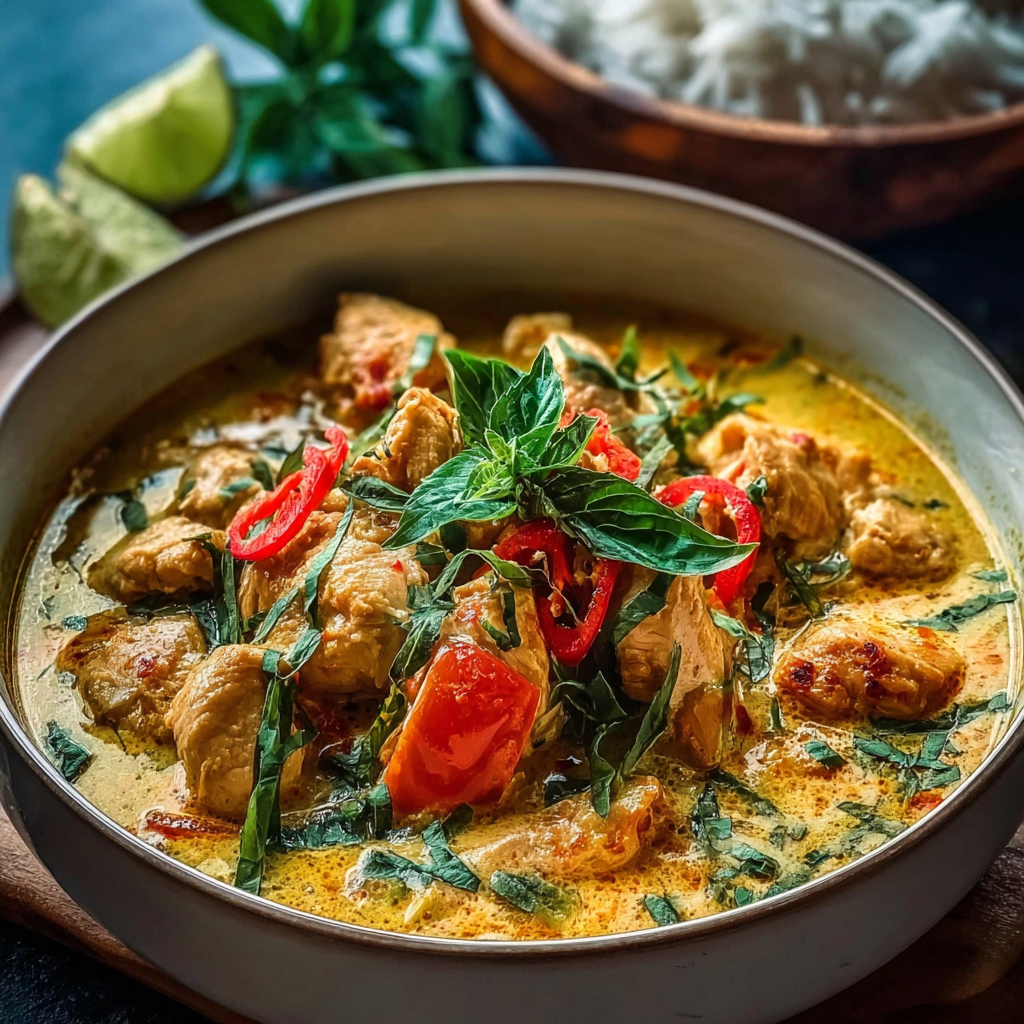
Ladle generously over steamed jasmine rice in wide bowls. Scatter Thai basil, fresh cilantro, and sliced red chili over the top. Finish with a squeeze of fresh lime and toasted coconut flakes if using. Serve immediately.
Nutritional Information
Per serving — based on 4 servings without rice.
| Nutrient | Per Serving | % Daily Value* |
|---|---|---|
| Calories | 480 kcal | 24% |
| Total Fat | 32g | 41% |
| Saturated Fat | 22g | 110% |
| Total Carbohydrates | 14g | 5% |
| Total Sugar | 7g | — |
| Protein | 36g | 72% |
| Dietary Fiber | 2g | 7% |
| Sodium | 820mg | 36% |
| Potassium | 740mg | 16% |
| Vitamin C | 55% DV | 55% |
| Iron | 22% DV | 22% |
| Vitamin A | 35% DV | 35% |
*Based on a standard 2,000-calorie daily diet.
The saturated fat content — driven primarily by full-fat coconut milk — is high by conventional standards but worth contextualizing: the saturated fat in coconut is composed predominantly of medium-chain triglycerides, which are metabolized differently from the long-chain saturated fats in animal products and are associated in several studies with improved satiety and energy utilization.
Healthier Alternatives
Lower fat: Use one can of full-fat coconut milk and replace the second with low-fat coconut milk or additional chicken stock. The sauce will be slightly thinner but the flavor remains excellent with roughly 40% less saturated fat.
Higher vegetable content: Add 1 cup of baby spinach, a handful of broccoli florets, and 1 medium zucchini sliced into half-moons alongside the other vegetables. These additions increase the fiber, vitamin, and mineral content significantly without disrupting the flavor of the sauce.
Vegan: Replace chicken with extra-firm tofu pressed and cubed, replace fish sauce with soy sauce or coconut aminos, and use vegetable stock. The curry paste flavor carries the dish effectively — add an extra tablespoon of soy sauce to compensate for the umami depth that fish sauce provides.
Lower sodium: Use reduced-sodium fish sauce or coconut aminos throughout and use a low-sodium chicken stock. These substitutions reduce the sodium per serving by approximately 25–30% without meaningfully altering the flavor balance.
Higher protein: Add 100g of shelled edamame or a drained can of chickpeas to the curry alongside the vegetables. Both absorb the coconut curry sauce beautifully and increase the protein content by 8–10 grams per serving.
Serving Suggestions
Over jasmine rice: The classic and correct pairing — steamed jasmine rice absorbs the coconut sauce and provides the neutral, fragrant base that allows the complexity of the curry to remain the focus of every bowl.
With rice noodles: Replace jasmine rice with soaked and drained flat rice noodles added directly to the curry in the final 2 minutes of cooking. The noodles absorb the sauce and the result is a curry noodle bowl that is deeply satisfying and requires no separate cooking vessel.
As a soup: Increase the chicken stock to 2 cups and thin the sauce slightly for a brothier, soup-style presentation. Serve in deep bowls with a small mound of rice in the center and the broth ladled over — a presentation modeled on Thai boat noodle soup.
With roti or naan: Serve alongside warm roti or garlic naan for sauce-scooping instead of rice — a Southeast Asian-influenced hybrid format that works particularly well for informal dinner parties where bread is already on the table.
Meal prep bowls: Divide over brown rice into airtight containers and refrigerate for up to 4 days. The curry flavor deepens and improves significantly overnight — this is a meal prep recipe that genuinely rewards advance preparation.
Common Mistakes to Avoid
Not blooming the curry paste. Adding curry paste directly to liquid rather than frying it in oil first is the most common and most damaging mistake in home curry cooking. The aromatic compounds in curry paste are fat-soluble — they only activate and release their full flavor profile when cooked in oil at sufficient heat. A paste added directly to coconut milk produces a flat, one-dimensional curry regardless of every other correct decision.
Using light coconut milk. Light coconut milk does not have sufficient fat content to carry the aromatic compounds from the curry paste into the sauce or to produce the characteristic richness and body of a Thai curry. Full-fat coconut milk is not optional — it is the structural foundation of the sauce.
Overcooking the vegetables. Thai curry vegetables should retain their color, their slight bite, and their individual character. Overcooked vegetables become grey, mushy, and flavored primarily by the sauce rather than contributing their own character to the bowl. Add them in the final 8–10 minutes and remove from heat the moment they are just tender.
Not tasting and adjusting at the end. The balancing step is where a good curry becomes a great one. Fish sauce, lime juice, sugar, and additional curry paste are the four levers — understanding which to adjust and by how much is a skill that improves with every batch but starts with actually tasting the curry before serving it.
Skipping fresh garnishes. Thai basil, cilantro, lime, and fresh chili are not optional decorations — they are functional flavor components that provide freshness, acidity, and herbal brightness that the cooked curry base cannot replicate. A curry served without fresh garnishes tastes flatter and less vibrant than one finished generously with them.
Storing Tips
Refrigerator: Store in an airtight container for up to 4 days. The flavor improves significantly overnight as the spices meld and deepen — this is one of the few recipes that is genuinely better on day two than day one.
Reheating: Reheat gently in a saucepan over medium-low heat, stirring occasionally. Add a splash of coconut milk or stock if the sauce has thickened during refrigeration. Avoid boiling during reheating — prolonged high heat toughens the chicken and can cause the coconut milk to separate.
Freezer: Freeze in portions for up to 3 months. The coconut milk sauce may separate slightly upon thawing — reheat gently and stir continuously until the sauce re-emulsifies. Freeze without the fresh vegetables if possible and add freshly cooked vegetables when reheating.
Make-ahead: The curry base — paste, aromatics, coconut milk, and stock — can be made up to 2 days ahead and refrigerated without the chicken or vegetables. Add freshly seared chicken and vegetables when reheating for the best texture in every component.
Conclusion
Thai coconut chicken curry proves that genuinely complex, restaurant-quality flavor does not require restaurant-level time or technique. Bloomed curry paste, full-fat coconut milk, properly seasoned chicken, and a generous finish of fresh herbs and lime produce a curry that is deeply aromatic, satisfying, and entirely achievable on any weeknight in under 40 minutes.
Make it this week and share your results in the comments — tell us how much curry paste you used, which vegetables you added, and whether it replaced your usual takeout order. Leave a review, share with someone who loves Thai food, and subscribe to our newsletter for more fast, globally inspired recipes every week.
FAQs
What Thai red curry paste brand should I use? Mae Ploy and Maesri are the two most widely recommended brands among Thai food enthusiasts and professional cooks — both are sold in Asian grocery stores and many supermarkets. They are significantly more flavorful and aromatic than the mainstream supermarket brands. If only supermarket brands are available, increase the quantity by 1–2 tablespoons to compensate for the less intense flavor.
Can I make this with green or yellow curry paste? Absolutely. Green curry paste produces a brighter, more herbaceous, slightly spicier curry. Yellow curry paste produces a milder, turmeric-forward curry with a warmer, more mellow character. The technique is identical — adjust the quantity based on the heat level of the specific paste and your personal preference.
How do I make this less spicy? Reduce the curry paste to 2 tablespoons and increase the coconut milk by half a can. The additional fat from the coconut milk coats the palate and significantly reduces the perception of heat. Removing the seeds from any fresh chili garnishes also helps — the heat in chilies is concentrated primarily in the seeds and white membrane.
Can I use chicken breast instead of thighs? Yes, with one adjustment — reduce the final simmering time to 6–8 minutes after adding the chicken back to the pan, as breast meat cooks faster than thighs and becomes dry and stringy if overcooked. The cornstarch coating helps protect the breast meat from drying but does not make it as forgiving as thighs under prolonged heat.
What is the best substitute for kaffir lime leaves? Fresh lime zest is the most accessible substitute — use 1 teaspoon per 2 leaves called for. The flavor is in the same citrus family but lacks the distinctive floral, aromatic quality of the real thing. Frozen kaffir lime leaves, available at most Asian grocery stores, are an excellent alternative that stores for months and produces an almost identical flavor to fresh.
Why is my curry sauce thin and watery? The two most common causes are using light coconut milk rather than full-fat, and adding too much stock relative to the paste. To thicken a thin curry sauce, simmer uncovered over medium heat for 5–8 minutes until reduced to the desired consistency, or stir in 1 teaspoon of cornstarch dissolved in 2 tablespoons of cold water and simmer for 2 minutes until the sauce coats the back of a spoon.