Follow Me On Social Media!
Tropical Pineapple Lemonade Punch

Introduction
Here is a question worth asking the next time you are planning a gathering: what if the most refreshing, visually stunning, crowd-pleasing drink on the table required no bartending skill, no expensive ingredients, and under 10 minutes of preparation? According to a 2024 beverage trend report by the National Restaurant Association, tropical and citrus-forward punch-style drinks represent the fastest-growing non-alcoholic beverage category in both restaurant and home entertaining settings — driven by a consumer shift toward bold, layered flavors in alcohol-free formats that feel as celebratory and special as cocktails.
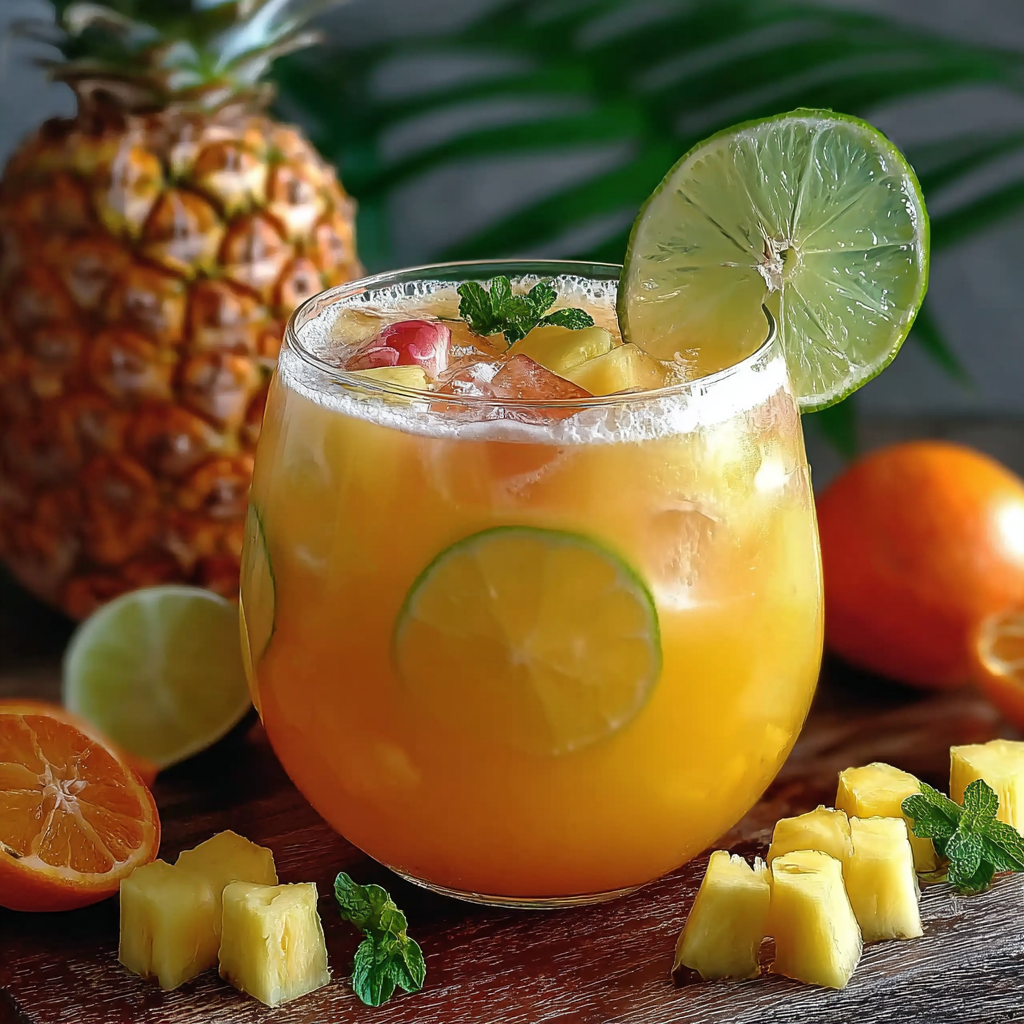
This tropical pineapple lemonade punch delivers exactly that. Fresh pineapple juice, bright homemade lemonade, a hint of tropical fruit, and a sparkling finish combine into a punch that is simultaneously sweet, tart, fragrant, and fizzy — the kind of drink that makes guests ask what is in it before they have finished the first glass. It works as a non-alcoholic centerpiece punch for parties, a refreshing summer pitcher drink, or a festive holiday table offering that serves as many or as few as the occasion demands.
A 2023 nutritional review in the Journal of Food Science identified pineapple as one of the most bromelain-rich fruits available — an enzyme compound associated with anti-inflammatory activity, improved digestion, and immune support. Combined with the Vitamin C from fresh lemon juice and the antioxidant compounds in tropical fruit, this punch delivers a meaningful nutritional contribution alongside its considerable refreshment value.
Ingredients List
For the Punch Base
- 3 cups (720ml) fresh or 100% pineapple juice, chilled (fresh-pressed is superior — bottled 100% juice is the next best option)
- 1 cup (240ml) fresh lemon juice (approximately 6–8 lemons — fresh only)
- ½ cup (120ml) fresh lime juice (approximately 4–5 limes)
- ½ cup (120ml) simple syrup (or to taste — recipe below)
- 1 cup (240ml) coconut water (adds a subtle tropical depth and natural electrolytes)
- 1 cup (240ml) mango juice or passion fruit juice (adds tropical complexity)
For the Simple Syrup
- 1 cup (200g) granulated sugar
- 1 cup (240ml) water
- Optional: fresh mint, sliced ginger, or lemongrass added during simmering for an infused syrup
For the Sparkling Finish
- 2 cups (480ml) sparkling water or lemon-lime soda (added just before serving)
- 1 cup (240ml) ginger ale (adds warmth and extra effervescence)
For Garnish
- Fresh pineapple slices or wedges
- Lemon and lime wheels
- Fresh mint sprigs
- Edible flowers (optional — stunning visual impact)
- Frozen pineapple chunks as ice cubes (keeps the punch cold without diluting it)
- Tajín rim for individual glasses (optional — adds a spicy-salty contrast)
For an Adult Version (Optional)
- 2 cups (480ml) white rum, vodka, or coconut rum
- Or 1 bottle (750ml) prosecco or sparkling wine in place of the sparkling water
Timing
- Simple Syrup: 10 minutes (can be made days ahead)
- Punch Assembly: 5 minutes
- Total Active Time: 15 minutes
- Chill Time: 1 hour minimum (for best flavor)
Make the simple syrup and juice base up to 24 hours ahead and refrigerate. Add the sparkling components only at the moment of serving — carbonation added in advance goes flat within the hour.
Step-by-Step Instructions
Step 1: Make the Simple Syrup
Combine the sugar and water in a small saucepan over medium heat. Stir gently until the sugar dissolves completely — approximately 3–4 minutes. Do not boil vigorously — a gentle simmer is sufficient and prevents crystallization. Remove from heat and allow to cool completely before using. For an infused syrup, add a handful of fresh mint leaves, 3–4 slices of fresh ginger, or a bruised lemongrass stalk to the warm syrup, steep for 20 minutes, then strain. Store in a sealed jar in the refrigerator for up to 2 weeks.
Step 2: Juice the Lemons and Limes
Roll each lemon and lime firmly on the counter with the palm of your hand before cutting and juicing — this breaks down the internal membranes and maximizes juice yield. Strain the fresh juice through a fine mesh sieve to remove seeds and pulp. Fresh citrus juice makes a flavor difference that bottled juice cannot approximate — the volatile aromatic compounds in freshly squeezed citrus begin to dissipate within hours of juicing, which is precisely why freshly squeezed lemonade at a summer stand tastes incomparably better than anything from a bottle.
Step 3: Combine the Punch Base
In a large pitcher or punch bowl, combine the chilled pineapple juice, fresh lemon juice, fresh lime juice, simple syrup, coconut water, and mango or passion fruit juice. Stir gently to combine. Taste and adjust — more simple syrup for sweetness, more lemon juice for tartness, more pineapple juice for tropical depth. The base at this stage should taste intensely flavored and slightly sweeter than you want the finished punch to taste, as the ice and sparkling water will dilute and soften it.
Key tip: Always taste and adjust the punch base before adding ice or sparkling components — once diluted and carbonated, the flavor balance is essentially fixed.
Step 4: Chill the Base
Cover the pitcher or punch bowl and refrigerate for at least 1 hour to allow the flavors to meld and the base to reach a deep chill. A properly cold punch base keeps the sparkling components active and fizzy longer after they are added. Warm punch base causes the carbonation to dissipate within minutes.
Step 5: Add the Sparkling Components and Serve
Just before serving, add the frozen pineapple chunks to the punch bowl. Pour in the sparkling water, ginger ale, and any alcohol if using — pour gently down the side of the pitcher or bowl rather than directly into the center to minimize carbonation loss. Stir once, very gently, with a long-handled spoon. Garnish the punch bowl with floating lemon and lime wheels, pineapple slices, fresh mint sprigs, and edible flowers if using.
For individual glasses, rim with Tajín if desired — run a lime wedge around the rim and dip into a small plate of Tajín. Fill with ice, ladle the punch over, and garnish each glass with a mint sprig and a citrus wheel.
Nutritional Information
Per serving — based on 10 servings from the full batch, without alcohol or Tajín rim.
| Nutrient | Per Serving | % Daily Value* |
|---|---|---|
| Calories | 125 kcal | 6% |
| Total Fat | 0g | 0% |
| Saturated Fat | 0g | 0% |
| Total Carbohydrates | 32g | 12% |
| Total Sugar | 28g | — |
| Protein | 1g | 2% |
| Dietary Fiber | 0.5g | 2% |
| Sodium | 25mg | 1% |
| Potassium | 280mg | 6% |
| Vitamin C | 45% DV | 45% |
| Folate | 8% DV | 8% |
*Based on a standard 2,000-calorie daily diet.
At 125 calories per serving with 45% of the daily Vitamin C requirement — driven by the combination of fresh pineapple, lemon, and lime juice — this punch delivers a genuinely meaningful micronutrient contribution for a party beverage. Replacing soda with this punch at a gathering eliminates artificial colors, artificial flavors, and significantly reduces the sugar content compared to most commercial punch mixes.
Healthier Alternatives
Lower sugar: Reduce the simple syrup to ¼ cup and replace with 2 tablespoons of honey or agave dissolved in warm water. The natural sweetness of the pineapple and mango juices provides sufficient background sweetness with less added sugar.
No added sugar: Omit the simple syrup entirely and use naturally sweet pineapple juice as the primary sweetening component. Add a few drops of liquid stevia if additional sweetness is needed without calories.
Electrolyte boost: Replace the sparkling water with coconut water throughout — increasing the coconut water to 3 cups total. This significantly increases the potassium and magnesium content and makes the punch a genuinely hydrating option for outdoor summer events.
Anti-inflammatory version: Add 1 teaspoon of freshly grated turmeric and 1 teaspoon of freshly grated ginger to the simple syrup while it simmers. Both compounds — curcumin and gingerol respectively — are among the most studied anti-inflammatory dietary compounds and integrate naturally into the tropical flavor profile.
Sparkling water only: Replace the ginger ale entirely with additional sparkling water and add ½ teaspoon of pure ginger extract to the base for the warming depth without the added sugar of commercial ginger ale.
Serving Suggestions
Large party punch bowl: Double the recipe, fill a large decorative punch bowl with ice, and set out glasses alongside for a self-service centerpiece that requires no attention from the host after initial assembly. A ladle tied with a ribbon and a printed ingredient card makes it a conversation piece as well as a beverage.
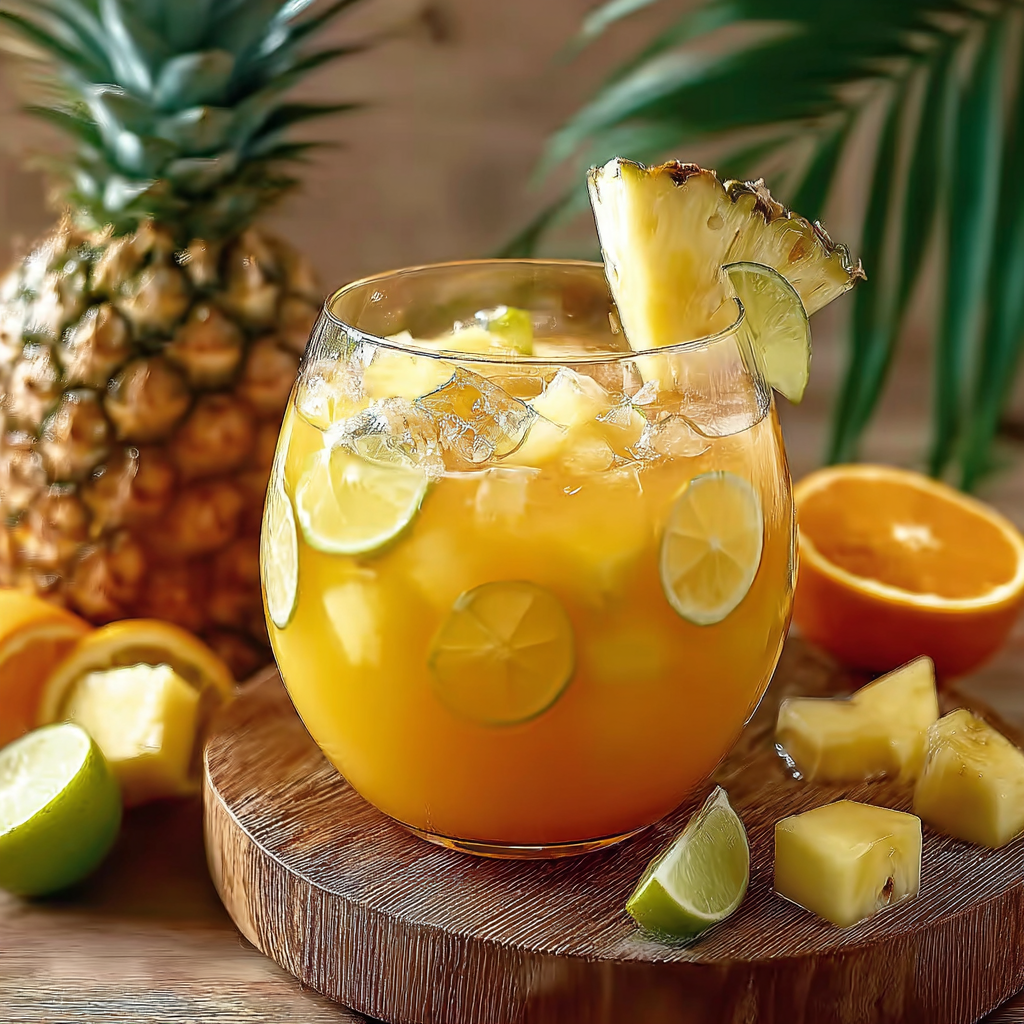
Individual pitcher for the table: Scale to a single pitcher serving 4–6 and bring to the table in a glass pitcher garnished with citrus wheels and mint. This is the format that photographs most beautifully and works perfectly for brunches, lunches, and casual dinner parties.
Frozen slush version: Blend 3 cups of the punch base with 2 cups of ice until smooth. Serve in wide glasses with a straw and garnish with a pineapple wedge. The frozen slush format is particularly appropriate for outdoor summer events and is consistently one of the most popular drinks at any warm-weather gathering.
Mocktail individual servings: Serve in tall glasses over crushed ice with a Tajín rim, a pineapple wedge, and a paper straw. This individual mocktail presentation makes every guest feel as though their drink has been specially made, and is the format that most closely replicates the cocktail bar experience without alcohol.
Holiday punch: Add pomegranate juice in place of the mango juice, replace the sparkling water with cranberry sparkling water, and garnish with fresh rosemary sprigs and frozen cranberries. This winter variation of the same base produces a festive, jewel-colored holiday punch suitable for Thanksgiving through New Year.
Common Mistakes to Avoid
Adding sparkling components too early. Sparkling water and ginger ale added more than 15 minutes before serving go flat and produce a still punch that lacks the effervescence responsible for much of its refreshing quality. Add carbonation only at the moment of serving, always.
Using bottled lemon juice. The flavor difference between fresh and bottled lemon juice in a drink where citrus is the primary flavor driver is dramatic and immediately detectable. Fresh juice is non-negotiable for a punch of this caliber — the 10 minutes of squeezing is the most impactful investment in the entire recipe.
Not chilling the base before serving. Warm punch dilutes faster, loses carbonation faster, and tastes less vibrant than a cold, well-chilled base. A minimum of 1 hour of refrigeration is essential — the punch should be as cold as possible before serving.
Over-sweetening the base. The punch should taste slightly too sweet before the ice and sparkling water are added — the dilution brings it to the correct balance. A base that tastes perfectly balanced before dilution will taste flat and slightly watery once fully assembled.
Using low-quality pineapple juice. Pineapple juice from concentrate has a noticeably flatter, more artificial flavor than 100% pressed pineapple juice. Look for labels that say 100% juice with no added sugar or concentrate for the most vibrant tropical flavor.
Skipping the frozen fruit ice. Regular ice cubes dilute the punch rapidly and can water it down significantly within 30 minutes. Frozen pineapple chunks or frozen citrus wheels keep the punch cold while contributing flavor as they melt rather than diluting it.
Storing Tips
Punch base: Store without sparkling components in a sealed pitcher or jar for up to 3 days in the refrigerator. The flavor actually improves over the first 24 hours as the citrus and tropical juices meld. Shake or stir before serving and taste to adjust sweetness or acidity.
Simple syrup: Stores in a sealed jar in the refrigerator for up to 2 weeks — make a large batch at the beginning of summer for effortless punch assembly throughout the season.
Pre-batching for events: Prepare the full base up to 24 hours ahead. Portion into sealed jars or bottles and refrigerate. Add sparkling components per glass at the moment of serving rather than adding them to the full batch — this maintains carbonation for the duration of the event.
Leftover punch: Leftover punch that has already had sparkling water added can be frozen into popsicle molds or ice cube trays for a refreshing frozen treat the following day. The flavor of frozen punch popsicles is exceptional and produces a zero-waste outcome from any party leftovers.
Conclusion
Tropical pineapple lemonade punch proves that the most memorable drink at any table is not always the most complicated — it is the one that is bright, cold, beautifully presented, and tastes unmistakably like the occasion it was made for. Fresh pineapple, hand-squeezed citrus, coconut water, and a sparkling finish in under 15 minutes of active preparation, served from a bowl that looks as festive as anything a professional bartender could produce.
Make it for your next gathering and share your results in the comments — tell us whether you made the adult version, which fruit garnishes you used, and how quickly it disappeared. Leave a review, share with someone planning a party, and subscribe to our newsletter for more fast, crowd-pleasing drink and recipe ideas every week.
FAQs
Can I make this punch alcoholic? Yes — add 2 cups of white rum, coconut rum, or vodka to the base before chilling, or replace the sparkling water with a full bottle of prosecco or sparkling wine added at the moment of serving. Coconut rum is the most thematically appropriate addition and amplifies the tropical character of the punch significantly.
How far in advance can I make this? The punch base — everything except the sparkling components — can be made up to 24 hours ahead and refrigerated. Add sparkling water, ginger ale, or sparkling wine only at the moment of serving to preserve the carbonation.
Can I use canned pineapple juice? Yes — use 100% pineapple juice with no added sugar or concentrate. Dole and Lakewood are reliable brands. Fresh-pressed juice from a whole pineapple is superior in flavor but requires either a juicer or blending and straining the flesh — worth it for a special occasion.
What can I substitute for coconut water? Plain filtered water or additional pineapple juice both work well as substitutes. Coconut water adds subtle tropical depth and natural electrolytes but the punch is entirely pleasant without it. Light coconut milk — not full-fat — stirred in at ¼ cup quantity adds richness and a more pronounced coconut flavor if desired.
How do I scale this recipe for a large crowd? This recipe serves approximately 10 generously. Double the entire recipe for 20 guests, triple for 30. The ratios scale directly — use a large punch bowl or multiple pitchers for larger quantities. Pre-batch the base in sealed containers and add sparkling components to each pitcher individually as needed throughout the event to maintain carbonation.
Is this punch suitable for children? It is an excellent choice for children — naturally flavored, vibrantly colored, and festive without any alcohol. For children who find the tartness too assertive, increase the simple syrup by 2 tablespoons and reduce the lime juice by half. The Tajín rim is optional and should be offered on the side for children to choose rather than applied automatically.