Follow Me On Social Media!
Twice-Baked Cheesy Broccoli Potatoes

Introduction
Here is a question that reframes one of the most satisfying formats in American home cooking: why does the twice-baked potato — a preparation that transforms a humble baked potato into something genuinely special through the simple act of scooping, mixing, and returning to the oven — remain underutilized in most home cooking rotations when it represents one of the most efficient flavor-development techniques available for a single vegetable?
According to a 2024 consumer food behavior report by the Food Marketing Institute, baked potatoes rank as the most frequently purchased and least creatively utilized staple vegetable in American households — yet the twice-baked format, which takes a standard baked potato from a side dish into a complete, protein-rich, vegetable-forward main course, consistently ranks among the highest satisfaction recipes in home cooking surveys when people actually make it. The barrier is entirely perception — the format sounds more time-consuming than it is, and the results are significantly more impressive than the effort suggests.
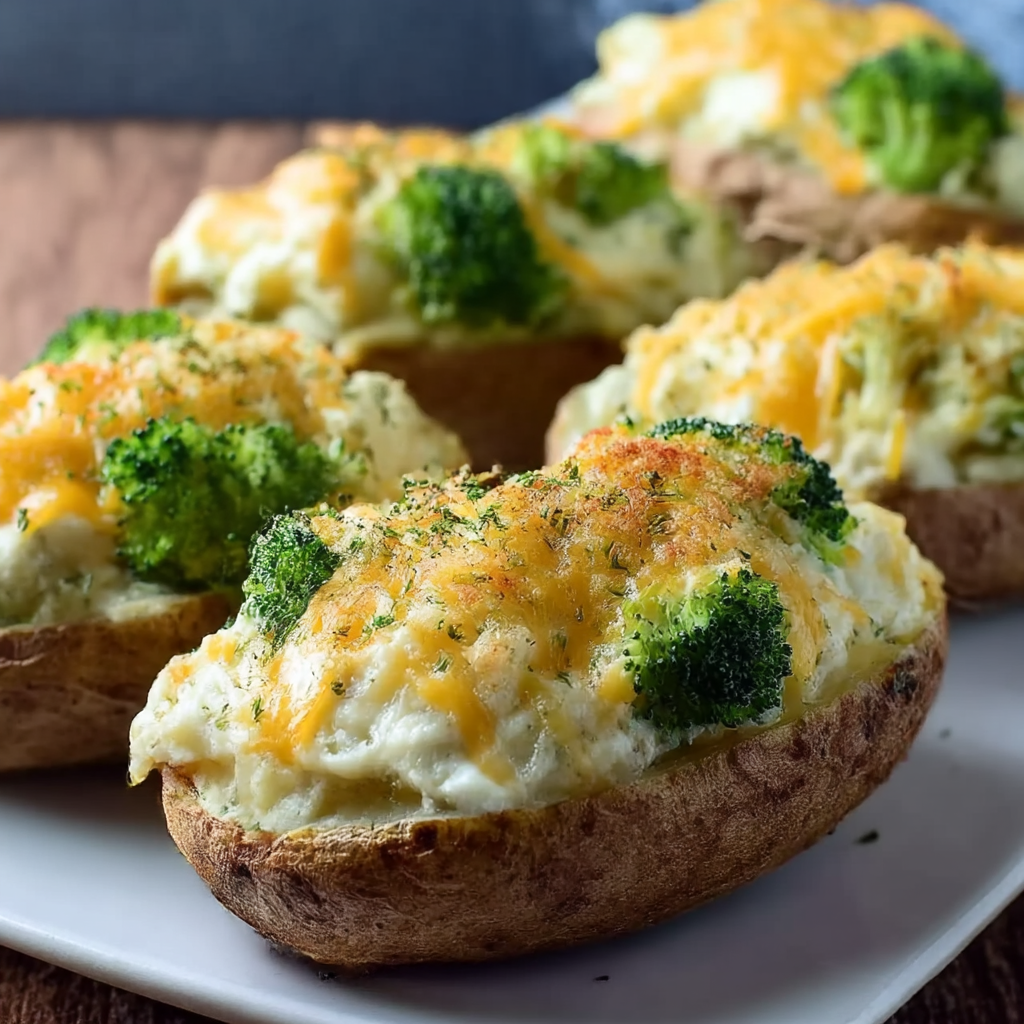
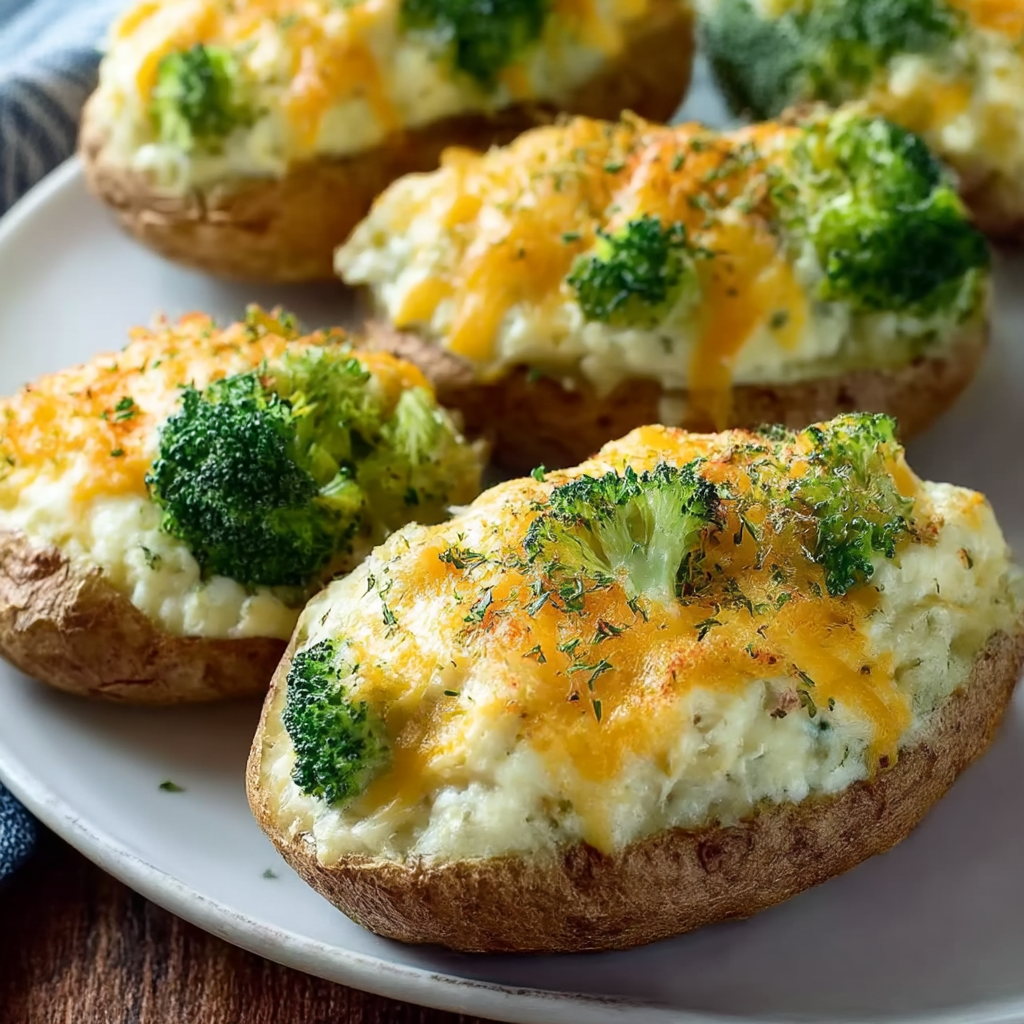
These twice-baked cheesy broccoli potatoes are the complete version of that format. Large Russet potatoes baked until their interior is fluffy and their skin is crisp, scooped and mixed with sharp cheddar, cream cheese, sour cream, broccoli, and seasonings into a filling that is simultaneously rich and vegetable-forward, returned to the potato shells and baked again until the tops are golden and the filling is molten — producing a self-contained meal with its own edible vessel that is nutritionally complete, visually striking, and deeply satisfying in the way that only potato-based comfort food can be.
A 2023 nutritional review in the British Journal of Nutrition identified the combination of potato, broccoli, and dairy — the precise combination at the heart of this recipe — as one of the most complete single-dish nutritional profiles available from a vegetable-centered preparation, with the potato providing potassium and B vitamins, the broccoli delivering Vitamin C, Vitamin K, and folate, and the dairy contributing calcium and complete protein.
Ingredients List
For the Potatoes
- 4 large Russet potatoes (approximately 300–350g / 10–12 oz each — Russet’s high starch content produces the fluffiest, most scoopable interior)
- 1 tbsp olive oil or neutral oil
- 1 tsp fine sea salt (for rubbing the skins)
For the Broccoli Filling
- 2 cups (200g) broccoli florets, cut into very small pieces (approximately ½ of a medium head)
- 115g (4 oz) full-fat cream cheese, softened
- ½ cup (120ml) sour cream or full-fat Greek yogurt
- 1½ cups (170g) sharp cheddar cheese, freshly shredded and divided (reserve ½ cup for the topping)
- 3 tbsp unsalted butter, softened
- ¼ cup (60ml) whole milk or heavy cream (warmed — added gradually for consistency control)
- 3 spring onions, thinly sliced (white and green parts separated)
- 2 garlic cloves, finely minced
- 1 tsp garlic powder
- ½ tsp smoked paprika
- ½ tsp onion powder
- ½ tsp fine sea salt, or to taste
- ¼ tsp freshly ground black pepper
- ¼ tsp cayenne pepper (optional)
For the Topping
- Reserved ½ cup (55g) sharp cheddar, shredded
- 2 tbsp Parmesan, finely grated
- ¼ cup (15g) panko breadcrumbs tossed with 1 tsp melted butter (optional — adds crunch)
- Smoked paprika, for dusting
- 2 tbsp fresh chives or spring onion greens, for garnish
Optional Additions
- 4 strips bacon, cooked and crumbled (fold into the filling)
- ½ cup (50g) Gruyère in place of some cheddar
- 1 tbsp Dijon mustard (stirred into the filling — adds subtle depth)
- Hot sauce, to finish
Timing
- First Bake: 60–75 minutes
- Prep and Filling: 15 minutes
- Second Bake: 20–25 minutes
- Total Time: approximately 95–115 minutes (mostly hands-off)
The active hands-on preparation — scooping, mixing, and filling — takes under 15 minutes. The first bake can be completed up to 2 days ahead and the potatoes refrigerated whole until needed — reducing the day-of effort to the filling and second bake only.
Step-by-Step Instructions
Step 1: First Bake — The Foundation
Preheat the oven to 400°F (200°C). Scrub the potatoes thoroughly under cold water and pat completely dry. Pierce each potato 8–10 times with a fork — the steam venting prevents dangerous pressure buildup and the fork holes allow the skin to dry and crisp more evenly during baking. Rub each potato with olive oil and season generously with salt — the salted oil coating produces the deeply flavored, slightly crispy skin that makes the potato shell worth eating.
Place the potatoes directly on the oven rack — not on a baking sheet — with a foil-lined sheet below to catch drips. Direct rack placement allows hot air to circulate completely around each potato, producing even cooking and an evenly crispy skin on all surfaces. Bake for 60–75 minutes until the skin is taut and crispy, the potato yields immediately to firm pressure, and a fork slides through the thickest part with zero resistance.
Key tip: The first bake should cook the potatoes fully — not just until tender, but until the interior is genuinely fluffy and beginning to pull away from the skin. Under-baked potatoes produce a dense, slightly gummy filling rather than the light, airy texture that makes a twice-baked potato filling so satisfying.
Step 2: Prepare the Broccoli
While the potatoes are in their final 15 minutes of baking, bring a small pot of salted water to a boil. Blanch the broccoli florets for 2–3 minutes until just tender and bright green — not soft, which would produce a mushy, grey broccoli in the finished filling. Drain immediately and run under cold water to stop the cooking and lock in the vivid green color. Chop into very small pieces — no larger than 1cm — to ensure even distribution through the filling and structural cohesion in the finished potato.
Key tip: Broccoli that is not cut small enough creates structural weak points in the filling — large florets cause the filling to break apart when portioned and produce bites that are entirely broccoli or entirely potato rather than an even combination of both. Small, uniform pieces distribute evenly and produce a cohesive filling that holds together cleanly.
Step 3: Scoop the Potatoes
Remove the potatoes from the oven and allow to cool for just 5 minutes — enough to handle safely but not long enough for the interior to firm. Cut each potato in half lengthwise with a sharp knife. Using a large spoon, scoop the interior flesh into a large bowl, leaving a shell approximately 5–7mm (¼ inch) thick — thin enough that the shell-to-filling ratio is generous but thick enough that the shell holds its structural integrity when filled and baked again.
Place the hollow shells on a parchment-lined baking sheet. If the shells feel limp, return them to the 400°F oven for 5 minutes to crisp and firm before filling — a structurally sound shell holds its shape through the second bake and portioning.
Step 4: Make the Filling
Mash the scooped potato flesh with a fork or potato masher until smooth with no large lumps — do not use a food processor or electric mixer, which would over-process the starch and produce a gluey, gummy filling. Add the softened cream cheese, sour cream, softened butter, 1 cup of the shredded cheddar, garlic powder, smoked paprika, onion powder, salt, pepper, and cayenne. Mix together with a fork or spatula until completely combined.
Warm the milk or cream briefly in the microwave and add gradually — stirring between additions — until the filling reaches the consistency of very thick mashed potatoes: smooth, creamy, and just soft enough to pipe or spoon generously into the shells without being loose or runny.
Add the minced garlic and white parts of the spring onions to a small skillet with ½ teaspoon of butter and cook for 30 seconds until fragrant. Fold into the filling along with the chopped broccoli. Taste and adjust seasoning — the filling should taste assertively seasoned since it will be surrounded by the neutral potato shell.
Step 5: Fill the Shells
Spoon or pipe the filling generously into the potato shells — it should be mounded above the rim of the shell rather than flush with it. A piping bag fitted with a large star tip produces a dramatic, restaurant-style presentation; a spoon and a fork used to shape the filling produces a more rustic, home-kitchen style that is equally delicious. Scatter the reserved cheddar, Parmesan, and buttered panko if using evenly over the tops of all eight filled halves. Dust lightly with smoked paprika.
Step 6: Second Bake
Bake at 400°F (200°C) for 20–25 minutes until the cheese topping is melted, bubbling, and developing deep golden patches, the panko is golden and crispy, and the filling is heated through to the center. For the most dramatically golden top, switch to the broiler for the final 2–3 minutes and watch closely.
Step 7: Garnish and Serve
Remove from the oven and allow to rest for 3–4 minutes. Scatter the green spring onion tops and fresh chives generously over all eight halves. Serve with sour cream and hot sauce on the side.
Nutritional Information
Per serving — based on 4 servings of 2 halves each.
| Nutrient | Per Serving | % Daily Value* |
|---|---|---|
| Calories | 580 kcal | 29% |
| Total Fat | 28g | 36% |
| Saturated Fat | 15g | 75% |
| Total Carbohydrates | 64g | 23% |
| Total Sugar | 6g | — |
| Protein | 22g | 44% |
| Dietary Fiber | 6g | 21% |
| Sodium | 740mg | 32% |
| Potassium | 1,280mg | 27% |
| Vitamin C | 80% DV | 80% |
| Vitamin K | 95% DV | 95% |
| Calcium | 35% DV | 35% |
*Based on a standard 2,000-calorie daily diet.
The Vitamin C content — 80% of the daily recommended value per serving — comes primarily from the broccoli and makes this one of the most meaningful single-meal Vitamin C contributors available from a potato-based preparation. The Vitamin K at 95% of the daily recommended value reflects the significant contribution of both broccoli and spring onions.
Healthier Alternatives
Lower fat: Replace cream cheese with Neufchâtel — ⅓ less fat — and use reduced-fat sour cream or plain non-fat Greek yogurt. Reduce the butter to 1 tablespoon. These changes reduce the saturated fat content by approximately 35% while the potato, broccoli, and cheese flavors remain fully present.
Higher protein: Add ½ cup of cottage cheese blended smooth to the filling alongside the cream cheese, and increase the cheddar by ¼ cup. These additions push the protein content above 28 grams per serving without altering the flavor character of the filling.
Vegan: Replace butter with plant-based butter, cream cheese with vegan cream cheese, sour cream with cashew cream or coconut yogurt, and cheddar with a shredded plant-based cheddar alternative. The filling will be slightly less rich but entirely cohesive and flavorful.
Lower carbohydrate: Use medium rather than large potatoes — approximately 200g each — and reduce the milk addition to produce a denser filling with a higher filling-to-potato ratio. This produces a lower-carbohydrate serving while maintaining the full flavor experience.
Higher vegetable content: Increase the broccoli to 3 cups and add ½ cup of finely diced roasted red pepper or wilted baby spinach to the filling. These additions increase the fiber, Vitamin C, and overall micronutrient content without disrupting the structure of the filling.
Serving Suggestions
As a complete vegetarian main course: Serve two halves per person with a simple green salad dressed with lemon vinaigrette and crusty bread. The potato provides starch, the broccoli provides vegetables, and the dairy provides protein and fat — a genuinely complete meal from a vegetable-centered format.
As a side dish: Serve one half per person alongside grilled steak, roasted chicken, or seared salmon. The twice-baked potato in this format is substantial enough to function as both a starch and a vegetable side simultaneously.
Loaded bar style: Prepare the filled, cheese-topped potatoes to the point of the second bake and hold unbaked. Set out a selection of toppings — bacon crumbles, sour cream, chives, jalapeños, hot sauce, and extra cheese — and let guests add their own before the second bake. This interactive format works exceptionally well for casual entertaining.
Meal prep format: Bake, fill, and partially bake (15 minutes rather than the full 20–25) the potatoes up to 3 days ahead. Refrigerate covered. When needed, bake from cold at 375°F (190°C) for 25–30 minutes until heated through and the cheese is melted. The advance preparation reduces the weeknight effort to reheating only.
As party appetizers: Use small potatoes — approximately 100g each — to produce individual, single-bite twice-baked potato portions. These miniature versions are one of the most elegant and practical party food formats available from this recipe.
Common Mistakes to Avoid
Under-baking the potato in the first bake. The interior must be genuinely fluffy and beginning to pull from the skin before scooping — under-baked potato produces a dense, slightly gummy filling that no amount of cream cheese or butter can fully correct. When in doubt, give the potatoes an additional 10–15 minutes.
Scooping too thin or too thick a shell. Too thin and the shell breaks apart when filled and baked. Too thick and the shell-to-filling ratio is unfavorable and the potato tastes predominantly of skin. The 5–7mm shell is calibrated for structural integrity and flavor balance.
Over-processing the potato interior. A food processor or electric mixer releases the starch from potato cells and produces a gluey, gummy texture that no amount of cream or butter can correct. A fork or manual masher is the correct tool — leaving some small pieces is preferable to a perfectly smooth, over-processed filling.
Filling that is too loose. Loose, runny filling bubbles over the shell edges during the second bake, makes the shells difficult to portion, and produces an uneven distribution of filling to shell in each bite. Add the milk gradually and stop before the filling reaches a pourable consistency — it should hold its shape when mounded.
Not seasoning assertively. The filling will taste less seasoned inside the potato shell than it did during preparation — the neutral potato surrounds the filling and moderates its perceived saltiness. Season more boldly than feels right during preparation.
Storing Tips
Refrigerator: Store filled, baked halves in an airtight container for up to 4 days. Reheat in a 375°F (190°C) oven for 15–18 minutes until heated through and the cheese is melted and beginning to bubble again. The microwave works at 70% power in 90-second intervals but does not restore the crispy topping or skin.
Freezer: Freeze the filled, unbaked halves in a single layer until solid, then transfer to a freezer bag for up to 3 months. Bake from frozen at 375°F (190°C) for 35–40 minutes until heated through. The texture after freezing is slightly softer than fresh but entirely acceptable.
Make-ahead: First-bake the potatoes up to 2 days ahead, wrap in foil, and refrigerate. Make the filling up to 24 hours ahead and refrigerate separately. On the day of serving, scoop, fill, and second-bake — reducing the active preparation to 15 minutes.
Unbaked filled halves: Fill the potato halves and refrigerate up to 24 hours before the second bake — add 8–10 minutes to the second bake time when cooking from cold.
Conclusion
Twice-baked cheesy broccoli potatoes prove that the most satisfying comfort food dinners are frequently the ones that take a single, universally beloved ingredient — the baked potato — and apply a small amount of additional technique to extract the maximum possible satisfaction from it. Crispy skin, fluffy filling rich with cheddar and cream cheese, vivid broccoli, a golden bubbling top — a complete meal from a single vessel that requires no apology for simplicity and no special occasion to justify making.
Make them and share your results in the comments — tell us which optional additions you included, whether you piped or spooned the filling, and whether they appeared as a side dish or a main course. Leave a review, share with someone who loves baked potatoes, and subscribe to our newsletter for more comfort-food-forward, technique-driven recipes every week.
FAQs
What potato variety works best? Russet potatoes are the definitive choice — their high starch, low moisture content produces the fluffiest interior and the crispiest skin of any commonly available potato variety. The fluffy interior is what allows the filling to be light and airy rather than dense and heavy. Yukon Gold produces a slightly more buttery, less fluffy result that works well for those who prefer a denser, richer filling. Avoid waxy varieties — their low starch content produces a filling that is dense and sticky regardless of how much cream or butter is added.
Can I microwave the potatoes for the first bake to save time? Microwaving produces a soft, steamed interior without the crispy, deeply flavored skin that is one of the most important textural elements of a twice-baked potato. For the best result, the oven first bake is non-negotiable. As a time-saving compromise, microwave the potatoes for 8–10 minutes on high to partially cook the interior, then finish in a 400°F (200°C) oven for 20–25 minutes to crisp the skin.
Can I add meat to the filling? Absolutely — crumbled cooked bacon or sausage folded into the filling alongside the broccoli is the most popular addition. Diced ham, shredded rotisserie chicken, or cooked and crumbled ground beef all work well. Any meat addition pushes the protein content significantly higher and transforms the twice-baked potato into an even more substantial meal.
How do I prevent the filling from being gluey? The two primary causes of gluey filling are over-processing the potato — using a mixer or processor rather than a fork — and adding too much liquid. Use a fork or potato masher, add milk gradually and stop well before the filling becomes fluid, and avoid over-mixing once all ingredients are incorporated. A slightly lumpy, textured filling is always preferable to a smooth, gluey one.
Can I make these for a crowd? This recipe scales directly — double or triple all quantities and use additional baking sheets for the second bake. For a crowd of 12, use 6 large potatoes (12 halves) and prepare a triple batch of filling. The advance preparation approach — first-baking the potatoes and making the filling up to 24 hours ahead — is essential for entertaining a large group, as it reduces the day-of effort to assembly and the 25-minute second bake.
Is this recipe suitable for children? It is one of the most reliably popular family dinners in this collection — the familiar comfort food format, the mild dairy and cheese flavors, and the self-contained vessel that children can eat without it falling apart make it an excellent family meal. For children who are resistant to visible broccoli, chop it very finely — nearly minced — and it becomes largely indistinguishable within the cheesy filling while still contributing its nutritional value.