Follow Me On Social Media!
Cheesy Roasted Cauliflower Steak

Introduction
Here is a question that challenges the assumption that a satisfying, centerpiece-worthy dinner always requires meat: when was the last time a vegetable arrived at the table with the visual drama, the caramelized depth of flavor, and the genuine satisfying heft of a main course that made everyone at the table — including the committed carnivores — genuinely interested in what they were eating? According to a 2024 report by the Good Food Institute, flexitarian eating — the practice of reducing but not eliminating meat consumption — now represents the fastest-growing dietary category globally, with over 42% of consumers actively seeking plant-forward main courses that deliver the same satisfaction as protein-centered meals.
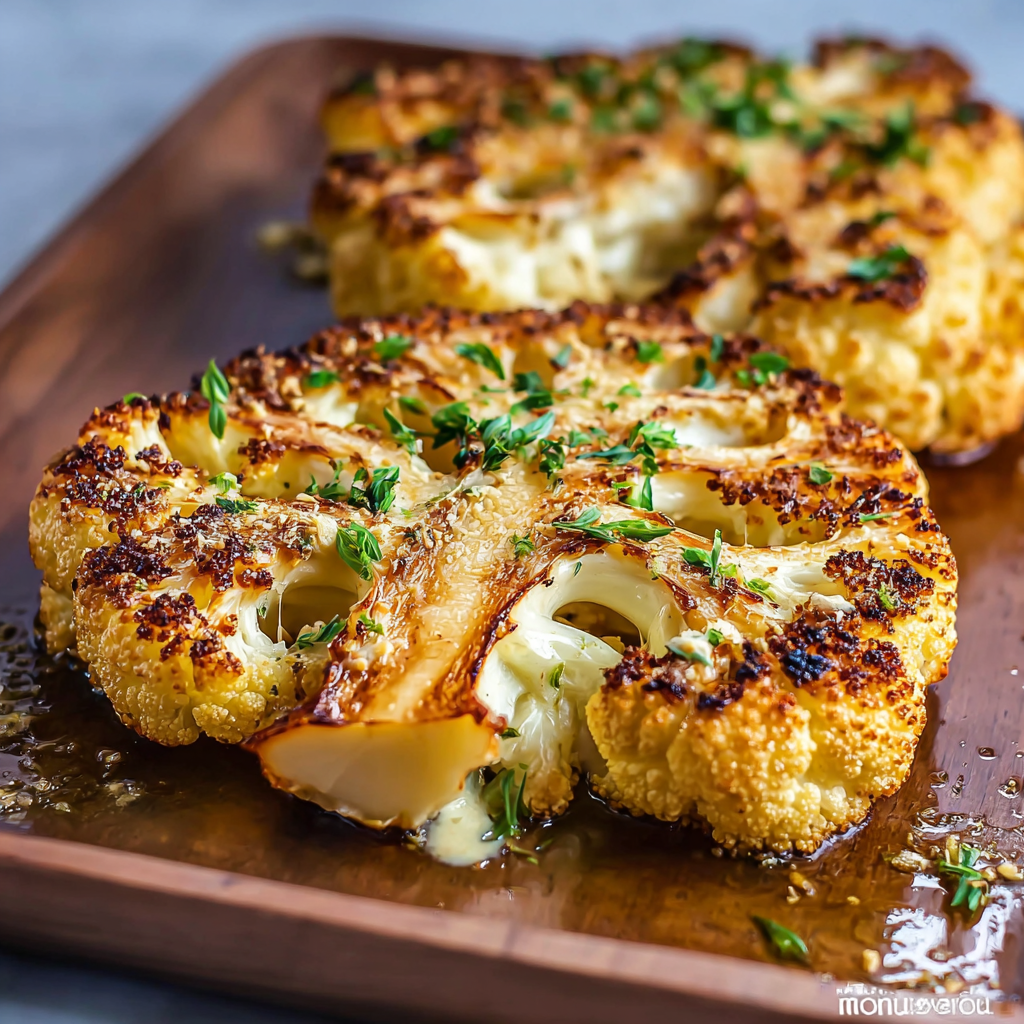
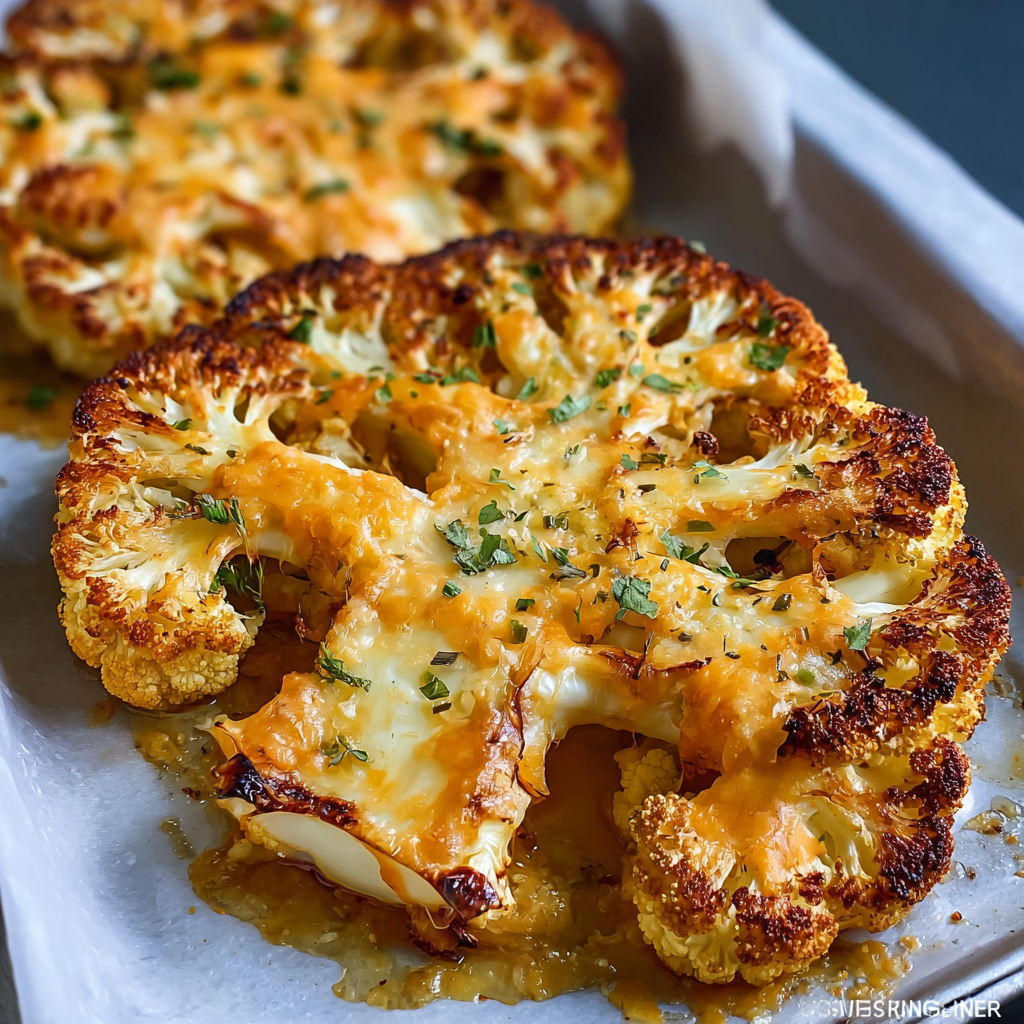
This cheesy roasted cauliflower steak answers that demand directly. A thick-cut cauliflower steak — sliced from the center of a whole head to preserve the core that holds the florets together — seasoned with a bold spice rub, roasted at high heat until the cut surfaces caramelize into deep, golden-brown sheets of concentrated flavor, then finished with a bubbling cheese crust that adds richness, saltiness, and the kind of textural contrast that makes a dish genuinely memorable. It is simultaneously one of the most visually impressive vegetable preparations and one of the most technically straightforward — requiring nothing more than a sharp knife, a baking sheet, and a hot oven.
A 2023 nutritional review in the British Journal of Nutrition identified cruciferous vegetables roasted at high heat as producing significantly higher concentrations of available glucosinolates — sulfur compounds associated with cancer-preventive activity — than the same vegetables steamed or boiled, making high-heat roasting both the most flavorful and the most nutritionally advantageous preparation method for cauliflower.
Ingredients List
For the Cauliflower Steaks
- 2 large heads of cauliflower (yields 2 center-cut steaks per head — 4 steaks total)
- 3 tbsp olive oil
- 1½ tsp fine sea salt
- 1 tsp freshly ground black pepper
- 1 tsp smoked paprika
- 1 tsp garlic powder
- ½ tsp ground cumin
- ½ tsp onion powder
- ¼ tsp cayenne pepper (optional)
- ¼ tsp ground turmeric (adds color and anti-inflammatory compounds)
For the Cheese Crust
- 1 cup (115g) shredded Gruyère cheese (sub: sharp cheddar, fontina, or a combination)
- ½ cup (50g) Parmesan, finely grated
- 2 tbsp panko breadcrumbs (sub: almond flour for gluten-free or keto)
- 1 tsp fresh thyme leaves
- ½ tsp garlic powder
- Pinch of smoked paprika
For the Herb Finishing Sauce
- 3 tbsp good-quality extra virgin olive oil
- 2 tbsp fresh flat-leaf parsley, finely chopped
- 1 tbsp fresh chives, thinly sliced
- 1 tsp lemon zest
- 1 tbsp fresh lemon juice
- 1 small garlic clove, minced
- Flaky sea salt, to finish
Optional Additions
- 2 tbsp harissa or chermoula, spread over the steaks before the cheese crust
- Tahini drizzle alongside serving
- Pomegranate seeds for garnish
Timing
- Prep Time: 10 minutes
- Roasting Time: 30–35 minutes
- Total Time: 40–45 minutes
Start the cauliflower in the oven and use the roasting time to make the herb finishing sauce and prepare any sides — everything arrives at the table simultaneously with zero stress.
Step-by-Step Instructions
Step 1: Cut the Cauliflower Steaks
Remove the outer leaves from each cauliflower head but leave the core intact — the core is the structural element that holds the steak together and must not be cut away. Stand each head upright on the cutting board and slice vertically through the center with a long, sharp chef’s knife to produce two thick center-cut steaks approximately 3–4cm (1¼–1½ inches) thick. The remaining outer florets will fall away — reserve them for roasting alongside the steaks or for another use.
Key tip: A sharp knife and a decisive, single downward stroke produces a clean steak. Multiple tentative cuts fracture the florets and produce a steak that falls apart during seasoning and roasting. One confident cut per steak.
Step 2: Season the Steaks
Preheat the oven to 425°F (220°C) and line a large baking sheet with parchment paper. In a small bowl, combine the salt, pepper, smoked paprika, garlic powder, cumin, onion powder, cayenne, and turmeric. Brush both flat sides of each steak generously with olive oil — every surface should be well coated. Press the spice blend firmly onto both flat sides and the curved outer edge. The oil acts as the adhesive that holds the spices in contact with the cauliflower surface throughout roasting and enables the deep caramelization the recipe depends on.
Step 3: Roast the First Side
Place the steaks flat-side down on the prepared baking sheet with adequate space between each. Roast at 425°F (220°C) on the middle rack for 18–20 minutes without opening the oven door — sustained high heat and undisturbed contact with the hot baking sheet is what produces the deep, mahogany-brown caramelization on the cut surface. The steak should not be moved, checked, or disturbed during this phase.
Key tip: For even more dramatic caramelization, heat the empty baking sheet in the oven for 5 minutes before adding the steaks. Placing cold cauliflower on a hot pan immediately begins caramelizing the contact surface — producing a sear comparable to a cast iron skillet.
Step 4: Flip and Add the Cheese Crust
After 18–20 minutes, carefully flip each steak with a wide spatula. The first side should be deeply golden to dark brown — if it is pale, return to the oven for 3–5 more minutes before flipping. Combine the Gruyère, Parmesan, panko, thyme, garlic powder, and smoked paprika in a small bowl. Spread harissa or chermoula over the top surface of each steak if using, then press the cheese mixture firmly and evenly onto the top — covering the entire surface to the edges. Return to the oven for 10–12 minutes until the second side is caramelized, the cheese is fully melted and bubbling, and the panko is golden and crispy.
Step 5: Make the Herb Finishing Sauce
While the steaks are in the oven for their final baking phase, combine the olive oil, parsley, chives, lemon zest, lemon juice, and minced garlic in a small bowl. Whisk together and season with flaky sea salt. This sauce should taste bright, herbaceous, and assertively lemony — it is the acidic counterpoint to the richness of the cheese crust and the sweetness of the roasted cauliflower.
Step 6: Serve
Transfer the steaks carefully to serving plates using a wide spatula. Spoon the herb finishing sauce generously over and around each steak. Add a drizzle of tahini alongside if using, scatter pomegranate seeds for color and sweetness, and finish with a pinch of flaky sea salt. Serve immediately — cauliflower steaks are at their textural best within 10 minutes of leaving the oven.
Nutritional Information
Per serving — based on 4 steaks, with cheese crust and herb sauce.
| Nutrient | Per Serving | % Daily Value* |
|---|---|---|
| Calories | 380 kcal | 19% |
| Total Fat | 28g | 36% |
| Saturated Fat | 9g | 45% |
| Total Carbohydrates | 18g | 7% |
| Total Sugar | 5g | — |
| Protein | 18g | 36% |
| Dietary Fiber | 5g | 18% |
| Sodium | 680mg | 30% |
| Potassium | 820mg | 17% |
| Vitamin C | 85% DV | 85% |
| Vitamin K | 25% DV | 25% |
| Folate | 22% DV | 22% |
*Based on a standard 2,000-calorie daily diet.
A single serving delivers 85% of the daily Vitamin C requirement — an exceptional contribution from a single vegetable-centered main course. The combination of Gruyère and Parmesan also provides a meaningful calcium contribution alongside the protein, making this one of the more nutritionally complete plant-forward main courses in any home repertoire.
Healthier Alternatives
Vegan cheese crust: Replace Gruyère and Parmesan with a combination of shredded vegan mozzarella and 3 tablespoons of nutritional yeast mixed with the panko. The result is less rich but delivers a satisfying cheesy flavor with zero animal products.
Lower fat: Reduce the olive oil to 1½ tablespoons applied with a pastry brush for maximum coverage with minimal quantity. Replace half the Gruyère with a lighter cheese such as part-skim mozzarella — the crust will be less rich but still golden and satisfying.
Gluten-free: Replace panko breadcrumbs with an equal quantity of finely ground almond flour or certified gluten-free breadcrumbs. Both produce a comparable golden crust with the same textural contrast.
Higher protein: Serve alongside a white bean purée — blend canned cannellini beans with olive oil, lemon, and garlic — which adds 8 grams of plant-based protein per serving and creates a creamy base that makes the entire plate feel more substantial.
Anti-inflammatory: The turmeric already in the spice rub is a meaningful anti-inflammatory addition. Reinforce it by adding ¼ teaspoon of freshly ground black pepper to the rub — piperine in black pepper increases curcumin absorption from turmeric by up to 2,000%.
Serving Suggestions
As a vegetarian main course: Serve on a swipe of white bean purée or romesco sauce with roasted cherry tomatoes alongside and a simple arugula salad dressed with lemon. This is a complete, restaurant-quality vegetarian main that requires no explanation or apology.
On a grain bowl: Place the steak on a base of farro, freekeh, or herbed couscous with roasted red peppers, cucumber, and a tahini dressing. The combination of cheesy, caramelized steak over a textured grain base is one of the most satisfying bowl meals in the plant-forward category.
Alongside grilled protein: Serve as a showstopping side dish next to grilled lamb chops, pan-seared salmon, or roasted chicken thighs for a table that accommodates both vegetarians and meat-eaters without a separate dish for each.
Steak sandwich: Place a cauliflower steak on a toasted ciabatta roll with harissa aioli, pickled red onion, arugula, and extra Parmesan. This format transforms the recipe into a lunch that rivals any hot sandwich in the repertoire.
With poached eggs: Serve for brunch with two soft-poached eggs on top of the cheesy crust, a drizzle of hot sauce, and the herb finishing sauce pooled around the base. The yolk breaks over the cheese and cauliflower and creates a sauce of extraordinary richness.
Common Mistakes to Avoid
Cutting the core away. The core is the structural column that holds the steak together as a unified slab. Remove it and the steak disintegrates into individual florets during seasoning, flipping, and serving. Leave it intact regardless of its appearance.
Not drying the cauliflower before seasoning. Moisture on the cauliflower surface creates steam in the oven rather than allowing dry-heat caramelization. Pat the cut surfaces dry with paper towels before applying oil and spices — particularly important if the cauliflower was washed before cutting.
Roasting at too low a temperature. Cauliflower at 350°F (175°C) steams in its own moisture and turns soft and pale rather than caramelizing. 425°F (220°C) minimum — and 450°F (230°C) if your oven runs cool — is required for the Maillard reaction to occur on the cut surface.
Flipping too early. A steak flipped before the caramelization is complete sticks to the parchment and tears apart. The steak is ready to flip when it releases cleanly from the surface — the same principle as searing meat. If it sticks, it needs more time.
Adding cheese before the second flip. Cheese added to the first side and then flipped melts onto the baking sheet rather than forming a crust on the top of the steak. Always add the cheese topping after flipping, to the side facing up.
Storing Tips
Refrigerator: Store cooled steaks in an airtight container for up to 3 days. The cheese crust softens during refrigeration — reheating is essential before serving.
Reheating: An air fryer at 375°F (190°C) for 5–6 minutes restores the cheese crust to close to its original crispiness. A 425°F (220°C) oven on a wire rack for 8–10 minutes is an effective alternative. The microwave reheats but softens the cheese crust completely — acceptable for flavor, not for texture.
Freezer: Not recommended for the assembled steaks — cauliflower’s water content produces a mushy, waterlogged texture upon thawing. Prepare fresh and consume within the refrigerator storage window.
Make-ahead: Season the raw steaks and refrigerate on a parchment-lined tray, uncovered, for up to 24 hours before roasting. Uncovered refrigeration further dehydrates the cauliflower surface, enhancing caramelization when it goes into the oven. The herb finishing sauce can also be made up to 24 hours ahead and refrigerated.
Conclusion
Cheesy roasted cauliflower steak proves that the most impressive vegetable preparation requires nothing more than a sharp knife, a hot oven, and the understanding that cauliflower — properly cut, boldly seasoned, and roasted at the right temperature — possesses a capacity for flavor and visual drama that most vegetable dishes never approach. The cheese crust is the reward. The caramelization is the technique. The herb finishing sauce is what makes it complete.
Make it and share your results in the comments — tell us which cheese combination you used, whether you added the harissa layer, and how the carnivores at your table reacted. Leave a review, share with someone who thinks plant-forward cooking has to be boring, and subscribe to our newsletter for more bold, technique-driven vegetable recipes every week.
FAQs
How do I prevent the cauliflower steak from falling apart? The core preservation is the primary structural factor — never cut it away. Beyond that, handle the raw steak as little as possible, ensure the spice rub and oil are applied gently without pressing the florets apart, and use a wide, flat spatula for flipping rather than tongs, which grip and compress the steak. A steak that has caramelized properly on the first side also holds together better than an under-roasted one because the Maillard reaction produces structural cross-linking on the cut surface.
Can I cook cauliflower steaks in a skillet instead of the oven? Yes — heat 2 tablespoons of olive oil in a cast iron skillet or heavy-bottomed pan over medium-high heat. Sear the steak for 4–5 minutes per side until deeply golden. Reduce heat to medium-low, add a splash of water or stock, cover, and cook for 8–10 minutes until the core is tender. Add the cheese in the final 2 minutes with the lid on to melt. The skillet version produces a slightly different texture — more concentrated on the seared surfaces — and works well when the oven is occupied.
What size cauliflower produces the best steaks? Large, dense heads of cauliflower — approximately 900g (2 lbs) or more — produce the widest, most dramatic center-cut steaks. Smaller heads produce narrower steaks that are more prone to falling apart because the florets are more tightly packed relative to the core. Look for the largest, densest heads available and the steaks will hold together reliably.
Can I make this recipe on the grill? Yes — one of the most spectacular presentations for cauliflower steak. Brush with oil and spices, grill over medium-high direct heat for 4–5 minutes per side until char marks form and the florets are beginning to soften. Move to indirect heat, add the cheese on top, close the lid, and cook for 5–6 minutes until the cheese melts and the core is tender. The smoky char from the grill adds a dimension of flavor the oven cannot replicate.
Is this recipe suitable as a meal for someone who is not vegetarian? Consistently and enthusiastically, yes. Cheesy roasted cauliflower steak is one of the most effective gateway recipes for demonstrating that plant-forward cooking can produce a main course with the visual impact, the caramelized flavor depth, and the genuine satisfaction of a meat-centered plate. Serve it without announcing it as vegetarian and observe the reaction — it speaks for itself.
How do I know when the cauliflower is cooked through? Insert a thin knife or skewer into the thickest part of the core — it should slide through with little to no resistance, similar to a properly cooked potato. The florets will be tender throughout and the core — which takes the longest to cook — should feel completely soft. If the cheese is golden and the exterior is deeply caramelized but the core still offers resistance, cover loosely with foil and return to the oven for 5 more minutes.