Follow Me On Social Media!
Coconut & Pandan Panna Cotta

Introduction
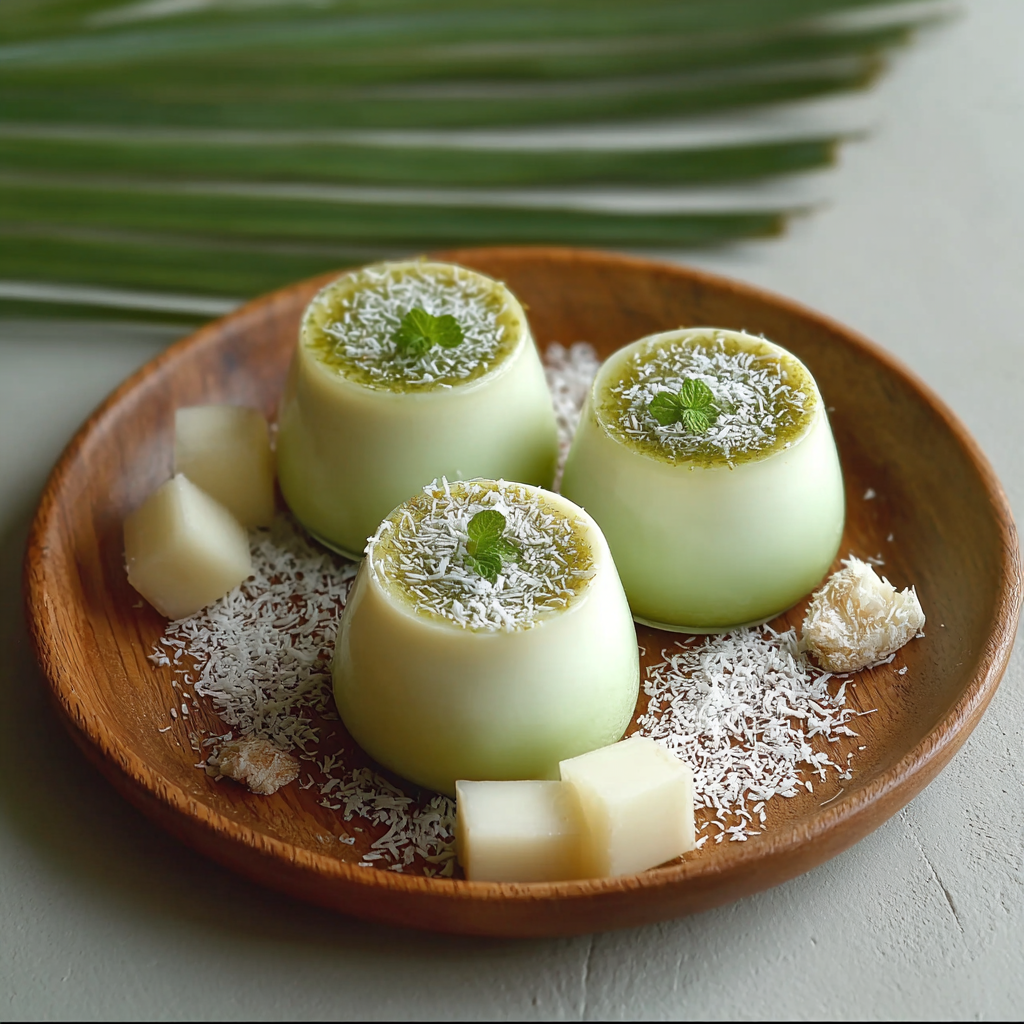
Here is a question that challenges the assumption that impressive desserts require impressive effort: when was the last time a dessert that took under 20 minutes of active preparation made a dinner table go genuinely, completely silent? According to a 2024 report by the World’s 50 Best Restaurants organization, Southeast Asian-inspired desserts represent the fastest-growing fine dining dessert category globally — driven by flavors that are simultaneously exotic to Western palates and immediately, instinctively appealing. Pandan, in particular, has been called the vanilla of Southeast Asia — a fragrant, grassy, faintly sweet leaf extract that perfumes rice, cakes, and custards across Thailand, Malaysia, Indonesia, and the Philippines with a flavor so distinctive and so compelling that food writers consistently struggle to describe it without simply saying: taste it.
This coconut and pandan panna cotta pairs that extraordinary flavor with the silky, trembling elegance of classic Italian panna cotta — a dessert that is, at its technical core, simply cream set with gelatin. The addition of full-fat coconut milk deepens the richness, introduces a tropical sweetness that dairy alone cannot produce, and creates a flavor pairing with the pandan that food scientists describe as a near-perfect complementary match — each flavor amplifying the other’s most appealing qualities. The result is a dessert that looks like it came from a Michelin-starred restaurant, tastes unlike anything most guests will have encountered, and requires nothing more than a saucepan, a whisk, and the patience to wait for it to set.
A 2023 review of Southeast Asian culinary ingredients in the Journal of Agricultural and Food Chemistry identified pandan leaf extract as a meaningful source of alkaloids and volatile compounds associated with antioxidant activity and appetite regulation — making this one of the more scientifically interesting desserts in the repertoire, quite apart from its extraordinary flavor.
Ingredients List
For the Panna Cotta
- 400ml (1¾ cups) full-fat coconut milk (shake the can well before opening)
- 300ml (1¼ cups) heavy cream
- 60g (¼ cup) granulated sugar
- 2½ tsp (7g) powdered unflavored gelatin (sub: 3½ sheets of leaf gelatin)
- 3 tbsp cold water (for blooming the gelatin)
- 1½ tsp pandan extract (sub: 4 fresh pandan leaves blended with 3 tbsp water and strained)
- 1 tsp pure vanilla extract
- ¼ tsp fine sea salt
- 1 tsp fresh lime juice (brightens the coconut flavor)
For the Mango Coulis (Optional but Highly Recommended)
- 2 ripe mangoes, peeled and diced (sub: 300g frozen mango, thawed)
- 2 tbsp fresh lime juice
- 1 tbsp honey or sugar, to taste
- 2 tbsp water
For Garnish
- Fresh mango slices or cubes
- Toasted coconut flakes
- Fresh mint or micro herbs
- Edible flowers (optional — stunning visual effect)
- Extra pandan extract, thinned with water, for a decorative drizzle
Timing
- Prep Time: 15 minutes
- Cook Time: 8 minutes
- Setting Time: 4 hours minimum (overnight preferred)
- Total Time: 20 minutes active, 4+ hours with setting
Make these the morning of a dinner party or the evening before — overnight setting produces the cleanest unmolding and the most developed, cohesive flavor of all the options.
Step-by-Step Instructions
Step 1: Bloom the Gelatin
Sprinkle the powdered gelatin over the cold water in a small bowl. Stir briefly and leave undisturbed for 5 minutes until the gelatin has absorbed all the water and turned into a firm, swollen, matte mass. This blooming step is essential — gelatin added directly to warm liquid without blooming first dissolves unevenly and can produce a panna cotta with inconsistent set — firm in some areas and liquid in others.
Key tip: Use cold water only for blooming. Warm water dissolves the gelatin prematurely before it has fully hydrated, which compromises its setting power and produces a softer, less reliable set.
Step 2: Heat the Coconut Cream Mixture
Combine the coconut milk, heavy cream, sugar, and salt in a medium saucepan over medium heat. Whisk gently and continuously as the mixture warms — do not allow it to boil. Heat until the sugar is completely dissolved and the mixture is steaming and just beginning to show small bubbles at the edges, approximately 4–5 minutes. Remove from heat immediately. Boiling coconut milk causes it to separate and can make the cream grainy rather than silky.
Step 3: Dissolve the Gelatin and Add Flavoring
Add the bloomed gelatin mass to the hot coconut cream mixture and whisk gently until completely dissolved — this should take approximately 60 seconds of gentle stirring. Any undissolved gelatin will create rubbery, set patches in the finished panna cotta. Add the pandan extract, vanilla extract, and fresh lime juice. Whisk briefly to combine. The mixture will turn a beautiful pale jade green from the pandan — the intensity of the color depends on the concentration of the extract used.
Key tip: Taste the mixture at this stage and adjust the pandan extract if needed — the flavor should be distinctly present but not overwhelming. Pandan extract varies significantly in concentration between brands — start conservative and add more gradually.
Step 4: Strain and Pour
Pour the mixture through a fine mesh sieve into a large measuring jug — straining removes any undissolved gelatin particles or coconut solids and ensures the smoothest possible finished texture. Allow the mixture to cool for 10 minutes until it is at room temperature but not beginning to set. Pour evenly into 6 individual serving glasses, ramekins, or lightly oiled molds. A measuring jug with a spout gives the most control and the cleanest pour.
Step 5: Set the Panna Cotta
Cover each glass or mold loosely with plastic wrap and refrigerate for a minimum of 4 hours. Overnight produces a firmer, more cleanly set panna cotta that unmolds perfectly if using molds, and develops the most cohesive, rounded flavor. The panna cotta is ready when it is completely set at the edges and center and trembles as a unified mass — not liquid in the center — when gently shaken.
Step 6: Make the Mango Coulis
Blend the diced mango, lime juice, honey, and water in a blender until completely smooth. Pass through a fine mesh sieve for a restaurant-smooth coulis or leave unstrained for a more rustic, textured sauce. Taste and adjust sweetness and acidity. Refrigerate until needed — the coulis keeps for up to 3 days.
Step 7: Unmold or Garnish and Serve
To serve in the glass: Spoon the mango coulis over the surface of the set panna cotta. Arrange fresh mango, toasted coconut flakes, and micro herbs or edible flowers on top. Serve directly in the glass.
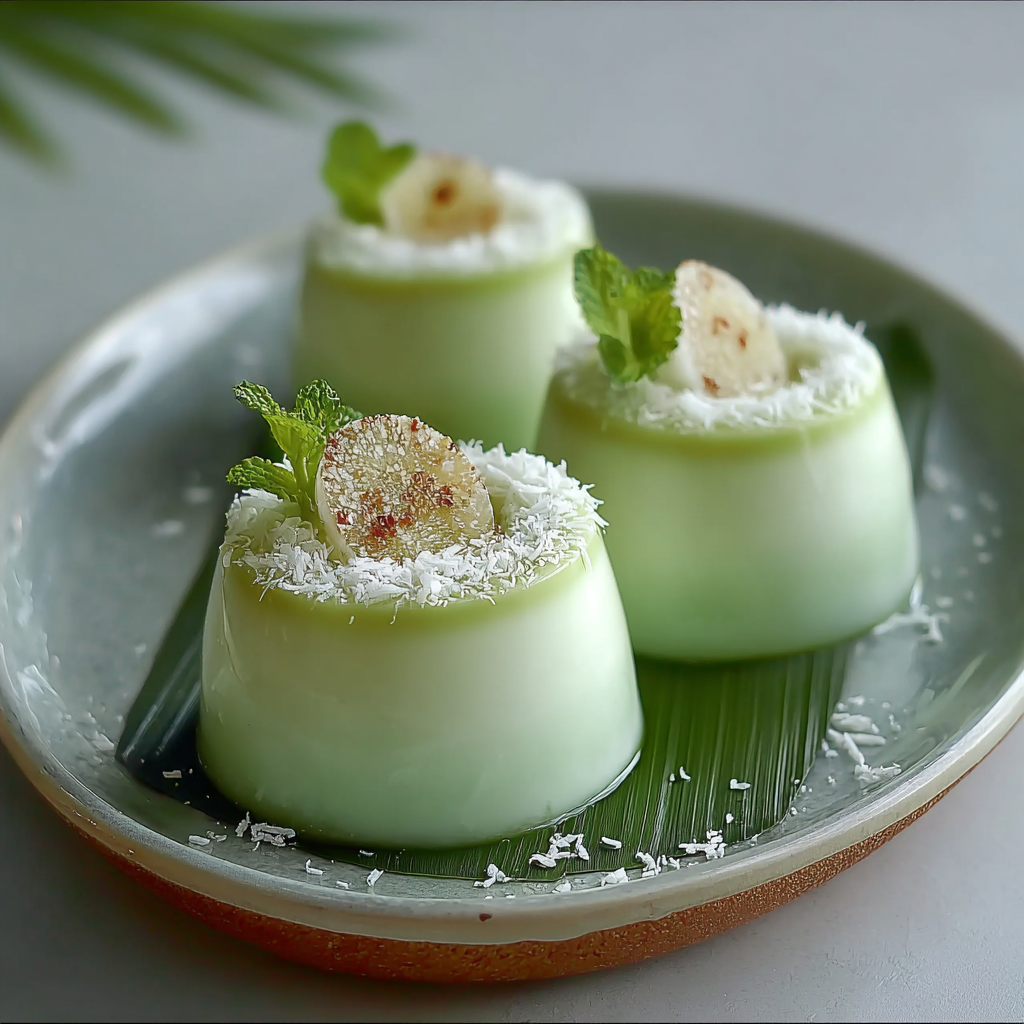
To unmold: Run a thin knife around the edge of each mold. Place a serving plate face-down on top and invert with a confident, decisive motion. If the panna cotta does not release immediately, hold a warm cloth against the outside of the mold for 10 seconds and try again. Surround the unmolded panna cotta with mango coulis and garnishes.
Nutritional Information
Per serving — based on 6 servings with mango coulis.
| Nutrient | Per Serving | % Daily Value* |
|---|---|---|
| Calories | 360 kcal | 18% |
| Total Fat | 28g | 36% |
| Saturated Fat | 20g | 100% |
| Total Carbohydrates | 26g | 9% |
| Total Sugar | 22g | — |
| Protein | 4g | 8% |
| Dietary Fiber | 1g | 4% |
| Sodium | 110mg | 5% |
| Potassium | 310mg | 7% |
| Vitamin C | 25% DV | 25% |
| Vitamin A | 20% DV | 20% |
*Based on a standard 2,000-calorie daily diet.
The Vitamin C and Vitamin A contributions come primarily from the mango coulis — a meaningful micronutrient addition for a dessert. The coconut milk’s medium-chain triglycerides, as noted in multiple metabolic studies, are processed by the body differently from long-chain saturated fats and are associated with improved satiety and energy efficiency.
Healthier Alternatives
Lower fat: Replace half the heavy cream with whole milk. The panna cotta will be slightly less rich and will require an extra ½ teaspoon of gelatin to compensate for the reduced fat content, which contributes to structural stability.
Lower sugar: Reduce granulated sugar to 40g and sweeten the coulis with honey only to taste. Ripe mango provides significant natural sweetness that reduces the need for added sugar in the topping.
Dairy-free: Replace heavy cream with additional full-fat coconut milk — use 700ml of coconut milk in total. The panna cotta becomes fully vegan and intensely coconut-flavored, with a slightly softer set that benefits from an additional ½ teaspoon of agar-agar powder in place of gelatin.
Agar-agar (vegan gelatin): Replace the gelatin entirely with 1½ teaspoons of agar-agar powder. Dissolve directly in the warm coconut cream mixture without blooming. Note that agar sets firmer than gelatin and produces a more cleanly sliceable panna cotta rather than the characteristic trembling wobble.
Higher protein: Serve alongside a small scoop of coconut Greek yogurt or a tablespoon of hemp seeds scattered over the coulis. These additions are modest but increase the protein contribution of the dessert meaningfully without altering the flavor profile of the panna cotta itself.
Serving Suggestions
In tall shot glasses: Serve as a two-bite pre-dessert or amuse-bouche before a larger dessert course — one tablespoon of mango coulis on top, a single toasted coconut flake, and a micro mint leaf. Stunning visual impact with zero additional effort.
Layered panna cotta: Pour half the panna cotta mixture into glasses and allow to partially set — approximately 45 minutes in the refrigerator. Pour the mango coulis over the partially set layer and allow to set for 15 minutes, then top with the remaining panna cotta mixture. This produces a three-layer dessert of extraordinary visual elegance.
Tropical dessert plate: Unmold the panna cotta onto a wide plate surrounded by mango coulis, sliced fresh passion fruit, a scattering of toasted coconut, and a small pile of dragon fruit cubes. This format elevates the dessert to a full plated restaurant experience.
With sticky rice: Serve alongside a small portion of warm coconut sticky rice — a combination inspired by the Thai dessert mango with sticky rice that pairs extraordinarily well with the coconut pandan flavor profile of the panna cotta.
Deconstructed format: Break a set panna cotta into large, irregular pieces and arrange casually in a shallow bowl with mango coulis pooled beneath, a scattering of pomelo segments, toasted coconut, and lime zest. The deconstructed presentation reads as contemporary and sophisticated while requiring no precise unmolding skill.
Common Mistakes to Avoid
Not blooming the gelatin. Gelatin added directly to warm liquid without blooming first dissolves unevenly and produces inconsistent set throughout the panna cotta. Five minutes of blooming in cold water takes almost no time and ensures uniform, reliable setting.
Boiling the coconut milk mixture. Boiling causes coconut milk to separate into its fat and water components, producing a greasy, slightly grainy texture in the finished panna cotta. Heat to steaming with visible bubbles at the edges only — remove from heat before any rolling boil develops.
Under-dissolving the gelatin. Visible gelatin particles in the mixture will create rubbery patches in the finished panna cotta. Whisk gently but thoroughly for at least 60 seconds after adding the bloomed gelatin to the warm liquid and verify visually that no particles remain before pouring.
Skipping the straining step. Coconut milk contains natural solids that can create a slightly grainy texture if not removed. A single pass through a fine mesh sieve takes 30 seconds and produces a noticeably smoother, more refined result.
Using insufficient gelatin. A panna cotta that is too soft will not unmold cleanly and will collapse on the plate. The quantity specified produces a panna cotta that trembles gently — the classic, correct texture — while still holding its shape when plated. Do not reduce the gelatin quantity.
Rushing the set. A panna cotta set for 2 hours is liquid in the center and will not unmold or hold on a plate. Four hours is the functional minimum and overnight is the reliable standard. There is no shortcut to the setting process.
Storing Tips
Refrigerator: Store covered panna cottas in their molds or glasses for up to 3 days. The flavor improves over the first 24 hours as the pandan and coconut notes deepen and meld. Add all fresh garnishes only at the moment of serving.
Mango coulis: Refrigerate in a sealed jar for up to 4 days. Stir well before serving — the coulis may thicken slightly during storage and benefit from a few drops of additional lime juice to restore brightness.
Freezer: Panna cotta does not freeze well — the gelatin structure breaks down during freezing, producing a watery, separated result upon thawing. Make fresh and refrigerate only.
Make-ahead strategy: Panna cottas made 24 hours ahead and refrigerated overnight are in every way superior to those served on the day of making — firmer, more cleanly set, and more deeply flavored. This is the ideal make-ahead dinner party dessert.
Conclusion
Coconut and pandan panna cotta proves that the most memorable desserts at a dinner table are not always the most technically demanding. Twenty minutes of active work, an overnight rest, and the extraordinary pairing of coconut and pandan produce a dessert that trembles, perfumes the room, and generates the kind of silence that only genuinely surprising food can create. Make it the night before, unmold it at the table, and take the compliments graciously.
Make it for your next gathering and share your results in the comments — tell us whether you found pandan extract, which garnishes you chose, and whether it impressed the table as much as it deserves to. Leave a review, share with someone who loves Southeast Asian flavors, and subscribe to our newsletter for more elegant, globally inspired recipes every week.
FAQs
Where can I find pandan extract? Pandan extract is available at most Asian grocery stores, particularly those carrying Southeast Asian products. It is also widely available online. Look for a bright green extract in a small bottle — the Koepoe-Koepoe and Butterfly brand are reliable options. If unavailable, blend 4–5 fresh pandan leaves with 4 tablespoons of water, strain through a fine cloth, and use the resulting liquid in the same quantity as the extract.
Can I make this without gelatin? Yes — use 1½ teaspoons of agar-agar powder dissolved directly in the warm coconut cream mixture without blooming. Agar sets firmer and at room temperature rather than requiring refrigeration, and it is fully plant-based. The texture will be slightly more rigid and less trembling than the gelatin version but entirely pleasant and suitable for vegan guests.
How do I know the panna cotta is set correctly? Gently shake the mold or glass — the panna cotta should move as a single, unified mass with a slight trembling wobble across the entire surface. If the center is still liquid and moves independently of the edges, it needs more time. If it does not move at all, it may be slightly over-set but will still be delicious.
Can I use fresh pandan leaves instead of extract? Yes — blend 5–6 fresh pandan leaves with 4 tablespoons of water until completely broken down. Strain through a fine mesh cloth, pressing firmly to extract as much liquid as possible. Use the resulting liquid in place of the extract. The flavor will be fresher and slightly more subtle than commercial extract.
Why did my panna cotta not unmold cleanly? The most common causes are insufficient chilling time, too little gelatin, or molds that were not lightly oiled before pouring. Ensure a full overnight set, use the specified gelatin quantity, and wipe the inside of molds with a thin film of neutral oil before filling. A warm cloth held against the outside of the mold for 10 seconds before inverting also helps release stubborn panna cottas.
What can I substitute for mango in the coulis? Passion fruit pulp thinned with a small amount of honey and lime juice produces an extraordinarily vibrant, acidic coulis that pairs beautifully with the sweet coconut pandan base. Fresh pineapple blended with lime juice is equally good. A simple raspberry coulis — blended raspberries strained and sweetened — provides a striking color contrast and a berry-tropical flavor combination that works surprisingly well.