Follow Me On Social Media!
Gourmet Ham and Cheese Puff Pastry Roll

Introduction
Here is a question that reframes one of the most underestimated ingredients in any home kitchen: what if a single sheet of store-bought puff pastry — an ingredient that costs under $5, requires no skill to handle, and is available in every supermarket freezer section — could produce a dinner, a party centerpiece, or a brunch showstopper that looks and tastes as though a trained pastry chef spent the morning in your kitchen? According to a 2024 report by the American Culinary Federation, puff pastry ranks as the single most transformative convenience ingredient in home cooking — capable of elevating simple fillings into visually dramatic, texturally sophisticated preparations that generate more compliments per minute of preparation time than virtually any other technique in the home cook’s repertoire.
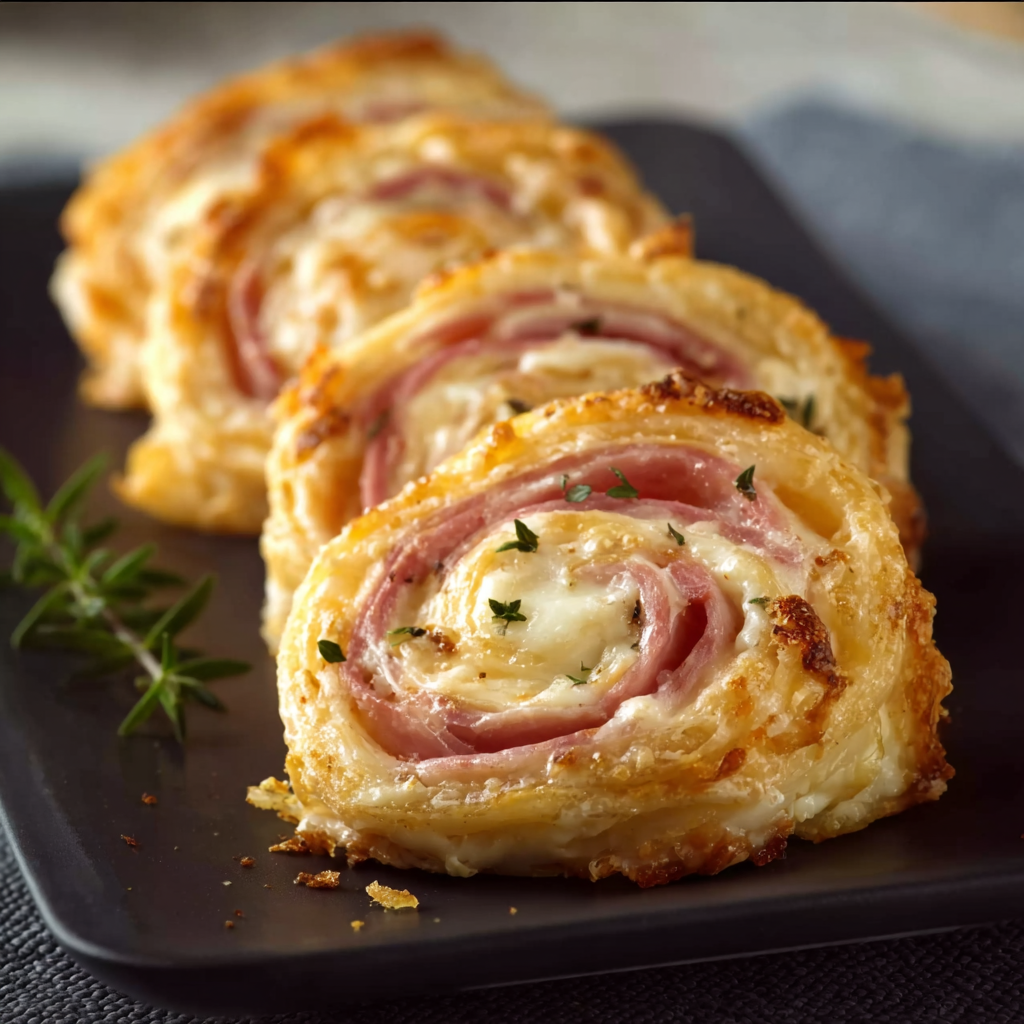
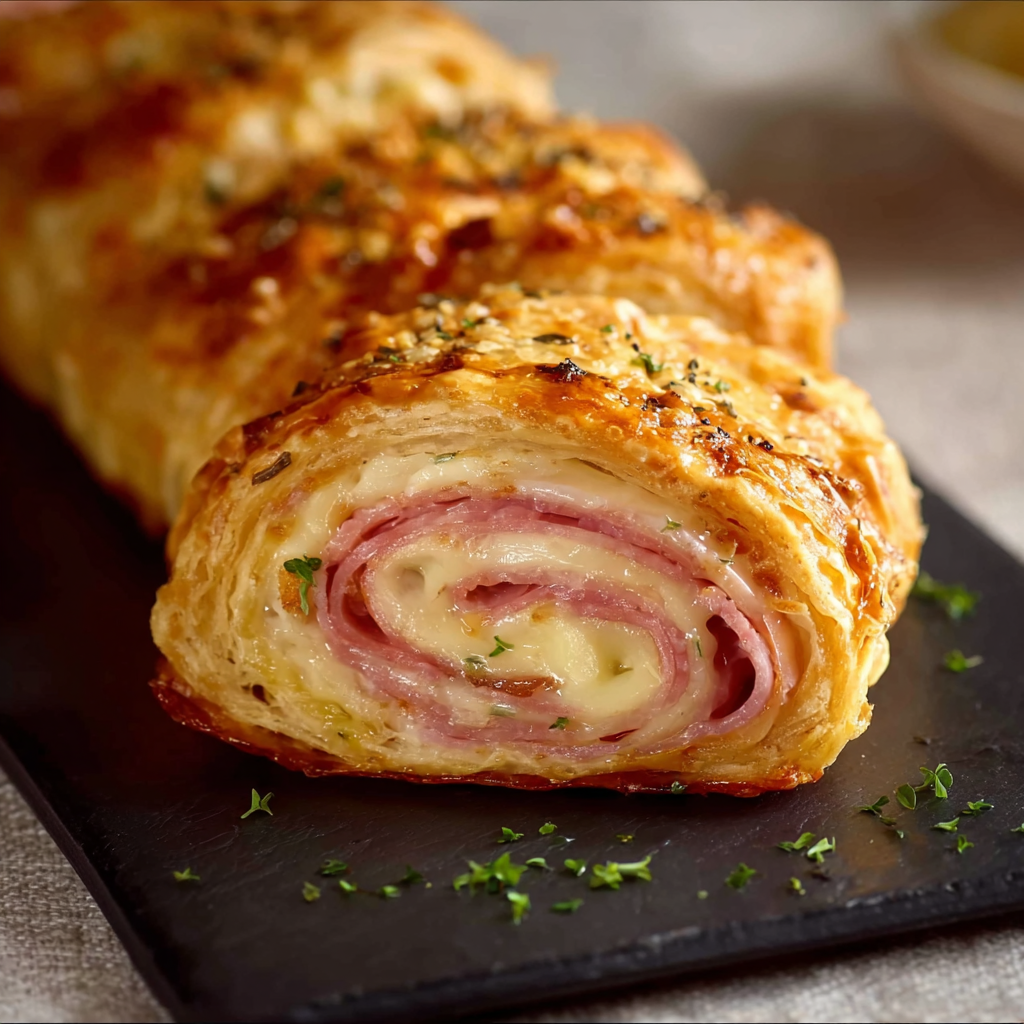
This gourmet ham and cheese puff pastry roll is the proof of that principle. Layers of good-quality ham and a combination of Gruyère and Dijon mustard wrapped in a golden, shatteringly flaky puff pastry exterior — baked until the pastry puffs into hundreds of airy, buttery layers and the cheese inside melts into a cohesive, savory filling that holds its shape when sliced. It works as an impressive dinner served alongside a simple salad, as a party appetizer sliced into rounds, as a brunch centerpiece, or as the kind of portable, make-ahead lunch that makes every other packed lunch in the vicinity look tragically inadequate.
A 2023 food trend analysis by Bon Appétit identified puff pastry-wrapped preparations as the highest-engagement recipe category on food-focused social media platforms globally — driven by the dramatic visual transformation from a flat, pale log to a deeply golden, layered, spectacular baked preparation that requires almost none of the skill the result implies.
Ingredients List
For the Roll
- 2 sheets (approximately 500g total) ready-rolled puff pastry, thawed (all-butter puff pastry produces a significantly superior flavor and crispness — worth seeking out)
- 250g (9 oz) good-quality ham, thinly sliced (Black Forest, honey-glazed, or a charcuterie-style ham — avoid watery, processed varieties)
- 200g (7 oz) Gruyère cheese, thinly sliced or coarsely grated (sub: Emmental, sharp cheddar, or a combination)
- 3 tbsp Dijon mustard
- 1 tsp wholegrain mustard (adds texture and visual interest)
- ½ tsp freshly ground black pepper
- ¼ tsp ground nutmeg (a small quantity that adds classical depth to the cheese)
For the Egg Wash
- 1 large egg, beaten with 1 tbsp whole milk
For Optional Additions (Choose One or Combine)
- 2 tbsp caramelized onions (adds sweetness and depth)
- 1 tbsp fresh thyme leaves (pairs exceptionally with Gruyère)
- ½ cup (60g) baby spinach, wilted and squeezed completely dry (adds color and nutrition)
- 1 tbsp honey, drizzled over the ham (amplifies the sweet-salty contrast)
- ¼ cup (30g) sun-dried tomatoes, finely chopped (adds intensity and acidity)
For the Topping
- 1 tsp flaky sea salt
- ½ tsp freshly cracked black pepper
- 1 tsp sesame or poppy seeds (optional)
- 1 tsp fresh thyme leaves (optional)
Timing
- Prep Time: 15 minutes
- Chilling Time: 20 minutes (non-negotiable for clean slicing and maximum puff)
- Bake Time: 25–30 minutes
- Resting Time: 10 minutes
- Total Time: approximately 70 minutes
The 20-minute chill before baking is the step most home cooks skip and the step most responsible for the difference between a roll that puffs dramatically and one that spreads flat. Cold pastry hits the oven heat with all of its butter layers intact and produces the maximum laminated puff — warm pastry begins to separate before baking and produces a denser, less dramatic result.
Step-by-Step Instructions
Step 1: Prepare the Pastry
Remove the puff pastry from the refrigerator 10 minutes before use — it should be cold but pliable enough to unroll without cracking. If using two separate sheets, overlap them slightly along one long edge and press firmly together to create a single, larger rectangle. On a lightly floured surface, gently roll to even out the seam and produce a uniform thickness of approximately 3–4mm throughout. The pastry should be cold to the touch throughout this process — if it becomes warm and greasy, refrigerate for 10 minutes before continuing.
Step 2: Apply the Mustard Base
Spread the Dijon mustard and wholegrain mustard evenly across the pastry surface, leaving a 2cm (¾-inch) border clean along all four edges. The mustard border is left clear to allow the egg wash to seal the roll — mustard on the sealing edge prevents adhesion and causes the roll to open during baking. Season the mustard layer with freshly ground pepper and the small quantity of nutmeg.
Key tip: The mustard is not merely a condiment here — it is a moisture barrier between the pastry and the wet ham and cheese filling. A generous, even application prevents the pastry from becoming soggy where it contacts the filling, which is the primary cause of a soft, pale underside in puff pastry rolls.
Step 3: Layer the Filling
Arrange the ham slices in an even, overlapping layer across the mustard-coated surface, leaving the 2cm border clear. Add any optional components — caramelized onions, wilted spinach, sun-dried tomatoes, or a drizzle of honey — distributed evenly over the ham. Scatter or lay the Gruyère over the ham layer. The filling layers should be generous but not so thick that rolling becomes impossible — approximately 5–8mm of total filling depth is the practical maximum for a clean roll.
Step 4: Roll, Seal, and Score
Starting from the long edge closest to you, roll the pastry away from you firmly and evenly — like a Swiss roll — keeping the roll tight enough to eliminate air gaps but not so tight that the filling is forced out the ends. The roll should be a consistent diameter from end to end. When the roll is complete, position it seam-side down on a parchment-lined baking sheet. Press the ends firmly closed and fold them slightly underneath. Brush the entire exterior surface, including the ends, with egg wash. Using a sharp knife, score the top of the roll with diagonal lines approximately 2cm apart — cutting through the pastry to approximately half its depth. These score marks allow steam to escape, prevent the roll from bursting, and create the visual pattern that makes the finished roll look professionally made.
Step 5: Chill
Transfer the assembled, egg-washed, scored roll to the refrigerator for 20 minutes. This chilling window resets the butter layers in the pastry that were warmed during rolling, ensures the egg wash is slightly dry before baking, and firms the filling so it holds its position during the oven’s initial heat. The result is a roll that rises dramatically straight up rather than spreading outward.
Step 6: Apply the Second Egg Wash and Topping
Remove from the refrigerator and apply a second, thin egg wash over the entire surface — the double wash produces a deeper, more uniform golden color than a single application. Sprinkle the flaky sea salt, cracked pepper, sesame seeds, and fresh thyme across the top surface.
Step 7: Bake
Bake at 400°F (200°C) on the middle rack for 25–30 minutes until the pastry is deeply golden brown — not pale gold but a rich, confident amber-brown across all visible surfaces. The score lines will have opened dramatically and the pastry will have puffed to approximately twice its pre-bake height. The internal temperature at the center should reach at least 165°F (74°C) to ensure the filling is heated through completely.
Step 8: Rest and Slice
Allow the roll to rest on the baking sheet for 10 minutes before slicing — cutting immediately releases the steam that keeps the interior cohesive and produces a filling that runs out of the slices rather than staying neatly contained. Slice with a sharp serrated knife using a gentle sawing motion — pressing down with a chef’s knife compresses the delicate pastry layers. Serve immediately.
Nutritional Information
Per serving — based on 6 servings.
| Nutrient | Per Serving | % Daily Value* |
|---|---|---|
| Calories | 520 kcal | 26% |
| Total Fat | 34g | 44% |
| Saturated Fat | 16g | 80% |
| Total Carbohydrates | 32g | 12% |
| Total Sugar | 2g | — |
| Protein | 24g | 48% |
| Dietary Fiber | 1g | 4% |
| Sodium | 840mg | 37% |
| Calcium | 28% DV | 28% |
| Iron | 12% DV | 12% |
| Vitamin B12 | 20% DV | 20% |
*Based on a standard 2,000-calorie daily diet.
The calcium content — 28% of the daily recommended value per serving — reflects the significant Gruyère contribution and makes this one of the more meaningful calcium sources in a savory pastry preparation. At 24 grams of protein per serving, it delivers a complete macronutrient profile for a meal that functions equally well as a light dinner or a substantial snack.
Healthier Alternatives
Lower fat: Use a reduced-fat puff pastry — several brands offer versions made with less butter — and replace the Gruyère with a reduced-fat Swiss cheese. The pastry will puff slightly less dramatically but the flavor remains entirely satisfying.
Higher protein: Add a layer of thinly sliced turkey breast alongside the ham and replace half the Gruyère with part-skim mozzarella. These substitutions push the protein content toward 32 grams per serving with a comparable flavor profile.
Vegetarian: Replace the ham with a combination of wilted baby spinach, roasted red peppers, caramelized onions, and sliced mushrooms. The cheese and mustard layers remain identical — the result is a vegetarian roll of equal visual and flavor impact that requires no further explanation or apology at any table.
Lower sodium: Use a low-sodium ham variety and reduce the flaky salt topping to a light sprinkle rather than a generous scatter. The Gruyère and mustard provide sufficient seasoning depth without the additional surface salt.
Whole wheat pastry: Substitute all-butter whole wheat puff pastry — available from specialty food stores and online — for approximately 15% more fiber per serving and a slightly nuttier, more complex pastry flavor that complements the ham and Gruyère combination well.
Serving Suggestions
Dinner with green salad: Slice into generous portions and serve alongside a sharply dressed watercress and endive salad with a Dijon vinaigrette. The bitterness of the greens and the acidity of the dressing cut through the richness of the puff pastry and cheese with precise effectiveness.
Party appetizer rounds: Slice the roll into 2cm rounds immediately after the resting period and arrange on a serving platter cut-side up — the spiral of ham and cheese and the golden pastry layers are visible from above and create a visually striking presentation that requires no additional decoration.
Brunch centerpiece: Serve alongside scrambled eggs, fresh fruit, and a pitcher of orange juice. The roll slices at the table in front of guests — the steam rising from the interior and the visible layers of ham and cheese produce a genuinely theatrical serving moment for minimal preparation.
Picnic or packed lunch: Wrap individual slices tightly in parchment paper and pack in a lunch box or cooler. The roll travels exceptionally well at room temperature for up to 4 hours and tastes excellent cold — the pastry retains a degree of crispiness and the filling firms slightly, producing a cleaner, more structured slice than the hot version.
Dipping sauces alongside: Serve with small ramekins of honey mustard, a tomato chutney, and a crème fraîche with fresh herbs for a format that encourages guests to experiment with flavor combinations and extends the appetizer format significantly beyond the roll itself.
Common Mistakes to Avoid
Skipping the refrigerator chill before baking. Warm pastry enters the oven with melted butter layers that produce steam unevenly — the roll spreads outward rather than rising upward and the characteristic dramatic puff never develops. Twenty minutes of refrigeration is the step that produces the visual drama the recipe is designed around.
Using watery or processed ham. Watery ham releases moisture during baking that softens the pastry from the inside, producing a pale, soggy underside regardless of oven temperature or baking time. Good-quality, well-dried, thinly sliced ham is the most important ingredient selection decision in this recipe.
Filling too thickly. A thick filling makes rolling difficult, produces an uneven diameter, and creates a center that does not heat through by the time the pastry is done. A generous but flat filling layer — no more than 8mm total depth — rolls cleanly and cooks evenly.
Cutting with a chef’s knife pressed straight down. A downward pressing motion compresses the laminated pastry layers and closes off the flaky cross-section that makes a properly baked puff pastry roll so visually appealing when sliced. A serrated knife with a gentle sawing motion preserves every layer cleanly.
Not applying egg wash to the sealing edge. The seam of the roll must be sealed with egg wash before rolling is complete — the egg acts as a protein adhesive that bonds the pastry together during baking and prevents the roll from unrolling as the pastry puffs and expands.
Storing Tips
Room temperature: The roll is at its absolute best within 30 minutes of leaving the oven — the pastry at its crispiest and the filling at its hottest and most cohesive. It holds at room temperature for up to 2 hours with acceptable quality.
Refrigerator: Wrap tightly in plastic wrap or foil and refrigerate for up to 3 days. The pastry softens significantly during refrigeration — reheating is essential for any recovery of the original texture.
Reheating: A 375°F (190°C) oven for 10–12 minutes on a wire rack restores much of the original crispiness — far superior to the microwave, which produces a soft, rubbery pastry exterior that bears no resemblance to the freshly baked version. An air fryer at 350°F (175°C) for 5–7 minutes is equally effective and faster.
Freezer: Freeze the assembled but unbaked roll — wrapped tightly — for up to 1 month. Bake directly from frozen at 400°F (200°C) for 35–40 minutes, adding 10–15 minutes to the standard baking time. The result is virtually indistinguishable from a fresh-assembled roll. This make-ahead freezer approach is the most practical preparation strategy for entertaining.
Make-ahead: Assemble the roll, wrap tightly, and refrigerate for up to 24 hours before baking. Apply the second egg wash and toppings immediately before baking. This approach is ideal for dinner parties — all preparation is done the evening before and the oven does the work while guests arrive.
Conclusion
Gourmet ham and cheese puff pastry roll proves that the most impressive food at any table is not always the most technically demanding — it is the food that understands what it is, executes it impeccably, and arrives at the table still steaming, golden-layered, and impossible to resist. Good ham, good cheese, good mustard, and one sheet of all-butter puff pastry — the rest is technique, and this recipe gives you all of it.
Make it and share your results in the comments — tell us which ham you used, which optional additions you tried, and whether it survived the journey to the table before someone started slicing prematurely. Leave a review, share with someone who loves puff pastry, and subscribe to our newsletter for more elegant, achievable recipes every week.
FAQs
Can I use homemade puff pastry? Yes — homemade all-butter puff pastry produces a superior result in both flavor and lamination quality. However, the preparation time increases to 2–3 hours and requires temperature management and multiple folding stages. For the vast majority of occasions, high-quality store-bought all-butter puff pastry produces an excellent result that is indistinguishable to most guests. The filling quality matters more than the pastry source for this recipe.
Why did my pastry not puff properly? Insufficient puffing is caused by one of three things: pastry that was too warm when it went into the oven, an oven that was not fully preheated to the correct temperature, or puff pastry that has been rolled too thin — below 2mm — eliminating the laminated layers that produce the puff. Ensure the pastry is cold when it enters a fully preheated oven and maintain the 3–4mm thickness throughout rolling.
Can I make this roll sweet instead of savory? Yes — replace the ham with thinly sliced or roughly chopped stone fruit such as pears or peaches, replace the Gruyère with brie or camembert, replace the mustard with a thin layer of frangipane or almond cream, and finish with a honey drizzle and flaked almonds on top. The format is identical and produces a dessert or sweet brunch pastry of equal visual drama.
What is the best way to prevent a soggy bottom? Three factors produce a crispy bottom: high-quality, well-dried ham with minimal moisture, a preheated oven at the correct temperature, and baking on a preheated baking sheet — slide the parchment-lined tray of assembled roll onto a baking sheet that has been heating in the oven for 5 minutes. The immediate contact with a hot surface begins crisping the pastry base before the top heat even reaches it.
Can I add other cheeses? Absolutely — Gruyère is the recommendation for its superior melting behavior and depth of flavor, but a combination of sharp cheddar and mozzarella produces a more accessible, less expensive alternative. Brie adds a creamier, more melting quality. Blue cheese adds intensity — use sparingly alongside milder ham. Any cheese that melts cleanly works in this format.
How do I ensure the roll holds together when sliced? Two things determine slice integrity: the 10-minute rest after baking, which allows the filling and cheese to firm from molten to cohesive, and a serrated knife used with a sawing motion rather than a pressing one. The combination of rested filling and correct cutting technique produces clean, intact slices that hold their shape on the plate.