Follow Me On Social Media!
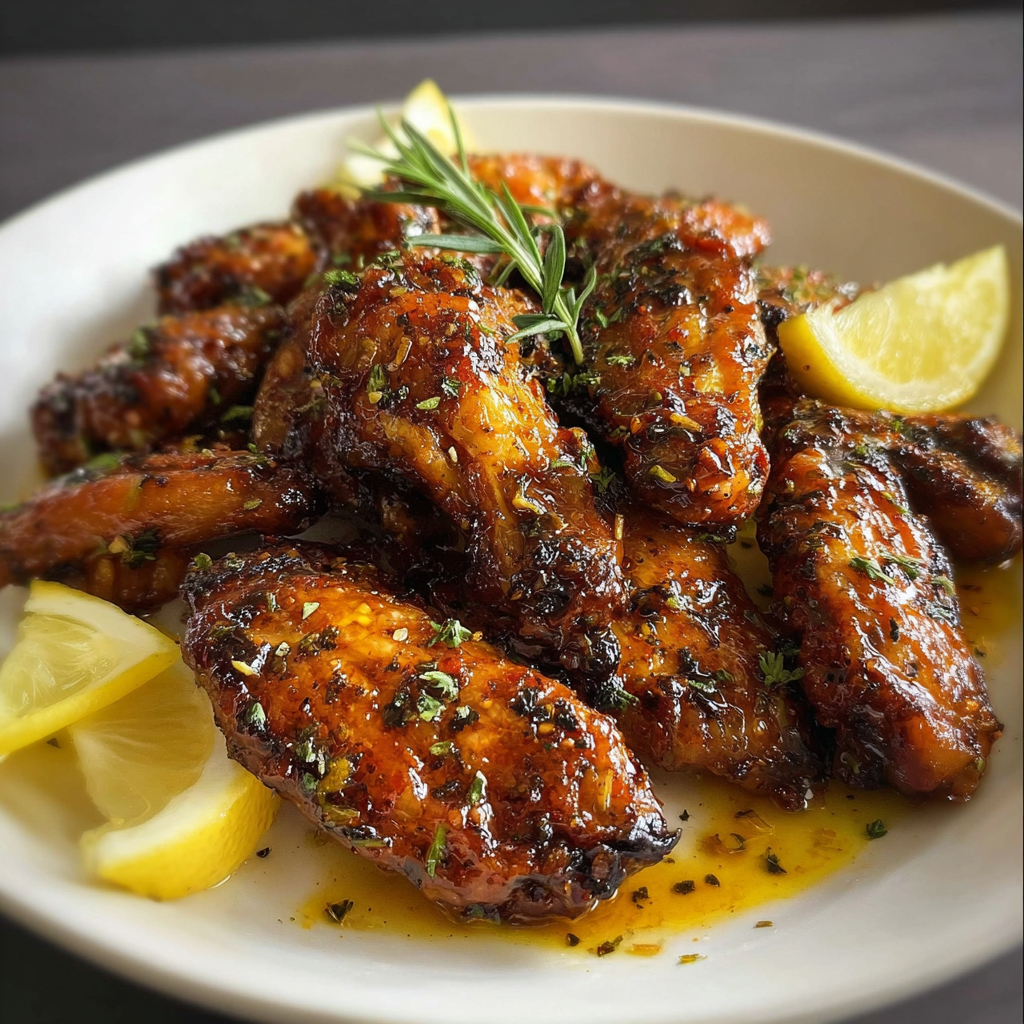
Honey Lemon Pepper Wings

Introduction
Here is a question that reframes the entire chicken wing conversation: why do lemon pepper wings — one of the most requested wing flavors at every sports bar and wing restaurant in the country — so consistently disappoint when made at home, producing wings that are either soggy, over-seasoned with powdery lemon pepper from a jar, or lacking the sticky, glossy finish that makes the restaurant version worth ordering? According to a 2024 report by the National Chicken Council, Americans consume over 1.4 billion chicken wings on Super Bowl Sunday alone — yet consumer satisfaction surveys show that homemade wings rank significantly below restaurant versions in texture and sauce adhesion, with the gap attributed almost entirely to technique rather than ingredients.
These honey lemon pepper wings close that gap completely. A baking powder dry brine that draws moisture from the skin and creates a surface that crisps at oven temperatures. A high-heat roasting technique that renders the fat from beneath the skin without frying. And a honey lemon pepper glaze — built from fresh lemon juice and zest, cracked black pepper, honey, and butter — that is applied in two stages: once during the final minutes of baking to caramelize onto the skin, and once immediately after the oven to create the glossy, lacquered finish that defines a great wing. The result is a wing with a genuinely crispy skin, a juicy interior, and a sauce that clings rather than pools at the bottom of the bowl.
A 2023 culinary science review in the journal Food Research International confirmed that baking powder applied to poultry skin raises the surface pH and produces significantly greater Maillard browning at lower temperatures than untreated skin — explaining why this technique produces oven wings that approach fried-wing crispiness without a drop of deep-frying oil.
Ingredients List
For the Wings
- 1.2kg (2.6 lbs) chicken wings, split into flats and drumettes (tips removed or reserved for stock)
- 1 tbsp baking powder (aluminum-free — essential for the crispiness technique)
- 1 tsp fine sea salt
- ½ tsp garlic powder
- ½ tsp onion powder
For the Honey Lemon Pepper Glaze
- 4 tbsp unsalted butter
- 3 tbsp raw honey
- 3 tbsp fresh lemon juice (approximately 1½ lemons — fresh only)
- 2 tsp lemon zest
- 1½ tsp freshly cracked black pepper (coarsely cracked — not finely ground)
- ½ tsp garlic powder
- ¼ tsp fine sea salt
- ¼ tsp cayenne pepper (optional — adds a gentle heat that balances the honey)
For Garnish and Serving
- Extra lemon zest
- Fresh flat-leaf parsley or chives, finely chopped
- Lemon wedges
- Celery sticks and ranch or blue cheese dipping sauce
Timing
- Dry Brine Time: 1 hour minimum (overnight is significantly better)
- Bake Time: 45–50 minutes
- Glaze and Finish: 8 minutes
- Total Active Time: 20 minutes
- Total Time: 1 hour 15 minutes (or overnight + 1 hour)
The overnight dry brine is the single highest-impact optional step in this recipe. Wings brined overnight and dried uncovered in the refrigerator are dramatically crispier than wings brined for an hour — the extended time draws surface moisture from the skin and produces a dryness that no amount of oven heat can achieve in the same time frame.
Step-by-Step Instructions
Step 1: Dry Brine the Wings
Pat the wings completely dry with paper towels — pressing firmly on every surface. In a large bowl, combine the baking powder, salt, garlic powder, and onion powder. Add the dried wings and toss thoroughly until every surface is evenly coated in the baking powder mixture. The coating should be thin and even — not thick or pasty. Arrange the wings in a single layer on a wire rack set over a foil-lined baking sheet. Refrigerate uncovered for a minimum of 1 hour — overnight for the best result.
Key tip: The wire rack is not optional for this technique. Wings resting directly on a baking sheet sit in any rendered fat and steam from below rather than crisping on all surfaces. The rack elevates them above the drip level and allows hot air to circulate completely around each wing.
Step 2: Bake the Wings
Remove the wings from the refrigerator and allow to sit at room temperature for 15 minutes. Preheat the oven to 425°F (220°C) with the rack in the upper third of the oven — the upper position maximizes radiant heat from the top element and enhances surface browning. Bake for 25 minutes, then flip each wing and bake for another 20–22 minutes until the skin is deep golden brown, visibly blistered in places, and audibly crispy when tapped with a fork.
Key tip: Do not open the oven for the first 25 minutes. Consistent sustained heat is what renders the subcutaneous fat and produces crispy skin — temperature drops from opening the door interrupt this process and extend the required baking time.
Step 3: Make the Honey Lemon Pepper Glaze
While the wings are in their final 10 minutes of baking, melt the butter in a small saucepan over medium heat. Add the honey, lemon juice, lemon zest, cracked black pepper, garlic powder, salt, and cayenne. Stir together and bring to a gentle simmer for 2 minutes until the honey dissolves and the glaze thickens slightly and becomes fragrant. Remove from heat. The glaze should be fluid enough to brush onto the wings but thick enough to cling rather than run off immediately.
Key tip: Use coarsely cracked pepper rather than finely ground — the larger pepper pieces create visible flecks of seasoning on the finished wing surface and contribute a more pronounced, intermittent heat that fine powder cannot replicate.
Step 4: First Glaze Application — In the Oven
Remove the baking sheet from the oven. Brush each wing generously with approximately half the glaze — coating all surfaces. Return to the oven for 4–5 minutes until the glaze is caramelized, slightly darkened, and set onto the skin surface. Watch closely — honey glazes can go from caramelized to burnt in under 90 seconds at 425°F.
Step 5: Second Glaze Application — Out of the Oven
Remove the wings from the oven and immediately transfer to a large bowl. Pour the remaining glaze over the wings and toss to coat every surface completely. The residual heat from the wings absorbs the second application of glaze into the skin rather than sitting on top of it — producing the lacquered, glossy finish that distinguishes these wings from a single-glaze result. Taste one wing and adjust — more lemon zest for brightness, more honey for sweetness, more cracked pepper for heat.
Step 6: Plate and Serve
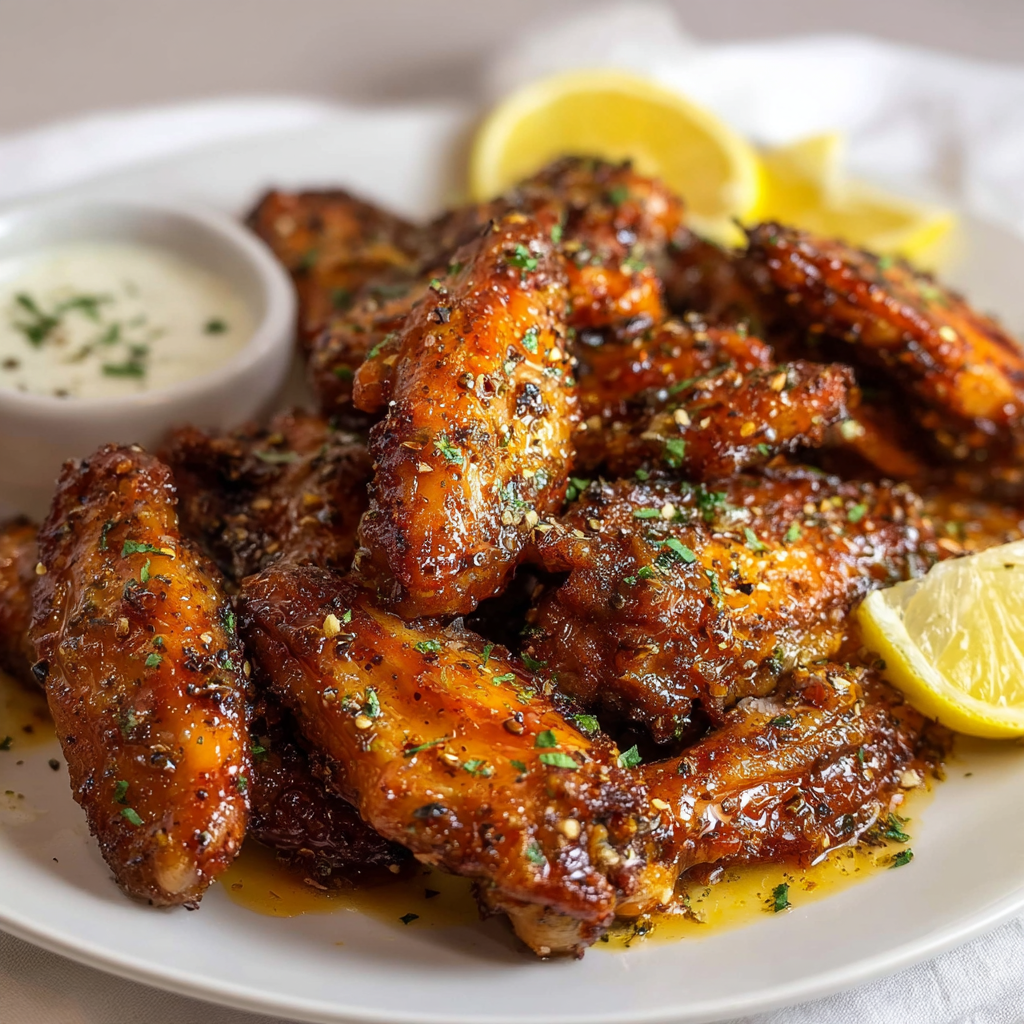
Arrange on a serving platter or in a large bowl. Scatter extra lemon zest and fresh parsley or chives over the top. Serve immediately with lemon wedges, celery sticks, and ranch or blue cheese dipping sauce alongside. Wings are at their crispiest within 10 minutes of the second glaze application — serve promptly.
Nutritional Information
Per serving — based on 4 servings of approximately 6–7 wings each, without dipping sauce.
| Nutrient | Per Serving | % Daily Value* |
|---|---|---|
| Calories | 480 kcal | 24% |
| Total Fat | 28g | 36% |
| Saturated Fat | 10g | 50% |
| Total Carbohydrates | 18g | 7% |
| Total Sugar | 15g | — |
| Protein | 38g | 76% |
| Dietary Fiber | 0.5g | 2% |
| Sodium | 620mg | 27% |
| Potassium | 380mg | 8% |
| Vitamin B6 | 30% DV | 30% |
| Vitamin B12 | 15% DV | 15% |
| Iron | 12% DV | 12% |
*Based on a standard 2,000-calorie daily diet.
At 38 grams of protein per serving, honey lemon pepper wings deliver a protein density that rivals dedicated high-protein meals while functioning as a crowd-pleasing sharing format. The Vitamin B6 content — 30% of the daily recommended value — supports energy metabolism, immune function, and neurotransmitter synthesis.
Healthier Alternatives
Lower sugar glaze: Reduce honey to 1½ tablespoons and replace the remainder with 1 tablespoon of monk fruit syrup or agave. The caramelization behavior is slightly different but the glaze remains sticky and flavorful with approximately 40% less sugar.
Air fryer method: Cook the dry-brined wings in a preheated air fryer at 400°F (200°C) for 22–25 minutes, flipping halfway, until deeply golden. Apply the glaze in two stages as directed. The air fryer produces crispier results in less time and uses no additional oil — the most practical high-crispiness alternative to deep frying.
Dairy-free glaze: Replace butter with refined coconut oil or a high-quality plant-based butter. The glaze behavior and flavor are nearly identical — coconut oil produces a slightly cleaner, less rich finish that many people prefer with the bright lemon flavor profile.
Lower sodium: Omit the added salt from the dry brine and reduce the glaze salt to a pinch. The baking powder and garlic powder contribute sufficient seasoning alongside the lemon and honey — the wings will be noticeably less salty with a minimal impact on overall flavor complexity.
Grilled version: Grill over medium-high direct heat for 20–25 minutes, turning every 5 minutes, until the skin is crispy and charred in places. Apply the glaze in the final 5 minutes over indirect heat. The grill adds a smoky char dimension that complements the lemon pepper profile with particular effectiveness.
Serving Suggestions
Game day platter: Arrange wings on a large board with celery sticks, carrot sticks, a bowl of blue cheese dip, a bowl of ranch, and small bowls of additional lemon zest and cracked pepper for guests who want extra seasoning. This format handles groups of 6–10 with a single recipe and requires no individual plating.
Wing flight: Make three sauces — the honey lemon pepper, a classic buffalo, and a garlic parmesan — and arrange one-third of the wings with each sauce. A wing flight format for a dinner party that generates conversation, comparison, and competitive preference declarations.
With waffle fries: Serve alongside crispy oven-baked waffle fries with a honey mustard dipping sauce. The combination of sticky, citrusy wings and crispy, starchy fries is one of the most universally satisfying casual dinner formats available.
As a main course: Plate 6–7 wings per person alongside a simple coleslaw dressed with lemon vinaigrette and a corn on the cob brushed with herb butter. The coleslaw’s acidity and crunch cuts through the richness of the wings in a way that makes the plate feel complete and balanced.
Leftover wing tacos: Strip the meat from any leftover cold wings and pile into warm corn tortillas with shredded cabbage, sliced avocado, pickled red onion, and a drizzle of extra honey lemon sauce. Leftover wing meat makes one of the finest taco fillings available with almost no additional preparation.
Common Mistakes to Avoid
Skipping the dry brine. Wet wings do not get crispy in the oven — the surface moisture steams the skin rather than allowing it to dehydrate and crisp. The baking powder and uncovered refrigeration are the two elements that transform oven wings from acceptable to genuinely crispy. Both are required.
Not using a wire rack. Wings cooked directly on a baking sheet sit in rendered fat and steam from below, producing a soft, greasy underside regardless of how golden the top surface becomes. The rack is the structural component of the crispiness technique.
Applying all the glaze at once. A single heavy glaze application before the final minutes of baking burns before it caramelizes and produces a bitter, dark crust rather than a lacquered, glossy finish. The two-stage application — one in the oven, one out — produces the correct result every time.
Using finely ground pepper. Fine black pepper disappears into the glaze and contributes heat without presence or texture. Coarsely cracked pepper creates visible pieces on the finished wing, intermittent bursts of pepper flavor, and the characteristic appearance of properly made lemon pepper wings.
Not watching the glaze in the oven. Honey burns rapidly at 425°F (220°C). The 4–5 minutes after the first glaze application requires close attention — the line between caramelized and burnt is approximately 90 seconds at this temperature. Check at 3 minutes and pull the wings the moment the glaze looks dark and set rather than wet and glossy.
Storing Tips
Refrigerator: Store in an airtight container for up to 3 days. The glaze softens the skin during storage — reheating is essential for any texture recovery.
Reheating: An air fryer at 375°F (190°C) for 5–7 minutes restores crispiness most effectively. A wire rack in a 400°F (200°C) oven for 10–12 minutes is equally good. The microwave reheats the interior but produces soft skin — acceptable for flavor, not for the full wing experience.
Freezer: Freeze fully cooked wings in a single layer until solid, then transfer to a freezer bag for up to 2 months. Reheat from frozen in a 400°F (200°C) oven for 18–20 minutes or in an air fryer at 375°F for 12–14 minutes. Apply a small additional brush of fresh glaze after reheating to restore the lacquered finish.
Make-ahead: The dry-brined wings can be prepared and refrigerated uncovered for up to 24 hours before baking — overnight preparation is recommended and produces the crispiest result. The glaze can be made up to 3 days ahead and refrigerated — reheat gently before applying.
Conclusion
Honey lemon pepper wings prove that the gap between a great restaurant wing and a great homemade wing is not a gap in ingredients — it is a gap in technique. Baking powder dry brine, wire rack elevation, two-stage glaze application, and coarsely cracked pepper are the four decisions that close that gap completely and produce a wing that is crispy, glossy, bright with lemon, and worth every minute of the overnight brine.
Make them and share your results in the comments — tell us whether you brined overnight, how much pepper you used, and whether they survived long enough to make it to the table in an organized fashion. Leave a review, share with someone who loves wings, and subscribe to our newsletter for more technique-driven, crowd-pleasing recipes every week.
FAQs
Why use baking powder instead of baking soda? Baking powder — a combination of baking soda, cream of tartar, and cornstarch — raises the surface pH of the chicken skin more moderately than pure baking soda, producing more even Maillard browning without the slightly soapy or metallic off-flavor that baking soda can impart at higher quantities. Use aluminum-free baking powder to avoid any metallic taste. The effect is a more evenly golden, properly flavored crispy skin that baking soda cannot replicate cleanly.
Can I make these in an air fryer from the start? Yes — the air fryer is an excellent alternative to the oven and often produces even crispier results. Dry brine as directed, then cook in a preheated air fryer at 400°F (200°C) for 22–25 minutes, flipping halfway, until deeply golden. Apply the two-stage glaze in the same sequence — first application inside the air fryer for 3–4 minutes, second application immediately after. Reduce the second cooking time to 2–3 minutes and watch closely due to the concentrated heat.
Can I use bottled lemon pepper seasoning instead of fresh lemon? Bottled lemon pepper seasoning can supplement but should not replace fresh lemon juice and zest in this recipe. The volatile aromatic compounds in fresh lemon — the compounds responsible for the bright, clean citrus flavor — are absent from dried seasoning, which tastes artificial and flat in comparison. Use fresh lemon juice and zest as the primary flavor drivers and add ½ teaspoon of lemon pepper seasoning to the glaze if desired for additional dried herb complexity.
How do I get the wings crispy without a wire rack? Flip the wings every 15 minutes rather than once, and blot any pooled fat from the baking sheet between flips using a folded paper towel held with tongs. This prevents the wings from sitting in rendered fat long enough to steam-cook the underside. The result is less consistently crispy than a wire rack but significantly better than unstirred wings cooked directly on the pan.
What is the best way to split whole wings? Place the wing flat on a cutting board. Locate the two joints — one between the drumette and flat, one between the flat and tip. Using a sharp chef’s knife or kitchen shears, cut directly through each joint with a single confident stroke. The joint is cartilage, not bone — it cuts cleanly without requiring force if the knife or shears are placed precisely at the joint rather than through the bone on either side.
Can I make these wings ahead for a party? Yes — with a staged approach. Dry brine and bake to completion up to 4 hours ahead. Hold at room temperature if serving within 2 hours, or refrigerate for up to 4 hours. Re-crisp in a 400°F oven or air fryer for 5–7 minutes immediately before serving, then apply the second glaze application fresh. This approach produces wings that are nearly indistinguishable from freshly made and requires no last-minute oven juggling during a party.