Follow Me On Social Media!
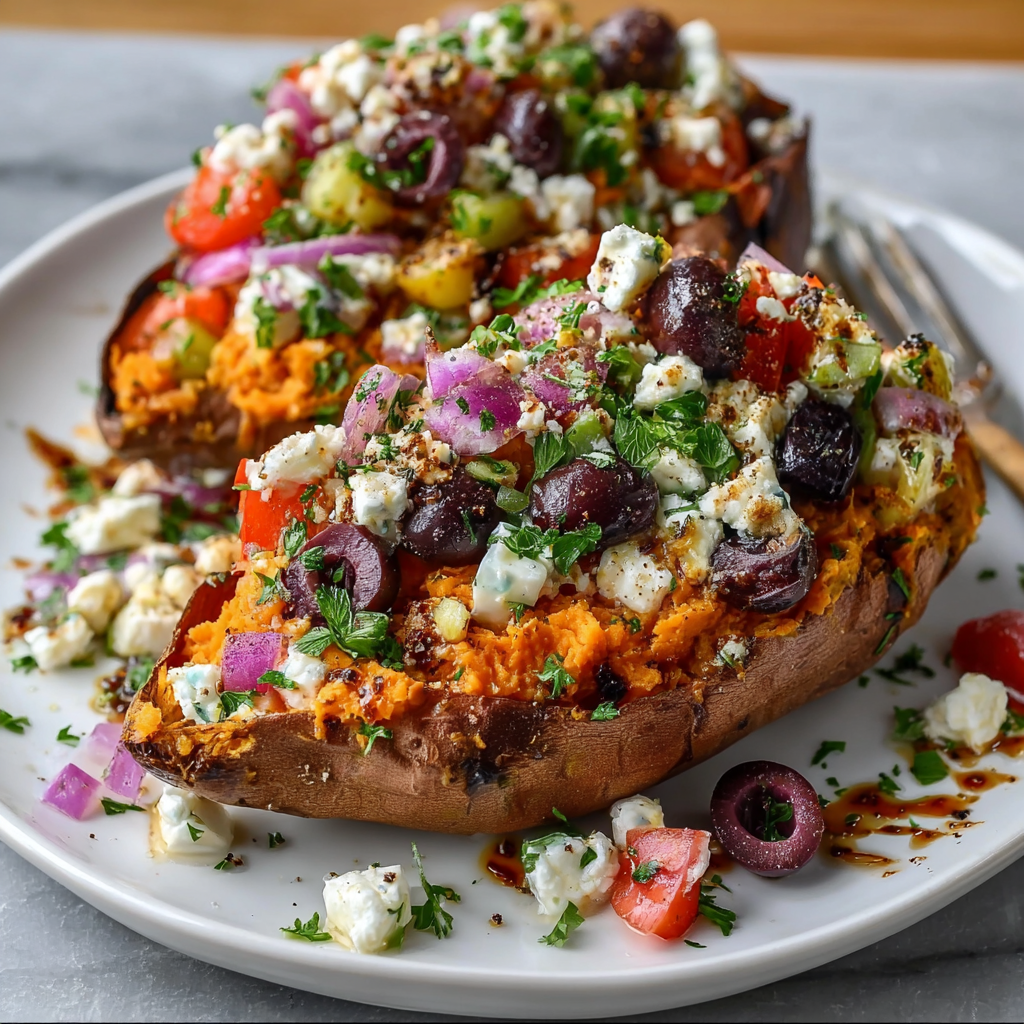
Mediterranean Stuffed Sweet Potatoes

Introduction
Here is a question that reframes what a weeknight dinner can be: what if a single ingredient — humble, inexpensive, and almost universally available — could serve simultaneously as the vessel, the starch, the sweetness, and the nutritional foundation of a complete meal that tastes as though it required considerably more thought and effort than it actually did? According to a 2024 consumer food trend report by Mintel, sweet potatoes rank as the most versatile single ingredient in home cooking — appearing in more meal categories, from breakfast to dessert, than any other single vegetable — yet fewer than 30% of home cooks use them as a stuffed, loaded main course format.
This Mediterranean stuffed sweet potato recipe uses that format to its fullest potential. A whole sweet potato roasted until its skin blisters and its interior turns custardy and sweet, split and loaded with a vibrant, herb-forward Mediterranean filling of chickpeas, roasted red peppers, Kalamata olives, crumbled feta, and a lemony tahini drizzle. The combination of the sweet, yielding potato with the salty, briny, herb-flecked filling represents one of the more intelligent flavor pairings in vegetable-forward cooking — each component amplifies the best qualities of the other in a way that a more conventional meal cannot.
A 2023 nutritional review in the American Journal of Clinical Nutrition identified the sweet potato as one of the most nutrient-dense whole foods available per calorie — delivering Vitamins A, C, B6, potassium, manganese, and dietary fiber at levels that exceed most other commonly consumed vegetables. Combined with the protein, fiber, and healthy fat contributions of the Mediterranean filling, this is a complete meal that requires no asterisk or apology.
Ingredients List
For the Sweet Potatoes
- 4 medium-large sweet potatoes, scrubbed (approximately 250–300g each)
- 1 tbsp olive oil
- ½ tsp fine sea salt
For the Mediterranean Filling
- 1 can (400g / 15 oz) chickpeas, drained and rinsed
- ½ cup (75g) roasted red peppers, drained and roughly chopped
- ½ cup (80g) Kalamata olives, pitted and halved
- ½ cup (75g) cherry tomatoes, halved
- ¼ cup (40g) red onion, finely diced
- 3 tbsp extra virgin olive oil
- 2 tbsp fresh lemon juice
- 1 tsp lemon zest
- 1 tsp dried oregano
- ½ tsp ground cumin
- ½ tsp smoked paprika
- Salt and black pepper to taste
- 2 tbsp fresh flat-leaf parsley, roughly chopped
- 2 tbsp fresh mint, roughly chopped (optional but transformative)
For the Lemony Tahini Drizzle
- 3 tbsp good-quality tahini, well-stirred
- 2 tbsp fresh lemon juice
- 1 small garlic clove, minced
- 2–4 tbsp cold water (to adjust consistency)
- ¼ tsp fine sea salt
- Pinch of smoked paprika
For Toppings
- 80g (3 oz) feta cheese, crumbled (omit for vegan)
- Extra fresh parsley and mint
- Pinch of sumac (adds a fruity tartness — optional but authentic)
- Pomegranate seeds (optional — adds sweetness and color)
- Extra virgin olive oil, to finish
Timing
- Prep Time: 15 minutes
- Roasting Time: 45–55 minutes
- Total Time: 60–70 minutes (mostly hands-off)
The sweet potatoes roast while the filling and tahini sauce are assembled — both ready in under 15 minutes. Everything converges at the moment the potatoes come out of the oven with zero timing stress.
Step-by-Step Instructions
Step 1: Roast the Sweet Potatoes
Preheat the oven to 425°F (220°C). Scrub the sweet potatoes thoroughly and pat dry. Pierce each potato 6–8 times with a fork — the steam venting holes prevent the potato from building internal pressure and splitting unpredictably during roasting. Rub each potato with olive oil and a pinch of salt. Place directly on the oven rack or on a foil-lined baking sheet. Roast for 45–55 minutes until the skin is blistered and slightly wrinkled, the potato yields immediately to firm finger pressure, and the interior is custardy and caramelized at the edges where the natural sugars have begun to escape through the fork holes.
Key tip: Placing sweet potatoes directly on the oven rack rather than on a baking sheet produces more evenly caramelized, slightly crispy skin on all sides rather than a soft, pale underside. Place a foil-lined sheet on the rack below to catch any drips.
Step 2: Make the Mediterranean Filling
While the potatoes roast, combine the drained chickpeas, roasted red peppers, Kalamata olives, cherry tomatoes, and red onion in a medium bowl. In a small bowl, whisk together the olive oil, lemon juice, lemon zest, oregano, cumin, and smoked paprika. Pour the dressing over the chickpea mixture and toss thoroughly to coat every component. Taste and adjust salt, pepper, and lemon juice — the filling should be bright, well-seasoned, and assertively flavored enough to stand up to the sweetness of the roasted potato. Fold in the fresh parsley and mint just before serving.
Step 3: Make the Tahini Drizzle
Combine the tahini, lemon juice, minced garlic, and salt in a small bowl. Whisk together — the mixture will initially seize and thicken dramatically as the lemon juice contacts the tahini. Add cold water one tablespoon at a time, whisking between each addition, until the sauce reaches a fluid, drizzleable consistency that falls from the whisk in a slow, steady stream. The finished sauce should be creamy, pale, and tart — taste and adjust lemon and salt as needed.
Key tip: Tahini varies significantly in consistency and bitterness between brands. A good tahini — made from hulled, roasted sesame seeds with no additives — should taste nutty and rich with no bitter aftertaste. If the tahini tastes bitter, add an additional teaspoon of lemon juice and a pinch of salt to balance it.
Step 4: Split and Load the Potatoes
Remove the roasted sweet potatoes from the oven and allow to cool for 3–4 minutes. Using a sharp knife, cut a deep lengthwise slit through the top of each potato, then press both ends firmly toward each other to open the potato into a wide, exposed cavity. Use a fork to gently fluff and loosen the interior flesh — this creates a soft, textured base that absorbs the filling and sauce rather than allowing them to sit on an impermeable surface.
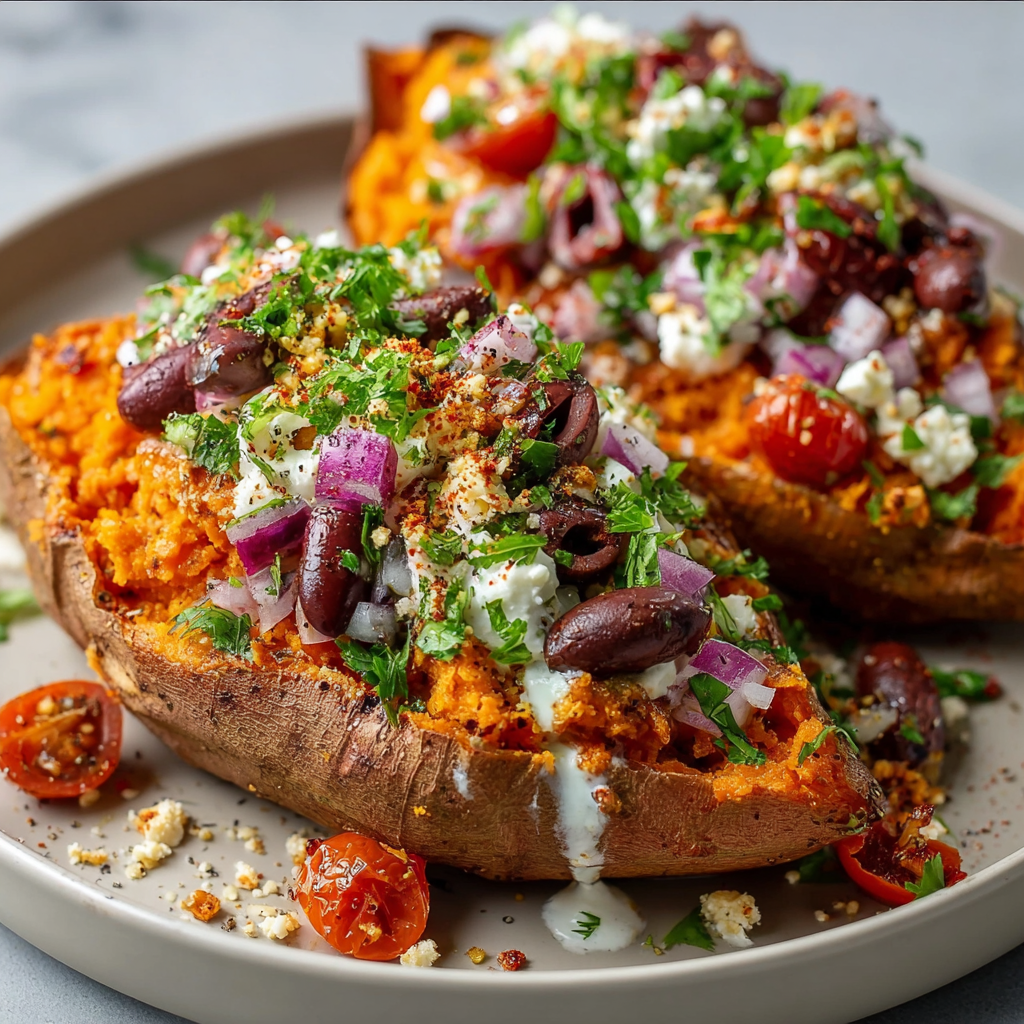
Spoon a generous portion of the Mediterranean filling into and over each potato, allowing it to spill over the sides. Drizzle the tahini sauce generously over the filling. Crumble feta over the top. Finish with extra fresh herbs, a pinch of sumac, pomegranate seeds if using, and a final drizzle of extra virgin olive oil.
Step 5: Serve
Serve immediately — the combination of the warm, custardy potato, the room-temperature filling, and the cool tahini sauce creates a temperature contrast that is part of the dish’s appeal. Serve on a plate wide enough to catch any filling that tumbles over the edges.
Nutritional Information
Per serving — based on 4 stuffed potatoes with feta.
| Nutrient | Per Serving | % Daily Value* |
|---|---|---|
| Calories | 520 kcal | 26% |
| Total Fat | 22g | 28% |
| Saturated Fat | 5g | 25% |
| Total Carbohydrates | 68g | 25% |
| Total Sugar | 14g | — |
| Protein | 15g | 30% |
| Dietary Fiber | 13g | 46% |
| Sodium | 720mg | 31% |
| Potassium | 1,100mg | 23% |
| Vitamin A | 320% DV | 320% |
| Vitamin C | 45% DV | 45% |
| Iron | 20% DV | 20% |
*Based on a standard 2,000-calorie daily diet.
The Vitamin A content — 320% of the daily recommended value per serving — comes entirely from the beta-carotene in the sweet potato and represents one of the single highest Vitamin A contributions of any main course dish in any cuisine. At 13 grams of dietary fiber per serving — 46% of the daily recommended value — this is also one of the most fiber-dense complete meals in the plant-forward cooking category.
Healthier Alternatives
Higher protein: Add ½ cup of cooked quinoa to the chickpea filling or serve alongside a scoop of Greek yogurt seasoned with lemon and garlic in place of or alongside the tahini drizzle. Either addition pushes the protein content toward 22–25 grams per serving.
Lower fat: Reduce the olive oil in the filling to 1 tablespoon and use 2 tablespoons of tahini thinned generously with water and lemon juice rather than 3 tablespoons of full-strength tahini. The flavor remains vibrant with approximately 30% less fat.
Vegan: Omit the feta and replace with an additional tablespoon of nutritional yeast stirred into the filling, or use a plant-based feta alternative. Every other component of the recipe is naturally vegan.
Lower carbohydrate: Replace the sweet potato with a large portobello mushroom cap or a halved roasted acorn squash — both provide a vessel for the Mediterranean filling with fewer carbohydrates. The flavor profile of the filling works equally well with either substitute.
Grain addition: Stir ½ cup of cooked farro, bulgur wheat, or orzo into the chickpea filling for a more substantial, grain-forward version that increases both fiber and satiety meaningfully.
Serving Suggestions
As a complete dinner: Each stuffed potato is a self-contained complete meal — starch, protein, vegetables, and sauce in a single edible vessel. Serve with a simple green salad dressed with lemon and olive oil for a balanced, nutritionally complete dinner with minimal additional effort.
Mezze-style spread: Serve alongside hummus, warm pita, a cucumber and tomato salad, and a bowl of marinated olives for a Mediterranean-themed dinner that accommodates every dietary preference at the table without separate preparations.
Meal prep format: Roast the potatoes and prepare the filling separately. Refrigerate each in airtight containers for up to 4 days. Assemble cold or with the potato briefly reheated — the filling works well at room temperature over a warmed potato for a fast, complete weekday lunch.
Served warm and cold together: The filling is genuinely excellent served at room temperature — even cold from the refrigerator — over a hot, freshly roasted potato. The temperature contrast between the hot potato and the cool filling is a feature rather than a flaw.
Party format: Roast small sweet potatoes — approximately 150g each — for individual, two-to-three-bite appetizer portions. Arrange on a platter with the filling piled high, tahini drizzled over, and pomegranate seeds scattered across for a visually striking party food that is entirely plant-based and requires no utensils.
Common Mistakes to Avoid
Under-roasting the sweet potato. A sweet potato pulled from the oven before the interior is fully custardy and the skin fully blistered will be dry, dense, and resistant to the fork-fluffing that creates the soft, absorbent base the filling needs. The potato is ready when a fork slides through the thickest part with zero resistance. When in doubt, give it another 10 minutes.
Not fluffing the interior. An unfluffed sweet potato interior is a solid, compact mass that the filling and sauce sit on top of rather than into — producing a meal that separates immediately at the first fork. Two minutes of vigorous fork-fluffing creates the porous, absorbent interior that makes every bite a combination of potato, filling, and sauce simultaneously.
Adding herbs to the filling too far in advance. Fresh parsley and mint bruise, wilt, and release water within 20–30 minutes of being dressed with lemon juice and olive oil. Add them at the last possible moment — immediately before serving — for maximum freshness, color, and aromatic impact.
Using unhulled or bitter tahini. Bitter tahini makes a bitter sauce that undermines the entire dish. Buy a reputable brand, stir thoroughly from the bottom of the jar before measuring, and taste before using — if it is bitter, use a different brand.
Skipping the sumac. Sumac is not a decoration — it is a distinctly Middle Eastern spice with a fruity, wine-like tartness that complements the sweet potato and the lemon-dressed filling in a way that no other spice replicates. It is available at Middle Eastern grocery stores, specialty spice shops, and widely online. A $6 jar lasts months and transforms dozens of dishes.
Storing Tips
Roasted potatoes: Store whole, uncut, cooled potatoes wrapped in foil or in an airtight container for up to 5 days in the refrigerator. Reheat in a 400°F (200°C) oven for 15 minutes or in the microwave at 70% power for 3–4 minutes until heated through.
Mediterranean filling: Store in an airtight container for up to 4 days — the flavors deepen over the first 24 hours as the chickpeas absorb the dressing. Add fresh herbs only at the moment of serving, not to the stored filling.
Tahini drizzle: Store in a sealed jar for up to 5 days. The sauce thickens in the refrigerator — whisk in 1–2 tablespoons of cold water before serving to restore the original drizzleable consistency.
Assembled potatoes: Do not store assembled potatoes — the filling makes the skin soggy and the potato interior waterlogged within 2 hours. Store all components separately and assemble to order.
Conclusion
Mediterranean stuffed sweet potatoes prove that the most satisfying plant-forward main courses are built not on compromise but on the intelligent pairing of ingredients whose flavors genuinely belong together. Custardy roasted sweet potato, briny chickpea filling, silky tahini, crumbled feta, and fresh herbs — a complete meal from a single vegetable and a pantry of staples, on the table in just over an hour, with the flavor complexity of something that took considerably longer.
Make it and share your results in the comments — tell us which toppings you used, whether you added sumac, and how it landed with everyone at the table. Leave a review, share with someone who loves Mediterranean flavors, and subscribe to our newsletter for more plant-forward, globally inspired recipes every week.
FAQs
Can I microwave the sweet potatoes instead of roasting? Yes — microwave on high for 8–10 minutes, turning halfway, until completely soft throughout. The microwave version saves 40 minutes but produces a different result — the skin remains soft rather than blistered and the interior lacks the caramelized sweetness that develops through oven roasting. For the best flavor, oven roasting is strongly recommended. For a fast weeknight version when time is short, the microwave is entirely acceptable.
Can I use canned chickpeas or should they be cooked from dried? Canned chickpeas are perfectly appropriate and produce an excellent result — they are what the recipe calls for. Drain and rinse thoroughly to remove the canning liquid before using. Chickpeas cooked from dried have a slightly firmer texture and more pronounced flavor but the difference in the context of this dressed filling is minor.
What can I substitute for tahini if I have a sesame allergy? Sunflower seed butter thinned with lemon juice and water produces a comparable drizzle sauce with a slightly different but pleasant flavor. Almond butter or cashew butter thinned identically also works — the flavor is nuttier and less bitter than tahini but compatible with the Mediterranean filling. Plain Greek yogurt seasoned with lemon and garlic is the most accessible substitute and pairs particularly well with the sweet potato.
Can I prepare this recipe entirely in advance for a dinner party? Yes — roast the potatoes and prepare the filling and tahini sauce up to 2 days ahead. Refrigerate all three separately. On the day of serving, reheat the potatoes in a 400°F (200°C) oven for 15 minutes, add fresh herbs to the filling, and assemble at the table. This approach requires less than 5 minutes of day-of effort and produces a result indistinguishable from freshly made.
Is this recipe suitable for meal prep? It is one of the most practical meal prep recipes in the plant-forward category. Roast 4–6 sweet potatoes on Sunday, prepare a large batch of filling, and make the tahini sauce. Store separately and assemble each day at lunchtime — the roasted potato reheats in 3 minutes in the microwave and the room-temperature filling requires no reheating. A complete, nutritionally dense lunch in under 5 minutes of daily effort.
How do I choose the best sweet potatoes for this recipe? Look for medium-large, evenly shaped sweet potatoes — approximately 250–300g each — that are firm and smooth with no soft spots, cracks, or blemishes. Avoid very large potatoes, which take significantly longer to roast and can be unevenly cooked at the center. The orange-fleshed variety — most commonly labeled “yam” in North American supermarkets despite being a sweet potato — produces the most custardy, sweet interior and the most dramatic color against the Mediterranean filling.