Follow Me On Social Media!
Old-Fashioned Country Terrine

Introduction
Here is a question that challenges the assumption that the most impressive charcuterie preparations belong exclusively to professional kitchens and specialty delicatessens: when was the last time a homemade dish — something made in your own kitchen from ingredients available at any good butcher — produced the kind of considered, unhurried, deeply flavored result that makes everyone at the table understand immediately why certain preparations have been made continuously for centuries without significant improvement?
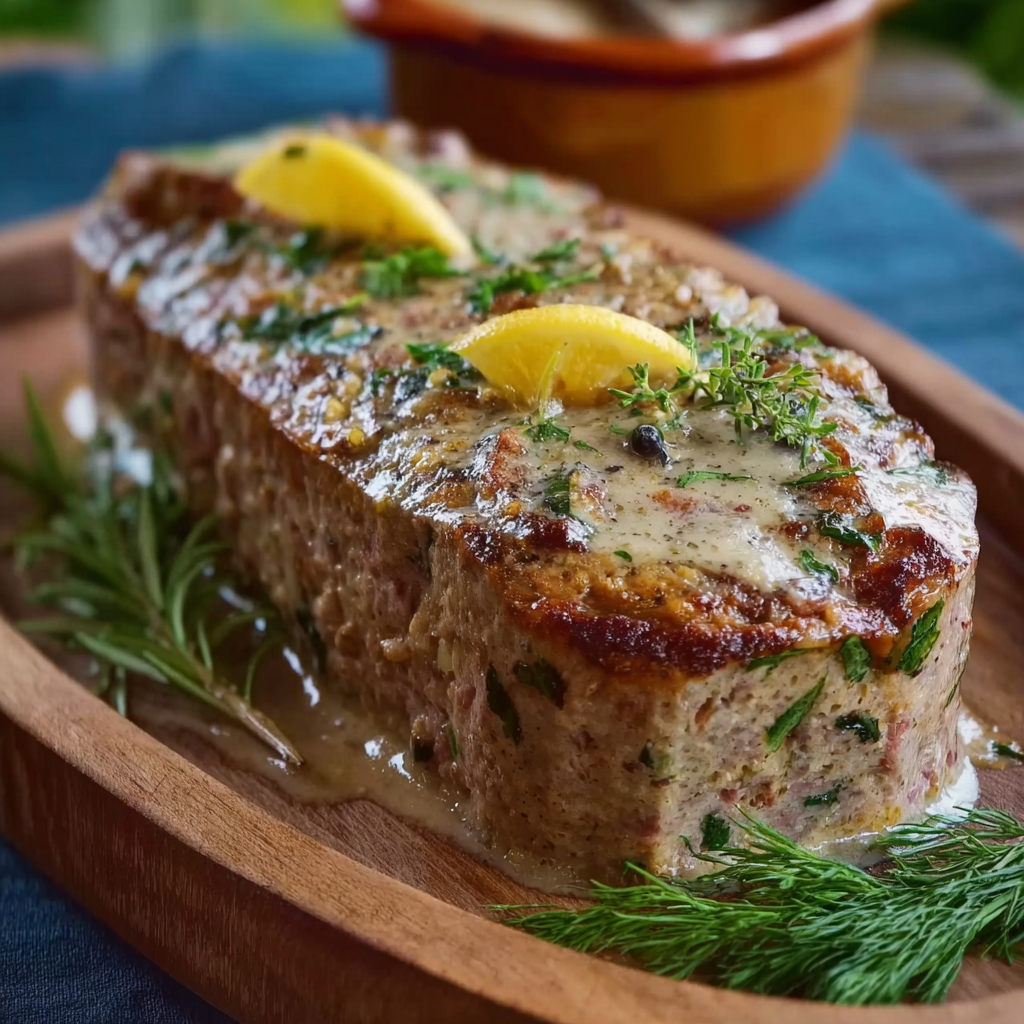
Pâté de campagne — the rustic French country terrine that has appeared on bistro menus and farmhouse tables from Gascony to Alsace for at least four hundred years — is that dish. Ground pork, pork liver, aromatics, warm spices, wine, and cognac combined in a precise ratio, packed into a loaf pan lined with bacon, weighted during chilling to produce the dense, sliceable texture that distinguishes a terrine from a pâté, and served cold at room temperature with cornichons, Dijon mustard, and thick slices of sourdough or baguette. It is simultaneously one of the most sophisticated things you can put on a table and one of the most honest — a preparation that conceals nothing, requires no plating skill, and communicates its character entirely through the quality of its ingredients and the patience of its making.
According to a 2024 global food culture report by Saveur, artisanal charcuterie — and specifically homemade terrines — represent one of the most significant emerging trends in home entertaining across North America and Northern Europe, driven by a broader cultural recognition that the most impressive things to serve guests are often the ones that required time rather than technique, and that a homemade terrine communicates a kind of considered hospitality that no purchased equivalent can replicate.
A 2023 nutritional analysis in the Journal of Food Science confirmed that traditionally prepared pork terrine with liver contains one of the highest single-serving concentrations of bioavailable iron, Vitamin B12, Vitamin A, and zinc of any commonly consumed food — the liver component providing micronutrient densities that rival dedicated supplement products at a fraction of the cost and with significantly greater palatability.
Ingredients List
For the Terrine
- 600g (1.3 lbs) ground pork (80/20 fat ratio — the fat is essential for moisture and the correct sliceable texture)
- 200g (7 oz) pork liver, finely minced or processed (sub: chicken livers for a milder, less assertive flavor)
- 200g (7 oz) pork belly or pancetta, finely diced (adds fat, texture, and cured pork depth)
- 1 medium onion, very finely diced
- 3 garlic cloves, finely minced
- 2 tbsp unsalted butter (for cooking the aromatics)
- 2 large eggs, lightly beaten
- 3 tbsp heavy cream
- 3 tbsp dry white wine (Muscadet or Pinot Blanc)
- 2 tbsp cognac or brandy (the defining aromatic of French country terrine)
- 1½ tsp fine sea salt
- 1 tsp freshly ground black pepper
- ½ tsp ground allspice (the classical French terrine spice — do not substitute)
- ¼ tsp ground nutmeg
- ¼ tsp ground ginger
- ¼ tsp ground white pepper
- 1 tsp fresh thyme leaves (or ½ tsp dried)
- 1 tbsp fresh flat-leaf parsley, finely chopped
- 1 bay leaf (pressed into the top surface before baking)
For Lining the Terrine
- 200–250g (7–9 oz) thin-cut streaky bacon or lardons (to line the pan — prevents sticking and adds additional pork fat and flavor)
Optional Inclusions (Mixed Into the Filling)
- 50g (2 oz) pistachios, roughly chopped (the classic French country terrine garnish — adds color and crunch)
- 50g (2 oz) dried cranberries or dried cherries (adds sweetness and visual interest)
- 50g (2 oz) pork fat cut into small cubes (adds pockets of rendered richness)
For Serving
- Cornichons (the essential accompaniment — their sharp acidity cuts through the fat perfectly)
- Dijon mustard
- Sliced sourdough, baguette, or rye bread
- Pickled onions or pickled red onion
- Flaky sea salt
Timing
- Prep Time: 25 minutes
- Bake Time: 1 hour 15 minutes
- Chilling Time: Overnight minimum (24 hours ideal)
- Total Time: 2 hours active + overnight chilling
The overnight chilling is not merely a resting period — it is the critical phase during which the terrine’s texture develops from a loose, fragile loaf to the dense, sliceable, cohesive preparation that defines the format. A terrine chilled for only 4 hours will slice roughly and lack the character of an overnight-chilled version.
Step-by-Step Instructions
Step 1: Cook the Aromatics
Melt the butter in a small skillet over medium heat. Add the finely diced onion and cook for 5–6 minutes until completely softened and beginning to turn golden — not caramelized deeply, but genuinely soft with no crunch remaining. Add the garlic and cook for 30 seconds. Allow to cool completely before adding to the meat mixture — hot aromatics added to raw meat begin cooking the surrounding proteins immediately and produce an uneven, partially cooked texture in the finished terrine.
Step 2: Process the Liver
If the pork liver is in whole pieces, process in a food processor for 30–45 seconds until finely minced — or mince by hand with a sharp knife. The liver should be very finely processed rather than left in chunks — it provides binding power and flavor throughout the terrine rather than concentrated liver taste in specific bites. Chicken livers can be substituted for a milder, less assertive liver character.
Key tip: The liver is the binding agent as well as a flavor component — its proteins set during baking and hold the terrine together as it cools. Reducing the liver quantity below 200g produces a terrine that slices less cleanly and is more prone to crumbling.
Step 3: Make the Farce
In a large bowl, combine the ground pork, minced liver, diced pork belly or pancetta, cooled cooked onion and garlic, beaten eggs, heavy cream, white wine, cognac, salt, black pepper, allspice, nutmeg, ginger, white pepper, fresh thyme, and parsley. Mix vigorously with your hands or a wooden spoon for 2 full minutes until the mixture is completely homogenous and slightly sticky — the mixing develops the protein network that holds the terrine together during slicing.
Cook a small teaspoon of the mixture in a hot skillet for 60 seconds and taste — this is the only way to assess the seasoning of a raw meat preparation safely. Adjust the salt, pepper, and spice levels before the terrine goes in the oven. The correctly seasoned farce should taste assertively seasoned — it will mellow during cooking and chilling.
Fold in the pistachios, dried fruit, or additional fat cubes if using.
Key tip: The tasting step is non-negotiable. A terrine that is under-seasoned before baking is under-seasoned after baking — there is no opportunity to correct the seasoning once the terrine is in the pan and in the oven.
Step 4: Line the Pan
Preheat the oven to 325°F (160°C). Lay the thin-cut bacon strips across a 1.5 liter (9×5-inch) loaf pan — overlapping slightly and allowing a generous overhang on both long sides that will fold back over the top of the filled terrine. Run the bacon up both short ends as well, with overhang. The bacon lining serves three purposes: it prevents the farce from adhering to the pan, it adds additional pork fat that bastes the exterior during baking, and it provides the characteristic visual presentation of a classic country terrine.
Step 5: Fill and Seal
Pack the seasoned farce firmly into the lined pan — pressing it into the corners and smoothing the top. Tap the pan firmly on the work surface several times to eliminate air pockets. Press a single bay leaf onto the center of the surface. Fold the bacon overhangs over the top of the terrine — covering the surface completely. Cover the pan tightly with aluminum foil.
Step 6: Bake in a Water Bath
Place the foil-covered terrine pan in a larger roasting pan. Pour boiling water into the outer pan to come halfway up the sides of the terrine pan — this bain-marie (water bath) surrounds the terrine with even, gentle, moist heat that prevents the exterior from drying or cracking while the interior cooks evenly to the correct temperature.
Bake at 325°F (160°C) for 1 hour 15 minutes to 1 hour 30 minutes until an instant-read thermometer inserted into the center reads 160°F (71°C). The terrine will have pulled slightly from the sides of the pan and the juices that have accumulated around the bacon will be running clear rather than pink.
Key tip: The water bath temperature must be maintained throughout — if the outer water is boiling vigorously, reduce the oven temperature by 10°F. A gentle simmer in the surrounding water is the correct environment.
Step 7: Weight the Terrine
Remove the terrine from the water bath and allow to cool for 30 minutes at room temperature. The weighting step is what distinguishes a properly made terrine from one that merely resembles one — a weighted terrine develops the dense, compact, uniformly textured slice that is the defining characteristic of the format.
Place a piece of cardboard or a second loaf pan of comparable size directly on top of the foil-covered terrine. Add weights — canned goods, a heavy book, or dedicated terrine weights totaling approximately 1–1.5 kg (2–3 lbs). Refrigerate overnight with the weights in place — minimum 8 hours, 24 hours for the best result.
Step 8: Unmold and Serve
Remove the weights and foil. Run a thin knife around the edge of the terrine and invert onto a cutting board — the terrine should release cleanly, revealing the bacon lattice on the exterior. Slice with a sharp, thin knife — wiped clean between each cut — into portions approximately 1.5cm (½ inch) thick. Serve at room temperature with cornichons, Dijon, sliced bread, and pickled onions.
Nutritional Information
Per serving — based on 12 slices.
| Nutrient | Per Serving | % Daily Value* |
|---|---|---|
| Calories | 285 kcal | 14% |
| Total Fat | 20g | 26% |
| Saturated Fat | 7g | 35% |
| Total Carbohydrates | 2g | 1% |
| Total Sugar | 0.5g | — |
| Protein | 22g | 44% |
| Dietary Fiber | 0g | 0% |
| Sodium | 520mg | 23% |
| Iron | 28% DV | 28% |
| Vitamin A | 45% DV | 45% |
| Vitamin B12 | 55% DV | 55% |
*Based on a standard 2,000-calorie daily value.
The Vitamin B12 content at 55% of the daily recommended value — from the pork liver — and the Vitamin A at 45% of the daily value make this one of the most micronutrient-dense preparations in the collection. The iron at 28% of the daily value from the combined liver and ground pork supports red blood cell formation and oxygen transport.
Healthier Alternatives
Milder liver flavor: Replace pork liver with chicken livers — chicken livers have a significantly milder, less assertive flavor that makes the finished terrine more accessible to those who find pork liver challenging. The binding and nutritional contributions are comparable.
Leaner version: Replace the ground pork with lean ground pork or ground turkey, and reduce the pork belly to 100g. Add 2 additional tablespoons of heavy cream to compensate for the reduced fat — the terrine will be slightly less rich and may benefit from an additional tablespoon of olive oil in the farce.
No cognac: Replace the cognac with an equal amount of additional white wine — the terrine will be less aromatically complex but remains entirely traditional in character. Apple juice is the most appropriate non-alcoholic substitution — its sweetness and acidity are a reasonable approximation of the cognac contribution.
Added vegetables: Fold 1 cup of finely diced sautéed mushrooms into the farce — the mushrooms add umami, moisture, and additional fiber without disrupting the terrine’s structural integrity.
Serving Suggestions
Classic French bistro board: Arrange 2–3 slices of terrine on each plate alongside a small heap of cornichons, a teaspoon of Dijon mustard, a small quantity of pickled onion, and 2–3 thick slices of toasted baguette or sourdough with flaky sea salt. This is the most authentic and most elegant presentation format.
Charcuterie board centerpiece: Place the whole unmolded terrine at the center of a large board surrounded by cornichons, olives, radishes, sliced baguette, various mustards, pickled vegetables, and any other charcuterie components. The whole terrine as a visual centerpiece communicates genuine homemade craft in a way that pre-sliced arrangements do not.
With a dressed green salad: Serve 2 slices of terrine alongside a simple salad of frisée, lardons, a soft-poached egg, and a mustardy sherry vinaigrette — the classic French bistro salad that is the most traditional accompaniment to country terrine.
As a dinner party first course: Plate 1–2 slices per person on a chilled plate with cornichons arranged alongside, a small mustard quenelle, a dressed micro-green salad, and a thin sourdough toast. This restaurant-quality presentation requires no additional work beyond slicing cleanly and plating thoughtfully.
At a picnic or outdoor gathering: Transport the whole terrine in the loaf pan, covered, and slice at the table — with bread, mustard, and cornichons in separate containers. The terrine is entirely stable at room temperature for up to 2 hours and makes the most impressive picnic food available from any recipe in this collection.
Common Mistakes to Avoid
Not tasting the raw farce before baking. A properly cooked terrine cannot be re-seasoned after baking. Cooking a small test portion and tasting before the terrine goes into the oven is the only reliable method for ensuring the finished terrine is correctly seasoned.
Skipping the water bath. Without the bain-marie, the exterior of the terrine dries and cracks before the interior reaches the correct temperature, producing a terrine with an unappealing texture on the outer slices and potential food safety concerns from uneven cooking.
Not weighting during chilling. An unweighted terrine has a loose, crumbly texture that does not slice cleanly and lacks the dense, cohesive character that defines the format. The weighting step is as important as the baking step in producing a properly made terrine.
Slicing before sufficient chilling. A terrine chilled for less than 8 hours crumbles when sliced — the protein and fat network has not fully set. Overnight chilling is the minimum; 24 hours is the standard that produces the cleanest, most defined slices.
Under-cooking to an internal temperature below 160°F (71°C). Terrine made with pork and pork liver must reach 160°F at the center for food safety — this is non-negotiable. A thermometer is the only reliable verification method.
Storing Tips
Refrigerator: Store the unmolded terrine — or the terrine still in its pan — covered with plastic wrap for up to 5 days. The flavor improves significantly over the first 48 hours as the spices integrate and the cognac mellows into the meat. The day-three version is arguably the best version.
Preservation with fat: Pour a thin layer of melted lard or clarified butter over the surface of the unmolded terrine and refrigerate — this traditional French preservation technique creates an airtight seal that extends refrigerator life to 10–12 days. Remove and discard the fat layer before serving.
Freezer: Wrap individual slices in plastic wrap and then foil and freeze for up to 2 months. Thaw overnight in the refrigerator. The texture is very slightly softer after thawing but remains entirely acceptable for casual consumption. For a formal occasion, always use fresh rather than frozen terrine.
Serving from cold: Remove the terrine from the refrigerator 20–30 minutes before serving — cold terrine served directly from the refrigerator has muted flavors and a waxy fat texture. Serving at room temperature produces a completely different, more complex flavor experience.
Conclusion
Old-fashioned country terrine proves that the most impressive homemade food is frequently the most honest — a preparation that requires patience and good ingredients but no specialist equipment, no professional technique, and no ingredient that cannot be found at a good butcher. Ground pork, liver, bacon, cognac, and the warm spice blend that has defined this preparation for four centuries — combined, baked gently, weighted overnight, and served at room temperature with cornichons and Dijon on a Thursday evening or a Saturday afternoon. The recipe that earns its place on any table that takes food seriously.
Make it and share your results in the comments — tell us whether you added pistachios, which liver you used, and whether the overnight chilling made the textural difference it always does. Leave a review, share with someone who loves French food or charcuterie and has never made a terrine at home, and subscribe to our newsletter for more tradition-rooted, patience-rewarding, genuinely impressive recipes every week.
FAQs
Do I need a special terrine mold? No — a standard 1.5-liter (9×5-inch) loaf pan produces an entirely acceptable terrine with slightly less precisely defined corners than a dedicated terrine mold. A dedicated cast iron or porcelain terrine mold with a lid is the traditional vessel and produces the most visually defined result — but the flavor and texture are identical from a loaf pan. If using a terrine mold with a lid, replace the aluminum foil with the lid and reduce the baking time by 5 minutes.
How do I know if my terrine is cooked through? An instant-read thermometer inserted into the geometric center of the terrine is the only reliable verification — the target is 160°F (71°C) for a pork and liver terrine. Visual indicators — juices running clear, the terrine pulling from the sides of the pan — are secondary confirmations but less reliable than a temperature reading.
Can I make this without liver? Yes — but the result is technically a meat loaf rather than a terrine, as the liver provides both binding power and the characteristic flavor depth of country terrine. Without liver, increase the egg to 3, add 1 tablespoon of concentrated beef stock, and expect a result that is pleasant but lacks the complexity and binding strength of the traditional preparation.
Why did my terrine crumble when sliced? Three possible causes: insufficient chilling time — the terrine needs a minimum of 8 hours and ideally 24; insufficient liver content — the liver proteins provide the primary binding for a clean slice; or the terrine was not weighted during chilling. Address all three in the next preparation — the slicing quality is the most reliable indicator of proper technique throughout the entire process.
Is it safe to eat a pink terrine? The interior of a properly cooked country terrine remains distinctly pink even when fully cooked to 160°F — this is the result of the curing reaction between the meat proteins and the salt, and does not indicate undercooking. Verify doneness with a thermometer rather than color — pinkness in a cured or seasoned terrine is normal and expected.
How do I scale this recipe for a larger batch? The recipe scales directly — double all quantities and use a 3-liter terrine mold or two standard loaf pans. For two pans, bake simultaneously in a larger water bath or in two separate baths and add 10–15 minutes to the baking time for the larger total mass. The weighting and chilling times remain the same regardless of batch size.